
STONE TOOLS AND CULTURAL EVOLUTION THE BEGINNINGS OF
STONE TOOLS AND CULTURAL EVOLUTION THE BEGINNINGS OF STONE TOOL TECHNOLOGY
ARTIFACTS IN THE NATURAL WORLD Naturefact – something removed from nature and used without modification. Artifact – anything removed from nature and modified for use. Tool – encompasses both naturefacts and artifacts. Something that is used to fulfill a useful purpose. Birds and otters have been observed to use naturefacts as tools. Chimpanzees make and use artifacts as tools.
CULTURE • Learned, shared behavior. • Tool use fits into a definition of culture if an animal or human acquires tool-using or tool-making behavior by observing another animal doing it. • Monkeys and Apes have the capacity for culture. • Organic and stone tools constitute material culture.
COGNITIVE PRECONDITIONS FOR MAKING STONE TOOLS • Core – parent stone from which a tool is fashioned. A core itself is a tool. • Qualities of core material: hard, uniform texture. Early tools are often of igneous rock like basalt or obsidian. Obsidian is a volcanic glass. • Often the material is cryptocrystalline. This means that it is made up of crystals that are so small as to not be visible. Cryptocrystalline material often has a glassy appearance. Examples are flint, chert and rhyolite.
MAKING A STONE TOOL BY PERCUSSION • Hammerstone – a round, palm-sized stone used to strike a core in order to shape it, or to strike off some useable flakes. The hammerstone must be of a material that is harder than the core. In turn, in order for a core to modified in this fashion it must have acute angles. Whatever is making a stone tool in this fashion must be an intuitive geologist.

Whatever was striking the core would have to have possessed the manual dexterity to strike the core with sufficient force at the surface (striking platform) along one of its edges, while holding the core at the proper angle.
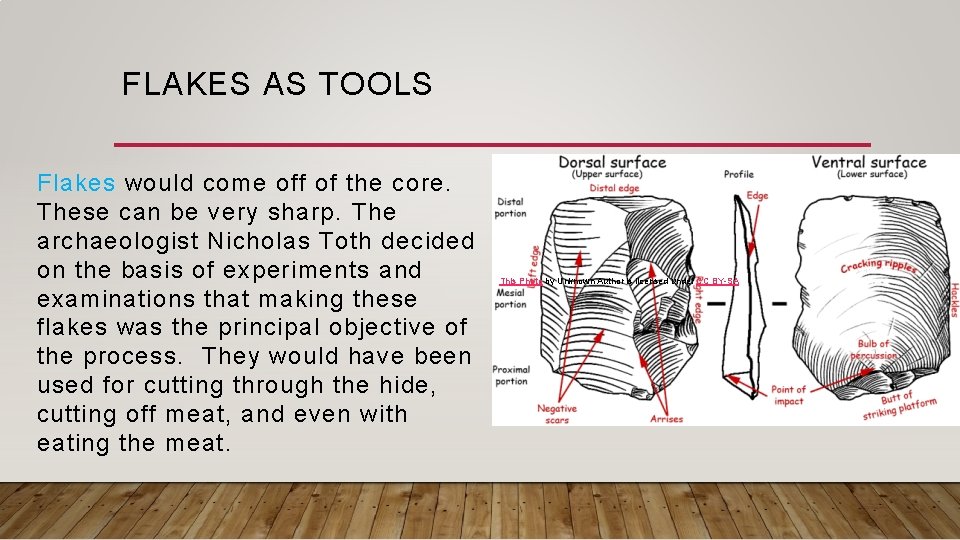
FLAKES AS TOOLS Flakes would come off of the core. These can be very sharp. The archaeologist Nicholas Toth decided on the basis of experiments and examinations that making these flakes was the principal objective of the process. They would have been used for cutting through the hide, cutting off meat, and even with eating the meat. This Photo by Unknown Author is licensed under CC BY-SA
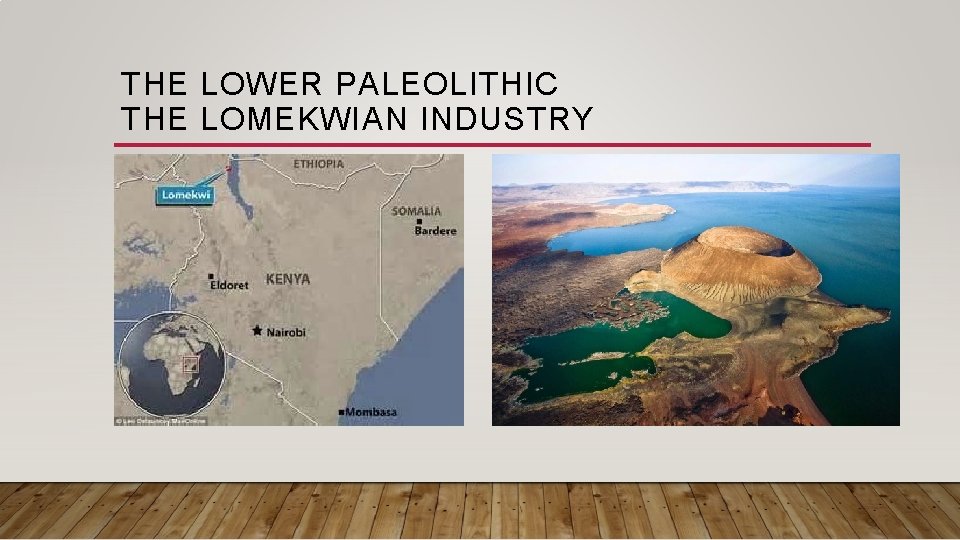
THE LOWER PALEOLITHIC THE LOMEKWIAN INDUSTRY
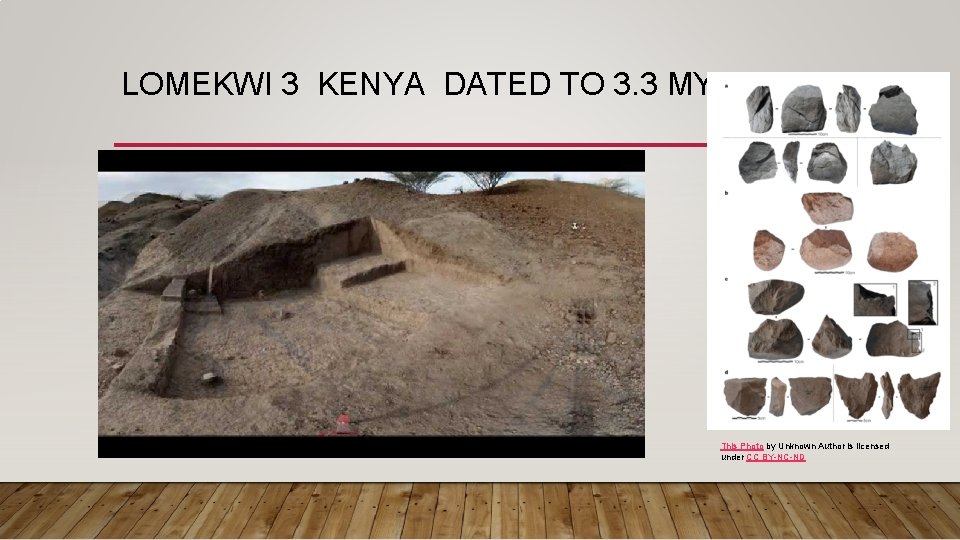
LOMEKWI 3 KENYA DATED TO 3. 3 MYA This Photo by Unknown Author is licensed under CC BY-NC-ND
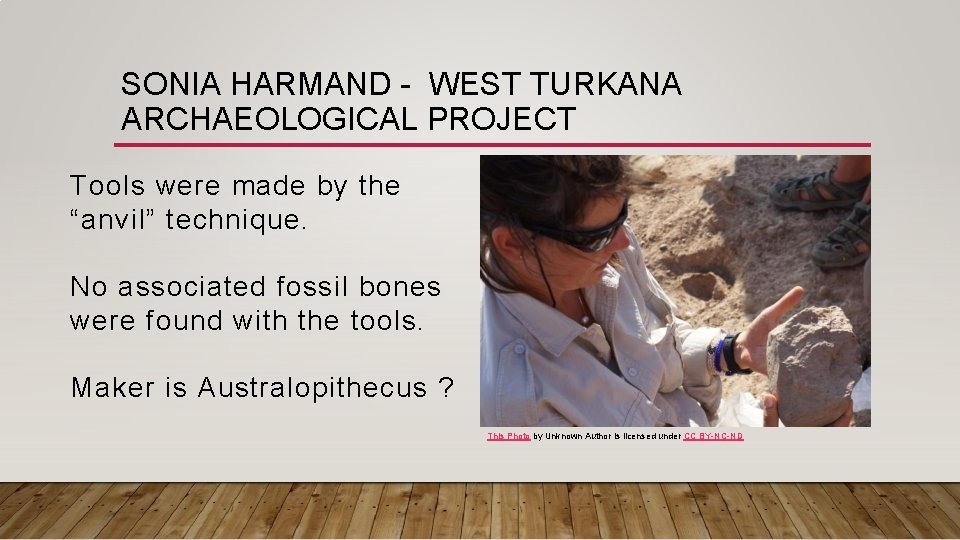
SONIA HARMAND - WEST TURKANA ARCHAEOLOGICAL PROJECT Tools were made by the “anvil” technique. No associated fossil bones were found with the tools. Maker is Australopithecus ? This Photo by Unknown Author is licensed under CC BY-NC-ND
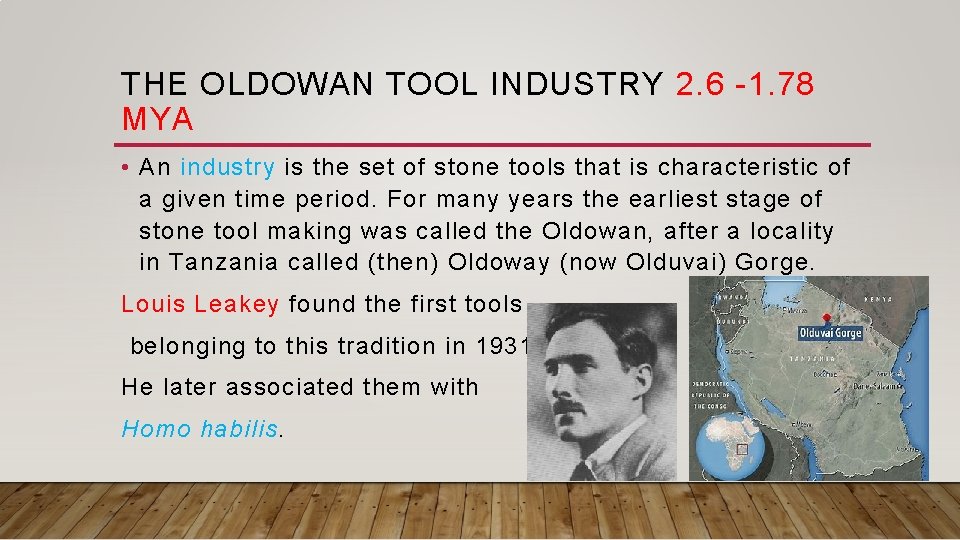
THE OLDOWAN TOOL INDUSTRY 2. 6 -1. 78 MYA • An industry is the set of stone tools that is characteristic of a given time period. For many years the earliest stage of stone tool making was called the Oldowan, after a locality in Tanzania called (then) Oldoway (now Olduvai) Gorge. Louis Leakey found the first tools belonging to this tradition in 1931. He later associated them with Homo habilis.
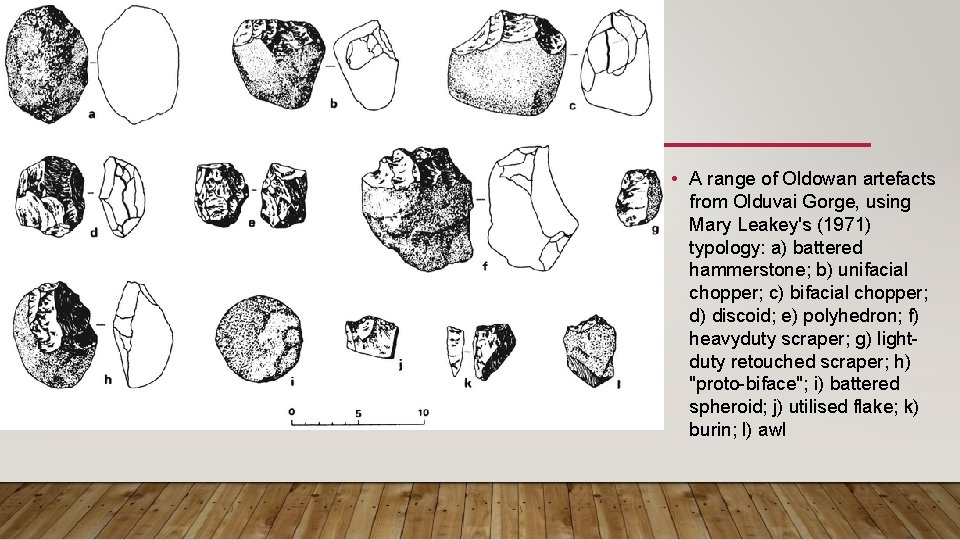
• A range of Oldowan artefacts from Olduvai Gorge, using Mary Leakey's (1971) typology: a) battered hammerstone; b) unifacial chopper; c) bifacial chopper; d) discoid; e) polyhedron; f) heavyduty scraper; g) lightduty retouched scraper; h) "proto-biface"; i) battered spheroid; j) utilised flake; k) burin; l) awl
- Slides: 12