
Stomatognathic system 2 BUCCINATOR MECHANISM It is a
Stomatognathic system 2
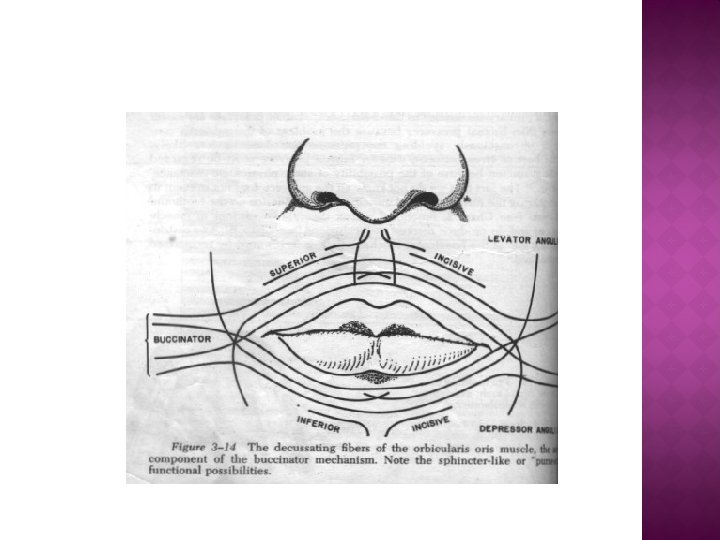
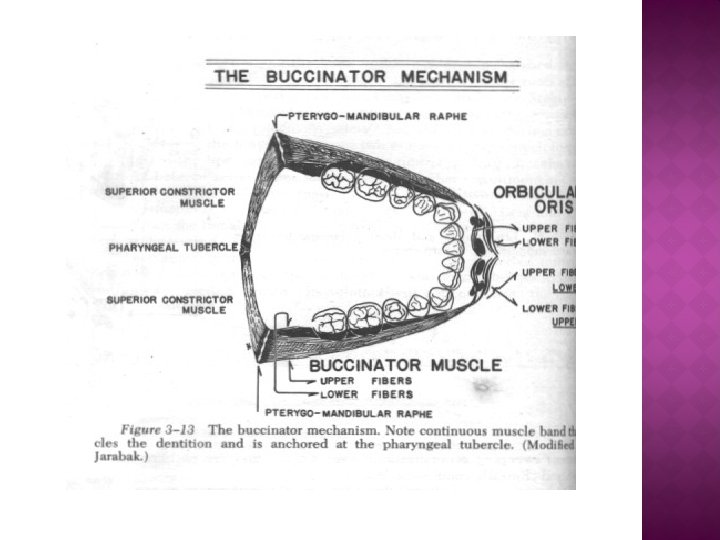
BUCCINATOR MECHANISM � It is a continous muscle band that encircles the dentition and is anchored at the pharyngeal tubercle. � Components: � Orbicularis oris � Buccinator � Pterygomandibular raphe � Opposing the buccinator mechanism there is a very powerful muscle – tongue : which begin with its activity before birth.
� They constitute to form the modiolus � Modiolus literally means “ hub of wheel” � It forms the mesial boundary of occlusal table � These muscles are important for facial expression and also in maintaining posture of various facial structures � Any abnormality in these muscles function can lead to skeletal or occlusal problems
� Strong inter-dependence occur between bone and muscle although bone is one of the hardest tissues in body � It is one of the most responsive to change whenever there is an alteration to in environment balance. � The teeth and supporting structures are constantly under influence of contiguous musculature buccinator and lips.
� Concept -by Wifred fish of NEUTRAL ZONE - acc to him the teeth occupy a dead space in mouth in a state of equilibrium. � The inwards pressure by cheek and lips and PDL is balanced by the outward pressure of tongue � It is believed as long as total pressure acting on teeth is balanced the position of teeth is stabilized
STRESS TRAJECTORIES � The trajectorial theory of face states that: “the lines of orientation of the bony trabeculae correspond to the pathway of maximal pressure and tension and that bone trabeculae are thicker in the region where the stress is greater. ”
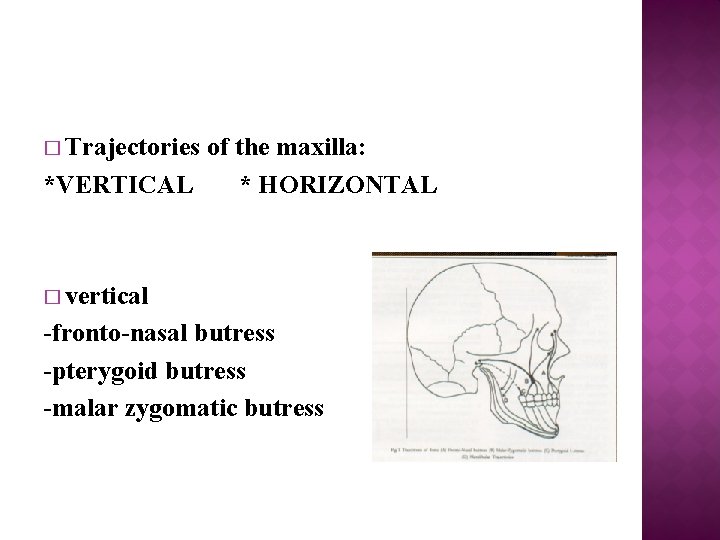
� Trajectories of the maxilla: *VERTICAL * HORIZONTAL � vertical -fronto-nasal butress -pterygoid butress -malar zygomatic butress
� Horizontal trajectories: - Hard palate - Orbital ridge - Zygomatic arches - Palatal bones - Lesser wing of sphenoid -
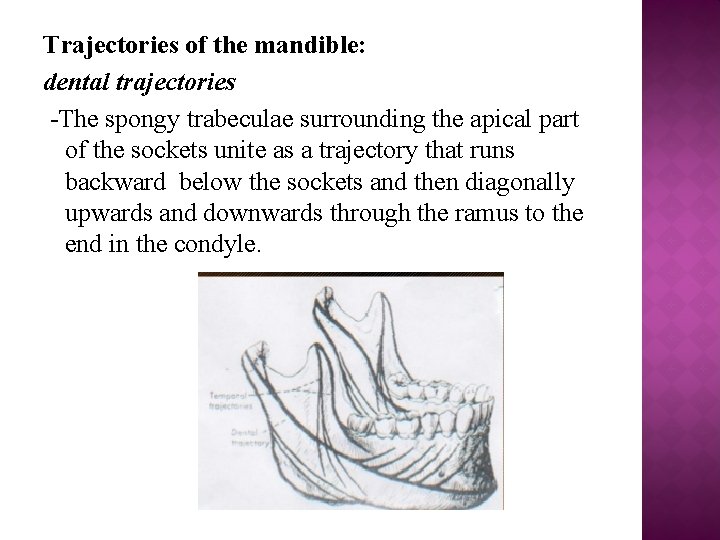
Trajectories of the mandible: dental trajectories -The spongy trabeculae surrounding the apical part of the sockets unite as a trajectory that runs backward below the sockets and then diagonally upwards and downwards through the ramus to the end in the condyle.
- Slides: 11