
Stomata Development Philipp Gerke PCDUSeminar 16 12 2015

- Slides: 12
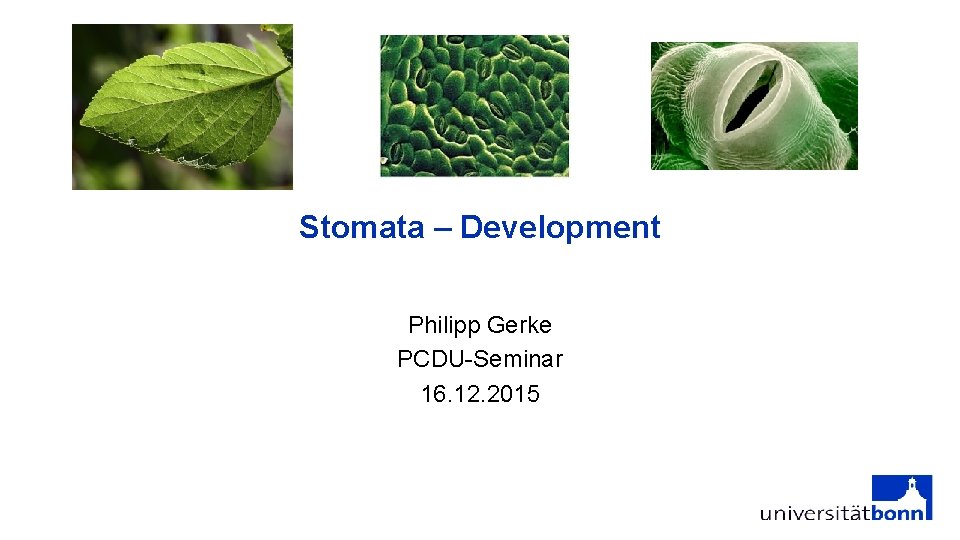
Stomata – Development Philipp Gerke PCDU-Seminar 16. 12. 2015
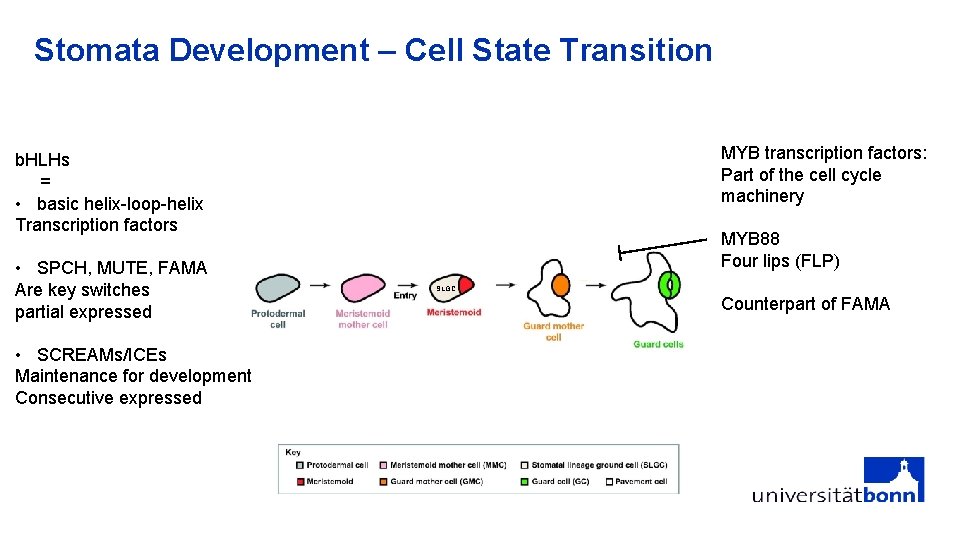
Stomata Development – Cell State Transition MYB transcription factors: Part of the cell cycle machinery b. HLHs = • basic helix-loop-helix Transcription factors • SPCH, MUTE, FAMA Are key switches partial expressed • SCREAMs/ICEs Maintenance for development Consecutive expressed MYB 88 Four lips (FLP) SLGC Counterpart of FAMA
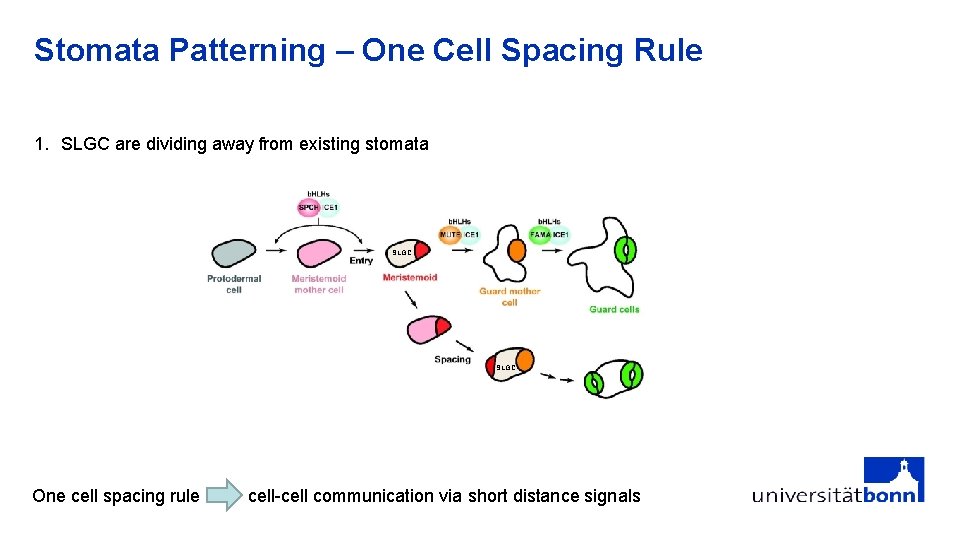
Stomata Patterning – One Cell Spacing Rule 1. SLGC are dividing away from existing stomata SLGC 2. Two misplaced meristemoids next to each other divides away from each other One cell spacing rule cell-cell communication via short distance signals
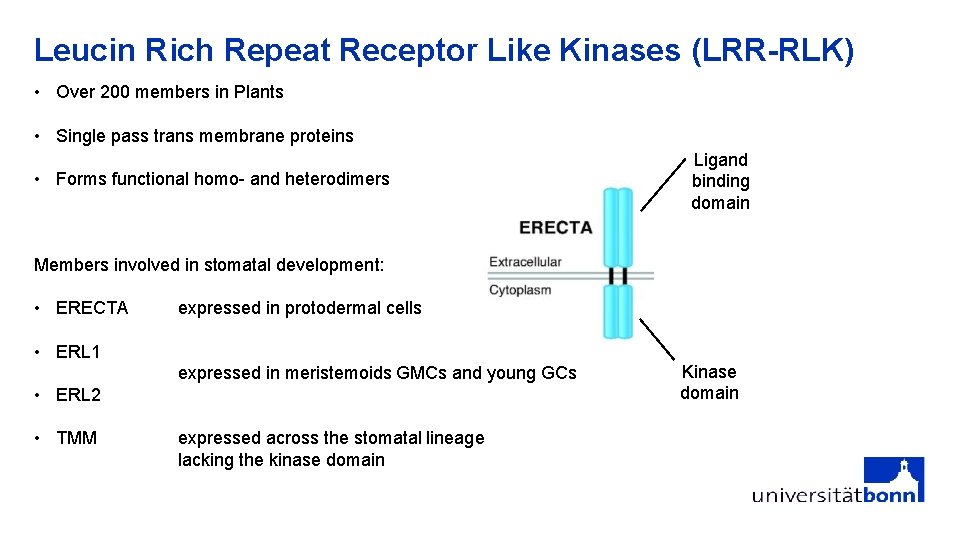
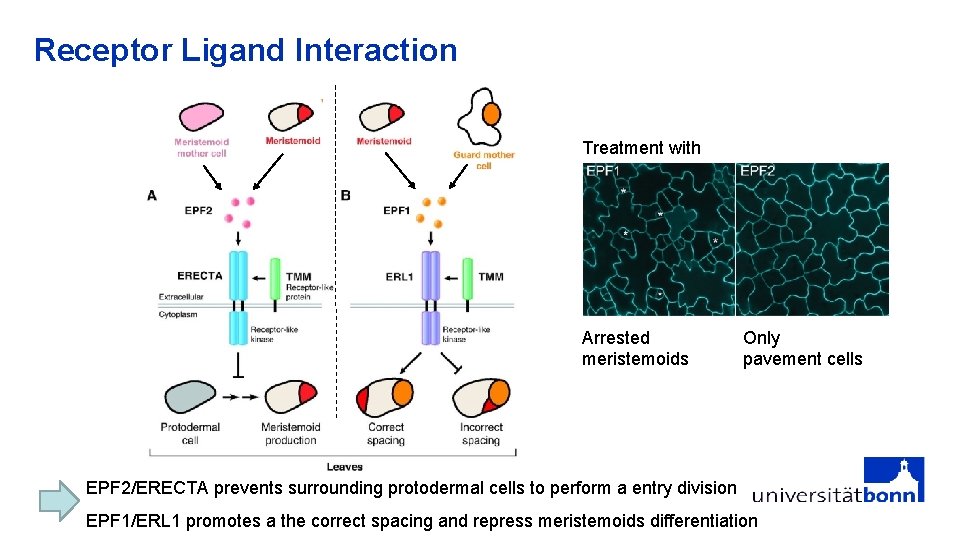
Leucin Rich Repeat Receptor Like Kinases (LRR-RLK) • Over 200 members in Plants • Single pass trans membrane proteins • Forms functional homo- and heterodimers Ligand binding domain Members involved in stomatal development: • ERECTA expressed in protodermal cells • ERL 1 expressed in meristemoids GMCs and young GCs • ERL 2 • TMM expressed across the stomatal lineage lacking the kinase domain Kinase domain
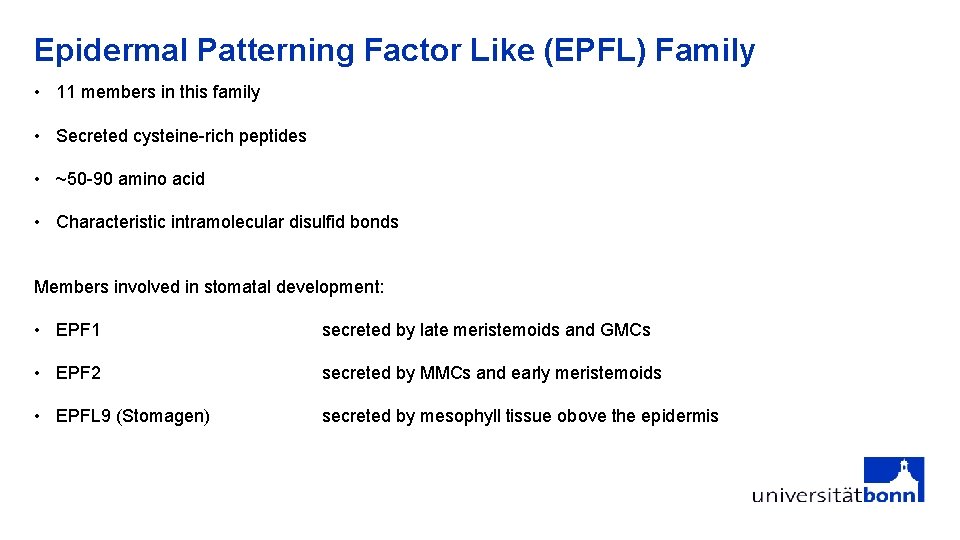
Epidermal Patterning Factor Like (EPFL) Family • 11 members in this family • Secreted cysteine-rich peptides • ~50 -90 amino acid • Characteristic intramolecular disulfid bonds Members involved in stomatal development: • EPF 1 secreted by late meristemoids and GMCs • EPF 2 secreted by MMCs and early meristemoids • EPFL 9 (Stomagen) secreted by mesophyll tissue obove the epidermis
Receptor Ligand Interaction Treatment with Arrested meristemoids Only pavement cells EPF 2/ERECTA prevents surrounding protodermal cells to perform a entry division EPF 1/ERL 1 promotes a the correct spacing and repress meristemoids differentiation
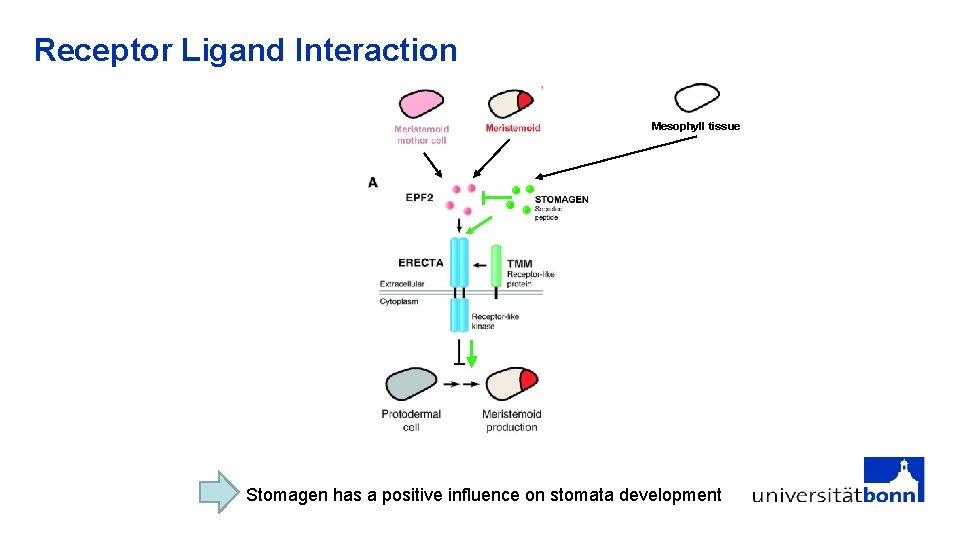
Receptor Ligand Interaction Mesophyll tissue Stomagen has a positive influence on stomata development
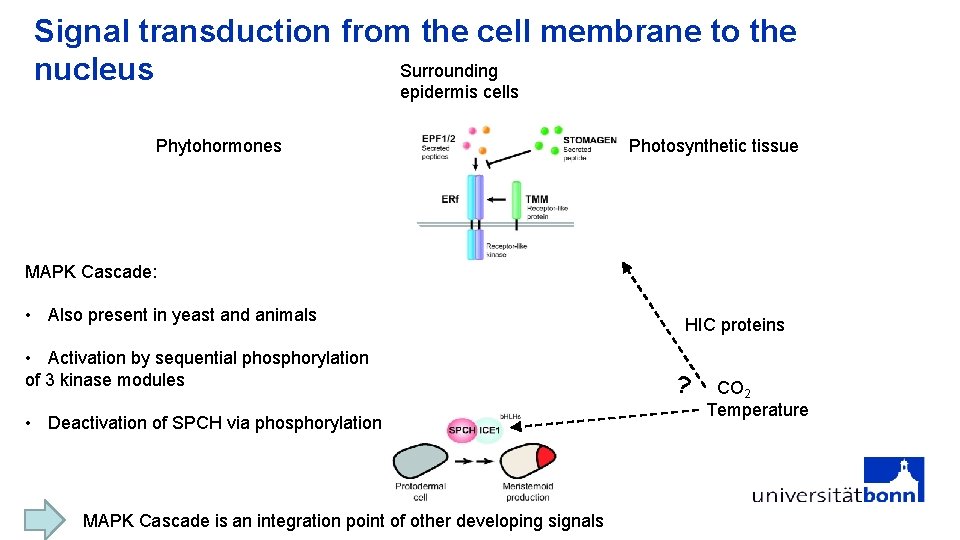
Signal transduction from the cell membrane to the Surrounding nucleus epidermis cells Phytohormones Photosynthetic tissue MAPK Cascade: • Also present in yeast and animals • Activation by sequential phosphorylation of 3 kinase modules • Deactivation of SPCH via phosphorylation MAPK Cascade is an integration point of other developing signals HIC proteins ? CO 2 Temperature
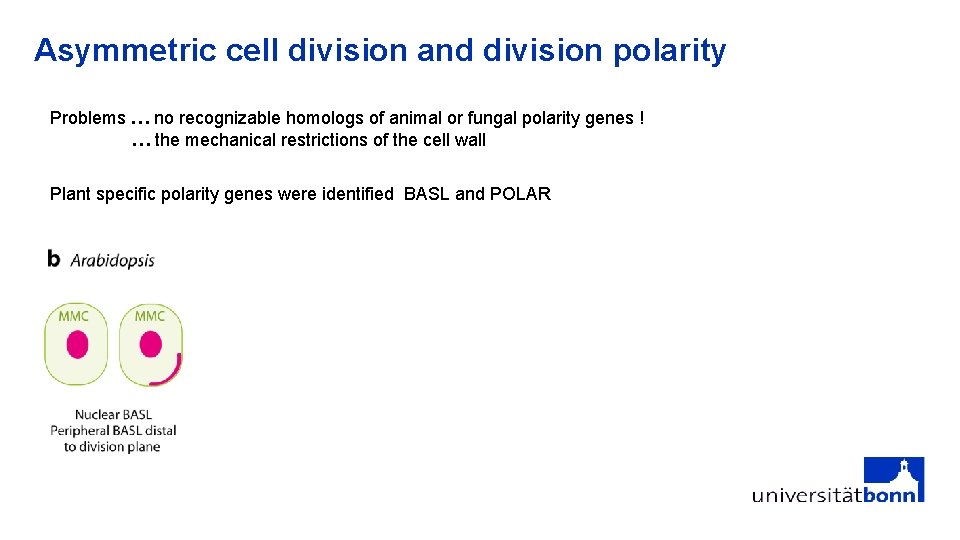
Asymmetric cell division and division polarity Problems … no recognizable homologs of animal or fungal polarity genes ! … the mechanical restrictions of the cell wall Plant specific polarity genes were identified BASL and POLAR
Conclusion • Stomata are produced through a characteristic series of divisions controlled via the coordinated activities of transcription factors that can directly regulate core cell-cycle genes. • Correct stomatal patterning and initiation requires intercellular communication through the activity of secreted peptide ligands, receptor kinases, and MAPK signaling modules. • Environmental conditions impact the production of stomata in developing leaves via a longdistance signal initiated in mature leaves. MAPK modules may provide a common integration point among multiple environmental inputs. • Polarity localized proteins (BASL and POLAR) provide the first examples polarity factors in plants.
References • Facette, Michelle R. ; Smith, Laurie G. (2012): Division polarity in developing stomata. In: Current Opinion in Plant Biology 15 (6), S. 585– 592. DOI: 10. 1016/j. pbi. 2012. 09. 013. • Lau, On Sun; Bergmann, Dominique C. (2012): Stomatal development: a plant's perspective on cell polarity, cell fate transitions and intercellular communication. In: Development (Cambridge, England) 139 (20), S. 3683– 3692. DOI: 10. 1242/dev. 080523. • Pillitteri, Lynn Jo; Torii, Keiko U. (2012): Mechanisms of stomatal development. In: Annual Review of Plant Biology 63, S. 591– 614. DOI: 10. 1146/annurev-arplant-042811 -105451. • Simmons, Abigail R. ; Bergmann, Dominique C. (2015): Transcriptional control of cell fate in the stomatal lineage. In: Current Opinion in Plant Biology 29, S. 1– 8. DOI: 10. 1016/j. pbi. 2015. 09. 008. • Torii, Keiko U. (2012): Mix-and-match: ligand-receptor pairs in stomatal development and beyond. In: Trends in Plant Science 17 (12), S. 711– 719. DOI: 10. 1016/j. tplants. 2012. 06. 013.