
Stoma Peristomal Complications IPAA Complication Pouchitis Janice Colwell

- Slides: 63
Stoma & Peristomal Complications IPAA Complication: Pouchitis Janice Colwell, RN, MS, CWOCN, FAAN University of Chicago Medicine
My Coworkers @ UCM
Objectives � At the completion of this session you should be able to: � Discuss two stoma complications: presentation, workup, plan of care and evaluation � Discuss two peristomal complications: presentation, workup, plan of care and evaluation � Describe the incidence and presentation of pouchitis in the patient with an ileal pouch anal anastomosis. complications
Prevalence of Peristomal Skin Complications � Complication rates: 10 -60% � Bosio et al, 20071: limited to fecal diversions, measured 0, 4, 14 and 24 weeks: 52% � Cottam et al, 20072: limited to fecal diversions, measured @ 3 week post op period: 34% � Spiers et al, 20063: limited to loop ileostomies, measured 3, 7, 10 days & 3 months: 7. 1% � St-Cyr, 20024: fecal & urinary diversions, measured 1 and 3 weeks & 6 weeks: 58% peristomal skin damage 1 Bosio et al, Ostomy Wound Manage, 2007 et al, Gastrointest Nurs, 2005 3 Spiers et al, Colorectal Dis, 2006 4 St-Cyr, Ostomy Wound Manage, 2002 2 Cottam
Incidence: Stoma and Peristomal Complications � 43 patients assessed 3 times during a 3 month period New stomas � Fecal and urinary stomas � � 63% had peristomal complications Peristomal irritation � Skin infection � � 6 � patients had a stoma complications Retraction, separation, prolapse, granuloma & laceration
Ostomy Complications: Contributing Variables � Skin irritation � Variables: Younger > older � Employed > retired � Single > married � $$$ > $ � IBD > cancer � No stoma marking > stoma marked � No pre op education > pre op education �
Ostomy Complication Predictors � Women > Men 1 � Age: younger than 421, 2 � Ileostomy > colostomy 1, 2 � Lack of pre operative stoma site marking 1, 2 � Body mass > 30 1, 2 � Use of a pouching system with a flat barrier 1, 2 1 Coons, Chongpison et al. Med Care, 2007 Weber et al. Ann Surgery, 2010 2 Greenblatt,
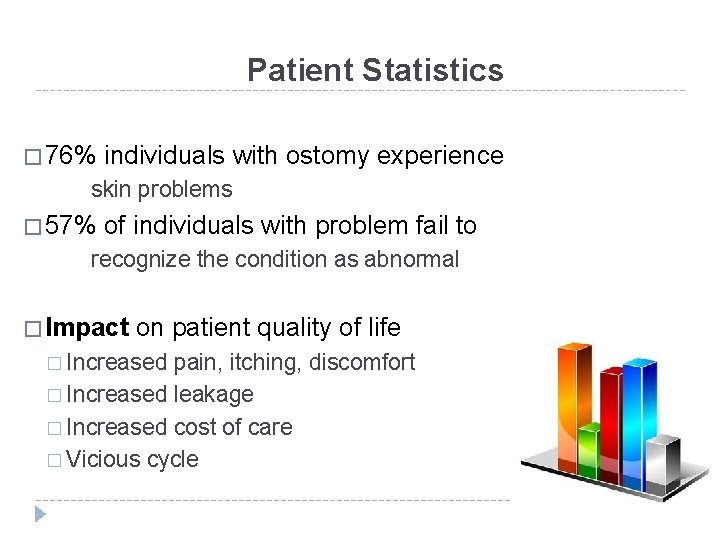
Patient Statistics � 76% individuals with ostomy experience skin problems � 57% of individuals with problem fail to recognize the condition as abnormal � Impact on patient quality of life � Increased pain, itching, discomfort � Increased leakage � Increased cost of care � Vicious cycle
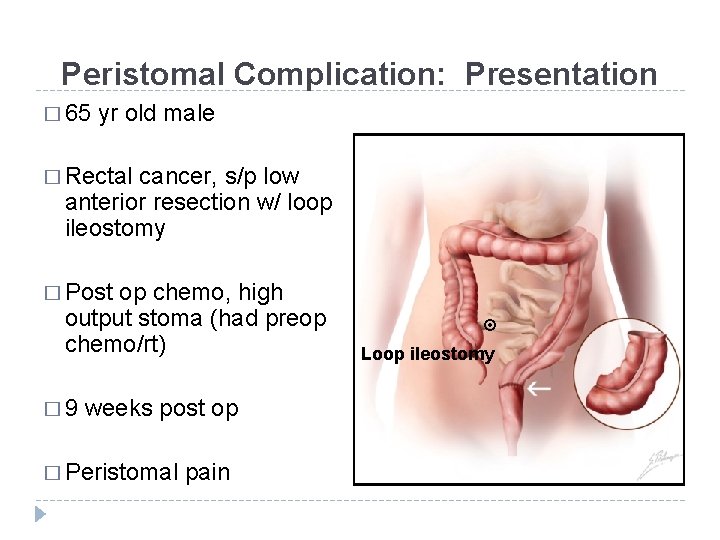
Peristomal Complication: Presentation � 65 yr old male � Rectal cancer, s/p low anterior resection w/ loop ileostomy � Post op chemo, high output stoma (had preop chemo/rt) � 9 weeks post op � Peristomal pain Loop ileostomy
Peristomal Complication: Patient Assessment � Pathology: T 3, N 0 T 3 into the muscular propria and no + nodes � Stoma output in 24 hours � Volume � Consistency � Pouching � Skin system barrier opening and shape � Accessory items � Wear time � Medications � GI � Diet
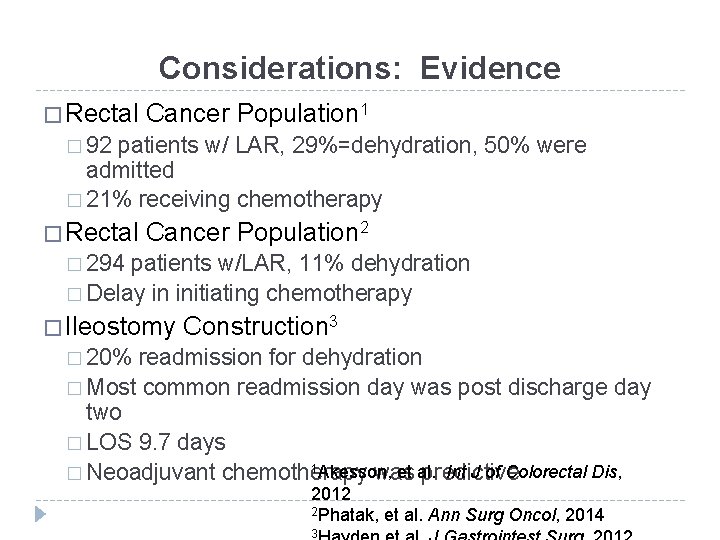
Considerations: Evidence � Rectal Cancer Population 1 � 92 patients w/ LAR, 29%=dehydration, 50% were admitted � 21% receiving chemotherapy � Rectal Cancer Population 2 � 294 patients w/LAR, 11% dehydration � Delay in initiating chemotherapy � Ileostomy Construction 3 � 20% readmission for dehydration � Most common readmission day was post discharge day two � LOS 9. 7 days 1 Akesson, et al. Int J of Colorectal Dis, � Neoadjuvant chemotherapy was predictive 2012 2 Phatak, et al. Ann Surg Oncol, 2014 3
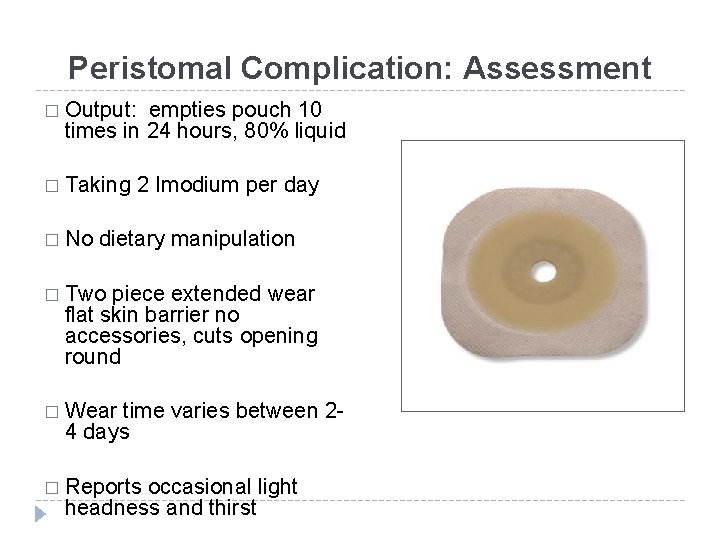
Peristomal Complication: Assessment � Output: empties pouch 10 times in 24 hours, 80% liquid � Taking � No 2 Imodium per day dietary manipulation � Two piece extended wear flat skin barrier no accessories, cuts opening round � Wear time varies between 24 days � Reports occasional light headness and thirst
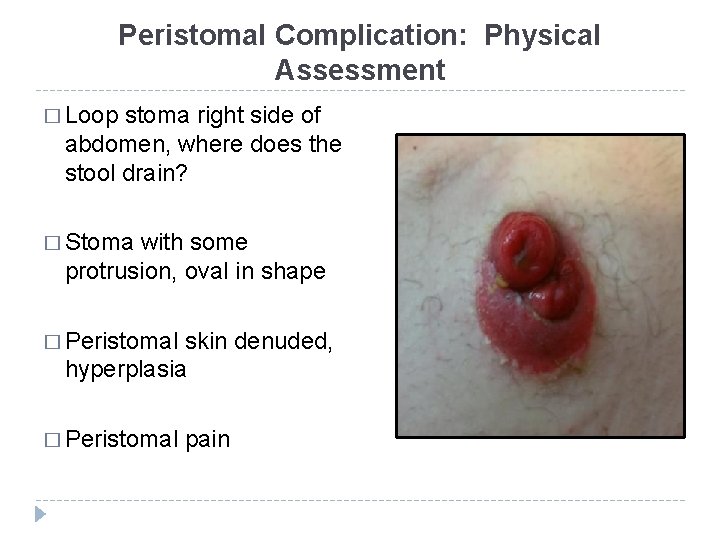
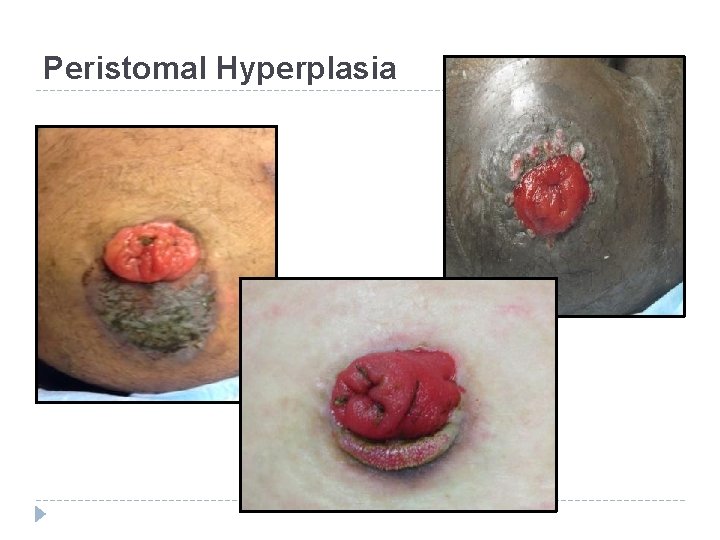
Peristomal Complication: Physical Assessment � Loop stoma right side of abdomen, where does the stool drain? � Stoma with some protrusion, oval in shape � Peristomal skin denuded, hyperplasia � Peristomal pain
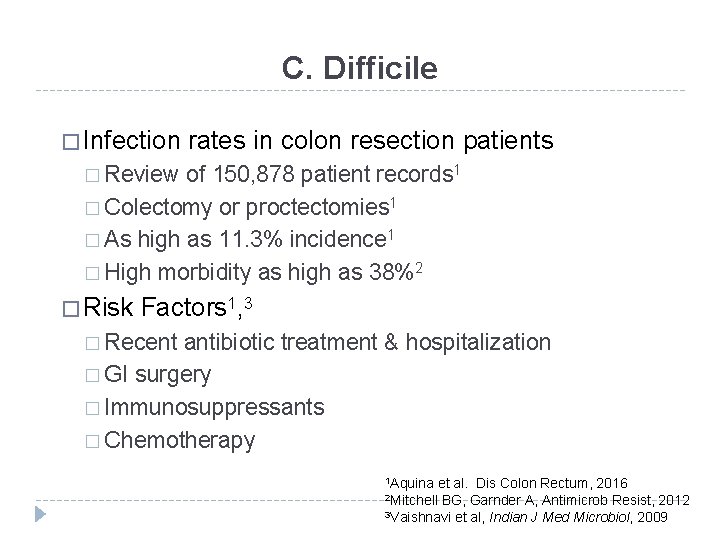
C. Difficile � Infection rates in colon resection patients � Review of 150, 878 patient records 1 � Colectomy or proctectomies 1 � As high as 11. 3% incidence 1 � High morbidity as high as 38%2 � Risk Factors 1, 3 � Recent antibiotic treatment & hospitalization � GI surgery � Immunosuppressants � Chemotherapy 1 Aquina et al. Dis Colon Rectum, 2016 BG, Garnder A, Antimicrob Resist, 2012 3 Vaishnavi et al, Indian J Med Microbiol, 2009 2 Mitchell
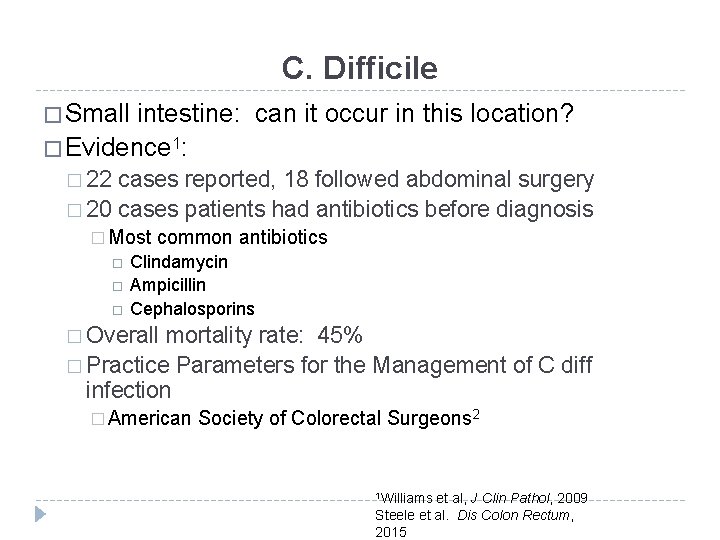
C. Difficile � Small intestine: can it occur in this location? � Evidence 1: � 22 cases reported, 18 followed abdominal surgery � 20 cases patients had antibiotics before diagnosis � Most common antibiotics Clindamycin Ampicillin Cephalosporins � Overall mortality rate: 45% � Practice Parameters for the Management of C diff infection � American Society of Colorectal Surgeons 2 1 Williams et al, J Clin Pathol, 2009 Steele et al. Dis Colon Rectum, 2015
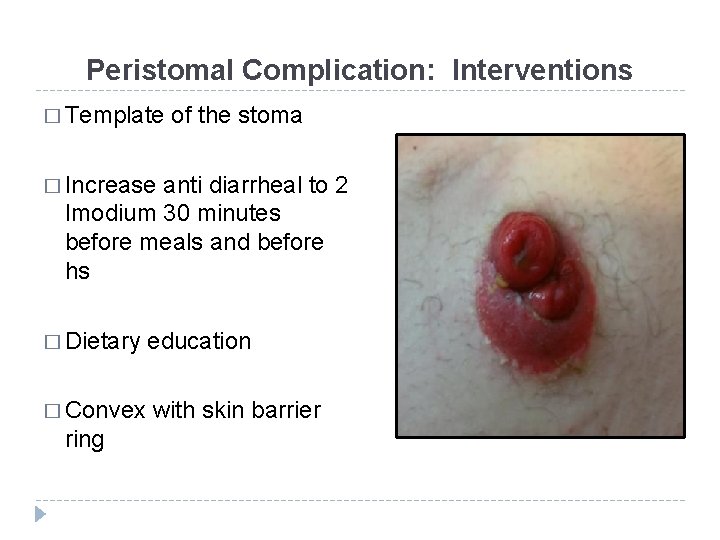
Peristomal Complication: Interventions � Template of the stoma � Increase anti diarrheal to 2 Imodium 30 minutes before meals and before hs � Dietary education � Convex with skin barrier ring
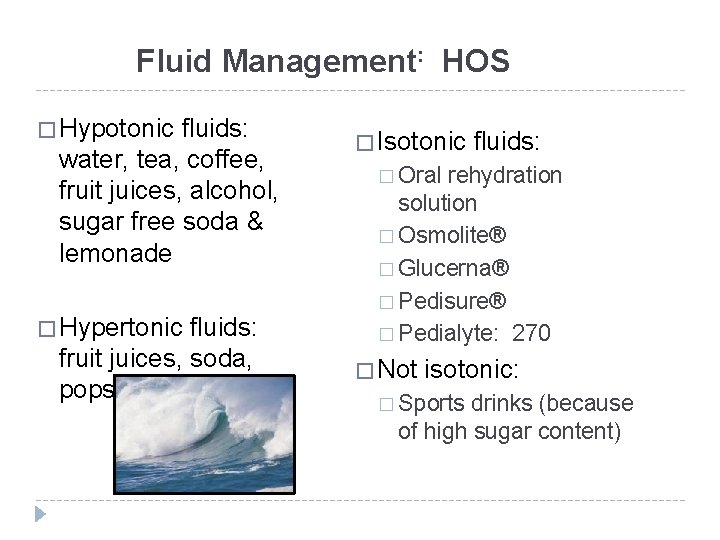
Fluid Management: HOS � Hypotonic fluids: water, tea, coffee, fruit juices, alcohol, sugar free soda & lemonade � Hypertonic fluids: fruit juices, soda, popsicles, broth � Isotonic fluids: � Oral rehydration solution � Osmolite® � Glucerna® � Pedisure® � Pedialyte: 270 � Not isotonic: � Sports drinks (because of high sugar content)
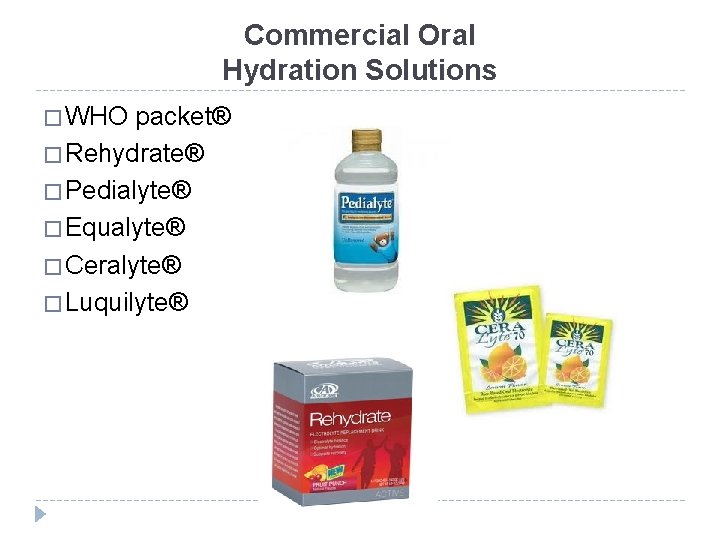
Commercial Oral Hydration Solutions � WHO packet® � Rehydrate® � Pedialyte® � Equalyte® � Ceralyte® � Luquilyte®
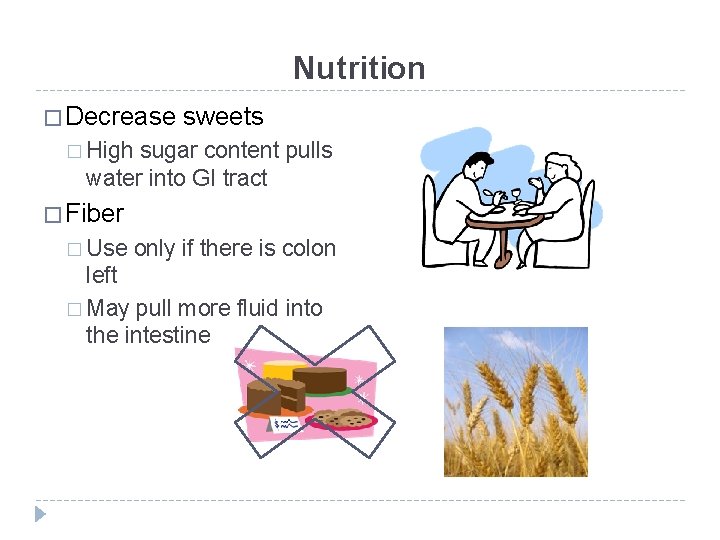
Nutrition � Decrease sweets � High sugar content pulls water into GI tract � Fiber � Use only if there is colon left � May pull more fluid into the intestine
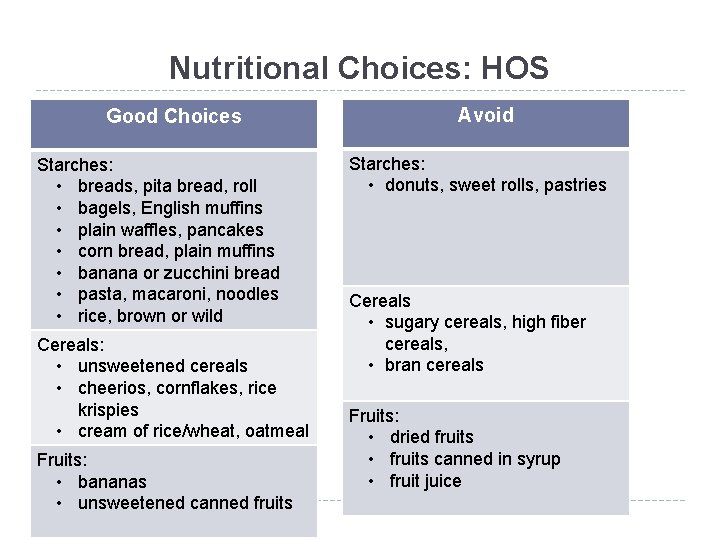
Nutritional Choices: HOS Good Choices Starches: • breads, pita bread, roll • bagels, English muffins • plain waffles, pancakes • corn bread, plain muffins • banana or zucchini bread • pasta, macaroni, noodles • rice, brown or wild Cereals: • unsweetened cereals • cheerios, cornflakes, rice krispies • cream of rice/wheat, oatmeal Fruits: • bananas • unsweetened canned fruits Avoid Starches: • donuts, sweet rolls, pastries Cereals • sugary cereals, high fiber cereals, • bran cereals Fruits: • dried fruits • fruits canned in syrup • fruit juice
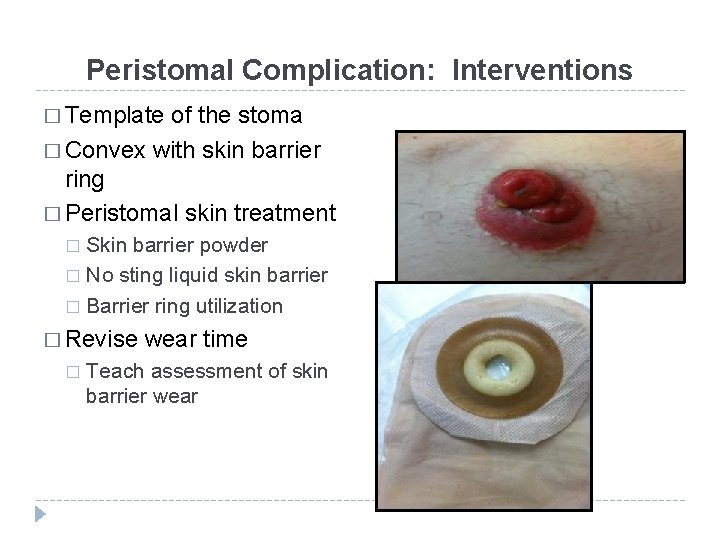
Peristomal Complication: Interventions � Template of the stoma � Convex with skin barrier ring � Peristomal skin treatment Skin barrier powder � No sting liquid skin barrier � Barrier ring utilization � � Revise � wear time Teach assessment of skin barrier wear
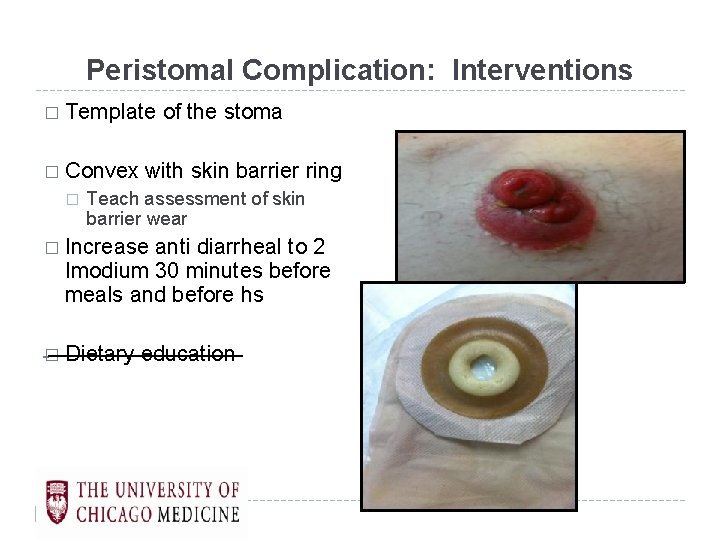
Peristomal Complication: Interventions � Template � Convex � of the stoma with skin barrier ring Teach assessment of skin barrier wear � Increase anti diarrheal to 2 Imodium 30 minutes before meals and before hs � Dietary education
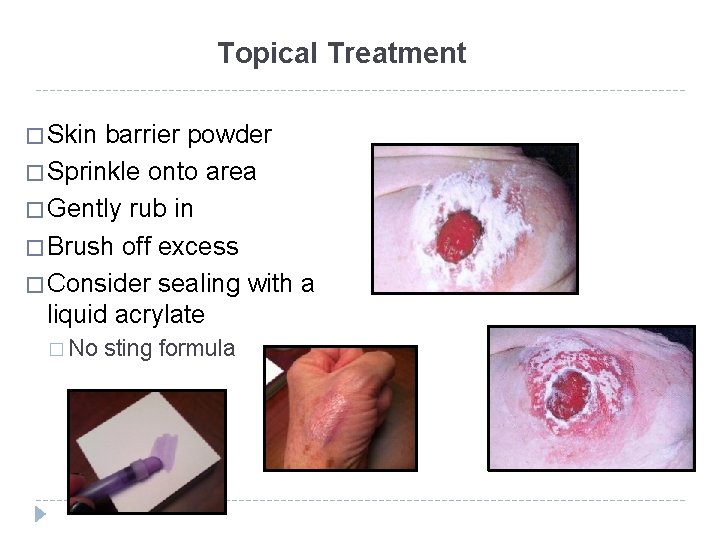
Topical Treatment � Skin barrier powder � Sprinkle onto area � Gently rub in � Brush off excess � Consider sealing with a liquid acrylate � No sting formula
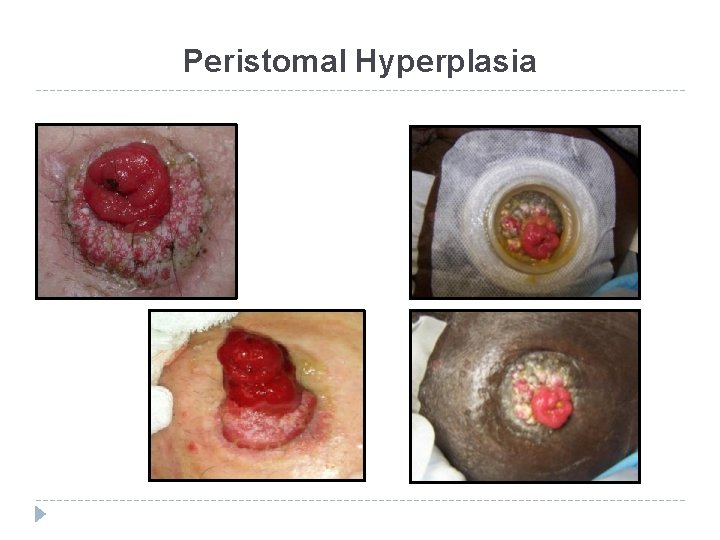
Peristomal Hyperplasia
Peristomal Hyperplasia
Peristomal Skin Complication � History: � 60 yr. old female � Crohn’s disease s/p proctolectomy � Ileostomy for 20 years � Non healing peristomal wound present for several months � Tried skin barrier powder to area at pouch change
Peristomal Skin Complication � History: � Kidney failure: transplant � Lung failure: transplant � Immunosuppressive medications � Output: empties 6 x in 24 hours, pasty to watery � Prefers a one piece CTF pouching system � No longer has a predictable wear time
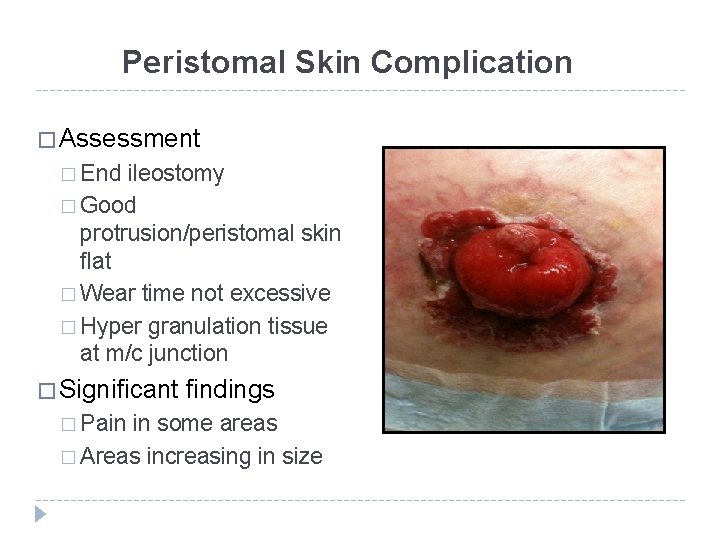
Peristomal Skin Complication � Assessment � End ileostomy � Good protrusion/peristomal skin flat � Wear time not excessive � Hyper granulation tissue at m/c junction � Significant � Pain findings in some areas � Areas increasing in size
Peristomal Skin Completion � Interventions � Decreased � Increase wear time fit around stoma � Skin barrier rings/paste � Extended wear barrier � Considered: � Used: silver nitrate triamcinolone spray and crème
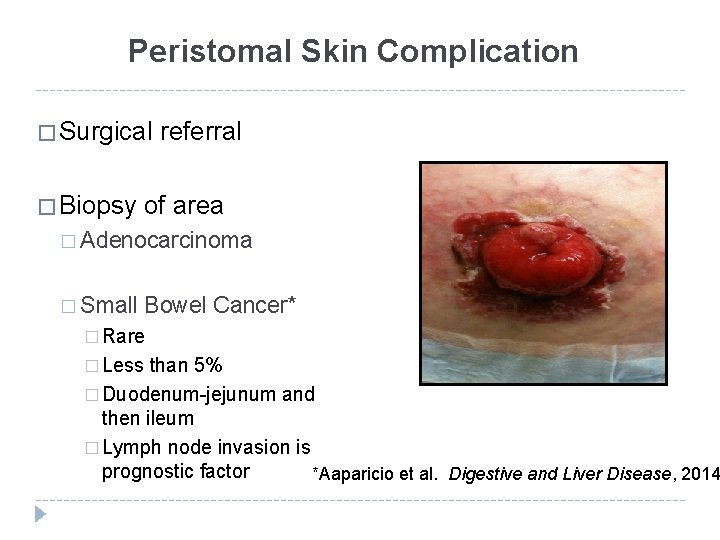
Peristomal Skin Complication � Surgical � Biopsy referral of area � Adenocarcinoma � Small Bowel Cancer* � Rare � Less than 5% � Duodenum-jejunum and then ileum � Lymph node invasion is prognostic factor *Aaparicio et al. Digestive and Liver Disease, 2014
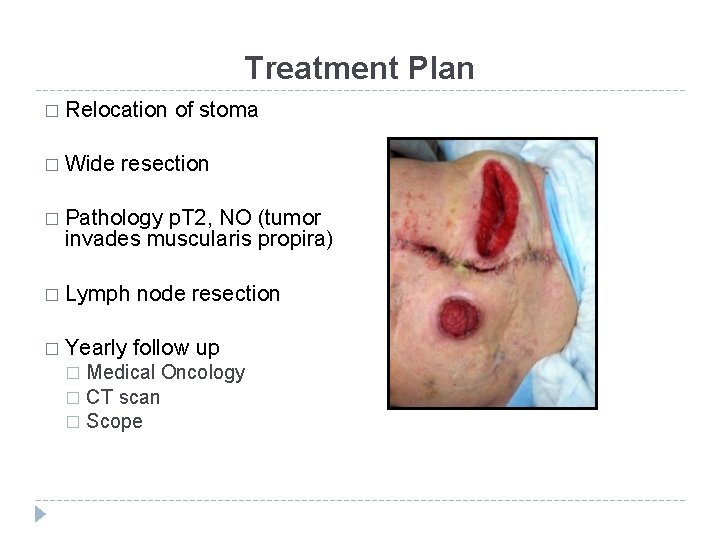
Treatment Plan � Relocation � Wide of stoma resection � Pathology p. T 2, NO (tumor invades muscularis propira) � Lymph node resection � Yearly follow up Medical Oncology � CT scan � Scope �
Stoma Complication: Presentation � 38 yr old male � Ulcerative colitis � Proctocolectomy (26 yrs ago) dysplasia � Primary sclerosing cholangitis � Liver transplant (19 yrs ago) � Presents with bleeding from his stoma
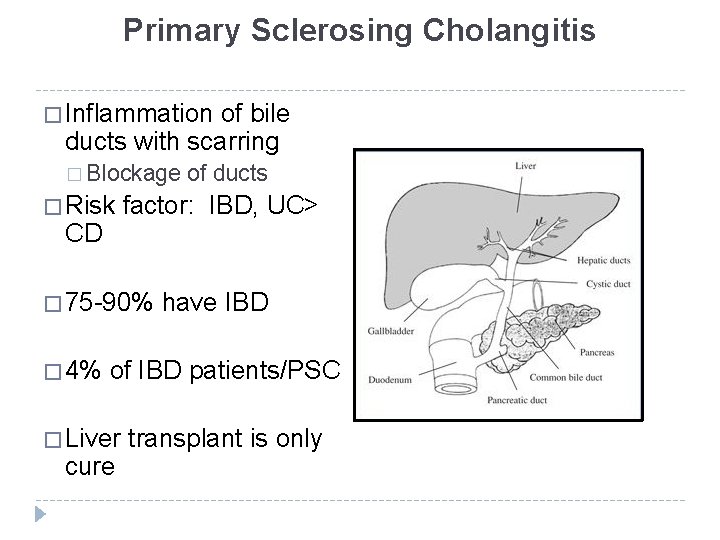
Primary Sclerosing Cholangitis � Inflammation of bile ducts with scarring � Blockage � Risk CD factor: IBD, UC> � 75 -90% � 4% of ducts have IBD of IBD patients/PSC � Liver cure transplant is only
Stoma Complication: Assessment � Pouching system: CTF extended wear one piece with paste � Usual wear time 3 days, recently lower due to oozing of blood under seal � Output pasty to watery, emptied 7 times in 24 hrs. � Working � Notes full time with UPS pain at the stoma site � Immunosuppression (tacro)
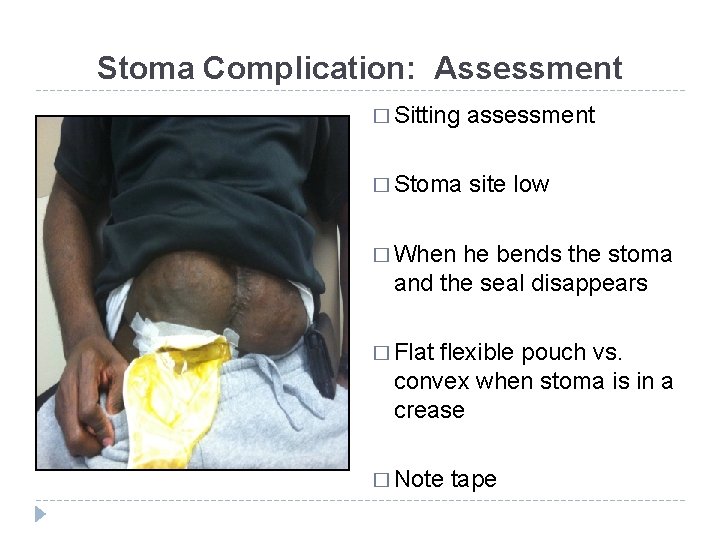
Stoma Complication: Assessment � Sitting assessment � Stoma site low � When he bends the stoma and the seal disappears � Flat flexible pouch vs. convex when stoma is in a crease � Note tape
Stoma Complication: Assessment
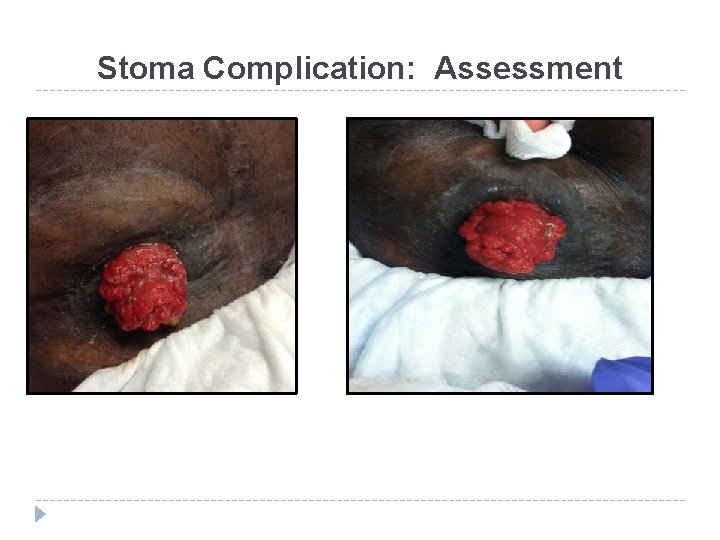
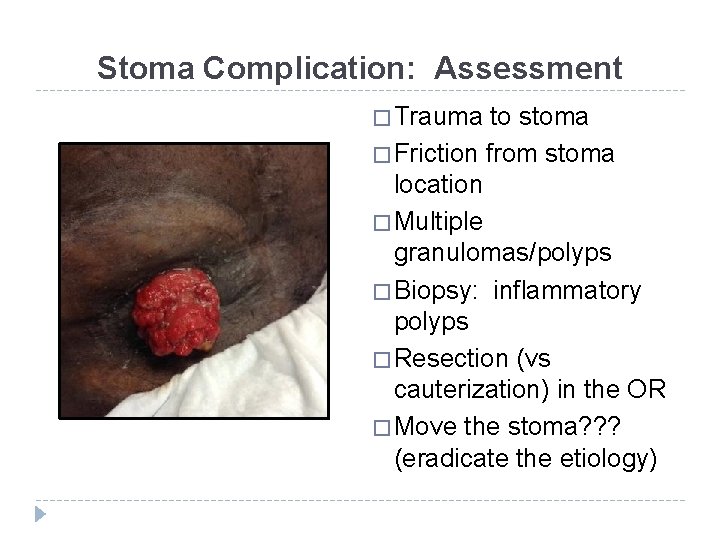
Stoma Complication: Assessment � Trauma to stoma � Friction from stoma location � Multiple granulomas/polyps � Biopsy: inflammatory polyps � Resection (vs cauterization) in the OR � Move the stoma? ? ? (eradicate the etiology)
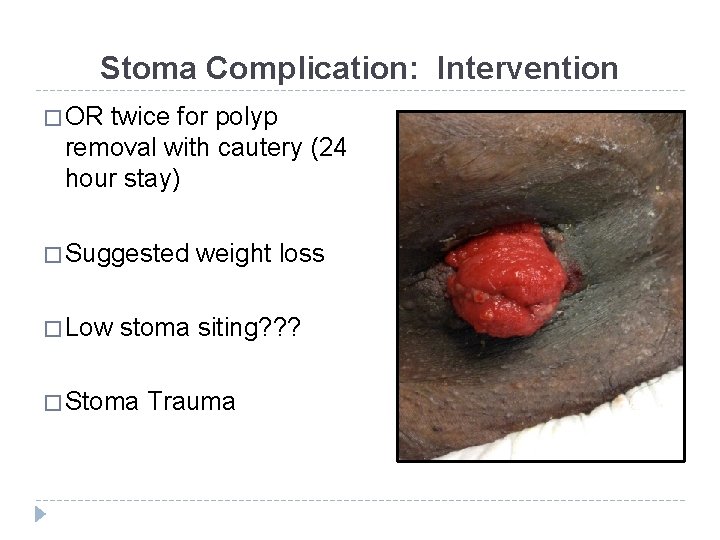
Stoma Complication: Intervention � OR twice for polyp removal with cautery (24 hour stay) � Suggested � Low weight loss stoma siting? ? ? � Stoma Trauma
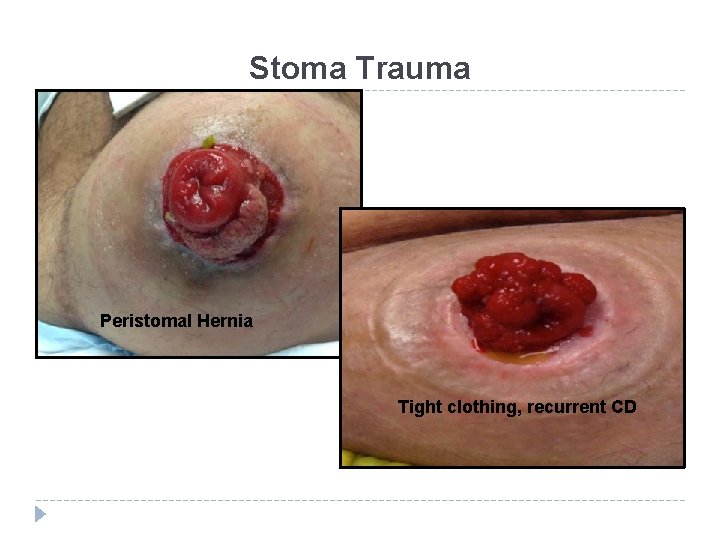
Stoma Trauma Peristomal Hernia Tight clothing, recurrent CD
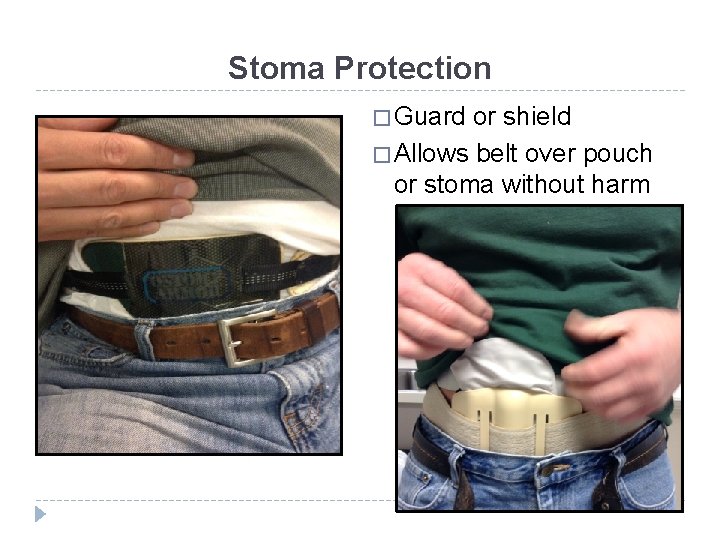
Stoma Protection � Guard or shield � Allows belt over pouch or stoma without harm
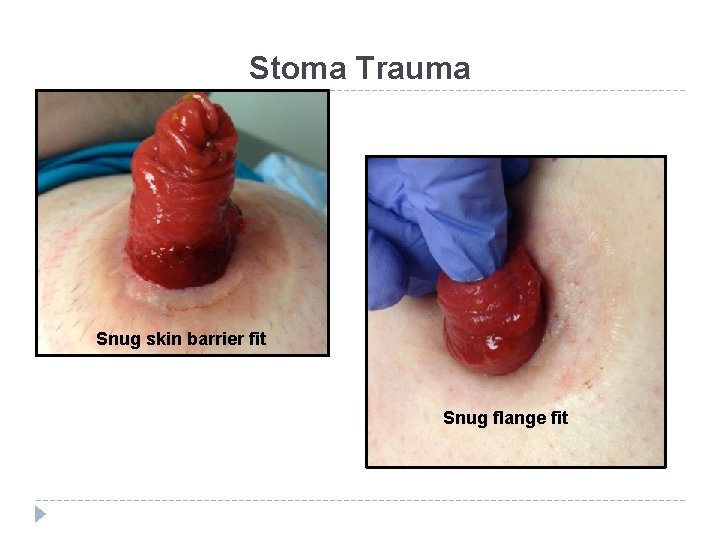
Stoma Trauma Snug skin barrier fit Snug flange fit
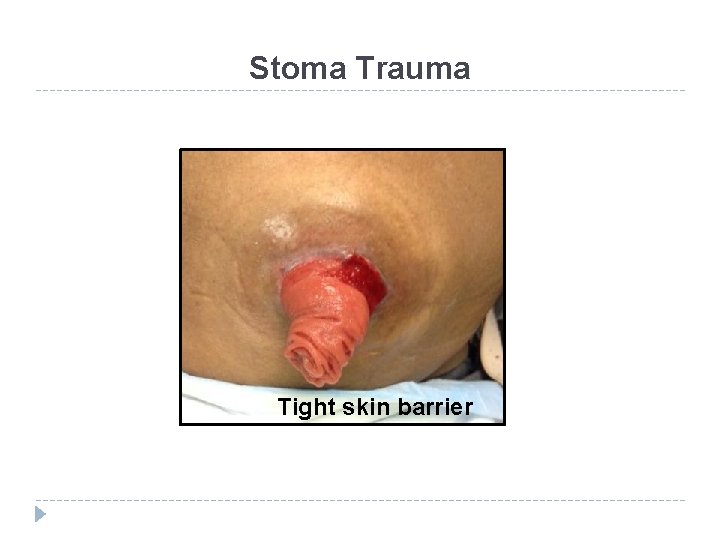
Stoma Trauma Tight skin barrier
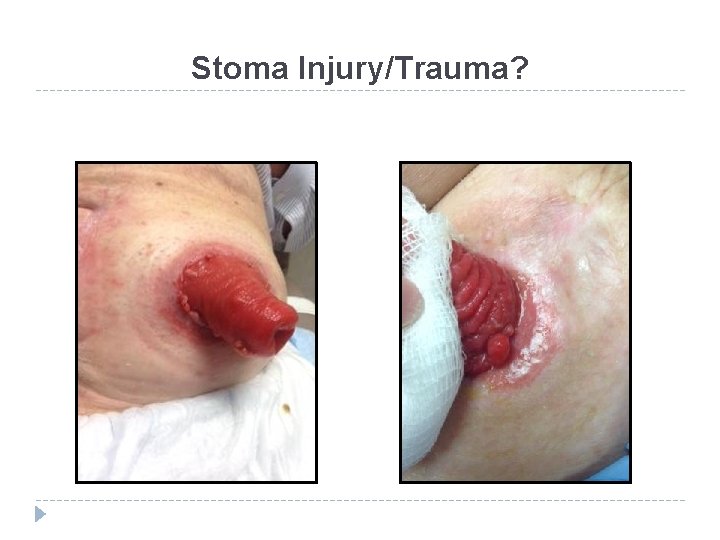
Stoma Injury/Trauma?
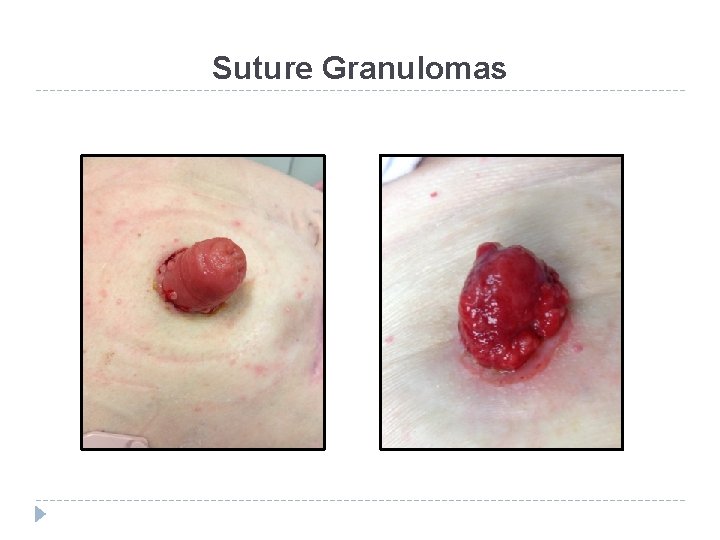
Suture Granulomas
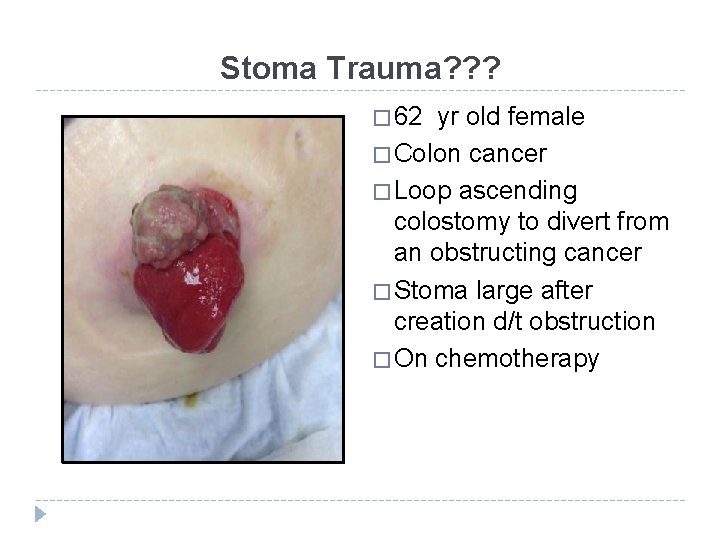
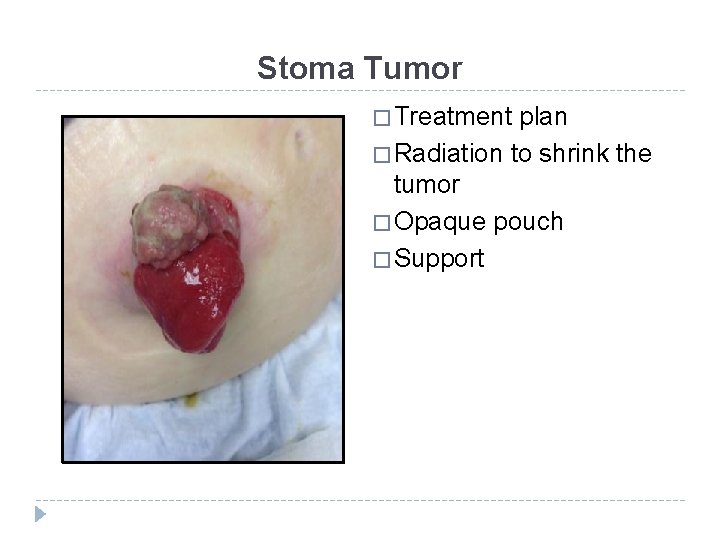
Stoma Trauma? ? ? � 62 yr old female � Colon cancer � Loop ascending colostomy to divert from an obstructing cancer � Stoma large after creation d/t obstruction � On chemotherapy
Stoma Tumor � Treatment plan � Radiation to shrink the tumor � Opaque pouch � Support
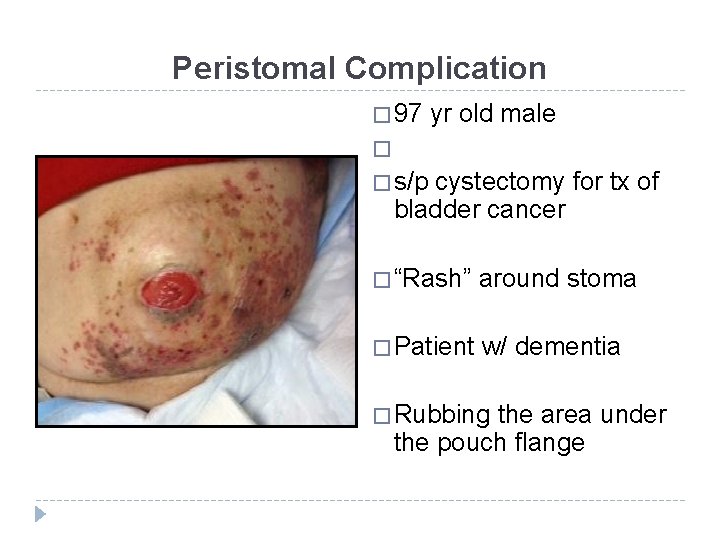
Peristomal Complication � 97 yr old male � � s/p cystectomy for tx of bladder cancer � “Rash” around stoma � Patient w/ dementia � Rubbing the area under the pouch flange
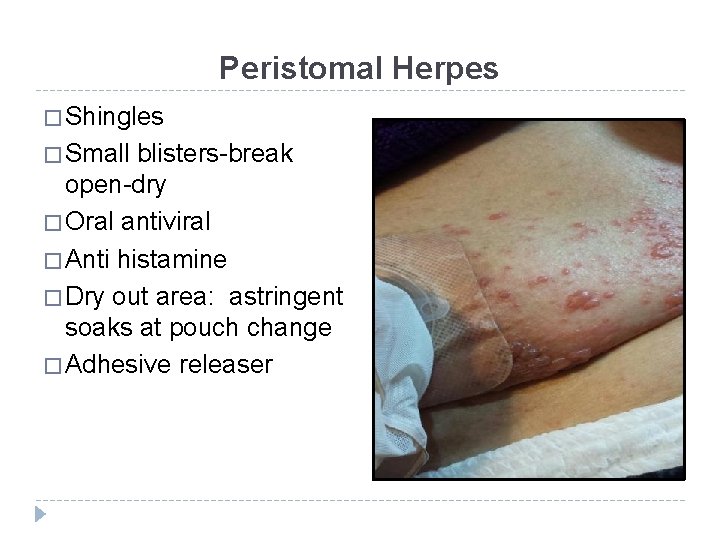
Peristomal Herpes � Shingles � Small blisters-break open-dry � Oral antiviral � Anti histamine � Dry out area: astringent soaks at pouch change � Adhesive releaser
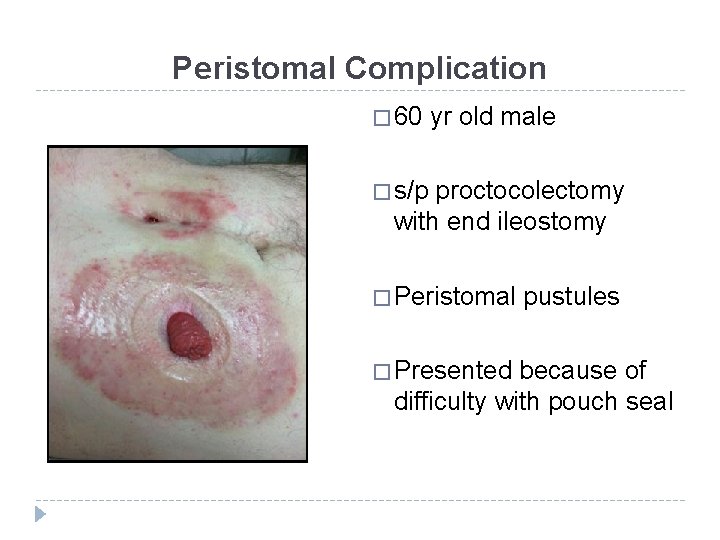
Peristomal Complication � 60 yr old male � s/p proctocolectomy with end ileostomy � Peristomal � Presented pustules because of difficulty with pouch seal
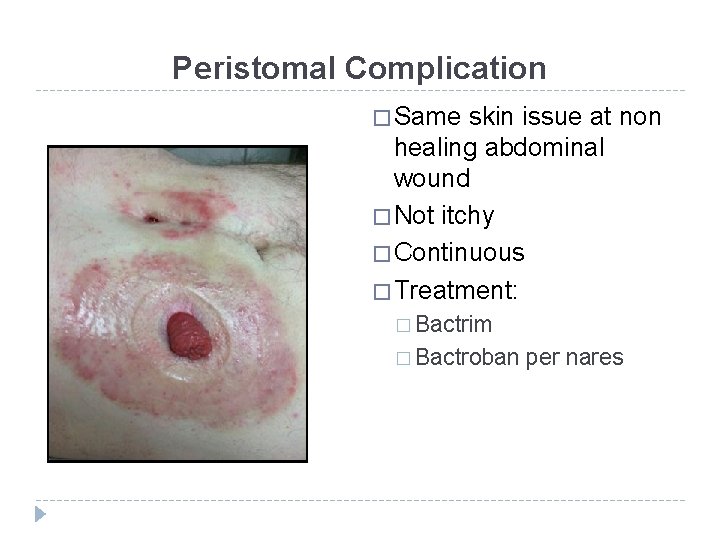
Peristomal Complication � Same skin issue at non healing abdominal wound � Not itchy � Continuous � Treatment: � Bactrim � Bactroban per nares
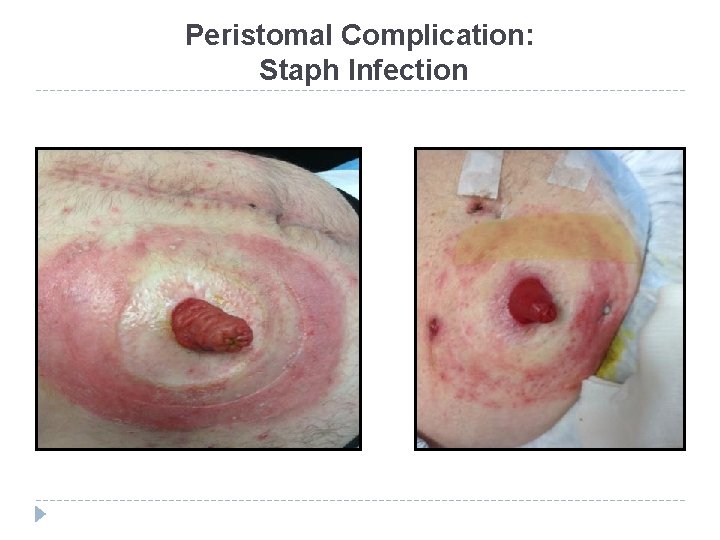
Peristomal Complication: Staph Infection
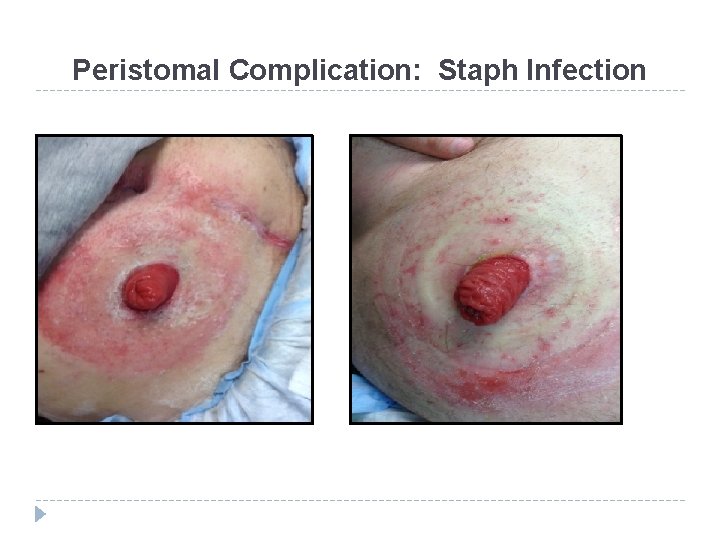
Peristomal Complication: Staph Infection
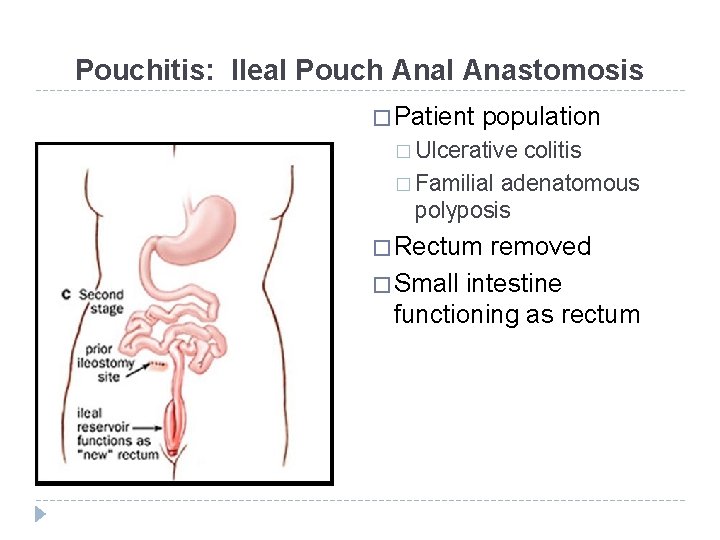
Pouchitis: Ileal Pouch Anal Anastomosis � Patient population � Ulcerative colitis � Familial adenatomous polyposis � Rectum removed � Small intestine functioning as rectum
Pouchitis � Most common IPAA complication � Etiology: imbalance in bacterial and fungal species in the intestinal wall � Change in microbiome � Change in bacteria
Pouchitis: Symptoms � Watery frequent stools � Urgency: feeling of incomplete emptying � Low abdominal pain/cramping � “Feels like UC again” � May encounter � Blood in stool � Fiver � Leakage of stool � Dehydration � Extra intestinal manifestations � Joint/body aches
Pouchitis �Incidence: 40 - 50 % of patients with an IPAA �Timing: approx 6 months and If after 2 1/2 years with a IPAA and no episode of pouchitis: decreased incidence � of patients develop single episode � 60% develop 2 or more episodes � 10 % develop frequent or have chronic pouchitis – higher risk of losing pouch � 30% https: //www. uptodate. com 2017 Hurst R et. al… Inflamm Bowel Dis 1998; Coffey C et al. Pouchitis: Ds Colon Rectum 2009
Pouchitis: Risk Factors �Extensive UC �Backwash ileitis �Extra-intestinal manifestations �NSAIDS � tendency https: //www. uptodate. com 2017 Coffey C et al. Ds Colon Rectum 2009
Pouchitis: Risk Factors �Non smoker �Younger age @ proctocolectomy surgery �Extra-intestinal manifestations https: //www. uptodate. com 2017 Coffey C et al. Ds Colon Rectum 2009
Pouchitis: Diagnosis � Symptoms � But – Classic ones usually present symptoms not specific to pouchitis alone � Endoscope - pouchoscopy � Inflammation proximal to pouch – � Probable Crohn’s disease – Crohn’s like inflammation � Biopsy � Acute or chronic pouchitis � Confirm Crohn’s disease � Annusitis
Pouchitis: Treatment � Flagyl (Metrodiazole) – 250 mg by mouth Ti. D � 365 mg (enteric coated) by mouth Bi. D - Tinidazole � Cipro � (Ciprofloxin) 500 mg by mouth Ti. D - okay during pregnancy � Xifaxin � OR OR (Rifaximin) 400 mg by mouth Ti. D OR � Amoxicillin (Augmentin) 500 mg by mouth Ti. D, 875 mg Bi. D � Option during pregnancy �
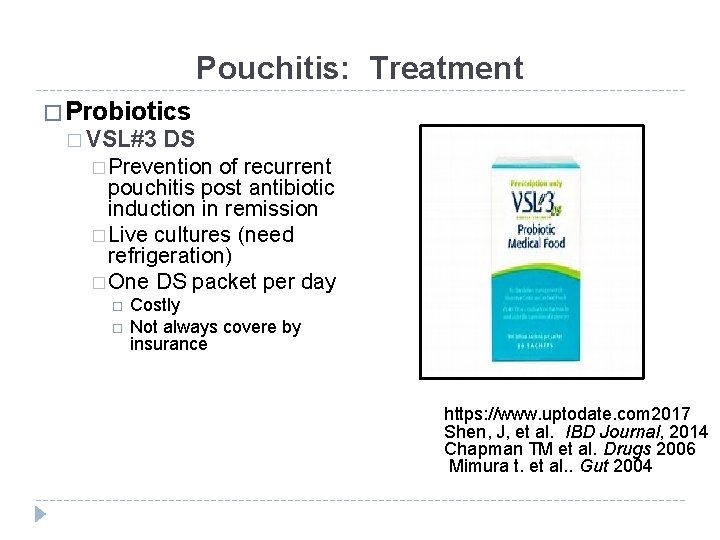
Pouchitis: Treatment � Probiotics � VSL#3 DS � Prevention of recurrent pouchitis post antibiotic induction in remission � Live cultures (need refrigeration) � One DS packet per day Costly Not always covere by insurance https: //www. uptodate. com 2017 Shen, J, et al. IBD Journal, 2014 Chapman TM et al. Drugs 2006 Mimura t. et al. . Gut 2004
Conclusions � Most of our ostomy patients will have a stoma or peristomal complication � Assessment � History � Presentation � Plan of care � Reassessment � Pouchitis � Large number of patients � Treatment antibiotics
Questions