
Stnd BI 1 a Objective CNotes Cell Membrane
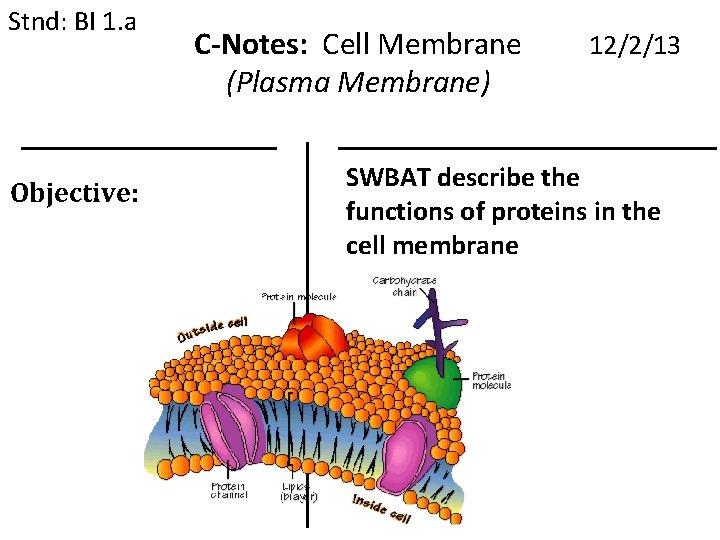
Stnd: BI 1. a Objective: C-Notes: Cell Membrane (Plasma Membrane) 12/2/13 SWBAT describe the functions of proteins in the cell membrane

Why is the Plasma Membrane called the Fluid Mosaic Model? FLUID- because individual phospholipids and proteins can move side-to-side within the layer, like it’s a liquid. MOSAIC- because of the pattern produced by the scattered protein molecules when the membrane is viewed from above.
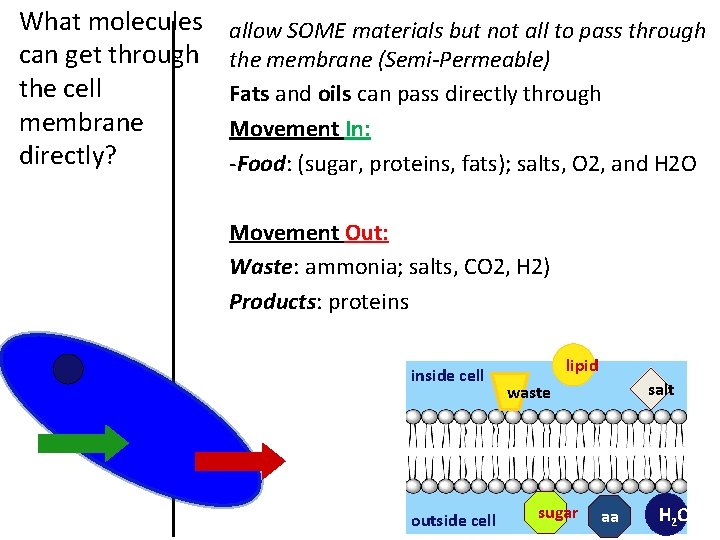
What molecules can get through the cell membrane directly? allow SOME materials but not all to pass through the membrane (Semi-Permeable) Fats and oils can pass directly through Movement In: -Food: (sugar, proteins, fats); salts, O 2, and H 2 O Movement Out: Waste: ammonia; salts, CO 2, H 2) Products: proteins inside cell outside cell lipid salt waste sugar aa H 2 O
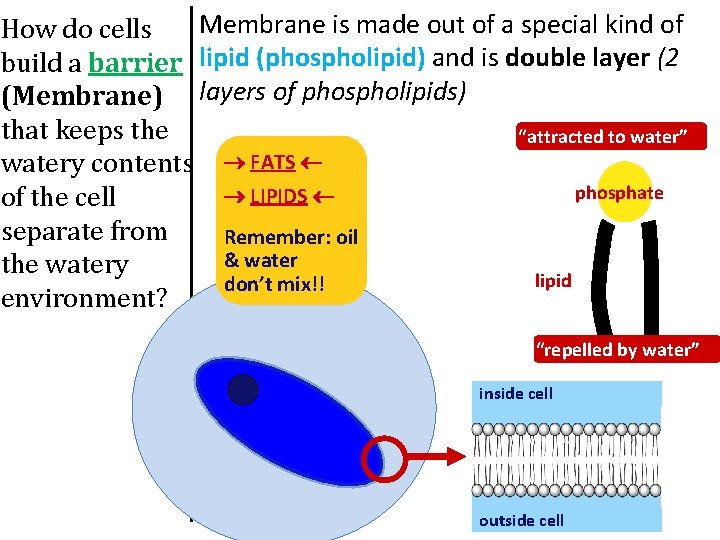
Membrane is made out of a special kind of How do cells build a barrier lipid (phospholipid) and is double layer (2 (Membrane) layers of phospholipids) that keeps the “attracted to water” watery contents FATS phosphate LIPIDS of the cell separate from Remember: oil & water the watery lipid don’t mix!! environment? “repelled by water” inside cell outside cell
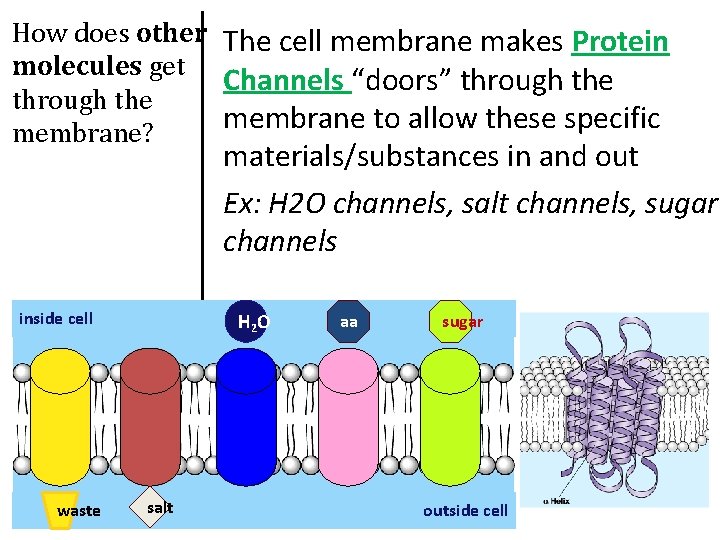
How does other The cell membrane makes Protein molecules get Channels “doors” through the membrane to allow these specific membrane? materials/substances in and out Ex: H 2 O channels, salt channels, sugar channels inside cell waste H 2 O salt aa sugar outside cell
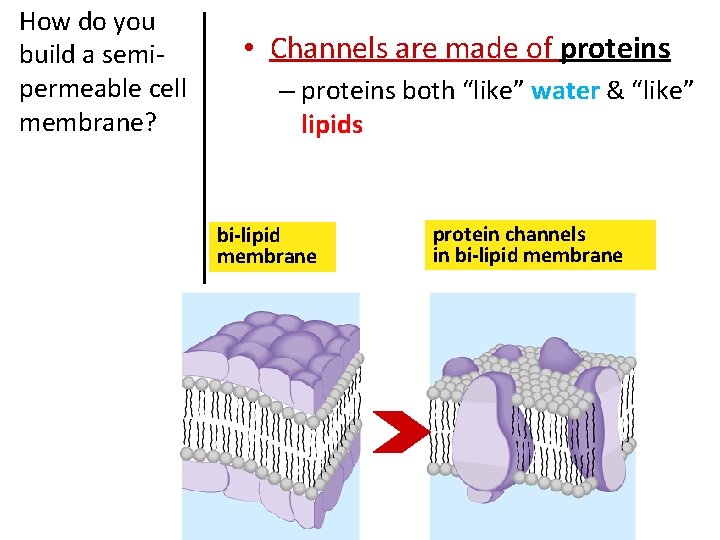
How do you build a semipermeable cell membrane? • Channels are made of proteins – proteins both “like” water & “like” lipids bi-lipid membrane protein channels in bi-lipid membrane
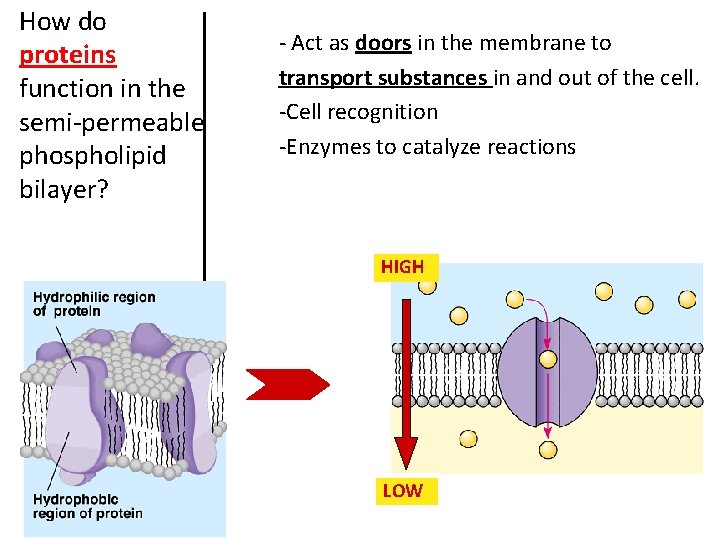
How do proteins function in the semi-permeable phospholipid bilayer? - Act as doors in the membrane to transport substances in and out of the cell. -Cell recognition -Enzymes to catalyze reactions HIGH LOW
Why do molecules move through membrane if you give them a channel? Because molecules move from high to low concentration Ex: Diffusion, Osmosis, passive transport, etc
How do larger molecules move into the cell? By a process called Endocytosis 3 types of Endocytosis 1. Pinocytosis “Cell Drinking” – most common – Takes in dissolved molecules as a vesicles 2. Receptor-Mediated Endocytosis – some proteins have receptors on their surface to recognize and take in hormones, cholesterol, etc. 3. Phagocytosis “Cell Eating” - Used to engulf (eat) large particles such as food, bacteria, etc. into vesicles.
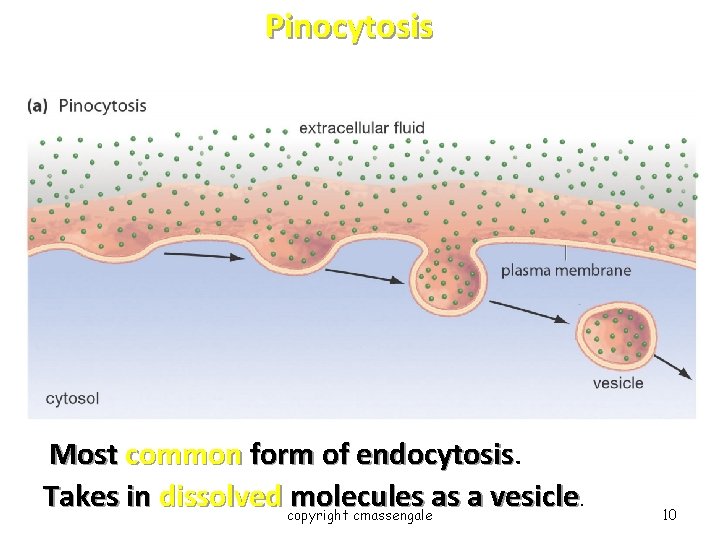
Pinocytosis Most common form of endocytosis Takes in dissolved copyright molecules as a vesicle. cmassengale 10
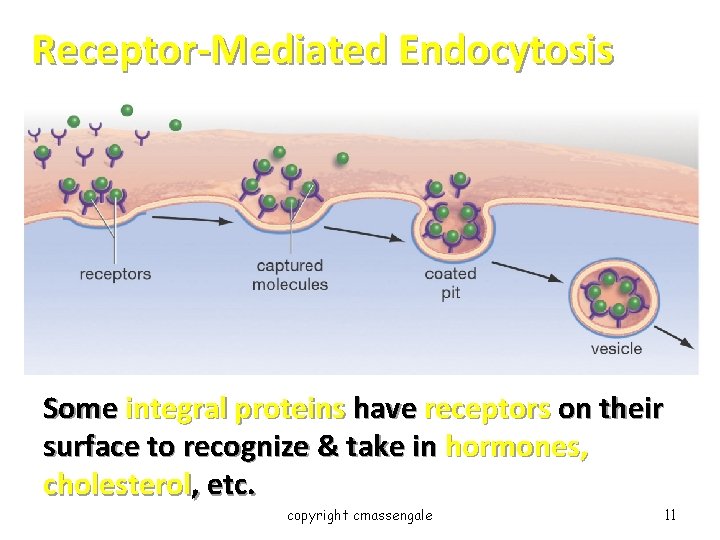
Receptor-Mediated Endocytosis Some integral proteins have receptors on their surface to recognize & take in hormones, cholesterol, etc. copyright cmassengale 11
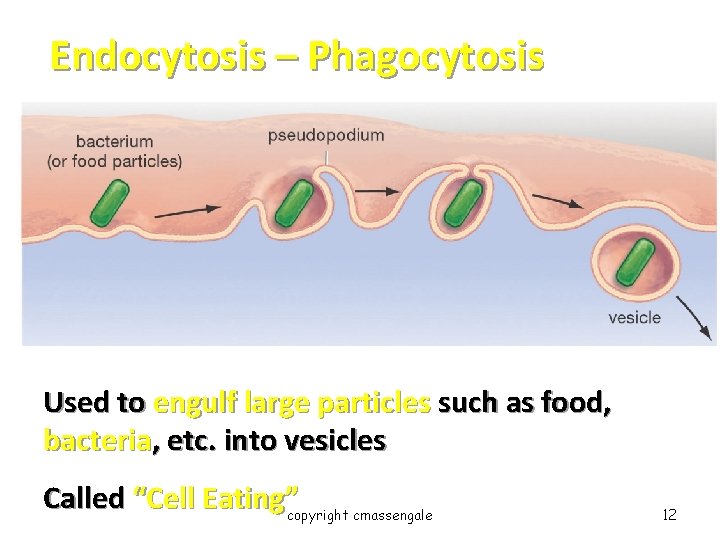
Endocytosis – Phagocytosis Used to engulf large particles such as food, bacteria, etc. into vesicles Called “Cell Eating”copyright cmassengale 12
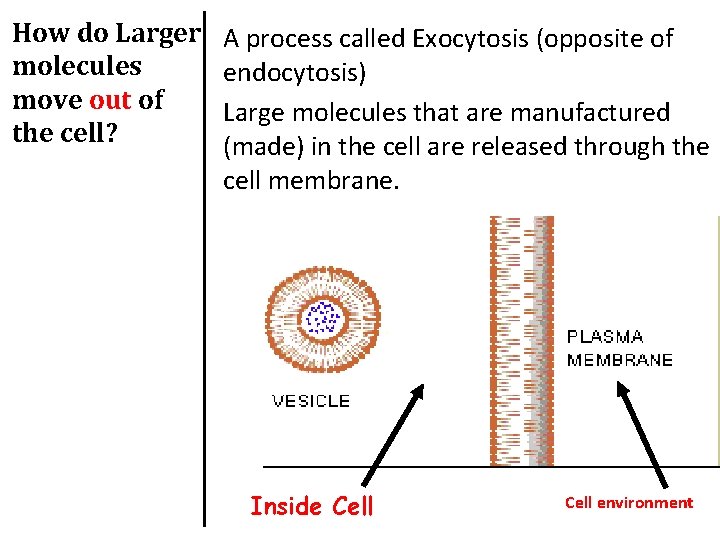
How do Larger molecules move out of the cell? A process called Exocytosis (opposite of endocytosis) Large molecules that are manufactured (made) in the cell are released through the cell membrane. Inside Cell environment
- Slides: 13