
Stimulus Control of Operant Behavior l Overview of
Stimulus Control of Operant Behavior l Overview of stimulus control of operant behavior Discrimination Generalization Gradients Peak Shift Concepts
I. Operant Discrimination Known as the study of discrimination learning or stimulus control l Discriminative stimulus - Signals that reinforcement will be forthcoming if the response occurs (S+ or Sd) l Signals that reinforcement will not be available, even if the response occurs (Sv) l
Discrimination l Animals learn to demonstrate differential patterns to responding to different stimulus conditions
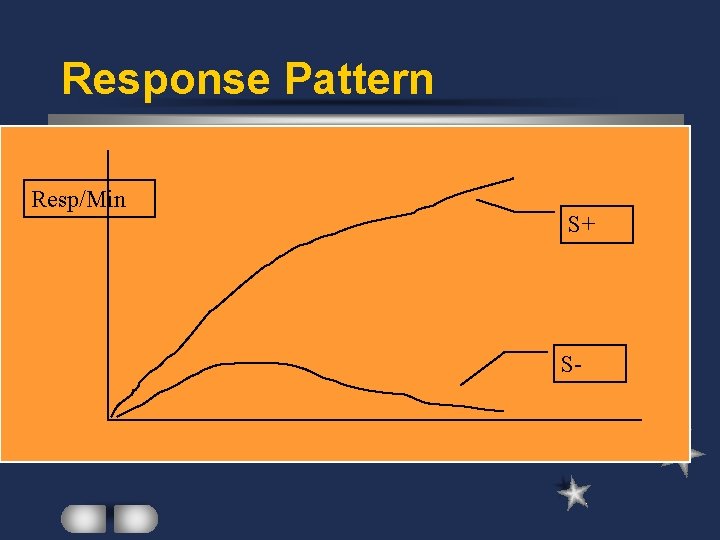
Response Pattern Add info of your choice here S+ or l Add text, graphic photo at left l Resp/Min S-
II. Generalization Similar patterns of responding to similar stimulus conditions l The opposing qualities of discrimination l
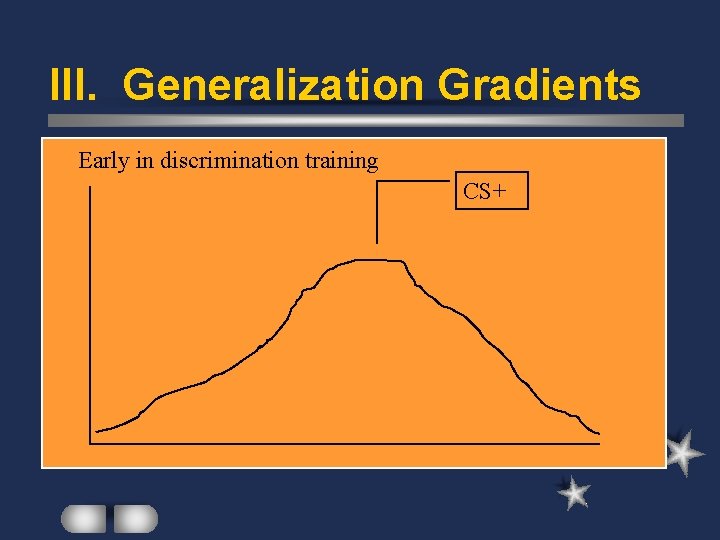
III. Generalization Gradients Early in discrimination training CS+
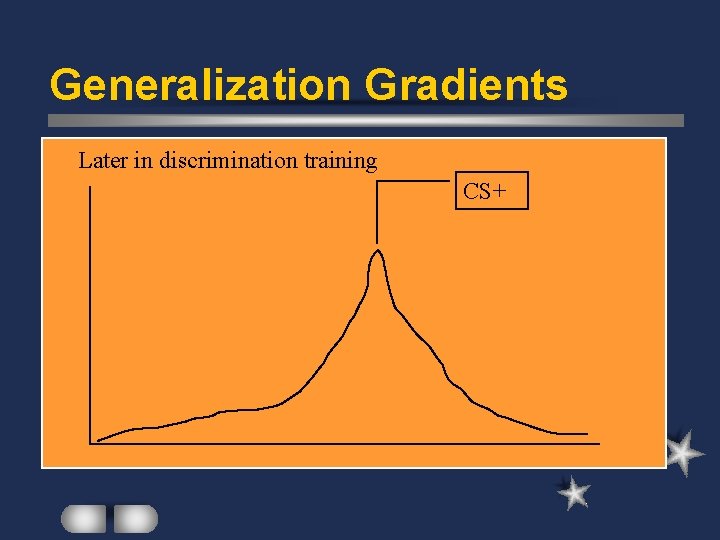
Generalization Gradients Later in discrimination training CS+
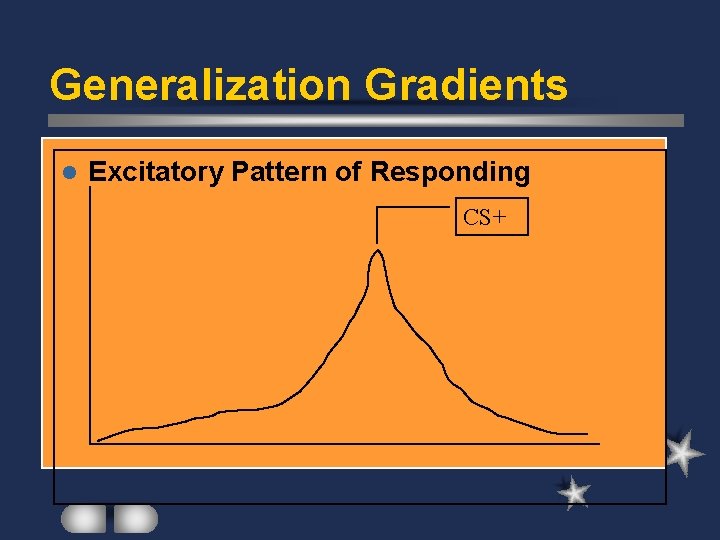
Generalization Gradients l Excitatory Pattern of Responding CS+
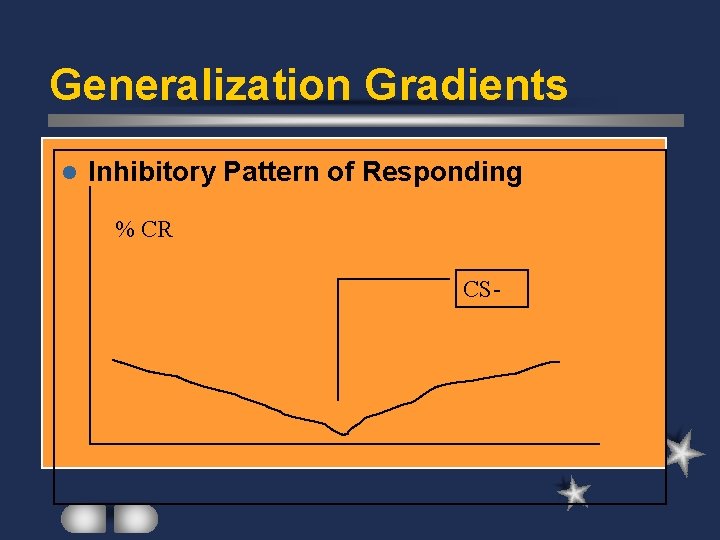
Generalization Gradients l Inhibitory Pattern of Responding % CR CS-
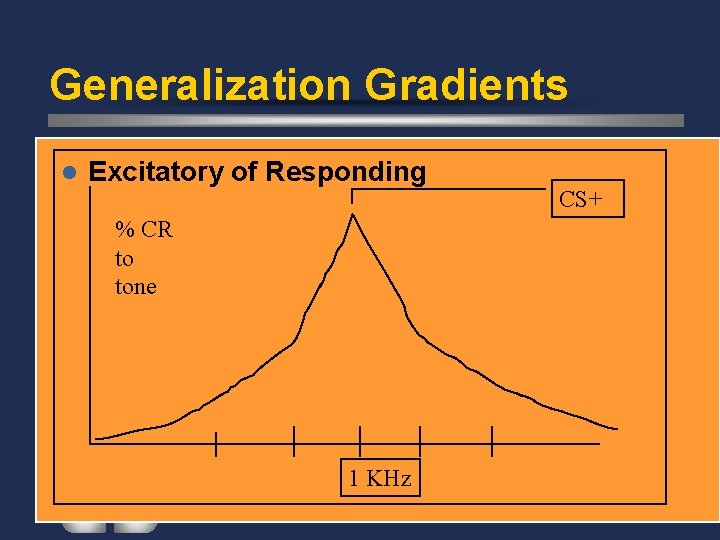
Generalization Gradients l Excitatory of Responding % CR to tone 1 KHz CS+
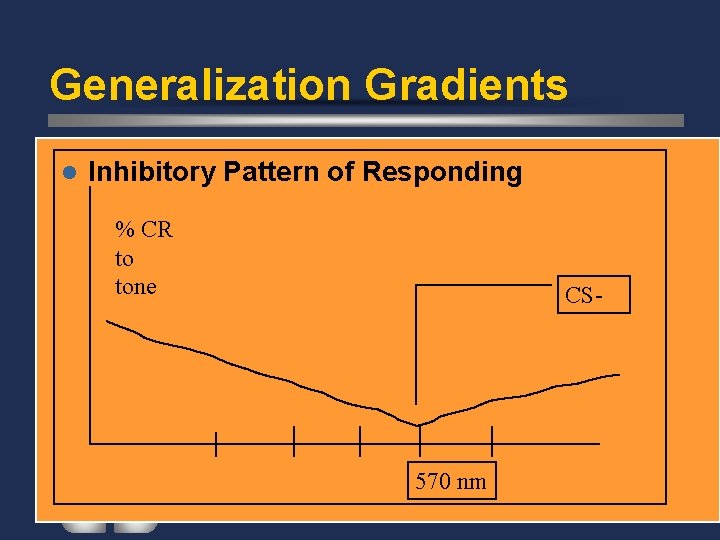
Generalization Gradients l Inhibitory Pattern of Responding % CR to tone CS- 570 nm
Predictiveness and Redundancy Conditioning will occur to the stimulus which most predictive l An especially salient CS may overshadow the other stimuli l
Overshadowing Depends upon nature of the environment, the past history of the animal and similar issues l Highly salient stimulus qualities often overshadow other stimuli l Specific features of the stimulus may be attended to l
Attention Training Relevance must be learned l Behavior must be demonstrated l Transfer of training studies – Paying attention is a separate part of the discrimination learning l
Attention Training l Dimensional shift learning paradigm – Intradimensional shift - Train to CS+ quality, shift to different type of same dimension (e. g. shift from red to blue for CS+) – Extradimensional shift - Train to CS+ quality, shift to different dimension (e. g. from color to shape for CS+)
Attention Training l Extradimensional shift is more difficult
IV. Process of Generalization Extinction builds to CS+ and inhibition builds to CSl Early work of Spence 1936, 1937; and Hull 1943, 1952 l According to Spence’s theory, excitation and inhibition add together in an algebraic fashion l
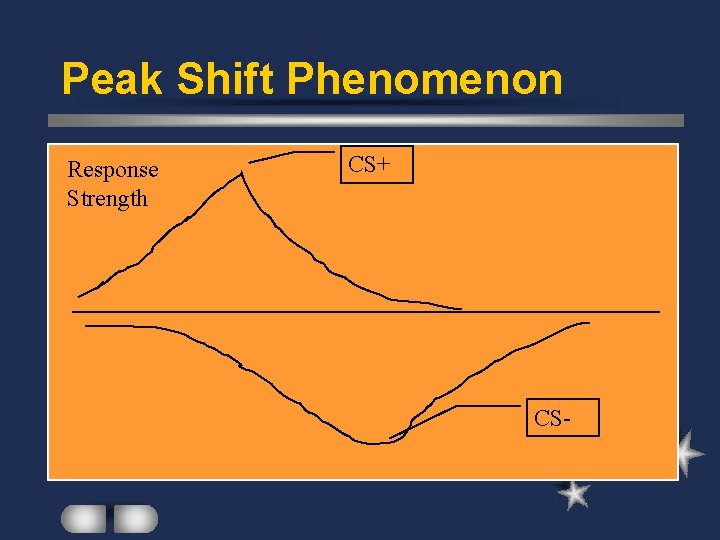
Peak Shift Phenomenon Response Strength CS+ CS-
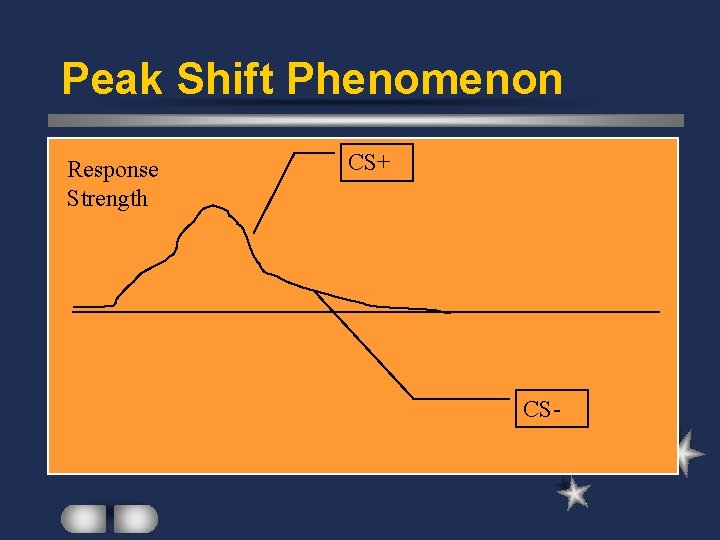
Peak Shift Phenomenon Response Strength CS+ CS-
V. Natural Concepts are related by unifying or common properties l Abstract concepts – “Same” or “different” – Often not limited to specific concrete qualities l
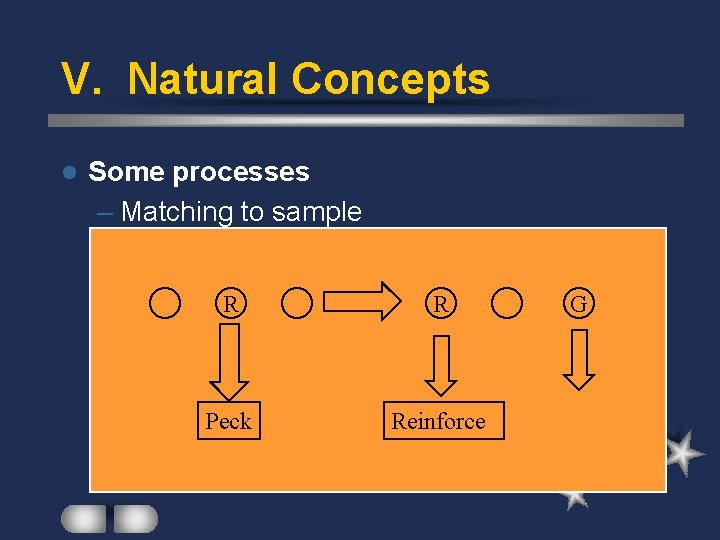
V. Natural Concepts l Some processes – Matching to sample R R Peck Reinforce G
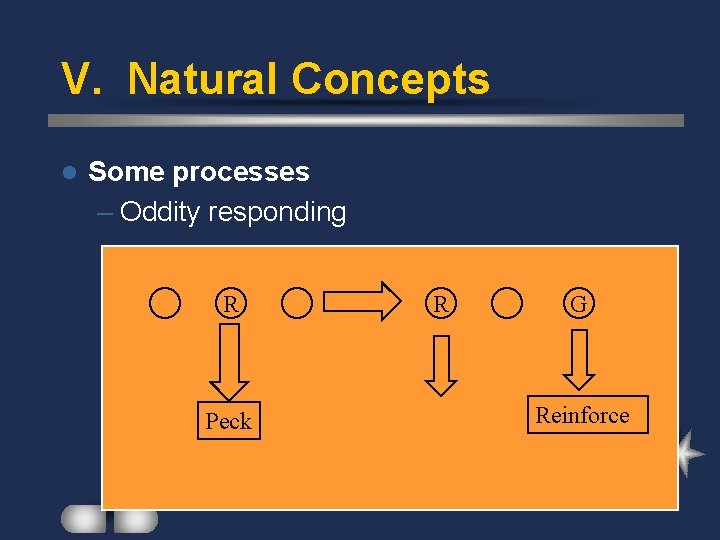
V. Natural Concepts l Some processes – Oddity responding R Peck R G Reinforce
V. Natural Concepts Wittgenstein in 1953 l It is not clear what specific features or qualities are being responded to l What is a dog? l What are the qualities of “dogginess? ” l
V. Natural Concepts Herrnstein work in the 1980 s l Demonstrated discrimination of natural objects by pigeons l Sort stimuli by water, trees or a particular person l Organisms as simple as pigeons can reliably demonstrate this discrimination l
Learning Theory and Memory Are there behavioral ways to describe remembering and knowing? l Some procedures include delayed matching to sample – Matching accuracy decreases as a function of time l
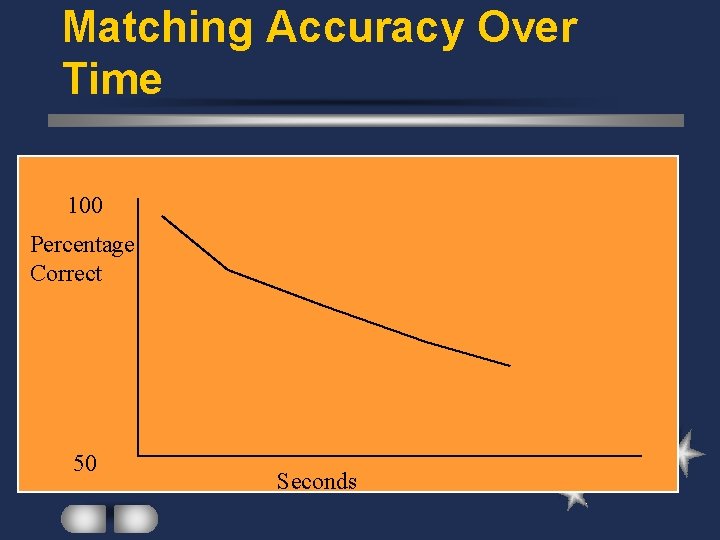
Matching Accuracy Over Time 100 Percentage Correct 50 Seconds
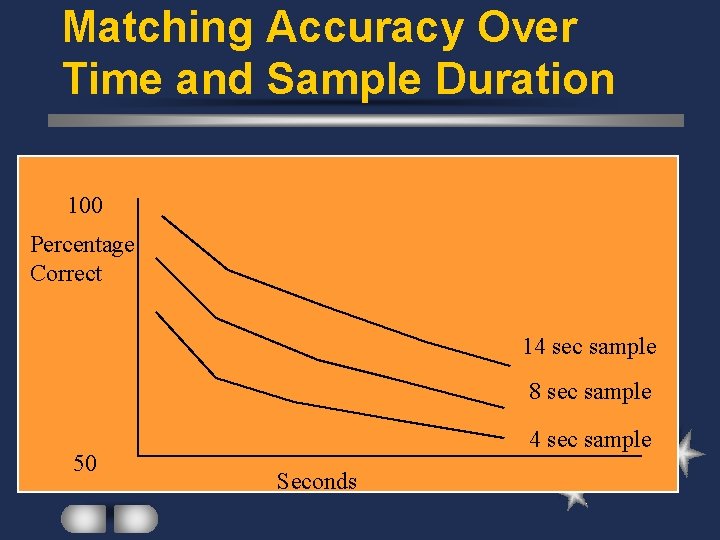
Matching Accuracy Over Time and Sample Duration 100 Percentage Correct 14 sec sample 8 sec sample 50 4 sec sample Seconds
Working Memory l Memory is an active process – Susceptible to interference l Retroactive interference - interfering stimulus comes after the stimulus to be remembered l Proactive interference - interfering stimulus comes before the stimulus to be remembered
Working Memory l Symbolic matching works as effectively as direct stimulus matching – For example, red to vertical lines is remembered as well as red to red – Directed forgetting - stimulus learning is followed by a signal that the stimulus is to be remembered or not – It appears memory is an active process
Spatial Memory and Cognitive Maps l Memory for places – Maze learning studies – Little indication of decay over time – Tends to be accounted for by a cognitive representation of space
- Slides: 30