
Stimulus and Response Why animals and plants do
- Slides: 16
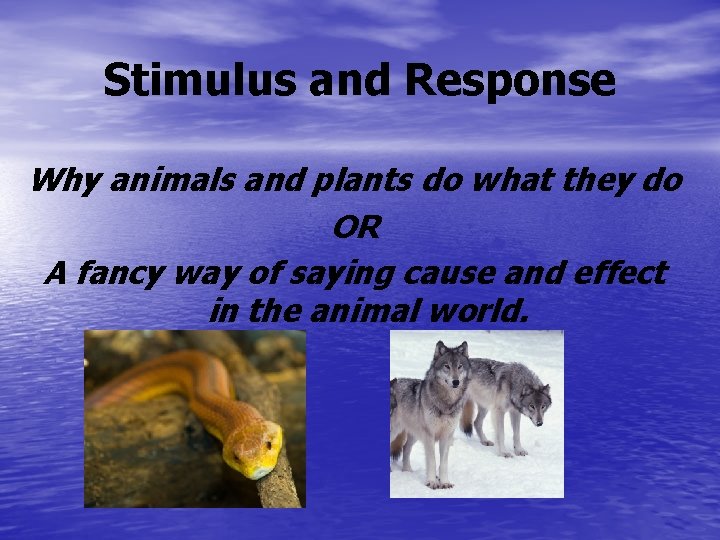
Stimulus and Response Why animals and plants do what they do OR A fancy way of saying cause and effect in the animal world.
Describe a situation in which you were immediately scared and/or reacted quickly to something. Write at least 1 complete sentence describing your experience.
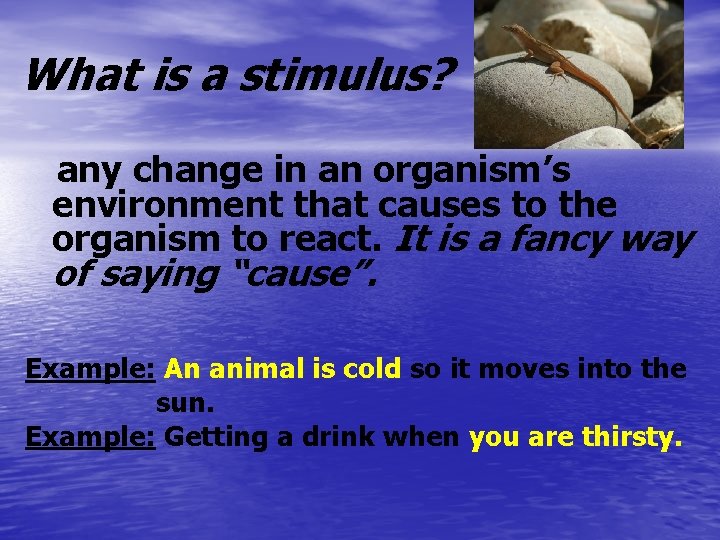
What is a stimulus? any change in an organism’s environment that causes to the organism to react. It is a fancy way of saying “cause”. Example: An animal is cold so it moves into the sun. Example: Getting a drink when you are thirsty.
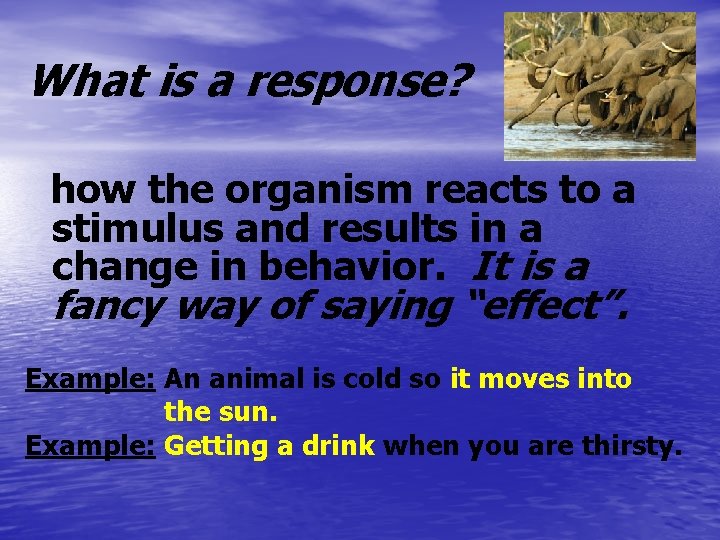
What is a response? how the organism reacts to a stimulus and results in a change in behavior. It is a fancy way of saying “effect”. Example: An animal is cold so it moves into the sun. Example: Getting a drink when you are thirsty.
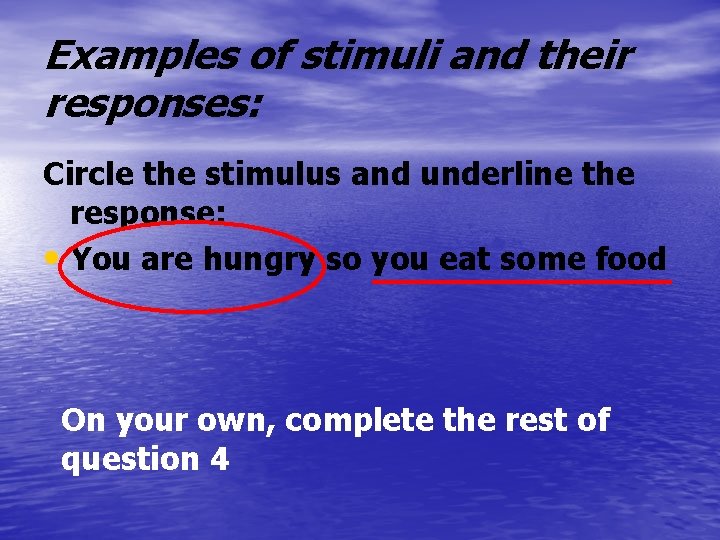
Examples of stimuli and their responses: Circle the stimulus and underline the response: • You are hungry so you eat some food On your own, complete the rest of question 4
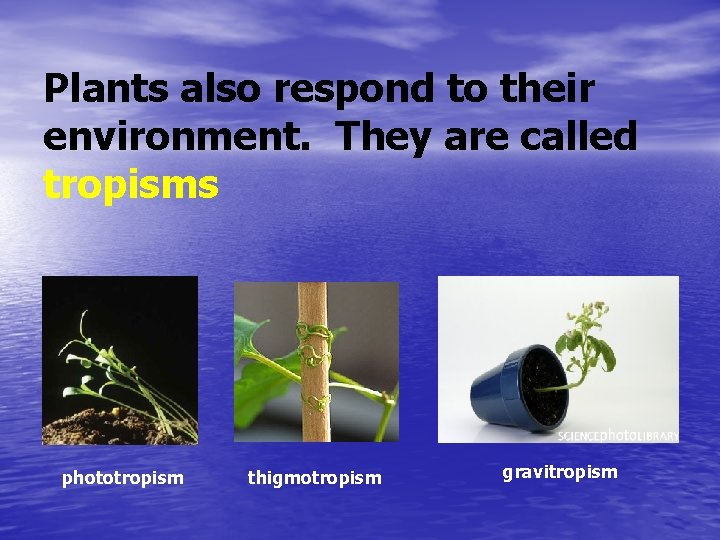
Plants also respond to their environment. They are called tropisms phototropism thigmotropism gravitropism
Think – Pair - Share Turn to your table partner and share two other stimuli and their responses.
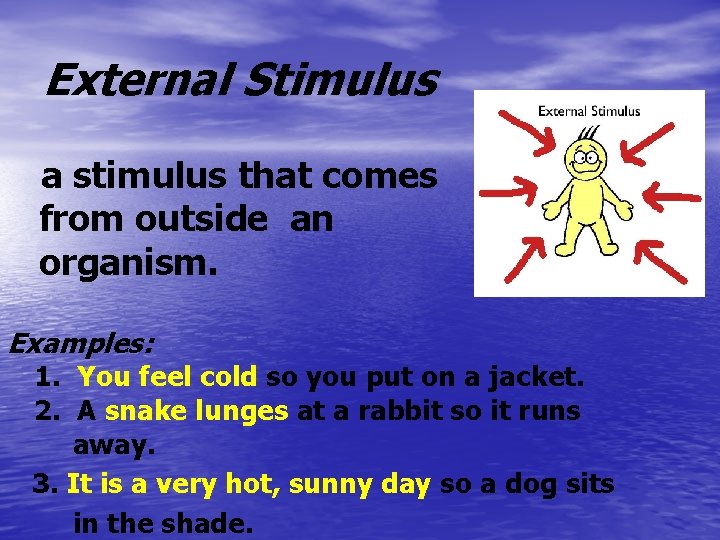
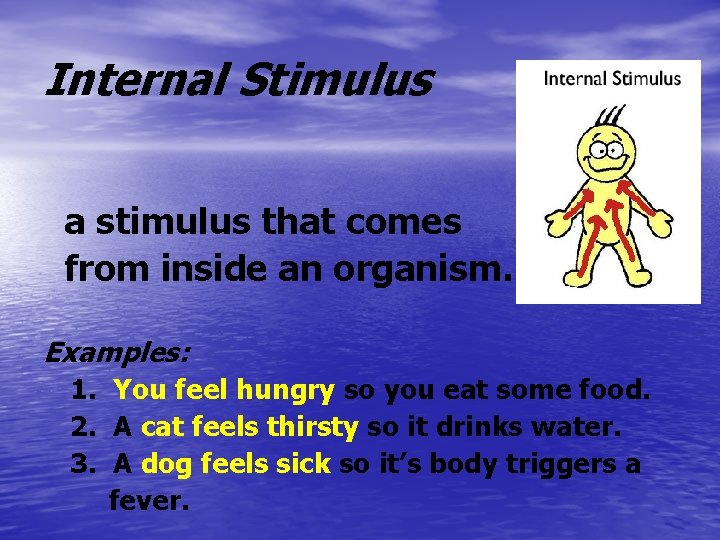
There are two types of stimuli: External Stimuli and Internal Stimuli
External Stimulus a stimulus that comes from outside an organism. Examples: 1. You feel cold so you put on a jacket. 2. A snake lunges at a rabbit so it runs away. 3. It is a very hot, sunny day so a dog sits in the shade.
Internal Stimulus a stimulus that comes from inside an organism. Examples: 1. You feel hungry so you eat some food. 2. A cat feels thirsty so it drinks water. 3. A dog feels sick so it’s body triggers a fever.
Animals can respond to stimuli in two ways: 1. In a way that they learned. We call this learned behavior. OR 2. In a way that they were just born knowing how to do. We call this instinct.
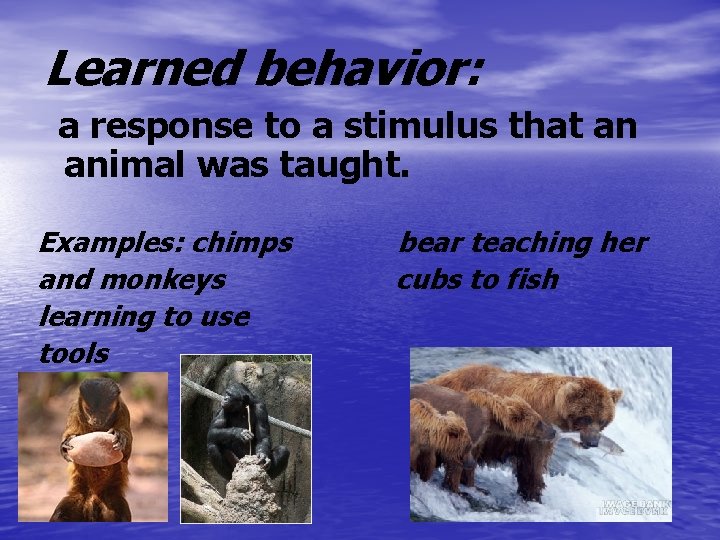
Learned behavior: a response to a stimulus that an animal was taught. Examples: chimps and monkeys learning to use tools bear teaching her cubs to fish
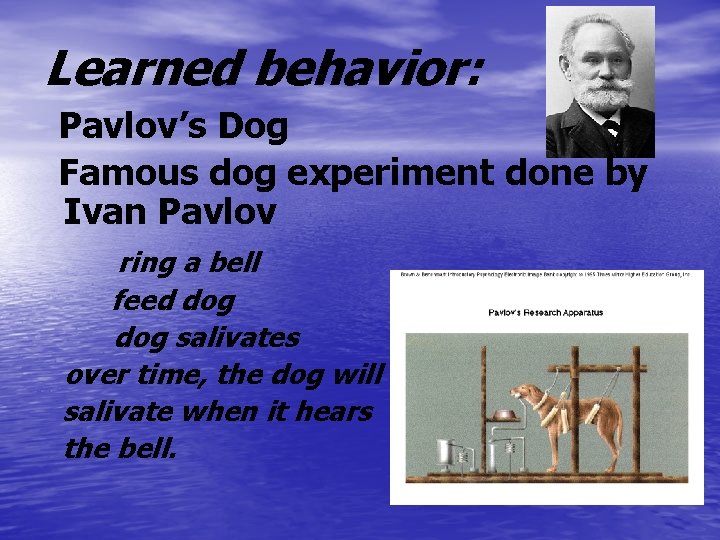
Learned behavior: Pavlov’s Dog Famous dog experiment done by Ivan Pavlov ring a bell feed dog salivates over time, the dog will salivate when it hears the bell.
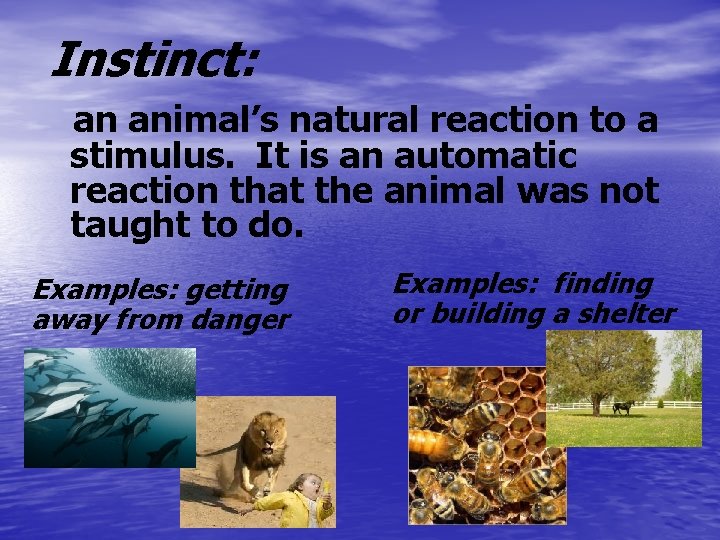
Instinct: an animal’s natural reaction to a stimulus. It is an automatic reaction that the animal was not taught to do. Examples: getting away from danger Examples: finding or building a shelter
Homeostasis • An organisms response to internal and external stimuli helps to maintain homeostasis – Homeostasis – balance or equilibrium inside a living organism • Blood sugar levels • Sweating/shivering • Fever • Vomiting • Plant tropisms
Blood Glucose Levels • In order to maintain homeostasis, your body tries to keep a certain blood glucose level • When blood glucose is low, you should eat • When blood glucose is high, your pancreas should release insulin • Problems with this system can create diabetes