
StickSlip A lab activity on Earthquake mechanics Question
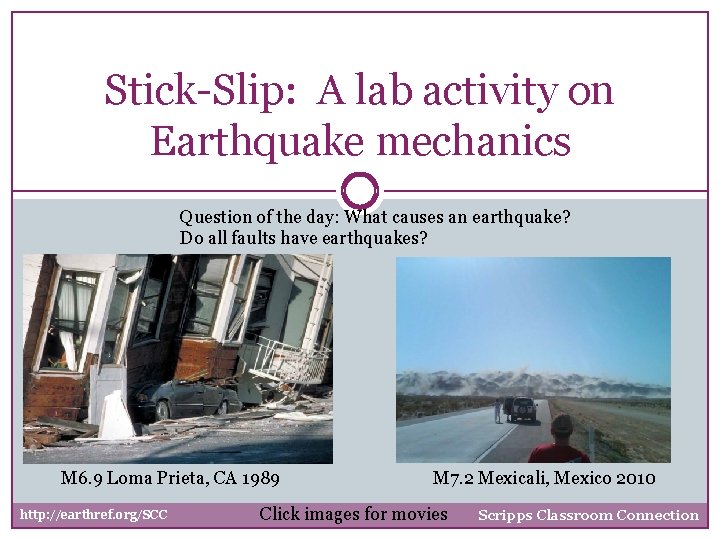
Stick-Slip: A lab activity on Earthquake mechanics Question of the day: What causes an earthquake? Do all faults have earthquakes? M 6. 9 Loma Prieta, CA 1989 http: //earthref. org/SCC M 7. 2 Mexicali, Mexico 2010 Click images for movies Scripps Classroom Connection
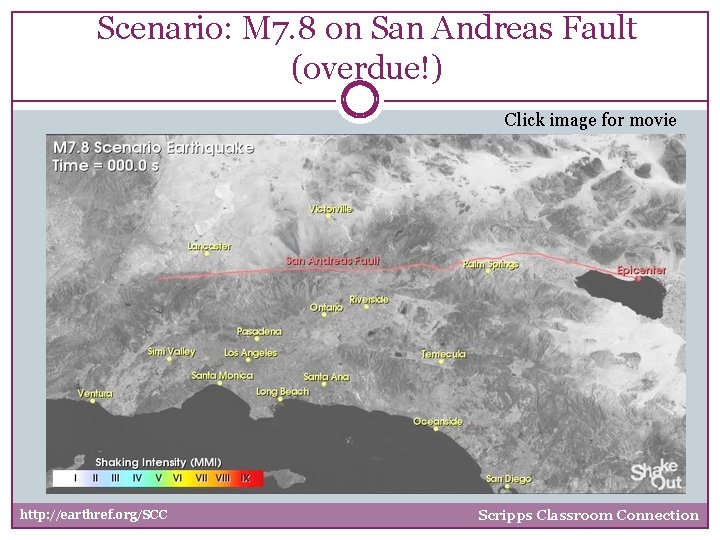
Scenario: M 7. 8 on San Andreas Fault (overdue!) Click image for movie http: //earthref. org/SCC Scripps Classroom Connection
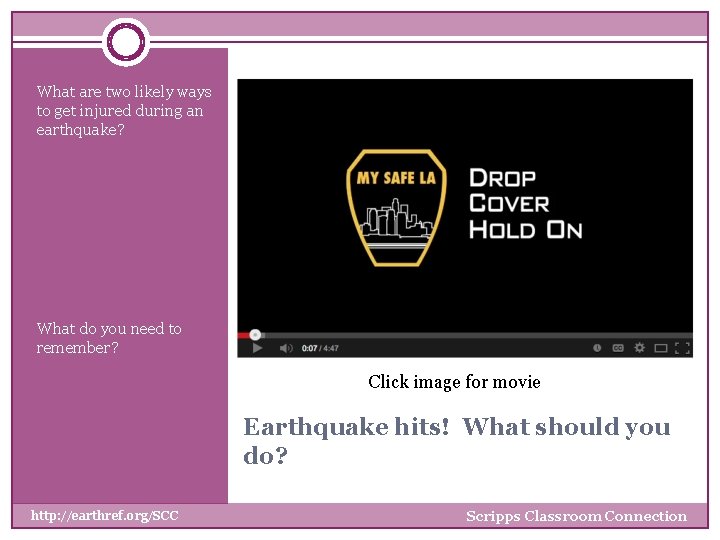
What are two likely ways to get injured during an earthquake? What do you need to remember? Click image for movie Earthquake hits! What should you do? http: //earthref. org/SCC Scripps Classroom Connection
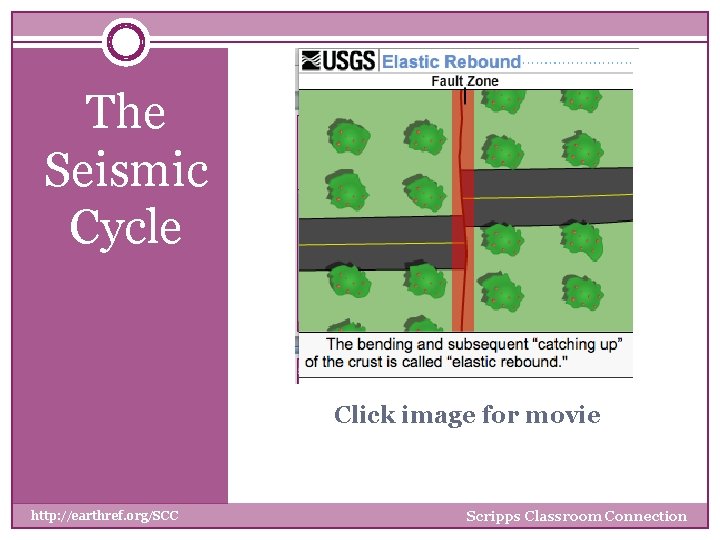
The Seismic Cycle Click image for movie http: //earthref. org/SCC Scripps Classroom Connection
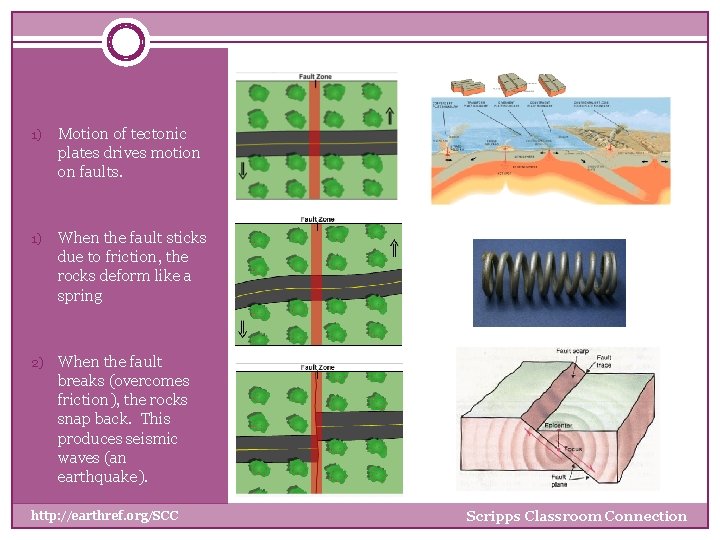
1) Motion of tectonic plates drives motion on faults. 1) When the fault sticks due to friction, the rocks deform like a spring 2) When the fault breaks (overcomes friction), the rocks snap back. This produces seismic waves (an earthquake). http: //earthref. org/SCC Scripps Classroom Connection

Before After Stick-slip experiments: Miniature earthquakes in the laboratory http: //earthref. org/SCC Scripps Classroom Connection
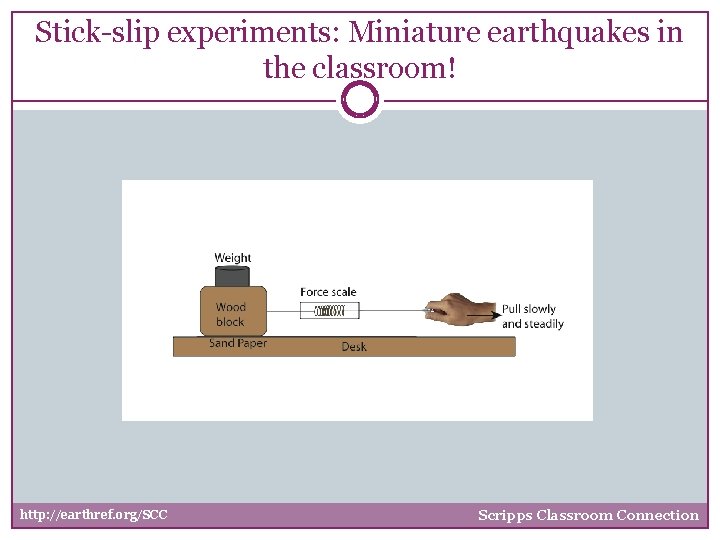
Stick-slip experiments: Miniature earthquakes in the classroom! http: //earthref. org/SCC Scripps Classroom Connection
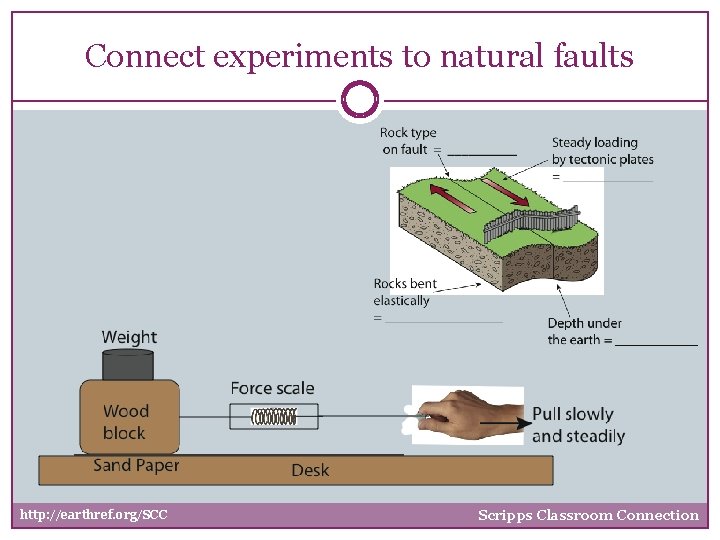
Connect experiments to natural faults http: //earthref. org/SCC Scripps Classroom Connection
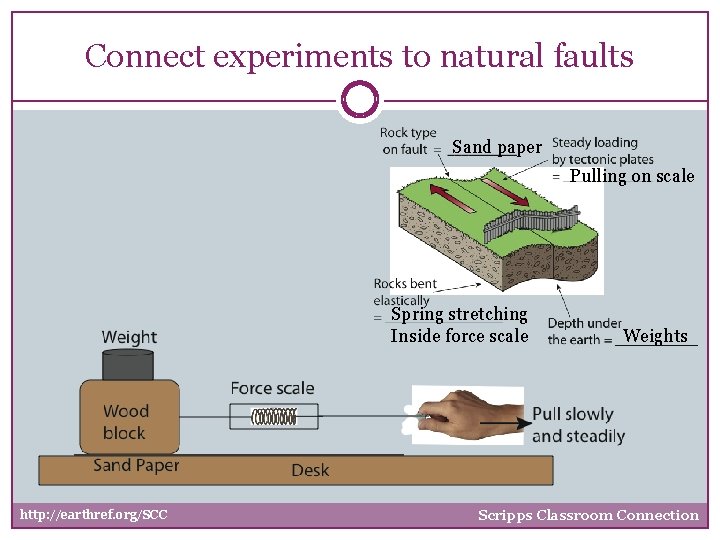
Connect experiments to natural faults Sand paper Pulling on scale Spring stretching Inside force scale http: //earthref. org/SCC Weights Scripps Classroom Connection
Conclusions 1) The earthquake cycle has three parts: Tectonic loading 2) Elastic bending (stick) 3) Elastic rebound (slip) Earthquake! 1) 2) What to do during an earthquake Drop 2) Cover 3) Hold on 1) http: //earthref. org/SCC Scripps Classroom Connection
- Slides: 10