
Stickase Substrate Transition state X Product If enzyme
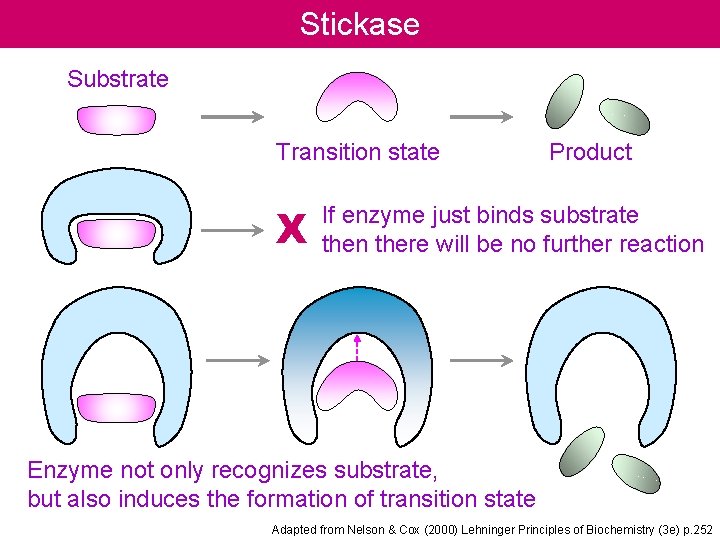
Stickase Substrate Transition state X Product If enzyme just binds substrate then there will be no further reaction Enzyme not only recognizes substrate, but also induces the formation of transition state Adapted from Nelson & Cox (2000) Lehninger Principles of Biochemistry (3 e) p. 252
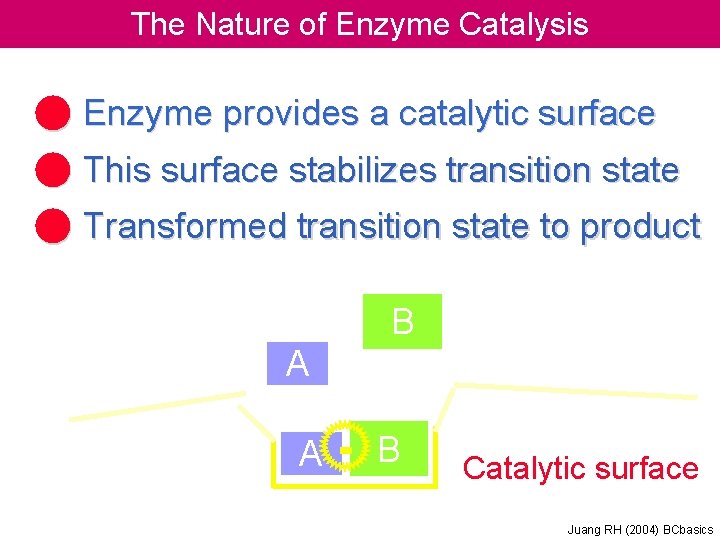
The Nature of Enzyme Catalysis ● Enzyme provides a catalytic surface ● This surface stabilizes transition state ● Transformed transition state to product B A A B Catalytic surface Juang RH (2004) BCbasics
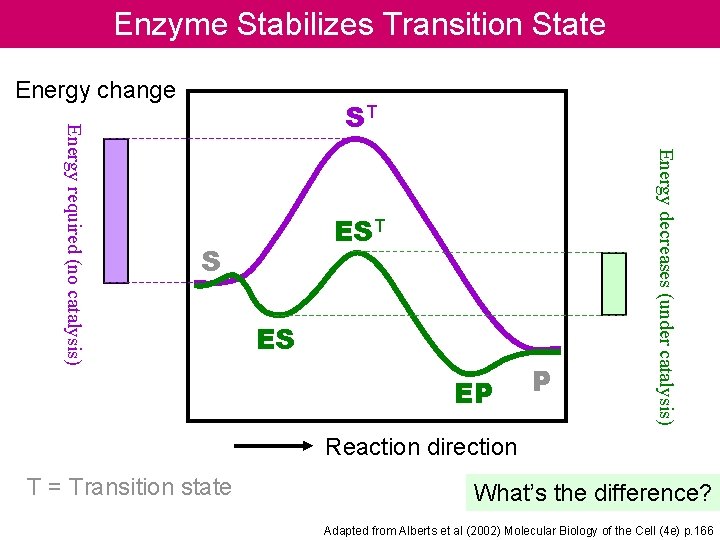
Enzyme Stabilizes Transition State Energy change EST S ES EP P Energy decreases (under catalysis) Energy required (no catalysis) ST Reaction direction T = Transition state What’s the difference? Adapted from Alberts et al (2002) Molecular Biology of the Cell (4 e) p. 166
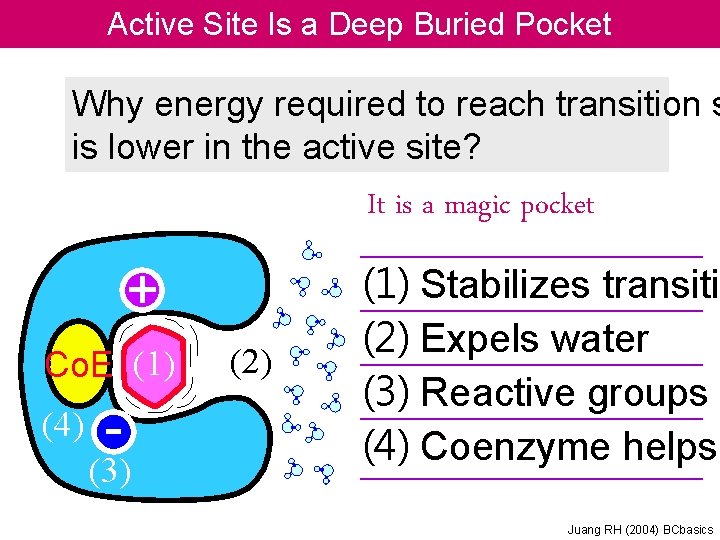
Active Site Is a Deep Buried Pocket Why energy required to reach transition s is lower in the active site? It is a magic pocket + Co. E (1) (4) - (3) (2) (1) Stabilizes transiti (2) Expels water (3) Reactive groups (4) Coenzyme helps Juang RH (2004) BCbasics
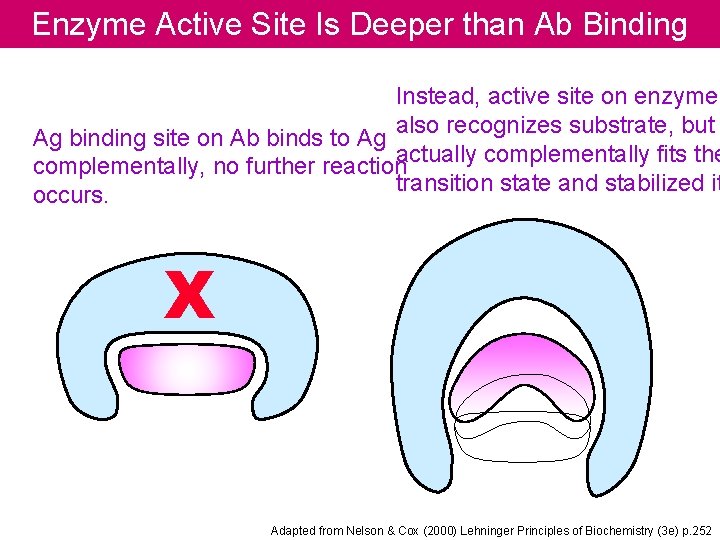
Enzyme Active Site Is Deeper than Ab Binding Instead, active site on enzyme also recognizes substrate, but Ag binding site on Ab binds to Ag actually complementally fits the complementally, no further reaction transition state and stabilized it occurs. X Adapted from Nelson & Cox (2000) Lehninger Principles of Biochemistry (3 e) p. 252
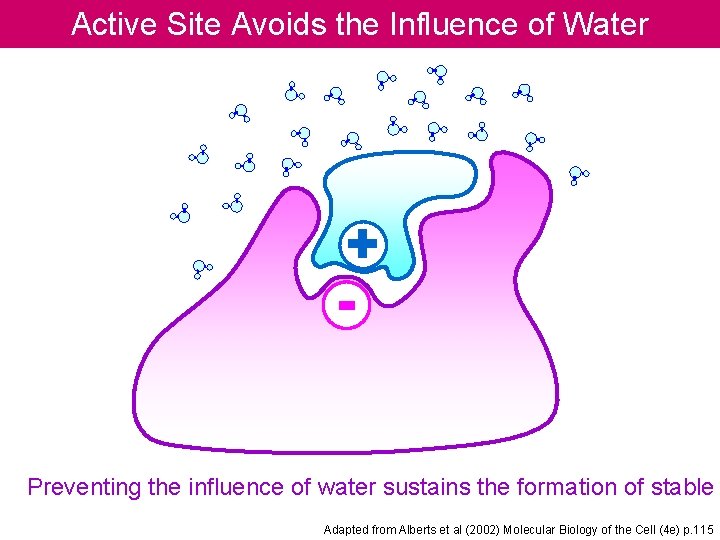
Active Site Avoids the Influence of Water + - Preventing the influence of water sustains the formation of stable Adapted from Alberts et al (2002) Molecular Biology of the Cell (4 e) p. 115
- Slides: 6