
Steroid hormone Nucleus Cytoplasm 1 Receptor protein 2
- Slides: 22
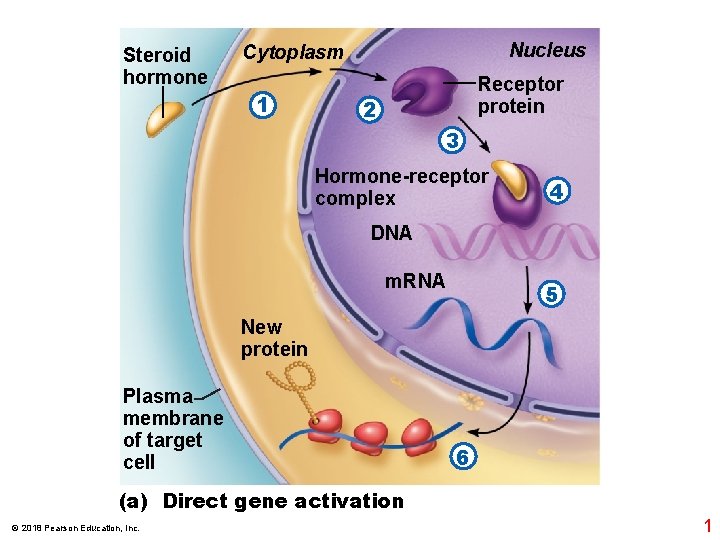
Steroid hormone Nucleus Cytoplasm 1 Receptor protein 2 3 Hormone-receptor complex 4 DNA m. RNA 5 New protein Plasma membrane of target cell 6 (a) Direct gene activation © 2018 Pearson Education, Inc. 1
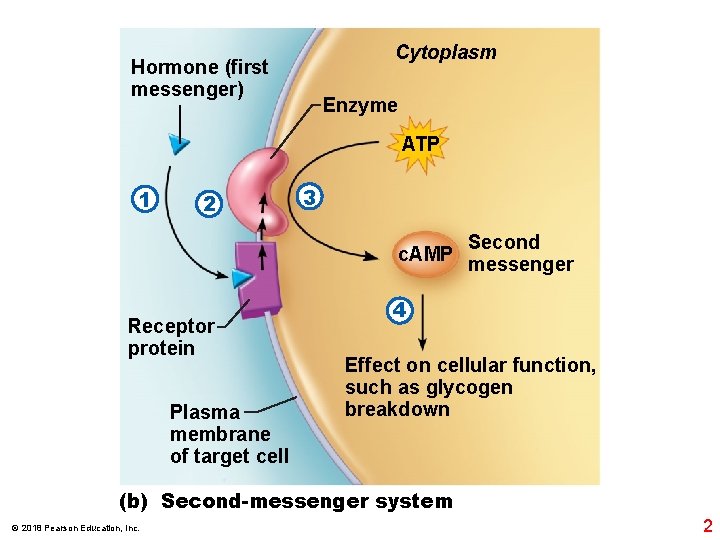
Cytoplasm Hormone (first messenger) Enzyme ATP 1 2 3 c. AMP Receptor protein Plasma membrane of target cell Second messenger 4 Effect on cellular function, such as glycogen breakdown (b) Second-messenger system © 2018 Pearson Education, Inc. 2
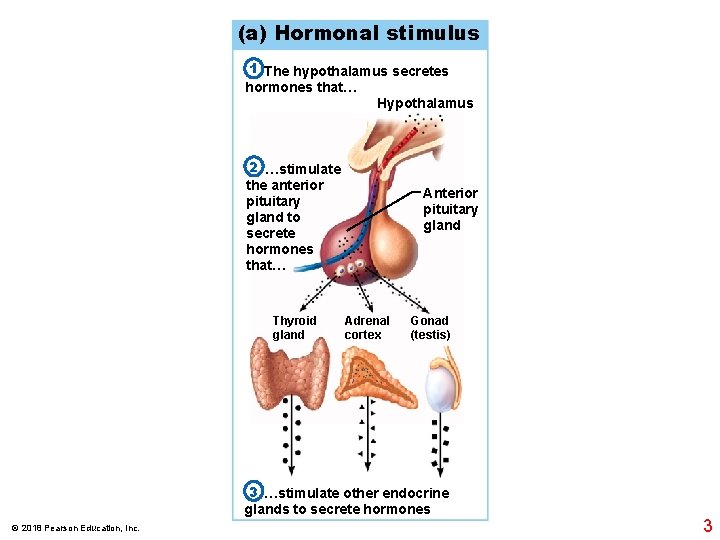
(a) Hormonal stimulus 1 The hypothalamus secretes hormones that… Hypothalamus 2 …stimulate the anterior pituitary gland to secrete hormones that… Thyroid gland Anterior pituitary gland Adrenal cortex Gonad (testis) 3 …stimulate other endocrine glands to secrete hormones © 2018 Pearson Education, Inc. 3
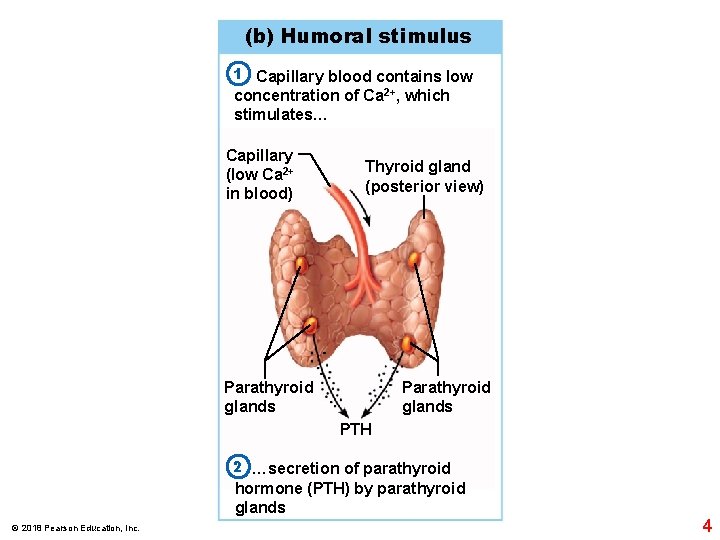
(b) Humoral stimulus 1 Capillary blood contains low concentration of Ca 2+, which stimulates… Capillary (low Ca 2+ in blood) Thyroid gland (posterior view) Parathyroid glands PTH 2 …secretion of parathyroid hormone (PTH) by parathyroid glands © 2018 Pearson Education, Inc. 4
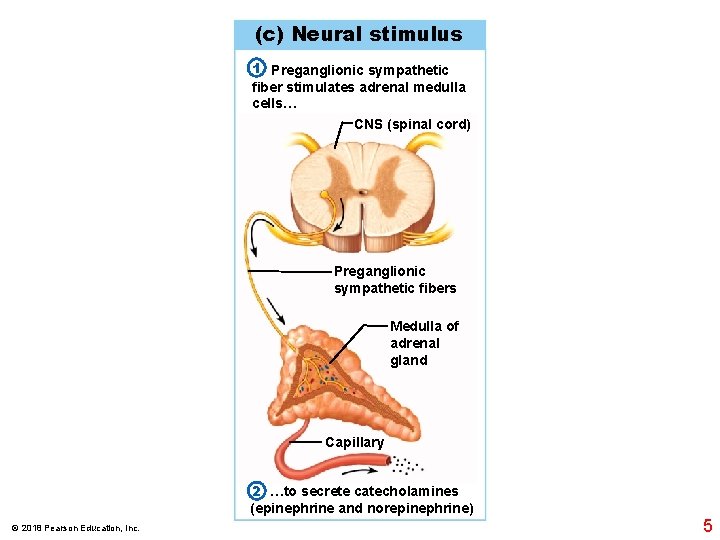
(c) Neural stimulus 1 Preganglionic sympathetic fiber stimulates adrenal medulla cells… CNS (spinal cord) Preganglionic sympathetic fibers Medulla of adrenal gland Capillary 2 …to secrete catecholamines (epinephrine and norepinephrine) © 2018 Pearson Education, Inc. 5
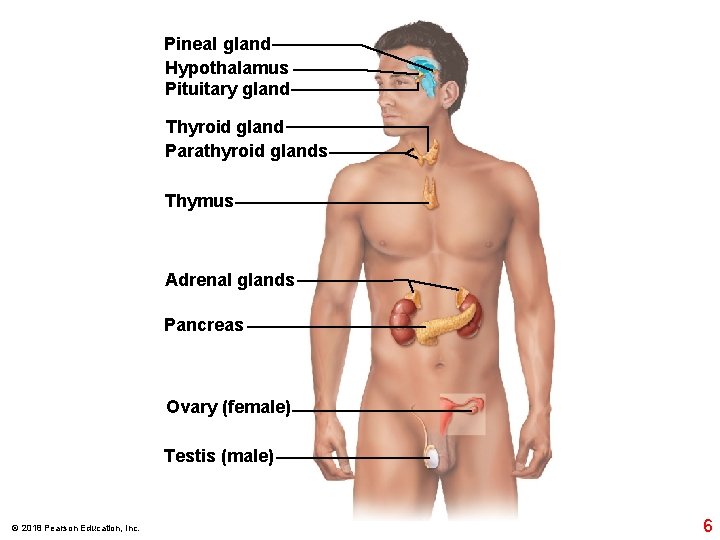
Pineal gland Hypothalamus Pituitary gland Thyroid gland Parathyroid glands Thymus Adrenal glands Pancreas Ovary (female) Testis (male) © 2018 Pearson Education, Inc. 6
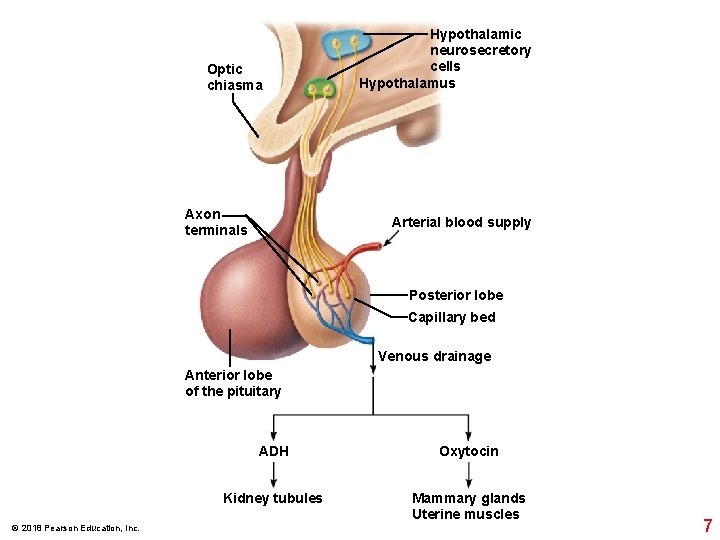
Optic chiasma Axon terminals Hypothalamic neurosecretory cells Hypothalamus Arterial blood supply Posterior lobe Capillary bed Venous drainage Anterior lobe of the pituitary © 2018 Pearson Education, Inc. ADH Oxytocin Kidney tubules Mammary glands Uterine muscles 7
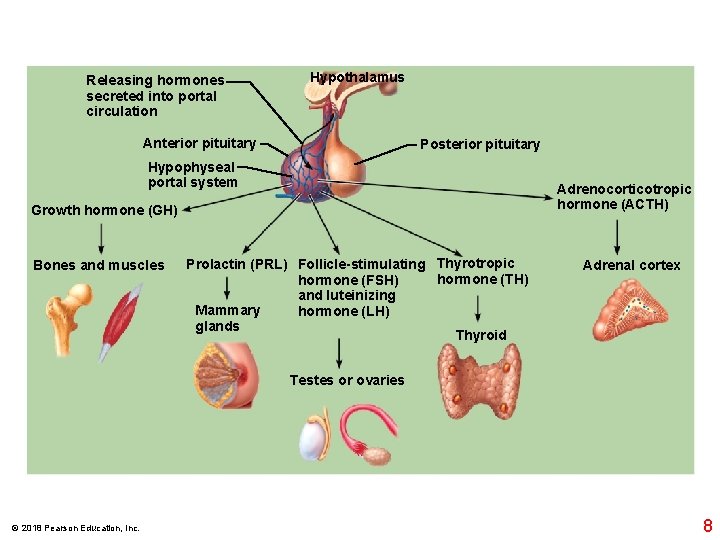
Releasing hormones secreted into portal circulation Hypothalamus Anterior pituitary Posterior pituitary Hypophyseal portal system Adrenocorticotropic hormone (ACTH) Growth hormone (GH) Bones and muscles Prolactin (PRL) Follicle-stimulating Thyrotropic hormone (TH) hormone (FSH) and luteinizing Mammary hormone (LH) glands Thyroid Adrenal cortex Testes or ovaries © 2018 Pearson Education, Inc. 8
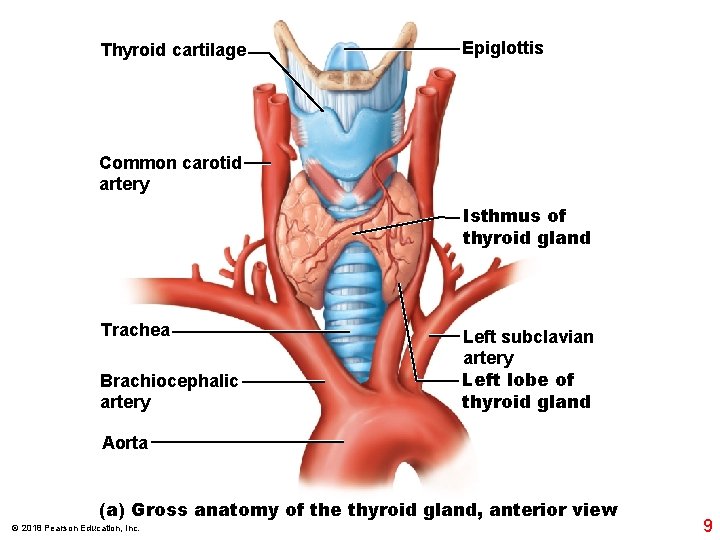
Thyroid cartilage Epiglottis Common carotid artery Isthmus of thyroid gland Trachea Brachiocephalic artery Left subclavian artery Left lobe of thyroid gland Aorta (a) Gross anatomy of the thyroid gland, anterior view © 2018 Pearson Education, Inc. 9
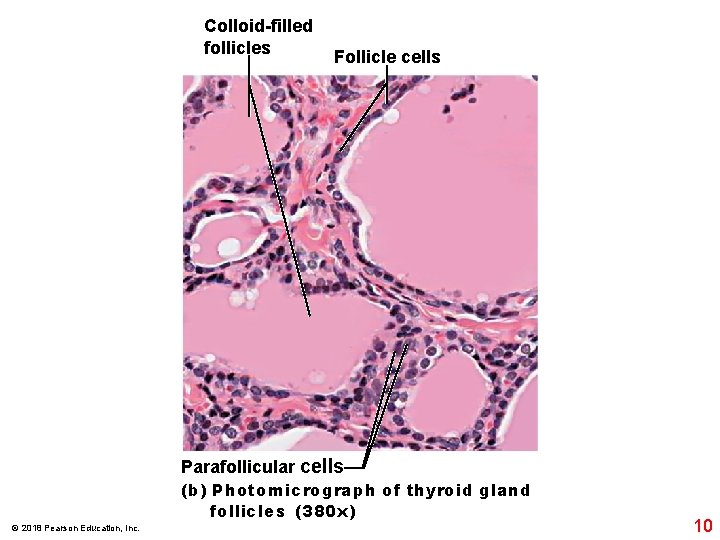
Colloid-filled follicles © 2018 Pearson Education, Inc. Follicle cells Parafollicular cells (b) Photomicrograph of thyroid gland follicles (380 x) 10
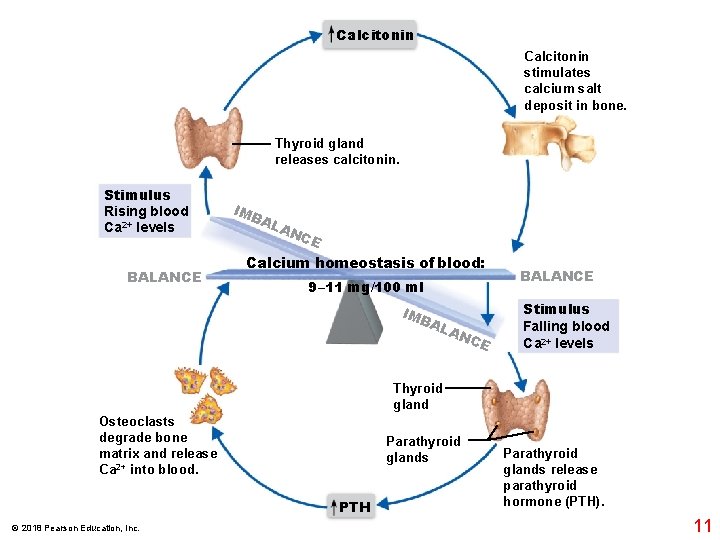
Calcitonin stimulates calcium salt deposit in bone. Thyroid gland releases calcitonin. Stimulus Rising blood Ca 2+ levels BALANCE IMB AL AN CE Calcium homeostasis of blood: 9– 11 mg/100 ml IMB AL AN CE BALANCE Stimulus Falling blood Ca 2+ levels Thyroid gland Osteoclasts degrade bone matrix and release Ca 2+ into blood. Parathyroid glands PTH © 2018 Pearson Education, Inc. Parathyroid glands release parathyroid hormone (PTH). 11
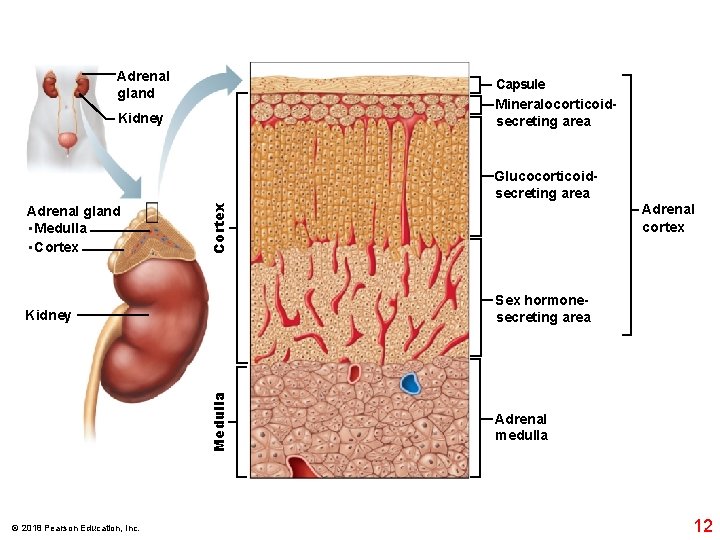
Adrenal gland Capsule Mineralocorticoidsecreting area Kidney Glucocorticoidsecreting area Sex hormonesecreting area Medulla Kidney © 2018 Pearson Education, Inc. Adrenal cortex Cortex Adrenal gland • Medulla • Cortex Adrenal medulla 12
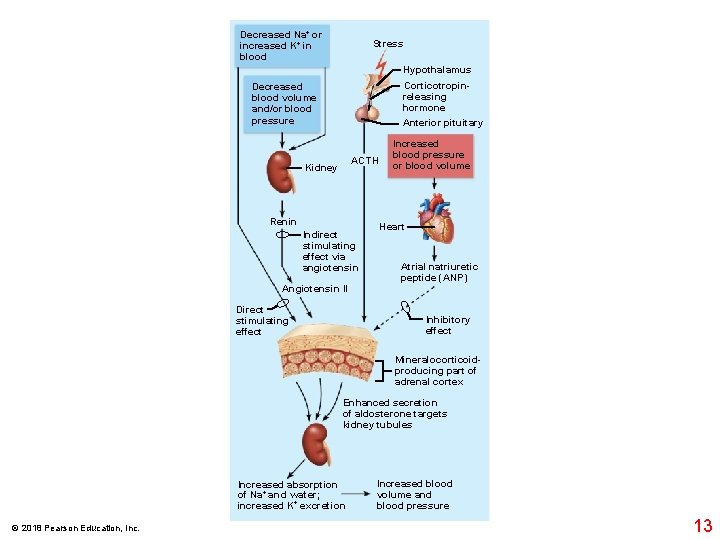
Decreased Na+ or increased K+ in blood Stress Hypothalamus Corticotropinreleasing hormone Decreased blood volume and/or blood pressure Anterior pituitary ACTH Kidney Renin Indirect stimulating effect via angiotensin Angiotensin II Direct stimulating effect Increased blood pressure or blood volume Heart Atrial natriuretic peptide (ANP) Inhibitory effect Mineralocorticoidproducing part of adrenal cortex Enhanced secretion of aldosterone targets kidney tubules Increased absorption of Na+ and water; increased K+ excretion © 2018 Pearson Education, Increased blood volume and blood pressure 13
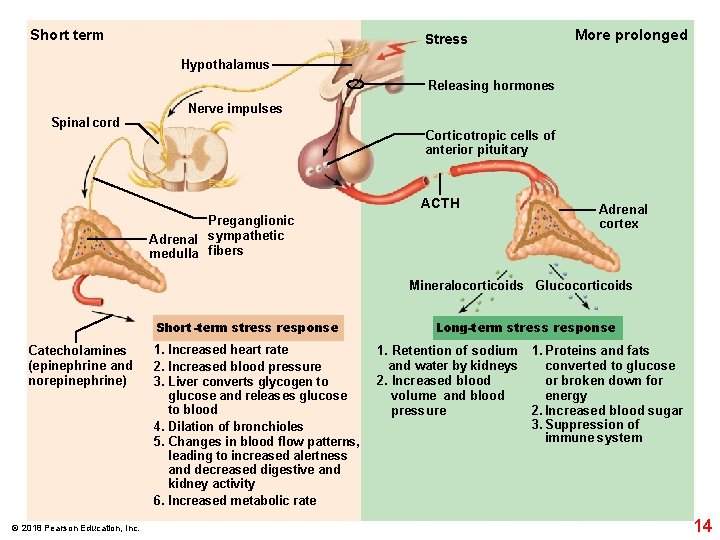
Short term Stress More prolonged Hypothalamus Releasing hormones Spinal cord Nerve impulses Corticotropic cells of anterior pituitary ACTH Preganglionic Adrenal sympathetic medulla fibers Adrenal cortex Mineralocorticoids Glucocorticoids Short -term stress response Catecholamines (epinephrine and norepinephrine) © 2018 Pearson Education, Inc. 1. Increased heart rate 2. Increased blood pressure 3. Liver converts glycogen to glucose and releases glucose to blood 4. Dilation of bronchioles 5. Changes in blood flow patterns, leading to increased alertness and decreased digestive and kidney activity 6. Increased metabolic rate Long-term stress response 1. Retention of sodium 1. Proteins and fats converted to glucose and water by kidneys or broken down for 2. Increased blood energy volume and blood 2. Increased blood sugar pressure 3. Suppression of immune system 14
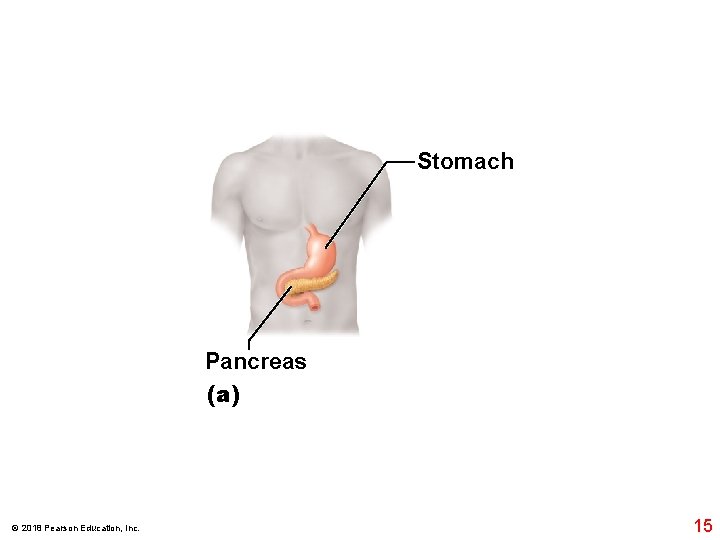
Stomach Pancreas (a) © 2018 Pearson Education, Inc. 15
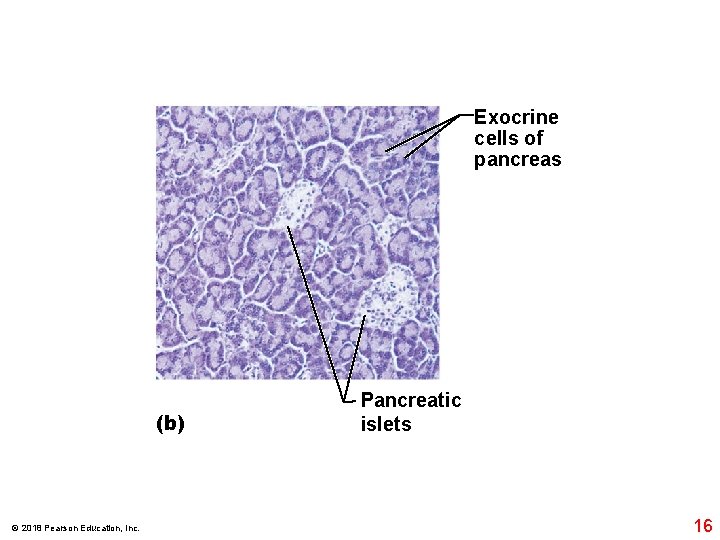
Exocrine cells of pancreas (b) © 2018 Pearson Education, Inc. Pancreatic islets 16
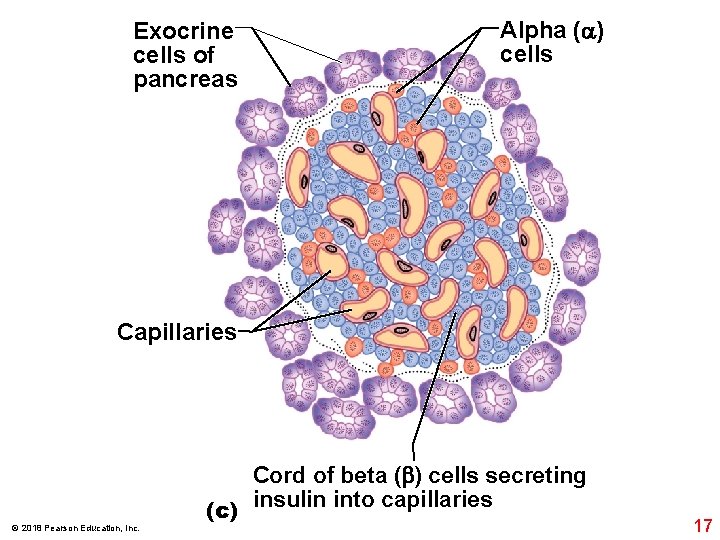
Exocrine cells of pancreas Alpha ( ) cells Capillaries © 2018 Pearson Education, Inc. Cord of beta ( ) cells secreting insulin into capillaries (c) 17
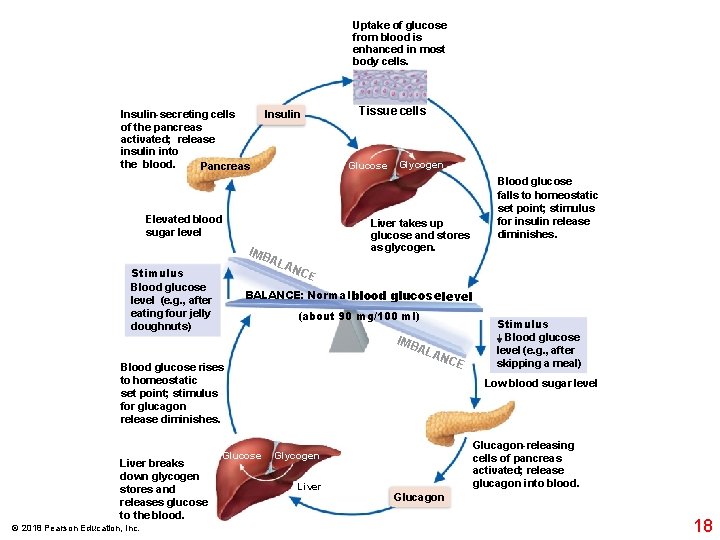
Uptake of glucose from blood is enhanced in most body cells. Insulin-secreting cells of the pancreas activated; release insulin into the blood. Pancreas Tissue cells Insulin Glucose Elevated blood sugar level Glycogen IMB ALA Liver takes up glucose and stores as glycogen. NC Stimulus Blood glucose level (e. g. , after eating four jelly doughnuts) E BALANCE: Normal blood glucose level (about 90 mg/100 ml) IM B ALA NC Blood glucose rises to homeostatic set point; stimulus for glucagon release diminishes. Liver breaks down glycogen stores and releases glucose to the blood. © 2018 Pearson Education, Inc. Blood glucose falls to homeostatic set point; stimulus for insulin release diminishes. Glucose E Stimulus Blood glucose level (e. g. , after skipping a meal) Low blood sugar level Glucagon-releasing cells of pancreas activated; release glucagon into blood. Glycogen Liver Glucagon 18
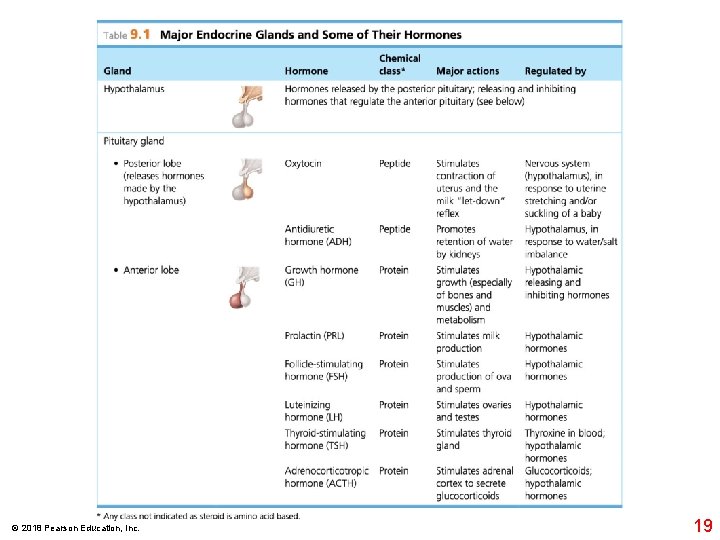
© 2018 Pearson Education, Inc. 19
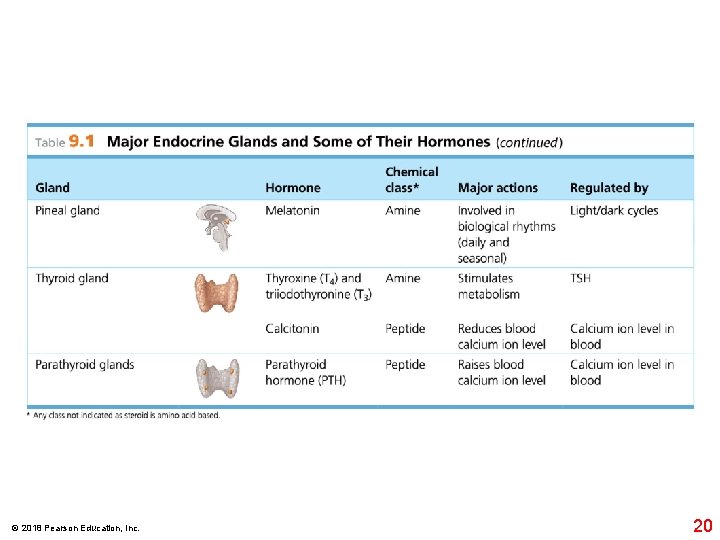
© 2018 Pearson Education, Inc. 20
© 2018 Pearson Education, Inc. 21
© 2018 Pearson Education, Inc. 22