
STERILIZATION DISINFECTION AND REPROCESSING DAVID R WOODARD MSC

- Slides: 55
STERILIZATION, DISINFECTION AND REPROCESSING DAVID R. WOODARD, MSC, CIC, FSHEA
DEFINITIONS • Cleaning – the removal of visible soil from the surfaces, joints and lumen of instruments or devices. This is done using a mechanical process to prepare the instrument (product) for further processing. • Tools and techniques • Brushes (clean) • pressurized air, • scrubbing, • Picks (clean)
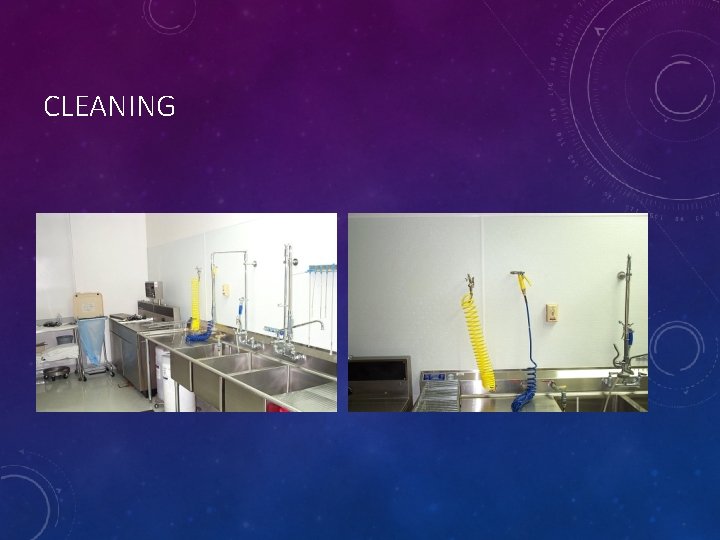
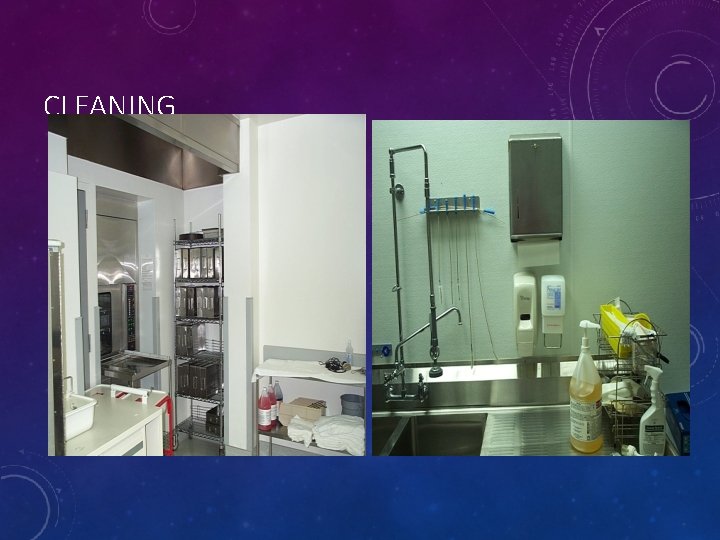
CLEANING • Remove all visible soil • Decrease the bioburden • Increase workers safety • Do early in process to avoid dried on materials. • Safe compounds • NOT intended to disinfect or sterilize
POINT OF USE • Immediate removal of materials • Enzymatic cleaner • Locations • ED • Clinics • Out patient setting • Physician offices
CLEANING
CLEANING
HOW TO • Mechanical process • Friction • Detergent • Make fats soluble or “isolate” • Carrier (water) • Detailed • Use standard process • Monitor activity • Use only the very best products
ESSENTIAL COMPONENTS • Surfactant – decreases surface tension permitting water and detergent to disperse throughout area. • Precipitants – condense metallic ions to prevent them from effecting process. • Chemical buffers – maintain the p. H of the cleaning solution to maximize the effect of the detergent.
OTHER AGENTS INVOLVED IN CLEANING • Enzymes – dissolve protein (organic matter) • Lipase (fat) • Protease (protein) • Amylase (starch)
TYPES OF MATERIALS CLEANED • • Aluminum • low alkaline detergent. • manually cleaning use a motion in the direction of the grain, rather than a circular motion against the grain. Glassware • washed with low alkaline detergent. • Rinse with large amounts of water. • final rinse, use distilled water, or demineralized water. Rubber goods • scrubbed thoroughly with soft fiber brush • detergent low alkaline. • Thorough rinsing, and followed by air-drying. Stainless steel • washed, rinsed, and dried as soon as possible • low alkaline detergent
DISINFECTING • A process that eliminates living pathogenic microorganisms on inanimate objects – • Does not work on most virus • Does not work on most spores • Does not work on “prion”? • May have other limits (high level vs. low level) • Time • Temperature
CHARACTERISTICS OF A DISINFECTANT • • • Broad kill spectrum Not affected by environment (p. H) Not toxic Mix with available water (hardness) Stable (evaporation) Won’t harm target surfaces (metal, fabric)
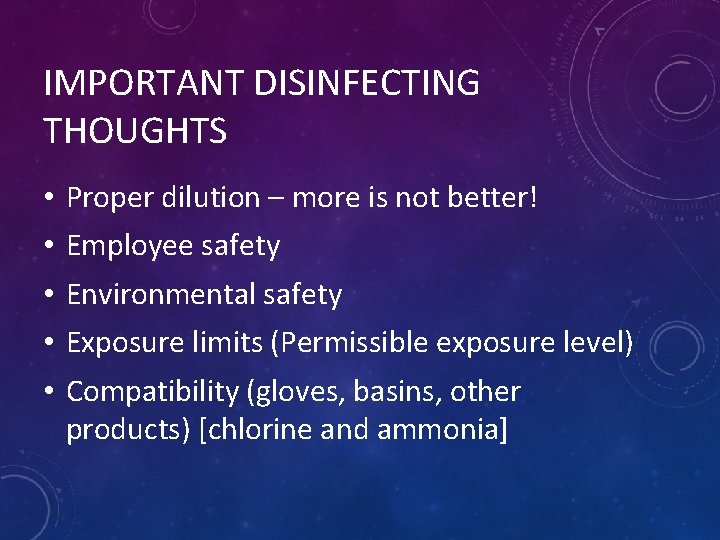
IMPORTANT DISINFECTING THOUGHTS • • • Proper dilution – more is not better! Employee safety Environmental safety Exposure limits (Permissible exposure level) Compatibility (gloves, basins, other products) [chlorine and ammonia]
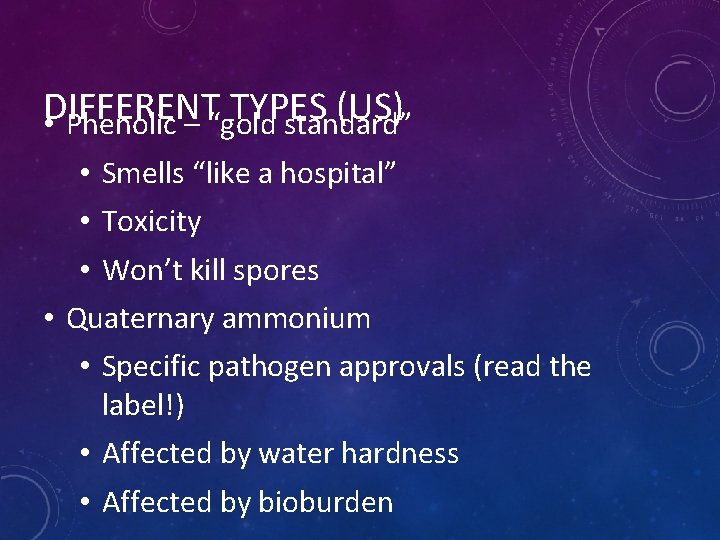
DIFFERENT TYPES (US) • Phenolic – “gold standard” • Smells “like a hospital” • Toxicity • Won’t kill spores • Quaternary ammonium • Specific pathogen approvals (read the label!) • Affected by water hardness • Affected by bioburden
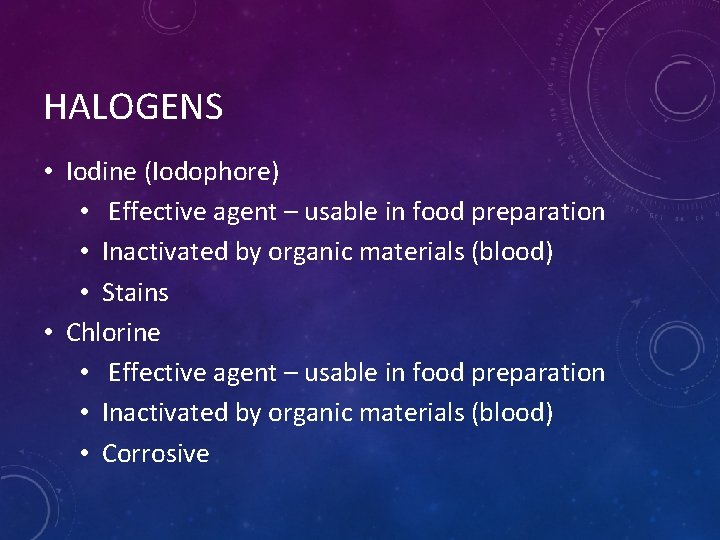
HALOGENS • Iodine (Iodophore) • Effective agent – usable in food preparation • Inactivated by organic materials (blood) • Stains • Chlorine • Effective agent – usable in food preparation • Inactivated by organic materials (blood) • Corrosive
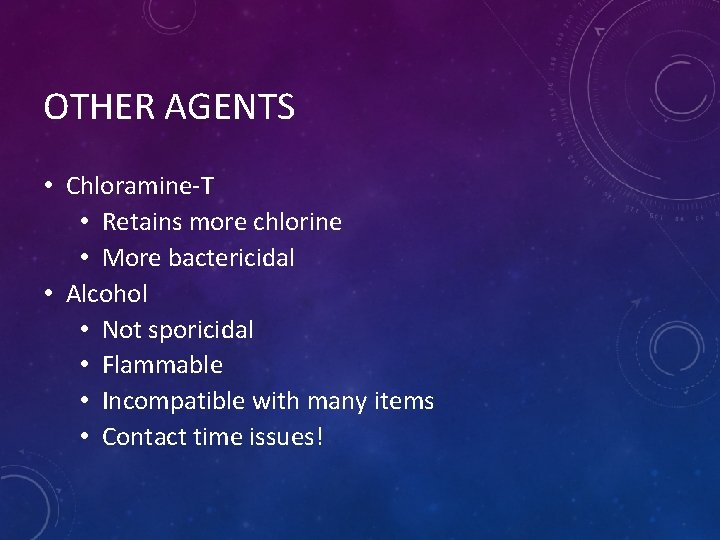
OTHER AGENTS • Chloramine-T • Retains more chlorine • More bactericidal • Alcohol • Not sporicidal • Flammable • Incompatible with many items • Contact time issues!
OTHER PRODUCTS • Aldehydes • Glutaraldehyde - CIDEX • Good product, sporicidal; tuberculocidal; viricidal • Characteristic unpleasant odor • Environmental issues • Toxicity • Exposure levels • Clean-up requirements
CIDEX OPA • • Not gluteraldehyde! Different rules and constraints Watch dating Watch compatability data (IFU)
NON-STEAM PRODUCTS • Hydrogen peroxide • Oxidizer (may harm some instruments) • Reverts to hydrogen and oxygen (safe? ) • Peracetic acid • Rapid action but smells bad (vinegar) • Works in presence of organic materials
STERILIZATION • • • Steam Dry Heat Ethylene Oxide Glutaraldehyde Peracetic Acid Plasma Gas (vaporized hydrogen peroxide)
STERILIZATION • Any thing can be autoclaved one time! • To sterilize any item adequately, you must first obtain guidelines from the manufacturer as to what the limitations and parameters have to be (IFU) • Cannot sterilize wood, medications, talc, rubber bands.
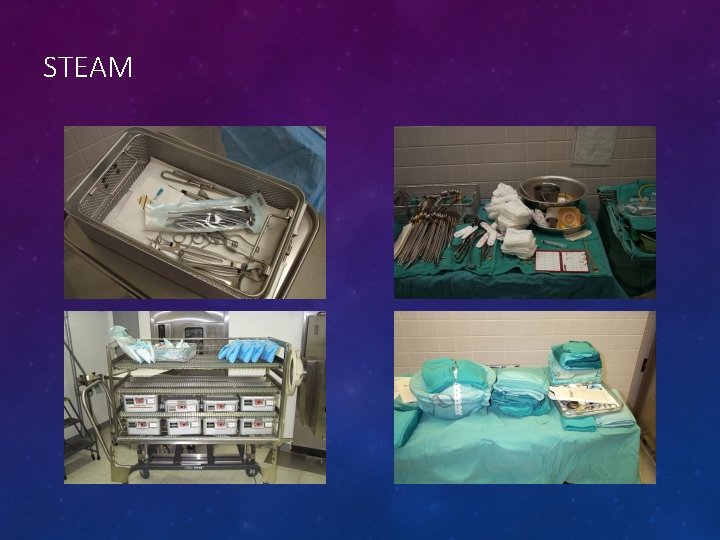
STEAM STERILIZATION o Rapid heating and penetration o Short exposure times (<20 minutes) o No toxicity to workers o Safety of workers o Cheap o Cooks on protein if product is not clean o Damages delicate instruments
THE PROCESS o Product must be clean and free of protein (blood) or other dirt o Product must be packaged so that the steam can penetrate o The autoclave must be loaded correctly o The autoclave must be operated correctly o The steam must be adequate (clean and of proper water concentration)
IT TAKES LONGER THAN YOU THINK! • Steam will “cook” the microorganism in a very short period of time but • Autoclave must be brought to temperature • Temperature must be maintained throughout the process • Safety Factor {just in case} (1/2 of the “scientific kill time at temperature) • Generally 20 minutes
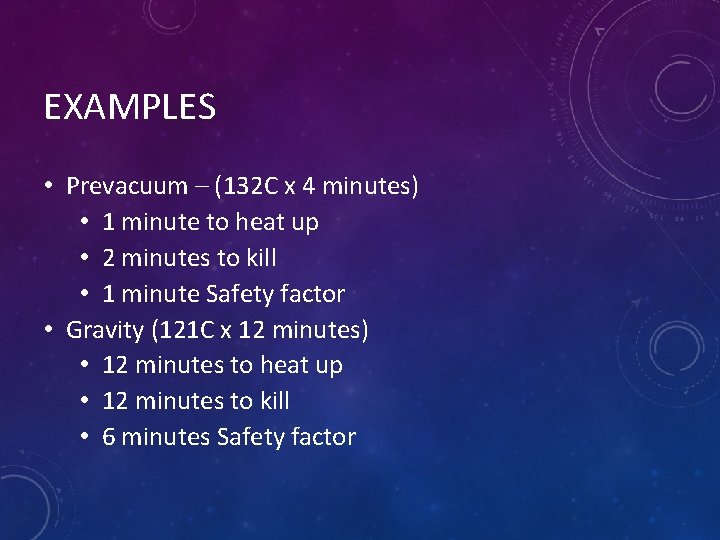
EXAMPLES • Prevacuum – (132 C x 4 minutes) • 1 minute to heat up • 2 minutes to kill • 1 minute Safety factor • Gravity (121 C x 12 minutes) • 12 minutes to heat up • 12 minutes to kill • 6 minutes Safety factor
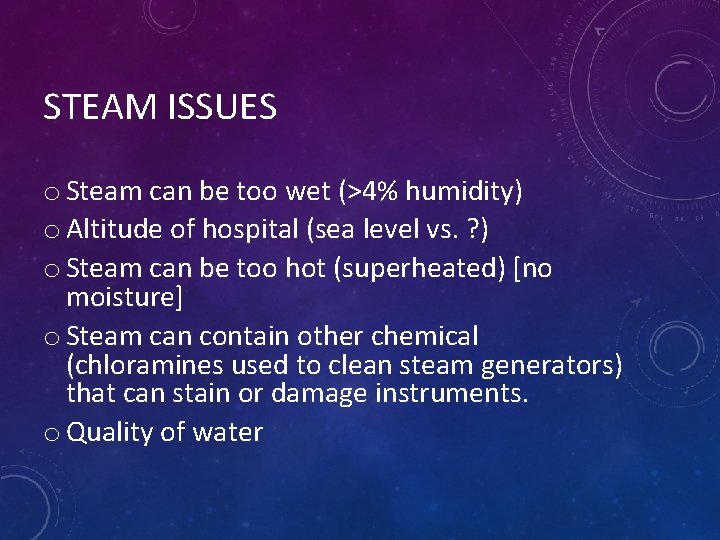
STEAM ISSUES o Steam can be too wet (>4% humidity) o Altitude of hospital (sea level vs. ? ) o Steam can be too hot (superheated) [no moisture] o Steam can contain other chemical (chloramines used to clean steam generators) that can stain or damage instruments. o Quality of water
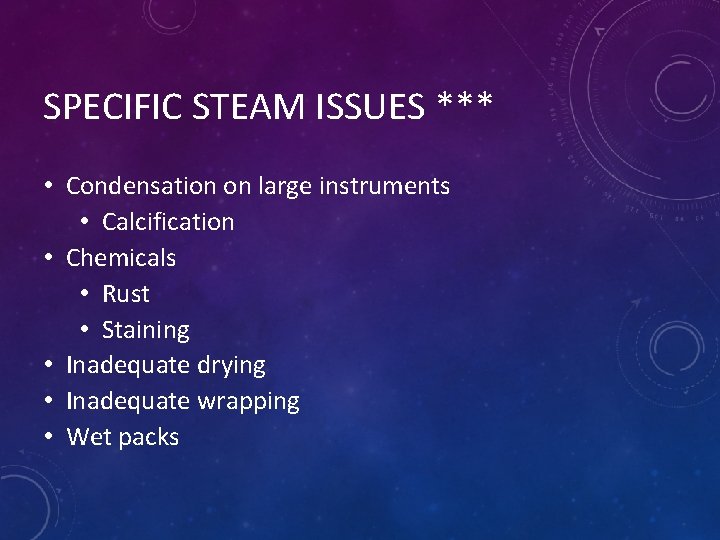
SPECIFIC STEAM ISSUES *** • Condensation on large instruments • Calcification • Chemicals • Rust • Staining • Inadequate drying • Inadequate wrapping • Wet packs
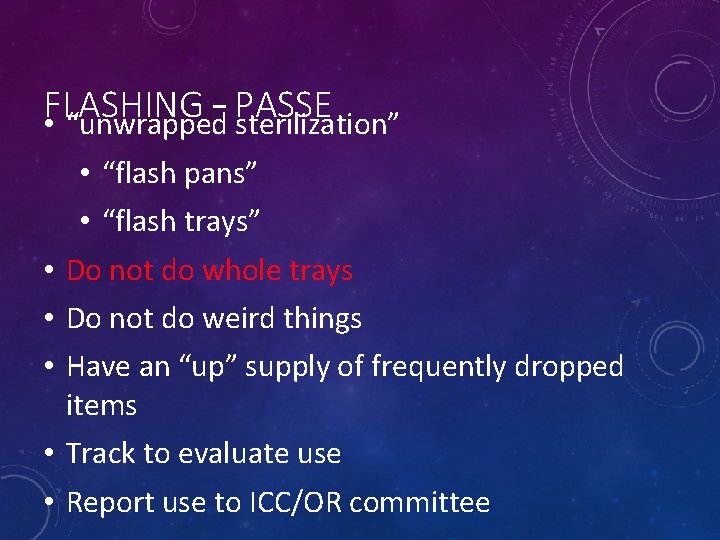
FLASHING – PASSE • “unwrapped sterilization” • • • “flash pans” • “flash trays” Do not do whole trays Do not do weird things Have an “up” supply of frequently dropped items Track to evaluate use Report use to ICC/OR committee
FLASHING OR “JUST IN TIME” o The same guidelines used for routine steam sterilization in central must apply. o It still takes time o Do not abort the cycle o Cleaning of device before processing o Record keeping for implants o Review of record by competent individual
RECORD OF IUSS • The same tracking process as for items put up in sterile processing. • Review daily for compliance • Report to ICC at its regular meeting • Use evidene to support additional sets • “We need to flash the hyster tray because we only have one”
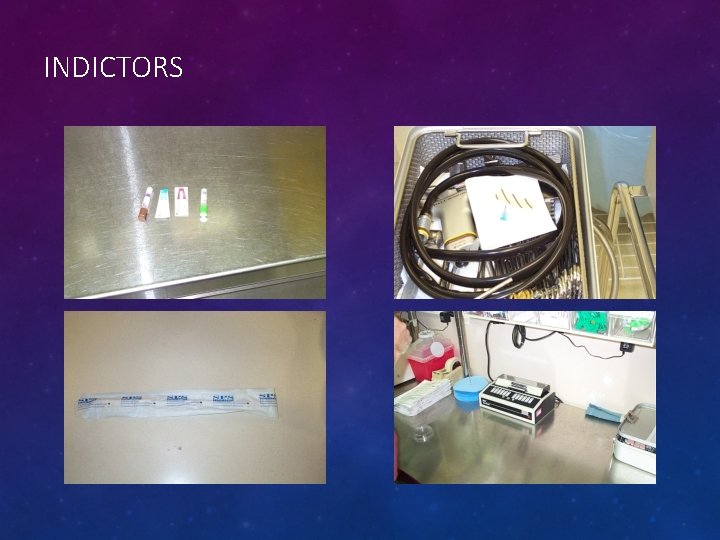
INDICATORS • Devices that – • Change color upon exposure to heat (not indicator of sterility) • Change physical composition upon exposure to heat and pressure (and time) (sterility indicator) • Tape on wrapper • Safety and quality control
STEAM
INDICTORS
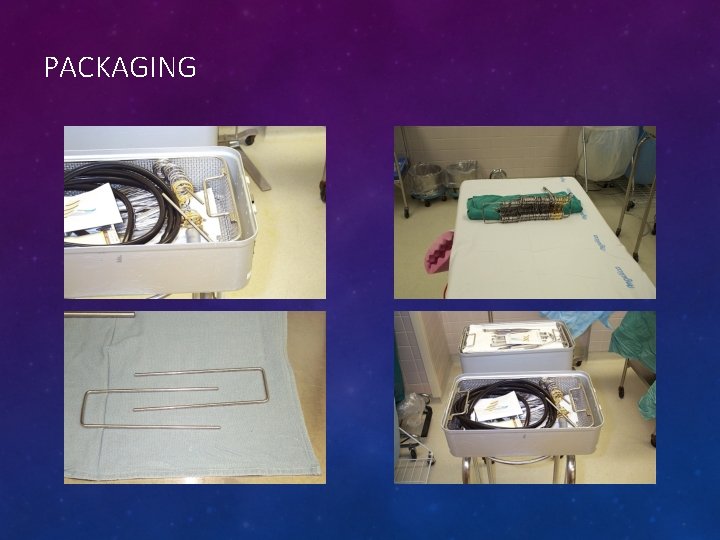
PACKAGING
ETHYLENE OXIDE • EO (kills by chemical reaction – causes cellular destruction) • EO is carcinogenic • EO “carrier” is Freon-12 which has an effect on the ozone level. • Flammable • Major Environmental Concerns
PERACETIC ACID • Disrupts chemical bonds in the bacteria • Oxidizes enzymes denatures protein • Good for most delicate devices • Better indication for most devices with lumen • Requires special plumbing • A “contact” sterilant
ADVANTAGES • Effective in the presence of organic materials. • Water soluble • Non-toxic • Liquid or vapor formulation effective
LIMITS AND DRAWBACKS o Process one scope at a time (slow) o Cannot wrap items (storage issues) o Items must be clean and thoroughly rinsed.
PLASMA STERILIZATION o Vaporized hydrogen peroxide o Good for delicate instruments o Generally safe for heat sensitive instruments. o Time (75 minutes per cycle)
ADVANTAGES o o Instruments can be wrapped (storage) Cannot use on long or thin lumen Small units available (table top devices) No special ventilation requirements.
IDEAL PROPERTIES FOR A STERILANT • • • Effective – good kill of target organisms Toxicity – safe without major PPE Speed – good “turn around time” Costs – economic at level used Implementation – works where needed Safety – works on target devices without damage.
POST PROCESS ISSUES o Protect sterility until ready to use. o Protect device from damage o Shelf life o Storage o Transportation o Handling
POST PROCEDURES • Steam • HOT !!!!!!!!! • Condensate – dampness (wet packs) • Quality of product! • ETO • Aeration • Hot
FAILURE o Indicators do not turn (color tests) o Time, temperature or pressure parameters not met o Aborted cycle o Recall policy o All items since the last good test cycle! o EDUCATION!
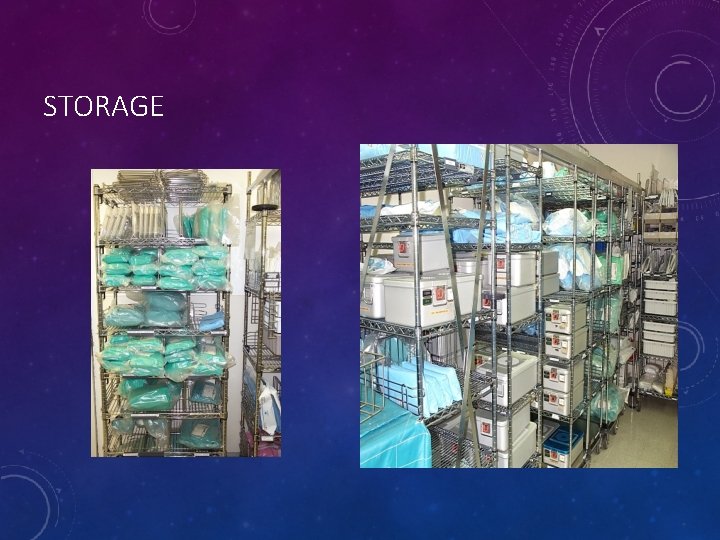
STORAGE • Preserve the integrity of the product. • “Dust covers” are not necessary • Clean, dry and free of dust • Good illumination • Accessibility to the product • Product rotation (aging of the product) • Recall • CLEANING!!!!!!
STORAGE
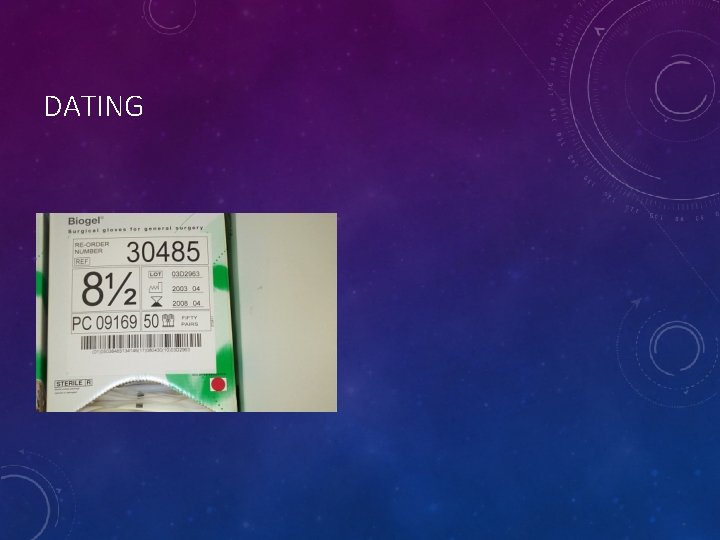
DATING
EXPIRATION DATES o Event related outdates o Dated for function and need o Economic rationale (Dr. Jones has been dead for years) o Space
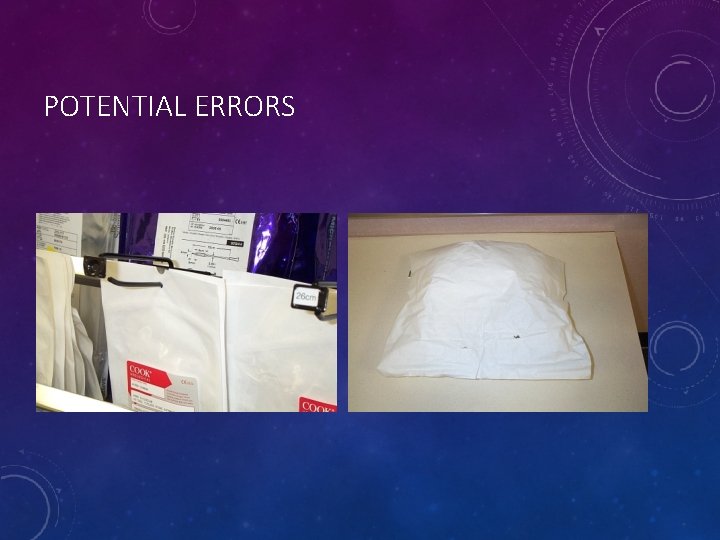
POTENTIAL ERRORS
DISINFECTING ISSUES Product must be: n. Tested each day of use/time used n. Changed as manufacturer requires n. Temperature sensitive n. Test strips tested for accuracy (high/low) n. Test strips expire! n. Color acuity!!!!!
THINGS YOU MUST DO Have a recall process that works for all items sterilized in your facility. Ensure that all failures are reported to you and risk management (? And DHS) Investigate and report on the investigation to the ICC. Know your sterile processing director Have lunch with your end-users.
THINGS TO BE DONE • Make a “cleaning matrix” showing: • Who cleans post discharge e. g. EVS • Who cleans when in use. • How often “general use equipment” is cleaned • Who cleans “general use equipment” • Identification of cleaned items • Rags, tags and bags.
THINGS • Cleaning and disinfecting of patient care equipment – • Who cleans the: • Ventilator • IV pole • Rolling Stock (wheel chairs, suction machines) • How do you know it clean?
THINGS YOU MUST KNOW No hospital laboratory per se is qualified to perform sterility testing on manufactured goods. No hospital laboratory per se is qualified to perform quantitative or qualitative testing of water (e. g. dialysis) for pathogens. No hospital laboratory per se is qualified to do sterility testing when an autoclave fails.
QUESTIONS?