
Sterile Processing for Ambulatory Surgery and Other Practices
Sterile Processing for Ambulatory Surgery and Other Practices Chapter 23 7 th Ed. Rosemary Thurston RN
Sterile Processing is Universal • Skills are used in various facilities • • Hospitals Ambulatory surgery centers Dental facilities VA institutions Clinics Veterinary hospitals 3 rd party processors Some manufacturers
• Skills are Universal • Process is the same everywhere • Facilities may be regulated differently • May have different regulations and standards • May cause modification in practice • Ambulatory Surgery Center • Have 1+ operating rooms • With the equipment necessary for safe surgery

Ambulatory Surgery Centers • Historical • Surgical procedures occurred in physician offices • Development of surgery centers separate from hospitals • Hospital Outpatient departments - HOPDs • Offer overnight services for patient needing extended recovery times • Single specialty or multi specialty stand-alone centers

• Types • GI – Gastrointestinal Procedure units • Do endoscopy • Colonoscopy – viewing the colon • EGD’s - esophagogastroduodenoscopy • Diagnostic – Biopsies • Therapeutic – Dilations • Ophthalmic Procedures • Surgical – cataracts and treating glaucoma • Therapeutic – laser treatment of retina
• MIS – Minimally Invasive Surgery • Endoscopic through a small incision • Cholecystectomy – gall bladder removal • Tubal ligation – tying off fallopian tubes • Sports Medicine • Arthroscopies – torn meniscus trimming • ACL Repairs • Multi-Specialty ASC • One facility provides many specialties in one place

Ownership and Regulation • Ownership • Physicians own about 90% of ASCs • Jointly owned – MD and Hospitals • Hospital owned – small amount • Called “Satellite Surgery Centers” • Regulatory Standards • Federal and State agencies regulate • States may require licensure • Includes Reporting and On-site Inspections
• Medicare reimbursement • Since 1982 • Must comply with federal government standards • Must be accredited by TJC (The Joint Commission) • Limit procedures to • Elective ones – not emergency • Short procedures with anesthesia • Don’t require overnight stay
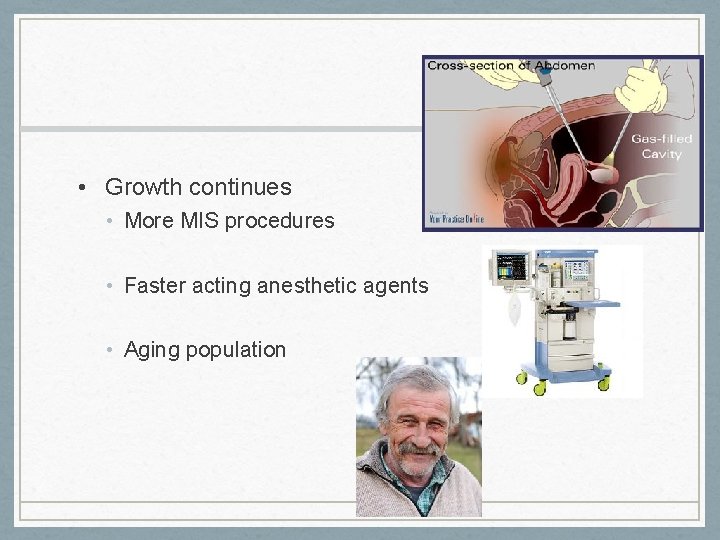
• Growth continues • More MIS procedures • Faster acting anesthetic agents • Aging population
Accreditation • Accreditation – • Voluntary process • Measures quality of service and performance • As compared to a national standard • Reviews compliance with standards • On-site inspection • Applied to • Hospitals • Stand-alone healthcare facilities - ASCs

• Accrediting Organizations • The Joint Commission – TJC • Accreditation Assoc. of Ambulatory Health Care – AAAHC • American Assoc. of Accreditation of ambulatory Surgery Facilities – AAAASF • American Osteopathic Association - AOA
• Sterility Assurance • 2006 – AAMI and ANSI Guide • Guidelines for ASC in Recommended Practices • AORN • Recommended Practices for ASCs • References “ST 79” Recommended Practice for Steam Sterilization – from AAMI

ASC Processing • Infection control in ASC • Sterile processing control person • Usually a person trained to oversee process • May be an RN or Surgical Technologist • References guidelines / best practices • From Assoc. for Prof. in Infection Control and Epidemiology – APIC • Fast paced environment • Turnovers done quickly • Terminal cleaning and sterilization processing • End of day • Pick cases for next day, stock inventory, maintain sterile storage
• CS techs may be employed • If there are multiple OR’s • May require certification • As instrumentation evolves • Demand for CS Techs will grow
Processing Environment • ASCs are fast paced • May have to move between processing areas during day • Instrument processing • Done close to OR’s • Need to work closely with OR personnel • Configuration of processing area may vary • Still need to separate “Dirty and Clean Areas” • Work always flows from Dirty to Clean

• Equipment – any combination of: • • • Sink Ultrasonic Washer-decontaminator Automated Endoscope Preprocessors – AER High-level disinfection or low temp sterilizers • Follow OEM’s recommendations for equipment • Reusable instruments • Special care with single / limited use instruments
• Use of PPE and Standard Precautions • Same as hospital safety protocols • Monitoring of liquid sterilization / disinfection • Processing may be done by non-dedicated staff • More people = more chance for errors • Accurate record keeping provides tracking for possible errors in best practice procedures
• Instrument assembly and sterilization • Area can vary • Includes: • Instrument inventory • Wrapping, packaging and labeling • Sterilizers • Steam – may be table top in small unit • Plasma vapor • Gas or Ozone units • ETO – NOT USED because of long turnover times • Limited number of instrument sets for cases • May mean FLASH sterilization – “Immediate Use Sterilization” • May need to be started by CS personnel
• Role of CS professionals in ASC • Contribute best practices in reprocessing areas • Another area of growth for CS Techs • Area for continuing education
Dental Facilities • Basic Standards and Practices • Require • Decontamination • Sterilization • Inventory management • Instrument range • Small basic instrumentation • Power hand drills
CDC Guidelines • Sterilization/disinfection • Environmental Issues • • • Processing Area divided into 4 areas: • Receiving, cleaning, decontamination • Preparation and packaging • Sterilization • Storage Ideally – separated by walls / partitions • Or space Goal • Minimize risk of cross-contamination – soiled to clean

• Environmental Surfaces • Surfaces that don’t contact patients directly • Clinical Contact Surfaces • Directly contaminated during patient care • Switches • Power unit switches • Drawer knobs • Contamination • Sprays, spatter, contact with providers hand
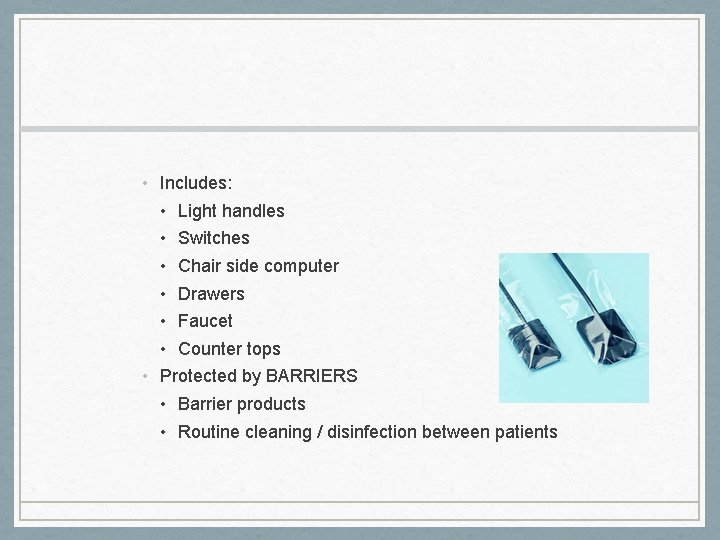
• Includes: • Light handles • Switches • Chair side computer • Drawers • Faucet • Counter tops • Protected by BARRIERS • Barrier products • Routine cleaning / disinfection between patients
• Housekeeping Surfaces • Includes: • Walls • Floors • Sinks • Cleaned • On schedule • When soiled

Instrument Processing • Contaminated instruments • Transported in enclosed container from POU • Process as quickly as possible • Otherwise must be kept moist • Cleaning option – manual or automatic • Must fit instrument need • Must be adequate to meet sterilization needs • You can clean an item without sterilizing it. . . But you can’t sterilize it without cleaning it! • Must wear PPE
• Preparation and Packaging • Inspect for • • Soil Functionality Unlocked Other per OEM • Assembly • Unwrapped loads – CI in each tray • Wrapped – CI inside + External CI outside
• Sterilization Types used • Steam – usually • Dependable, economical • Usually table top gravity displacement – possible prevac • Dry heat • Economical and non-corrosive • High temps and long exposure times • Oven type – coils on bottom and sides – heat through convection (air) – Instruments – conduction • Rapid heat - circulate heat at high speed – decreased time • Burrs and Orthodontic instrument damaged by moist heat
• Unsaturated chemical vapor • Usually Alcohol and Formaldehyde under pressure • Less corrosive than steam for burrs – carbon steel • Cycle times less than dry heat • Liquid chemical sterilization used at times • Gluteraldehyde • PA – paracetic acid • Hydrogen peroxide plasma vapor • ETO at times • Quality Assurance through • Cycle monitoring • CI’s and BI’s
• Storage • Enclosed cabinets • Must protect integrity of each package • Inspect before use for contamination • Polices and Procedures • Written procedures should be at all facilities for: • Decontamination • Inspection • Packaging • Sterilization • Storage
Veterans Administration Facilities • “To care for him who shall have borne the battle and for his widow , and his orphan” Abraham Lincoln, 1865 Inauguration - VA Mott • Veterans Administration (VA) Hospitals • Located throughout the US • Sterile Processing Department - SPD is Central Service • Has it’s own certification program
• VA requirement to maintain certification • Chiefs – 20 CEU’s • Supervisors – 17 CEU’s • SPD Techs – 5 CEU’s • Directives are the “Standards” • • • Organization structure Employee development Infection control Inventory management Safety standards
• Directives Continued • • Decontamination Preparation area Loading / operating sterilizers Distribution Inventory Equipment tracking Quality Control
• Practice Differences – • To assure using proven practices for the best care available to the Veteran • Main differences • Expiration Dates of one year • Must be reprocessed at that time • No 3 rd party reprocessors • Must use VA facilities • No single use devices are reprocessed

• Single wrappers x 2 used to wrap items • To allow aseptic opening • To maintain a sterile field • Peel pouches must be heat sealed – not self-sealing • Concern regarding proper sealing • No writing on packages – must write on tape and apply that • Concern re integrity of package material

• All items are sterilized after decontamination process • Before going to the preparation area for assembly • BI tests are incubated and read at 48 hours • 3 hour tests can be used, but. . . • 48 hour tests must still be run and documented • Validation of reprocessed items it not performed by VA personnel • Only those approved on the 510 K application are allowed
• Use of Internal CI is at the discretion of SPD personnel • Sterilization of liquids is not permitted
Additional Related Practices • Sterile Processing services all occur in these practices: • • Clinics Veterinary hospitals Third party reprocessing facilities Some manufacturers
Wherever instruments and equipment are needed for patient care. . . Central Service skills are needed

The End
- Slides: 39