
STEREOTYPES IN PRINT ADVERTS This advert negatively stereotypes
- Slides: 9
STEREOTYPES IN PRINT ADVERTS
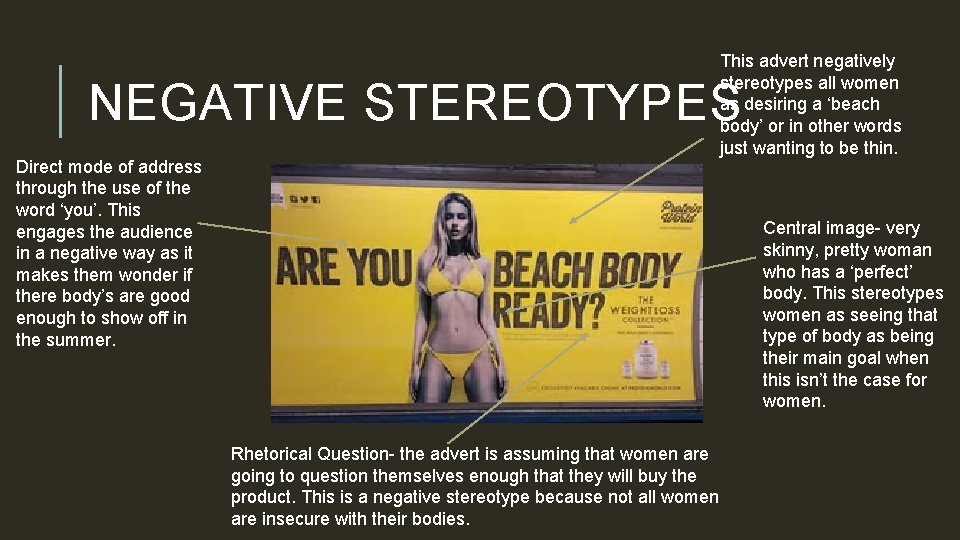
This advert negatively stereotypes all women as desiring a ‘beach body’ or in other words just wanting to be thin. NEGATIVE STEREOTYPES Direct mode of address through the use of the word ‘you’. This engages the audience in a negative way as it makes them wonder if there body’s are good enough to show off in the summer. Central image- very skinny, pretty woman who has a ‘perfect’ body. This stereotypes women as seeing that type of body as being their main goal when this isn’t the case for women. Rhetorical Question- the advert is assuming that women are going to question themselves enough that they will buy the product. This is a negative stereotype because not all women are insecure with their bodies.
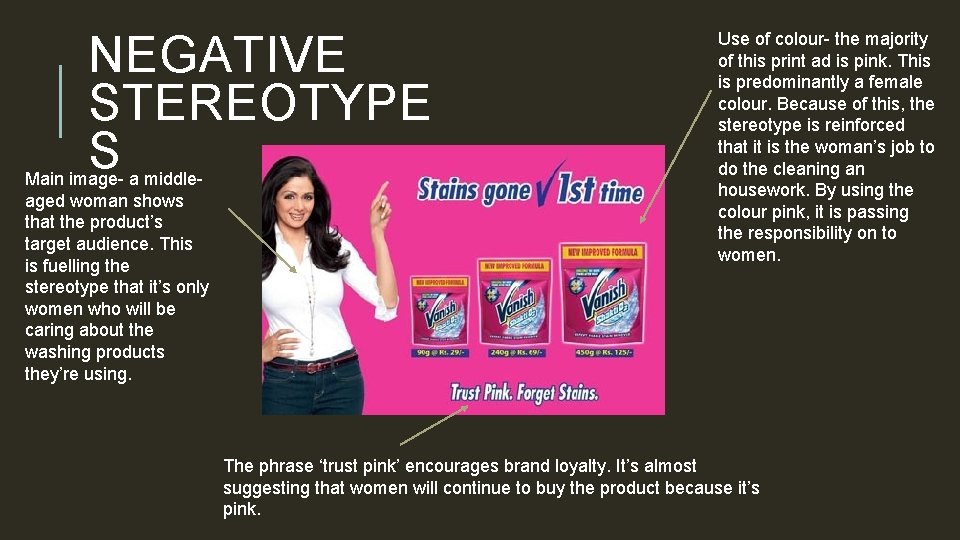
NEGATIVE STEREOTYPE S Main image- a middleaged woman shows that the product’s target audience. This is fuelling the stereotype that it’s only women who will be caring about the washing products they’re using. Use of colour- the majority of this print ad is pink. This is predominantly a female colour. Because of this, the stereotype is reinforced that it is the woman’s job to do the cleaning an housework. By using the colour pink, it is passing the responsibility on to women. The phrase ‘trust pink’ encourages brand loyalty. It’s almost suggesting that women will continue to buy the product because it’s pink.
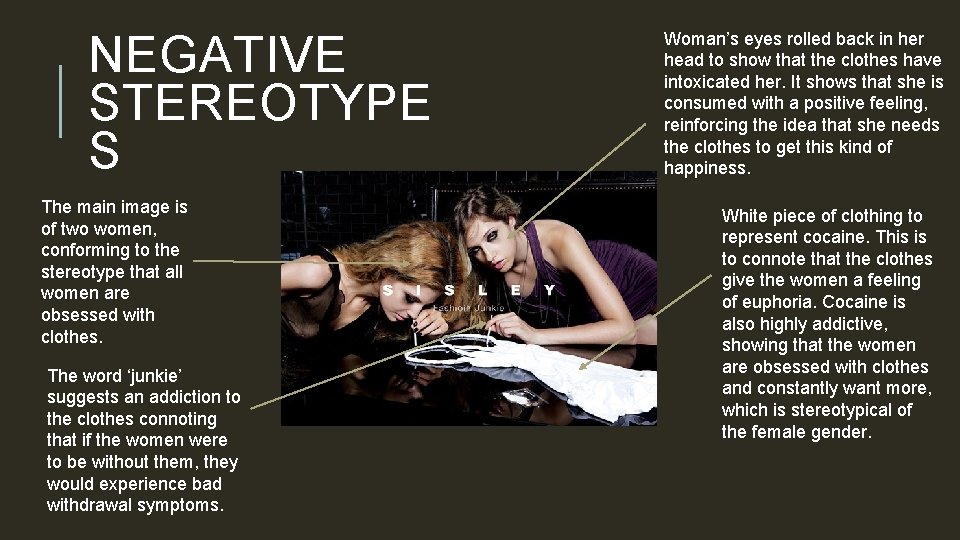
NEGATIVE STEREOTYPE S The main image is of two women, conforming to the stereotype that all women are obsessed with clothes. The word ‘junkie’ suggests an addiction to the clothes connoting that if the women were to be without them, they would experience bad withdrawal symptoms. Woman’s eyes rolled back in her head to show that the clothes have intoxicated her. It shows that she is consumed with a positive feeling, reinforcing the idea that she needs the clothes to get this kind of happiness. White piece of clothing to represent cocaine. This is to connote that the clothes give the women a feeling of euphoria. Cocaine is also highly addictive, showing that the women are obsessed with clothes and constantly want more, which is stereotypical of the female gender.
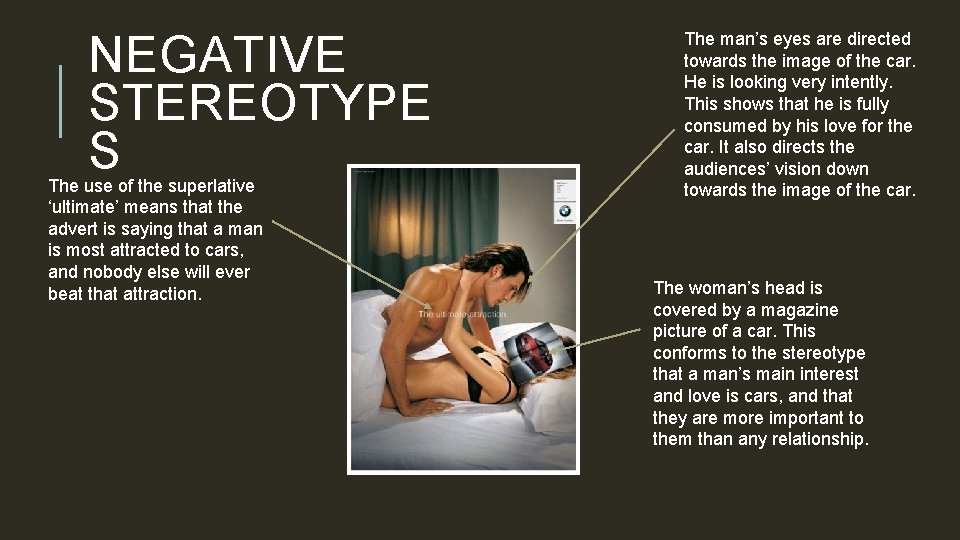
NEGATIVE STEREOTYPE S The use of the superlative ‘ultimate’ means that the advert is saying that a man is most attracted to cars, and nobody else will ever beat that attraction. The man’s eyes are directed towards the image of the car. He is looking very intently. This shows that he is fully consumed by his love for the car. It also directs the audiences’ vision down towards the image of the car. The woman’s head is covered by a magazine picture of a car. This conforms to the stereotype that a man’s main interest and love is cars, and that they are more important to them than any relationship.
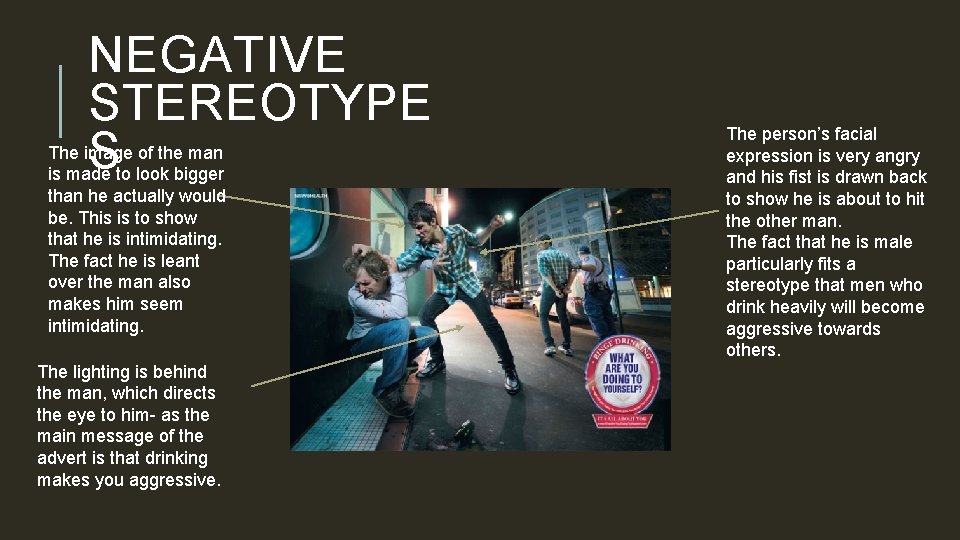
NEGATIVE STEREOTYPE S The image of the man is made to look bigger than he actually would be. This is to show that he is intimidating. The fact he is leant over the man also makes him seem intimidating. The lighting is behind the man, which directs the eye to him- as the main message of the advert is that drinking makes you aggressive. The person’s facial expression is very angry and his fist is drawn back to show he is about to hit the other man. The fact that he is male particularly fits a stereotype that men who drink heavily will become aggressive towards others.
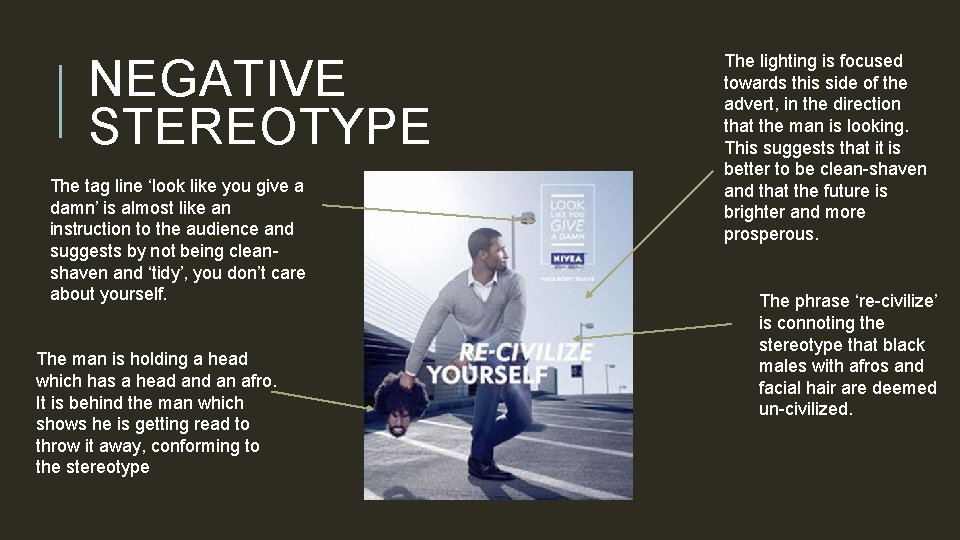
NEGATIVE STEREOTYPE The tag line ‘look like you give a damn’ is almost like an instruction to the audience and suggests by not being cleanshaven and ‘tidy’, you don’t care about yourself. The man is holding a head which has a head an afro. It is behind the man which shows he is getting read to throw it away, conforming to the stereotype The lighting is focused towards this side of the advert, in the direction that the man is looking. This suggests that it is better to be clean-shaven and that the future is brighter and more prosperous. The phrase ‘re-civilize’ is connoting the stereotype that black males with afros and facial hair are deemed un-civilized.
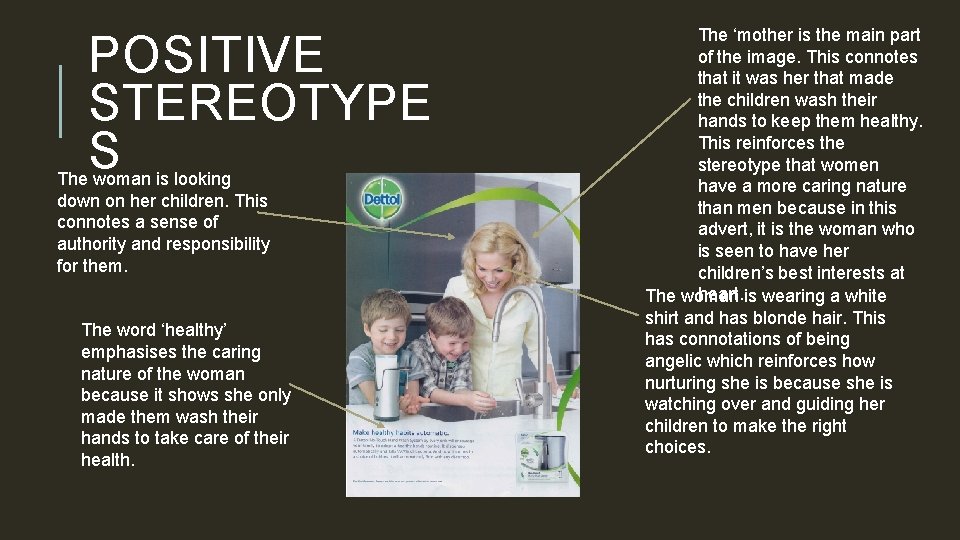
POSITIVE STEREOTYPE S The woman is looking down on her children. This connotes a sense of authority and responsibility for them. The word ‘healthy’ emphasises the caring nature of the woman because it shows she only made them wash their hands to take care of their health. The ‘mother is the main part of the image. This connotes that it was her that made the children wash their hands to keep them healthy. This reinforces the stereotype that women have a more caring nature than men because in this advert, it is the woman who is seen to have her children’s best interests at heart. is wearing a white The woman shirt and has blonde hair. This has connotations of being angelic which reinforces how nurturing she is because she is watching over and guiding her children to make the right choices.
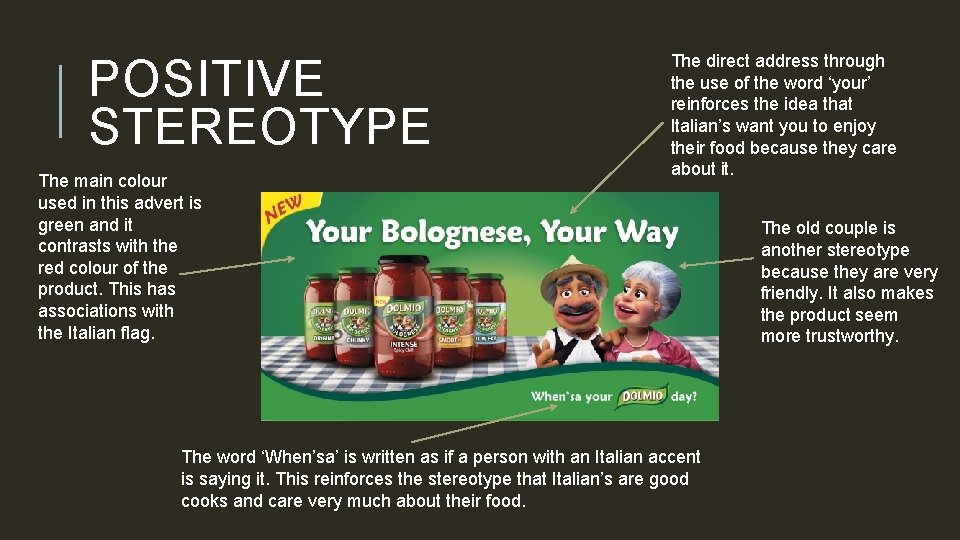
POSITIVE STEREOTYPE The main colour used in this advert is green and it contrasts with the red colour of the product. This has associations with the Italian flag. The direct address through the use of the word ‘your’ reinforces the idea that Italian’s want you to enjoy their food because they care about it. The word ‘When’sa’ is written as if a person with an Italian accent is saying it. This reinforces the stereotype that Italian’s are good cooks and care very much about their food. The old couple is another stereotype because they are very friendly. It also makes the product seem more trustworthy.