
STEREOTYPES DEFINITION OF A STEREOTYPE a stereotype is
- Slides: 9
STEREOTYPES
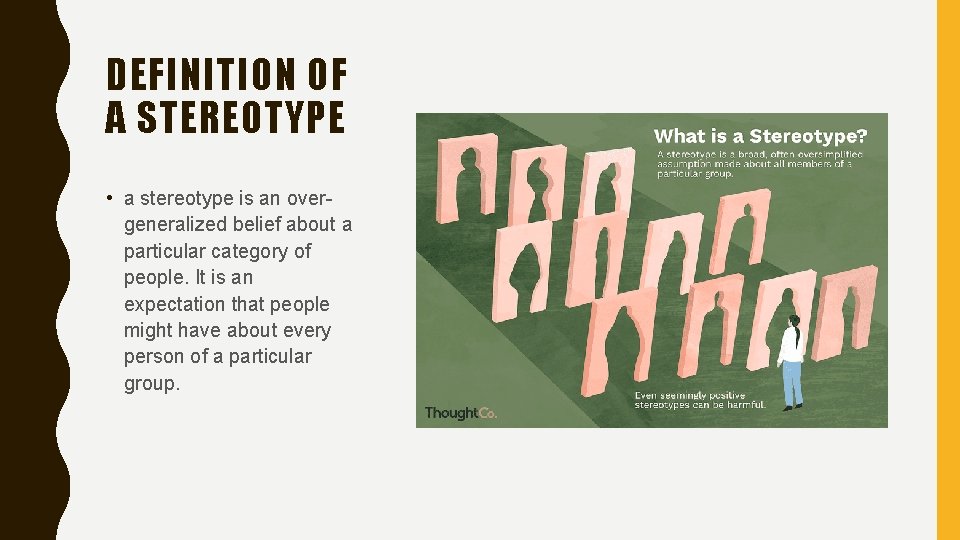
DEFINITION OF A STEREOTYPE • a stereotype is an overgeneralized belief about a particular category of people. It is an expectation that people might have about every person of a particular group.
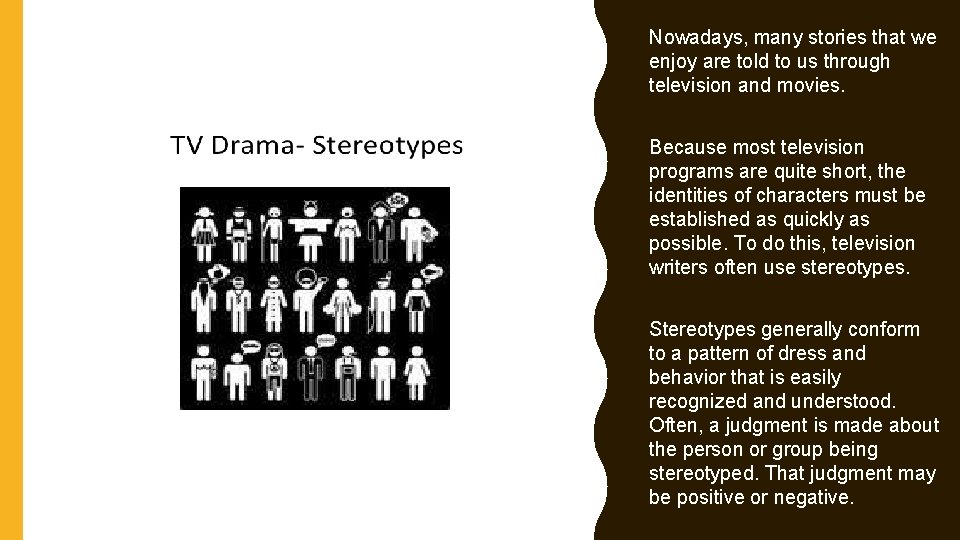
• Nowadays, many stories that we enjoy are told to us through television and movies. • Because most television programs are quite short, the identities of characters must be established as quickly as possible. To do this, television writers often use stereotypes. • Stereotypes generally conform to a pattern of dress and behavior that is easily recognized and understood. Often, a judgment is made about the person or group being stereotyped. That judgment may be positive or negative.
TV CHARACTER STEREOTYPES How would you describe the following TV characters? • A grandmother • A bully • A villain • A cop • Kids
STEREOTYPES • A grandmother (is old-looking, wears her hair in a bun, wears glasses, is a homebody, lives with relatives). • A bully (is big and tough looking, is always mean, most often is male). • A villain (looks funny, or scary, or ugly; is always outwitted by the hero, nobody likes him or her) • A cop (is mostly likely male, always chasing criminals, involved in lots of car chases and shoot-outs). • Kids (are usually cute, smarter than their parents, sassy to their parents and teachers). • Are there any other stereotypes which exist on television?
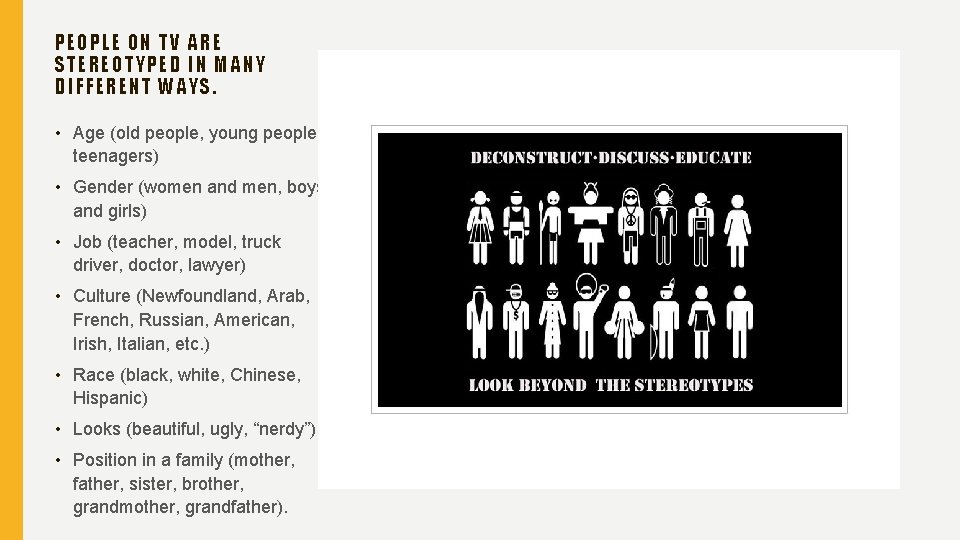
PE OP LE ON T V ARE STEREOT YPED IN MANY DIFF ERENT WAY S. • Age (old people, young people, teenagers) • Gender (women and men, boys and girls) • Job (teacher, model, truck driver, doctor, lawyer) • Culture (Newfoundland, Arab, French, Russian, American, Irish, Italian, etc. ) • Race (black, white, Chinese, Hispanic) • Looks (beautiful, ugly, “nerdy”) • Position in a family (mother, father, sister, brother, grandmother, grandfather).
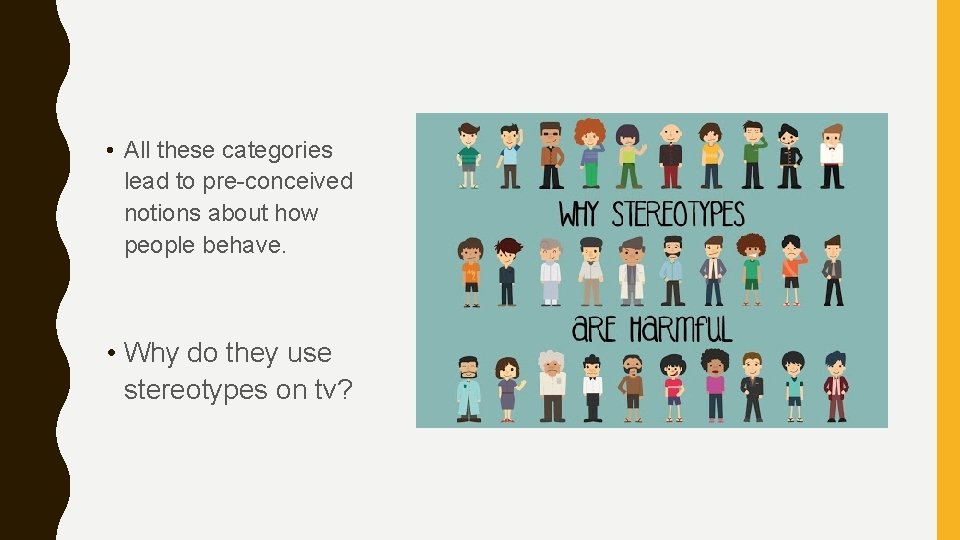
• All these categories lead to pre-conceived notions about how people behave. • Why do they use stereotypes on tv?
• Television stereotypes are used because they enable a viewer to understand a character’s role quickly and easily. In a half hour show, you only have about twentythree minutes of the actual program, so there isn’t much time to develop a character in a more well-rounded manner. Stereotypes are a kind of television “shorthand” with stock characters creating easily understood plots. • It is important to recognize that these stereotypes can be problematic– they can lead to generalizations that can be internalized.
TV STEREOTYPES • Hermoine Granger: https: //www. youtube. com/watch? v=0 Z 4 UUc 7 wa. M 8&list=RD 0 Z 4 UUc 7 wa. M 8& start_radio=1&t=0 • Dwight Schrute: https: //www. youtube. com/watch? v=Wa a. ANll 8 h 18 • Highschool musical: https: //www. youtube. com/watch? v=4 vr 7 Pi. Gtq. H 0 • What type of character did you see? (e. g. villain) • What words of phrases best describe them? (e. g. evil, sinister-looking, tough) • Did the character’s actions tell you something about them? • How was the character dressed? Did the clothing help to suggest what kind of person this might be? • Is the character a stereotype?