
Stereochemistry Paderborn May 2005 Founding Fathers of Stereochemistry
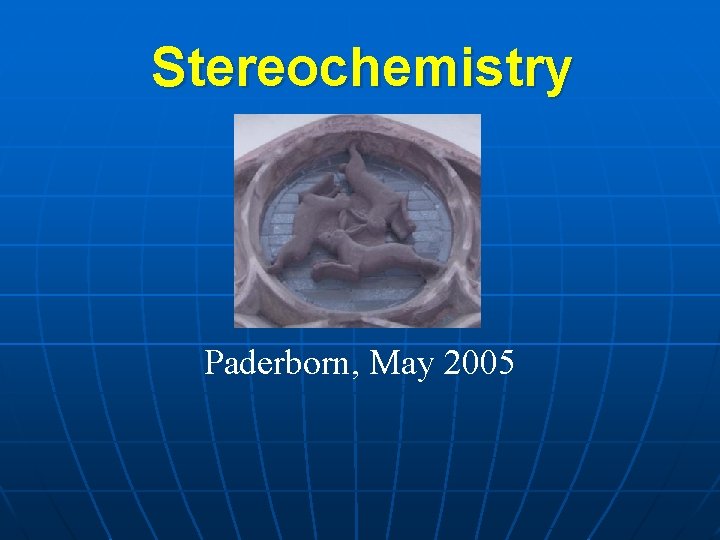
Stereochemistry Paderborn, May 2005
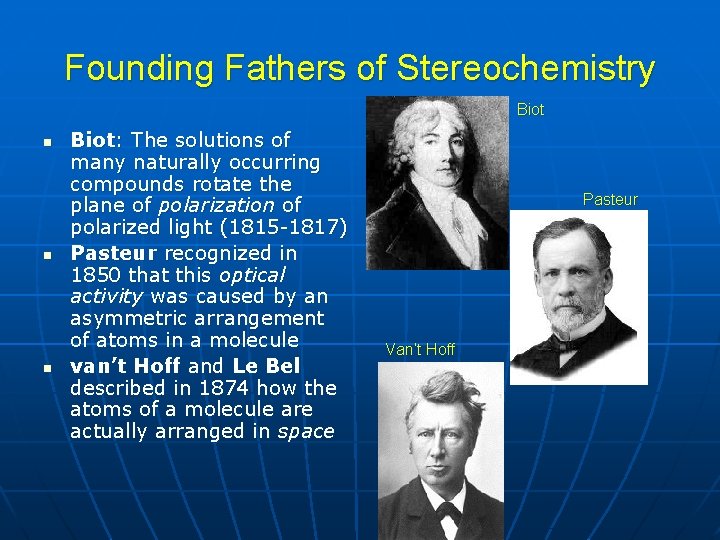
Founding Fathers of Stereochemistry Biot n n n Biot: The solutions of many naturally occurring compounds rotate the plane of polarization of polarized light (1815 -1817) Pasteur recognized in 1850 that this optical activity was caused by an asymmetric arrangement of atoms in a molecule van’t Hoff and Le Bel described in 1874 how the atoms of a molecule are actually arranged in space Pasteur Van’t Hoff
Subdisciplines of Stereochemistry n Static stereochemistry • Studies the three-dimensional arrangement of the atoms of a molecule in the ground state n Dynamic stereochemistry • Description of the steric relationships in molecules as they change from one state to another, for example during a chemical reaction
Preview n n Introduction Conformational analysis • • • n Optical activity and stereoisomerism • • • n Cyclohexane Bicyclic compounds, steroids Heterocyclic compounds Symmetry and chirality Molecular asymmetry Prochirality Chiroptical properties of chiral molecules • Optical rotatory dispersion
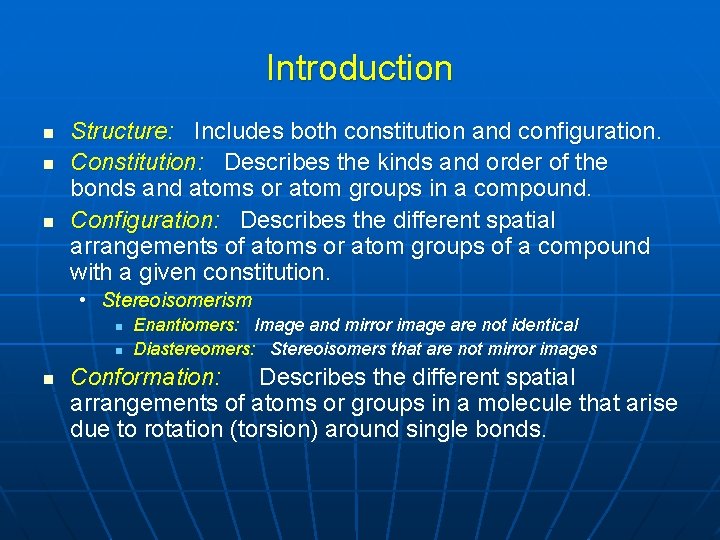
Introduction n Structure: Includes both constitution and configuration. Constitution: Describes the kinds and order of the bonds and atoms or atom groups in a compound. Configuration: Describes the different spatial arrangements of atoms or atom groups of a compound with a given constitution. • Stereoisomerism n n n Enantiomers: Image and mirror image are not identical Diastereomers: Stereoisomers that are not mirror images Conformation: Describes the different spatial arrangements of atoms or groups in a molecule that arise due to rotation (torsion) around single bonds.
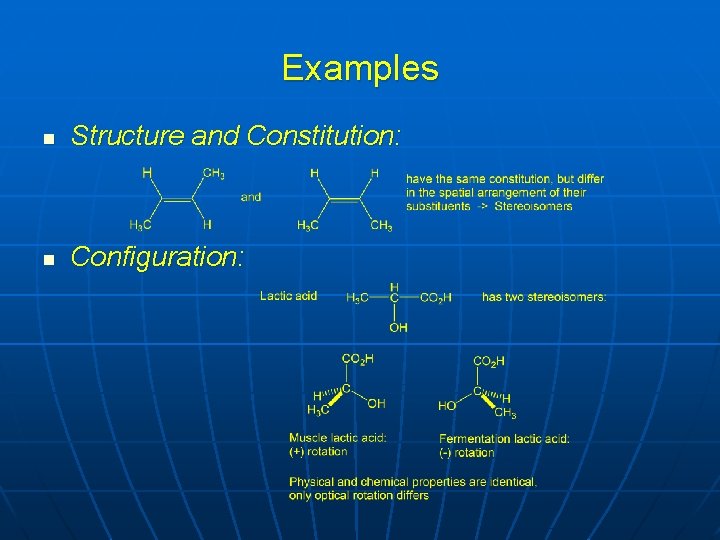
Examples n Structure and Constitution: n Configuration:
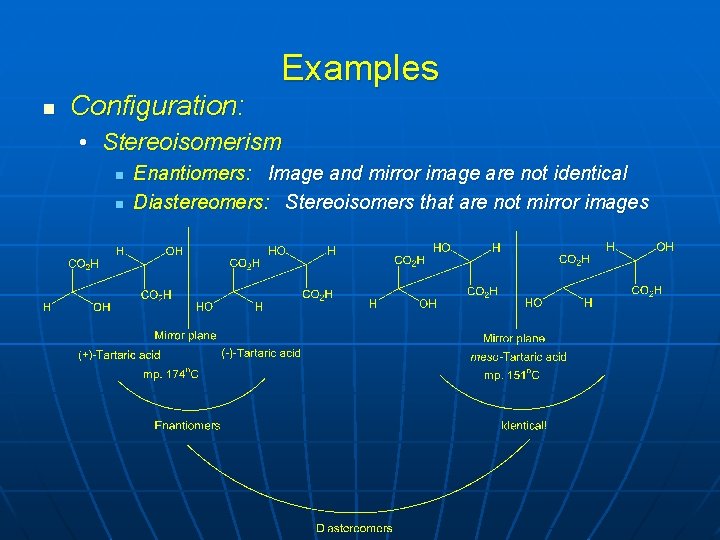
Examples n Configuration: • Stereoisomerism n n Enantiomers: Image and mirror image are not identical Diastereomers: Stereoisomers that are not mirror images
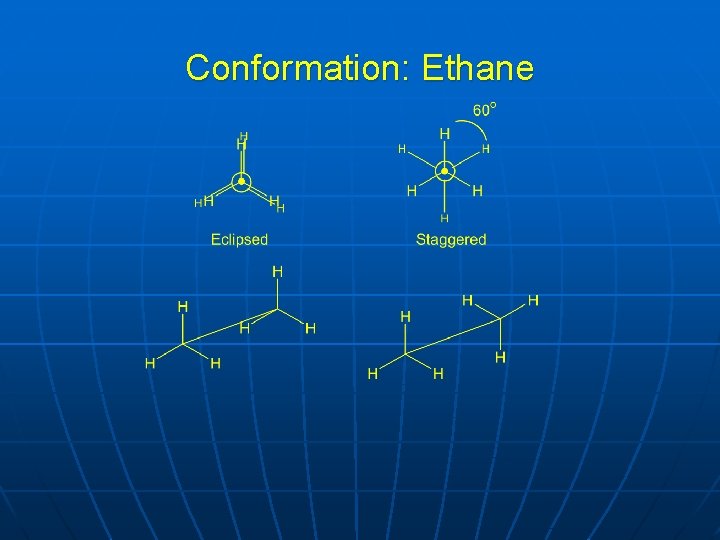
Conformation: Ethane
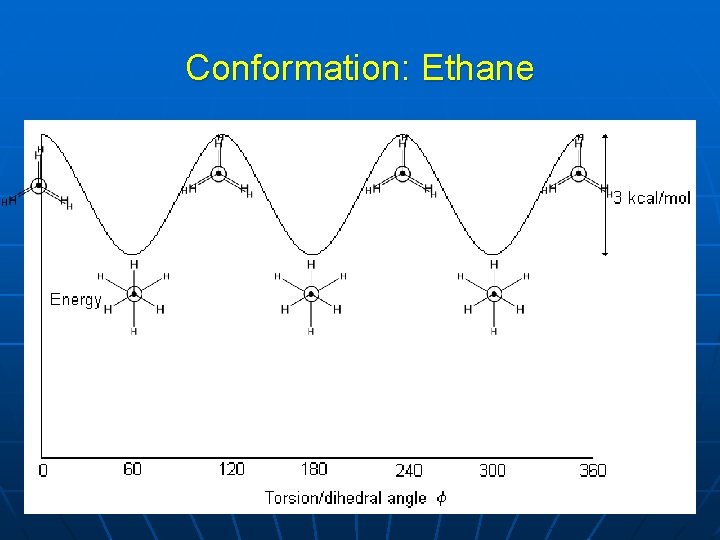
Conformation: Ethane
Conformational Analysis n n n Cyclohexane Bicyclic systems and steroids Heterocyclic systems
Optical activity and Stereoisomerism n Symmetry und chirality • • n Symmetry axis Cn Symmetry plane σ Symmetry centre i Rotation/reflection axis Sn Molecular asymmetry • Chiral axis • Chiral plane • Chiral centre n Prochirality
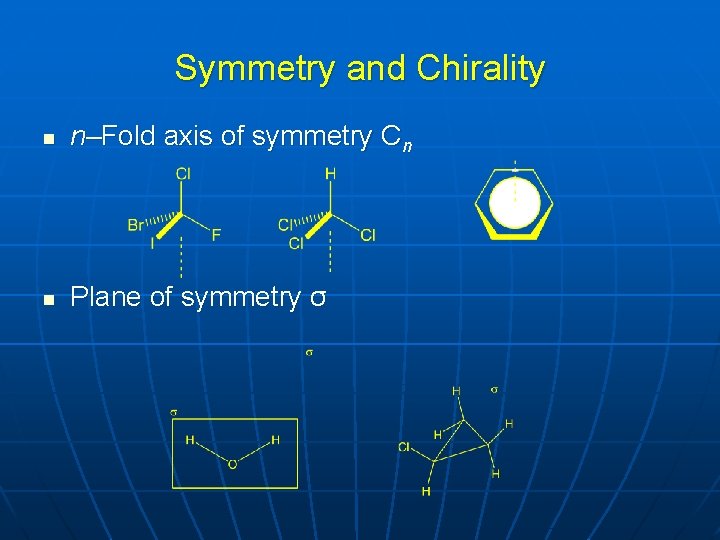
Symmetry and Chirality n n–Fold axis of symmetry Cn n Plane of symmetry σ
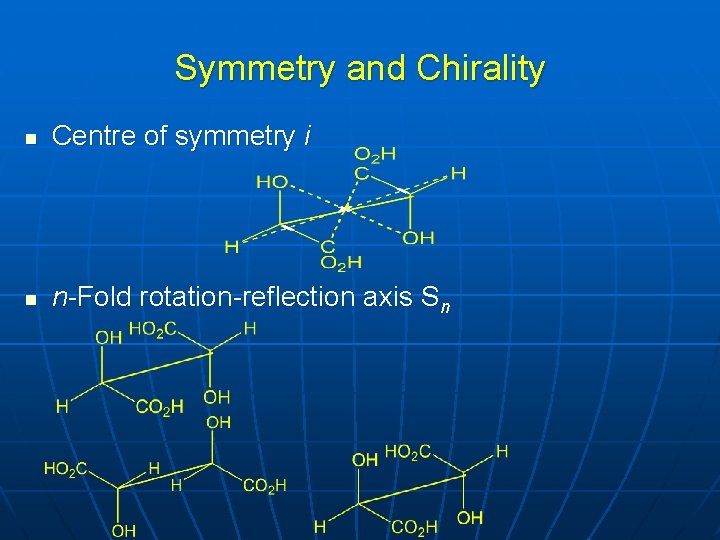
Symmetry and Chirality n Centre of symmetry i n n-Fold rotation-reflection axis Sn
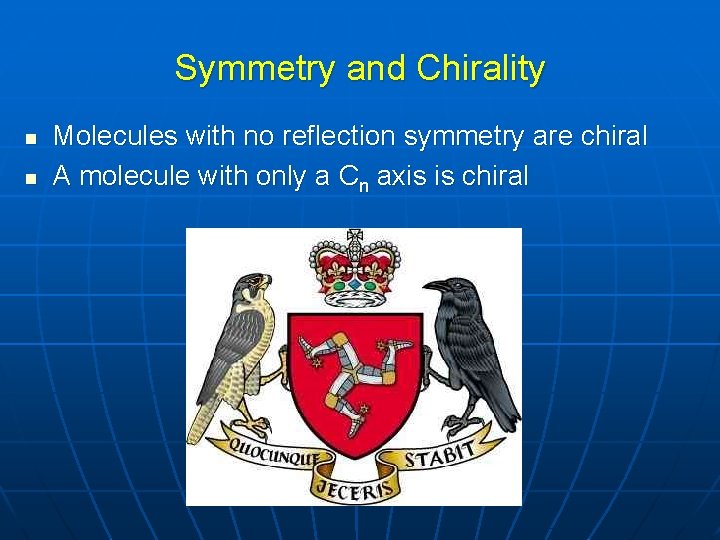
Symmetry and Chirality n n Molecules with no reflection symmetry are chiral A molecule with only a Cn axis is chiral
Molecular Asymmetry n n n Chiral axis Chiral plane Chiral centre

Chiral Axis
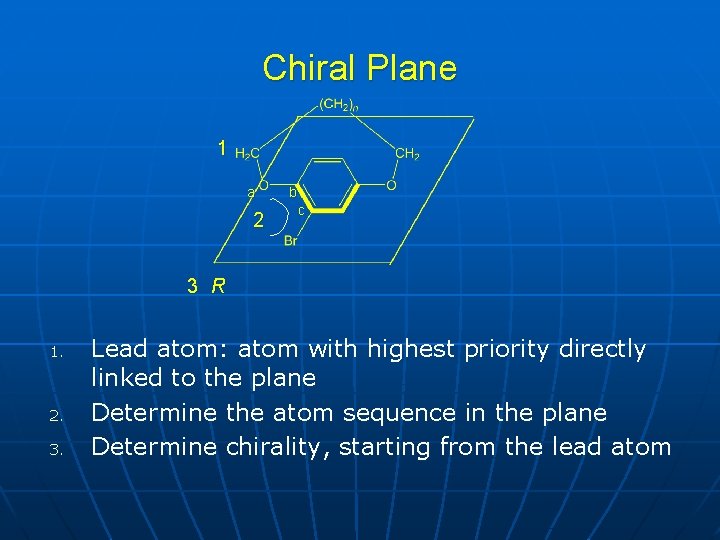
Chiral Plane 1 a 2 b c 3 R 1. 2. 3. Lead atom: atom with highest priority directly linked to the plane Determine the atom sequence in the plane Determine chirality, starting from the lead atom
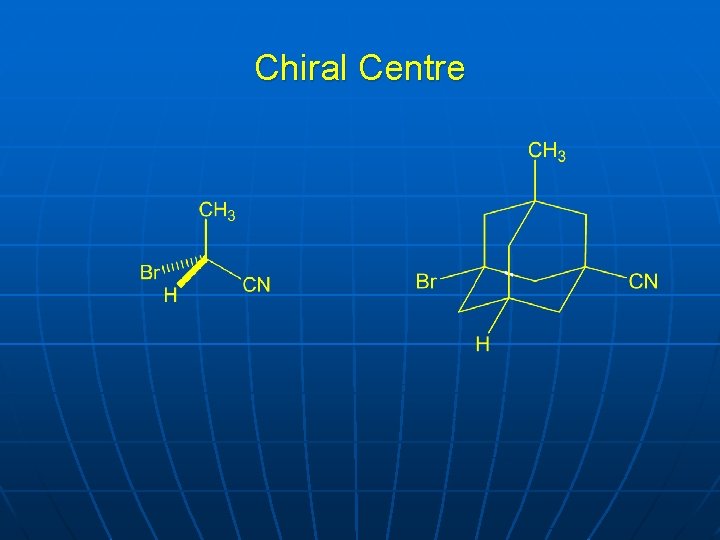
Chiral Centre
Prochirality n n Enantiotopos Enantiofaces Diastereotopos Diastereofaces
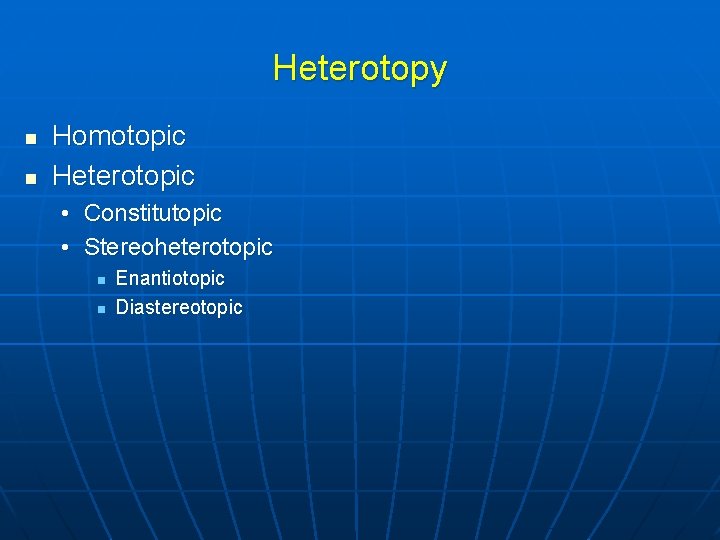
Heterotopy n n Homotopic Heterotopic • Constitutopic • Stereoheterotopic n n Enantiotopic Diastereotopic
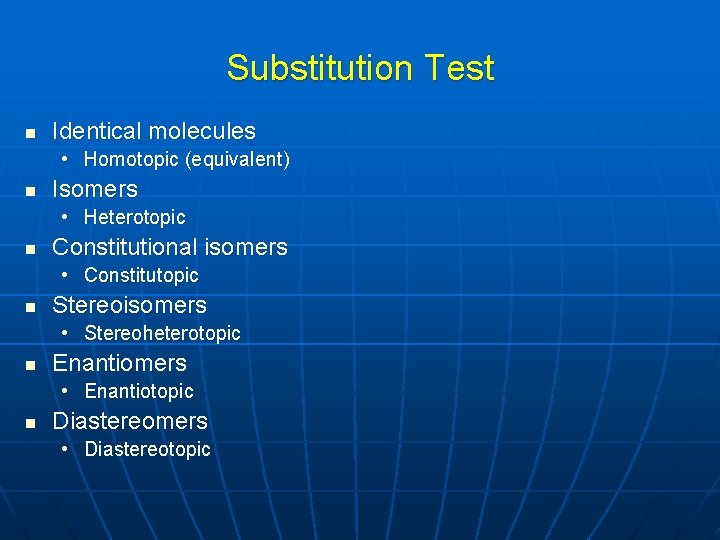
Substitution Test n Identical molecules • Homotopic (equivalent) n Isomers • Heterotopic n Constitutional isomers • Constitutopic n Stereoisomers • Stereoheterotopic n Enantiomers • Enantiotopic n Diastereomers • Diastereotopic
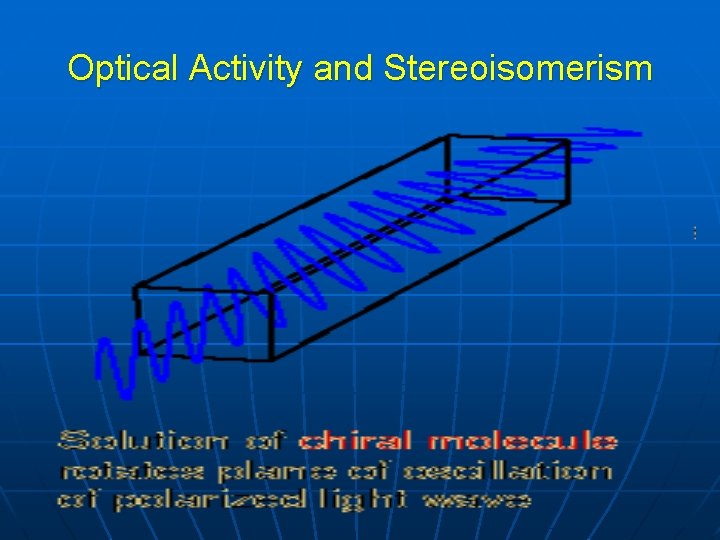
Optical Activity and Stereoisomerism
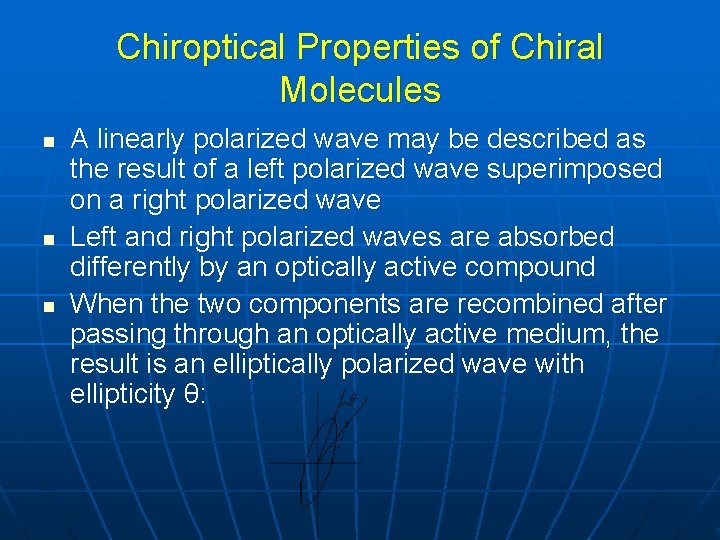
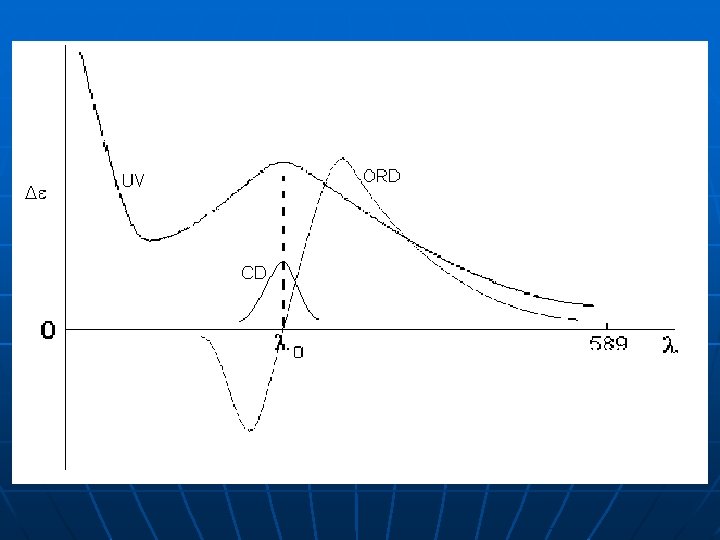
Chiroptical Properties of Chiral Molecules n n n A linearly polarized wave may be described as the result of a left polarized wave superimposed on a right polarized wave Left and right polarized waves are absorbed differently by an optically active compound When the two components are recombined after passing through an optically active medium, the result is an elliptically polarized wave with ellipticity θ:
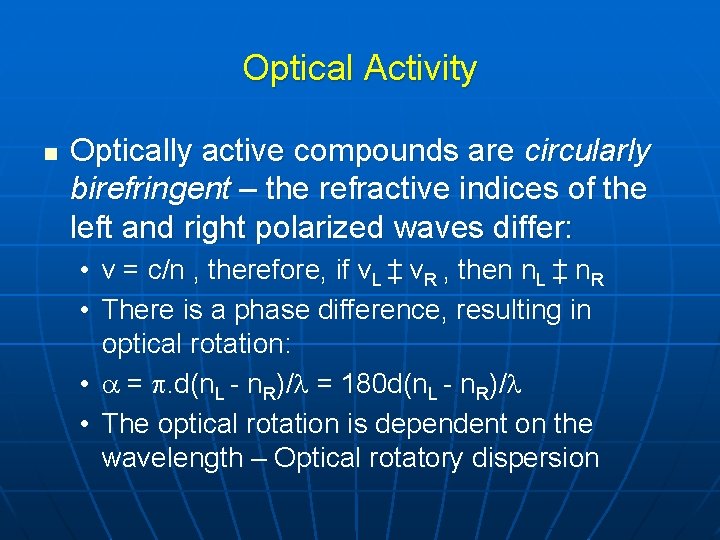
Optical Activity n Optically active compounds are circularly birefringent – the refractive indices of the left and right polarized waves differ: • v = c/n , therefore, if v. L ‡ v. R , then n. L ‡ n. R • There is a phase difference, resulting in optical rotation: • = . d(n. L - n. R)/ = 180 d(n. L - n. R)/ • The optical rotation is dependent on the wavelength – Optical rotatory dispersion
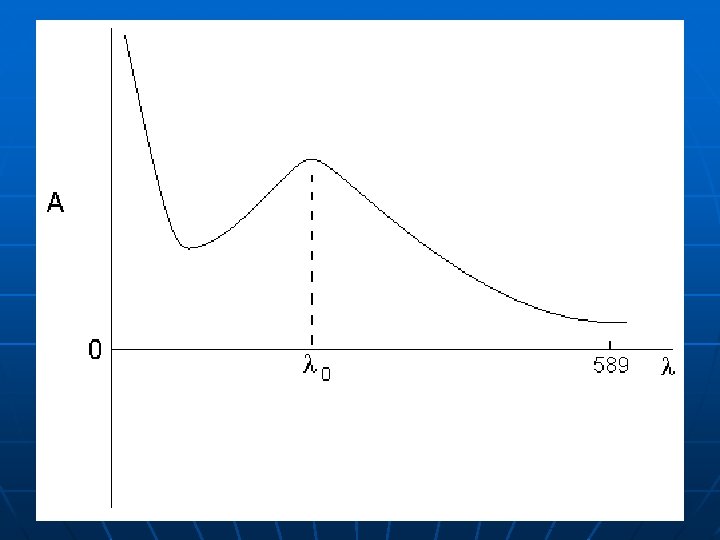
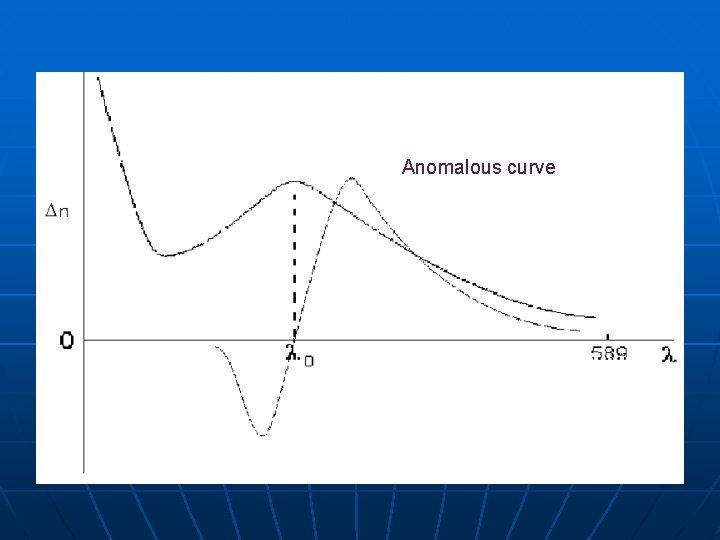
Anomalous curve
Chiroptical Properties of Chiral Molecules n Optical rotatory dispersion • Plain curves • Anomalous curves
Chiroptical Properties of Chiral Molecules n Optical rotatory dispersion • Achiral chromophores • Chiral chromophores
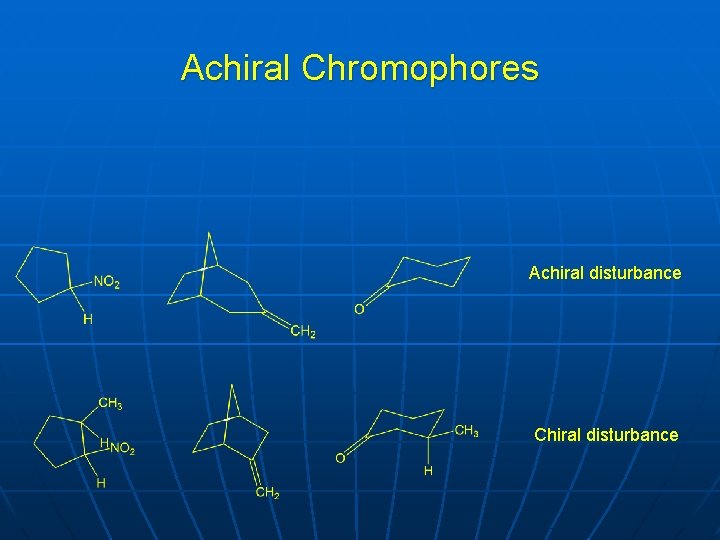
Achiral Chromophores Achiral disturbance Chiral disturbance
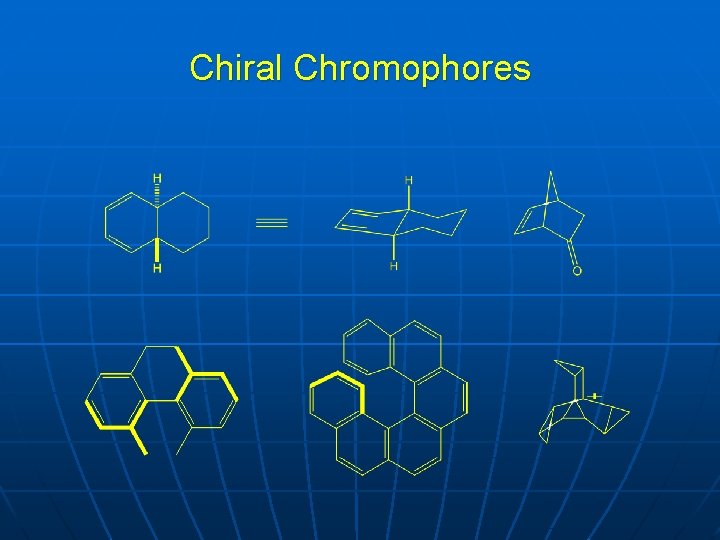
Chiral Chromophores
Chiroptical Properties of Chiral Molecules n Optical rotatory dispersion • • • Constitution Configuration Conformation
Plain Curves n n With small amounts of substance, one can measure at shorter wavelengths To determine whether a substance is really optically active and not racemic
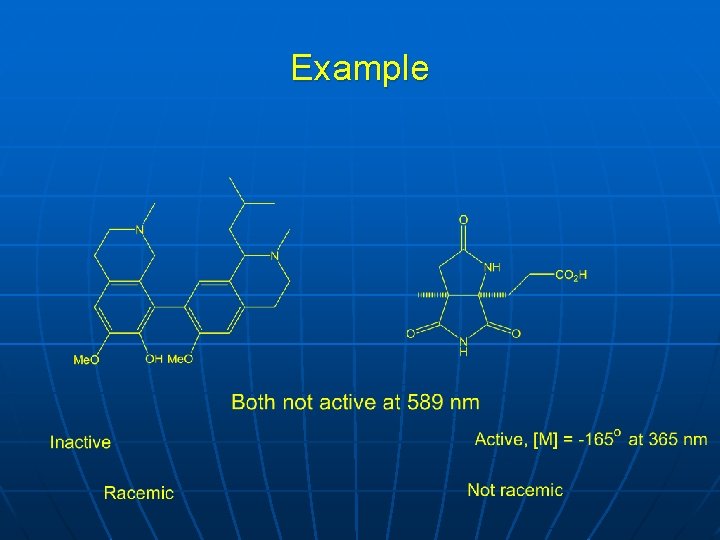
Example
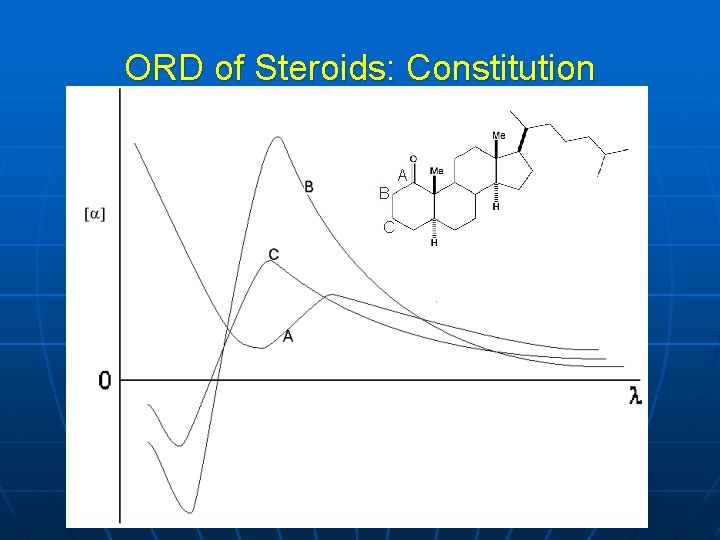
ORD of Steroids: Constitution A B C
Chiroptical Properties of Chiral Molecules n Optical rotatory dispersion • Constitution • Configuration and conformation
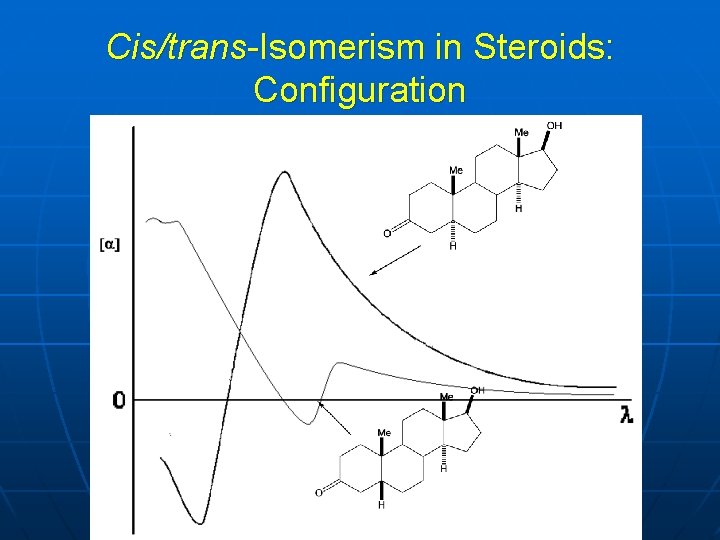
Cis/trans-Isomerism in Steroids: Configuration
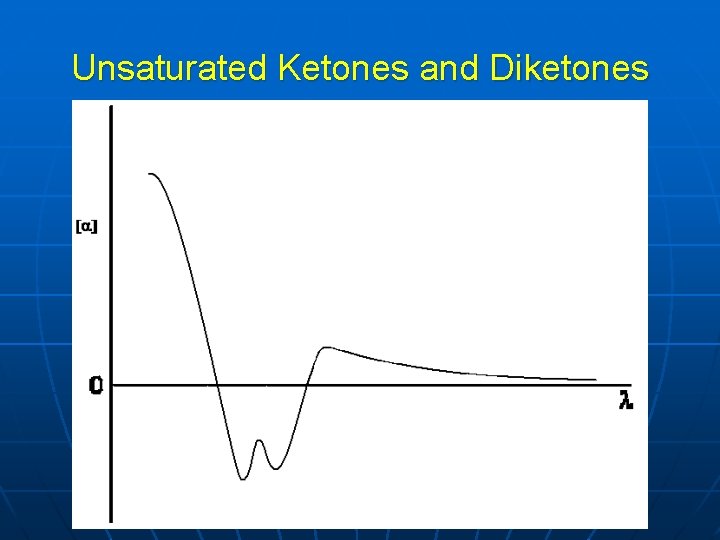
Unsaturated Ketones and Diketones
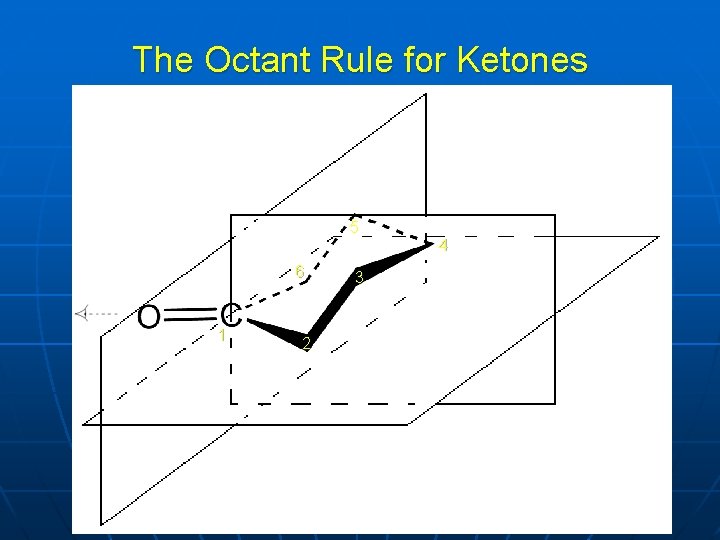
The Octant Rule for Ketones 5 6 1 2 3 4
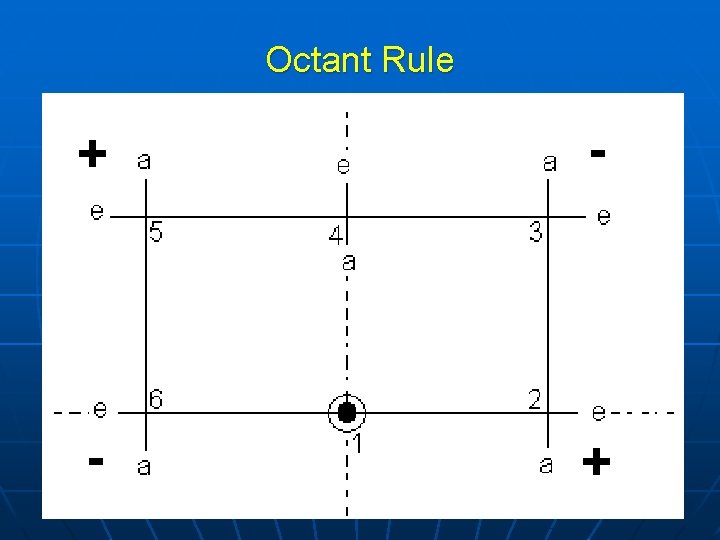
Octant Rule
Chiroptical Properties of Chiral Molecules • Octant rule: Configuration n Conformation n • Absolute configuration
Summary n n Introduction Conformational analysis • • • n Optical activity and stereoisomerism • • • n Cyclohexane Bicyclic compounds, steroids Heterocyclic compounds Symmetry and chirality Molecular asymmetry Prochirality Chiroptical properties of chiral molecules • Optical rotatory dispersion
Questions/Remarks ?
- Slides: 43