
STEPS of SCIENTIFIC METHOD Observation leads to 1
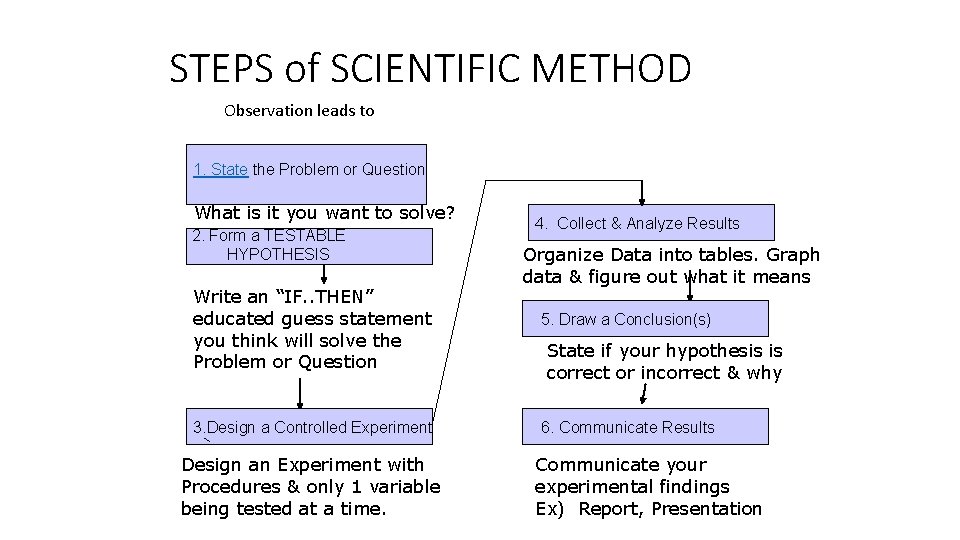
STEPS of SCIENTIFIC METHOD Observation leads to 1. State the Problem or Question What is it you want to solve? 2. Form a TESTABLE HYPOTHESIS Write an “IF. . THEN” educated guess statement you think will solve the Problem or Question 3. Design a Controlled Experiment Design an Experiment with Procedures & only 1 variable being tested at a time. 4. Collect & Analyze Results Organize Data into tables. Graph data & figure out what it means 5. Draw a Conclusion(s) State if your hypothesis is correct or incorrect & why 6. Communicate Results Communicate your experimental findings Ex) Report, Presentation
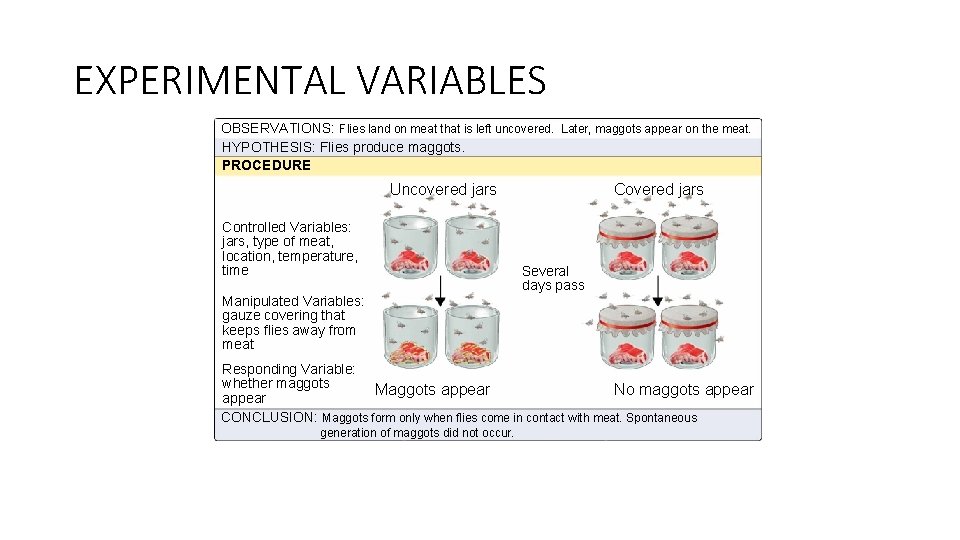
EXPERIMENTAL VARIABLES OBSERVATIONS: Flies land on meat that is left uncovered. Later, maggots appear on the meat. HYPOTHESIS: Flies produce maggots. PROCEDURE Uncovered jars Controlled Variables: jars, type of meat, location, temperature, time Covered jars Several days pass Manipulated Variables: gauze covering that keeps flies away from meat Responding Variable: whether maggots Maggots appear No maggots appear CONCLUSION: Maggots form only when flies come in contact with meat. Spontaneous generation of maggots did not occur.
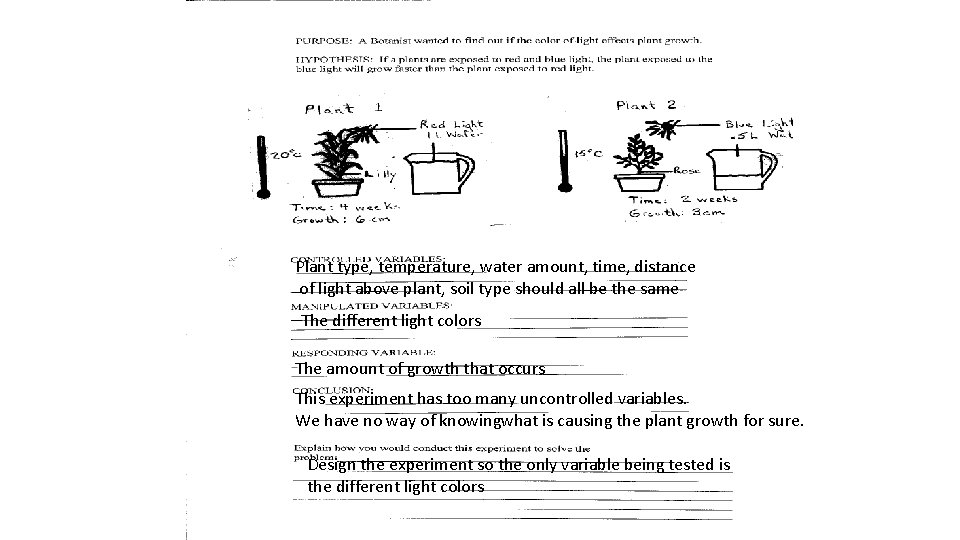
Plant type, temperature, water amount, time, distance of light above plant, soil type should all be the same The different light colors The amount of growth that occurs This experiment has too many uncontrolled variables. We have no way of knowingwhat is causing the plant growth for sure. Design the experiment so the only variable being tested is the different light colors
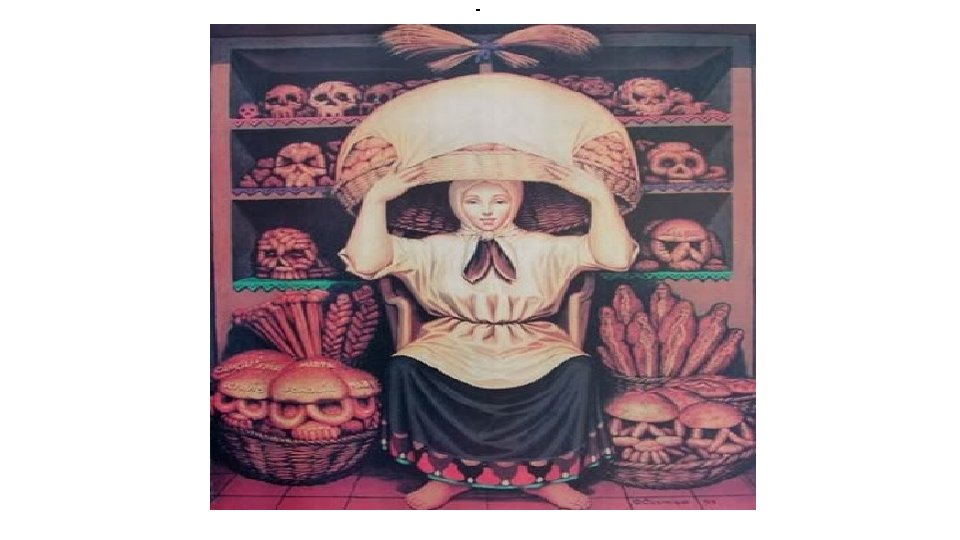
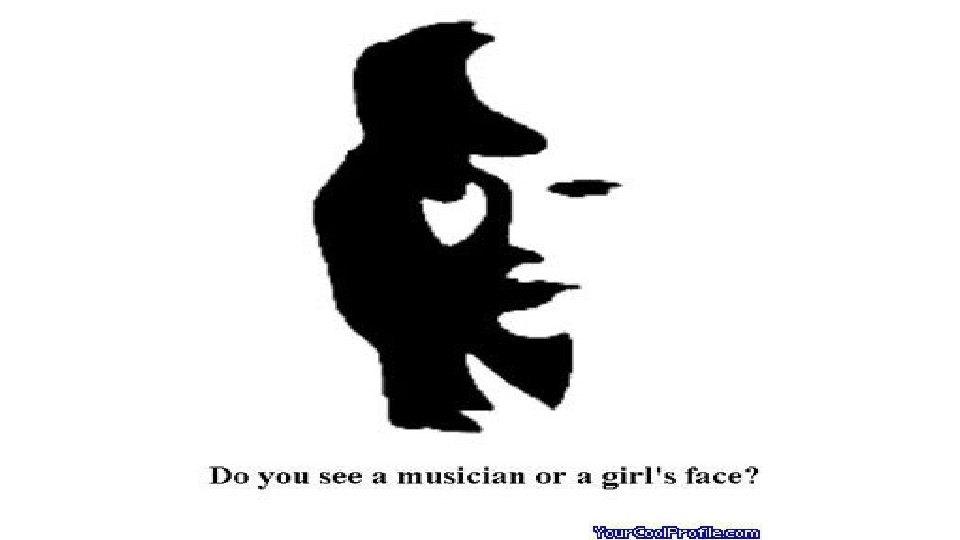
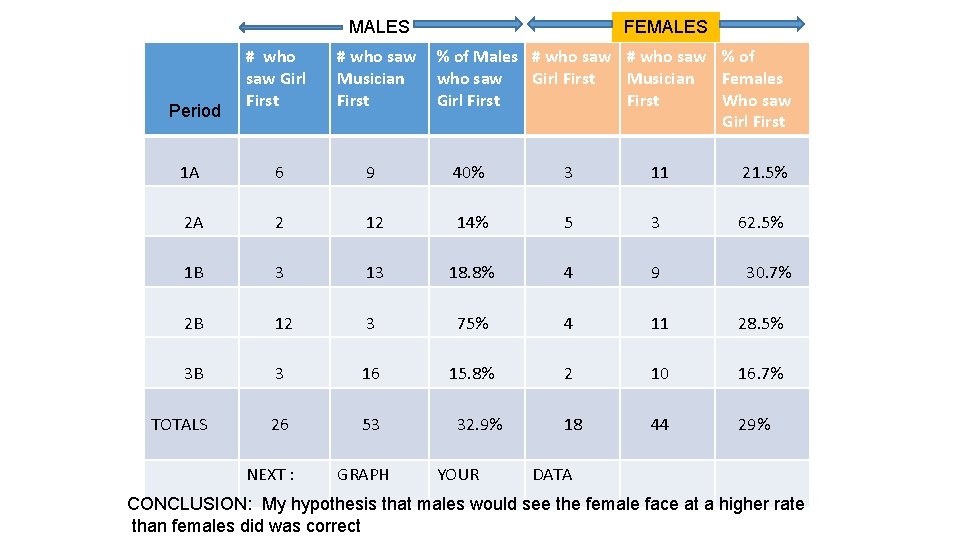
MALES Period # who saw Girl First # who saw Musician First FEMALES % of Males # who saw % of who saw Girl First Musician Females Girl First Who saw Girl First 1 A 6 9 40% 3 11 21. 5% 2 A 2 12 14% 5 3 62. 5% 1 B 3 13 18. 8% 4 9 2 B 12 3 75% 4 11 28. 5% 3 B 3 16 15. 8% 2 10 16. 7% TOTALS 26 53 18 44 29% NEXT : GRAPH 32. 9% YOUR 30. 7% DATA CONCLUSION: My hypothesis that males would see the female face at a higher rate than females did was correct
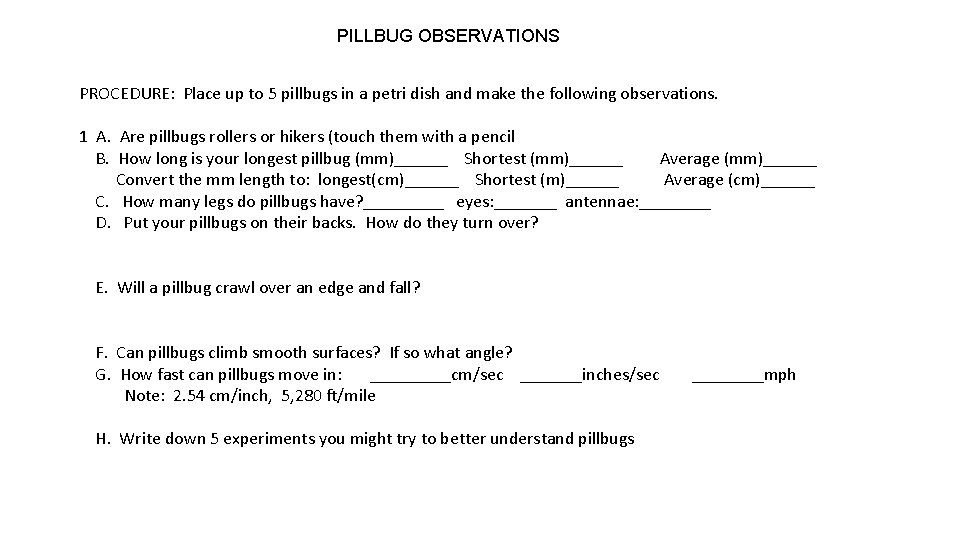
PILLBUG OBSERVATIONS PROCEDURE: Place up to 5 pillbugs in a petri dish and make the following observations. 1 A. Are pillbugs rollers or hikers (touch them with a pencil B. How long is your longest pillbug (mm)______ Shortest (mm)______ Average (mm)______ Convert the mm length to: longest(cm)______ Shortest (m)______ Average (cm)______ C. How many legs do pillbugs have? _____ eyes: _______ antennae: ____ D. Put your pillbugs on their backs. How do they turn over? E. Will a pillbug crawl over an edge and fall? F. Can pillbugs climb smooth surfaces? If so what angle? G. How fast can pillbugs move in: _____cm/sec _______inches/sec Note: 2. 54 cm/inch, 5, 280 ft/mile H. Write down 5 experiments you might try to better understand pillbugs ____mph
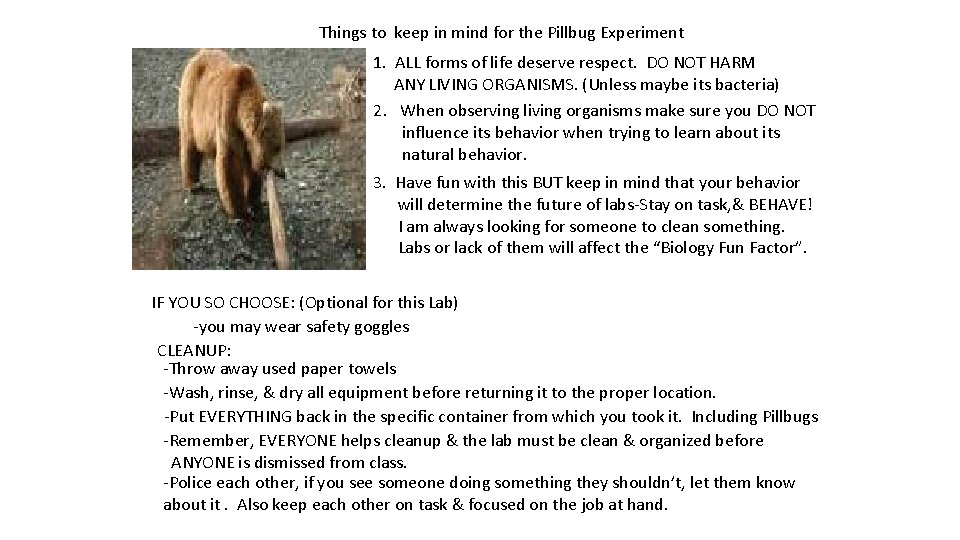
Things to keep in mind for the Pillbug Experiment 1. ALL forms of life deserve respect. DO NOT HARM ANY LIVING ORGANISMS. (Unless maybe its bacteria) 2. When observing living organisms make sure you DO NOT influence its behavior when trying to learn about its natural behavior. 3. Have fun with this BUT keep in mind that your behavior will determine the future of labs-Stay on task, & BEHAVE! I am always looking for someone to clean something. Labs or lack of them will affect the “Biology Fun Factor”. IF YOU SO CHOOSE: (Optional for this Lab) -you may wear safety goggles CLEANUP: -Throw away used paper towels -Wash, rinse, & dry all equipment before returning it to the proper location. -Put EVERYTHING back in the specific container from which you took it. Including Pillbugs -Remember, EVERYONE helps cleanup & the lab must be clean & organized before ANYONE is dismissed from class. -Police each other, if you see someone doing something they shouldn’t, let them know about it. Also keep each other on task & focused on the job at hand.

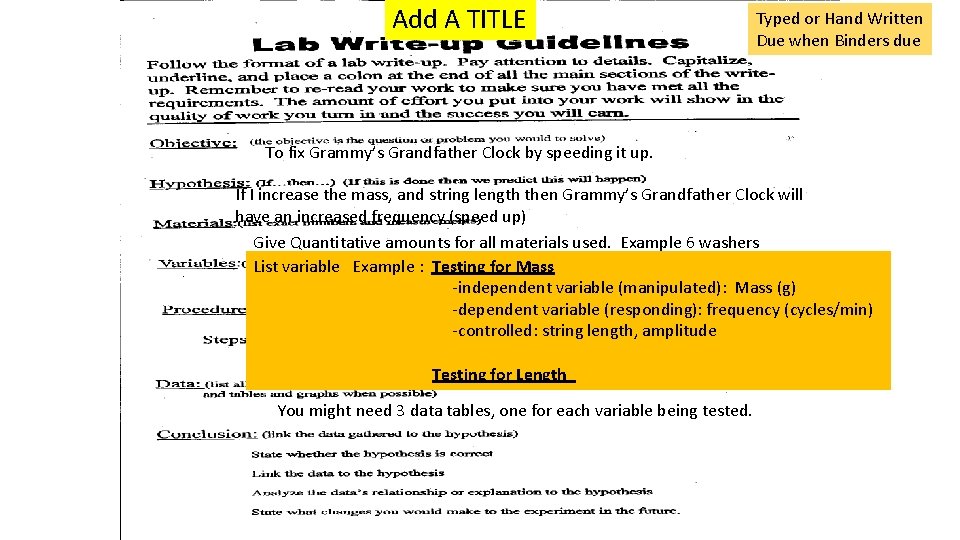
Add A TITLE Typed or Hand Written Due when Binders due To fix Grammy’s Grandfather Clock by speeding it up. If I increase the mass, and string length then Grammy’s Grandfather Clock will have an increased frequency (speed up) Give Quantitative amounts for all materials used. Example 6 washers List variable Example : Testing for Mass -independent variable (manipulated): Mass (g) Write these in numerical -dependent steps so another Sophomore couldfrequency understand variable (responding): (cycles/min) how to do your experiment without having ever done it. -controlled: string length, amplitude Testing for Length You might need 3 data tables, one for each variable being tested.
Pendulum Lab Reflection 1. Did you “zero out” the triple beam balance before measuring the mass of washer(s) 2. Did you use the English or the metric system for measurements? 3. Did you include units? 4. Did you get the Independent variable on the X axis & Dependent on the Y? 5. Did you label your data table and graph with Titles? Units included? 6. Did you test your independent variable(s) systematically- ie. 10, cm, 12, cm, 14 cm 7. Could others follow your procedures? Did you do enough trials? 8. In your conclusion did you accept or reject your hypothesis? 9. Did you address (possible) experimental error ?
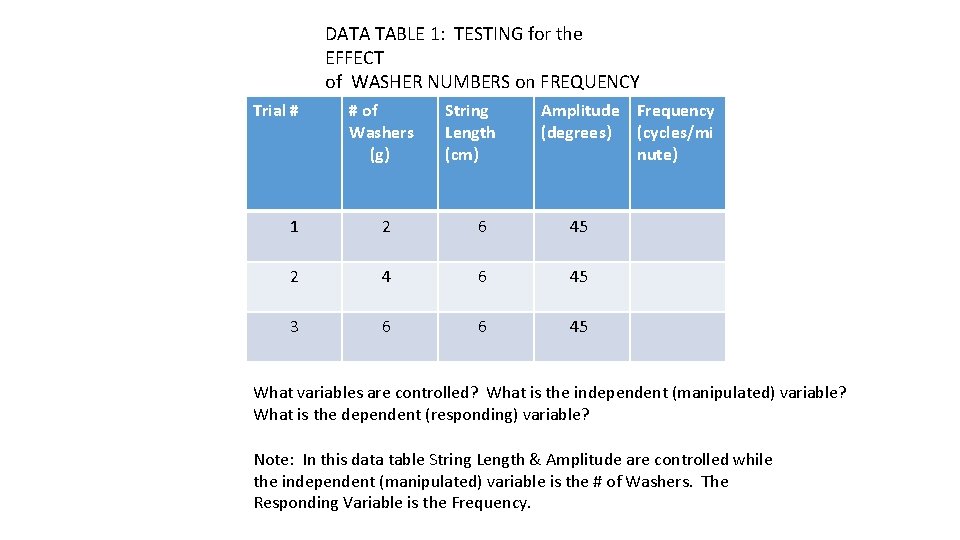
DATA TABLE 1: TESTING for the EFFECT of WASHER NUMBERS on FREQUENCY Trial # # of Washers (g) String Length (cm) Amplitude Frequency (degrees) (cycles/mi nute) 1 2 6 45 2 4 6 45 3 6 6 45 What variables are controlled? What is the independent (manipulated) variable? What is the dependent (responding) variable? Note: In this data table String Length & Amplitude are controlled while the independent (manipulated) variable is the # of Washers. The Responding Variable is the Frequency.
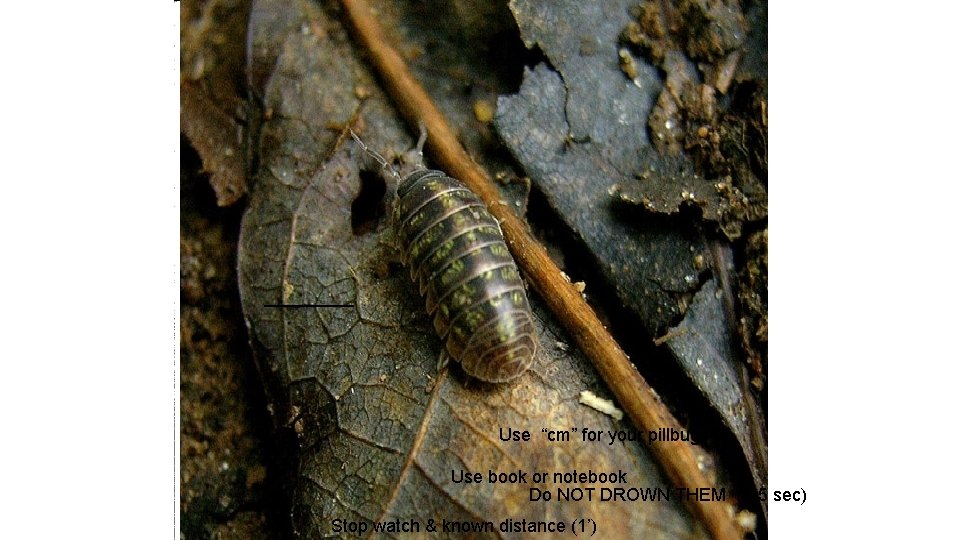
Use “cm” for your pillbugs Use book or notebook Do NOT DROWN THEM (2 -5 sec) Stop watch & known distance (1’)
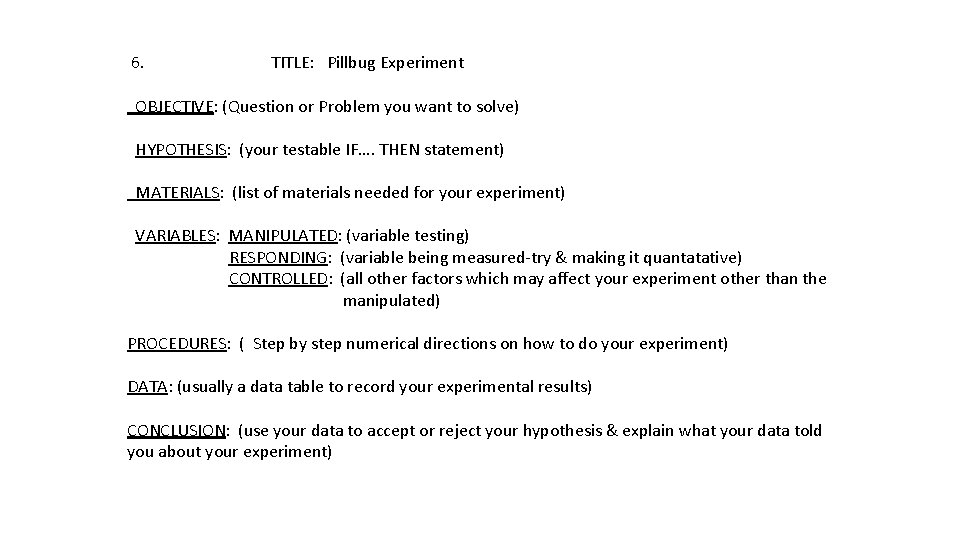
6. TITLE: Pillbug Experiment OBJECTIVE: (Question or Problem you want to solve) HYPOTHESIS: (your testable IF…. THEN statement) MATERIALS: (list of materials needed for your experiment) VARIABLES: MANIPULATED: (variable testing) RESPONDING: (variable being measured-try & making it quantatative) CONTROLLED: (all other factors which may affect your experiment other than the manipulated) PROCEDURES: ( Step by step numerical directions on how to do your experiment) DATA: (usually a data table to record your experimental results) CONCLUSION: (use your data to accept or reject your hypothesis & explain what your data told you about your experiment)
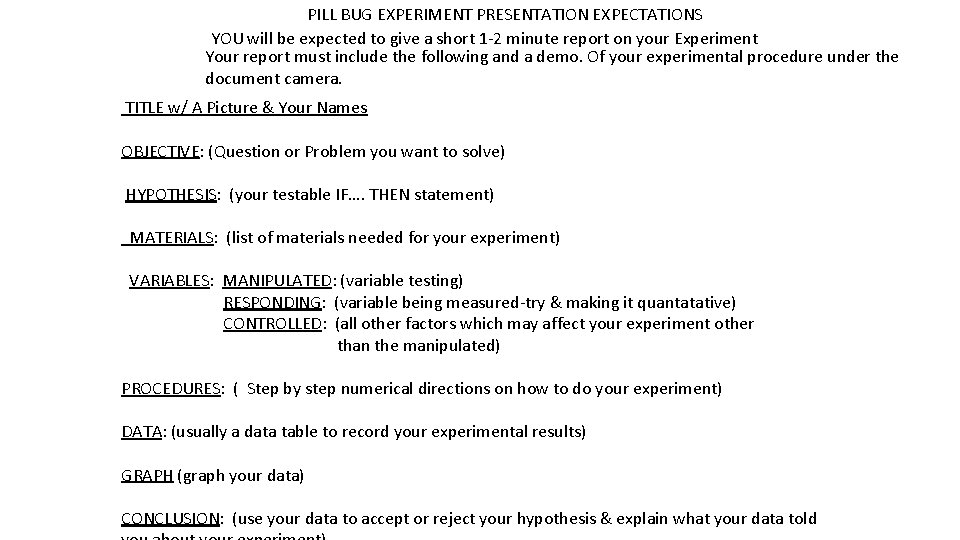
PILL BUG EXPERIMENT PRESENTATION EXPECTATIONS YOU will be expected to give a short 1 -2 minute report on your Experiment Your report must include the following and a demo. Of your experimental procedure under the document camera. TITLE w/ A Picture & Your Names OBJECTIVE: (Question or Problem you want to solve) HYPOTHESIS: (your testable IF…. THEN statement) MATERIALS: (list of materials needed for your experiment) VARIABLES: MANIPULATED: (variable testing) RESPONDING: (variable being measured-try & making it quantatative) CONTROLLED: (all other factors which may affect your experiment other than the manipulated) PROCEDURES: ( Step by step numerical directions on how to do your experiment) DATA: (usually a data table to record your experimental results) GRAPH (graph your data) CONCLUSION: (use your data to accept or reject your hypothesis & explain what your data told
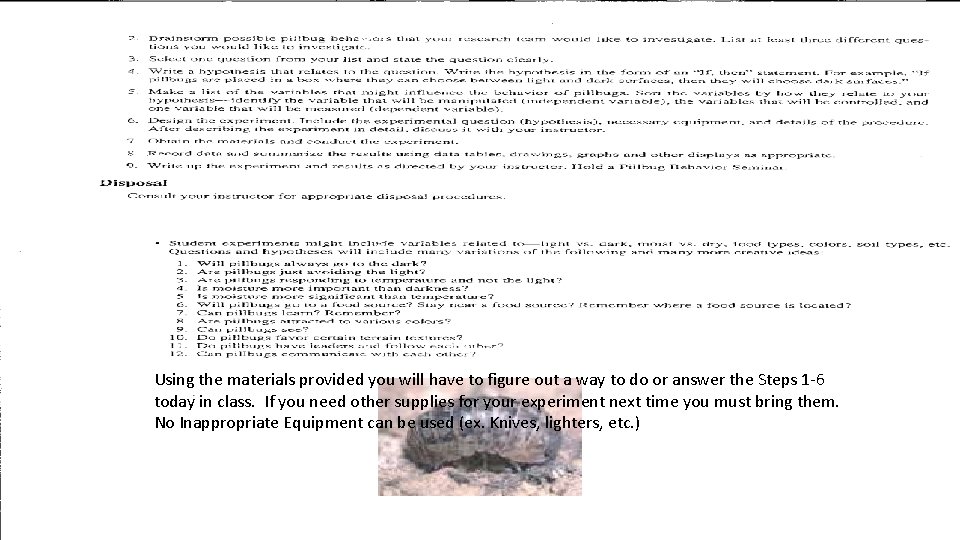
Using the materials provided you will have to figure out a way to do or answer the Steps 1 -6 today in class. If you need other supplies for your experiment next time you must bring them. No Inappropriate Equipment can be used (ex. Knives, lighters, etc. )
- Slides: 16