
Steps in the Design Process The Learning Challenge
- Slides: 10
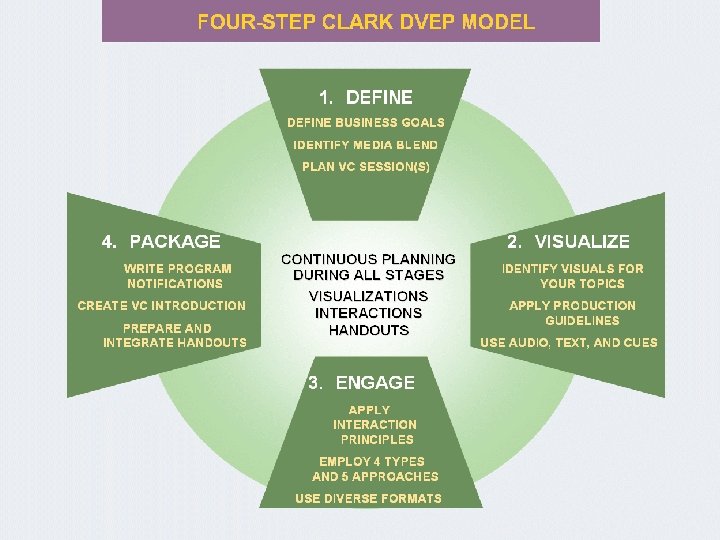
Steps in the Design Process
The Learning Challenge Define Learning Objectives 1. What are the skills, knowledge and attitudes staff will need? 2. Write behaviorally specific objectives. 3. Then select possible ELearning training methods. But Wait Here is help
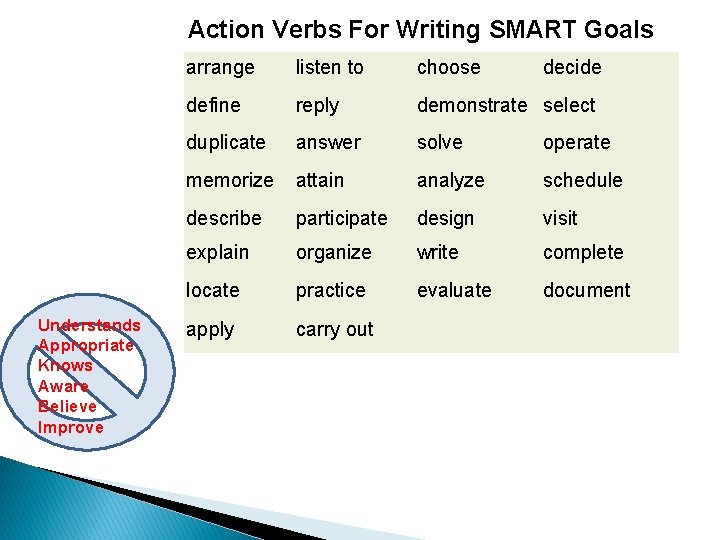
Action Verbs For Writing SMART Goals Understands Appropriate Knows Aware Believe Improve arrange listen to choose decide define reply demonstrate select duplicate answer solve operate memorize attain analyze schedule describe participate design visit explain organize write complete locate practice evaluate document apply carry out
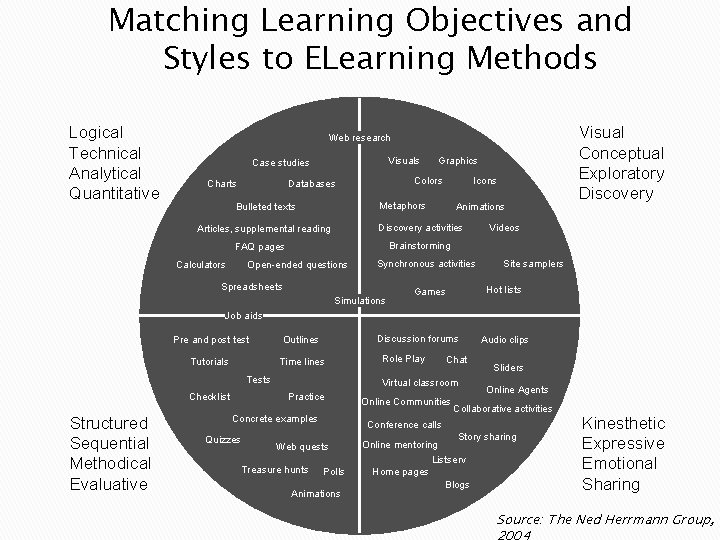
Matching Learning Objectives and Styles to ELearning Methods Logical Technical Analytical Quantitative Web research Visuals Case studies Charts Colors Databases Icons Metaphors Bulleted texts Animations Discovery activities Articles, supplemental reading Videos Brainstorming FAQ pages Calculators Graphics Visual Conceptual Exploratory Discovery Open-ended questions Synchronous activities Spreadsheets Simulations Site samplers Hot lists Games Job aids Discussion forums Pre and post test Outlines Tutorials Time lines Tests Checklist Structured Sequential Methodical Evaluative Chat Virtual classroom Practice Concrete examples Quizzes Role Play Sliders Online Agents Collaborative activities Conference calls Web quests Treasure hunts Online Communities Audio clips Polls Animations Story sharing Online mentoring Listserv Home pages Blogs Kinesthetic Expressive Emotional Sharing Source: The Ned Herrmann Group, 2004
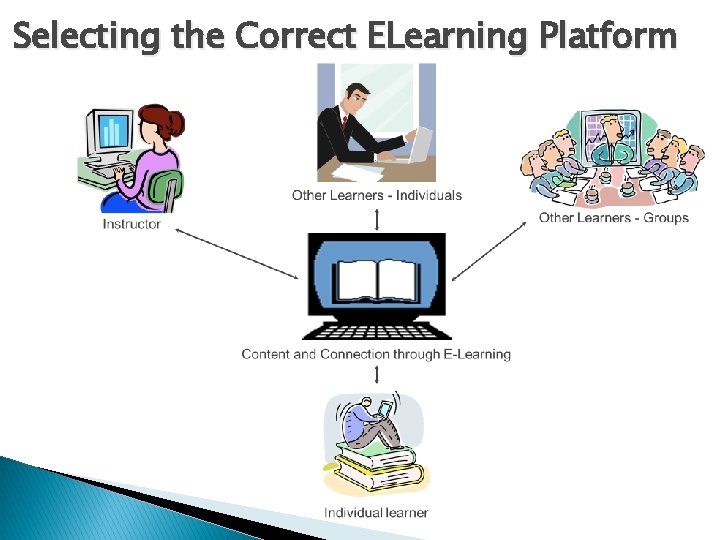
Selecting the Correct ELearning Platform
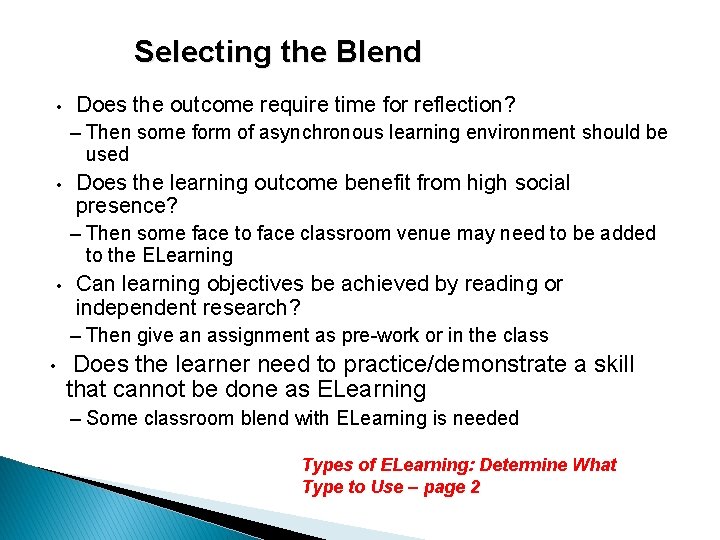
Selecting the Blend • Does the outcome require time for reflection? – Then some form of asynchronous learning environment should be used • Does the learning outcome benefit from high social presence? – Then some face to face classroom venue may need to be added to the ELearning • Can learning objectives be achieved by reading or independent research? – Then give an assignment as pre-work or in the class • Does the learner need to practice/demonstrate a skill that cannot be done as ELearning – Some classroom blend with ELearning is needed Types of ELearning: Determine What Type to Use – page 2
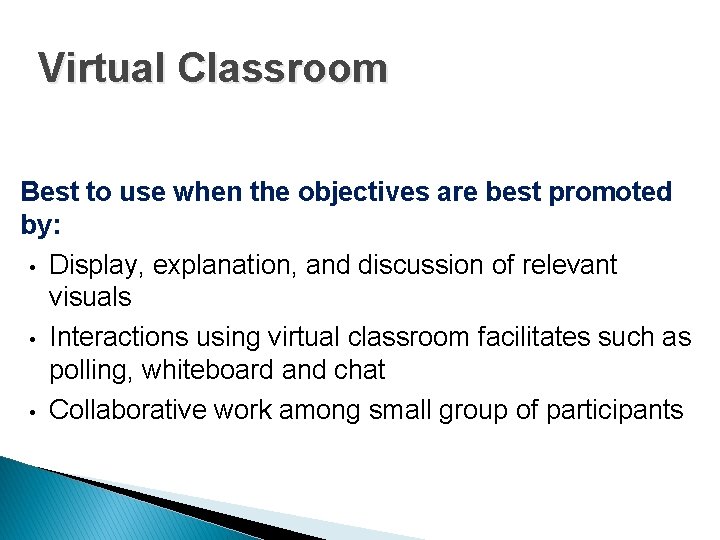
Virtual Classroom Best to use when the objectives are best promoted by: • Display, explanation, and discussion of relevant visuals • Interactions using virtual classroom facilitates such as polling, whiteboard and chat • Collaborative work among small group of participants
Auditory • • • Auditory explanations to complex visuals Use cueing tools to point out the relevant part of the visual Do not use auditory for information the learner needs to reference later, i. e. exercise directions Remember ADA rules when developing ELearning.
Types of ELearning � What questions do you have about selecting the type of ELearning? � Let’s take a poll. � How well is this workshop meeting your needs? Select the one that reflects what you think right now. � What can I do to make it better?