
Steps in A Court Case What happens in
- Slides: 8
Steps in A Court Case What happens in a Court Case?
1. Briefs n Both sides of the case and any interested parties submit written information summarizing their point of view.
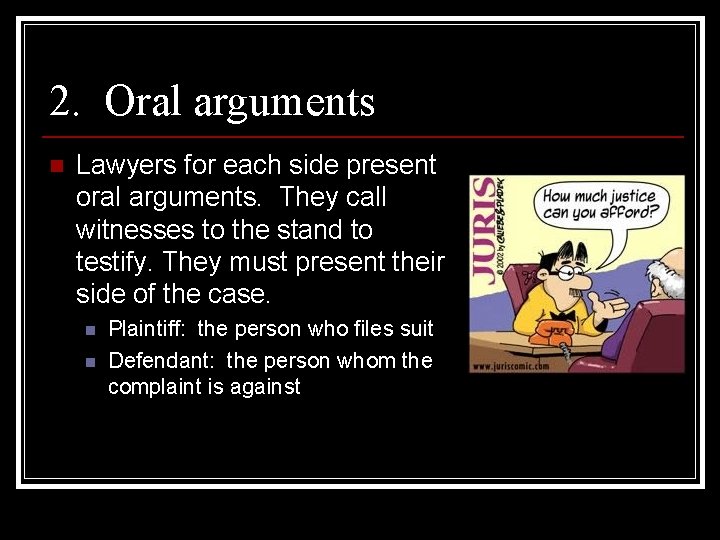
2. Oral arguments n Lawyers for each side present oral arguments. They call witnesses to the stand to testify. They must present their side of the case. n n Plaintiff: the person who files suit Defendant: the person whom the complaint is against
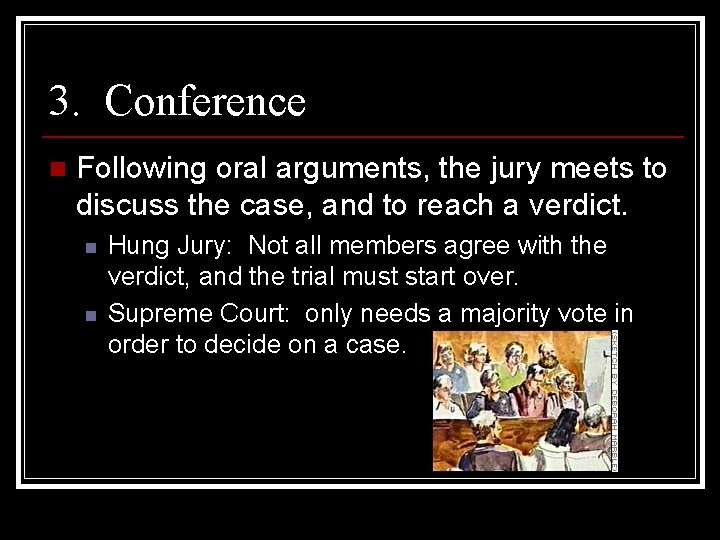
3. Conference n Following oral arguments, the jury meets to discuss the case, and to reach a verdict. n n Hung Jury: Not all members agree with the verdict, and the trial must start over. Supreme Court: only needs a majority vote in order to decide on a case.
4 th Step: Supreme Court only n Opinions: Justices are assigned to write the majority and minority opinions of the court. When all opinions have been written and justices have determined which opinion they will support, the decision is announced in public. Justices who disagree with those opinions may write a dissenting opinion.
Double Jeopardy n No person can be tried twice for the same crime. This is established in the Constitution in 5 th Amendment
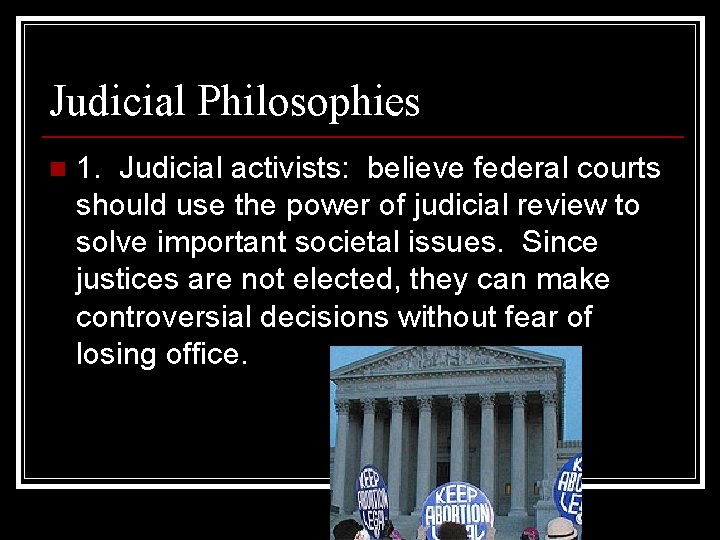
Judicial Philosophies n 1. Judicial activists: believe federal courts should use the power of judicial review to solve important societal issues. Since justices are not elected, they can make controversial decisions without fear of losing office.
Judicial Philosophies n 2. Those in favor of judicial restraint argue that the Supreme Court should avoid ruling on constitutional issues whenever possible. When action is necessary, it should decide cases in as narrow a manner as possible.