
Stephanie Carnes LL M LCSW PNW BOCES Culturally
Stephanie Carnes, LL. M, LCSW PNW BOCES Culturally Competent Work with Central American Students
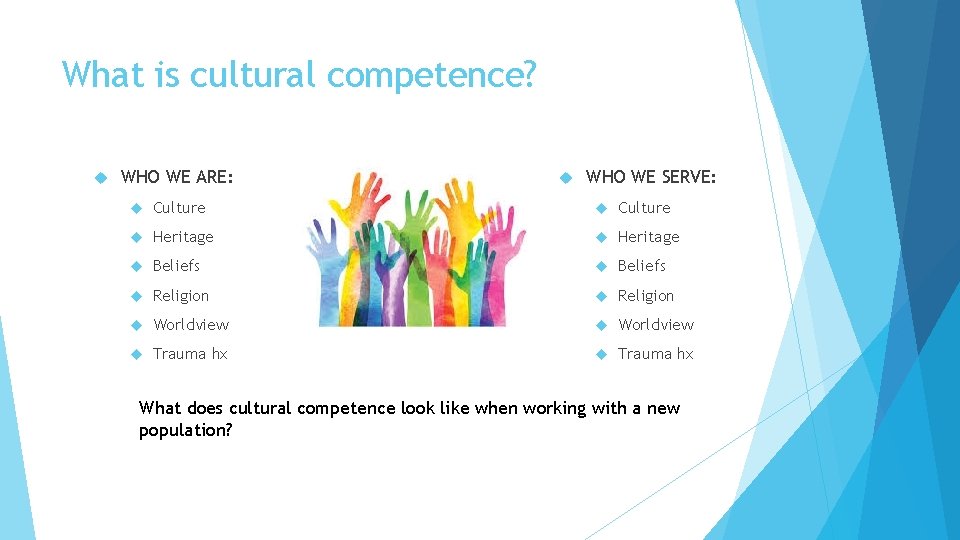
What is cultural competence? WHO WE ARE: WHO WE SERVE: Culture Heritage Beliefs Religion Worldview Trauma hx What does cultural competence look like when working with a new population?
Philosophical Debate: Refugees or Migrants?
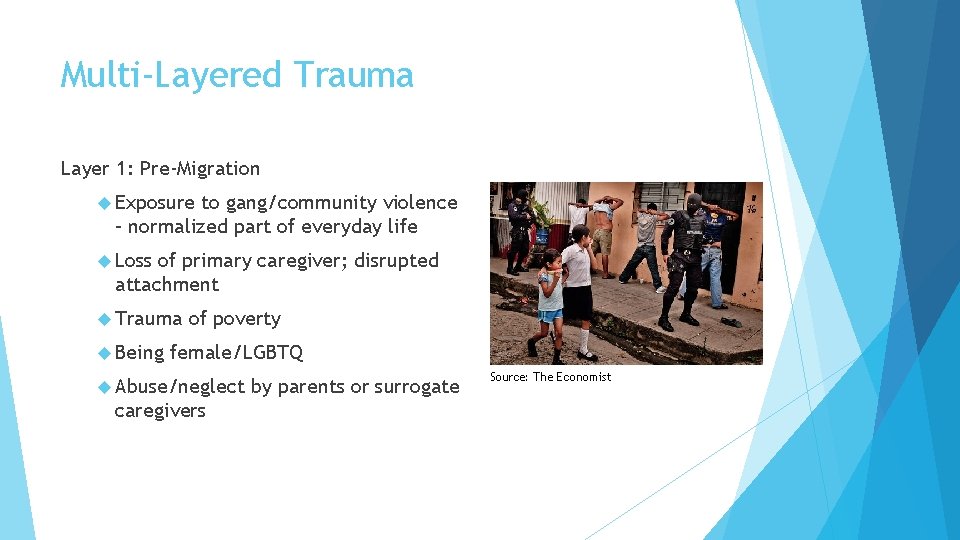
Multi-Layered Trauma Layer 1: Pre-Migration Exposure to gang/community violence – normalized part of everyday life Loss of primary caregiver; disrupted attachment Trauma Being of poverty female/LGBTQ Abuse/neglect caregivers by parents or surrogate Source: The Economist
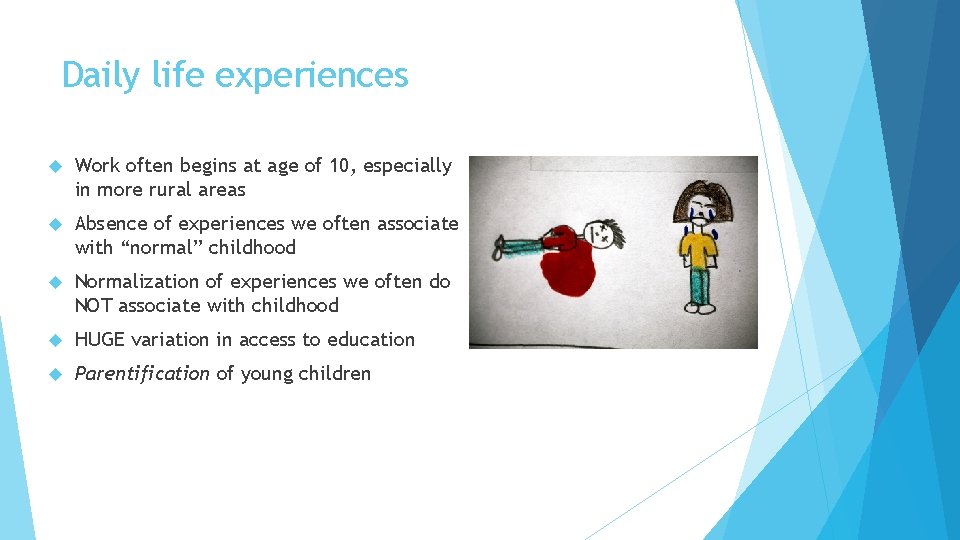
Daily life experiences Work often begins at age of 10, especially in more rural areas Absence of experiences we often associate with “normal” childhood Normalization of experiences we often do NOT associate with childhood HUGE variation in access to education Parentification of young children
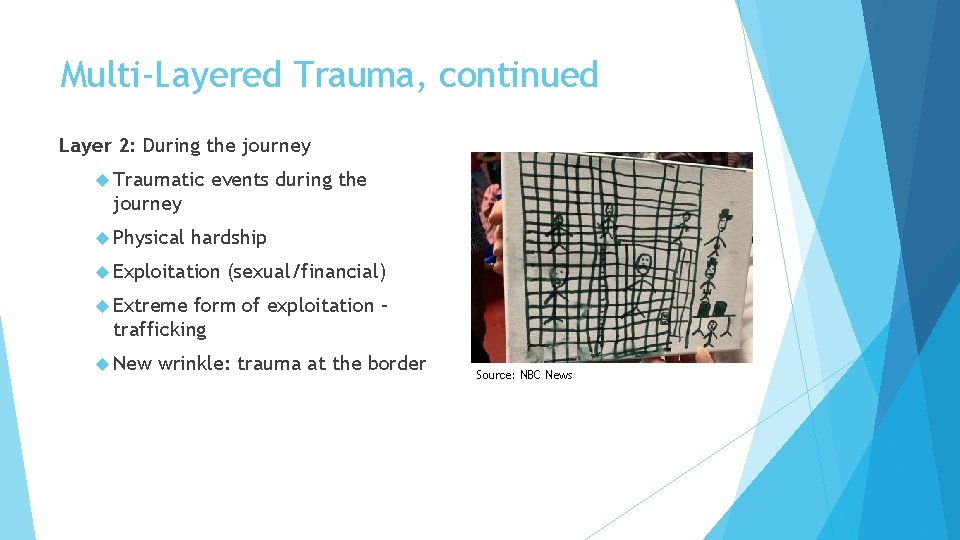
Multi-Layered Trauma, continued Layer 2: During the journey Traumatic events during the journey Physical hardship Exploitation (sexual/financial) Extreme form of exploitation – trafficking New wrinkle: trauma at the border Source: NBC News
Multi-Layered Trauma, continued Layer 3: Being a new “American” Is it really “re-unification”? (Unexpected) grief/heartbreak Social isolation Fear of deportation – what will happen if they return? “Adelante” mentality Too many responsibilities, too few supports/resources American dream, or big let-down?
Experiences of BOCES ELL students 43% from Guatemala (then Ecuador, ES + Honduras) 67% traveled to the US via land 72% reported that their trip to the US was difficult or traumatic 55% described life in the US as difficult 78% reported being worried about the political situation in the US 93% exposed to traumatic event in COO (general pop: 64%)
Real-Life Experiences What do immigrant students hear on a regular basis? “Don’t speak Spanish here. ” “Go home, Mexican!” “Trump is going to deport all of you. ” “Go back to where you came from. ” “Do the cooks (Latinos) use the same bathroom as us? ” (local restaurant)
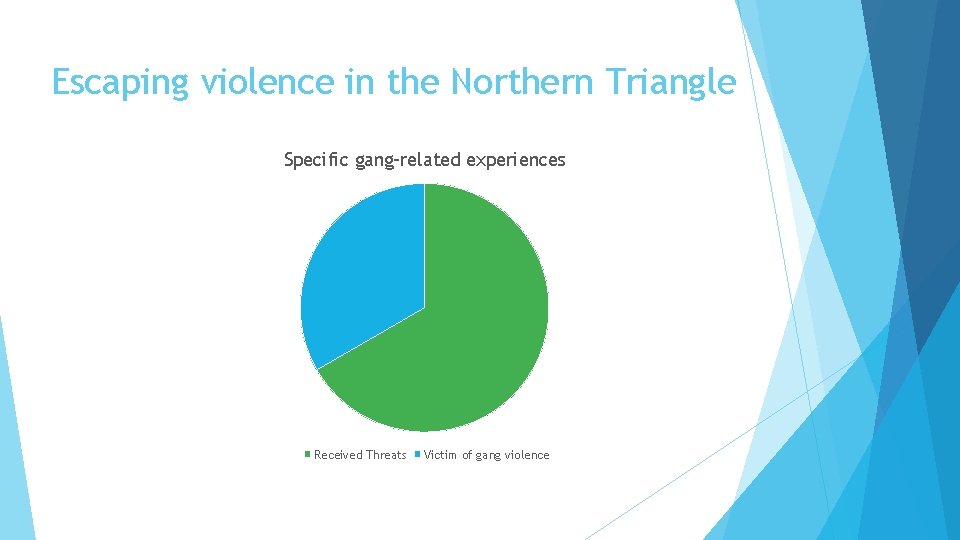
Escaping violence in the Northern Triangle Specific gang-related experiences Received Threats Victim of gang violence
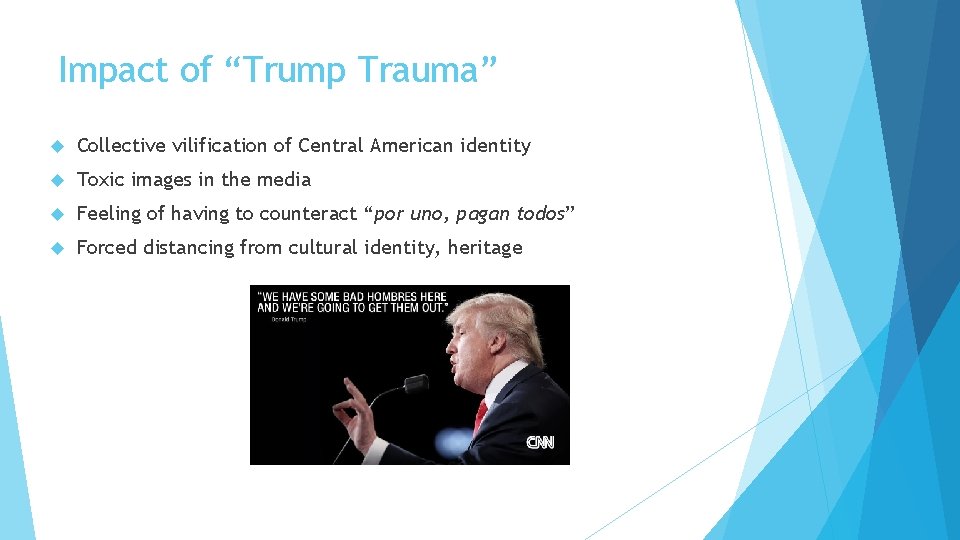
Impact of “Trump Trauma” Collective vilification of Central American identity Toxic images in the media Feeling of having to counteract “por uno, pagan todos” Forced distancing from cultural identity, heritage
Moving Past the Politics Just the facts, please: NYS Constitution, Plyler v. Doe (1982) Unifying belief in the power of education Building bridges between cultures Make space for diversity in your school community How do we do that effectively?
From an Educator’s Perspective Respecting the stages of culture shock Thinking about student competencies: resilience, adaptability, and responsibility “No he logrado nada. ” Teaching the mentality of academic achievement Fine-tuning resilience – they already HAVE the capabilities! Managing shame/frustration in the classroom Education opportunity!
From a Clinical Perspective Normalize mental health care Make distinction between reactions to trauma and diagnosable mental illness Give permission for SUFFERING Help students develop a lexicon through which to express their feelings Resources, resources! Build the net! Do they need TF-CBT?
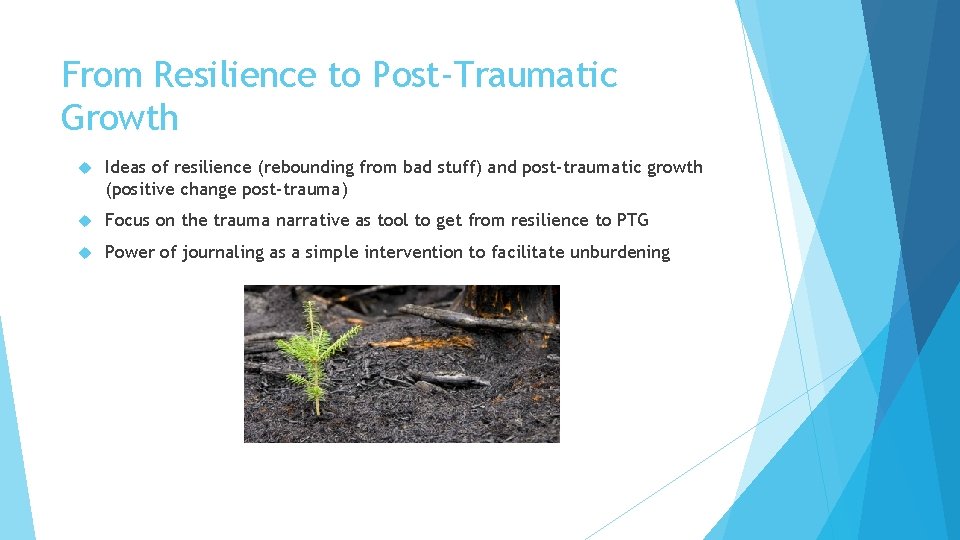
From Resilience to Post-Traumatic Growth Ideas of resilience (rebounding from bad stuff) and post-traumatic growth (positive change post-trauma) Focus on the trauma narrative as tool to get from resilience to PTG Power of journaling as a simple intervention to facilitate unburdening
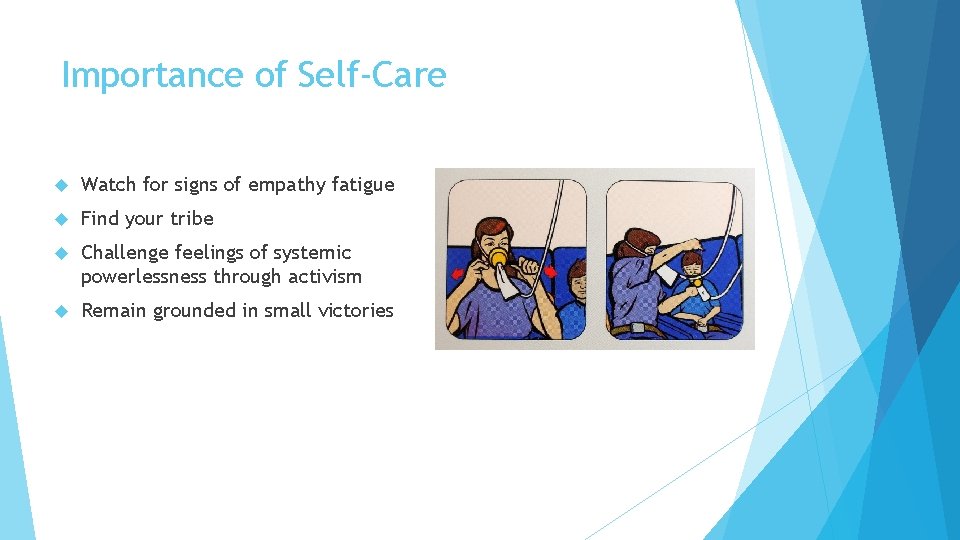
Importance of Self-Care Watch for signs of empathy fatigue Find your tribe Challenge feelings of systemic powerlessness through activism Remain grounded in small victories
THANK YOU! Stephanie Carnes, LL. M. , LCSW Putnam Northern Westchester BOCES scarnes@pnwboces. org 914 -248 -3616 Create Cultural Competence, LLC www. createculturalcompetence. com 845 -505 -9929
- Slides: 17