
Step Into Sixth Form Study Skills Session Mrs




- Slides: 23
Step Into Sixth Form – Study Skills Session Mrs Bean/Mr Smickersgill
Session Outline • What to expect from Sixth Form • What makes a successful Sixth Form student? • Key Study Skills – Organisation and Note Taking
What to expect from sixth form…. Your expectations • • • Parties A levels More experiences Independence Freedom Uni Offers New friends New and developing current skills Driving Its true – there all of these…but the key is in getting the balance right
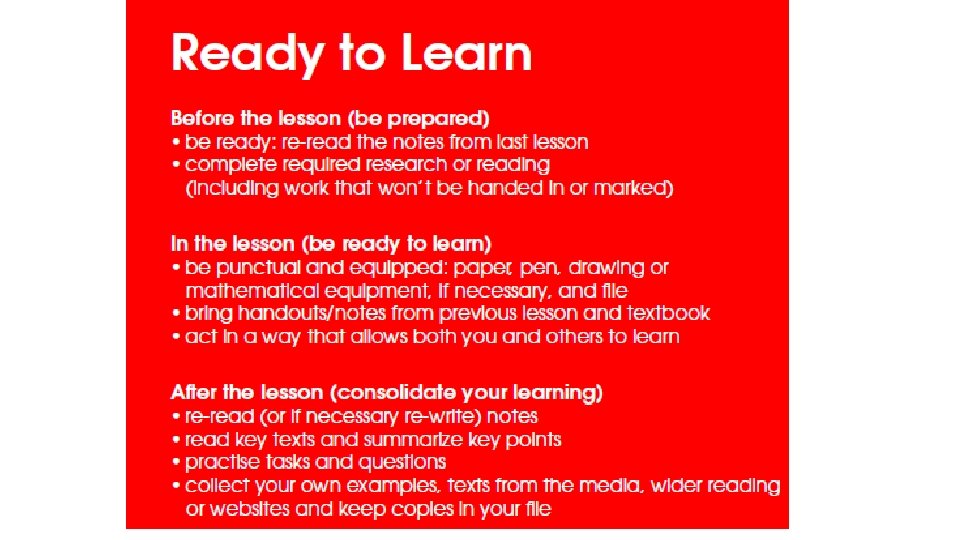
Insert title 1 What to expect from sixth form…. Teacher expectations • Excellent attendance and punctuality • Appropriate equipment and resources for lessons brought to lessons • An enthusiastic approach to lessons • Asking questions - in lessons (enquiring further) • Evidence of additional research outside of lessons (maybe without teacher prompting) either prior to lessons or after • Good use of "non-contact" time • Meeting coursework and homework deadlines • Becoming independent learners
Insert title 1 What to expect from sixth form…. Reality……………… • Biggest difference to GCSEs • The workload • Focus on independent learning • Tougher • Hardest part • Managing workload and exams • Fitting in activity outside of school • Maintaining motivation
What to expect from sixth form…. Realising the challenge (4 min video) • https: //www. netsixthform. co. uk/resources/view/leap-from-gcse-tosixth-form-1 -realising-the-challenge
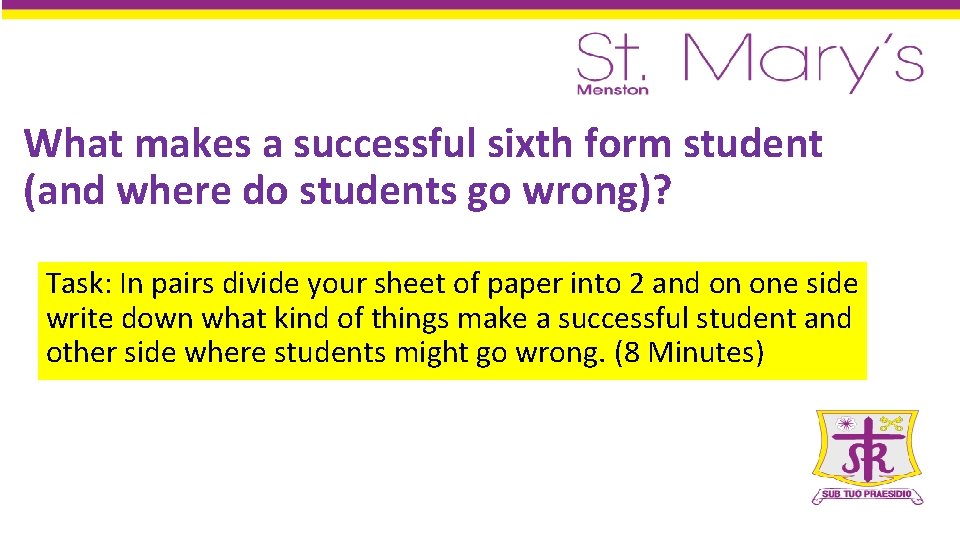
What makes a successful sixth form student (and where do students go wrong)? Task: In pairs divide your sheet of paper into 2 and on one side write down what kind of things make a successful student and other side where students might go wrong. (8 Minutes)
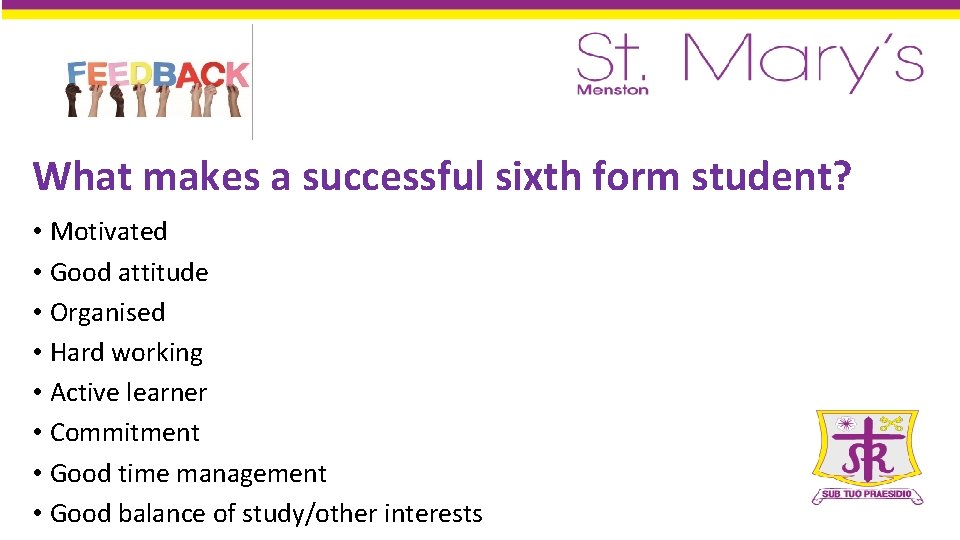
What makes a successful sixth form student? • Motivated • Good attitude • Organised • Hard working • Active learner • Commitment • Good time management • Good balance of study/other interests
Where do students go wrong? • • • Lack of motivation Not attending lessons/Poor attendance Leaving work until the last minute Missing deadlines Failing to see the big picture in terms of how much work needs to be done Not asking for help Complacency – “I only did last minute revision at GCSE and it worked” Spending too much time doing paid work Not getting enough sleep Refusing to use study time wisely – just wanting to ‘chill’ in the common room Filling their time with anything except study!
• Angela Duckworth – Ted Talk – Grit • https: //www. youtube. com/watch? v=H 14 b. Buluw. B 8 Attitude and determination are CRUCIAL to success
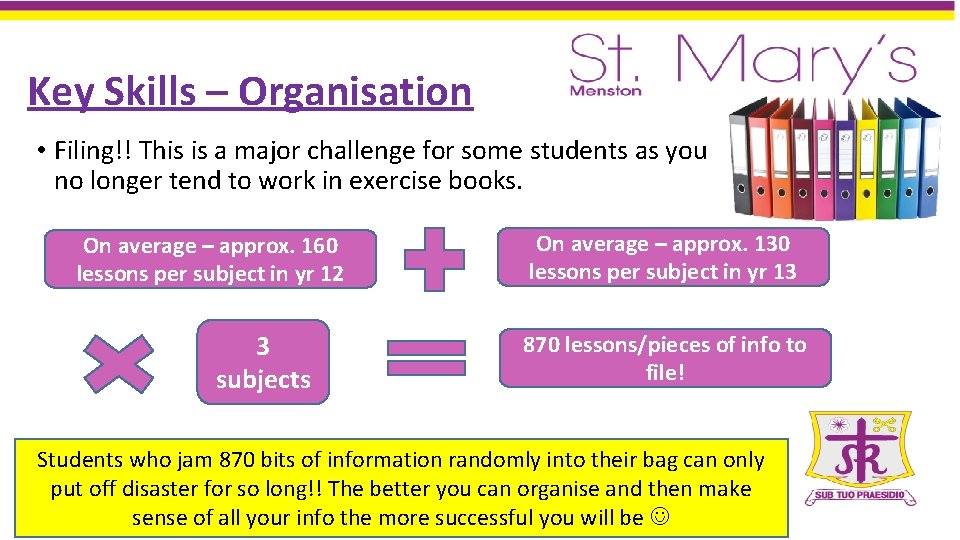
Key Skills – Organisation • Filing!! This is a major challenge for some students as you no longer tend to work in exercise books. On average – approx. 160 lessons per subject in yr 12 3 subjects On average – approx. 130 lessons per subject in yr 13 870 lessons/pieces of info to file! Students who jam 870 bits of information randomly into their bag can only put off disaster for so long!! The better you can organise and then make sense of all your info the more successful you will be
Key Skills – Organisation • Planning your time is one of the major differences between KS 4 and KS 5 and how you do it really has an impact on your success. • It is a skill that you will need in future life – whatever job you are in as well as your personal life. • Generally it is most efficient when you have a routine.
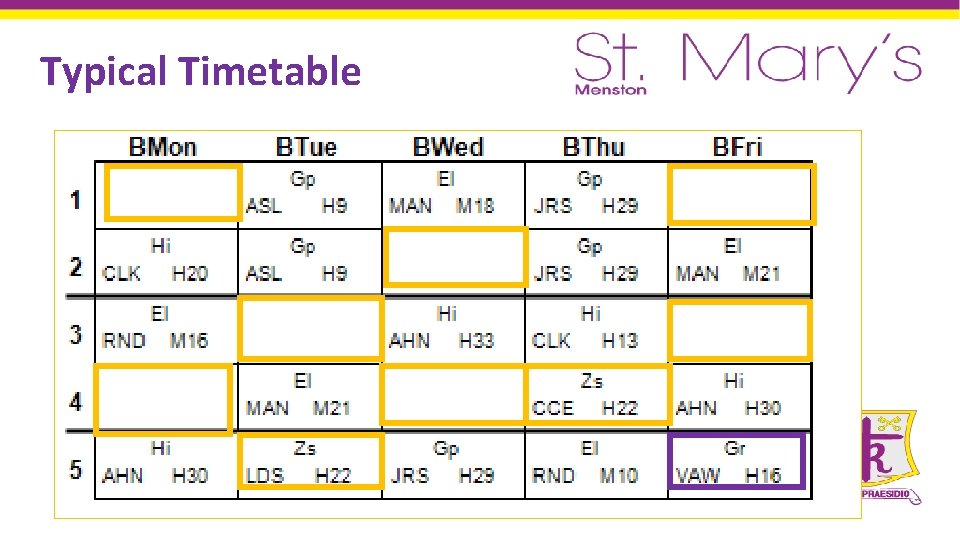
Typical Timetable
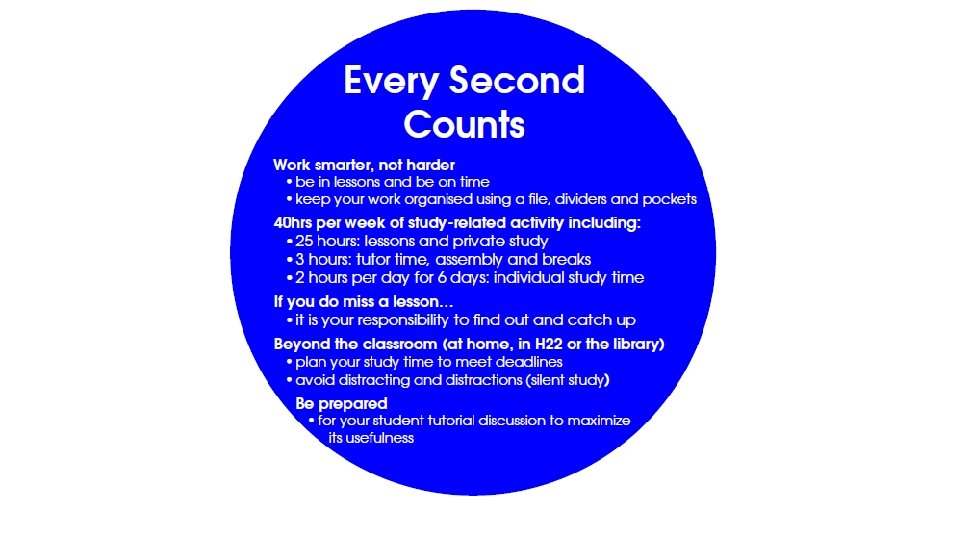
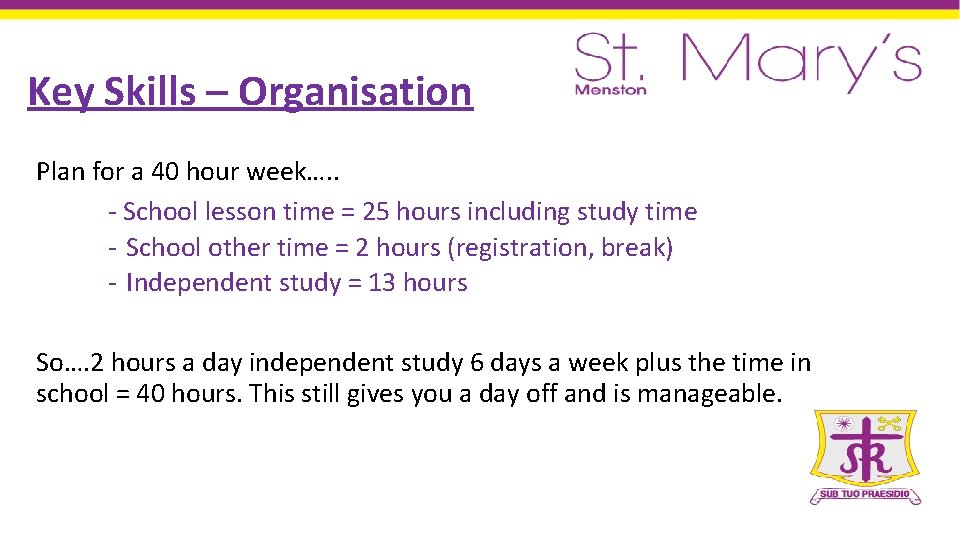
Key Skills – Organisation Plan for a 40 hour week…. . - School lesson time = 25 hours including study time - School other time = 2 hours (registration, break) - Independent study = 13 hours So…. 2 hours a day independent study 6 days a week plus the time in school = 40 hours. This still gives you a day off and is manageable.
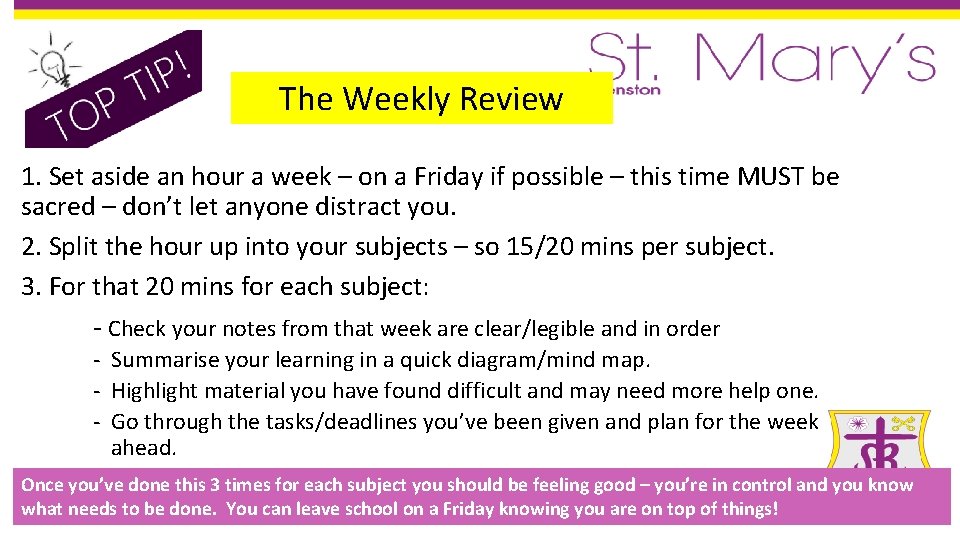
The Weekly Review 1. Set aside an hour a week – on a Friday if possible – this time MUST be sacred – don’t let anyone distract you. 2. Split the hour up into your subjects – so 15/20 mins per subject. 3. For that 20 mins for each subject: - Check your notes from that week are clear/legible and in order - Summarise your learning in a quick diagram/mind map. - Highlight material you have found difficult and may need more help one. - Go through the tasks/deadlines you’ve been given and plan for the week ahead. Once you’ve done this 3 times for each subject you should be feeling good – you’re in control and you know what needs to be done. You can leave school on a Friday knowing you are on top of things!
Key Skills – Note Taking • This is a key skill in all subjects that you may need to do in class or independently as wider reading. • The temptation is often to copy out word for word what is said – but this is not what note taking is. It is being able to read, summarise and pick out the main points of an article/textbook page etc.
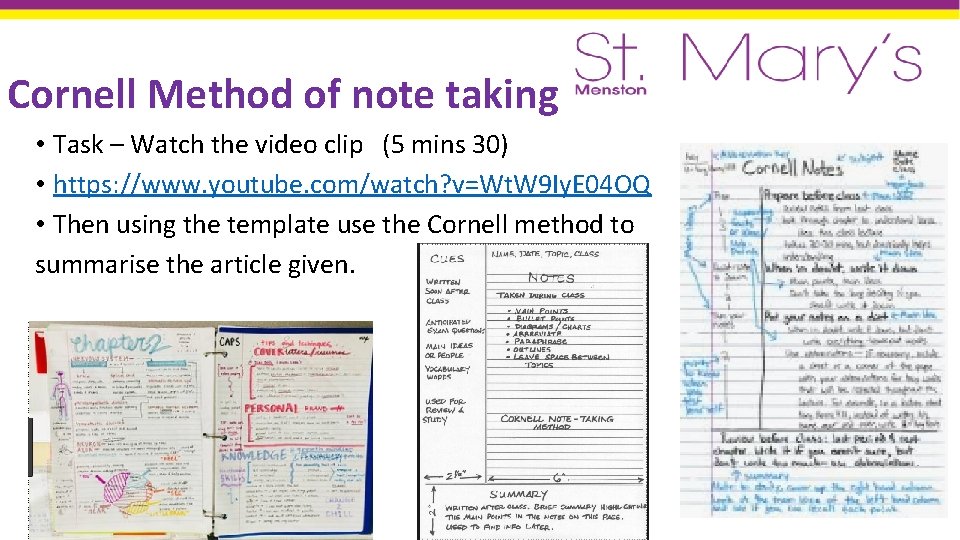
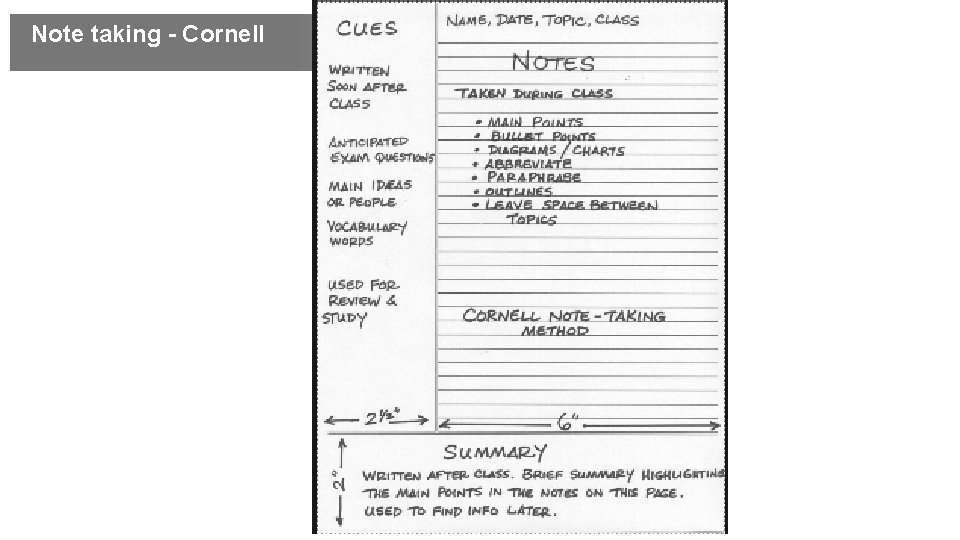
Cornell Method of note taking • Task – Watch the video clip (5 mins 30) • https: //www. youtube. com/watch? v=Wt. W 9 Iy. E 04 OQ • Then using the template use the Cornell method to summarise the article given.
Note taking - Cornell Insert title 1
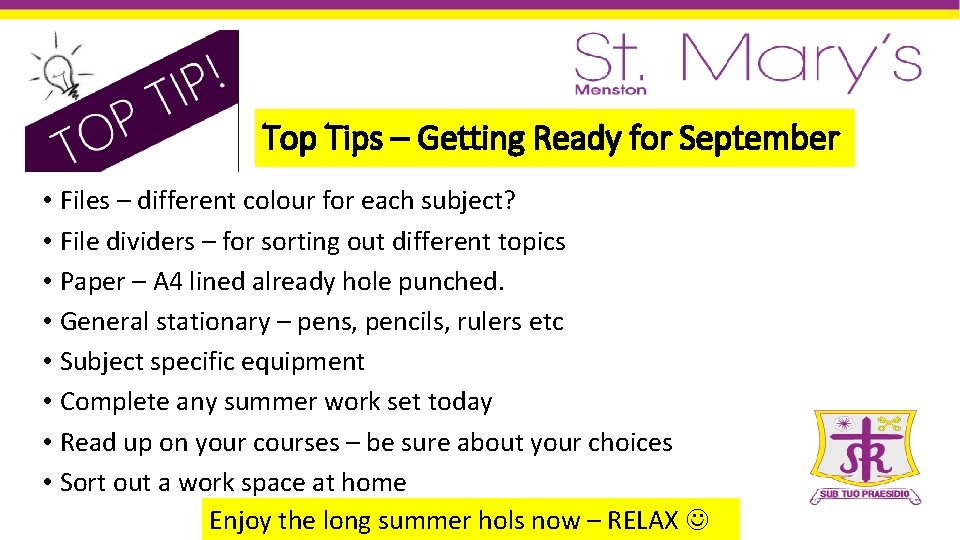
Top Tips – Getting Ready for September • Files – different colour for each subject? • File dividers – for sorting out different topics • Paper – A 4 lined already hole punched. • General stationary – pens, pencils, rulers etc • Subject specific equipment • Complete any summer work set today • Read up on your courses – be sure about your choices • Sort out a work space at home Enjoy the long summer hols now – RELAX