
Step by Step on the Road to Quality
Step by Step on the Road to Quality Improvement “QAPI Land” October 27, 2016
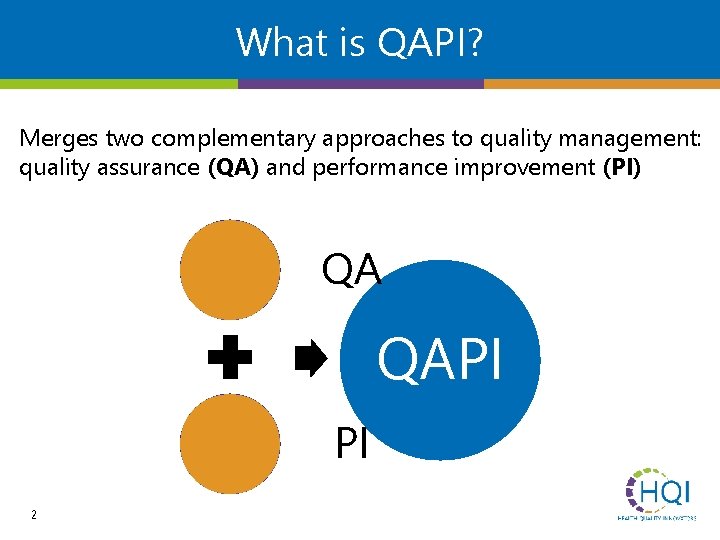
What is QAPI? Merges two complementary approaches to quality management: quality assurance (QA) and performance improvement (PI) QA QAPI PI 2
Definitions Reactive Proactive Quality assurance is the organizational structure, processes, and procedures designed to ensure that care practices are consistently applied and the facility meets or exceeds an expected standard of quality. Quality/performance improvement is an ongoing interdisciplinary process that is designed to improve the delivery of services and resident outcomes.
Performance Improvement • A proactive and continuous study of processes with the intent to prevent or decrease the likelihood of problems by identifying areas of opportunity and testing new approaches to fix underlying causes of persistent/systemic problems. • PI in nursing homes aims to improve processes involved in health care delivery and resident quality of life. PI can make good quality even better. 4
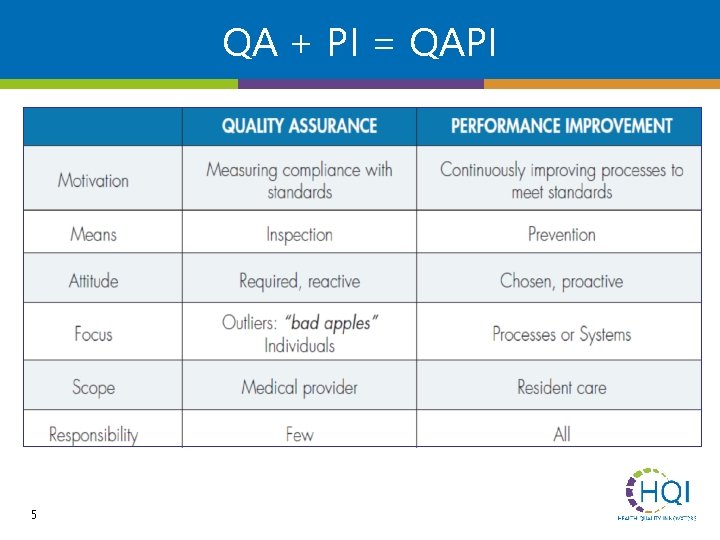
QA + PI = QAPI 5
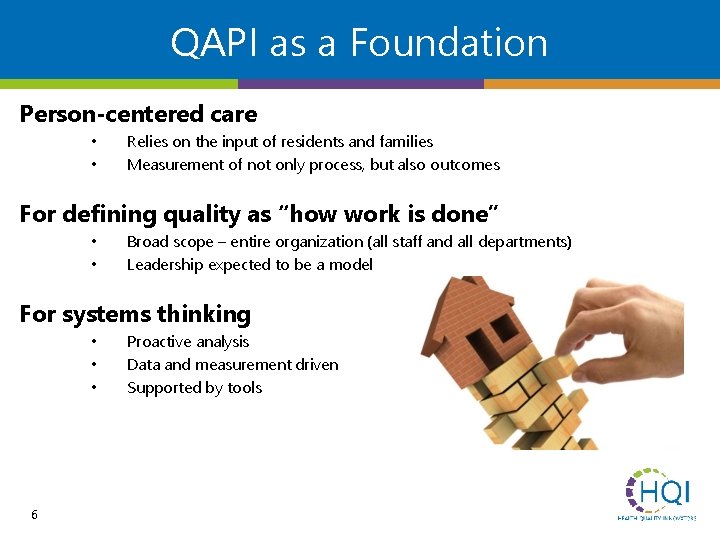
QAPI as a Foundation Person-centered care • • Relies on the input of residents and families Measurement of not only process, but also outcomes For defining quality as “how work is done” • • Broad scope – entire organization (all staff and all departments) Leadership expected to be a model For systems thinking • • • 6 Proactive analysis Data and measurement driven Supported by tools
QAPI as a Culture • QAPI does not refer to a program; rather, this is the way we do our work. • The ability to think, make decisions and take action at the system level is a prerequisite for QAPI success. 7
QAPI Land • QAPI Land is an interactive tool for QAPI implementation • 12 Action Steps to achieve full implementation • One step a month to maintain momentum, provide consistency, establish a pattern and ensure you are QAPI Ready 8
Step 1: Leadership Responsibility & Accountability 1. Who is on our QAPI Steering Committee? 2. Is our Medical Director involved in QAPI? 3. How can we provide needed resources for QAPI? 4. Is our climate open, respecting, and “just” (fair)? What does our climate look like? 5. How can QAPI blend with our existing QA efforts? 9
Step 2: Develop a Deliberate Approach to Teamwork 1. How can residents and families be involved in our QAPI efforts? 2. Do we have effective teamwork? How do we know? What does it look like? 3. How does leadership support the development of effective teams? 4. Do we have effective communication in our facility? How do we know? 5. Do team members support one another? 10
Step 3: Take Your QAPI “Pulse” with a Self. Assessment 1. Who should be involved in this assessment of our current practices/ 2. 11 What is our timeline for completing it?
Step 4: Identify Your Organization’s Guiding Principles 1. What beliefs do we have about our facility’s purpose and philosophy? 2. What beliefs do we have about our approach to QA and PI? 3. What is our mission and vision statement? 4. What are some of the ways in which we expect care to be provided? 12
Step 5: Develop Your QAPI Plan 1. What goals do we have for how QAPI will work? 2. How will QAPI be integrated into leadership’s accountability? 3. How will we strive to use data and performance improvement teams? 4. How will direct care staff be involved in QAPI and PIPs? 13
Step 6: Conduct a QAPI Awareness Campaign 1. How will we inform staff about QAPI? 2. How much education and training will be needed? 3. How will we engage residents and families in QAPI efforts? 14
Step 7: Develop a Strategy for Collecting & Using Data 1. What data does our facility routinely monitor? How are these data displayed and used? 2. What benchmarks will we use when assessing our performance? 3. How can we better make use of the data we have? Do we track and trend our progress over time? 4. How are data shared with others in the organization? Staff? Residents/families? The 15 Board or corporate office?
Step 8: Identify Your Gaps and Opportunities 1. When reviewing your data, what stands out? 2. How strong is your organization capacity for assessing facility systems (i. e. , policies, procedures, protocols, actual care delivery, etc. )? 3. What are some areas of strengths and weakness? 4. What opportunities do you see? 16
Step 9: Prioritize Opportunities and Charter PIPs 1. Prioritize opportunities for more intensive improvement work. 2. Consider which problems will become the focus of a PIP. 3. Charter PIP Teams by selecting a leader and defining the mission. 4. The PIP Team should develop a written charter, timeline, and budget. 5. The PIP Team should use the Goal Setting Worksheet to establish appropriate goals. 17
Step 10: Plan, Conduct, and Document PIPs 1. According to our data, what area(s) do we need to work on? 2. Who should be involved? What is the timeline? 3. What resources are needed? 4. What ideas can we test? 18
Step 11: Get to the “Root” of the Problem 1. What are the obvious and less obvious reason(s) the problem surfaced? 2. What is at the root of those factors? 3. What systems and processes are involved (not people)!? 19
Step 12: Take Systemic Action 1. How strong are the interventions? 2. Do the selected interventions address system issues, or do they address individual performance? 3. Is what we’re doing working? How do we know? 20 4. What are our next steps?
Summary “The goal of a nursing home never changes: to improve the best possible care for the people who live here, and to nourish the spirit of residents and staff alike. At the same time, nursing homes are places that change every day; residents and workers come and go, staff learn better ways to deliver care, equipment is modernized and new regulations are introduced. Thus, to do our work well means adapting to change, and continuously learning new and more effective ways of working – as individuals, as teams and as an organization. ” Source: “Getting Better All the Time” Cobble Hill Health Center, Isabella Geriatric Center 21
22
- Slides: 22