
Step 3 Strategy Development Learning Objectives n Define

Step 3: Strategy Development

Learning Objectives n Define “strategy/strategic approach” n Understand strategy development process n Engage in informed dialogue about strategic choices and impacts

Strategy Development n n Developing alternative strategies using identified factors Selecting a strategy for implementation • Brainstorm • Review experiences of other countries/locales • Feasibility analysis • Cost-benefit estimate
What Is Strategy? Strategy/strategic approach: a statement that describes the overall approach to attaining the goal • A strategy is just a means of moving from the current situation towards a stated goal • All parts of the strategy must be internally consistent and unified
Strategy Development Steps n Identifying critical factors n Developing alternative strategies using identified factors n Selecting a strategy for implementation
Identifying Critical Factors n List all the identified factors n Rate each of the factors on a 5 -point scale for n • Importance • Current status • Level of internal control Identify critical factors: most important, potential, and controllable
Identifying Critical Factors n Why is it an issue? - current status n Who says it is an issue? (be sensitive to different perspectives of different stakeholders) importance n What are the consequences of not doing anything about it? - importance n Can we do anything about it? - changeability/ level of internal control
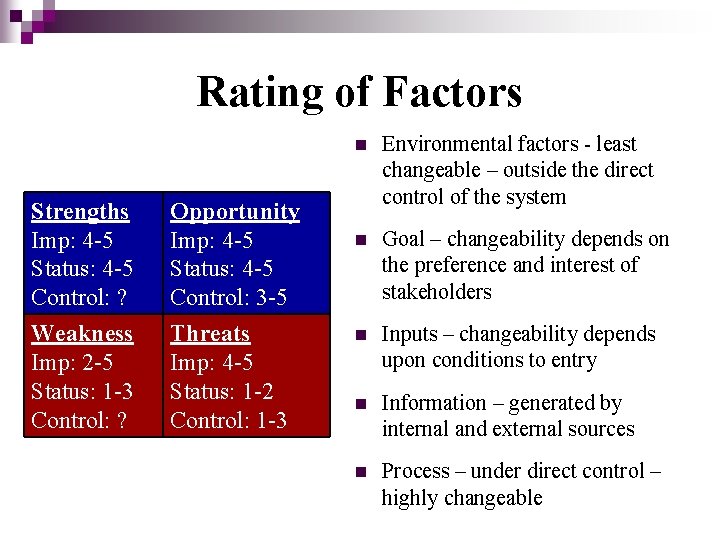
Rating of Factors Strengths Imp: 4 -5 Status: 4 -5 Control: ? Opportunity Imp: 4 -5 Status: 4 -5 Control: 3 -5 Weakness Imp: 2 -5 Status: 1 -3 Control: ? Threats Imp: 4 -5 Status: 1 -2 Control: 1 -3 n Environmental factors - least changeable – outside the direct control of the system n Goal – changeability depends on the preference and interest of stakeholders n Inputs – changeability depends upon conditions to entry n Information – generated by internal and external sources n Process – under direct control – highly changeable
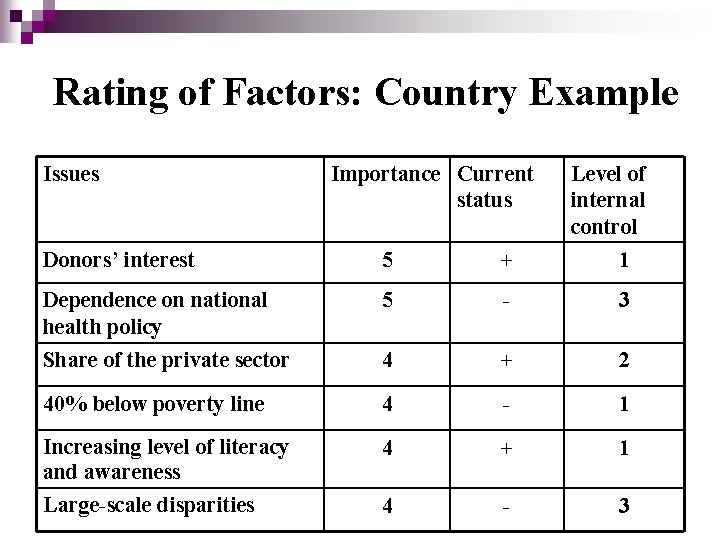
Rating of Factors: Country Example Issues Importance Current status Level of internal control Donors’ interest 5 + 1 Dependence on national health policy 5 - 3 Share of the private sector 4 + 2 40% below poverty line 4 - 1 Increasing level of literacy and awareness Large-scale disparities 4 + 1 4 - 3
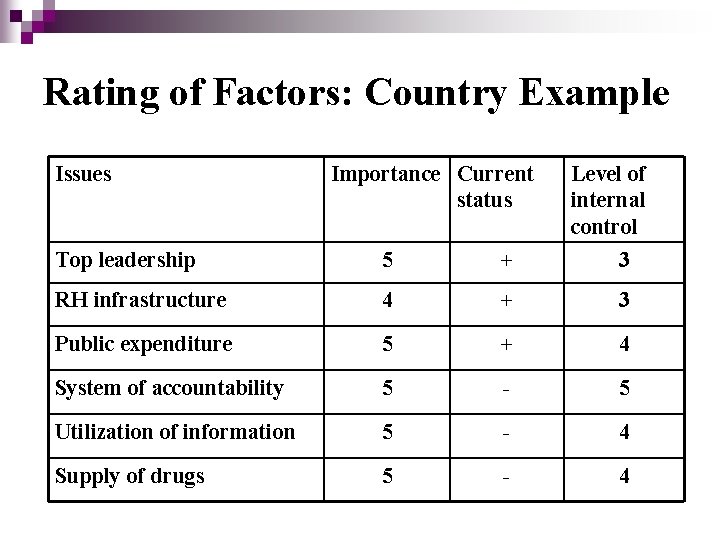
Rating of Factors: Country Example Issues Importance Current status Level of internal control Top leadership 5 + 3 RH infrastructure 4 + 3 Public expenditure 5 + 4 System of accountability 5 - 5 Utilization of information 5 - 4 Supply of drugs 5 - 4
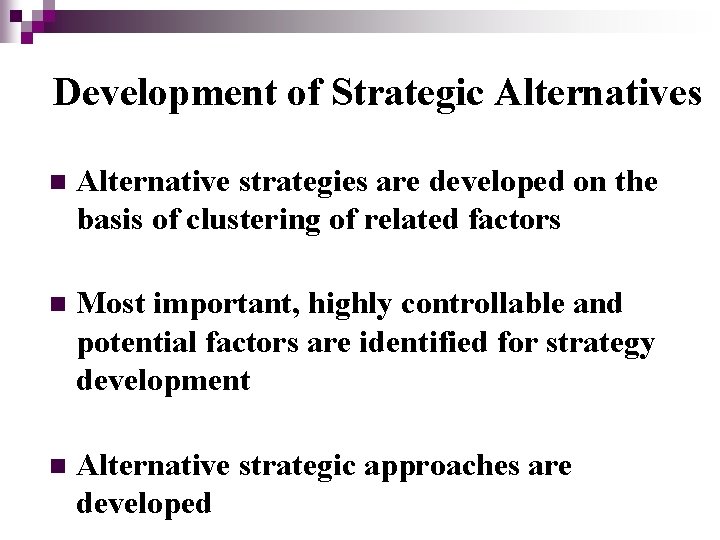
Development of Strategic Alternatives n Alternative strategies are developed on the basis of clustering of related factors n Most important, highly controllable and potential factors are identified for strategy development n Alternative strategic approaches are developed
Alternative Strategic Approaches: Country Example n Improving the performance of the health system of Rajasthan by setting performance standards for managers, and equipping them with necessary authority, managerial know-how, and resources to enable them to achieve these standards n Strengthen government capacity by encouraging private sector participation in the delivery of health care services n Decentralization of the health system to the grassroots, with power vested in the local government
Selecting a Strategy: Purpose n Devise a strategic approach relevant to the concrete situation n Make it flexible enough to be adapted when that situation changes n Realistically take available resources into account
Selecting a Strategy for Implementation A comprehensive, cost-effective, and feasible option is selected among alternative strategies A high-impact, low-cost strategy
Feasibility Assessment n Requires a consultative process that considers § One’s critical judgment § Viewpoint of counterparts § Resource issues § Implications in terms of program effort
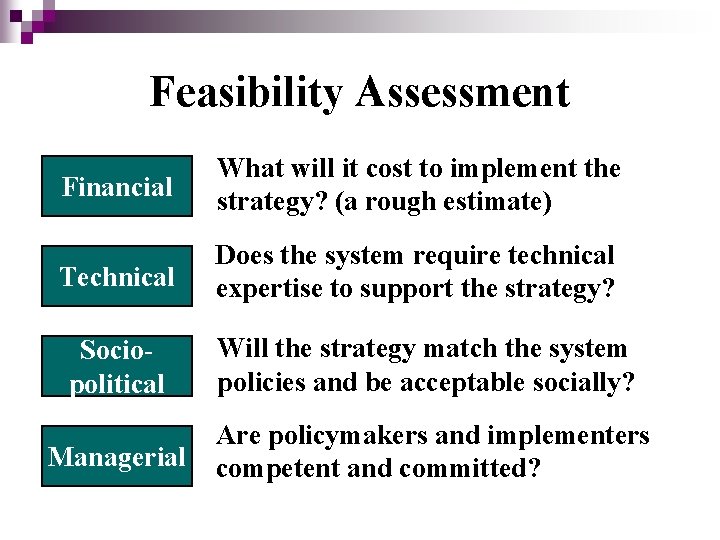
Feasibility Assessment Financial What will it cost to implement the strategy? (a rough estimate) Technical Does the system require technical expertise to support the strategy? Sociopolitical Will the strategy match the system policies and be acceptable socially? Managerial Are policymakers and implementers competent and committed?
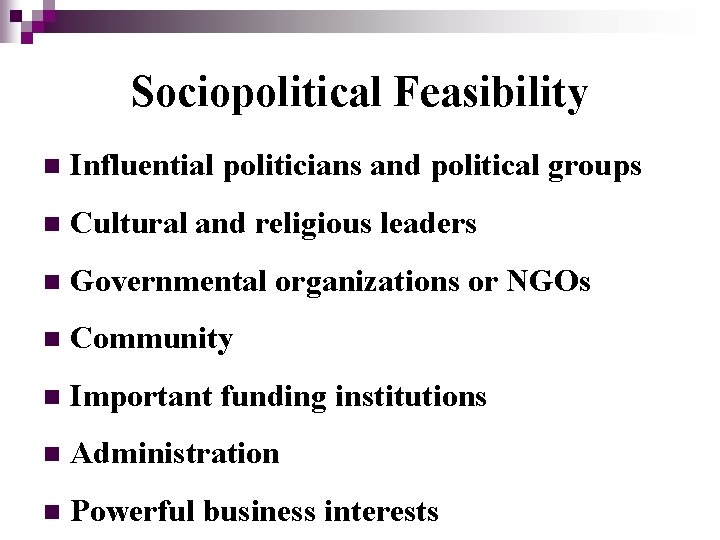
Sociopolitical Feasibility n Influential politicians and political groups n Cultural and religious leaders n Governmental organizations or NGOs n Community n Important funding institutions n Administration n Powerful business interests
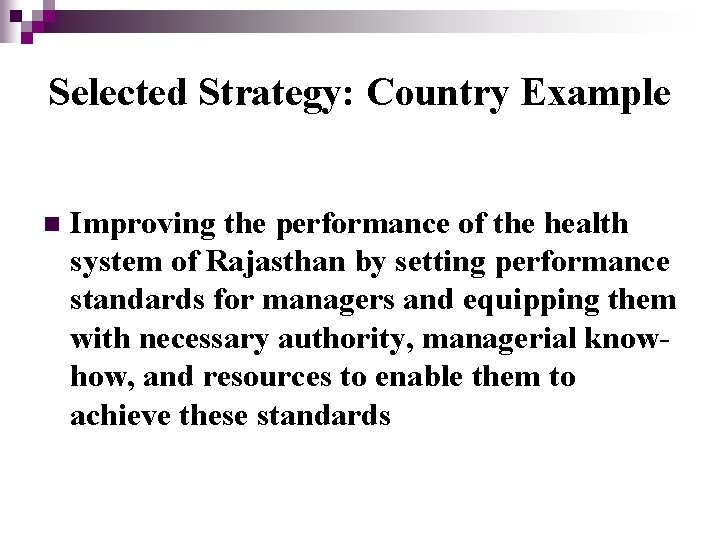
Selected Strategy: Country Example n Improving the performance of the health system of Rajasthan by setting performance standards for managers and equipping them with necessary authority, managerial knowhow, and resources to enable them to achieve these standards
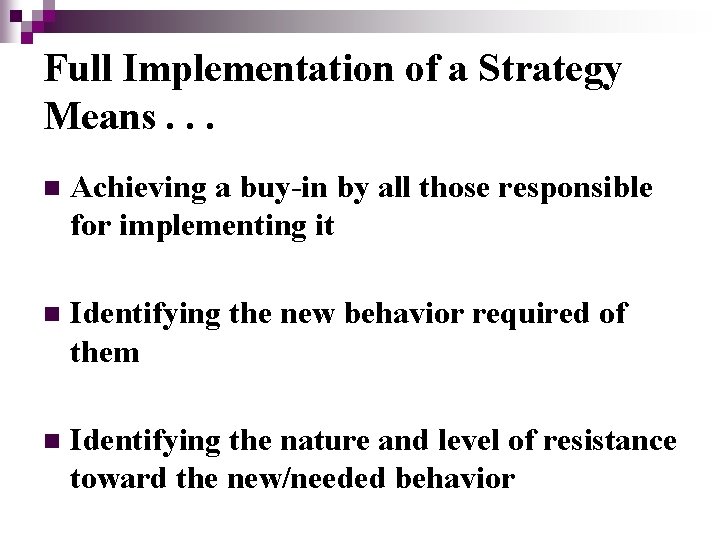
Full Implementation of a Strategy Means. . . n Achieving a buy-in by all those responsible for implementing it n Identifying the new behavior required of them n Identifying the nature and level of resistance toward the new/needed behavior
Full Implementation of a Strategy Means. . . n n Developing ways and means for instituting the new/needed behaviors: § Training (if new know-how is needed) § Incentives to develop stakes in the outcomes of the new behavior § Replacement/reassignment of key personnel Establishing a sound monitoring and accountability system
- Slides: 20