
Stenting for acute variceal bleeding an update Rainer
Stenting for acute variceal bleeding an update Rainer Hubmann General Hospital Linz Hubmann. SV Linz Austria R. Hubmann 20. 9. 2012 1
Acute variceal bleeding continues to be associated with significant mortality. Recently published randomized controlled trials have shown that mortality from acute variceal bleeding has decreased over the past two decades from 42% to 15% but this figure is still remarkably high R. Hubmann 20. 9. 2012 2
Endoscopic treatment Baveno V as soon as possible in any patient documented upper GI bleeding due to esophageal varices (within 12 h) combine hemodynamic stabilization antibiotic prophylaxis pharmacological agents Endoscopic treatment Ligation (EVL) is the recommended form of endoscopic therapy for acute esophageal variceal bleeding, although sclerotherapy may be used in the acute setting if ligation is technically difficult De Franchis R. Revising consensus in portal hypertension: Report of the Baveno V consensus workshop on methodology of diagnosis and therapy in portal hypertension. J Hepatol (2010) BAVENO V, 2010 R. Hubmann 20. 9. 2012 3
First line therapy fails to control bleeding or is associated with early rebleeding (within five days) in as many as 10 -20% of patients rescue therapies ◦ including balloon tamponade (BT) ◦ insertion of a transjugular intrahepatic portosystemic shunt (TIPS) ◦ surgical shunts R. Hubmann 20. 9. 2012 4
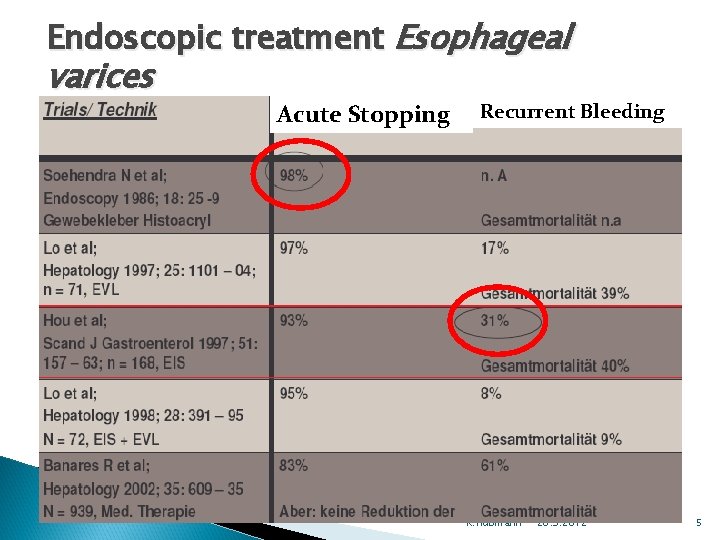
Endoscopic treatment Esophageal varices Acute Stopping Recurrent Bleeding R. Hubmann 20. 9. 2012 5
Pathophysiology of esophageal varices Varices rupture if the wall tension becomes too great. The likelihood that a varix will rupture and bleed increases with increasing size/diameter of the varix and with increasing variceal pressure, which is again proportionate to the HVPG. Conversely, varices do not bleed if the HVPG is below 12 mm. Hg. © WGO Practice Guidelines Esophageal varices 2007 R. Hubmann 20. 9. 2012 6
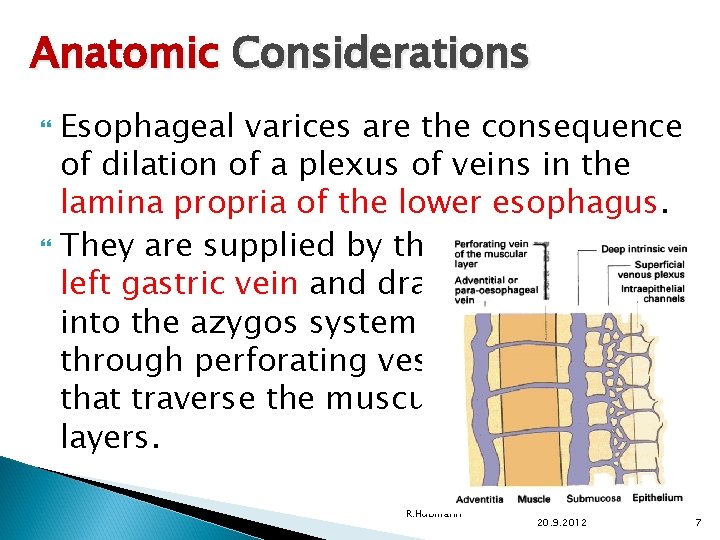
Anatomic Considerations Esophageal varices are the consequence of dilation of a plexus of veins in the lamina propria of the lower esophagus. They are supplied by the left gastric vein and drain into the azygos system through perforating vessels that traverse the muscular layers. R. Hubmann 20. 9. 2012 7
Rescue therapies for refractory esophageal variceal bleeding-Surgery Candidate ◦ Acute variceal bleeding unresponsive to medical and endoscopic therapy. Efficacy in controlling bleeding ◦ Heterogeneous group but generally very effective. Complications ◦ Hepatic encephalopathy. Liver decompensation. Limitation ◦ Requires expertise with exception of modified Sugiura procedure R. Hubmann 20. 9. 2012 8
Rescue therapies for refractory esophageal variceal bleeding-TIPs Candidate ◦ Acute variceal bleeding unresponsive to medical and endoscopic therapy. Efficacy in controlling bleeding ◦ More than 90%, rebleeding in only 18% of patients Complications ◦ Hepatic encephalopathy 30– 35% ◦ Liver decompensation Limitation ◦ Limited availability ◦ Occlusion and stenosis ◦ Not suitable or contraindicated in many patients R. Hubmann 20. 9. 2012 9
Transjugular Intrahepatic Portosystemic Shunt (TIPS) Early use of TIPS in high-risk patients (Child. Pugh class C or those in class B who have persistent bleeding) was reported to be associated with improved outcome and reduction in mortality R. Hubmann 20. 9. 2012 10

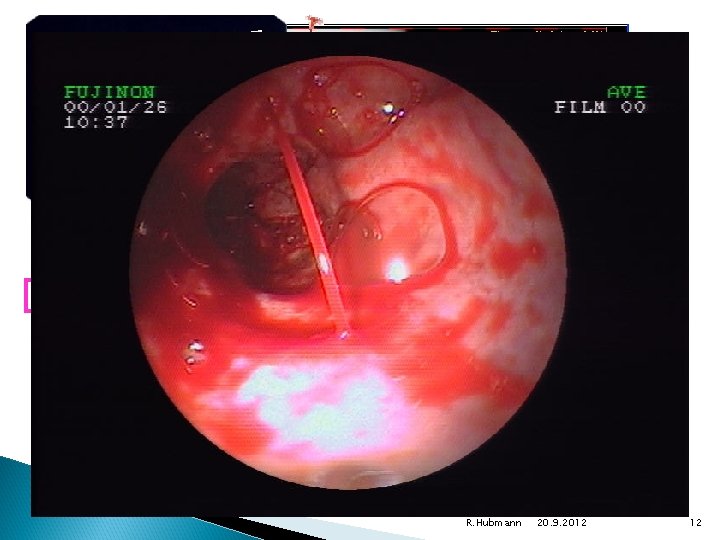
Use of balloon tamponade Balloon tamponade should only be used in massive bleeding as a temporary ‘‘bridge” until definitive treatment can be instituted (for a maximum of 24 h, preferably in an intensive care facility) Bleeding recurs after deflation in over 50% of cases De Franchis R. Revising consensus in portal hypertension: Report of the Baveno V consensus workshop on methodology of diagnosis and therapy in portal hypertension. J Hepatol (2010) BAVENO V, 2010 R. Hubmann 20. 9. 2012 11
R. Hubmann 20. 9. 2012 12
Rescue therapies for refractory esophageal variceal bleeding-BT Candidate ◦ Refractory esophageal bleeding as bridge to definitive therapy. Efficacy in controlling bleeding ◦ More than 80% but tube should be removed within 24 hours. Complications ◦ Potentially lethal complications including esophageal perforation aspiration and pneumonia. Limitation ◦ Limited efficacy and high complication rate in inexperienced hands. Temporary measure. R. Hubmann 20. 9. 2012 13
Self-Expandable. Metal Stent in Treatment of Refractory Esophageal Variceal Bleeding The previously listed limitations of the current rescue therapies have led to the continued search for other methods as rescue therapy for refractory esophageal variceal bleeding R. Hubmann 20. 9. 2012 14
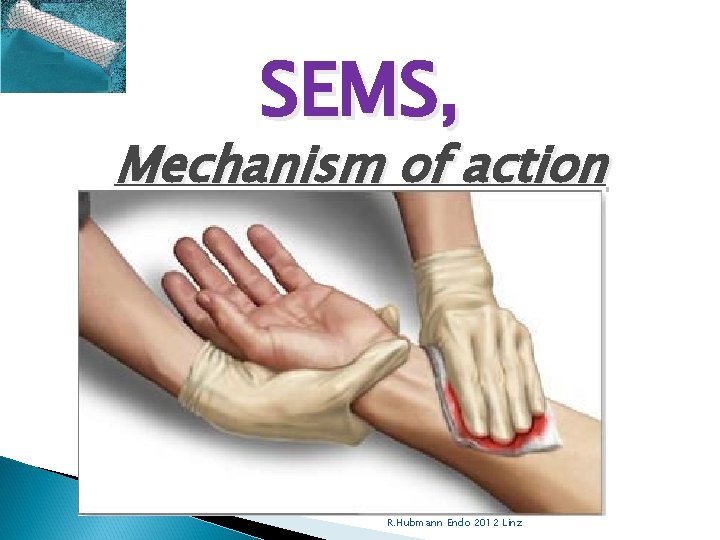
SEMS, Mechanism of action R. Hubmann Endo 2012 Linz
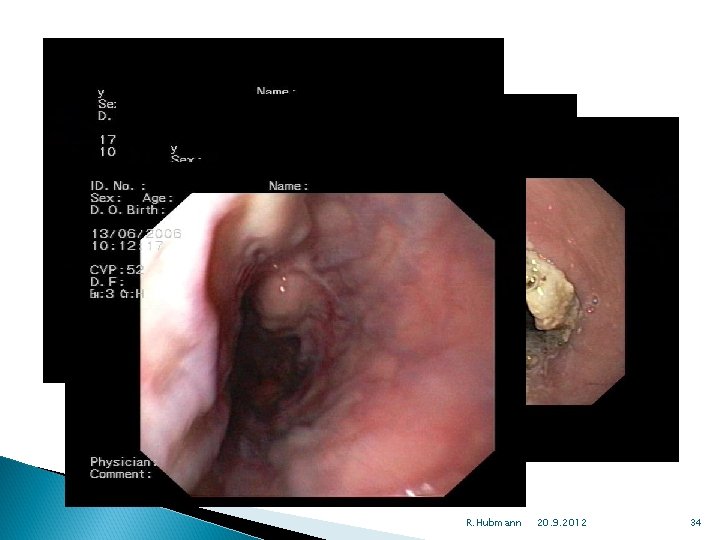
Pilot study Implantation of an esophageal stent in 20 patients (between November 2002 and May 2005) with massive bleeding from esophageal varices They could not be managed by pharmacologic or endoscopic managment (sclerotherapy or band ligation) We used them as an alternative treatment to balloon tamponade. R. Hubmann et al. , Endoscopy 2006; 38: 896 -901 R. Hubmann 20. 9. 2012 16
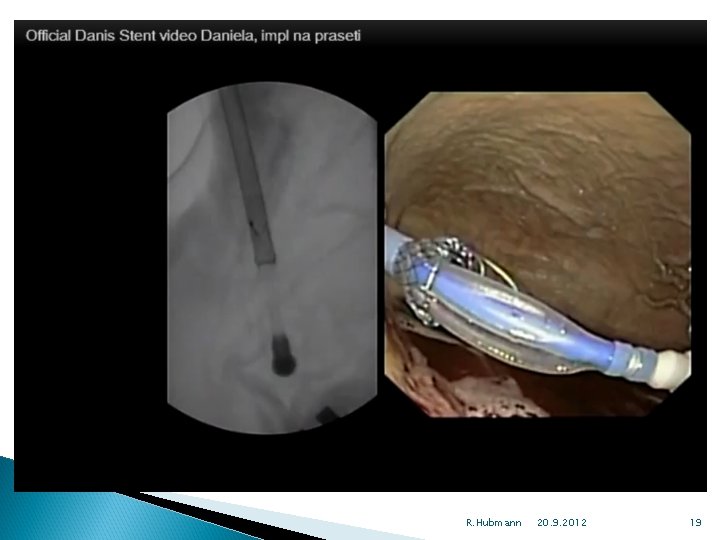
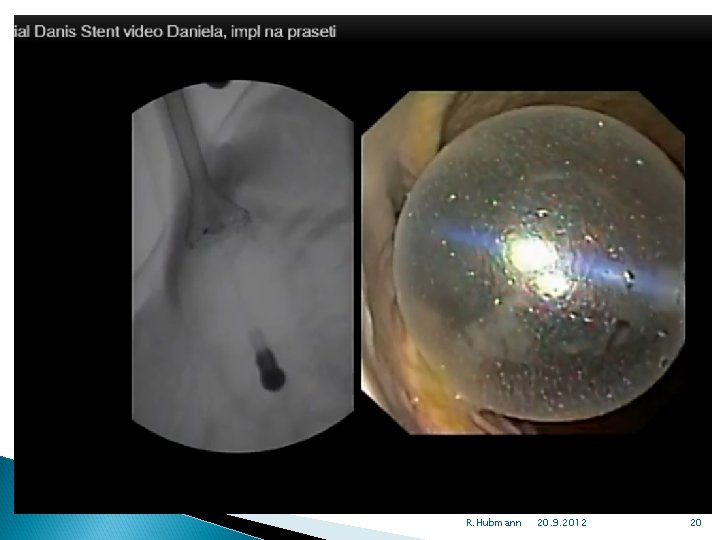
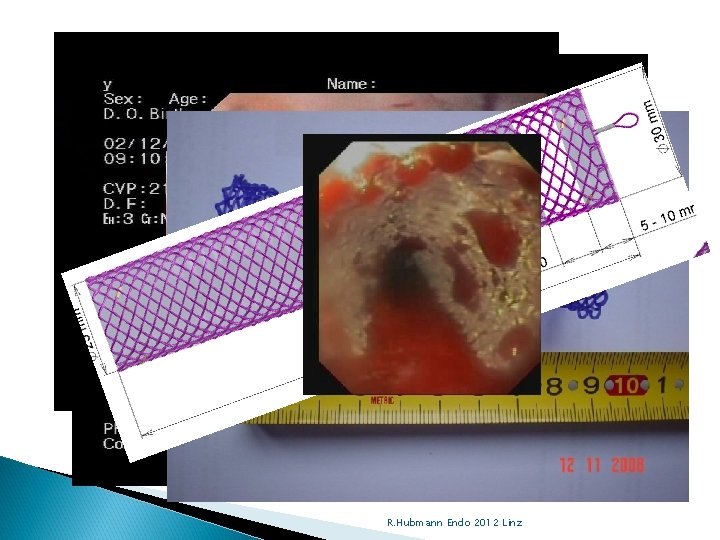
New design of stents New introducing set It is easy to implant the stent in the esophagus in an emergency situation even without the need for x-ray control or endoscopic guidance A simple endoscopic extraction of the stent is possible. R. Hubmann 20. 9. 2012 17
R. Hubmann 20. 9. 2012 18
R. Hubmann 20. 9. 2012 19
R. Hubmann 20. 9. 2012 20
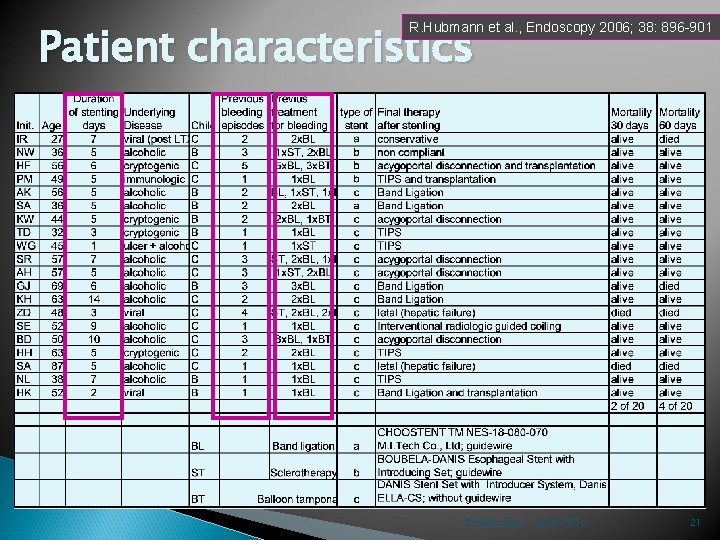
Patient characteristics R. Hubmann et al. , Endoscopy 2006; 38: 896 -901 R. Hubmann 20. 9. 2012 21
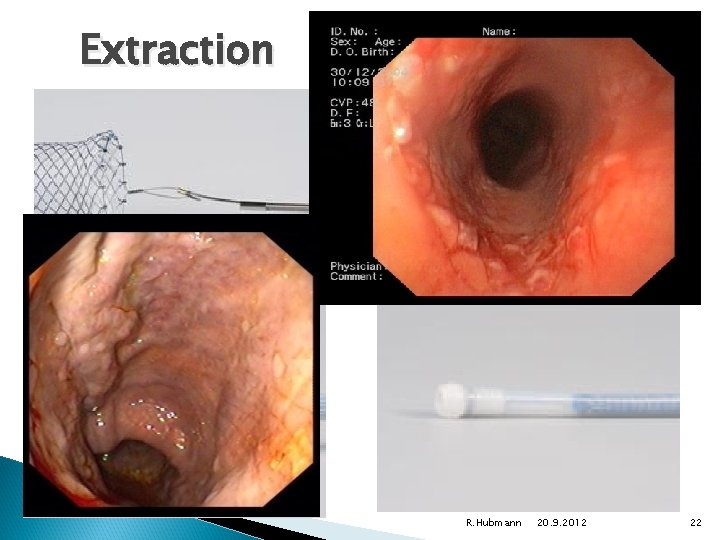
Extraction R. Hubmann 20. 9. 2012 22
Results - Pilot study Stents could be placed successfully in all the patients and were kept for 2 to 14 days. The bleeding from esophageal varices ceased immediately after implantation of the stent in all treated patients. No re-bleeding, morbidity or mortality occurred during the treatment by means of the esophageal stent. R. Hubmann 20. 9. 2012 23
Use of self-expandable metal stents Uncontrolled data suggest that selfexpanding covered esophageal metal stents may be an option in refractory esophageal variceal bleeding, although further evaluation is needed De Franchis R. Revising consensus in portal hypertension: Report of the Baveno V consensus workshop on methodology of diagnosis and therapy in portal hypertension. J Hepatol (2010) R. Hubmann 20. 9. 2012 24
The use of self-expanding metal stents to treat acute esophageal variceal bleeding in comparison to band ligation. A randomized prospective study – publication procedure 40 patients (20 each) Acute variceal bleeding Severe active visual bleeding, spurters, … – Stent Active bleeding but visual – BL R. Hubmann 20. 9. 2012 25
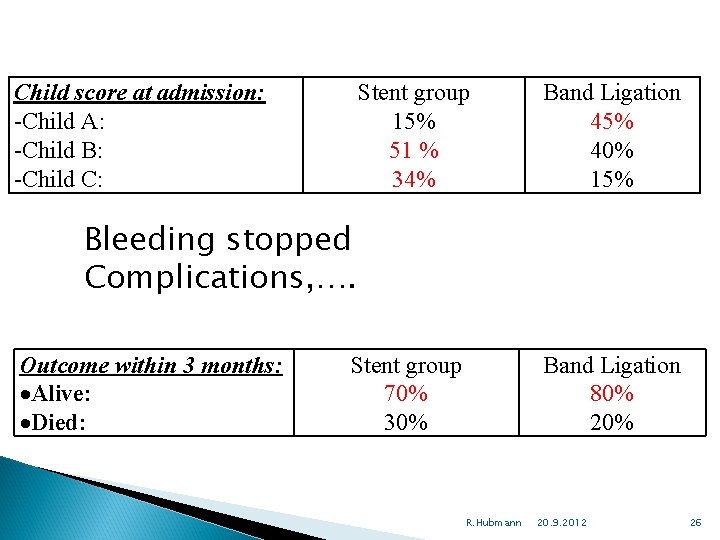
Child score at admission: -Child A: -Child B: -Child C: Stent group 15% 51 % 34% Band Ligation 45% 40% 15% Bleeding stopped Complications, …. Outcome within 3 months: Alive: Died: Stent group 70% 30% Band Ligation 80% 20% R. Hubmann 20. 9. 2012 26
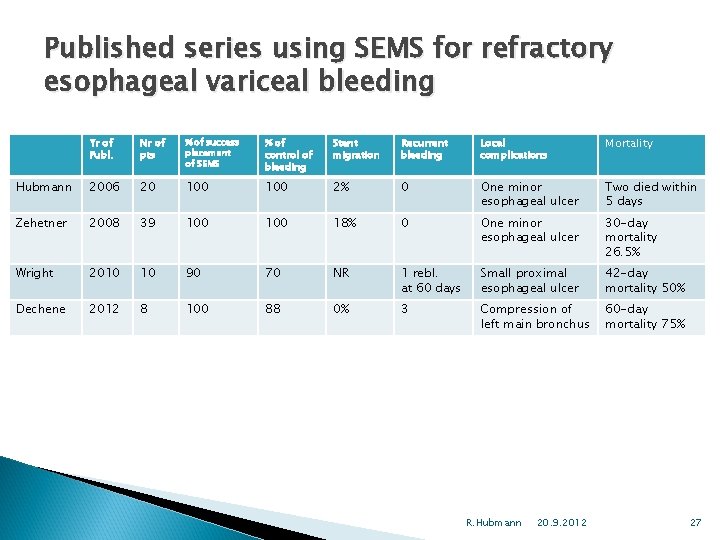
Published series using SEMS for refractory esophageal variceal bleeding Yr of Publ. Nr of pts % of success placement of SEMS % of control of bleeding Stent migration Recurrent bleeding Local complications Mortality Hubmann 2006 20 100 2% 0 One minor esophageal ulcer Two died within 5 days Zehetner 2008 39 100 18% 0 One minor esophageal ulcer 30 -day mortality 26. 5% Wright 2010 10 90 70 NR 1 rebl. at 60 days Small proximal esophageal ulcer 42 -day mortality 50% Dechene 2012 8 100 88 0% 3 Compression of left main bronchus 60 -day mortality 75% R. Hubmann 20. 9. 2012 27
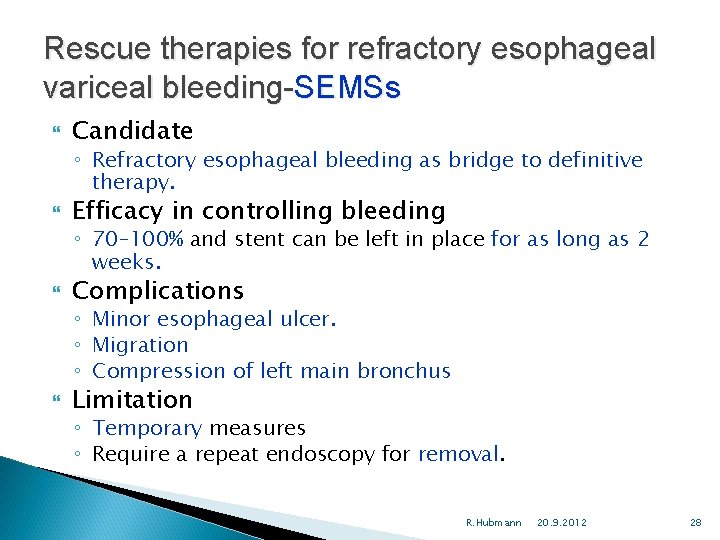
Rescue therapies for refractory esophageal variceal bleeding-SEMSs Candidate ◦ Refractory esophageal bleeding as bridge to definitive therapy. Efficacy in controlling bleeding ◦ 70– 100% and stent can be left in place for as long as 2 weeks. Complications ◦ Minor esophageal ulcer. ◦ Migration ◦ Compression of left main bronchus Limitation ◦ Temporary measures ◦ Require a repeat endoscopy for removal. R. Hubmann 20. 9. 2012 28
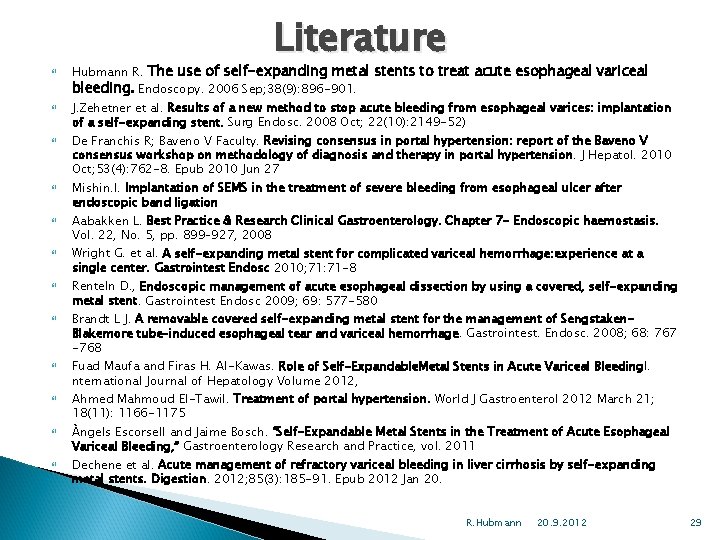
Literature Hubmann R. The use of self-expanding metal stents to treat acute esophageal variceal bleeding. Endoscopy. 2006 Sep; 38(9): 896 -901. J. Zehetner et al. Results of a new method to stop acute bleeding from esophageal varices: implantation of a self-expanding stent. Surg Endosc. 2008 Oct; 22(10): 2149 -52) De Franchis R; Baveno V Faculty. Revising consensus in portal hypertension: report of the Baveno V consensus workshop on methodology of diagnosis and therapy in portal hypertension. J Hepatol. 2010 Oct; 53(4): 762 -8. Epub 2010 Jun 27 Mishin. I. Implantation of SEMS in the treatment of severe bleeding from esophageal ulcer after endoscopic band ligation Aabakken L. Best Practice & Research Clinical Gastroenterology. Chapter 7 - Endoscopic haemostasis. Vol. 22, No. 5, pp. 899– 927, 2008 Wright G. et al. A self-expanding metal stent for complicated variceal hemorrhage: experience at a single center. Gastrointest Endosc 2010; 71: 71 -8 Renteln D. , Endoscopic management of acute esophageal dissection by using a covered, self-expanding metal stent. Gastrointest Endosc 2009; 69: 577 -580 Brandt L J. A removable covered self-expanding metal stent for the management of Sengstaken. Blakemore tube–induced esophageal tear and variceal hemorrhage. Gastrointest. Endosc. 2008; 68: 767 -768 Fuad Maufa and Firas H. Al-Kawas. Role of Self-Expandable. Metal Stents in Acute Variceal Bleeding. I. nternational Journal of Hepatology Volume 2012, Ahmed Mahmoud El-Tawil. Treatment of portal hypertension. World J Gastroenterol 2012 March 21; 18(11): 1166 -1175 Àngels Escorsell and Jaime Bosch. “Self-Expandable Metal Stents in the Treatment of Acute Esophageal Variceal Bleeding, ” Gastroenterology Research and Practice, vol. 2011 Dechene et al. Acute management of refractory variceal bleeding in liver cirrhosis by self-expanding metal stents. Digestion. 2012; 85(3): 185 -91. Epub 2012 Jan 20. R. Hubmann 20. 9. 2012 29
Literature I. Mishin, G. Ghidirim, A. Dolghii, G. Bunic, and G. Zastavnitsky, “Implantation of self-expanding metal stent in the treatment of severe bleeding from esophageal ulcer after endoscopic band ligation, ” Diseases of the Esophagus, vol. 23, no. 7, pp. E 35–E 38, 2010. Àngels Escorsell and Jaime Bosch, “Self-Expandable Metal Stents in the Treatment of Acute Esophageal Variceal Bleeding, ” Gastroenterology Research and Practice, vol. 2011, Article ID 910986, 6 pages, 2011. von Renteln D, Vassiliou MC, Caca K, Schmidt A, Rothstein RI. Feasibility and safety of endoscopic transesophageal access and closure using a Maryland dissector and a self-expanding metal stent. Surg Endosc. 2011 Jul; 25(7): 2350 -7. Epub 2010 Dec 7 NICE Interventional Procedures, Stent insertion for bleeding oesophageal varices, 2010 Study: Self-expandable Esophageal Stent Versus Balloon Tamponade in Refractory Esophageal Variceal Bleeding. 2010. Hospital Clinic of Barcelona. Recruiting The ‘’Stent Oesophageal Bleeding’’ – SOB Study-THE ROYAL FREE SHEILA SHERLOCK LIVER CENTRE. Effective haemostasis using self-expandable covered mesh-metal oesophageal stents versus standard endoscopic therapy in the emergency treatment of oesophageal variceal haemorrhage: A multicentre, open, prospective, randomised, controlled study. Brandt L J. A removable covered self-expanding metal stent for the management of Sengstaken. Blakemore tube–induced esophageal tear and variceal hemorrhage. Gastrointest. Endosc. 2008; 68: 767 -768 R. Hubmann 20. 9. 2012 30
New studies Self-expandable Esophageal Stent Versus Balloon Tamponade in Refractory Esophageal Variceal Bleeding. ◦ Hospital Clinic of Barcelona Effective haemostasis using self-expandable covered mesh-metal oesophageal stents versus standard endoscopic therapy in the emergency treatment of oesophageal variceal haemorrhage: A multicentre, open, prospective, randomised, controlled study. The ‘’Stent Oesophageal Bleeding’’ – SOB Study ◦ London study, Royal Free Hospital BD Stents ? R. Hubmann 20. 9. 2012 31
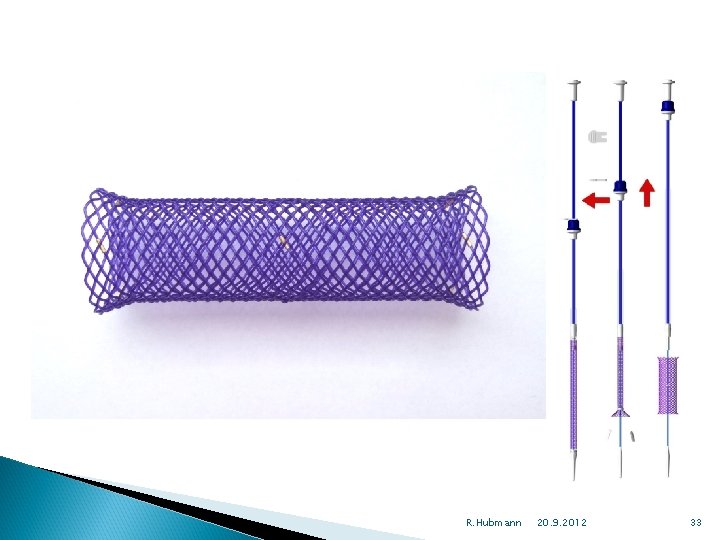
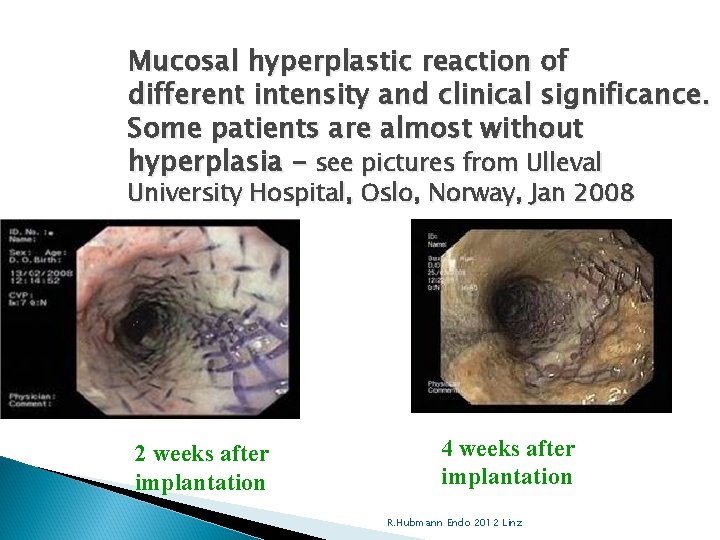
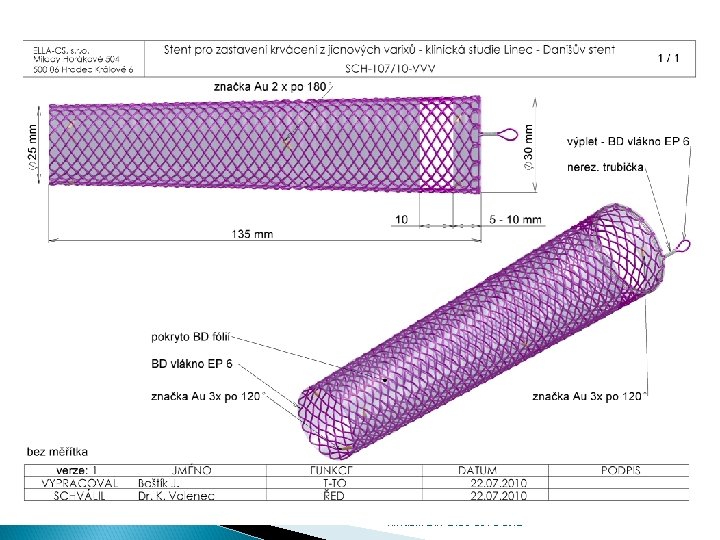
New ideas for bleeding BD Stent ? Length, Diameter Covered, Uncovered Insertion, Set loading Loop material Treatment of bleeding Prevention of rebleeding Mucosal fibrosis R. Hubmann 20. 9. 2012 32
R. Hubmann 20. 9. 2012 33
R. Hubmann 20. 9. 2012 34
R. Hubmann Endo 2012 Linz
Mucosal hyperplastic reaction of different intensity and clinical significance. Some patients are almost without hyperplasia – see pictures from Ulleval University Hospital, Oslo, Norway, Jan 2008 2 weeks after implantation 4 weeks after implantation R. Hubmann Endo 2012 Linz
R. Hubmann Endo 2012 Linz
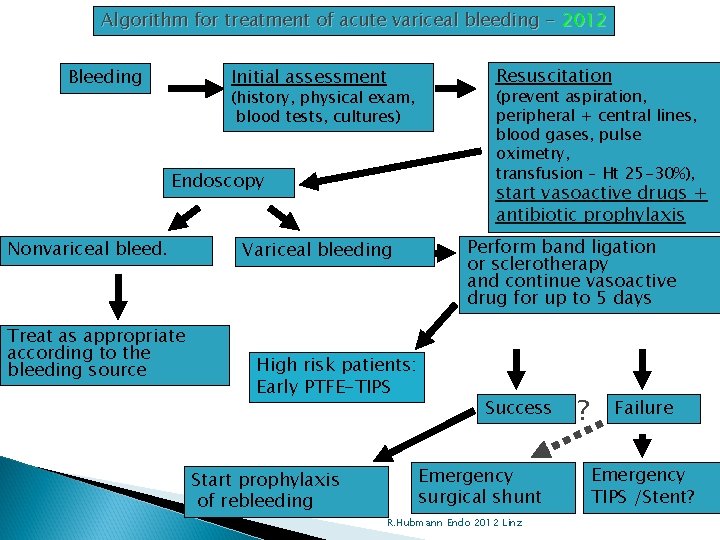
Algorithm for treatment of acute variceal bleeding - 2012 Bleeding Initial assessment (history, physical exam, blood tests, cultures) Endoscopy Nonvariceal bleed. Treat as appropriate according to the bleeding source (prevent aspiration, peripheral + central lines, blood gases, pulse oximetry, transfusion – Ht 25 -30%), start vasoactive drugs + antibiotic prophylaxis Variceal bleeding High risk patients: Early PTFE-TIPS Start prophylaxis of rebleeding Resuscitation Perform band ligation or sclerotherapy and continue vasoactive drug for up to 5 days Success Emergency surgical shunt R. Hubmann Endo 2012 Linz ? Failure Emergency TIPS /Stent?
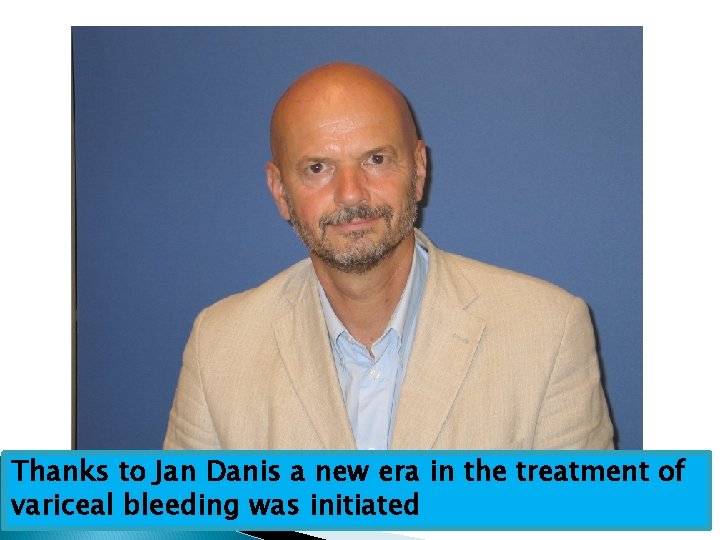
Thanks to Jan Danis a new era in the treatment of variceal bleeding was initiated R. Hubmann 25. 6. 2011 39
- Slides: 39