
Stena Teknik Open Innovation Challenge OBJECTIVE June 7
Stena Teknik Open Innovation Challenge
OBJECTIVE (June 7) Prepare Technical Briefs to be submitted to Open Innovation Solver Communities for the Stena Teknik Innovation Challenge “Contain any fire that breaks out in open cargo deck area by cutting off supply of oxygen to the compartment where the fire breaks out. Essentially, make open decks as safe as closed decks, where cutting off ventilation to the compartment is sufficient to contain any fire that breaks out. ”

Agenda
OBJECTIVE (June 8) Prepare Technical Briefs to be submitted to Open Innovation Solver Communities for the Stena Teknik Innovation : “Prevent the ingress of water into damaged hulls for gashes exceeding 50 meters (three compartments). ” “Store sufficient energy on board to eliminate the need for fuel boilers to generate power for short journeys, or at least for that portion of the journey near ports of call. ”

Agenda
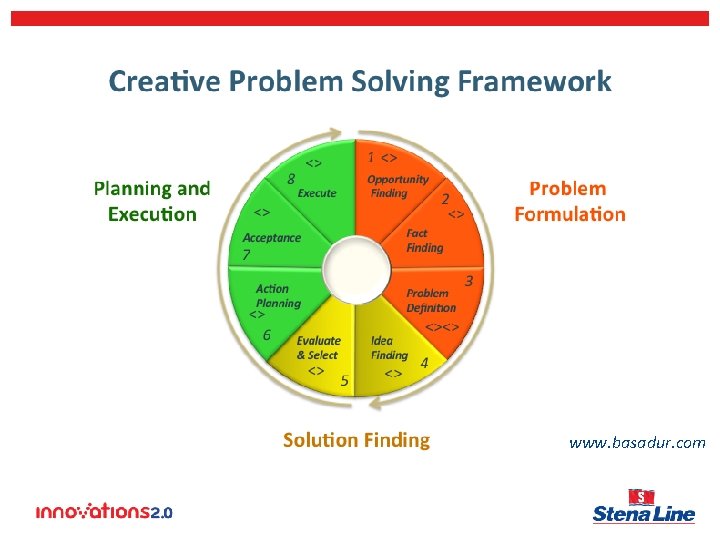
www. basadur. com
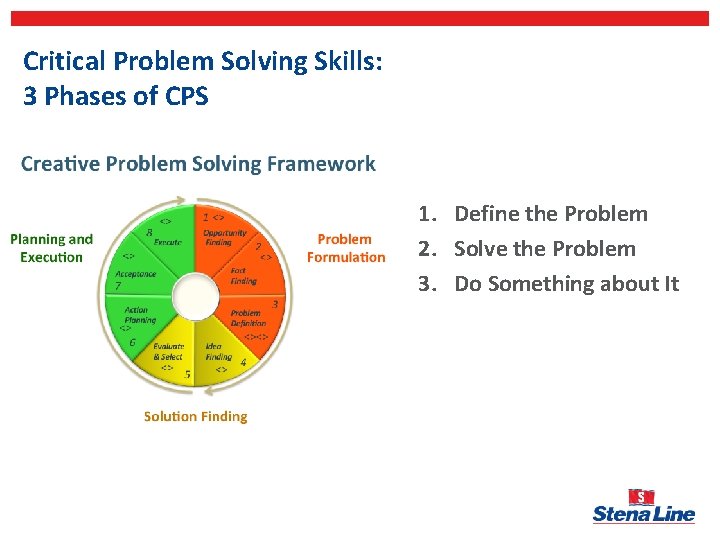
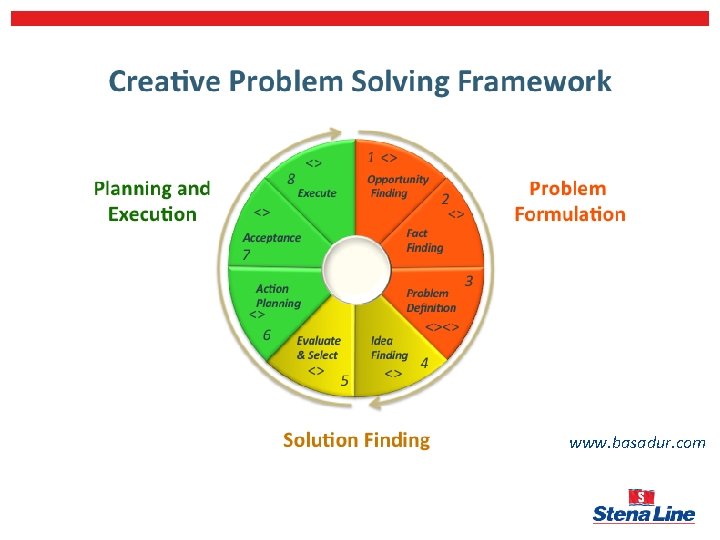
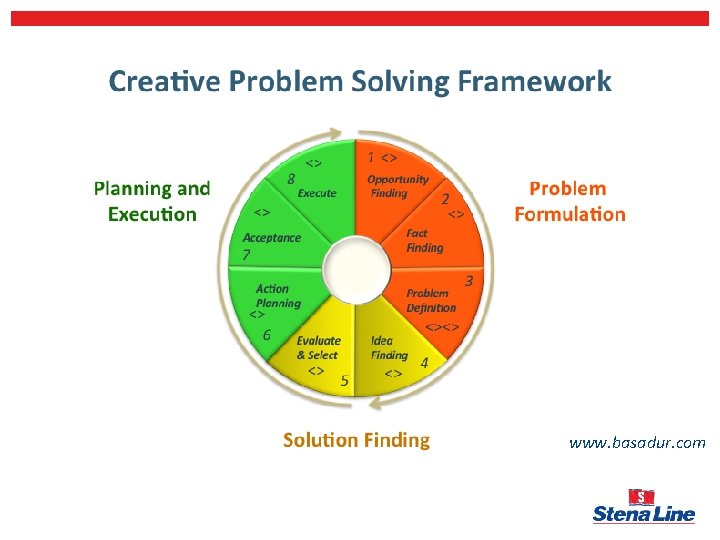
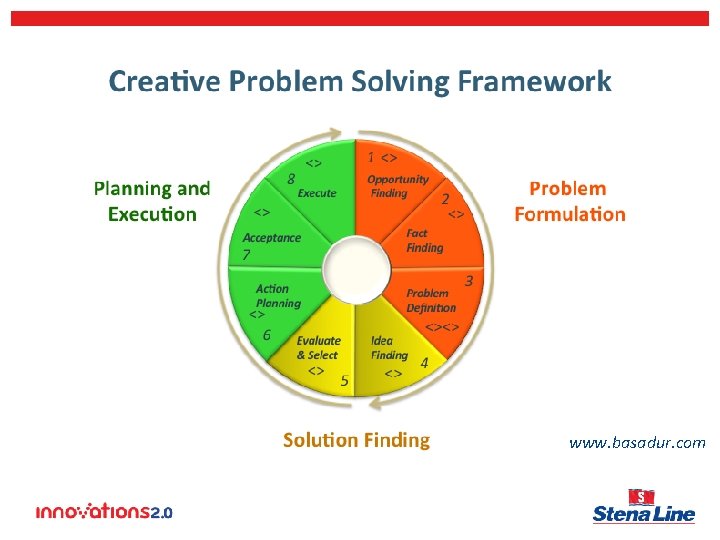
Critical Problem Solving Skills: 3 Phases of CPS 1. Define the Problem 2. Solve the Problem 3. Do Something about It
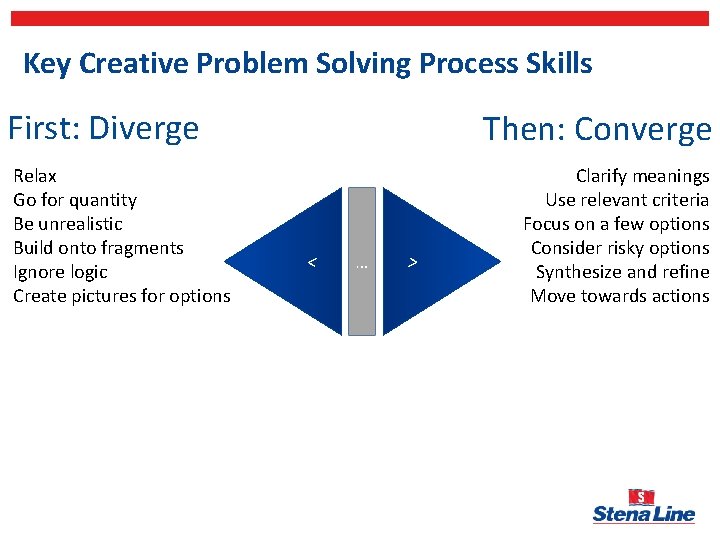
Key Creative Problem Solving Process Skills First: Diverge Relax Go for quantity Be unrealistic Build onto fragments Ignore logic Create pictures for options Then: Converge < … > Clarify meanings Use relevant criteria Focus on a few options Consider risky options Synthesize and refine Move towards actions
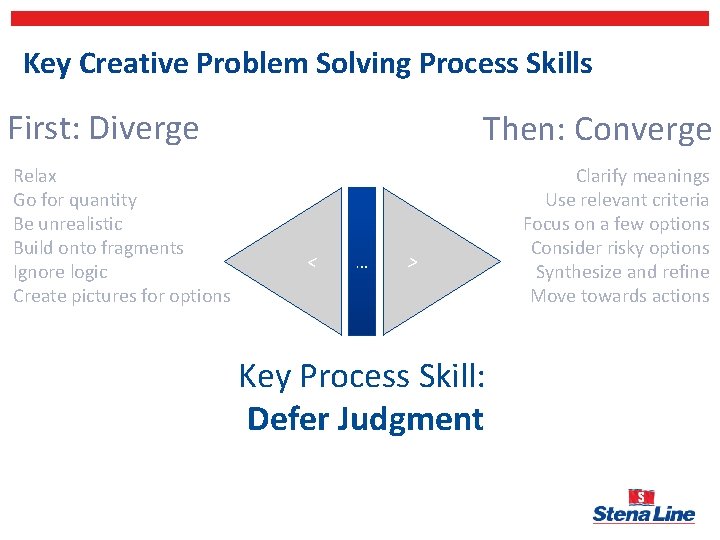
Key Creative Problem Solving Process Skills First: Diverge Relax Go for quantity Be unrealistic Build onto fragments Ignore logic Create pictures for options Then: Converge < … > Key Process Skill: Defer Judgment Clarify meanings Use relevant criteria Focus on a few options Consider risky options Synthesize and refine Move towards actions
Key CPS Process Skills • Define the Problem before you try to solve it. • Diverge before you converge at every step.
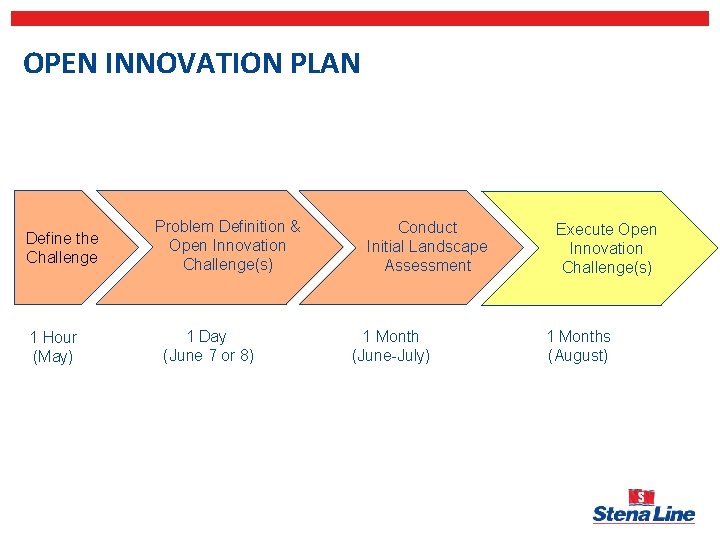
OPEN INNOVATION PLAN Define the Challenge 1 Hour (May) Problem Definition & Open Innovation Challenge(s) 1 Day (June 7 or 8) Conduct Initial Landscape Assessment 1 Month (June-July) Execute Open Innovation Challenge(s) 1 Months (August)
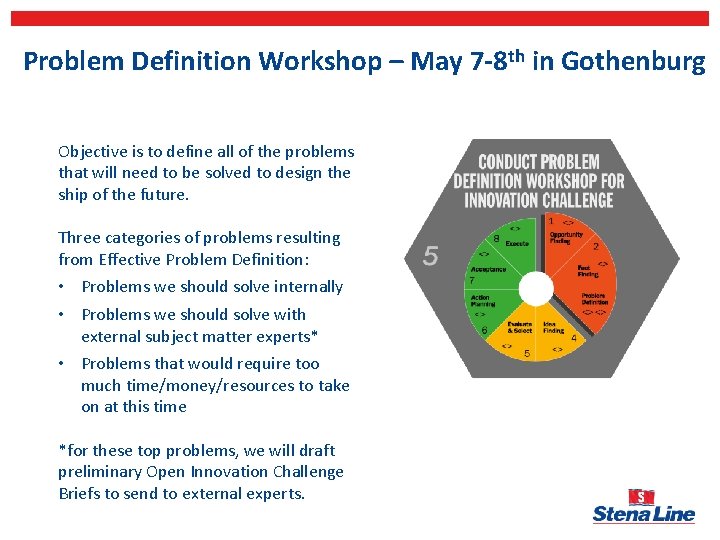
Problem Definition Workshop – May 7 -8 th in Gothenburg Objective is to define all of the problems that will need to be solved to design the ship of the future. Three categories of problems resulting from Effective Problem Definition: • Problems we should solve internally • Problems we should solve with external subject matter experts* • Problems that would require too much time/money/resources to take on at this time *for these top problems, we will draft preliminary Open Innovation Challenge Briefs to send to external experts.
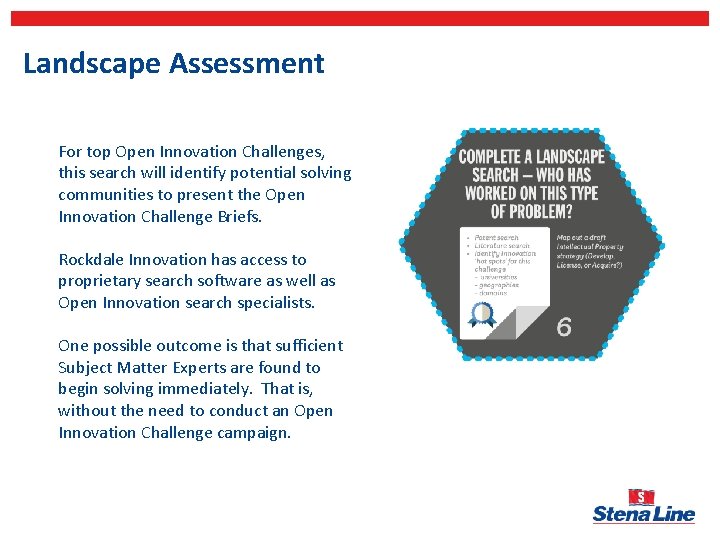
Landscape Assessment For top Open Innovation Challenges, this search will identify potential solving communities to present the Open Innovation Challenge Briefs. Rockdale Innovation has access to proprietary search software as well as Open Innovation search specialists. One possible outcome is that sufficient Subject Matter Experts are found to begin solving immediately. That is, without the need to conduct an Open Innovation Challenge campaign.
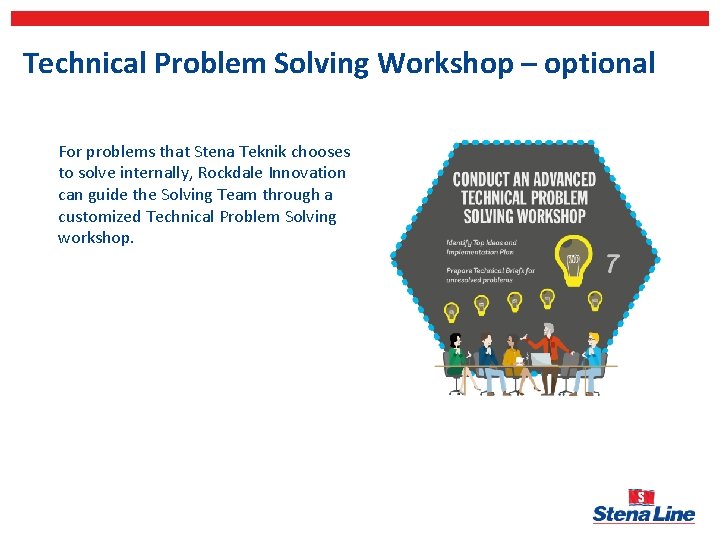
Technical Problem Solving Workshop – optional For problems that Stena Teknik chooses to solve internally, Rockdale Innovation can guide the Solving Team through a customized Technical Problem Solving workshop.
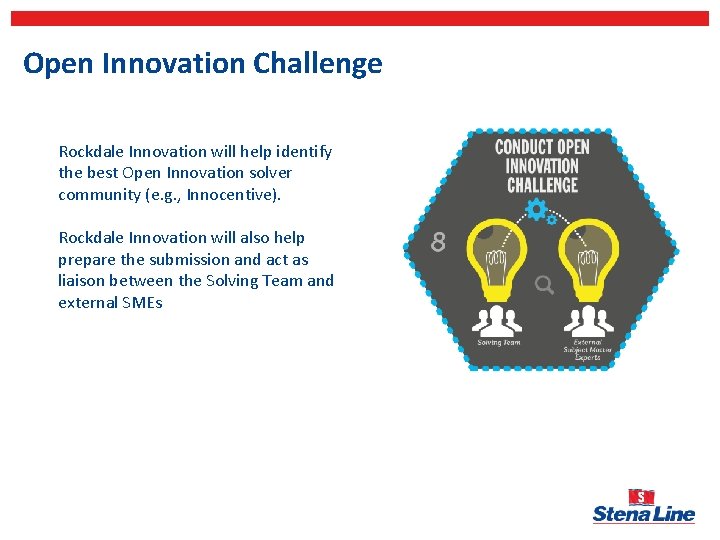
Open Innovation Challenge Rockdale Innovation will help identify the best Open Innovation solver community (e. g. , Innocentive). Rockdale Innovation will also help prepare the submission and act as liaison between the Solving Team and external SMEs
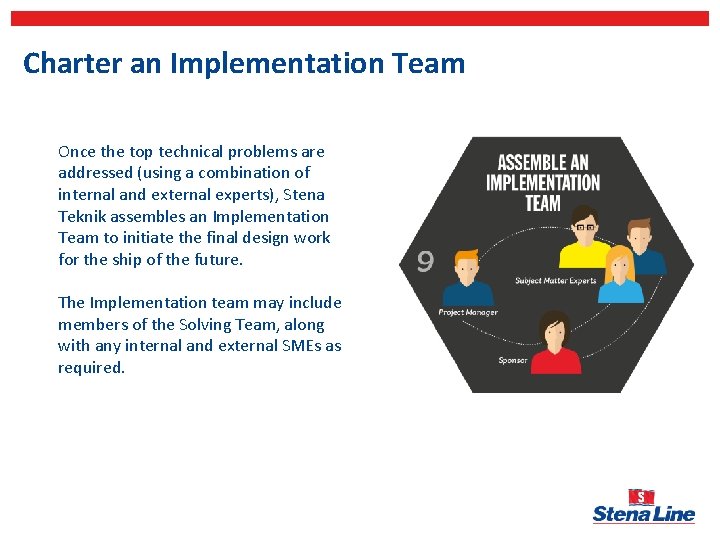
Charter an Implementation Team Once the top technical problems are addressed (using a combination of internal and external experts), Stena Teknik assembles an Implementation Team to initiate the final design work for the ship of the future. The Implementation team may include members of the Solving Team, along with any internal and external SMEs as required.
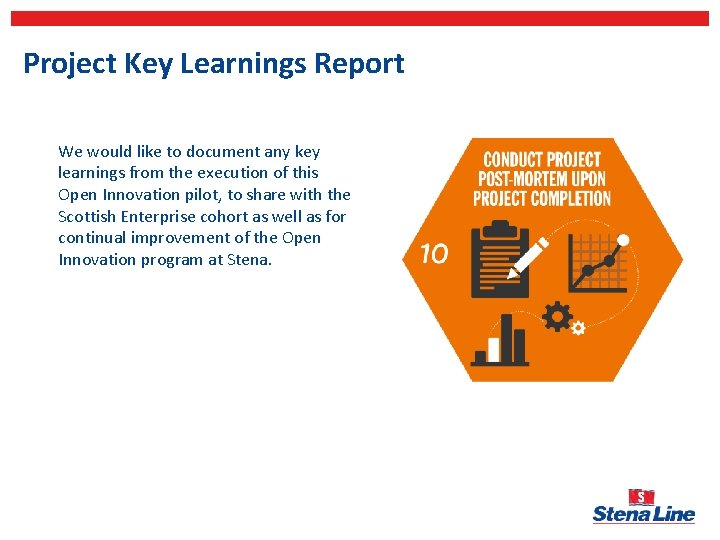
Project Key Learnings Report We would like to document any key learnings from the execution of this Open Innovation pilot, to share with the Scottish Enterprise cohort as well as for continual improvement of the Open Innovation program at Stena.
QUESTIONS?
Background • Preliminary Lanscape Review • Proposed solution approaches (industry, academia) • Known challenges and potential future challenges As we revies the background information, capture potential How Might We statements – one per post-it note!
Problem Statements that Facilitate Idea Generation • Use “How Might We…? ” to turn negative facts into more positively-stated problem statements for idea generation. • Detailed problem statements written in complete sentences makes idea generation easier. • Individually, write “How Might We…? ” statements from your unique perspective before sharing with the group.
Holy Grail Problem Statements: Before and After BEFORE TOO MANY EMAILS!! AFTER How Might We develop a “chat room” capability at Stena to eliminate back-and-forth conversations currently occurring over email?
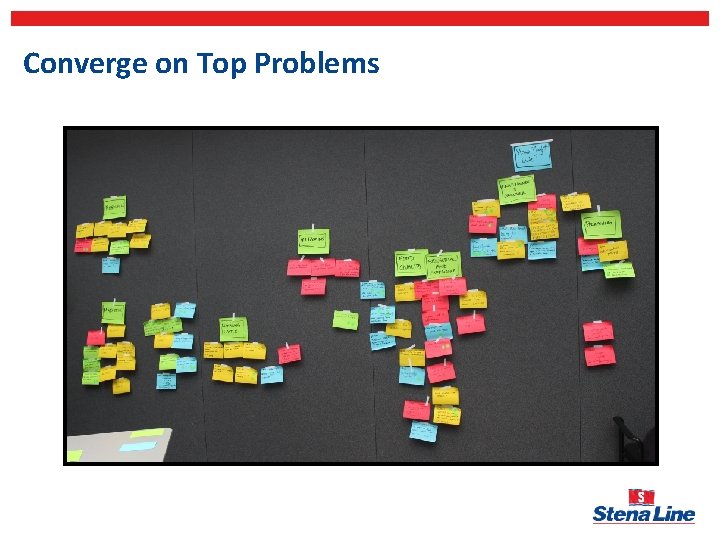
Converge on Top Problems
Affinity Diagram and Power Dots As a group, sort the HMWs by themes and label those groups of problems. You will receive some power dots. Use your dots to vote for the top problems for further problem definition.
www. basadur. com

Nine Windows
Nine Windows How might we reduce port turn-around time by 15 minutes?
Nine Windows How might we reduce port turn-around time by 15 minutes? Ship at Port
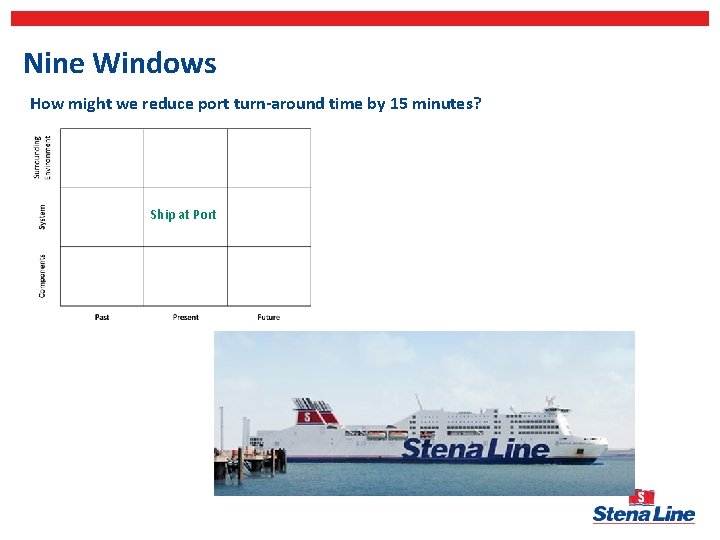
Nine Windows How might we reduce port turn-around time by 15 minutes? Ship at Port
Nine Windows How might we reduce port turn-around time by 15 minutes? Ship at Port
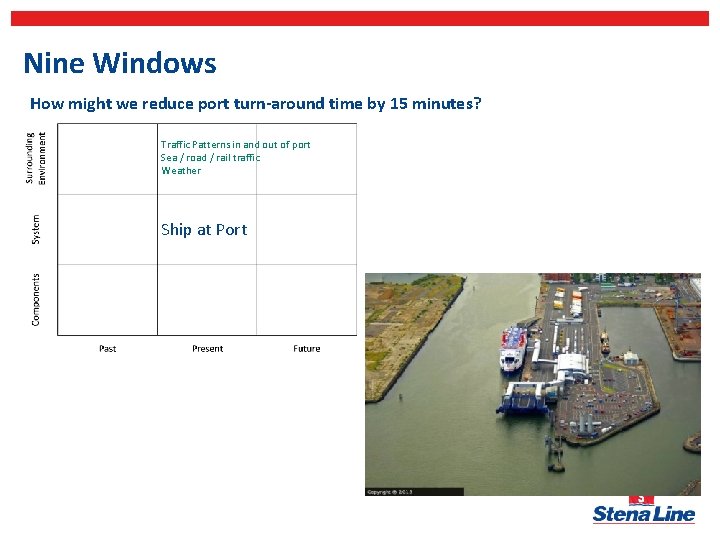
Nine Windows How might we reduce port turn-around time by 15 minutes? Traffic Patterns in and out of port Sea / road / rail traffic Weather Ship at Port
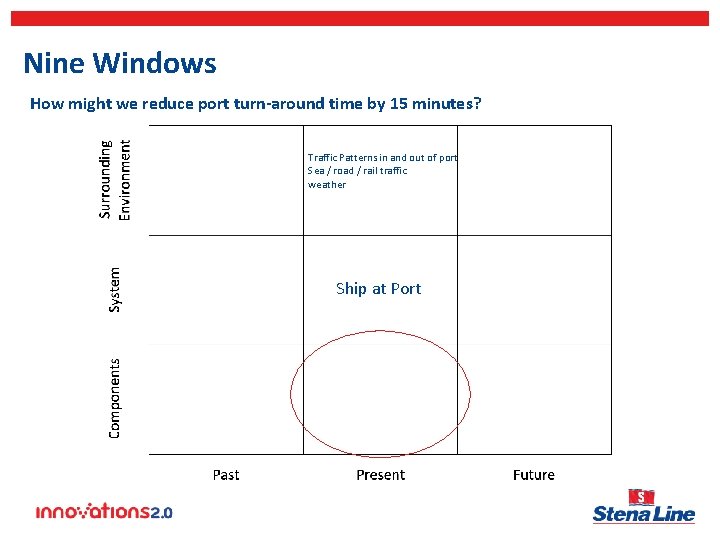
Nine Windows How might we reduce port turn-around time by 15 minutes? Traffic Patterns in and out of port Sea / road / rail traffic weather Ship at Port
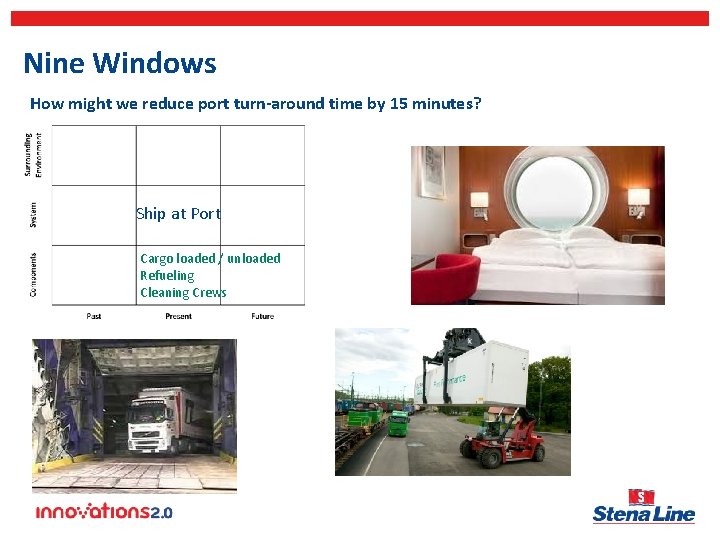
Nine Windows How might we reduce port turn-around time by 15 minutes? Ship at Port Cargo loaded / unloaded Refueling Cleaning Crews
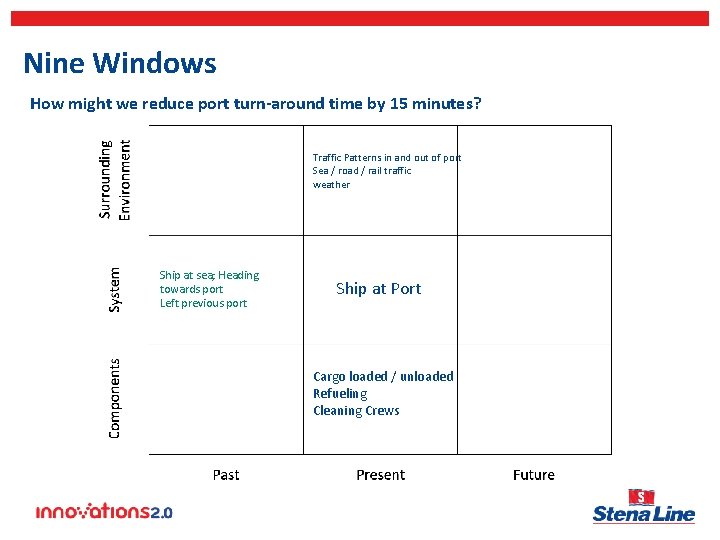
Nine Windows How might we reduce port turn-around time by 15 minutes? Traffic Patterns in and out of port Sea / road / rail traffic weather Ship at sea; Heading towards port Left previous port Ship at Port Cargo loaded / unloaded Refueling Cleaning Crews
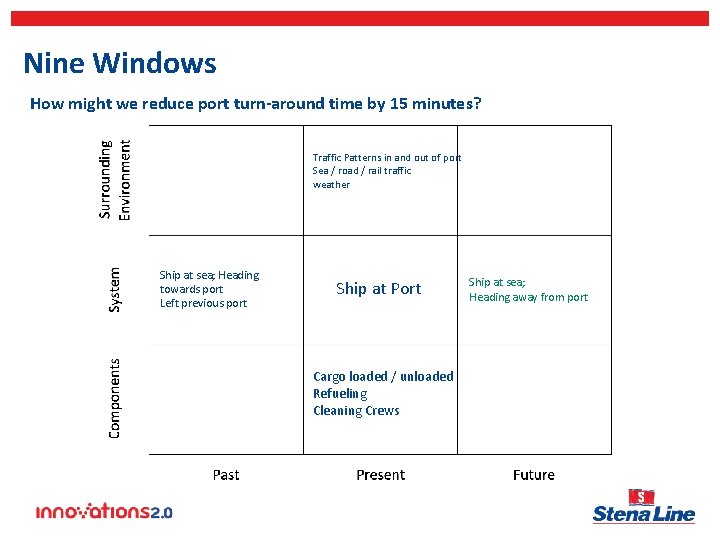
Nine Windows How might we reduce port turn-around time by 15 minutes? Traffic Patterns in and out of port Sea / road / rail traffic weather Ship at sea; Heading towards port Left previous port Ship at Port Cargo loaded / unloaded Refueling Cleaning Crews Ship at sea; Heading away from port
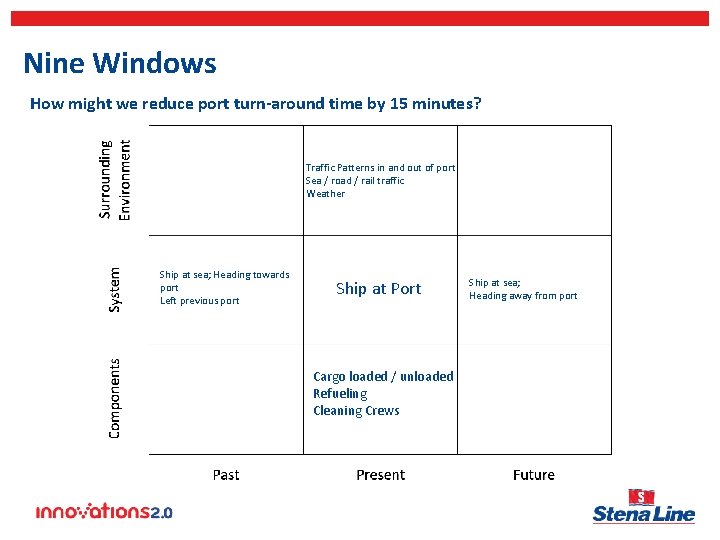
Nine Windows How might we reduce port turn-around time by 15 minutes? Traffic Patterns in and out of port Sea / road / rail traffic Weather Ship at sea; Heading towards port Left previous port Ship at Port Cargo loaded / unloaded Refueling Cleaning Crews Ship at sea; Heading away from port
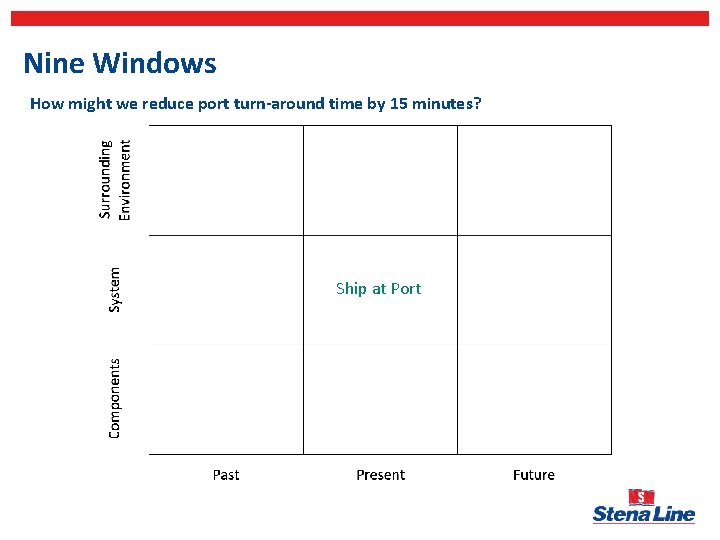
Nine Windows • Identify the Focal Point of the problem. Describe what is happening at the Focal Point in the Present moment when the problem is occurring. Add these details to the middle box. • Zoom Out: Describe what is happening in the Surrounding Environment of the Focal Moment in the Present moment while the problem is occurring. • Identify the elements of the Focal Point’s Surrounding Environment in the Present. • Zoom In: Identify the Components of the Focal Point’s System in the Present. • Evaluate the Past: Identify elements of the Focal Point’s System in the Past. • Evaluate the Future: Identify elements of the Focal Point’s System in the Future. • Identify elements for the remaining boxes. • Write at least 3 new HMW statements – One per post-it note! • When all subgroups are finished, share your original HMW statement and your new HMW statements with the group.
www. basadur. com
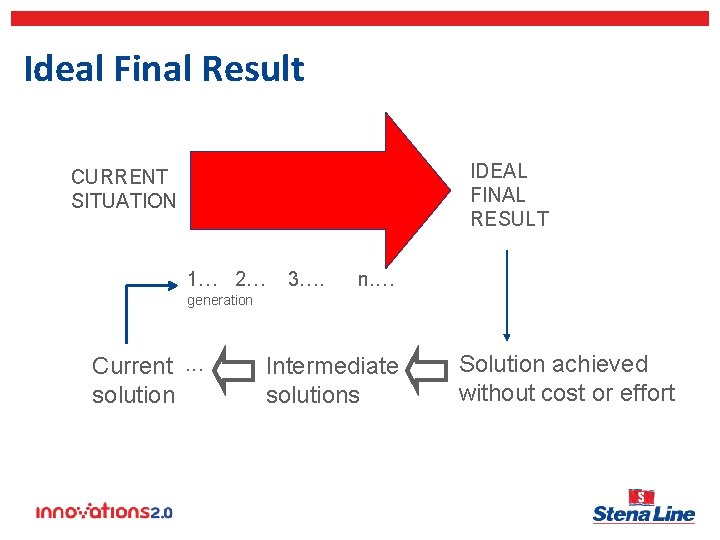
Ideal Final Result IDEAL FINAL RESULT CURRENT SITUATION 1… 2… 3…. n. … generation Current. . . solution Intermediate solutions Solution achieved without cost or effort
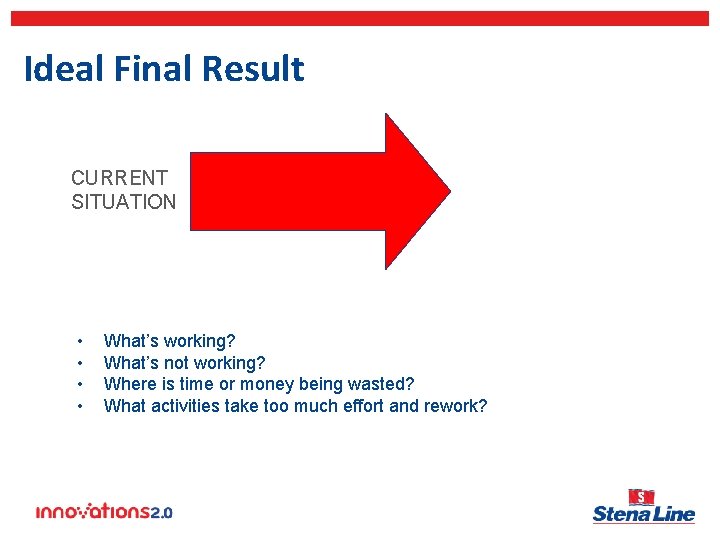
Ideal Final Result CURRENT SITUATION • • What’s working? What’s not working? Where is time or money being wasted? What activities take too much effort and rework?
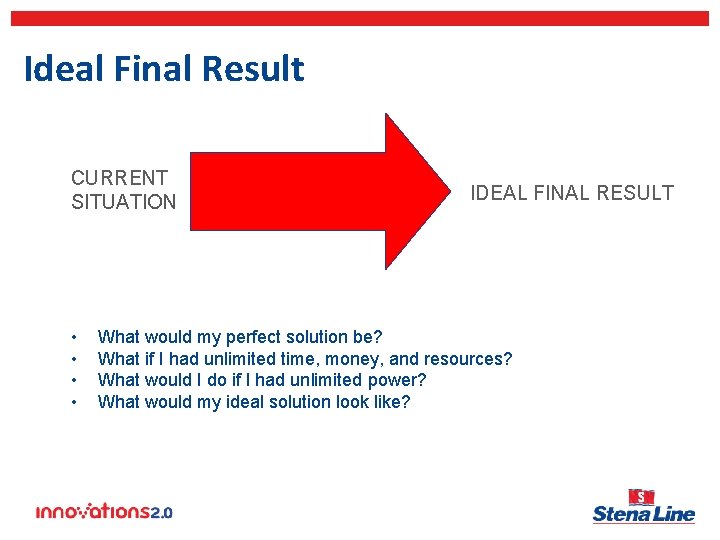
Ideal Final Result CURRENT SITUATION • • IDEAL FINAL RESULT What would my perfect solution be? What if I had unlimited time, money, and resources? What would I do if I had unlimited power? What would my ideal solution look like?
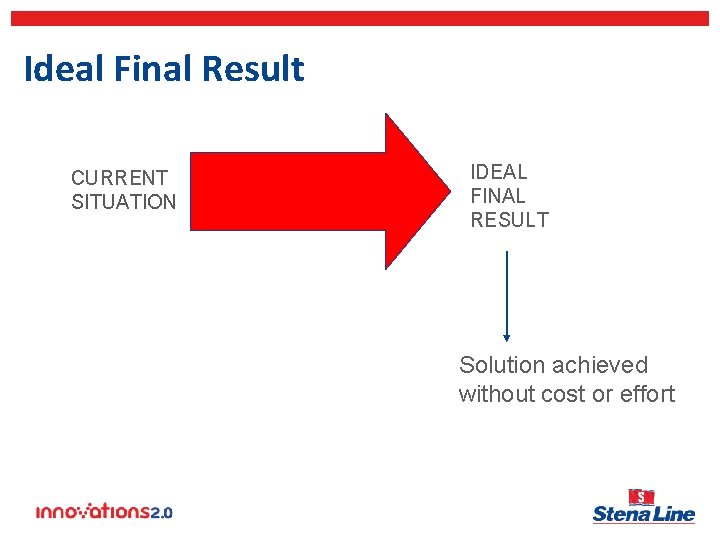
Ideal Final Result CURRENT SITUATION IDEAL FINAL RESULT Solution achieved without cost or effort
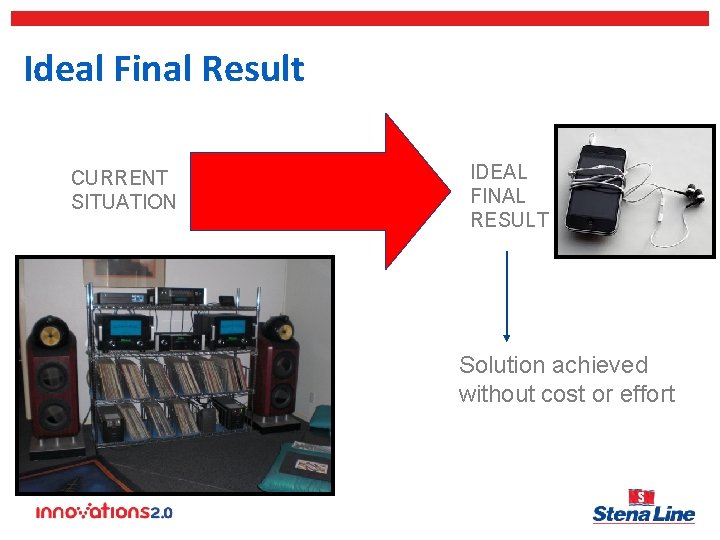
Ideal Final Result CURRENT SITUATION IDEAL FINAL RESULT Solution achieved without cost or effort
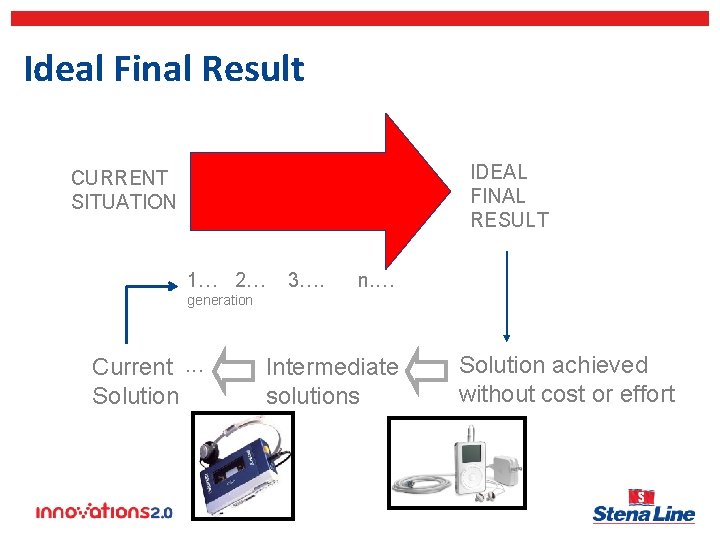
Ideal Final Result IDEAL FINAL RESULT CURRENT SITUATION 1… 2… 3…. n. … generation Current. . . Solution Intermediate solutions Solution achieved without cost or effort
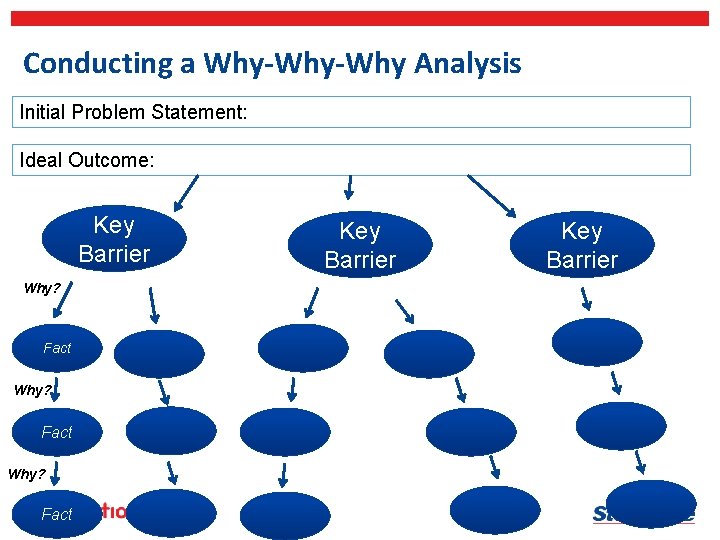
Conducting a Why-Why Analysis Initial Problem Statement: Ideal Outcome: Key Barrier Why? Fact Key Barrier
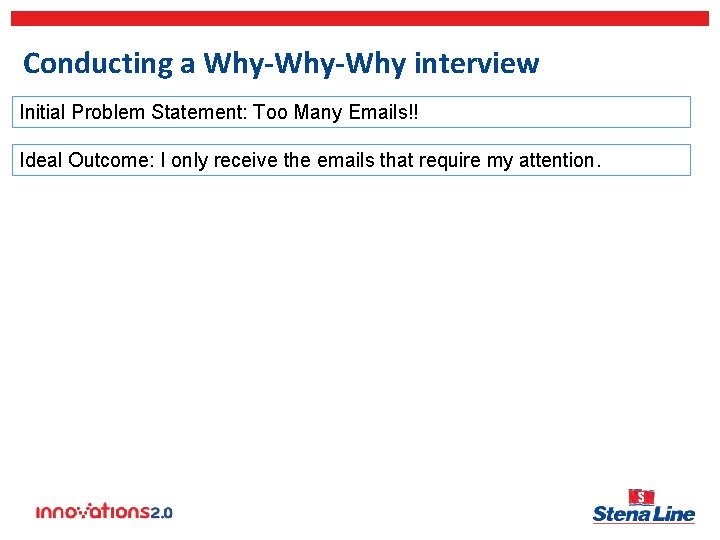
Conducting a Why-Why interview Initial Problem Statement: Too Many Emails!! Ideal Outcome: I only receive the emails that require my attention.
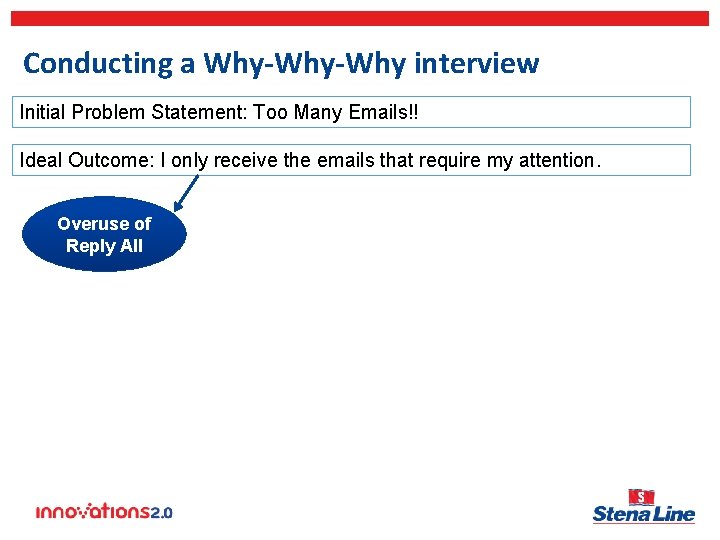
Conducting a Why-Why interview Initial Problem Statement: Too Many Emails!! Ideal Outcome: I only receive the emails that require my attention. Overuse of Reply All
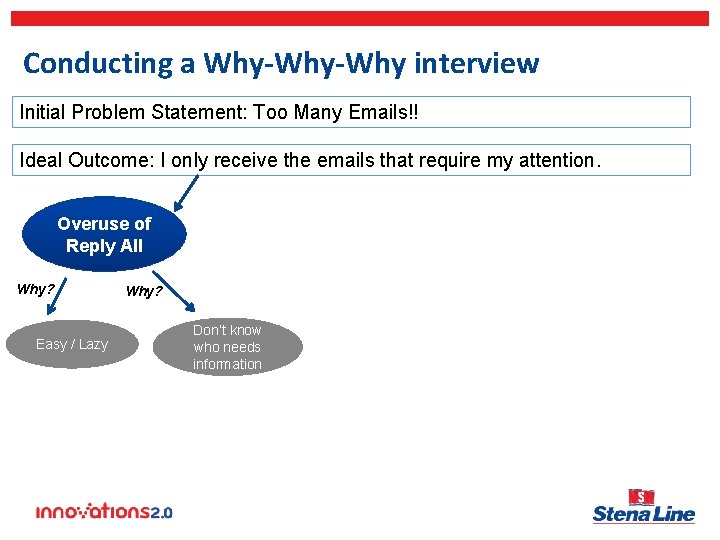
Conducting a Why-Why interview Initial Problem Statement: Too Many Emails!! Ideal Outcome: I only receive the emails that require my attention. Overuse of Reply All Why? Easy / Lazy Why? Don’t know who needs information
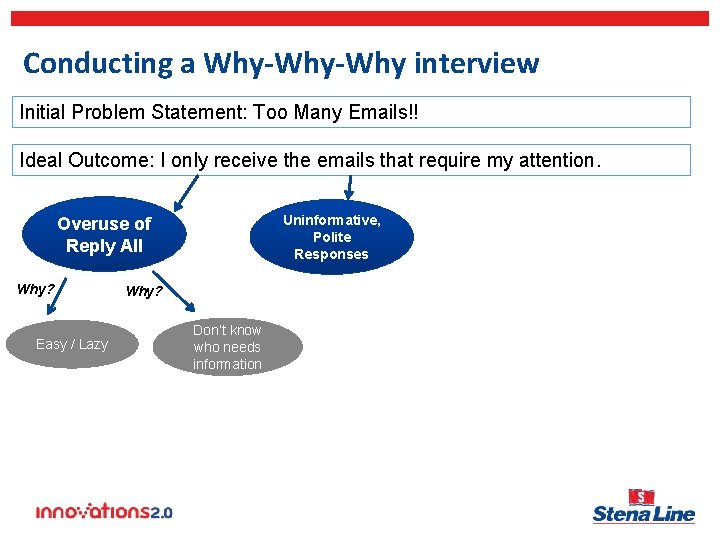
Conducting a Why-Why interview Initial Problem Statement: Too Many Emails!! Ideal Outcome: I only receive the emails that require my attention. Uninformative, Polite Responses Overuse of Reply All Why? Easy / Lazy Why? Don’t know who needs information
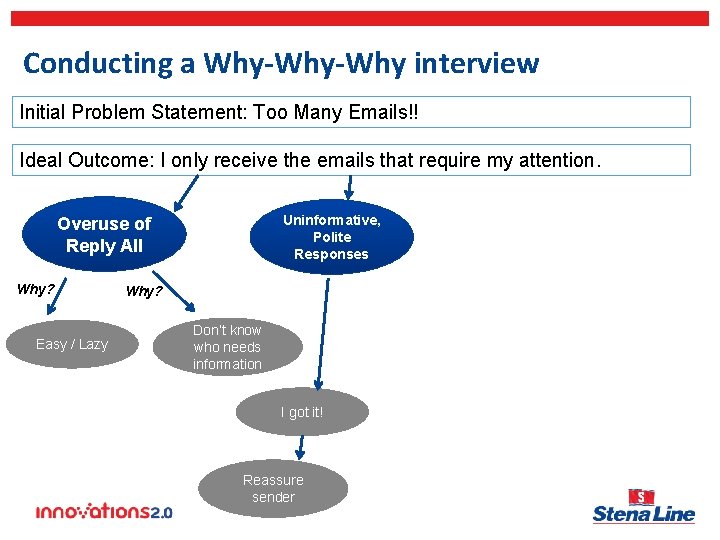
Conducting a Why-Why interview Initial Problem Statement: Too Many Emails!! Ideal Outcome: I only receive the emails that require my attention. Uninformative, Polite Responses Overuse of Reply All Why? Easy / Lazy Why? Don’t know who needs information I got it! Reassure sender
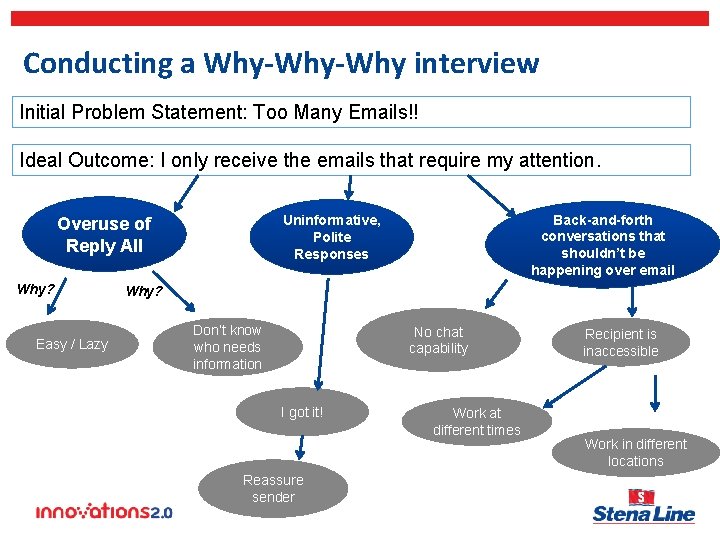
Conducting a Why-Why interview Initial Problem Statement: Too Many Emails!! Ideal Outcome: I only receive the emails that require my attention. Why? Easy / Lazy Back-and-forth conversations that shouldn’t be happening over email Uninformative, Polite Responses Overuse of Reply All Why? Don’t know who needs information No chat capability I got it! Reassure sender Work at different times Recipient is inaccessible Work in different locations
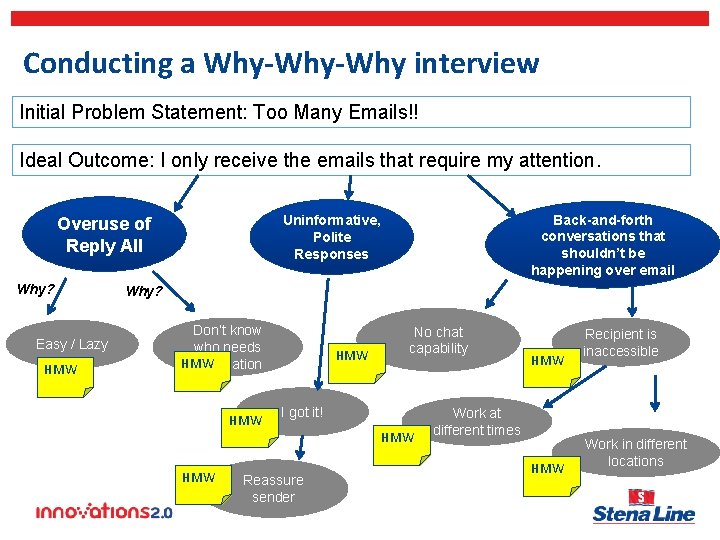
Conducting a Why-Why interview Initial Problem Statement: Too Many Emails!! Ideal Outcome: I only receive the emails that require my attention. Why? Easy / Lazy HMW Back-and-forth conversations that shouldn’t be happening over email Uninformative, Polite Responses Overuse of Reply All Why? Don’t know who needs HMW information HMW No chat capability I got it! HMW Reassure sender HMW Work at different times HMW Recipient is inaccessible Work in different locations
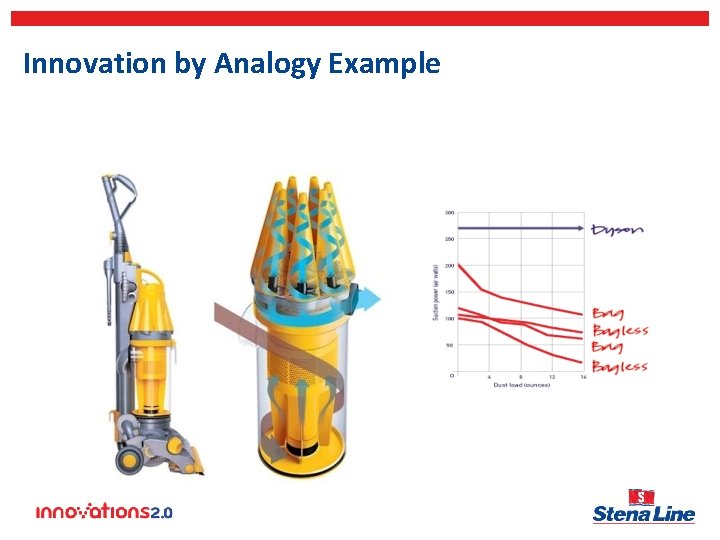
Innovation by Analogy Someone, somewhere, has already solved our problem Key Questions • What is this problem (situation) similar to? • What approach did they use to solve it?
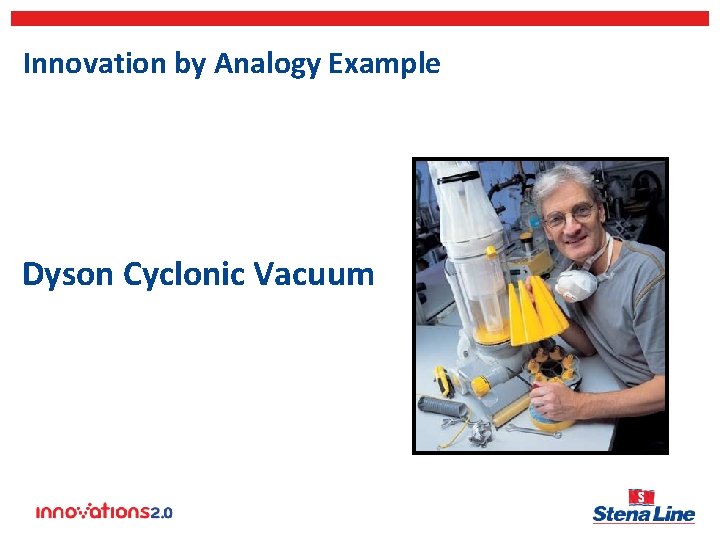
Innovation by Analogy Example Dyson Cyclonic Vacuum
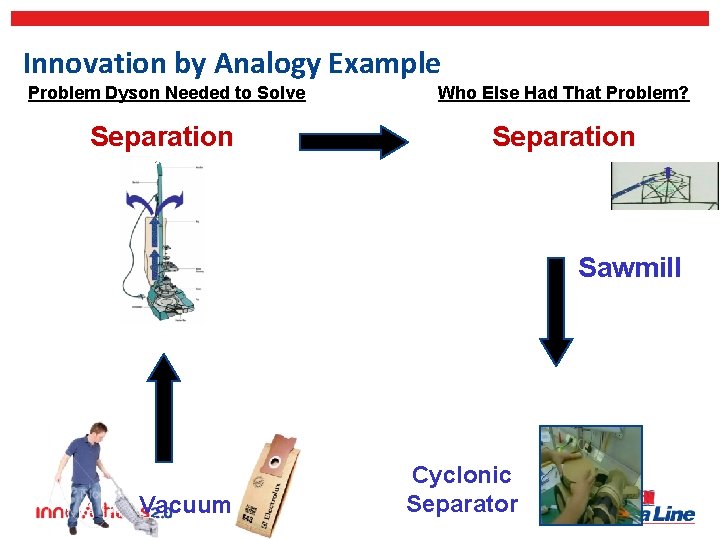
Innovation by Analogy Example Problem Dyson Needed to Solve Who Else Had That Problem? Separation Sawmill Vacuum Cyclonic Separator
Innovation by Analogy Example
Practice on a Local Challenge: Innovation by Analogy
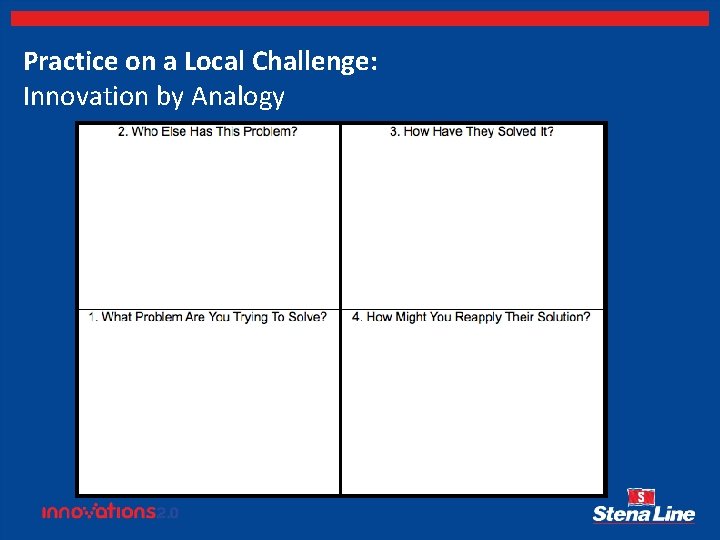
Practice on a Local Challenge: Innovation by Analogy • As a subgroup, choose a new top How Might We problem statement from the Affinity Diagram. • Each subgroup will share the problem statement they have chosen, and the rest of the group will help brainstorm potential analogies. • Each subgroup will select the most promising analogies and complete the Innovation by Analogy template. • Use one analogy per template • Work as a subteam or break into pairs • Create at least 3 new Idea Cards.
IBA – Who else is working on our problem? • Pulp and papermaking • Consumer products – beauty care, personal care • Drinking water distribution and waste water collection • Bio mimicry • Mr. Clean
Theory of Inventive Problem Solving (TIPS aka TRIZ) What is TIPS? • Summary of knowledge from Patent Literature • Structured problem solving approach Problem Solving Tools • 40 Inventive Principles • 12 Trends of Evolution • >1000 Scientific Effects
TIPS – Engineering Contradictions Definition: Implementing a well-known method of improving one parameter of an engineering system leads to the simultaneous deterioration in one or more other parameters. Typical parameters: Product performance, product cost, product defects, product complexity, ease of manufacturability, production capacity, process safety, scrap losses, environmental emissions.
Identifying & Eliminating Contradictions • What is the problem you are trying to solve? • What is one overly simple solution that would solve that problem? • What new problems would cause? • Restate the original problem as a both/and problem statement
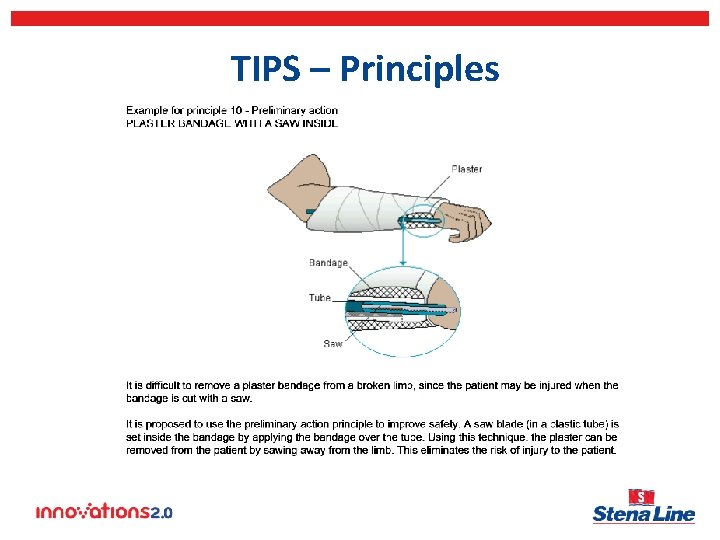
TIPS – Principles
Preliminary Landscape Assessment
www. basadur. com
Displayed Thinking to identify all work required
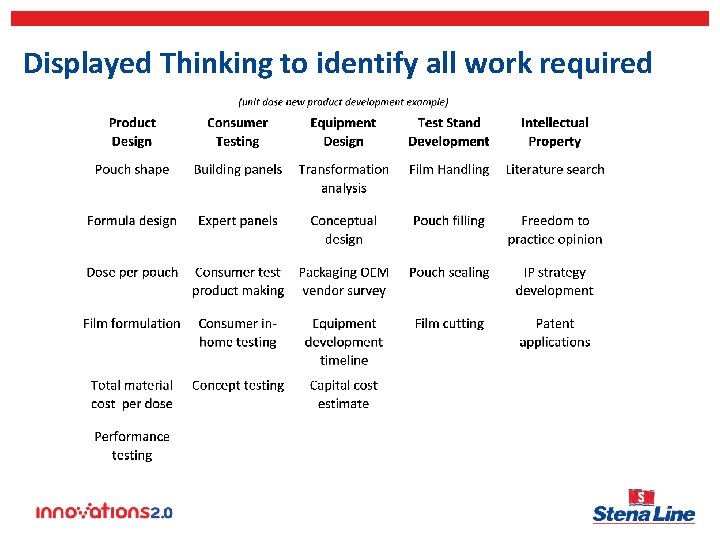
Displayed Thinking • As a group, brainstorm the main categories of work required to fully implement the top Ideas. Write on Post-Its and post along the top row. • Under each Header, brainstorm more specific bodies of work needed under each category (in subgroups). • After brainstorming, converge on the most important work that needs to be completed in the next 90 days (power dot).

NEXT STEPS
- Slides: 68