
Stems Stem Functions support food storage photosynthesis in

- Slides: 37
Stems
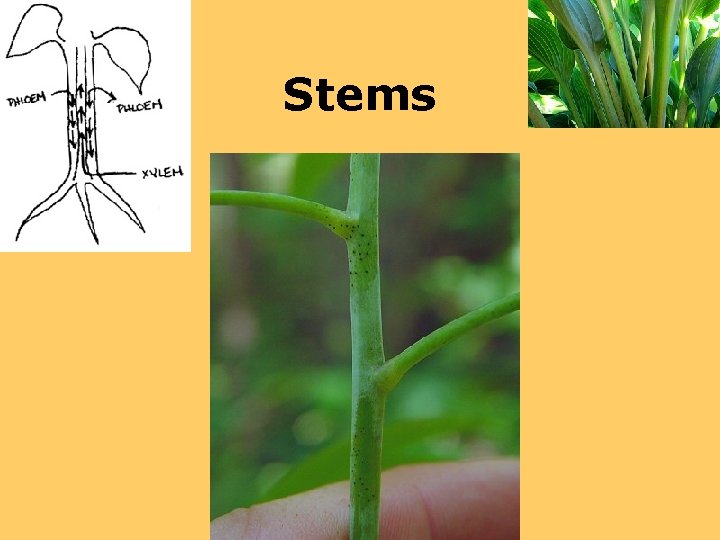
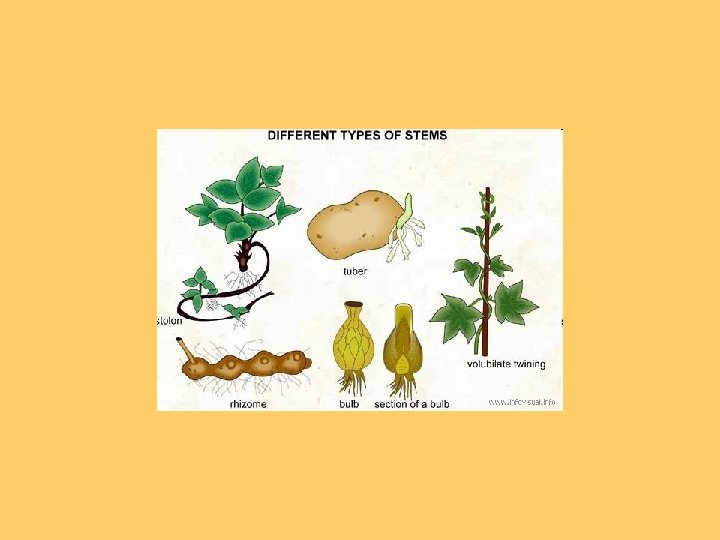
Stem Functions • support • food storage • photosynthesis in green stems • conducts water and materials from roots to other plant organs
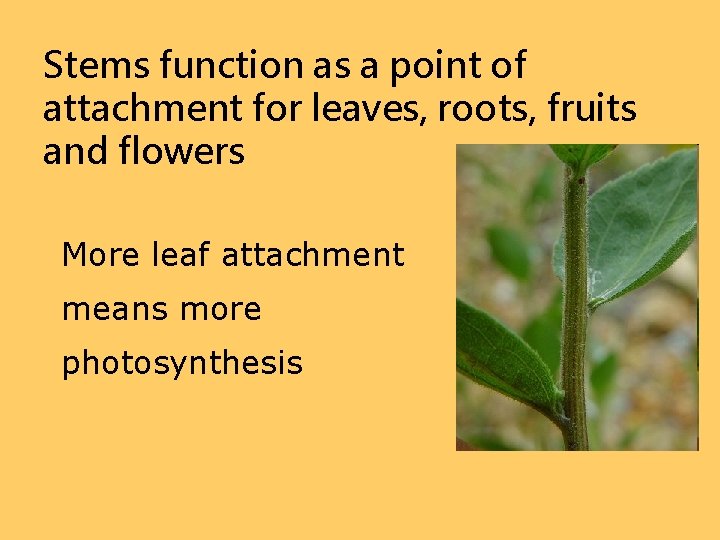
Stems function as a point of attachment for leaves, roots, fruits and flowers More leaf attachment means more photosynthesis
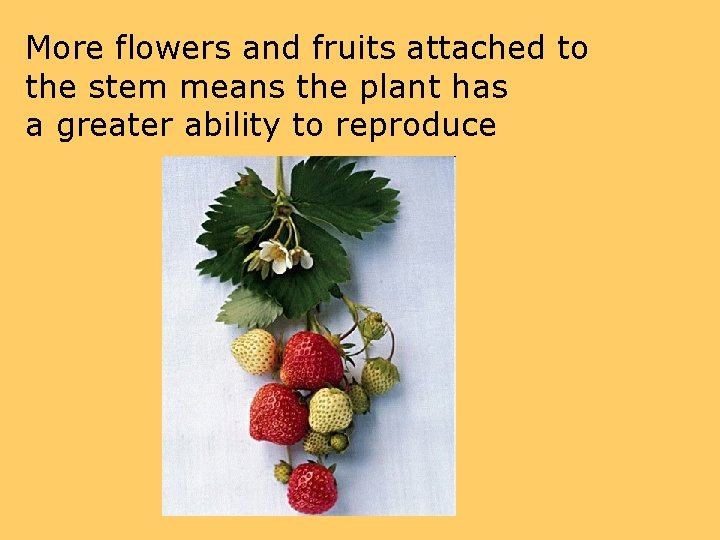
More flowers and fruits attached to the stem means the plant has a greater ability to reproduce
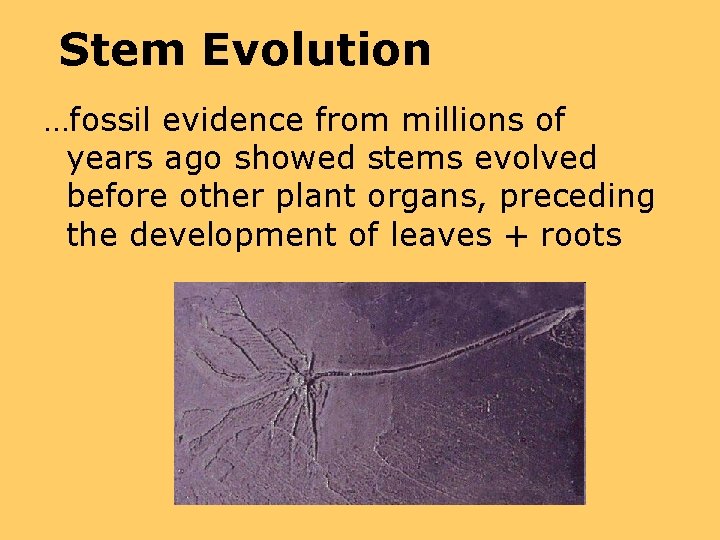
Stem Evolution …fossil evidence from millions of years ago showed stems evolved before other plant organs, preceding the development of leaves + roots
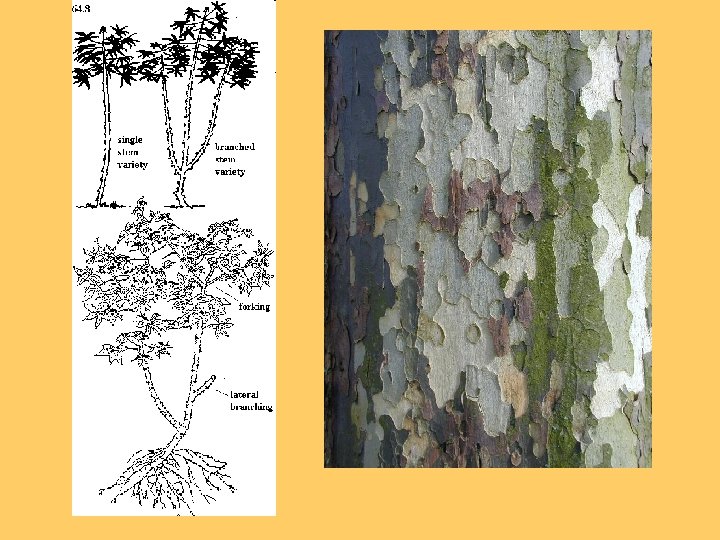
Stem Functions • aid plant growth by increasing height, mass and surface area –stems branching patterns allow this growth
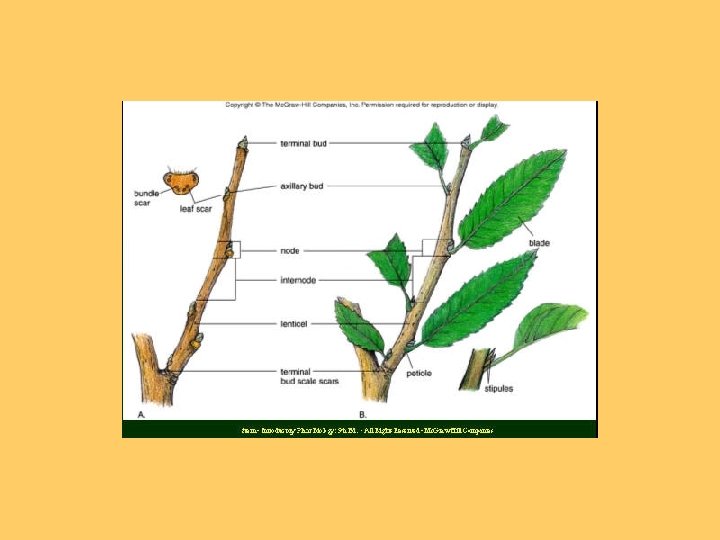
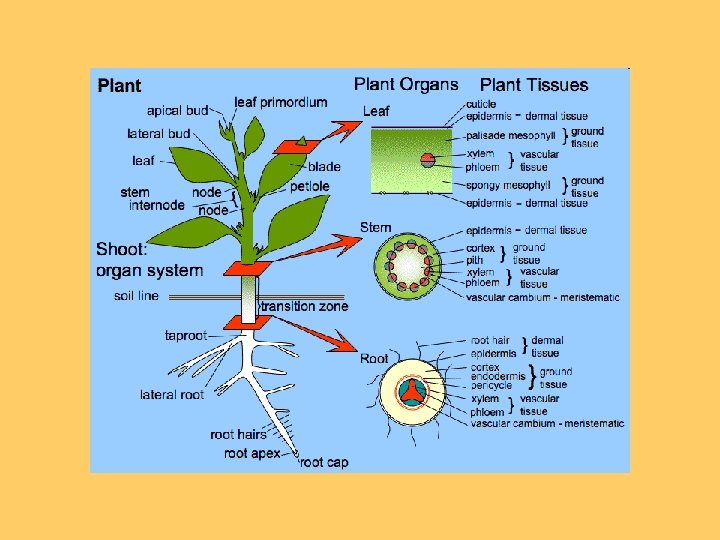
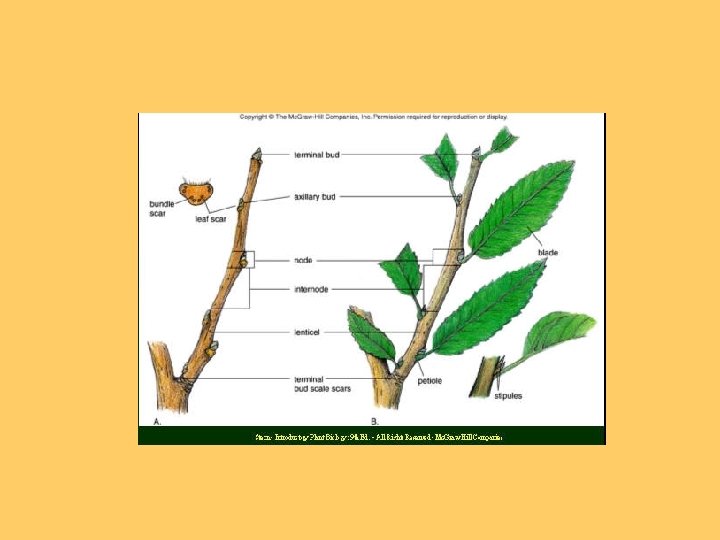
Stem Structure and growth • node – area where leaves are attached to a stem • internode – the stem region between the nodes
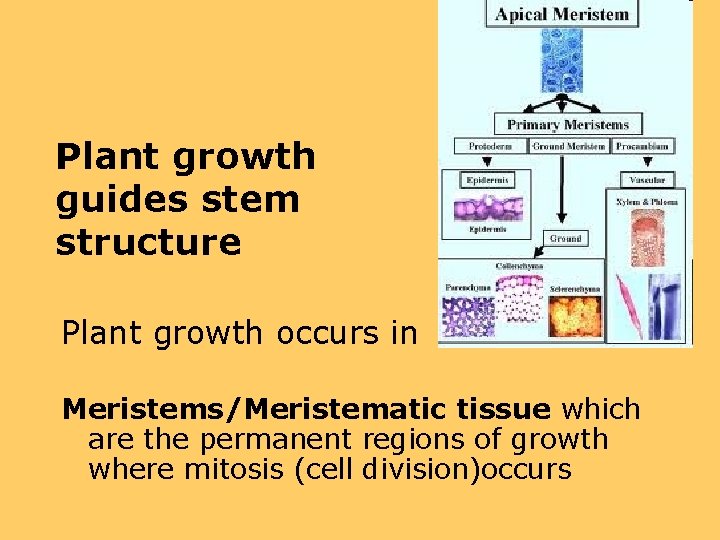
Plant growth guides stem structure Plant growth occurs in Meristems/Meristematic tissue which are the permanent regions of growth where mitosis (cell division)occurs
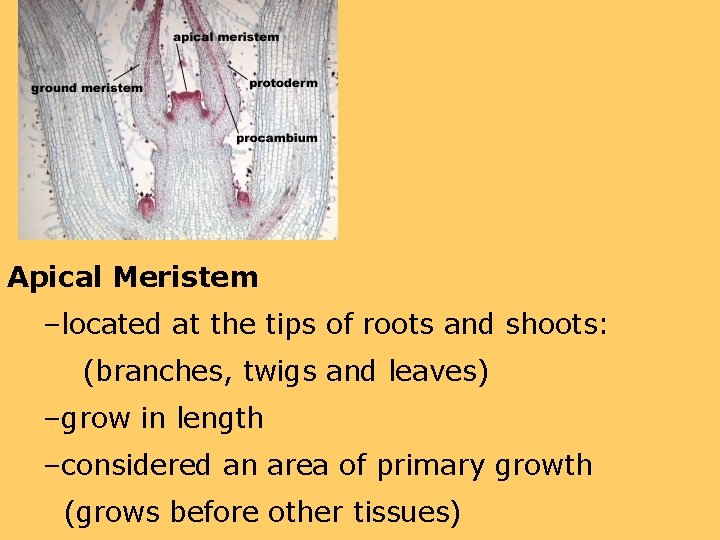
Apical Meristem –located at the tips of roots and shoots: (branches, twigs and leaves) –grow in length –considered an area of primary growth (grows before other tissues)
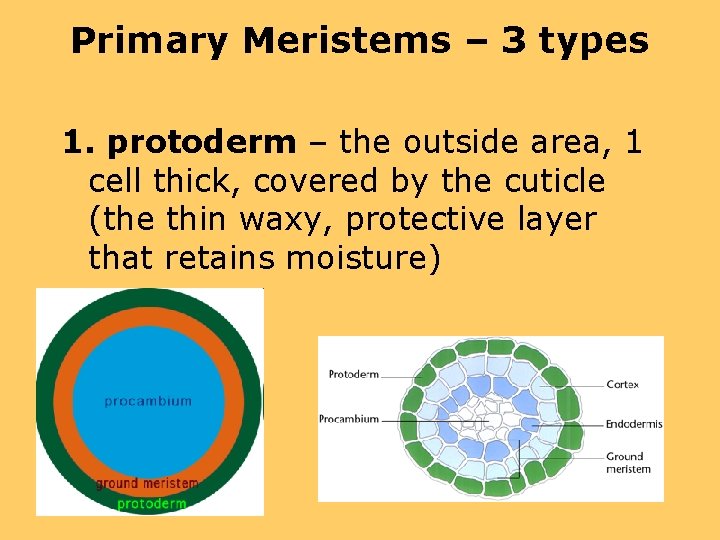
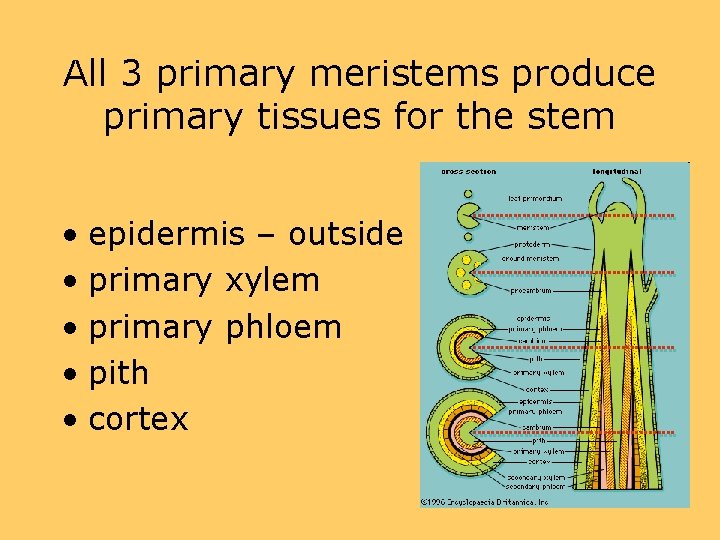
Primary Meristems – 3 types 1. protoderm – the outside area, 1 cell thick, covered by the cuticle (the thin waxy, protective layer that retains moisture)
Primary Meristems – 3 types 2. ground meristems – produces 2 tissues made of parenchyma cells pith – tissue in the center of a stem or root cortex – located between epidermis + vascular tissues
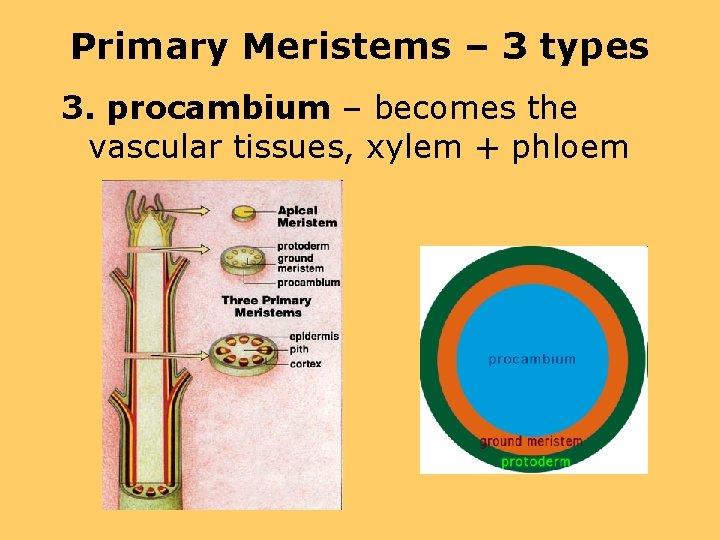
Primary Meristems – 3 types 3. procambium – becomes the vascular tissues, xylem + phloem
All 3 primary meristems produce primary tissues for the stem • epidermis – outside • primary xylem • primary phloem • pith • cortex
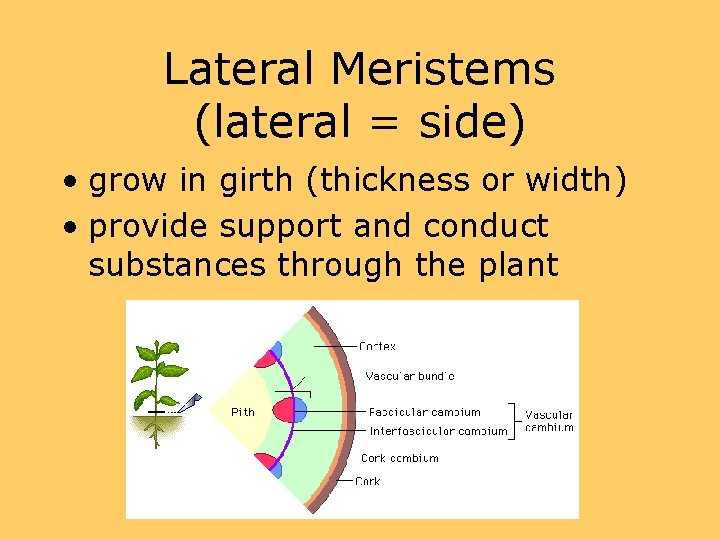
Lateral Meristems (lateral = side) • grow in girth (thickness or width) • provide support and conduct substances through the plant
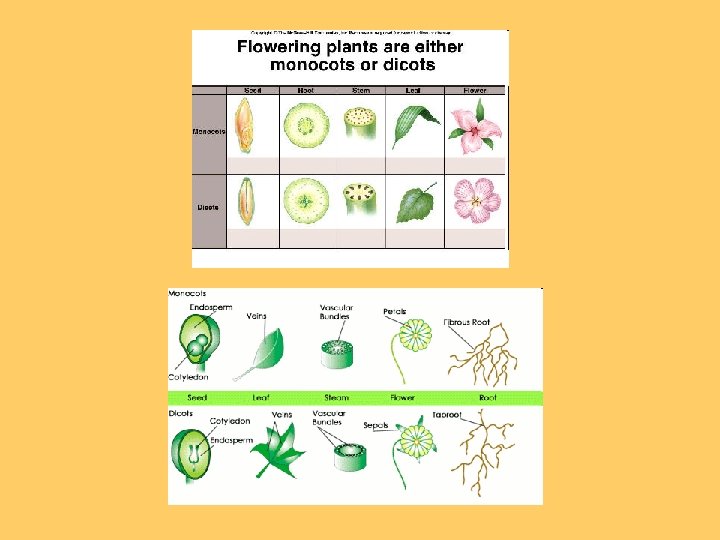
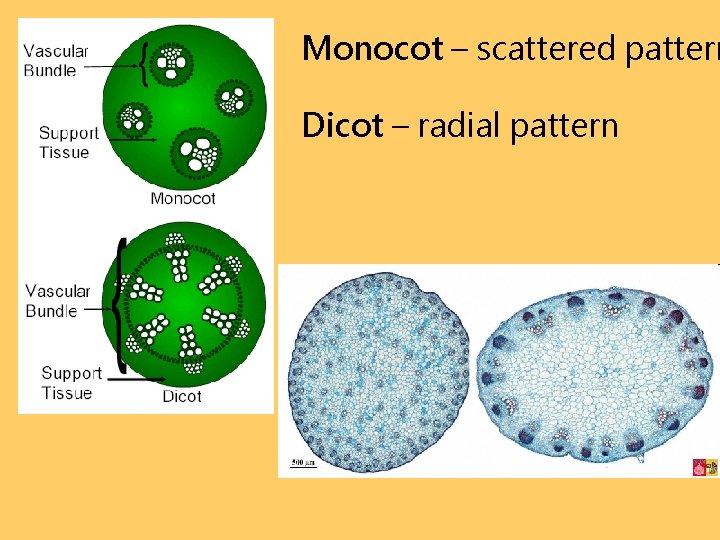
Monocot – scattered pattern Dicot – radial pattern
Stem Classification • Monocot stems • Herbaceous stems – have soft green stems that last 1 year or more – xylem + phloem pattern in cross section is scattered – Dicot stems • Woody Dicotlyledenous stems - xylem + phloem pattern in radial pattern
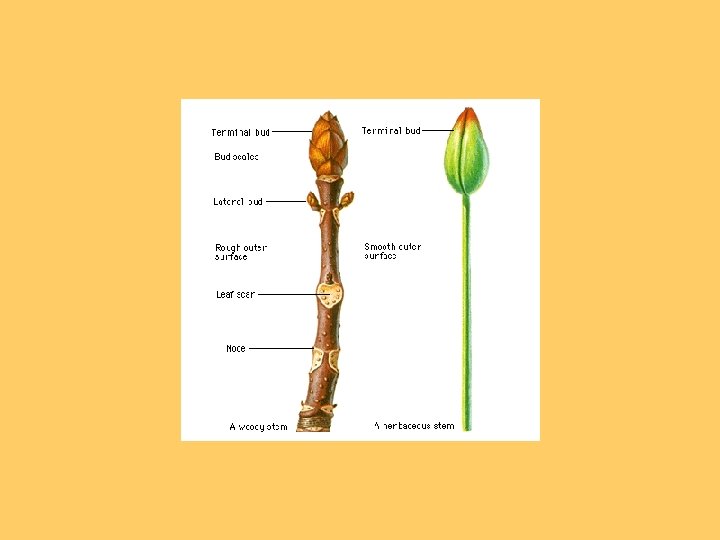
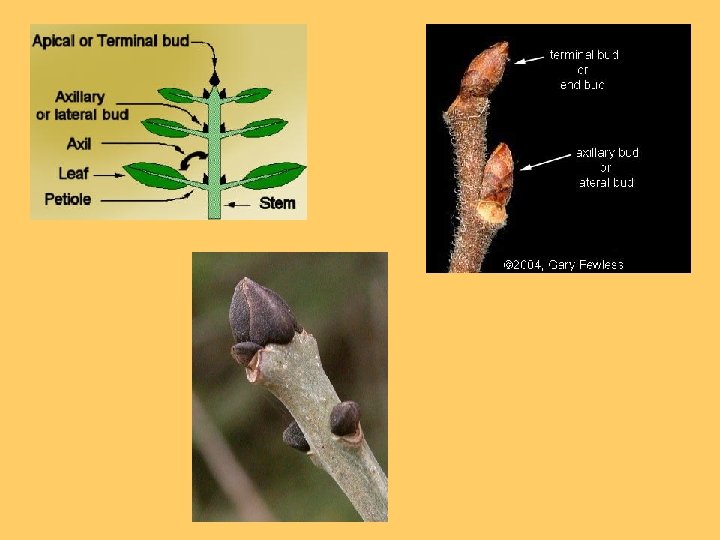
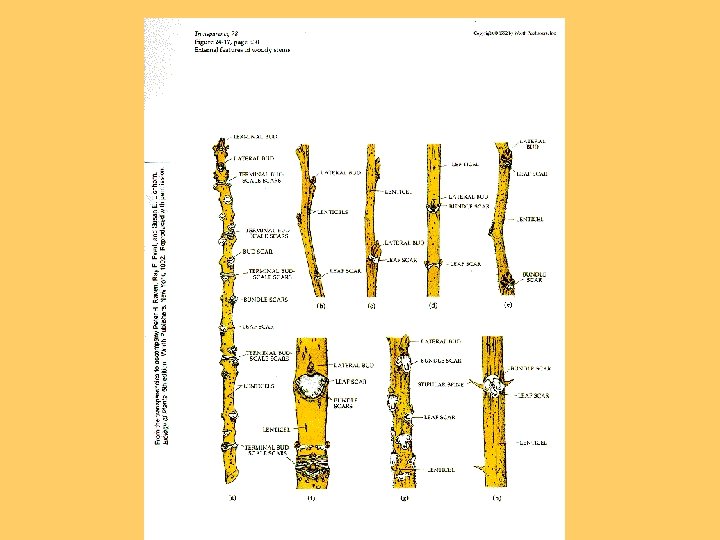
Stem structure + growth • stems grow from the terminal bud/end • the terminal bud grows out and away, leaving bud scars • bud scales – leaf-like structures that cover and protect the soft growing point
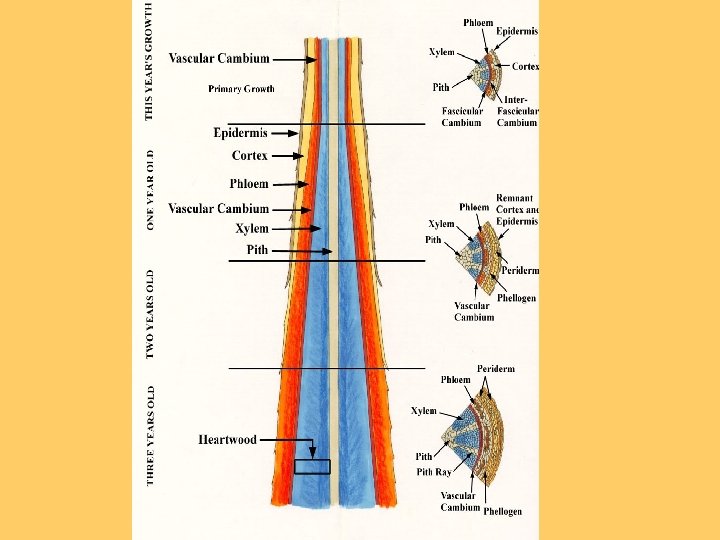
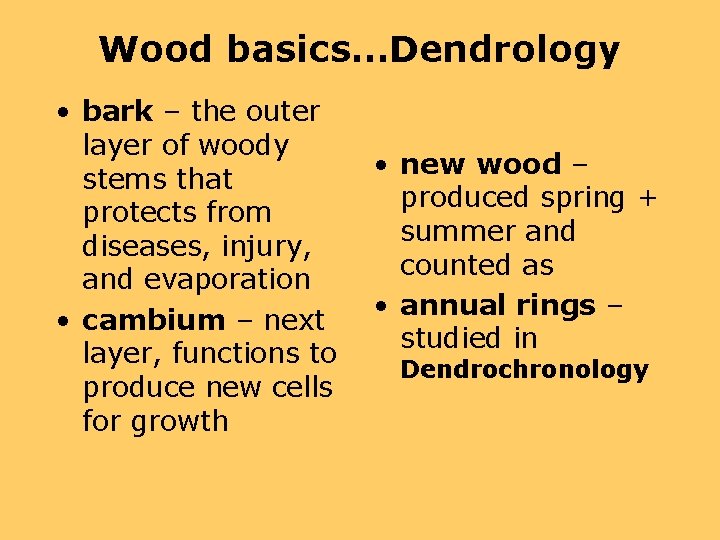
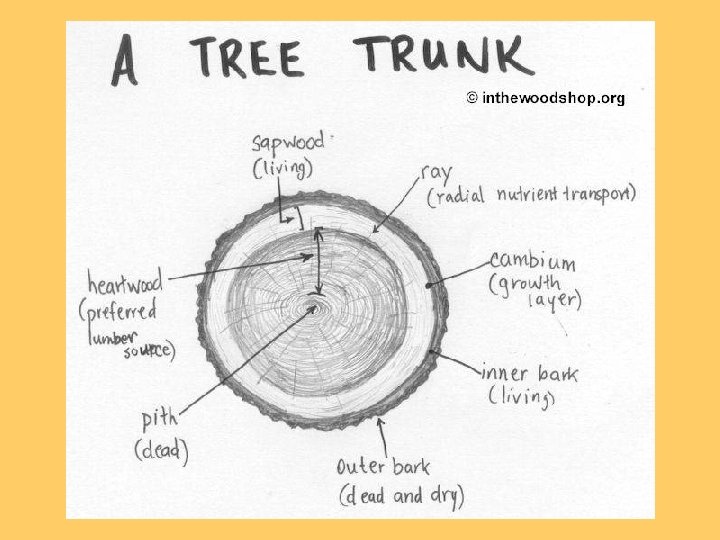
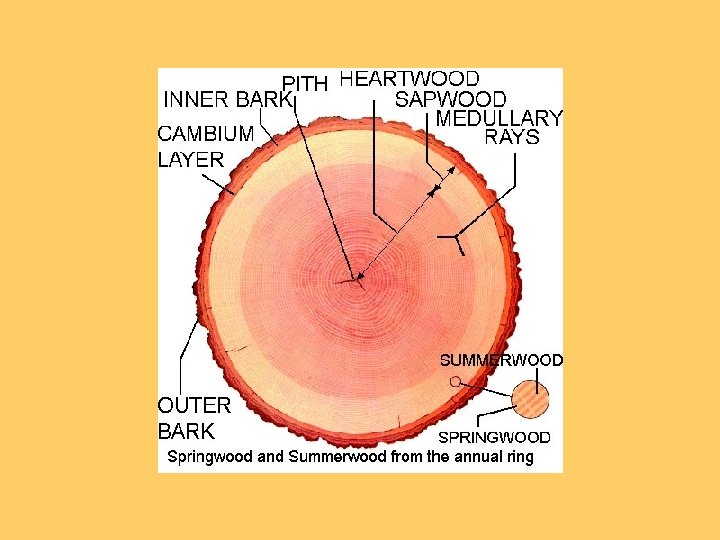
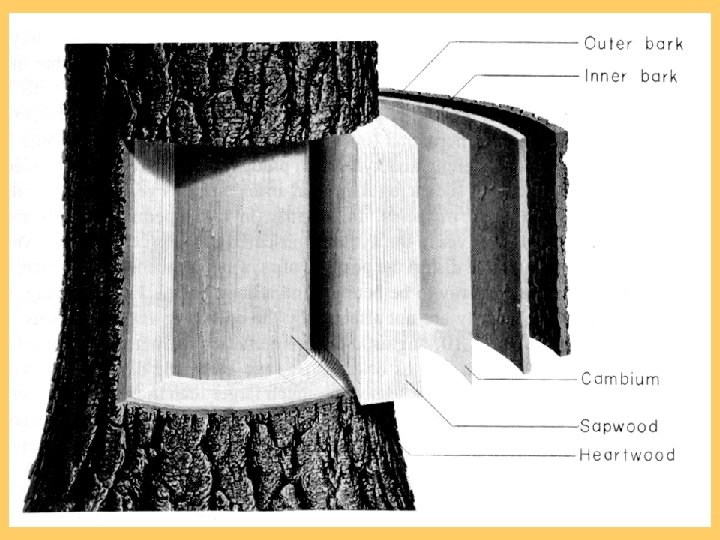
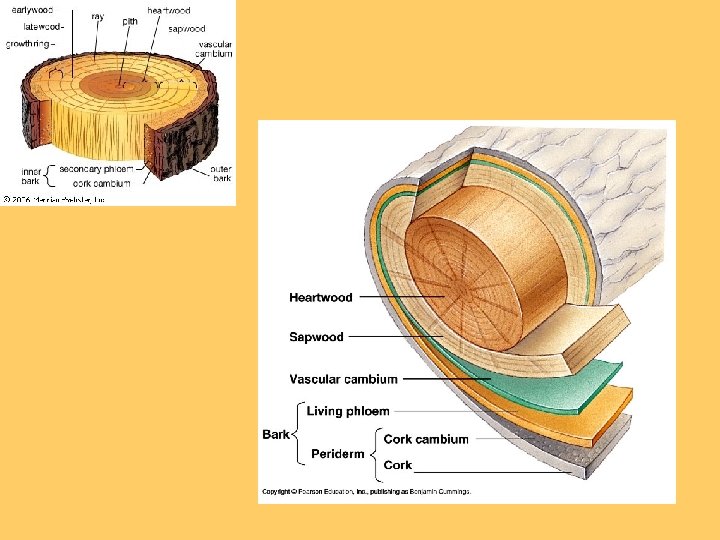
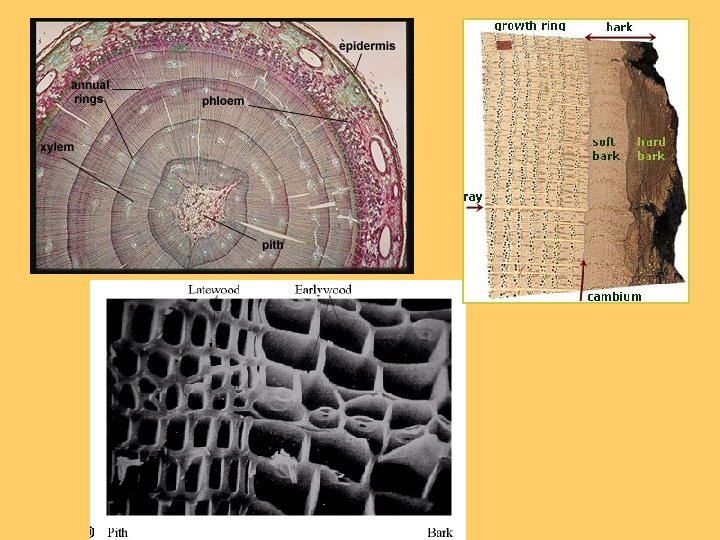
Wood basics…Dendrology • bark – the outer layer of woody stems that protects from diseases, injury, and evaporation • cambium – next layer, functions to produce new cells for growth • new wood – produced spring + summer and counted as • annual rings – studied in Dendrochronology