
Stem Lecture Functions Support of Leaves Flowers Fruits
- Slides: 26
Stem Lecture Functions Support of Leaves, Flowers, Fruits Conduction of Water, Minerals, Sugars, etc. Photosynthesis Storage Defense
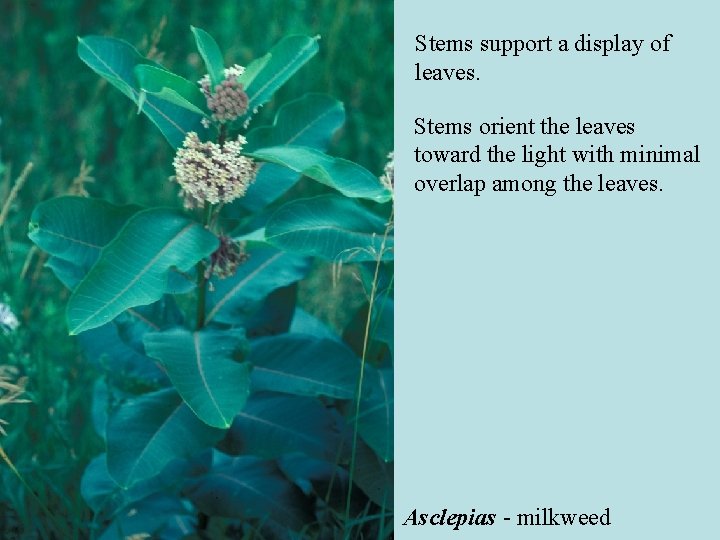
Stems support a display of leaves. Stems orient the leaves toward the light with minimal overlap among the leaves. Asclepias - milkweed
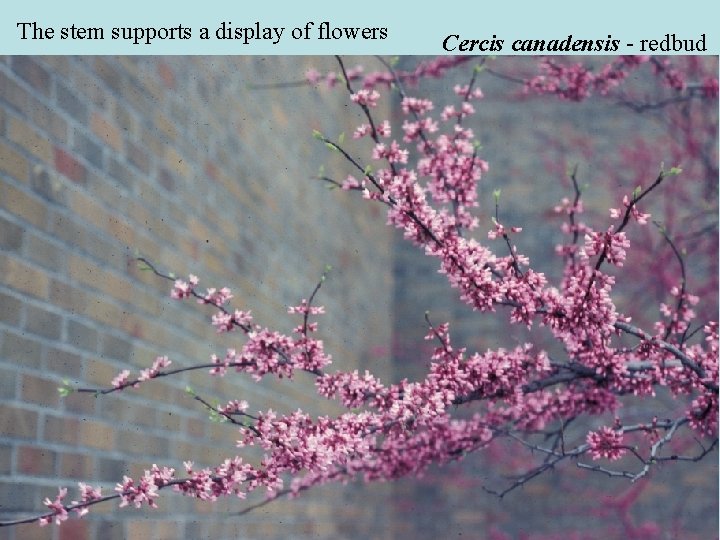
The stem supports a display of flowers Cercis canadensis - redbud
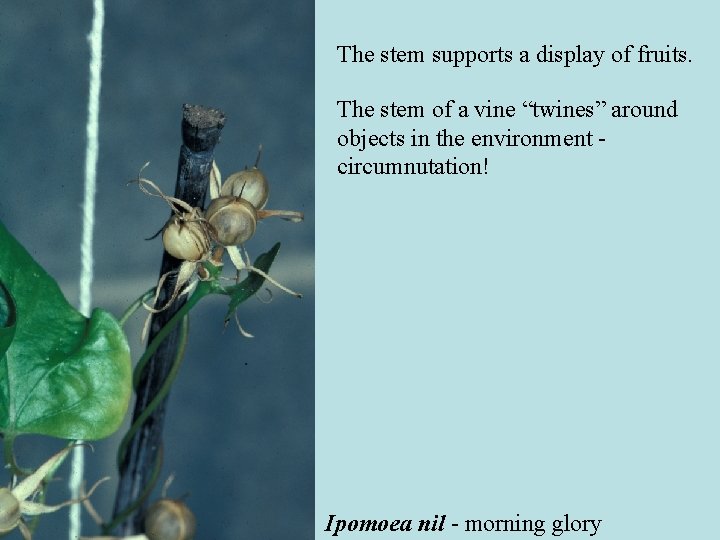
The stem supports a display of fruits. The stem of a vine “twines” around objects in the environment circumnutation! Ipomoea nil - morning glory
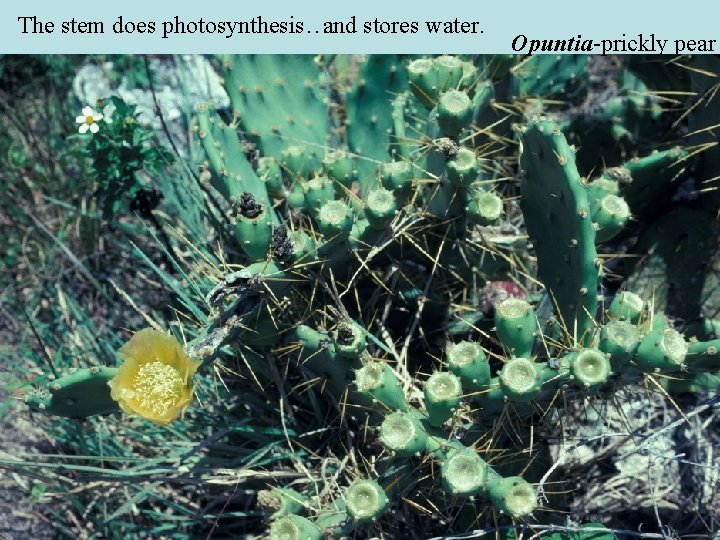
The stem does photosynthesis…and stores water. Opuntia-prickly pear
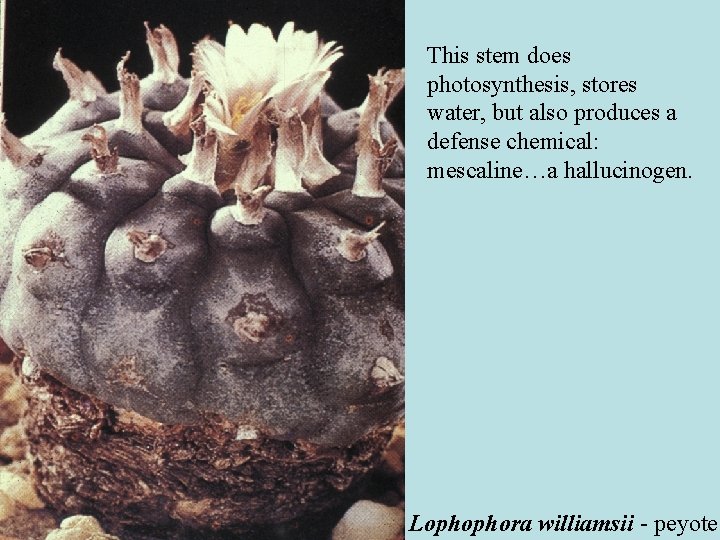
This stem does photosynthesis, stores water, but also produces a defense chemical: mescaline…a hallucinogen. Lophophora williamsii - peyote
Stem Lecture Structure to Provide Functions Support of Leaves, Flowers, Fruits Conduction of Water, Minerals, Sugars, etc. Photosynthesis Storage Defense
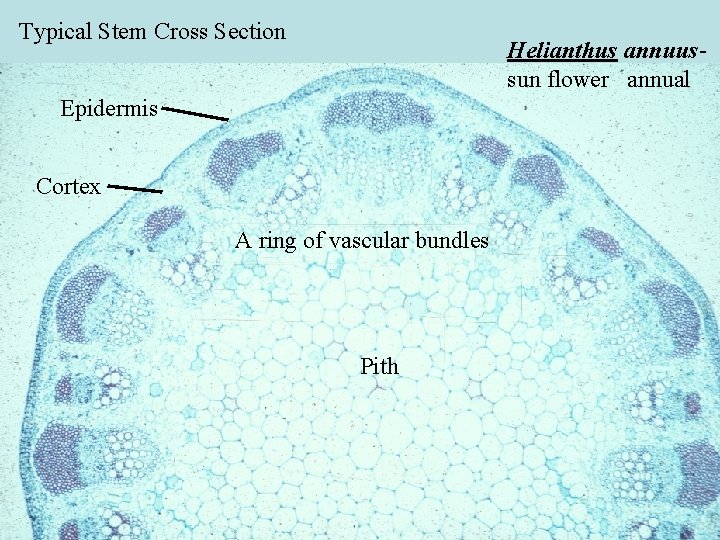
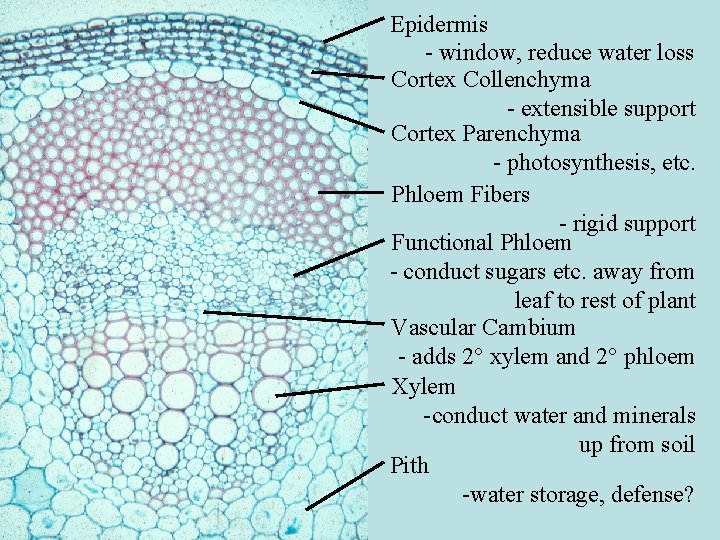
Typical Stem Cross Section Helianthus annuussun flower annual Epidermis Cortex A ring of vascular bundles Pith
Epidermis - window, reduce water loss Cortex Collenchyma - extensible support Cortex Parenchyma - photosynthesis, etc. Phloem Fibers - rigid support Functional Phloem - conduct sugars etc. away from leaf to rest of plant Vascular Cambium - adds 2° xylem and 2° phloem Xylem -conduct water and minerals up from soil Pith -water storage, defense?
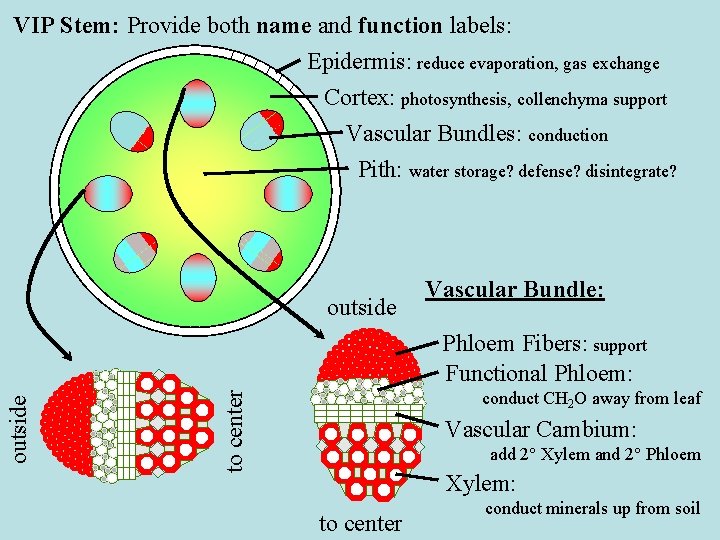
VIP Stem: Provide both name and function labels: Epidermis: reduce evaporation, gas exchange Cortex: photosynthesis, collenchyma support Vascular Bundles: conduction Pith: water storage? defense? disintegrate? outside Vascular Bundle: conduct CH 2 O away from leaf to center outside Phloem Fibers: support Functional Phloem: Vascular Cambium: add 2° Xylem and 2° Phloem Xylem: to center conduct minerals up from soil
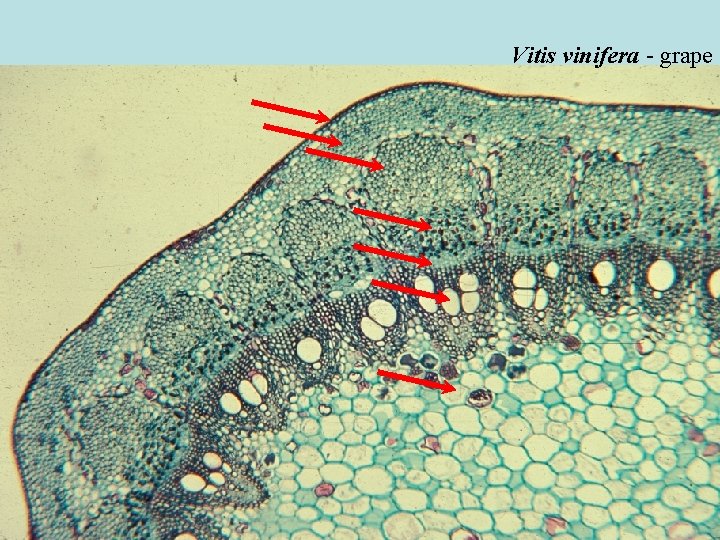
Vitis vinifera - grape
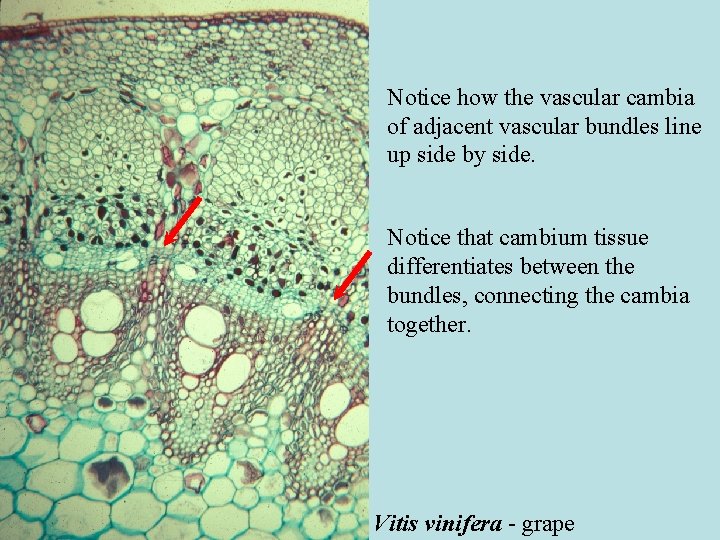
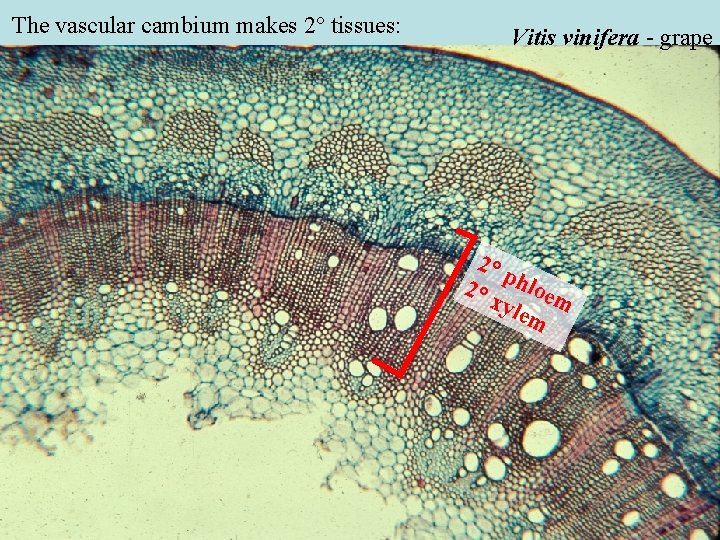
Notice how the vascular cambia of adjacent vascular bundles line up side by side. Notice that cambium tissue differentiates between the bundles, connecting the cambia together. Vitis vinifera - grape
The vascular cambium makes 2° tissues: Vitis vinifera - grape 2° p 2° hloem xyl em
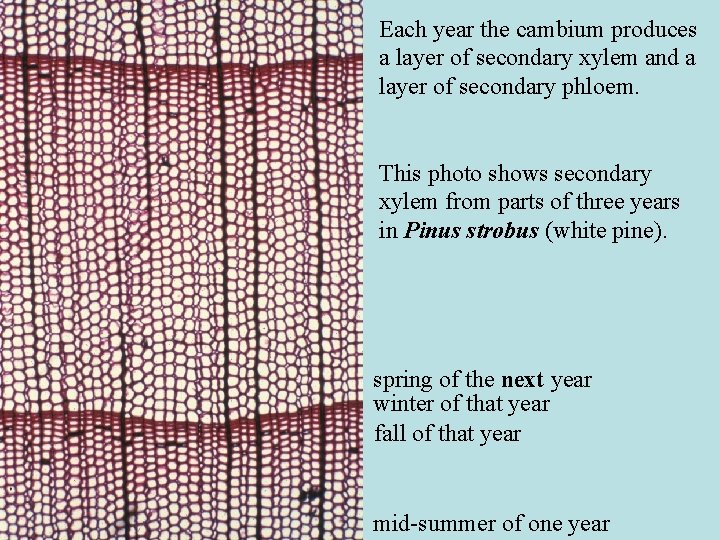
Each year the cambium produces a layer of secondary xylem and a layer of secondary phloem. This photo shows secondary xylem from parts of three years in Pinus strobus (white pine). spring of the next year winter of that year fall of that year mid-summer of one year
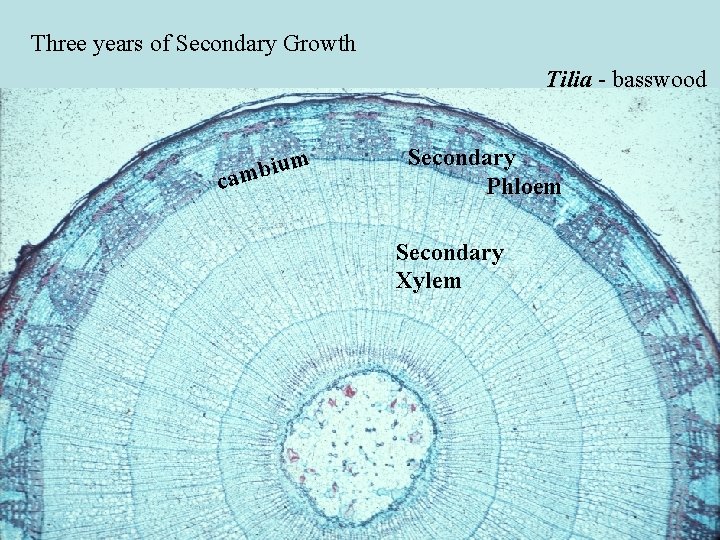
Three years of Secondary Growth Tilia - basswood ium b m ca Secondary Phloem Secondary Xylem
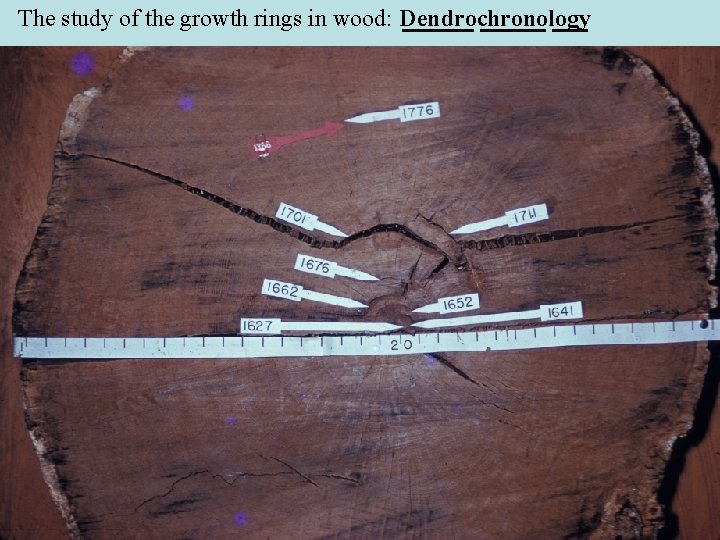
The study of the growth rings in wood: Dendrochronology
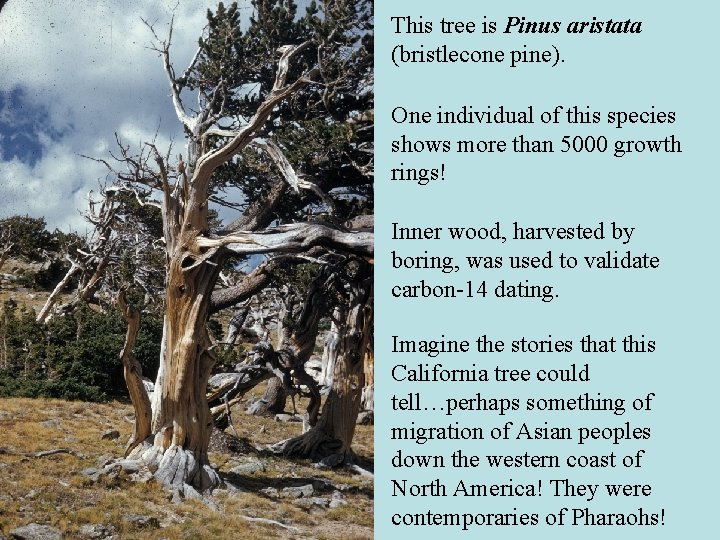
This tree is Pinus aristata (bristlecone pine). One individual of this species shows more than 5000 growth rings! Inner wood, harvested by boring, was used to validate carbon-14 dating. Imagine the stories that this California tree could tell…perhaps something of migration of Asian peoples down the western coast of North America! They were contemporaries of Pharaohs!
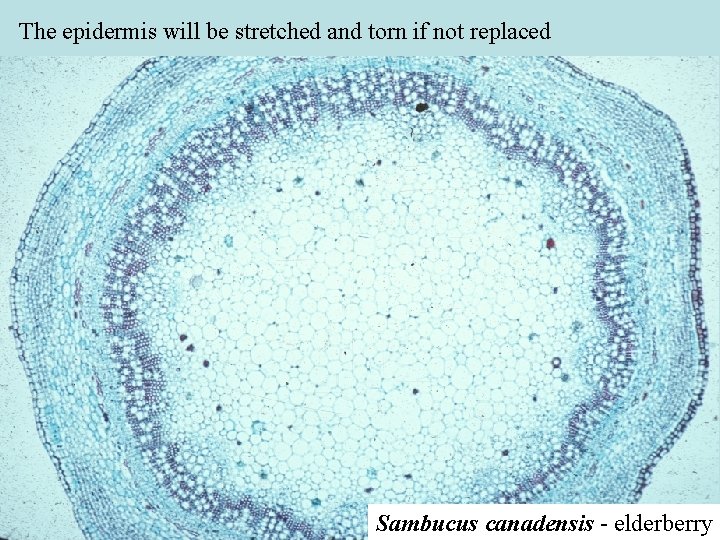
The epidermis will be stretched and torn if not replaced Sambucus canadensis - elderberry
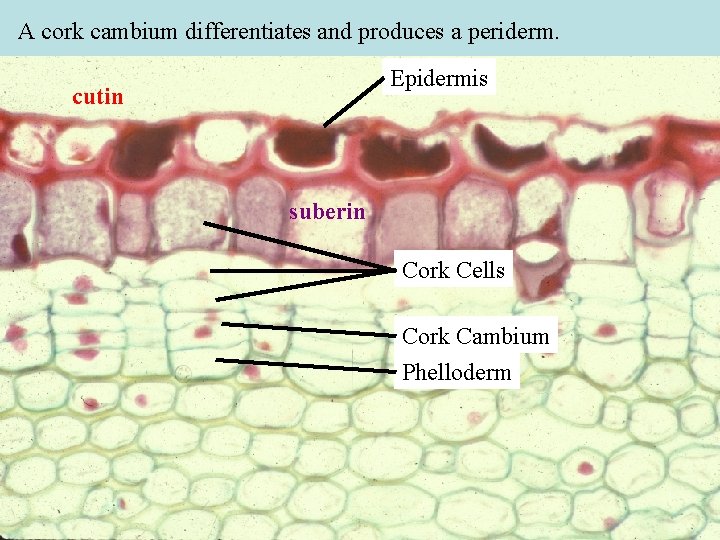
A cork cambium differentiates and produces a periderm. Epidermis cutin suberin Cork Cells Cork Cambium Phelloderm
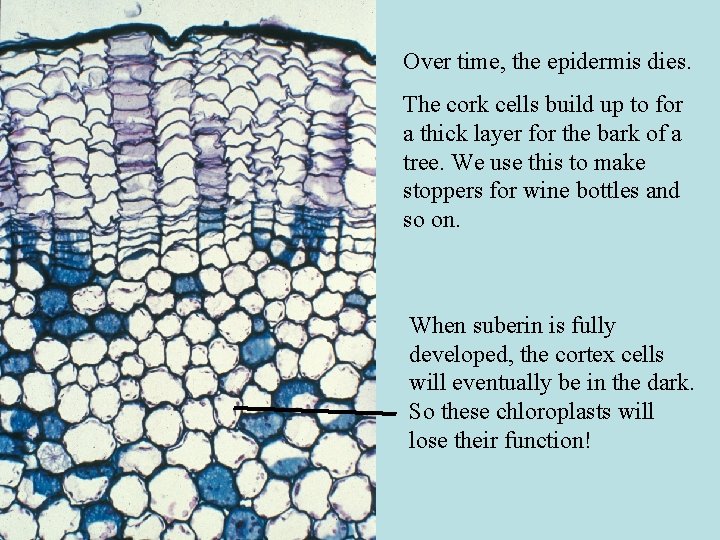
Over time, the epidermis dies. The cork cells build up to for a thick layer for the bark of a tree. We use this to make stoppers for wine bottles and so on. When suberin is fully developed, the cortex cells will eventually be in the dark. So these chloroplasts will lose their function!
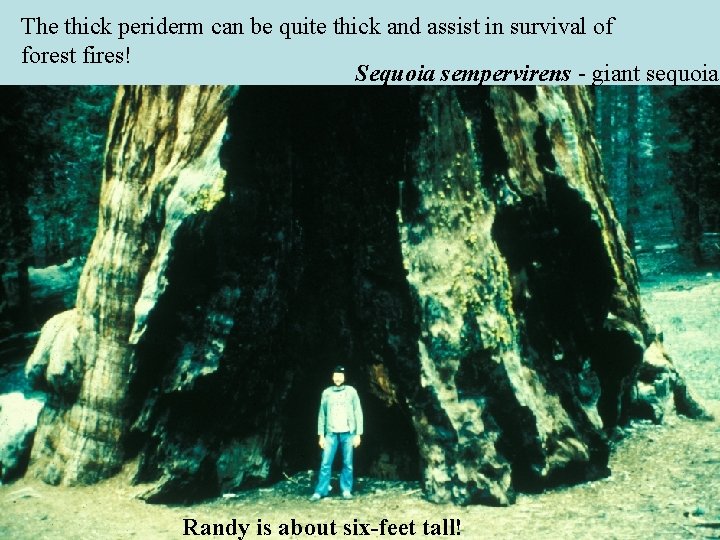
The thick periderm can be quite thick and assist in survival of forest fires! Sequoia sempervirens - giant sequoia Randy is about six-feet tall!
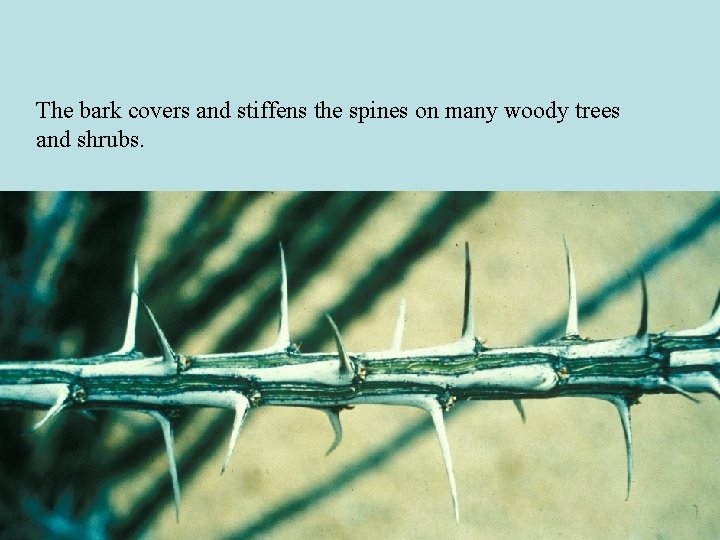
The bark covers and stiffens the spines on many woody trees and shrubs.
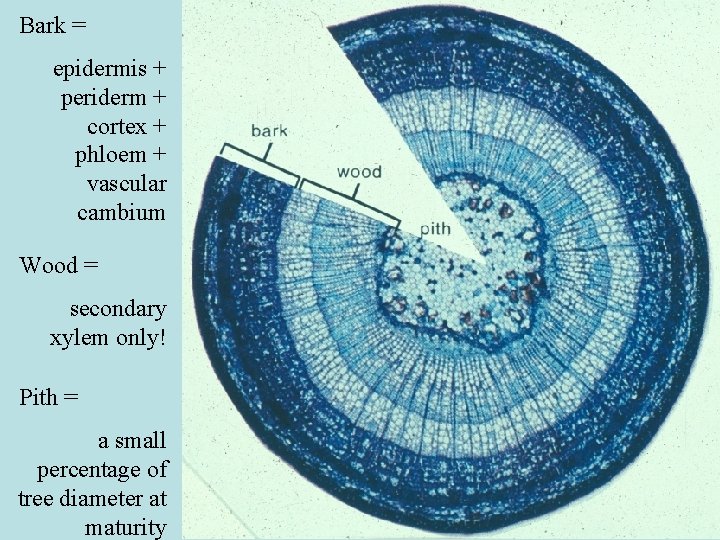
Bark = epidermis + periderm + cortex + phloem + vascular cambium Wood = secondary xylem only! Pith = a small percentage of tree diameter at maturity