
STEM CELLS Learning objectives Understand what a stem
STEM CELLS Learning objectives Understand what a stem cell is (D-E). Identify where stems cells come from and how they can be useful (B-C). Assess the disadvantages and advantages of stem cell research (A-B).
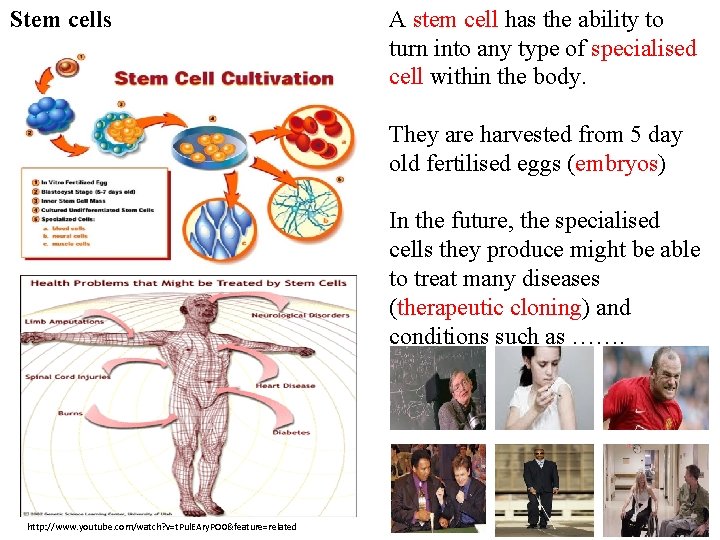
Stem cells A stem cell has the ability to turn into any type of specialised cell within the body. They are harvested from 5 day old fertilised eggs (embryos) In the future, the specialised cells they produce might be able to treat many diseases (therapeutic cloning) and conditions such as ……. http: //www. youtube. com/watch? v=t. Pul. EAry. PO 0&feature=related
What is a stem cell? • A “stem cell” is a cell that hasn’t yet become specialised (differentiated). • Stem cells are able to turn in many different cell types. The 2 types of stem cells: 1. Stem cells found in embryos are known as embryonic stem cells and can develop into almost every cell type. 2. Stem cells found in bone marrow are known as adult stem cells and can only change into a few cell types.
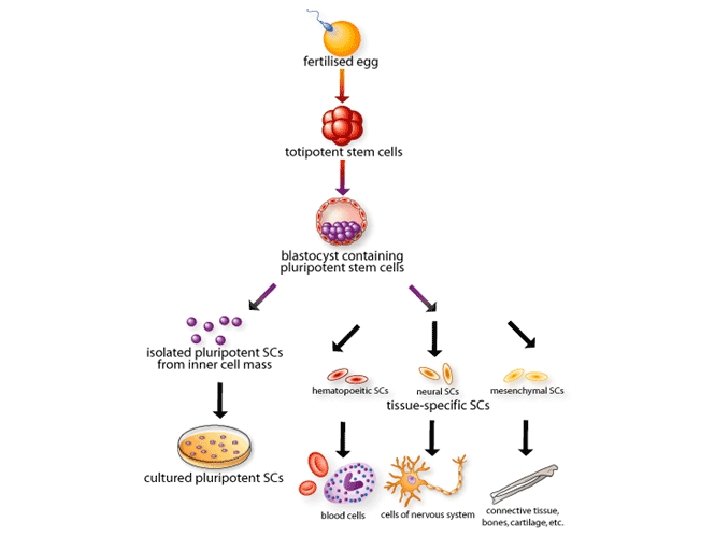
In the Beginning • • Early embryo: (embryonic stem cells) Totipotency Blastocyst: pluripotency Multicellular body: (adult stem cells) Multipotency Stem Cells In Medicine Ethical Concerns of Using Stem Cells
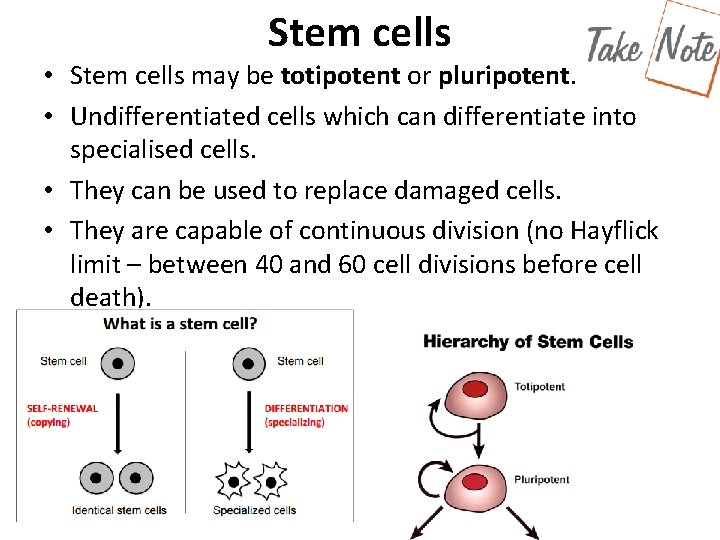
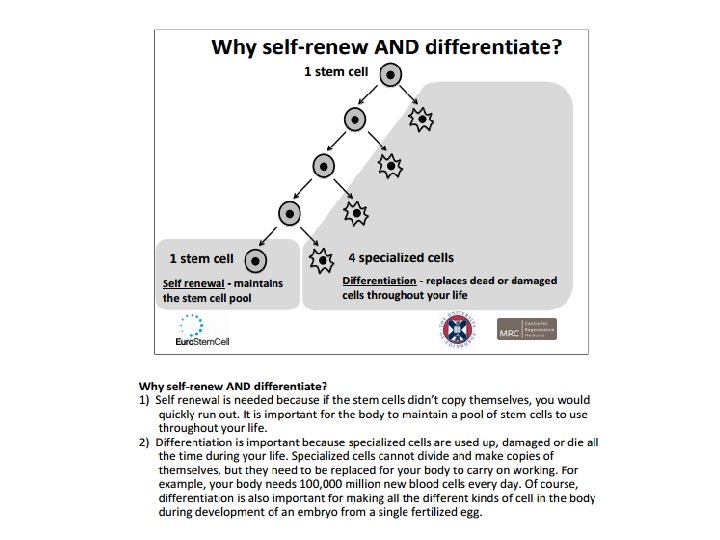
Stem cells • Stem cells may be totipotent or pluripotent. • Undifferentiated cells which can differentiate into specialised cells. • They can be used to replace damaged cells. • They are capable of continuous division (no Hayflick limit – between 40 and 60 cell divisions before cell death).
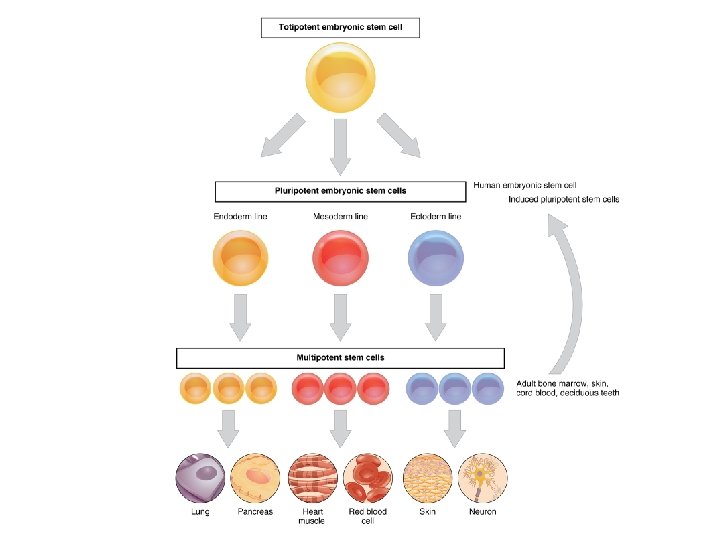
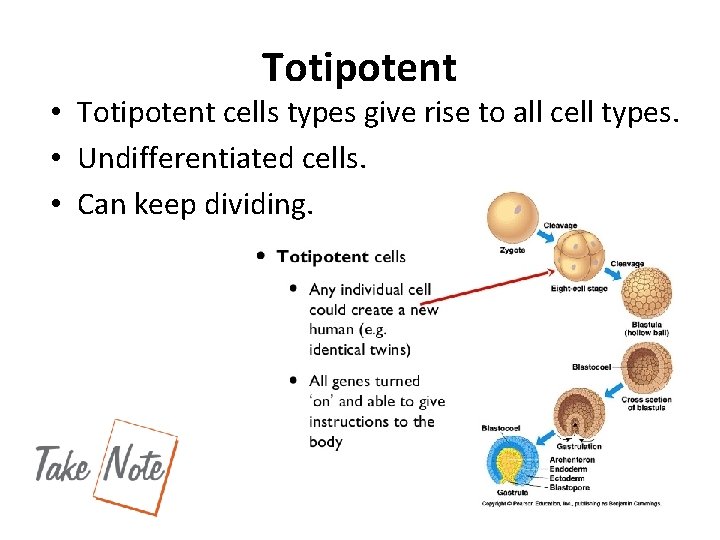
Totipotent • Totipotent cells types give rise to all cell types. • Undifferentiated cells. • Can keep dividing.
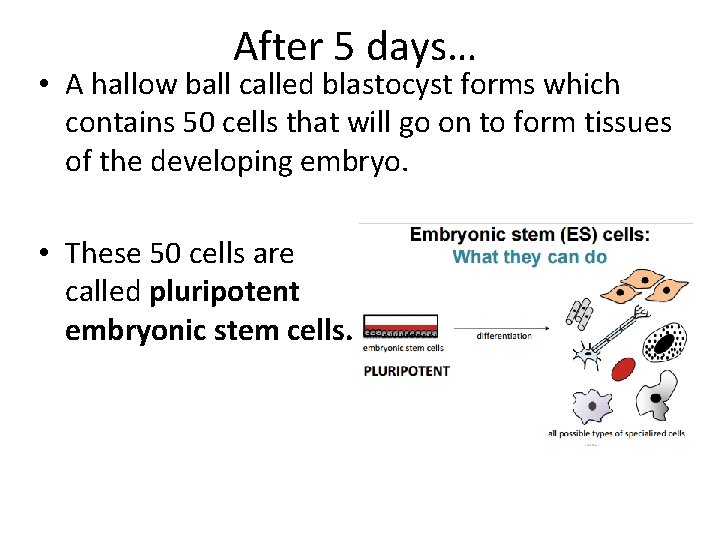
After 5 days… • A hallow ball called blastocyst forms which contains 50 cells that will go on to form tissues of the developing embryo. • These 50 cells are called pluripotent embryonic stem cells.
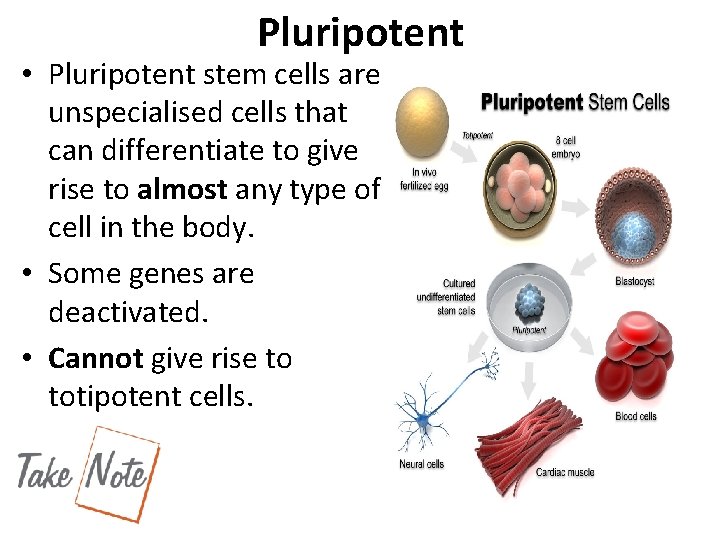
Pluripotent • Pluripotent stem cells are unspecialised cells that can differentiate to give rise to almost any type of cell in the body. • Some genes are deactivated. • Cannot give rise to totipotent cells.
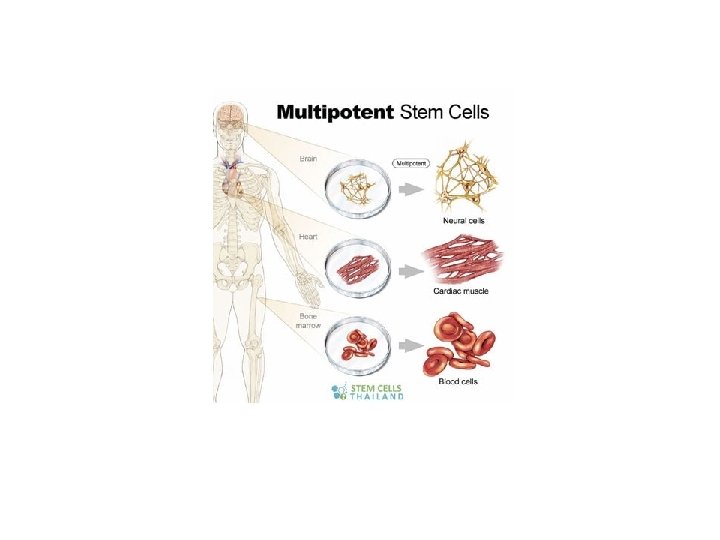

Multipotent: adult stem cells • The cells become more differentiated and specialised. BUT!. . . • Some cells can still give rise to different cell types… • Neural stem cells: give rise to various cells in nervous system • Bone marrow: give rise to red blood cells, platelets, white blood cells
Stem Cell Independent Activity You are going to conduct some research on stem cells in order to develop an argument against stem cell research. • Answer stem cell questions from 1 -8. • There are posters showing information which will help you answer the questions.
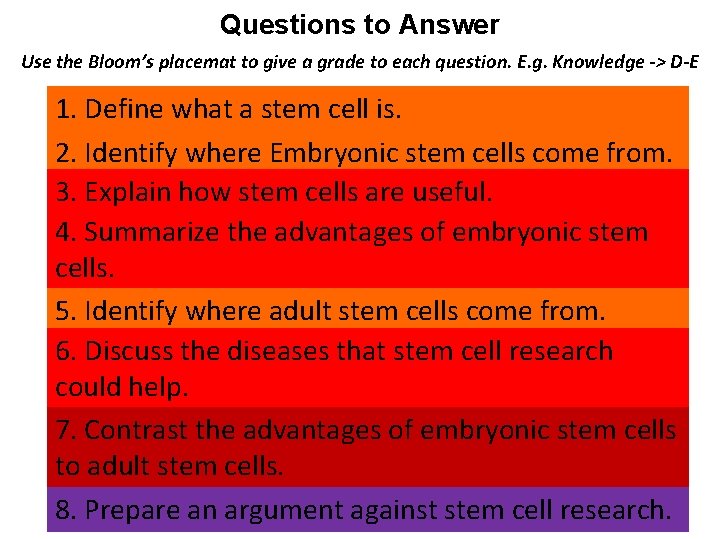
Questions to Answer Use the Bloom’s placemat to give a grade to each question. E. g. Knowledge -> D-E 1. Define what a stem cell is. 2. Identify where Embryonic stem cells come from. 3. Explain how stem cells are useful. 4. Summarize the advantages of embryonic stem cells. 5. Identify where adult stem cells come from. 6. Discuss the diseases that stem cell research could help. 7. Contrast the advantages of embryonic stem cells to adult stem cells. 8. Prepare an argument against stem cell research.
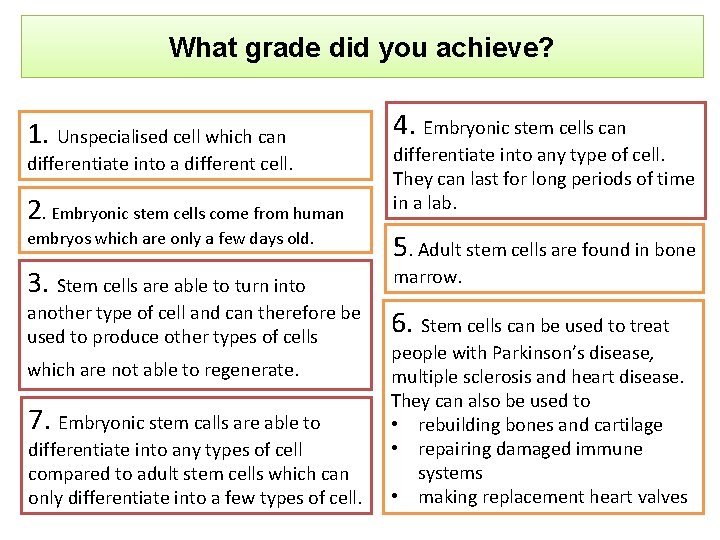
What grade did you achieve? 1. Unspecialised cell which can differentiate into a different cell. 2. Embryonic stem cells come from human embryos which are only a few days old. 3. Stem cells are able to turn into another type of cell and can therefore be used to produce other types of cells which are not able to regenerate. 7. Embryonic stem calls are able to differentiate into any types of cell compared to adult stem cells which can only differentiate into a few types of cell. 4. Embryonic stem cells can differentiate into any type of cell. They can last for long periods of time in a lab. 5. Adult stem cells are found in bone marrow. 6. Stem cells can be used to treat people with Parkinson’s disease, multiple sclerosis and heart disease. They can also be used to • rebuilding bones and cartilage • repairing damaged immune systems • making replacement heart valves
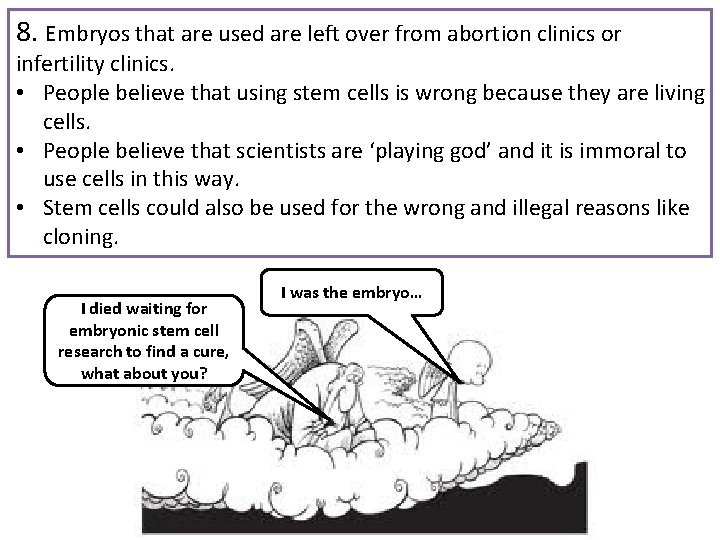
8. Embryos that are used are left over from abortion clinics or infertility clinics. • People believe that using stem cells is wrong because they are living cells. • People believe that scientists are ‘playing god’ and it is immoral to use cells in this way. • Stem cells could also be used for the wrong and illegal reasons like cloning. I was the embryo. . I died waiting for embryonic stem cell research to find a cure, what about you? I was the embryo…
Ethical concerns • Write a 10 mark essay discussing the ethical conflicts considering whether or not embryonic stem cells should be used in medical research. (p 130)
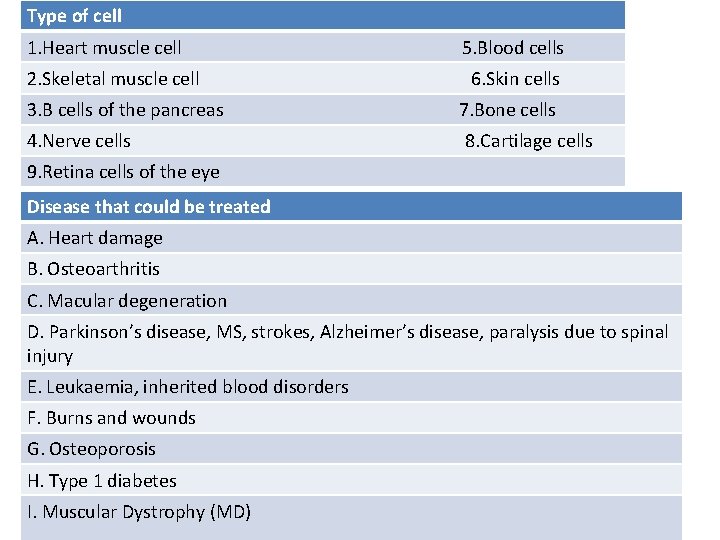
Type of cell 1. Heart muscle cell 2. Skeletal muscle cell 3. B cells of the pancreas 4. Nerve cells 5. Blood cells 6. Skin cells 7. Bone cells 8. Cartilage cells 9. Retina cells of the eye Disease that could be treated A. Heart damage B. Osteoarthritis C. Macular degeneration D. Parkinson’s disease, MS, strokes, Alzheimer’s disease, paralysis due to spinal injury E. Leukaemia, inherited blood disorders F. Burns and wounds G. Osteoporosis H. Type 1 diabetes I. Muscular Dystrophy (MD)
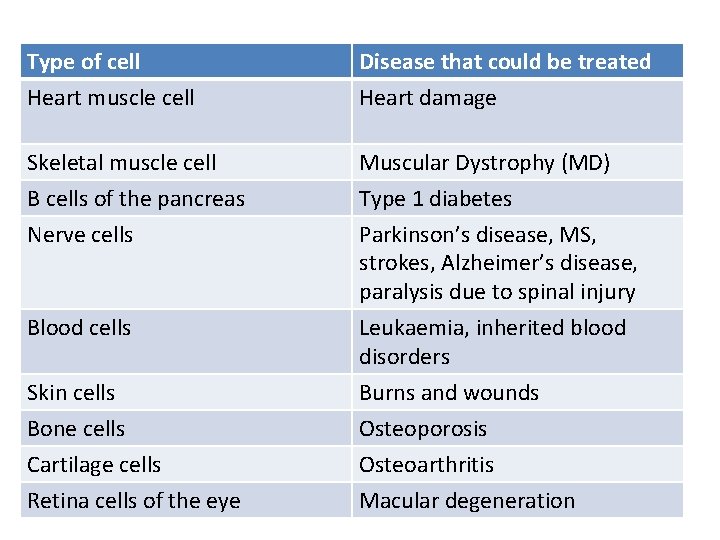
Type of cell Disease that could be treated Heart muscle cell Heart damage Skeletal muscle cell Muscular Dystrophy (MD) B cells of the pancreas Type 1 diabetes Nerve cells Skin cells Parkinson’s disease, MS, strokes, Alzheimer’s disease, paralysis due to spinal injury Leukaemia, inherited blood disorders Burns and wounds Bone cells Osteoporosis Cartilage cells Osteoarthritis Retina cells of the eye Macular degeneration Blood cells
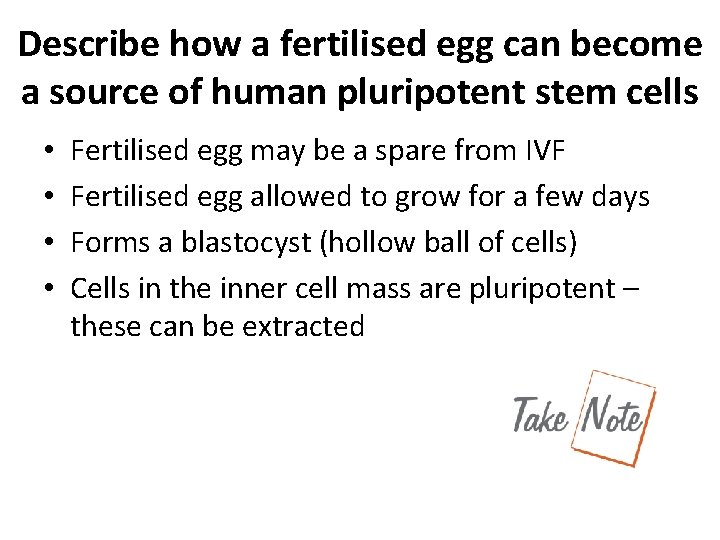
Describe how a fertilised egg can become a source of human pluripotent stem cells • • Fertilised egg may be a spare from IVF Fertilised egg allowed to grow for a few days Forms a blastocyst (hollow ball of cells) Cells in the inner cell mass are pluripotent – these can be extracted
Risks of being injected with stem cells • May become cancerous • May be rejected by recipient immune system • Possible route for infection
- Slides: 22