
Stem cells Learning Objectives understand the special nature
Stem cells Learning Objectives: understand the special nature of stem cells describe the structure and location of stem cells in humans and in plants and explain the differences between plant and animal cell growth describe how stem cells have the potential to treat diseases and understand the controversy surrounding this research
Stem cells Building Body Parts Key points to consider from this video: • What is the source of the cells used to grow the new body parts in this research? • How would you feel if you needed a transplant one day but couldn’t find a donor? • What are the advantages of this future technology? • Are there ethical issues associated with this research?
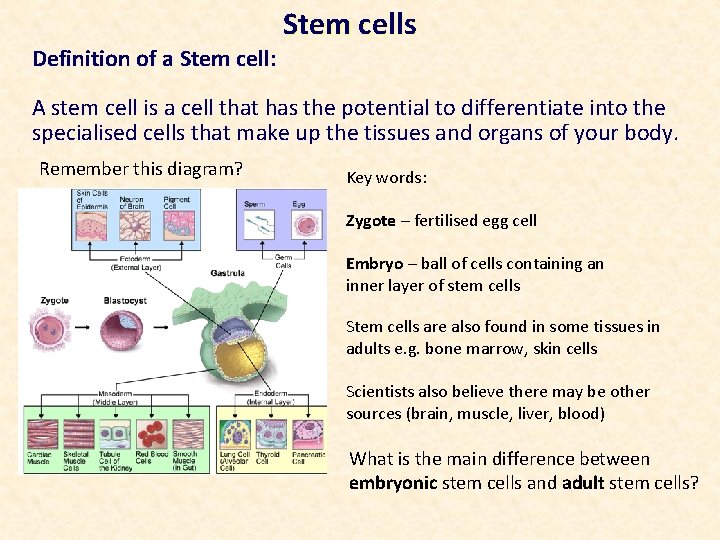
Definition of a Stem cell: Stem cells A stem cell is a cell that has the potential to differentiate into the specialised cells that make up the tissues and organs of your body. Remember this diagram? Key words: Zygote – fertilised egg cell Embryo – ball of cells containing an inner layer of stem cells Stem cells are also found in some tissues in adults e. g. bone marrow, skin cells Scientists also believe there may be other sources (brain, muscle, liver, blood) What is the main difference between embryonic stem cells and adult stem cells?
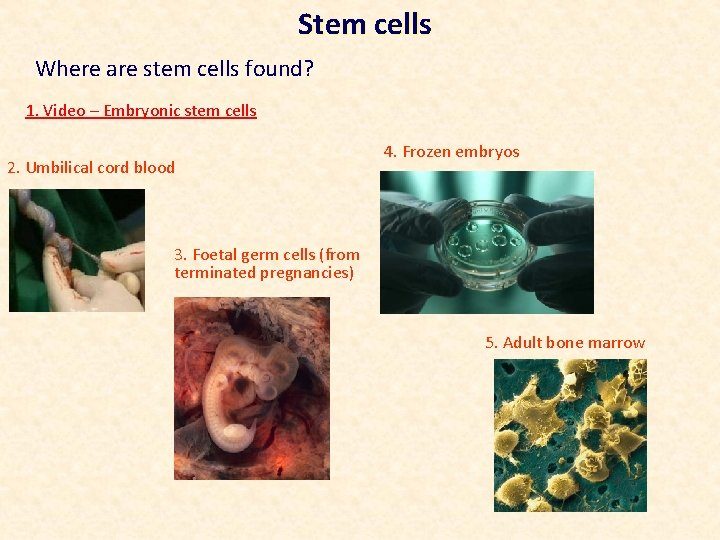
Stem cells Where are stem cells found? 1. Video – Embryonic stem cells 2. Umbilical cord blood 4. Frozen embryos 3. Foetal germ cells (from terminated pregnancies) 5. Adult bone marrow
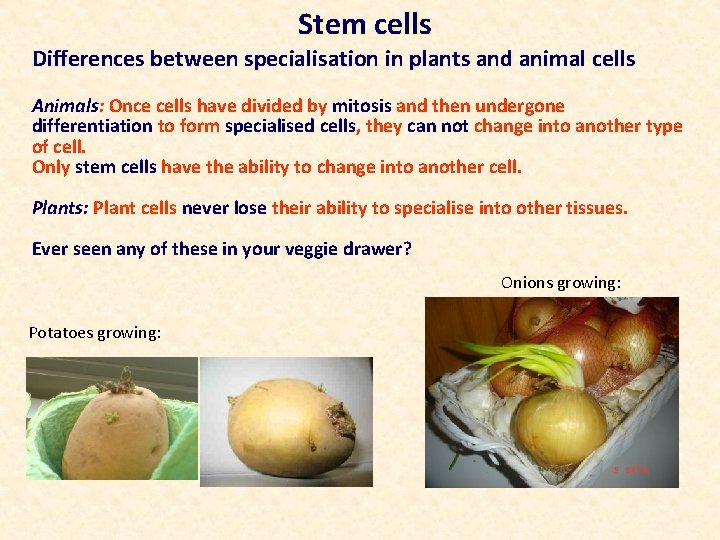
Stem cells Differences between specialisation in plants and animal cells Animals: Once cells have divided by mitosis and then undergone differentiation to form specialised cells, they can not change into another type of cell. Only stem cells have the ability to change into another cell. Plants: Plant cells never lose their ability to specialise into other tissues. Ever seen any of these in your veggie drawer? Onions growing: Potatoes growing:
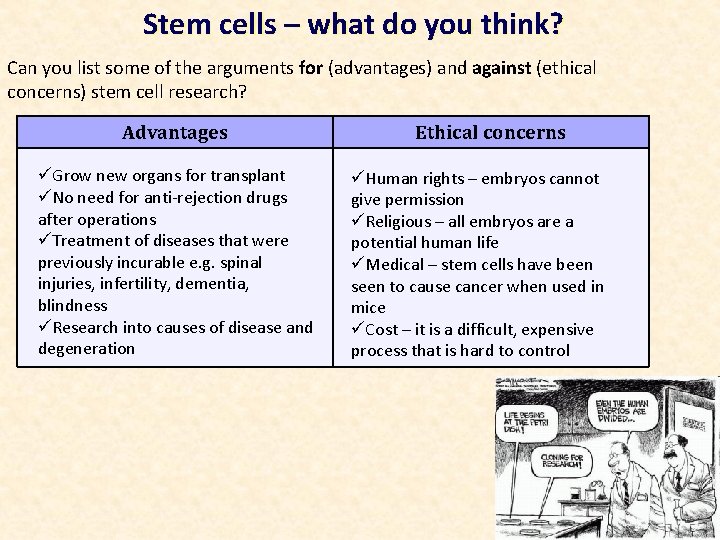
Stem cells – what do you think? Can you list some of the arguments for (advantages) and against (ethical concerns) stem cell research? Advantages üGrow new organs for transplant üNo need for anti-rejection drugs after operations üTreatment of diseases that were previously incurable e. g. spinal injuries, infertility, dementia, blindness üResearch into causes of disease and degeneration Ethical concerns üHuman rights – embryos cannot give permission üReligious – all embryos are a potential human life üMedical – stem cells have been seen to cause cancer when used in mice üCost – it is a difficult, expensive process that is hard to control
Stem cells Key word anagrams: sitmsoi lest mlces ymecnbiro wrom nabero toindffnertaie glcnion tezgyo heraersc cimulibdo loca disepsaicle uteofs cihets
Stem cells Key word anagrams: Mitosis Stem cells Embryonic Bone marrow Differentiation Cloning Zygote Umbilical cord Research Specialised Foetus Ethics
The future of stem cell research Since 1998, when the first human embryonic stem cells were cultured, scientists have been excited about the prospect of using stem cells to treat diseases. Hwk: Research the use of stem cells and therapeutic cloning and their potential for future medical treatments. Useful websites: www. stemcells. nih. gov www. christopherreeve. org www. newscientist. com www. stemcellresearchfoundation. org Produce a short report (no more than one typed page) or a poster (no bigger than A 3) of your findings.
Stem cells Learning Objectives - review: understand the special nature of stem cells describe the structure and location of stem cells in humans and in plants and explain the differences between plant and animal cell growth describe how stem cells have the potential to treat diseases and understand the controversy surrounding this research
- Slides: 10