
Stem cells cell differentiation HW task 2015 New



- Slides: 15
Stem cells + cell differentiation HW task 2015
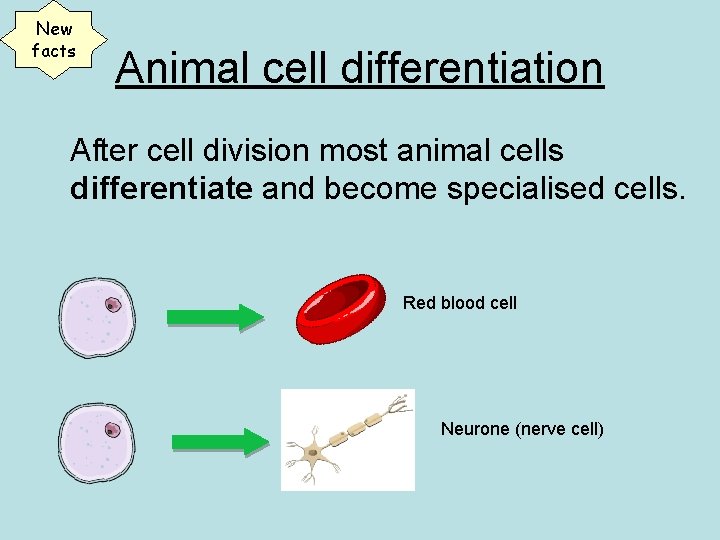
New facts Animal cell differentiation After cell division most animal cells differentiate and become specialised cells. Red blood cell Neurone (nerve cell)
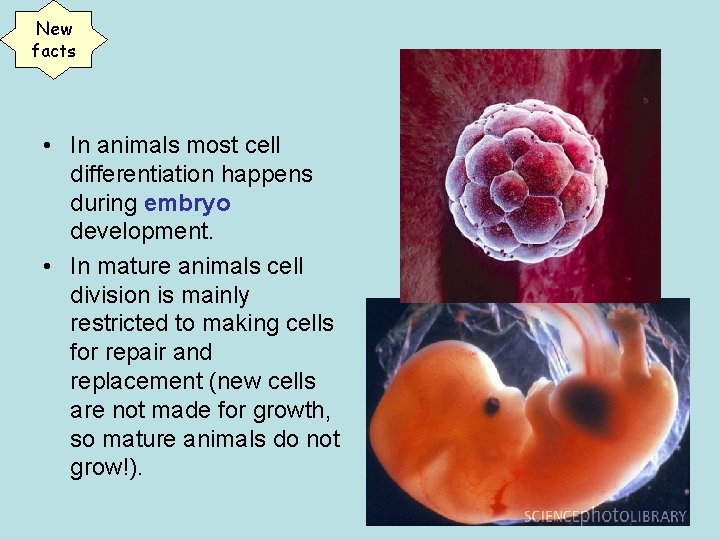
New facts • In animals most cell differentiation happens during embryo development. • In mature animals cell division is mainly restricted to making cells for repair and replacement (new cells are not made for growth, so mature animals do not grow!).
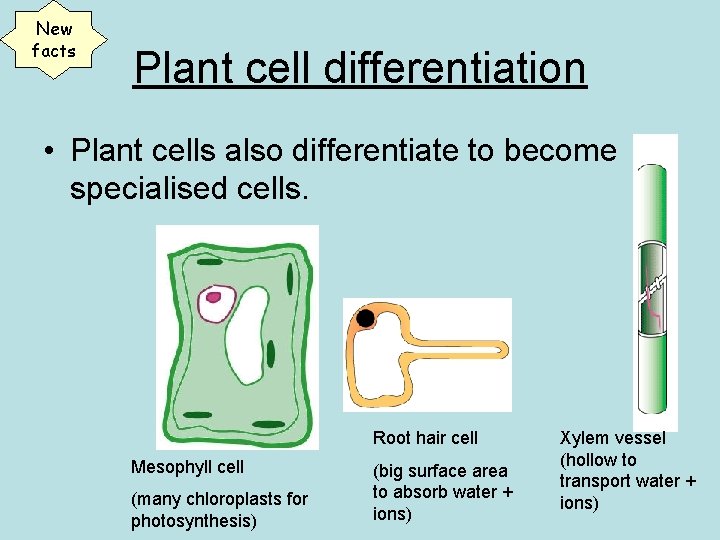
New facts Plant cell differentiation • Plant cells also differentiate to become specialised cells. Root hair cell Mesophyll cell (many chloroplasts for photosynthesis) (big surface area to absorb water + ions) Xylem vessel (hollow to transport water + ions)
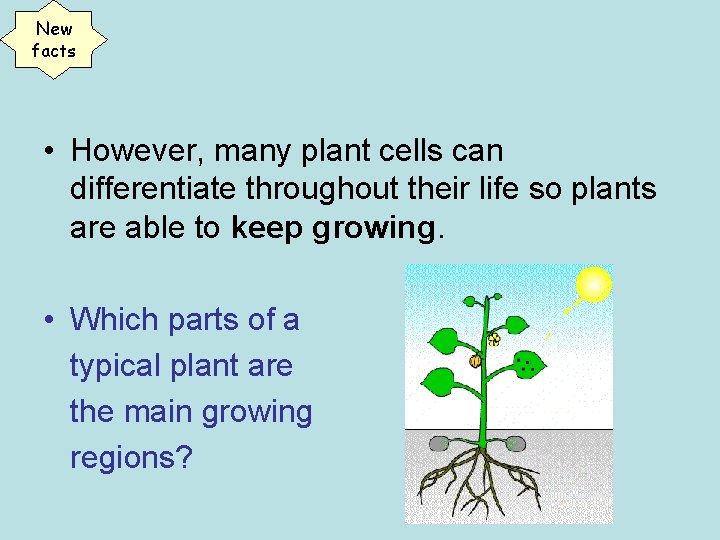
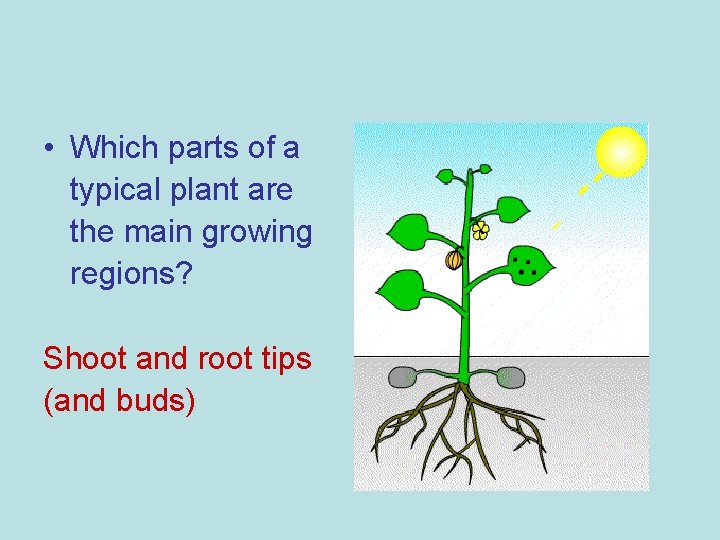
New facts • However, many plant cells can differentiate throughout their life so plants are able to keep growing. • Which parts of a typical plant are the main growing regions?
• Which parts of a typical plant are the main growing regions? Shoot and root tips (and buds)
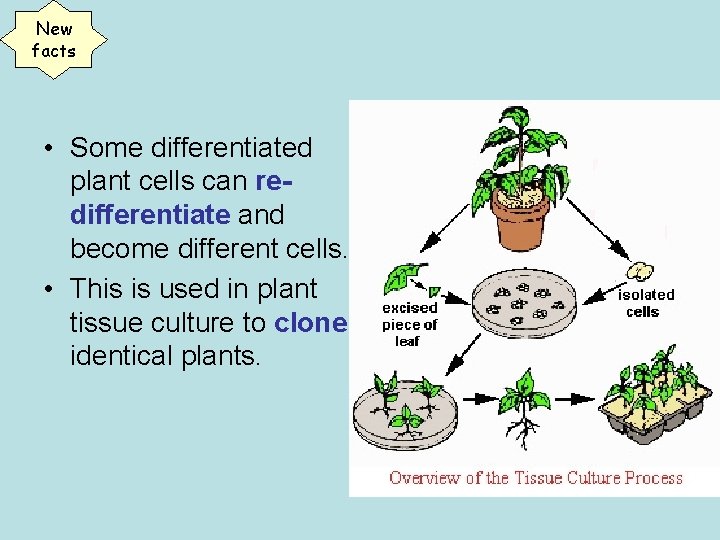
New facts • Some differentiated plant cells can redifferentiate and become different cells. • This is used in plant tissue culture to clone identical plants.
To do • Answer the questions in box 1 on the HW sheet.
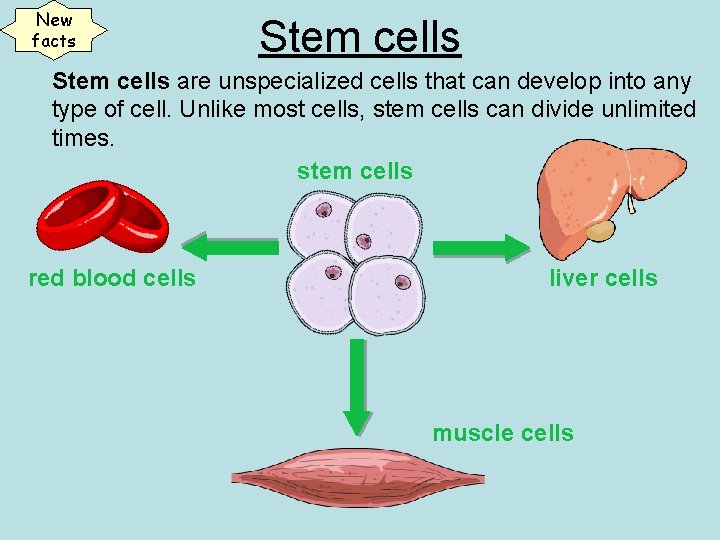
New facts Stem cells are unspecialized cells that can develop into any type of cell. Unlike most cells, stem cells can divide unlimited times. stem cells red blood cells liver cells muscle cells
New facts Stem cells and their uses Watch the 3 videos from the website or via these links What are stem cells http: //youtu. be/ev. H 0 I 7 Coc 54 What are stem cells (Bang goes theory) http: //youtu. be/c. EB 8656 TCIE Watch the video clip “Building body parts saving lives salamander style”. http: //youtu. be/e. MHVRkw. J_R 0
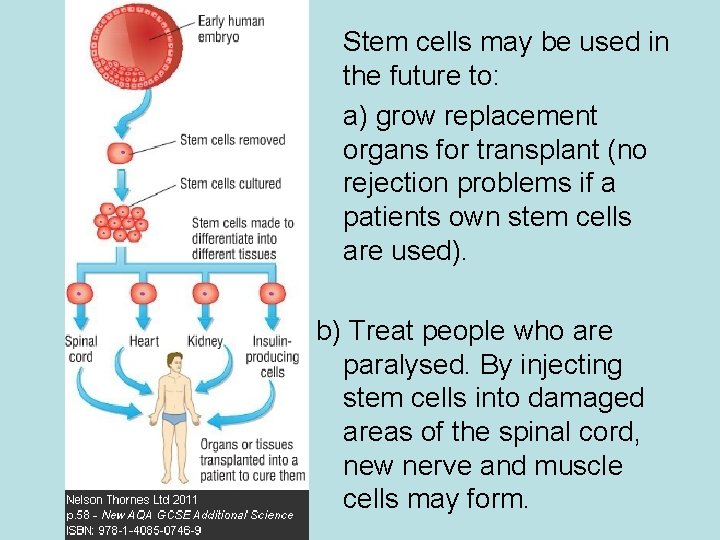
Stem cells may be used in the future to: a) grow replacement organs for transplant (no rejection problems if a patients own stem cells are used). b) Treat people who are paralysed. By injecting stem cells into damaged areas of the spinal cord, new nerve and muscle cells may form.
New facts To do Answer the questions in box 2 on the homework sheet
Stem cell ethics • Many people object to the use of stem cells for medical purposes. • This is partly because embryos are the best source of stem cells. • You need to be able to argue the pros and cons of using stem cells….
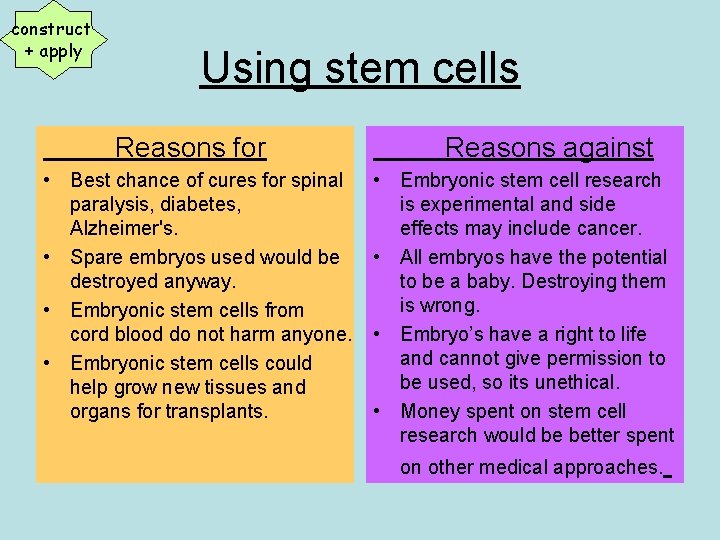
construct + apply Using stem cells Reasons for • Best chance of cures for spinal paralysis, diabetes, Alzheimer's. • Spare embryos used would be destroyed anyway. • Embryonic stem cells from cord blood do not harm anyone. • Embryonic stem cells could help grow new tissues and organs for transplants. Reasons against • Embryonic stem cell research is experimental and side effects may include cancer. • All embryos have the potential to be a baby. Destroying them is wrong. • Embryo’s have a right to life and cannot give permission to be used, so its unethical. • Money spent on stem cell research would be better spent on other medical approaches.
To do • Answer the question in box 3 on the homework sheet