
Stem Cell Mobilization and Collection in Autologous Stem
Stem Cell Mobilization and Collection in Autologous Stem Cell Transplantation
Activity Faculty Luciano J. Costa, MD, Ph. D Associate Professor of Medicine Department of Medicine and UAB-CCC Bone Marrow Transplantation and Cell Therapy Program School of Medicine University of Alabama at Birmingham, AL
Learning Objectives Upon completion, participants should be able to: § Identify factors that place patients at risk of poor AHSC mobilization, thereby requiring guideline-recommended mobilization protocols § Apply guideline-based strategies that optimize first-attempt stem cell mobilization and collection in patients undergoing AHSC transplantation
Key Considerations in Mobilization for AHSC Transplant § Mobilization of AHSCs using chemotherapy, growth factors, and novel agents has increased the success rates of AHSC transplants § Risk factors for poor AHSC mobilization include prior chemotherapy, radiotherapy, age, low platelet count before mobilization, and diabetes § New guidelines exist to help optimize mobilization regimens and increase the success of AHSC transplant
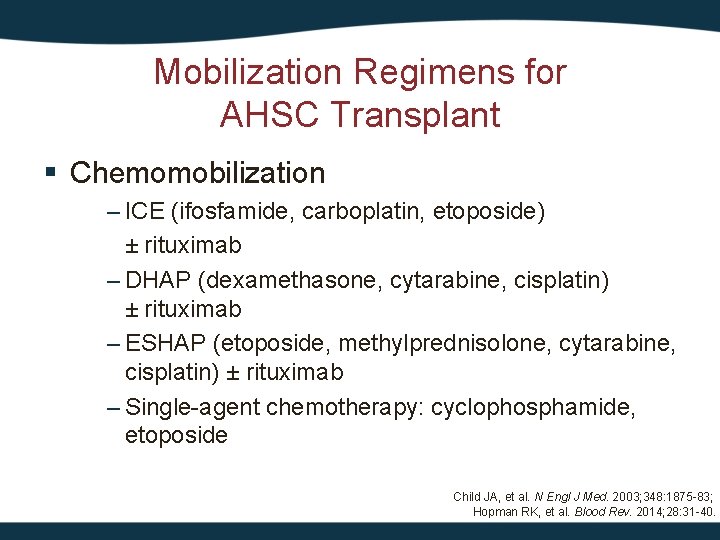
Mobilization Regimens for AHSC Transplant § Chemomobilization – ICE (ifosfamide, carboplatin, etoposide) ± rituximab – DHAP (dexamethasone, cytarabine, cisplatin) ± rituximab – ESHAP (etoposide, methylprednisolone, cytarabine, cisplatin) ± rituximab – Single-agent chemotherapy: cyclophosphamide, etoposide Child JA, et al. N Engl J Med. 2003; 348: 1875 -83; Hopman RK, et al. Blood Rev. 2014; 28: 31 -40.

Mobilization Regimens for AHSC Transplant § Cytokines – G-CSF – GM-CSF § Plerixafor – Approved by the FDA in 2008 in combination with G-CSF for AHSC mobilization in MM and NHL – Reversible CXCR 4 antagonist Motabi IH, et al. Blood Rev. 2012; 26: 267 -78.

Mobilization Guidelines—Algorithm Giralt S, et al. Biol Blood Marrow Transplant. 2014; 20: 295 -308; Costa LJ, et al. Bone Marrow Transplant. 2011; 46: 523 -8.
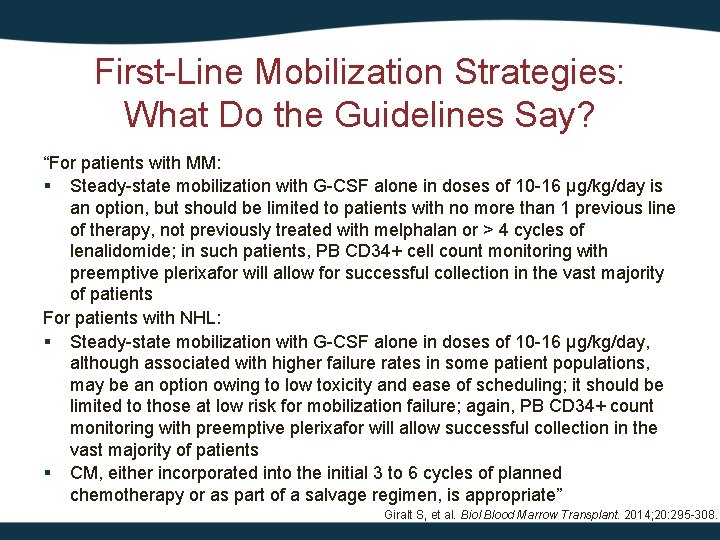
First-Line Mobilization Strategies: What Do the Guidelines Say? “For patients with MM: § Steady-state mobilization with G-CSF alone in doses of 10 -16 μg/kg/day is an option, but should be limited to patients with no more than 1 previous line of therapy, not previously treated with melphalan or > 4 cycles of lenalidomide; in such patients, PB CD 34+ cell count monitoring with preemptive plerixafor will allow for successful collection in the vast majority of patients For patients with NHL: § Steady-state mobilization with G-CSF alone in doses of 10 -16 μg/kg/day, although associated with higher failure rates in some patient populations, may be an option owing to low toxicity and ease of scheduling; it should be limited to those at low risk for mobilization failure; again, PB CD 34+ count monitoring with preemptive plerixafor will allow successful collection in the vast majority of patients § CM, either incorporated into the initial 3 to 6 cycles of planned chemotherapy or as part of a salvage regimen, is appropriate” Giralt S, et al. Biol Blood Marrow Transplant. 2014; 20: 295 -308.
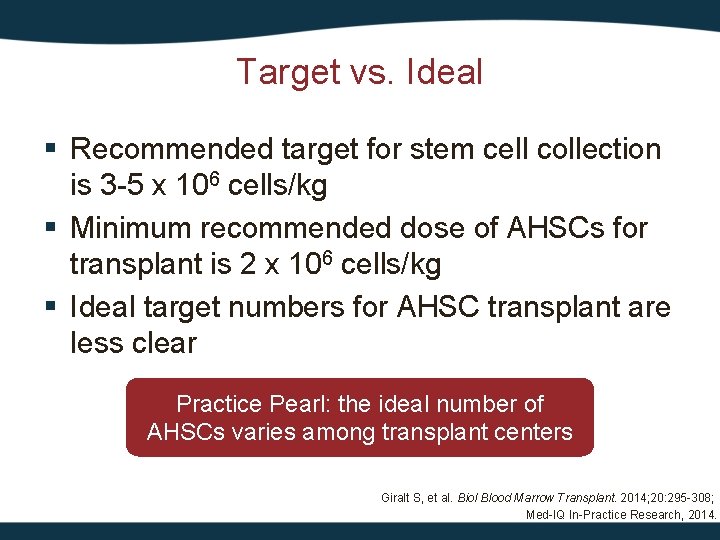
Target vs. Ideal § Recommended target for stem cell collection is 3 -5 x 10⁶ cells/kg § Minimum recommended dose of AHSCs for transplant is 2 x 10⁶ cells/kg § Ideal target numbers for AHSC transplant are less clear Practice Pearl: the ideal number of AHSCs varies among transplant centers Giralt S, et al. Biol Blood Marrow Transplant. 2014; 20: 295 -308; Med-IQ In-Practice Research, 2014.
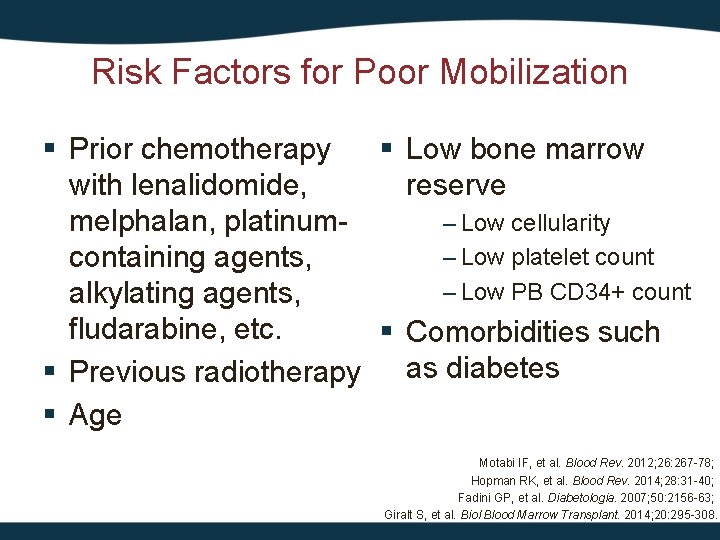
Risk Factors for Poor Mobilization § Prior chemotherapy § Low bone marrow with lenalidomide, reserve – Low cellularity melphalan, platinum– Low platelet count containing agents, – Low PB CD 34+ count alkylating agents, fludarabine, etc. § Comorbidities such § Previous radiotherapy as diabetes § Age Motabi IF, et al. Blood Rev. 2012; 26: 267 -78; Hopman RK, et al. Blood Rev. 2014; 28: 31 -40; Fadini GP, et al. Diabetologia. 2007; 50: 2156 -63; Giralt S, et al. Biol Blood Marrow Transplant. 2014; 20: 295 -308.
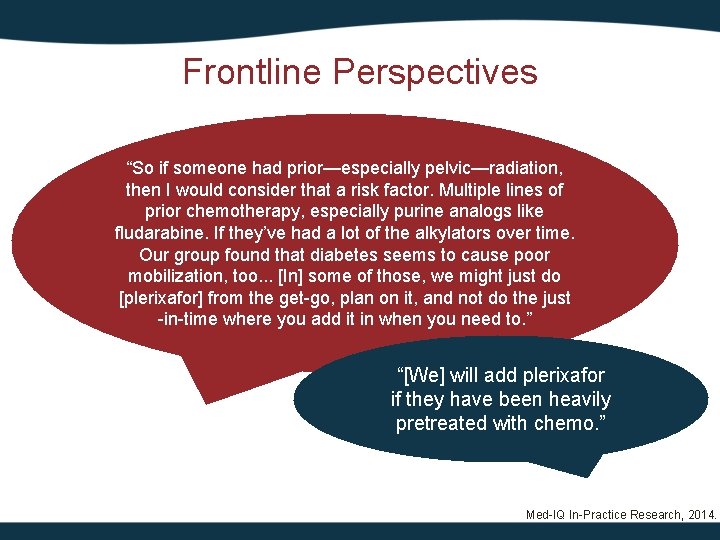
Frontline Perspectives “So if someone had prior—especially pelvic—radiation, then I would consider that a risk factor. Multiple lines of prior chemotherapy, especially purine analogs like fludarabine. If they’ve had a lot of the alkylators over time. Our group found that diabetes seems to cause poor mobilization, too. . . [In] some of those, we might just do [plerixafor] from the get-go, plan on it, and not do the just -in-time where you add it in when you need to. ” “[We] will add plerixafor if they have been heavily pretreated with chemo. ” Med-IQ In-Practice Research, 2014.
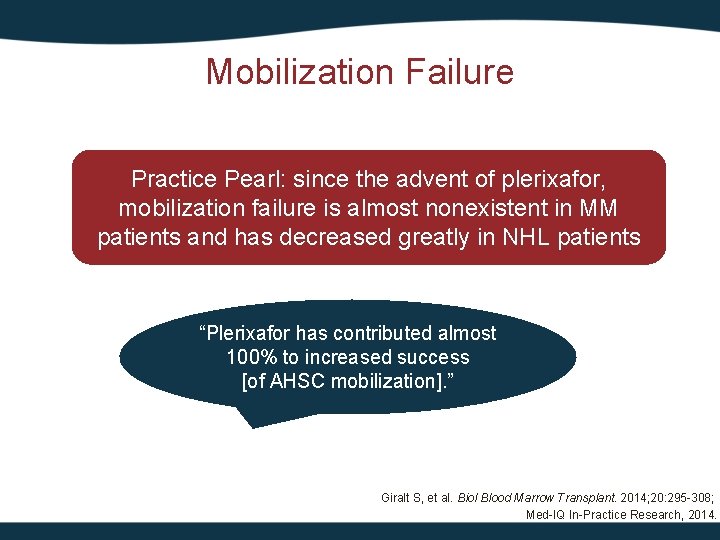
Mobilization Failure Practice Pearl: since the advent of plerixafor, mobilization failure is almost nonexistent in MM patients and has decreased greatly in NHL patients “Plerixafor has contributed almost 100% to increased success [of AHSC mobilization]. ” Giralt S, et al. Biol Blood Marrow Transplant. 2014; 20: 295 -308; Med-IQ In-Practice Research, 2014.
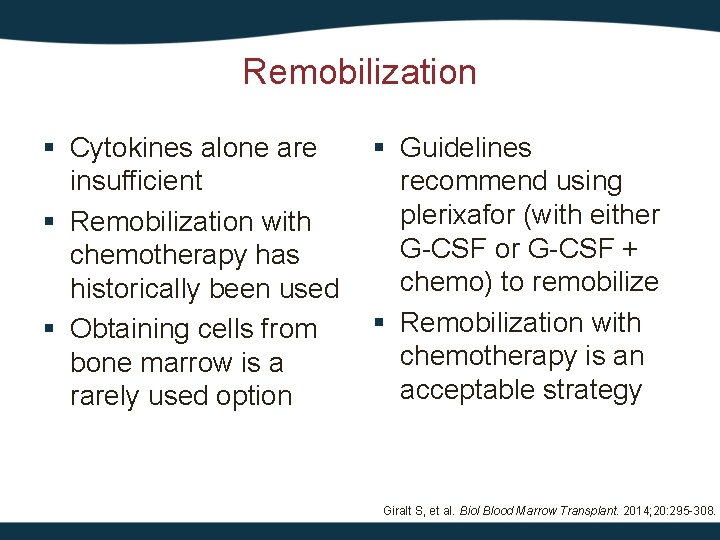
Remobilization § Cytokines alone are insufficient § Remobilization with chemotherapy has historically been used § Obtaining cells from bone marrow is a rarely used option § Guidelines recommend using plerixafor (with either G-CSF or G-CSF + chemo) to remobilize § Remobilization with chemotherapy is an acceptable strategy Giralt S, et al. Biol Blood Marrow Transplant. 2014; 20: 295 -308.
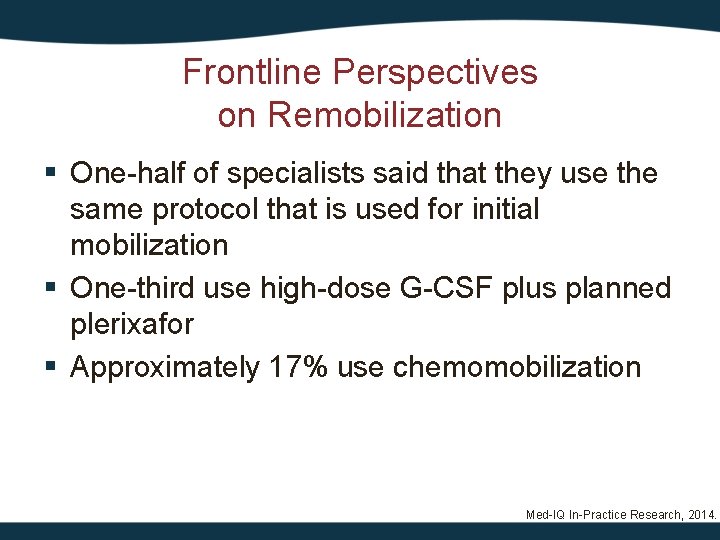
Frontline Perspectives on Remobilization § One-half of specialists said that they use the same protocol that is used for initial mobilization § One-third use high-dose G-CSF plus planned plerixafor § Approximately 17% use chemomobilization Med-IQ In-Practice Research, 2014.

Frontline Perspectives Practice Pearl: to optimize the yield of HSCs, each transplant center should use a mobilization regimen based on algorithms developed at their own centers “We follow the spirit of the guidelines. ” Giralt S, et al. Biol Blood Marrow Transplant. 2014; 20: 295 -308; Med-IQ In-Practice Research, 2014.
Key Considerations in Mobilization for AHSC Transplant § Mobilization of AHSCs using chemotherapy, growth factors, and novel agents has increased the success rate of AHSC transplants § Risk factors for poor AHSC mobilization include prior chemotherapy, radiotherapy, age, low platelet count before mobilization, and diabetes § New guidelines exist to help optimize mobilization regimens and increase the success of AHSC transplant

Thank You To redeem credit, click the “Get Credit” button on the activity homepage: www. Med-IQ. com/a 841. Please visit us online at www. Med-IQ. com for additional activities sponsored by Med-IQ. © 2015
- Slides: 17