
Stellenbosch University South Africa CONSTRUCTION ENGINEERING MANAGEMENT Jan

Stellenbosch University South Africa CONSTRUCTION ENGINEERING & MANAGEMENT Jan Wium
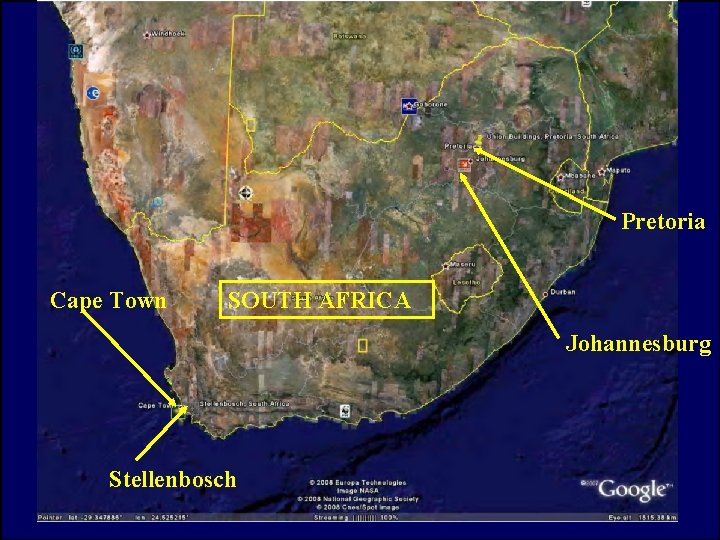
Pretoria Cape Town SOUTH AFRICA Johannesburg Stellenbosch
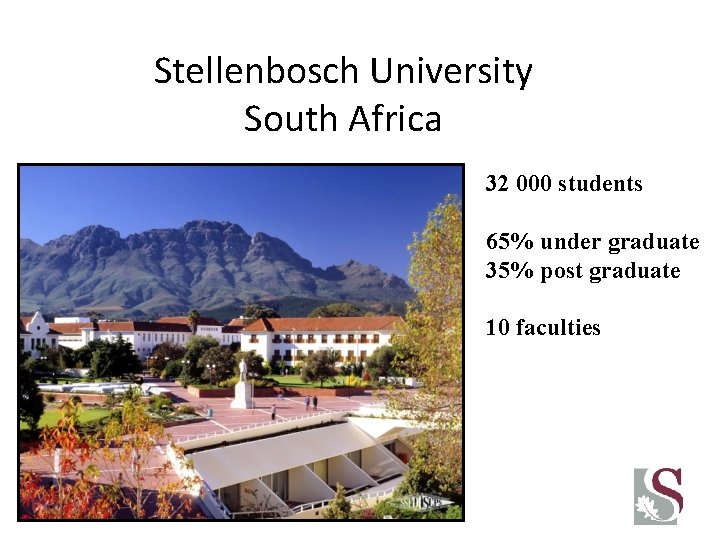
Stellenbosch University South Africa 32 000 students 65% under graduate 35% post graduate 10 faculties

Faculty of Engineering 4 000 engineering students The Faculty was established in 1944
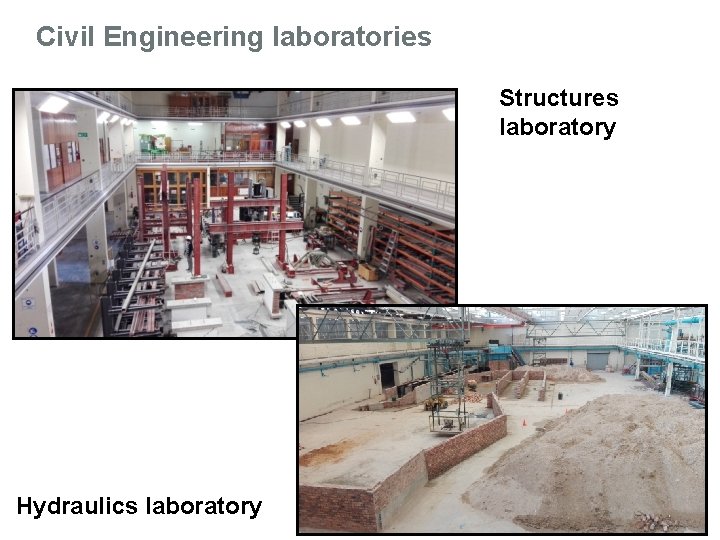
Civil Engineering laboratories Structures laboratory Hydraulics laboratory
RESEARCH in Construction Engineering and Management Key Research Areas: 1. Improving project delivery 1. Modular Construction (Hybrid Construction) 2. Construction Risk Management 3. Design Management & Large Projects 2. Infrastructure Asset Management 3. Management & Modern Technology
Topics • Building Information Models: – Modelling the secondary impact of change – Modelling constructability verifications • Technology approach to monitor construction quality • Implementation of concrete temperature measurement devices

BIM as a Tool for Quantifying the Secondary Impact of Change 8
Changes on projects • When determine the effects of change, project teams generally consider impact on: – Labour – Equipment – Materials • … on directly impacted work • Seldom do they consider : the secondary impact 9
Secondary impacts of change • • Disruption in sequencing/program cumulative impact productivity loss knock-on impact ripple effects / impact morale motivation 10
Secondary impacts are hard to measure (productivity and rework) create impacts on other activities causes and drivers are difficult to identify causes and drivers are difficult to communicate to others • mitigating actions are difficult to define • • 11

Mapping Causes and Effects throughout the Project The Rework Cycle with Secondary Impacts and Feedback Loops (Cooper and Reichelt 2004) 12
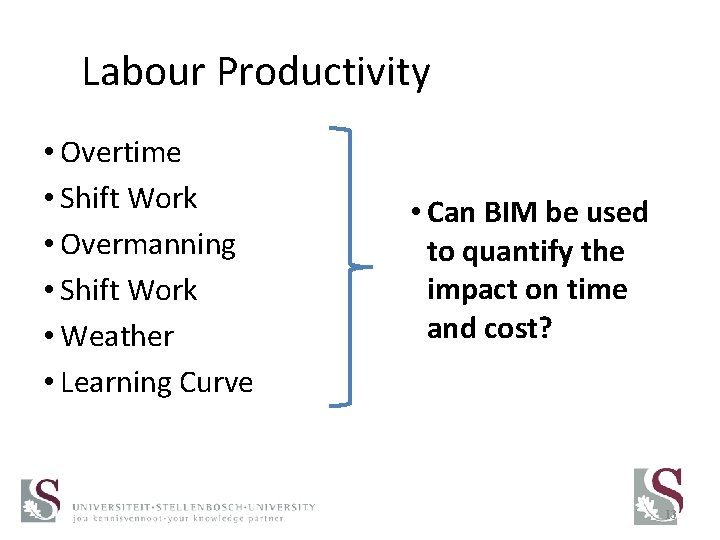
Labour Productivity • Overtime • Shift Work • Overmanning • Shift Work • Weather • Learning Curve • Can BIM be used to quantify the impact on time and cost? 13
Case Study • Quantifying the Changes with BIM – Change of Width – Change in Slab Dimensions – Change in Roof Height 14
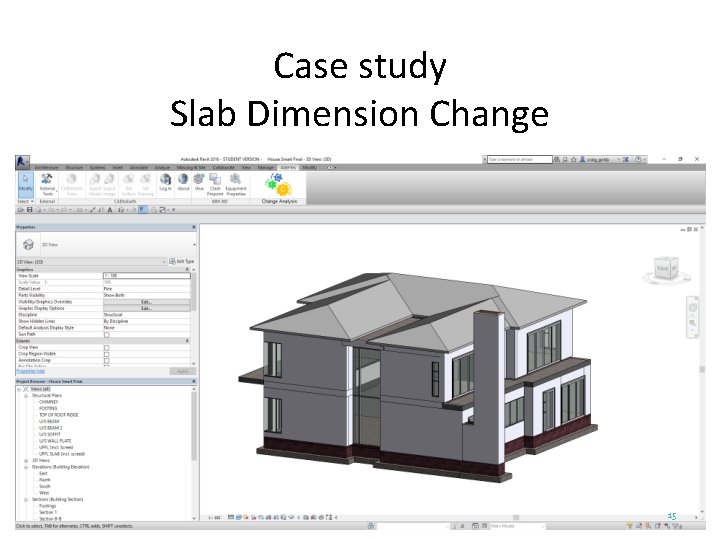
Case study Slab Dimension Change 15
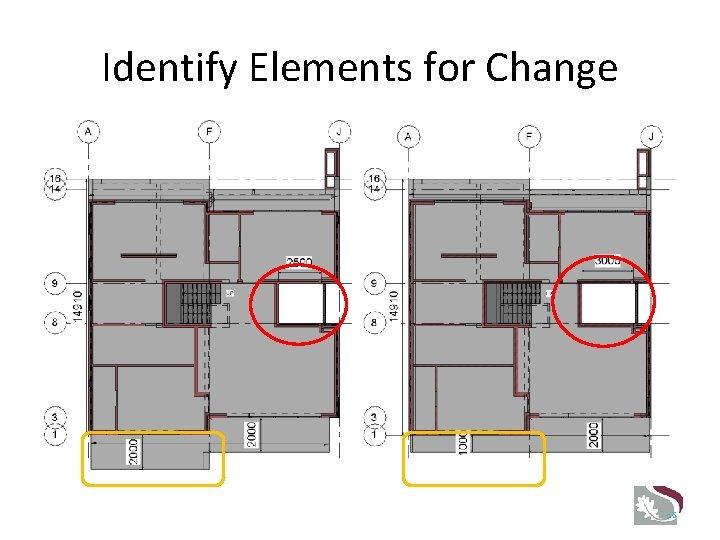
Identify Elements for Change 16
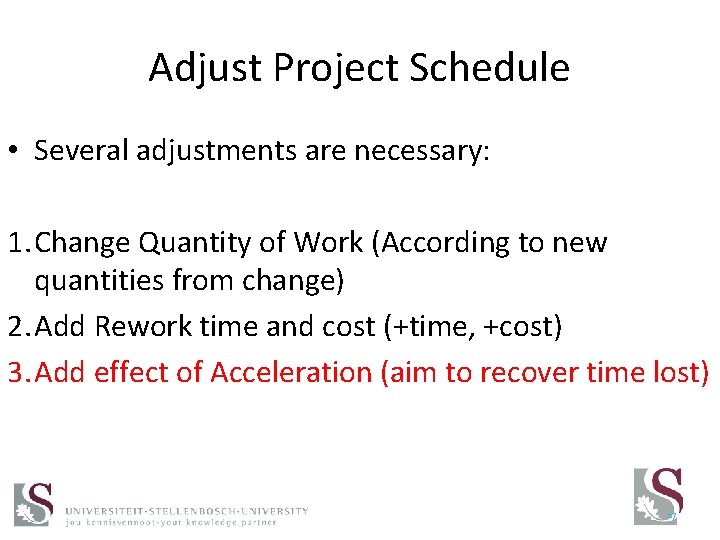
Adjust Project Schedule • Several adjustments are necessary: 1. Change Quantity of Work (According to new quantities from change) 2. Add Rework time and cost (+time, +cost) 3. Add effect of Acceleration (aim to recover time lost) 17
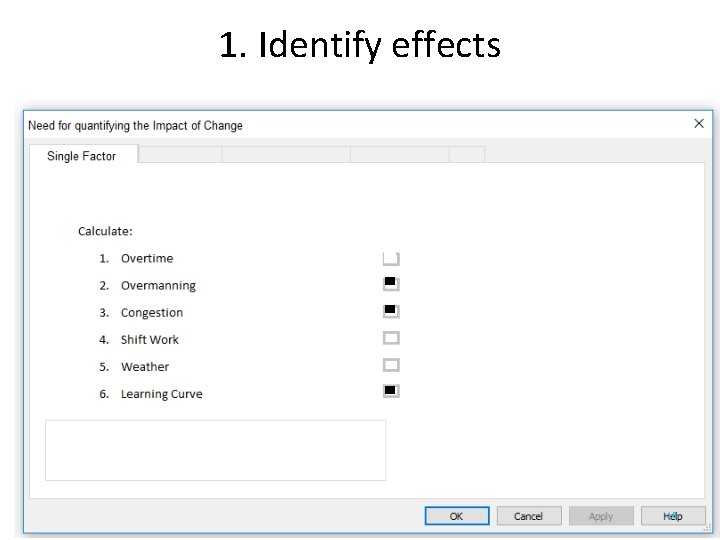
1. Identify effects 18
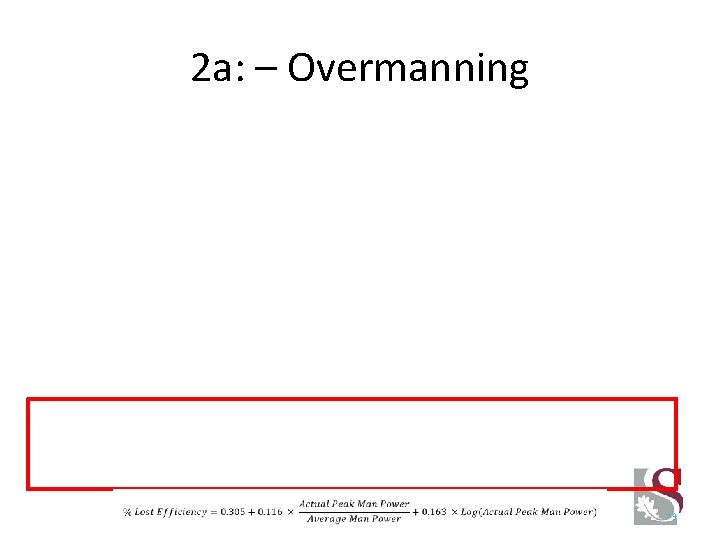
2 a: – Overmanning 19
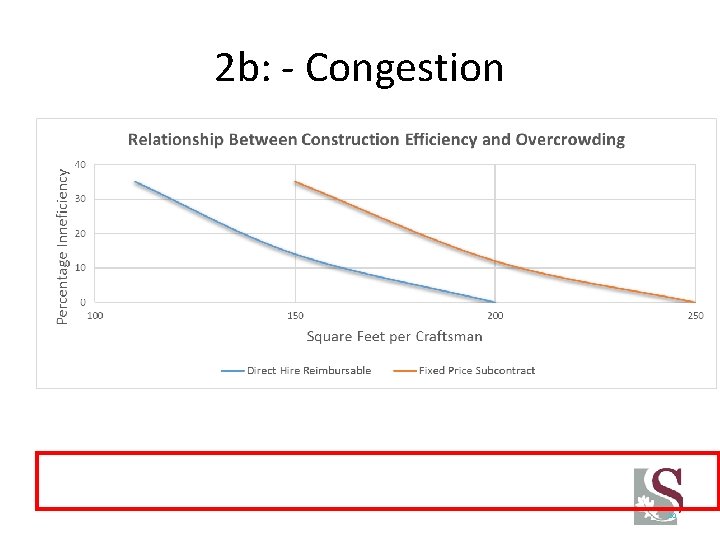
2 b: - Congestion 20

2 c: – Learning Curve 21
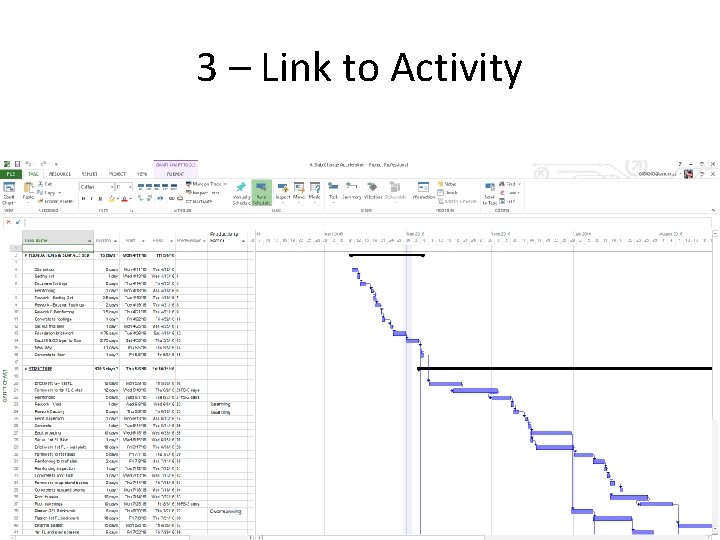
3 – Link to Activity 22
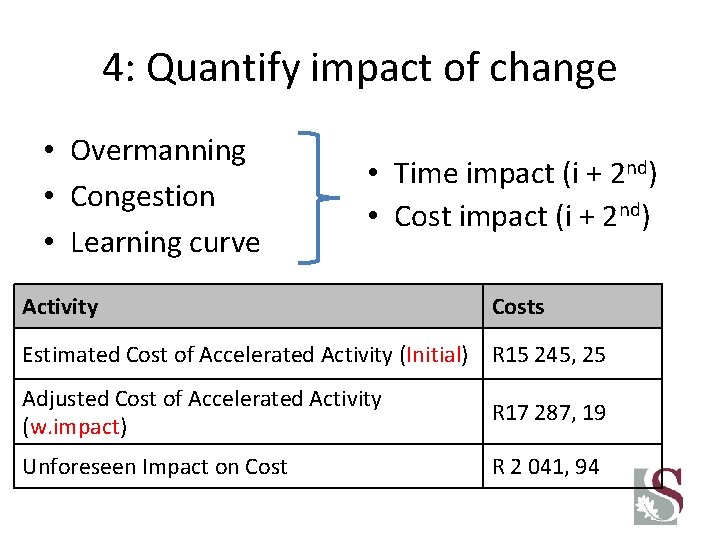
4: Quantify impact of change • Overmanning • Congestion • Learning curve • Time impact (i + 2 nd) • Cost impact (i + 2 nd) Activity Costs Estimated Cost of Accelerated Activity (Initial) R 15 245, 25 Adjusted Cost of Accelerated Activity (w. impact) R 17 287, 19 Unforeseen Impact on Cost R 2 041, 94
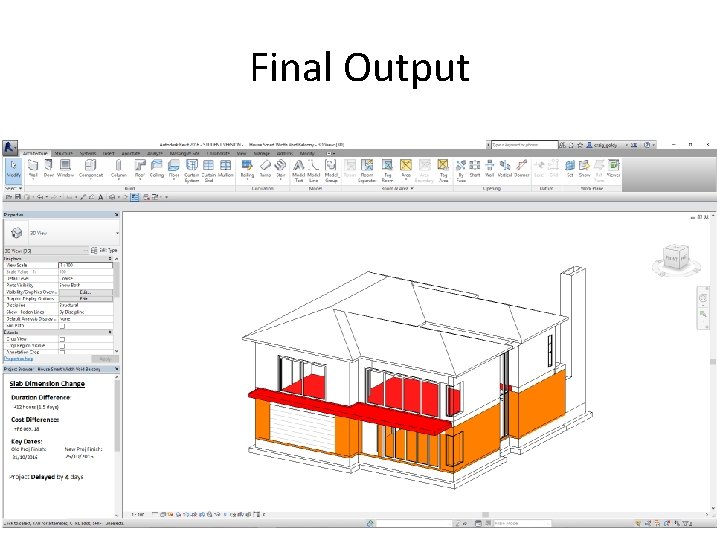
Final Output 24
A Building Information Modelling-based approach towards improving the constructability of suspended floor slabs
A Building Information Modelling-based approach towards improving the constructability of suspended floor slabs • Aim: • Investigate a process using BIM to improve constructability in building construction • Approach: • Consider constructability of suspended floor slabs and their supports • Integration of constructability information into early stages of a project-good opportunity for time and cost savings
A Building Information Modelling-based approach towards improving the constructability of suspended floor slabs Approach • Previous studies show that BIM can prove to be effective in constructability improvement - allows collaboration between project participants • Factors which affect constructability were identified • Investigate a process to perform constructa bility verifications using BIM.
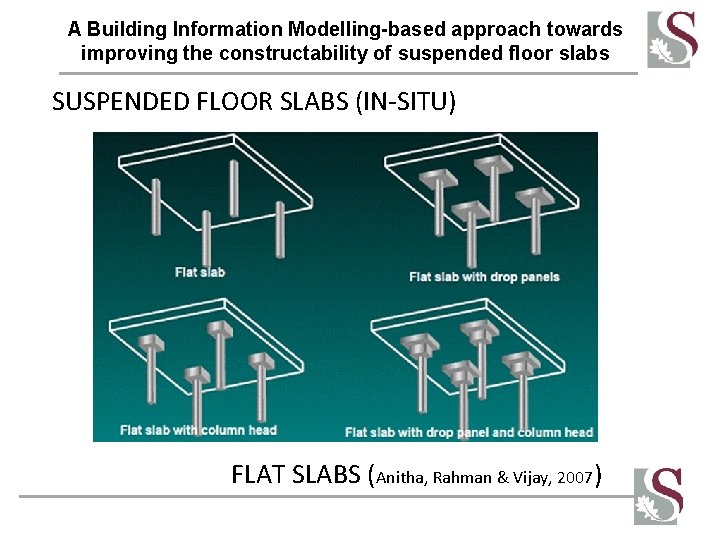
A Building Information Modelling-based approach towards improving the constructability of suspended floor slabs SUSPENDED FLOOR SLABS (IN-SITU) FLAT SLABS (Anitha, Rahman & Vijay, 2007)
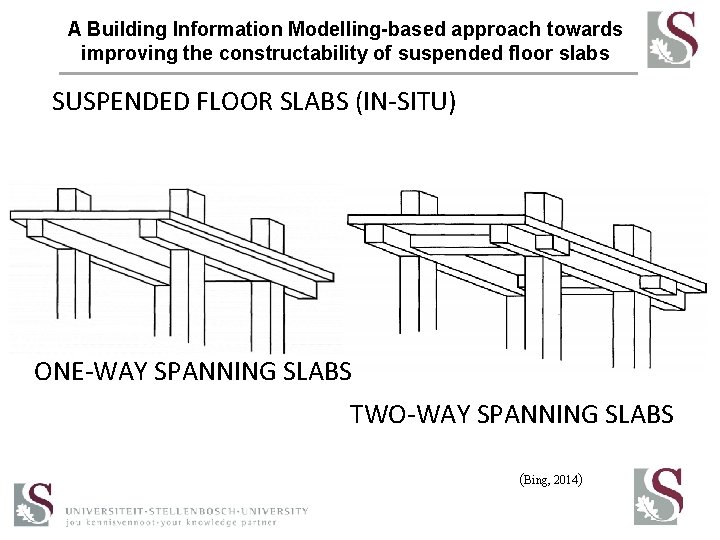
A Building Information Modelling-based approach towards improving the constructability of suspended floor slabs SUSPENDED FLOOR SLABS (IN-SITU) ONE-WAY SPANNING SLABS TWO-WAY SPANNING SLABS (Bing, 2014)
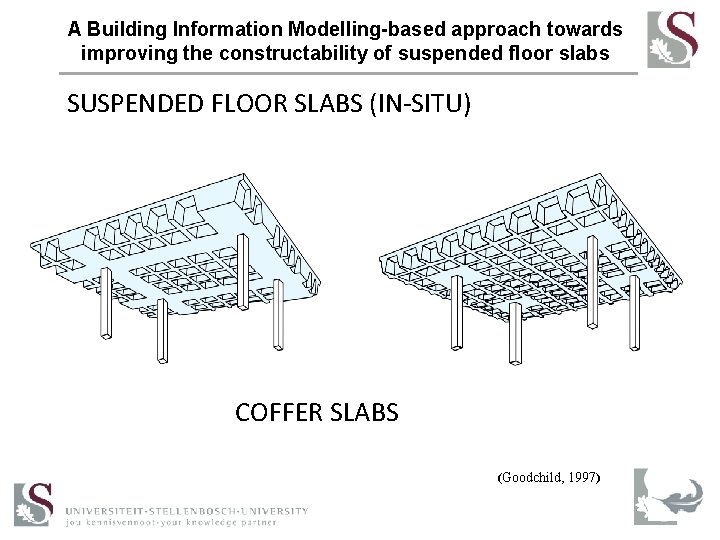
A Building Information Modelling-based approach towards improving the constructability of suspended floor slabs SUSPENDED FLOOR SLABS (IN-SITU) COFFER SLABS (Goodchild, 1997)
A Building Information Modelling-based approach towards improving the constructability of suspended floor slabs • Methodology: • Identify constructability aspects (51) through interviews • Rank and choose 5 most important • Model the verifications in BIM • Demonstrate process and obtain feedback
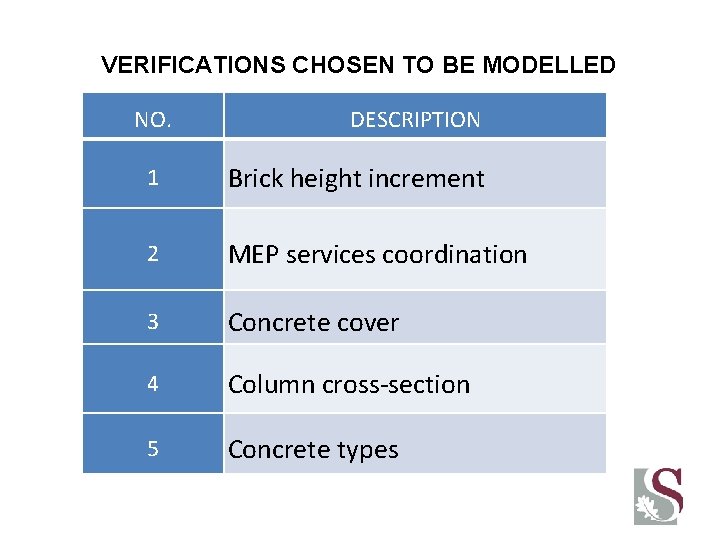
VERIFICATIONS CHOSEN TO BE MODELLED NO. DESCRIPTION 1 Brick height increment 2 MEP services coordination 3 Concrete cover 4 Column cross-section 5 Concrete types
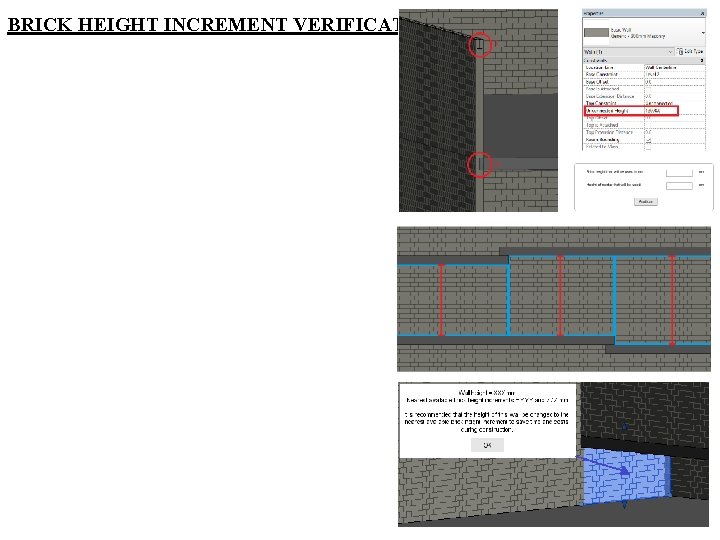
BRICK HEIGHT INCREMENT VERIFICATION
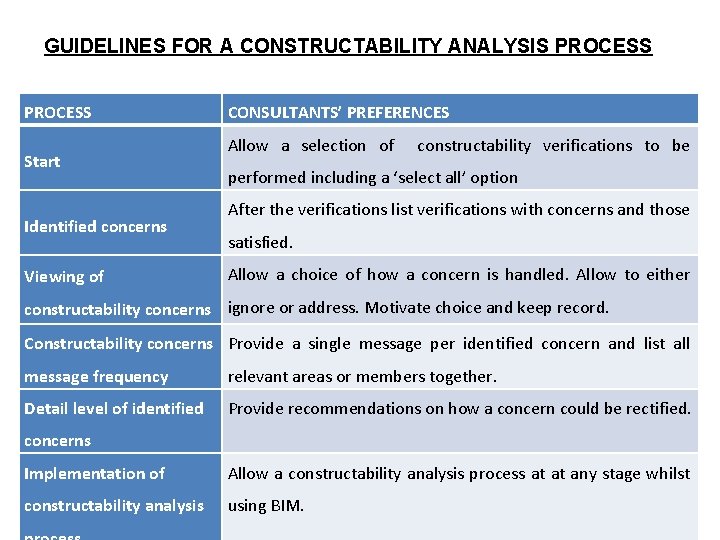
GUIDELINES FOR A CONSTRUCTABILITY ANALYSIS PROCESS Start Identified concerns Viewing of CONSULTANTS’ PREFERENCES Allow a selection of constructability verifications to be performed including a ‘select all’ option After the verifications list verifications with concerns and those satisfied. Allow a choice of how a concern is handled. Allow to either constructability concerns ignore or address. Motivate choice and keep record. Constructability concerns Provide a single message per identified concern and list all message frequency relevant areas or members together. Detail level of identified Provide recommendations on how a concern could be rectified. concerns Implementation of Allow a constructability analysis process at at any stage whilst constructability analysis using BIM.

REMOTE MONITORING OF MASONRY WALL CONSTRUCTION QUALITY: A suggested quality monitoring system for the South African low income housing industry
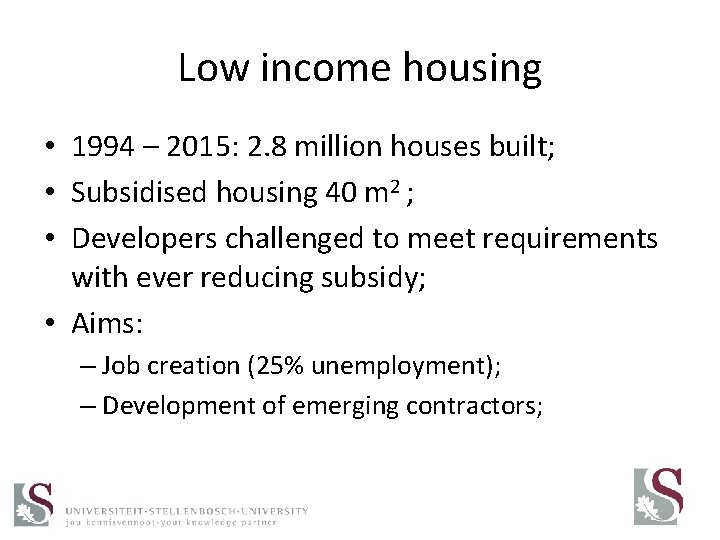
Low income housing • 1994 – 2015: 2. 8 million houses built; • Subsidised housing 40 m 2 ; • Developers challenged to meet requirements with ever reducing subsidy; • Aims: – Job creation (25% unemployment); – Development of emerging contractors;
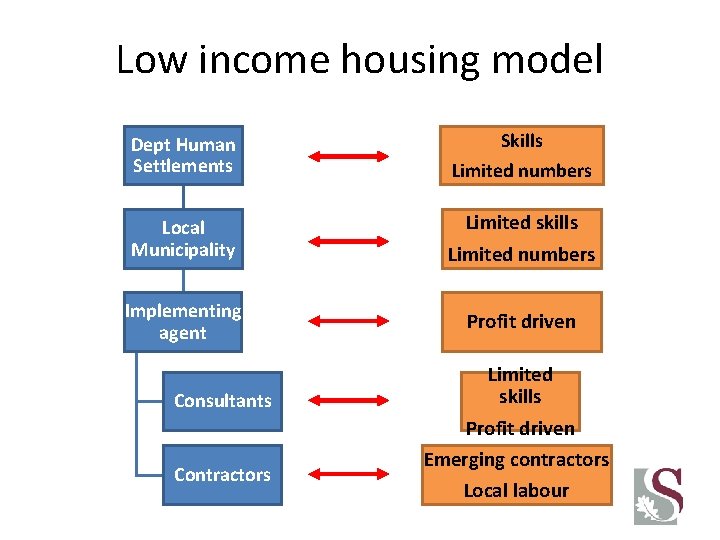
Low income housing model Skills Dept Human Settlements Limited numbers Local Municipality Limited skills Limited numbers Implementing agent Profit driven Consultants Contractors Limited skills Profit driven Emerging contractors Local labour
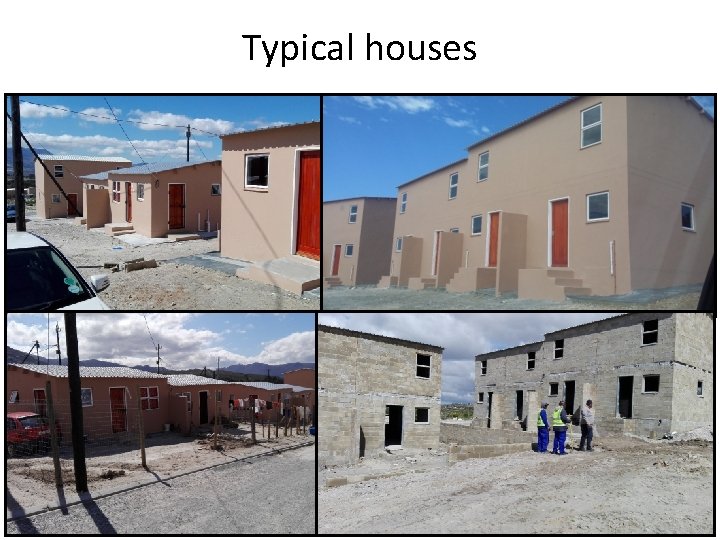
Typical houses
Research project • Develop a technology based approach to assist with construction quality monitoring: – masonry construction – use everyday technology
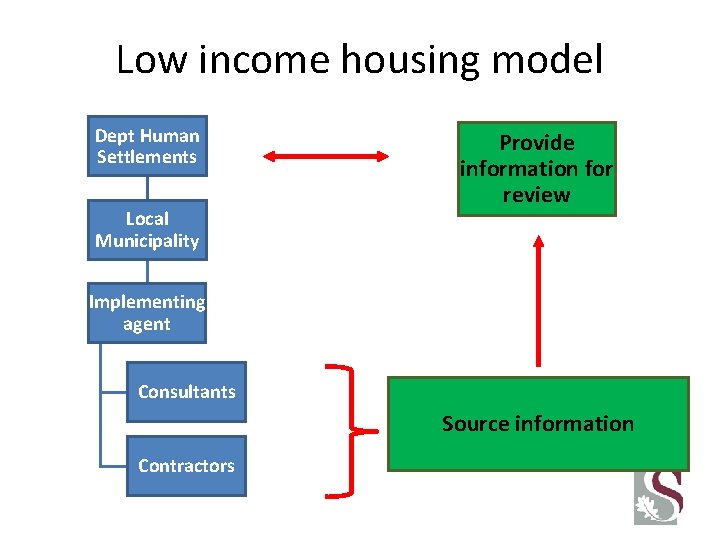
Low income housing model Dept Human Settlements Local Municipality Provide information for review Implementing agent Consultants Source information Contractors
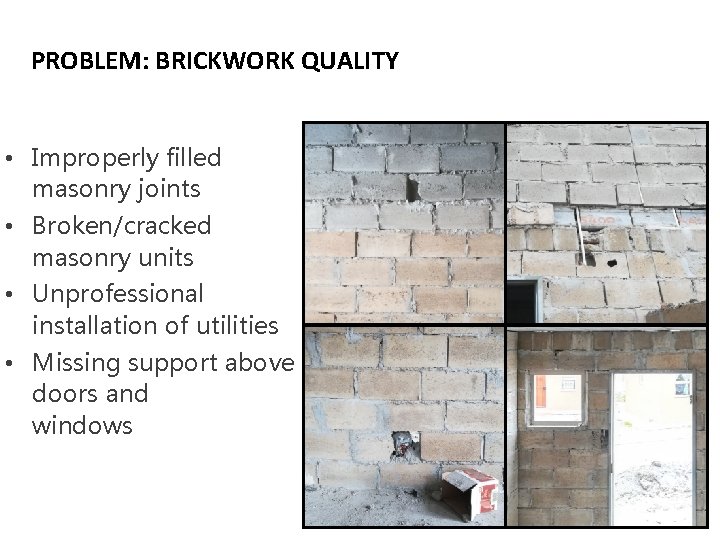
PROBLEM: BRICKWORK QUALITY • Improperly filled masonry joints • Broken/cracked masonry units • Unprofessional installation of utilities • Missing support above doors and windows

Consequences of quality problems: • Compromised structural integrity • Cracked plaster on in- and outside of building • Moisture damage (such as mould growth and salt crystallisation) • Limited airtightness and decreased energy efficiency
Brickwork quality Causes of quality problems: • Limited oversight • Inexperienced workers • Labour-intensive construction methods
Aim of the approach Development of a quality monitoring system Properties of the system: • Application of existing technology • Maximising automation (without sacrificing accuracy) • Exporting easily interpretable conclusions • Increase construction quality through feedback to contractor
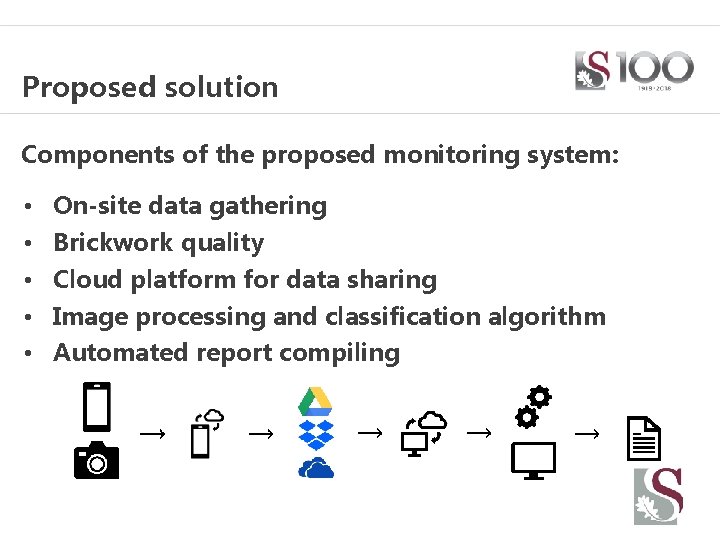
Proposed solution Components of the proposed monitoring system: • • • On-site data gathering Brickwork quality Cloud platform for data sharing Image processing and classification algorithm Automated report compiling
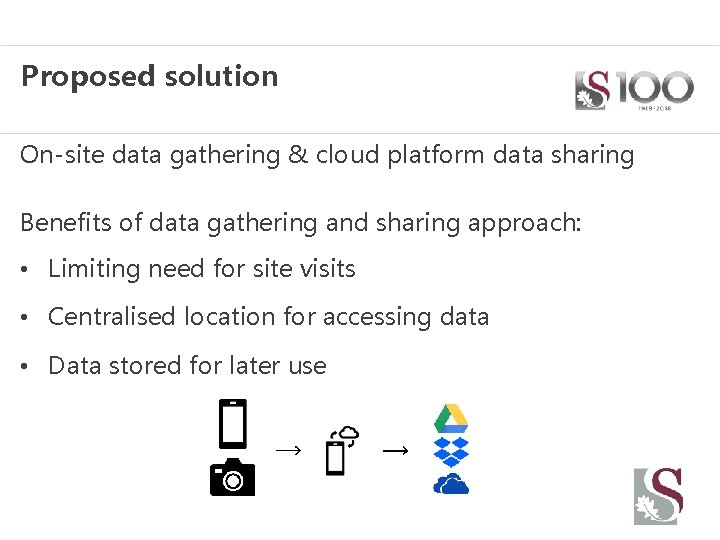
Proposed solution On-site data gathering & cloud platform data sharing Benefits of data gathering and sharing approach: • Limiting need for site visits • Centralised location for accessing data • Data stored for later use
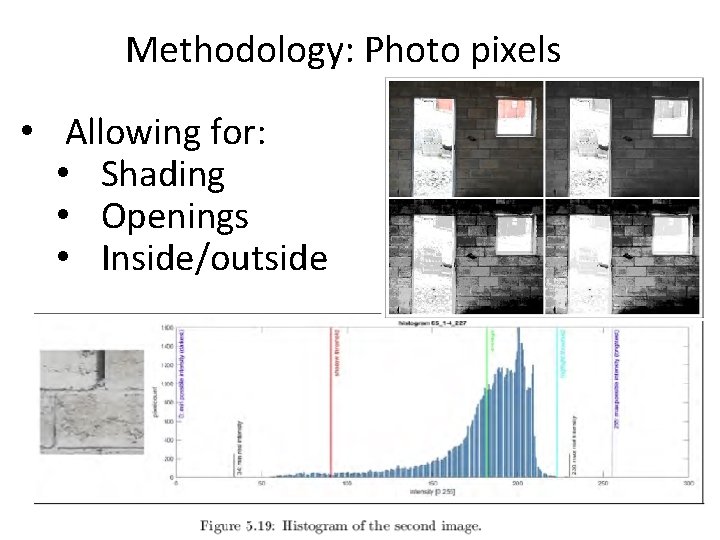
Methodology: Photo pixels • Allowing for: • Shading • Openings • Inside/outside
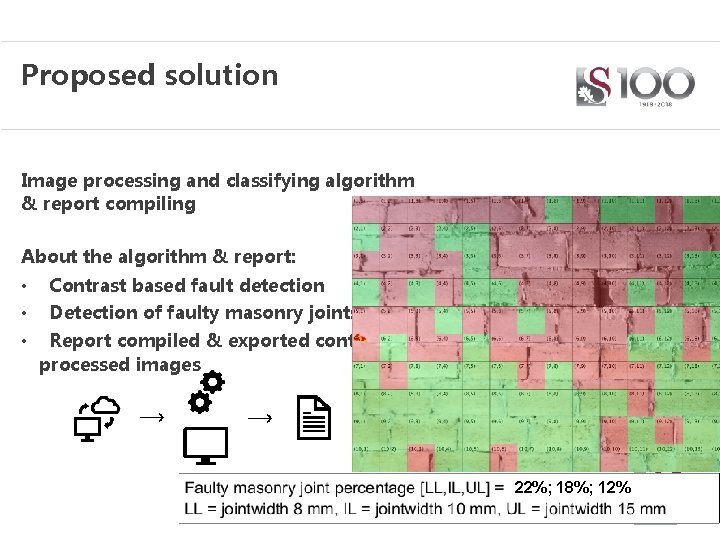
Proposed solution Image processing and classifying algorithm & report compiling About the algorithm & report: • Contrast based fault detection • Detection of faulty masonry joints • Report compiled & exported containing processed images 22%; 18%; 12%
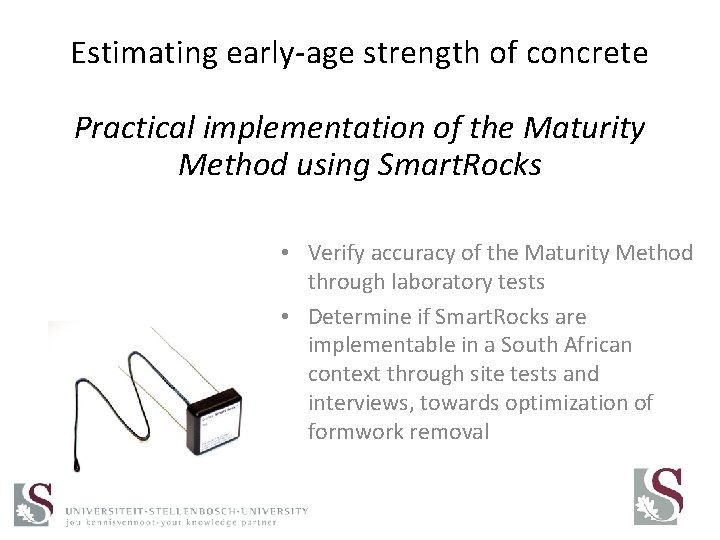
Estimating early-age strength of concrete Practical implementation of the Maturity Method using Smart. Rocks • Verify accuracy of the Maturity Method through laboratory tests • Determine if Smart. Rocks are implementable in a South African context through site tests and interviews, towards optimization of formwork removal
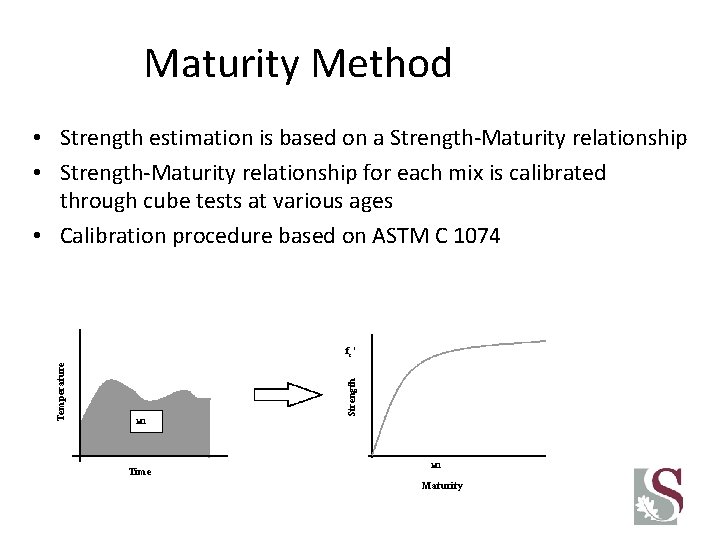
Maturity Method • Strength estimation is based on a Strength-Maturity relationship • Strength-Maturity relationship for each mix is calibrated through cube tests at various ages • Calibration procedure based on ASTM C 1074 Strength Temperature fc ’ M 1 Time M 1 Maturity
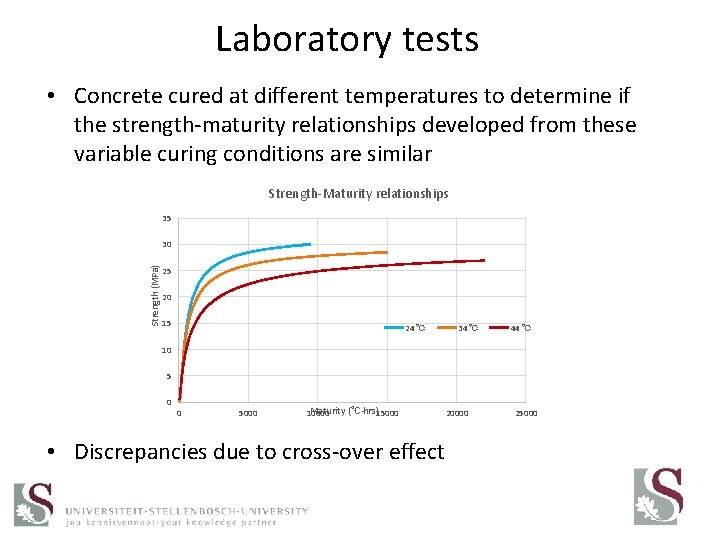
Laboratory tests • Concrete cured at different temperatures to determine if the strength-maturity relationships developed from these variable curing conditions are similar Strength-Maturity relationships 35 Strength (MPa) 30 25 20 15 24 ℃ 34 ℃ 44 ℃ 10 5 0 0 5000 Maturity (℃·hrs)15000 10000 • Discrepancies due to cross-over effect 20000 25000
Site tests • Sensors installed in a reinforced concrete slab on a 11 storey residential structure. • Sensors installed at the top and bottom of the slab to determine discrepancies in maturity values for different measuring locations • <1% difference in Top and Bottom maturities at 28 days • Sensors were implemented by contractor for posttensioned slabs to determine when tendons could be tensioned • Achieved optimization of tensioning times and absorbed various delays
Interviews • Engineers trust the accuracy of the sensors • Successful implementation of the sensors are dependent on accurate mix calibrations provided by the concrete supplier • Contractor needs to drive the use of Smart. Rock. He is responsible for temporary works, but he can reap the reward of formwork optimization • There is room formwork optimization within the current scope of formwork removal standards by using Smart. Rocks • Immediate application for Smart. Rock is for post-tensioned slabs, since current standards are performance based
Conclusion • Research topics cover a range of practical implementation aspects • Ph. D research: – Digital twins for real estate – Quantifying drone design parameters – Bridge management systems including environmental and societal requirements – Infrastructure funding mechanisms
End
- Slides: 55