
Stellar Evolution Homework Problems Chapter 13 Review Questions
Stellar Evolution • Homework Problems Chapter 13 – Review Questions: 1 -3, 9 -11 – Review Problems: 1, 2, 7 – Web Inquiries: 1, 4 • Homework Problems Chapter 14 – Review Questions: 2, 4, 7, 9 -11, 13 – Review Problems: 3, 6, 9 – Web Inquiries: 1

Main Sequence Life Time
Out of Fuel After approximately 10 billion years of steady core hydrogen burning, a Sun-like (1 solar mass) star begins to run out of fuel. The situation is a little like that of an automobile cruising effortlessly along a highway at a constant speed of 55 mph for many hours, only to have the engine suddenly cough and sputter as the gas gauge reaches empty.
Contraction • What happens when all of the Hydrogen in the core is used up and converted into Helium? • Source of energy is gone, gravity wins. • Contraction resumes. • Contraction leads to increase in density and temperature in the core.
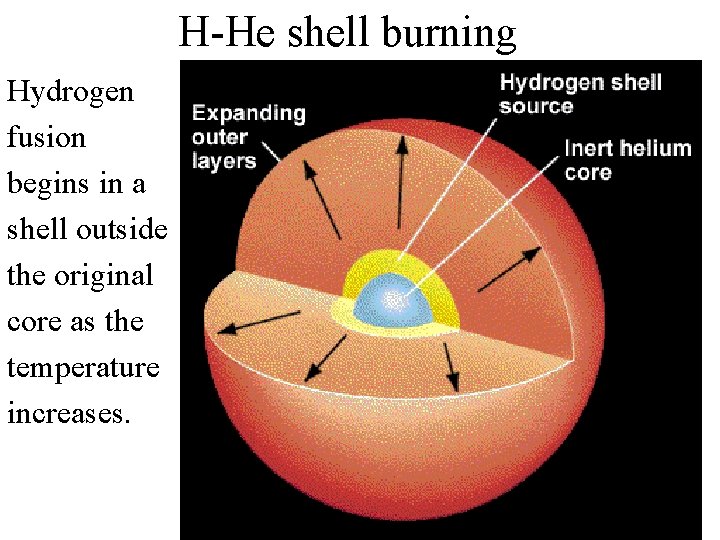
H-He shell burning Hydrogen fusion begins in a shell outside the original core as the temperature increases.
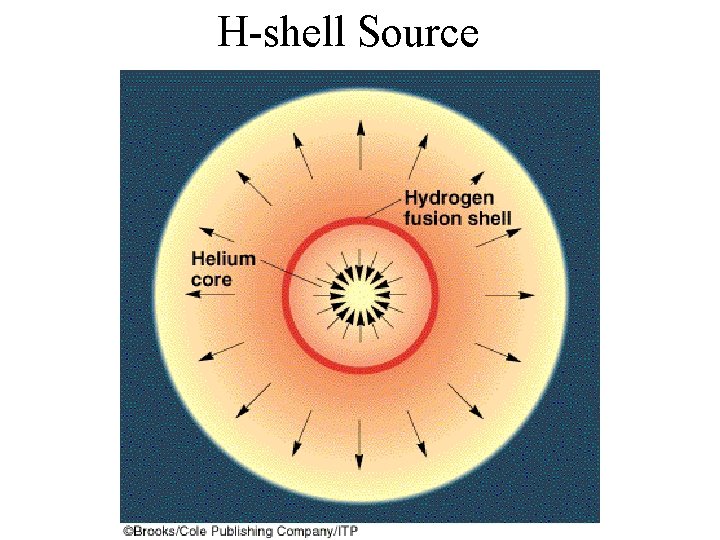
H-shell Source
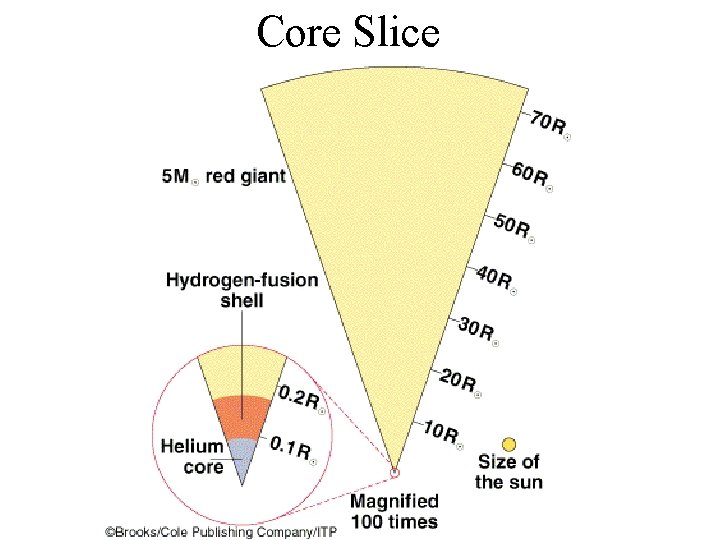
Core Slice
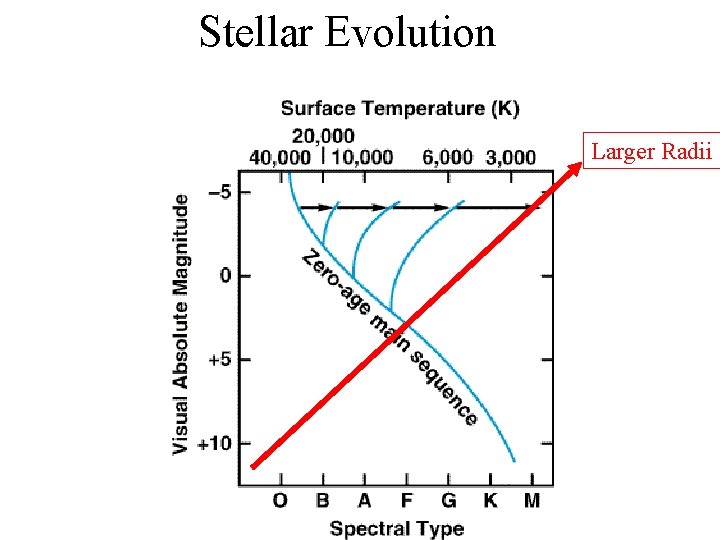
Stellar Evolution Larger Radii
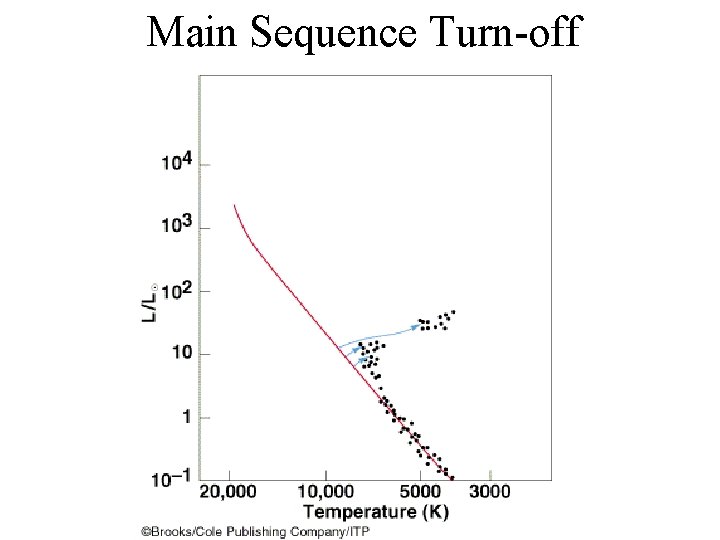
Main Sequence Turn-off
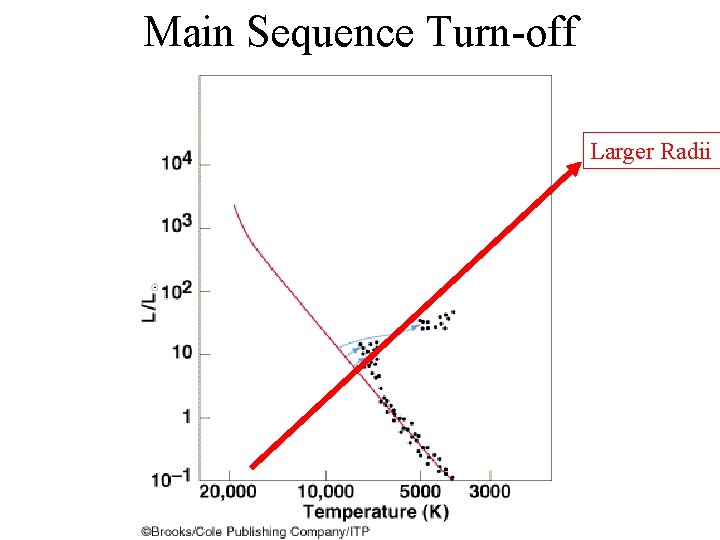
Main Sequence Turn-off Larger Radii
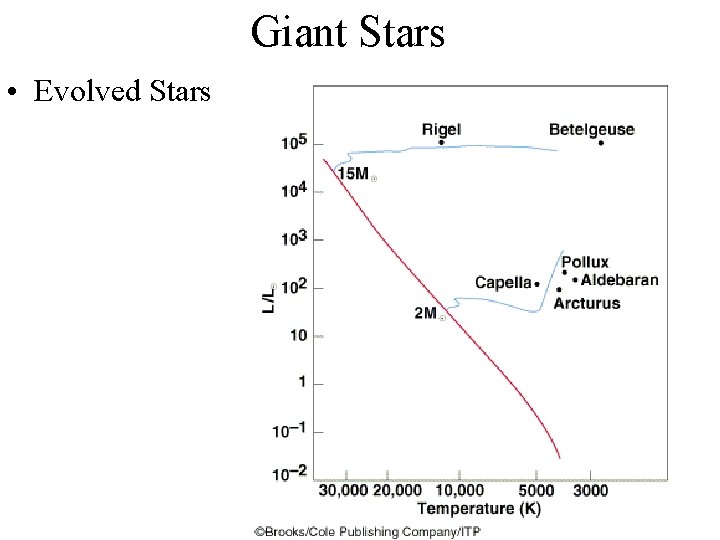
Giant Stars • Evolved Stars
Core Helium Burning The helium flash terminates the giant star's ascent on the redgiant branch of the H-R diagram. Yet despite the explosive detonation of helium in the core, the flash does not increase the star's luminosity. On the contrary, the helium flash produces a rearrangement of the core that ultimately results in a reduction in the energy output. On the H-R diagram, the star enters a stable state with steady helium burning in the core and hydrogen burning in a shell. This adjustment in the star's properties occurs quite quickly, over about 100, 000 years.

Helium Flash
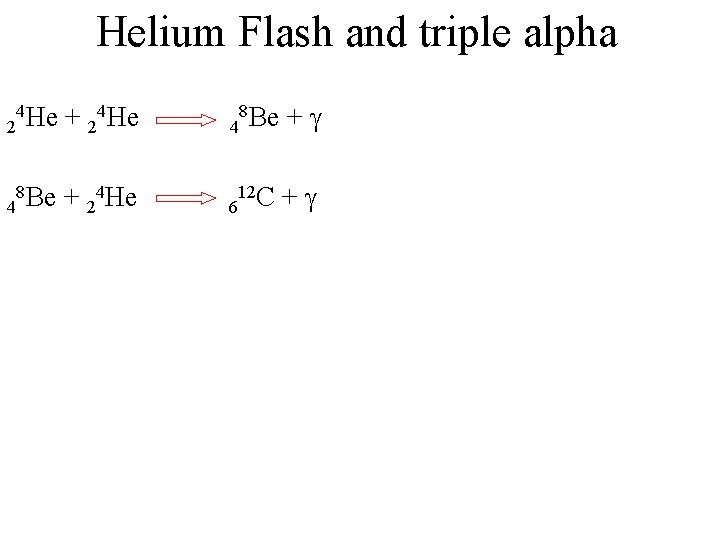
Helium Flash and triple alpha 4 He 2 + 24 He 8 Be 4 + 24 He 8 Be +g 12 C +g 4 6
Carbon Core Buildup The nuclear reactions in our star's helium core burn on, but not for long. Whatever helium exists in the core is rapidly consumed. The triple-alpha helium-to-carbon fusion reaction, like the proton-proton and CNO-cycle hydrogento-helium reactions before it, proceeds at a rate that increases very rapidly with temperature. At the extremely high temperatures found at this stage, the helium fuel doesn't last long, no more than a few tens of millions of years after the initial flash. Higher temperatures yield higher reaction rates.
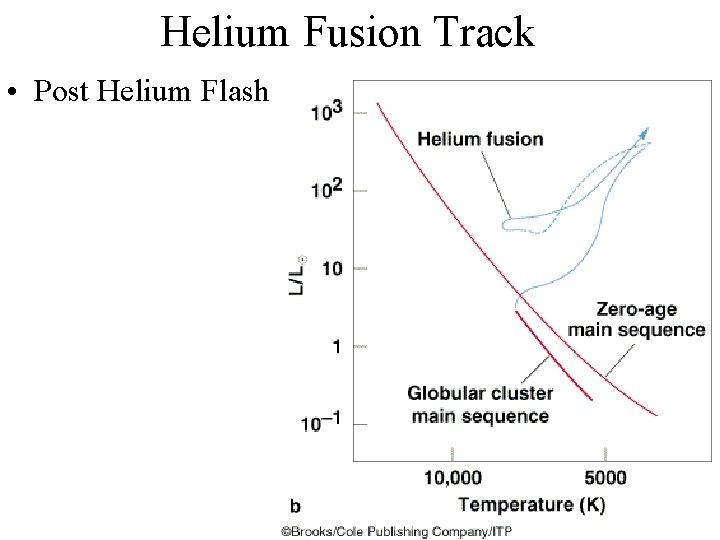
Helium Fusion Track • Post Helium Flash

H-He, He-C shell burning Once the star runs out of helium in the core, contraction begins again. Eventually the core temperature allows helium fusion to occur.
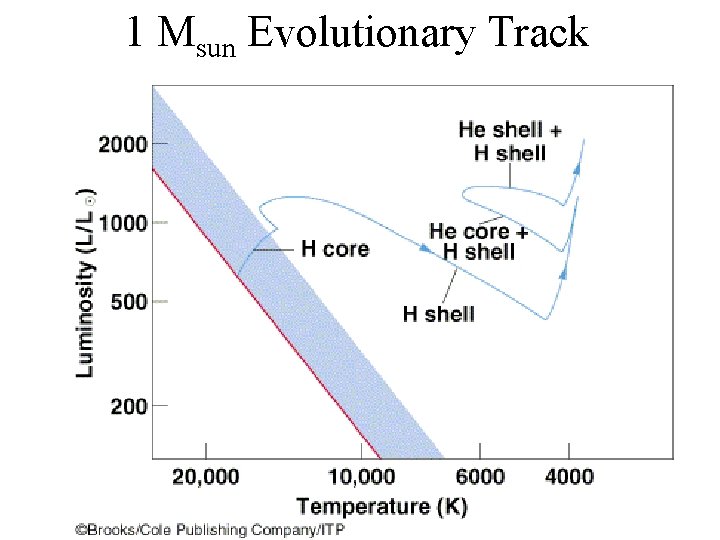
1 Msun Evolutionary Track
The End As our red supergiant ascends the asymptotic giant branch, its envelope swells while its core, too cool for further nuclear burning, continues to contract. If the central temperature could become high enough for carbon fusion to occur, still heavier products could be synthesized, and the newly generated energy might again support the star, restoring for a time the equilibrium between gravity and radiation. For 1 solar-mass stars, however, this does not occur. The temperature never reaches the 600 million K needed for a new round of nuclear reactions to occur. The red supergiant is now very close to the end of its nuclearburning lifetime.
Red Giant and Planetary Nebula Animation
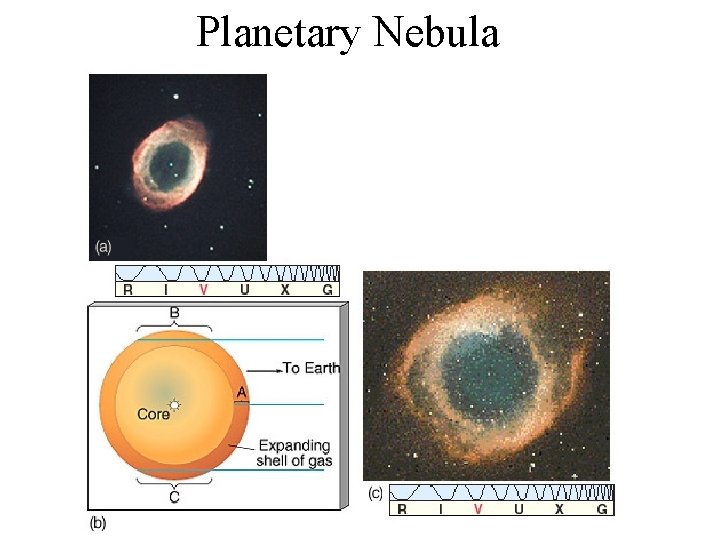
Planetary Nebula
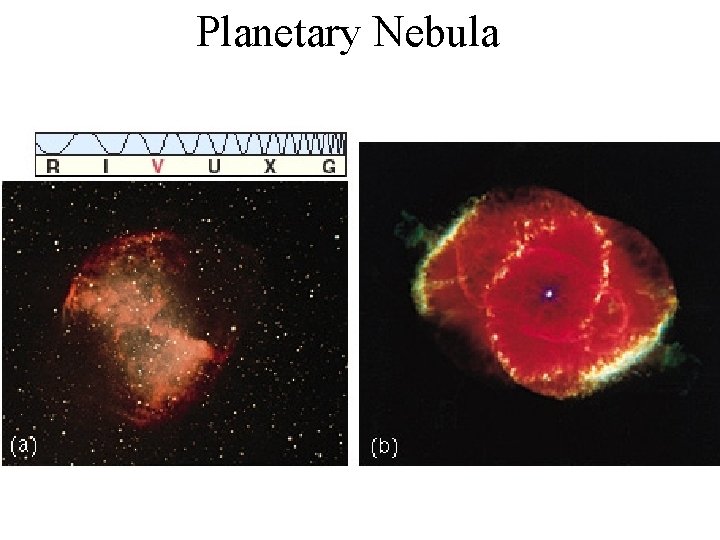
Planetary Nebula
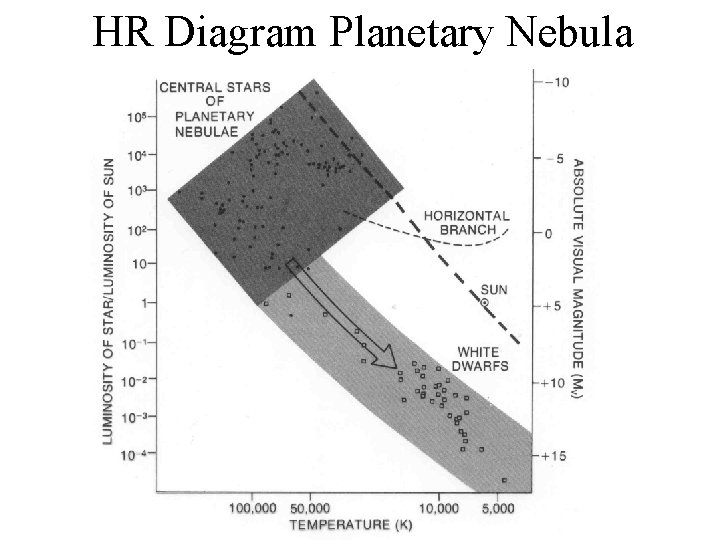
HR Diagram Planetary Nebula
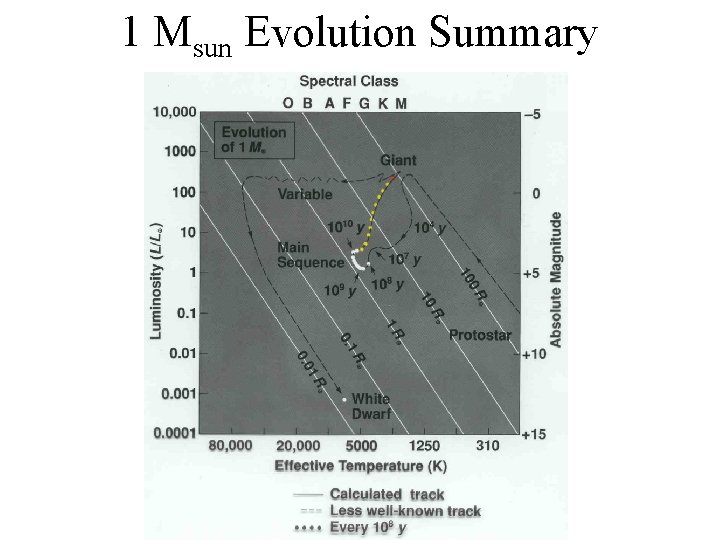
1 Msun Evolution Summary
1 Msun Evolution Animation
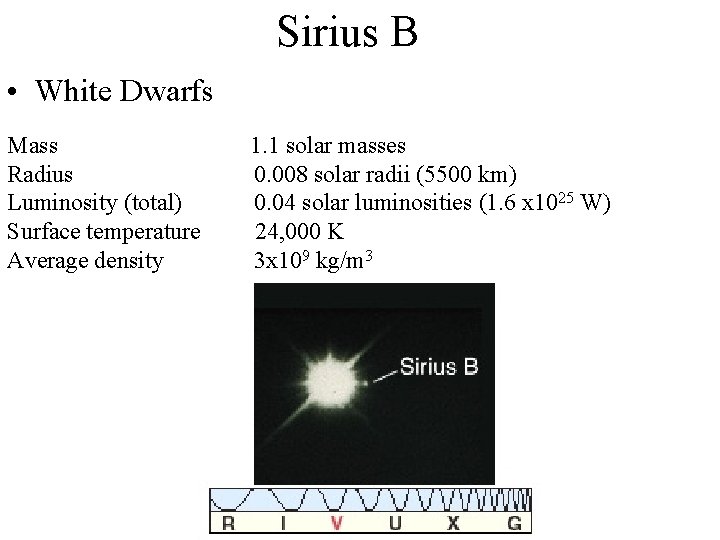
Sirius B • White Dwarfs Mass Radius Luminosity (total) Surface temperature Average density 1. 1 solar masses 0. 008 solar radii (5500 km) 0. 04 solar luminosities (1. 6 x 1025 W) 24, 000 K 3 x 10⁹ kg/m 3
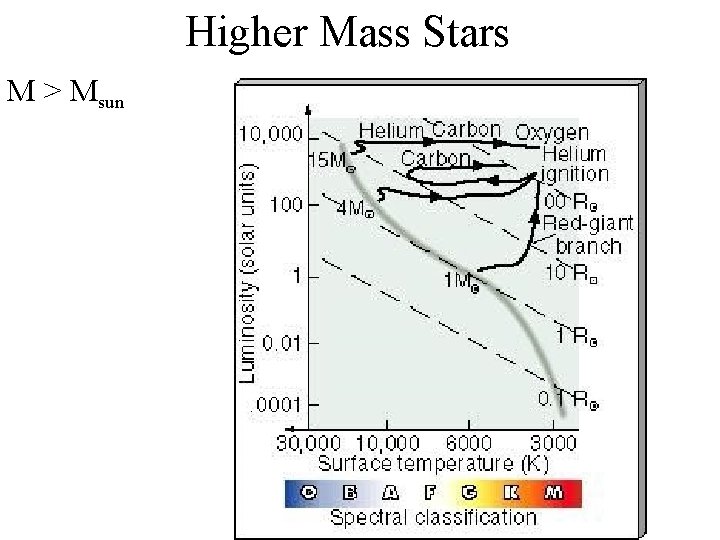
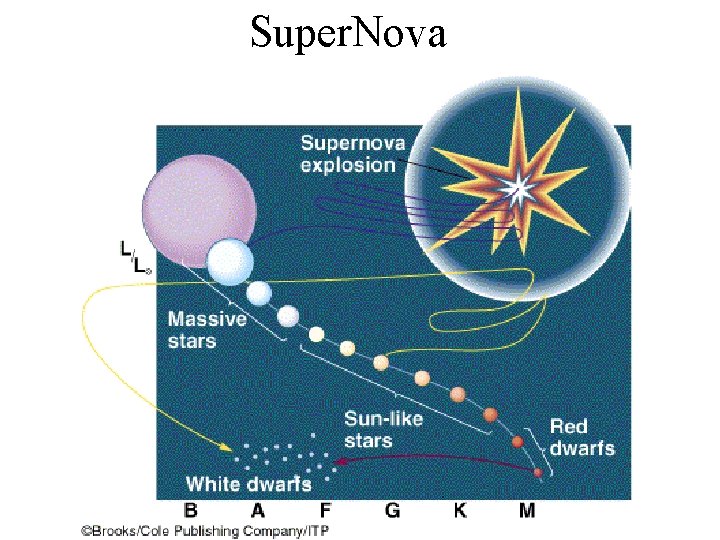
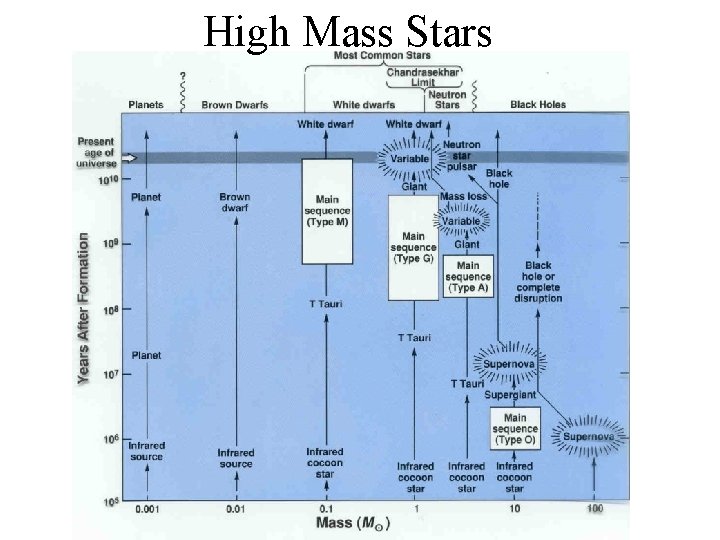
Higher Mass Stars M > Msun
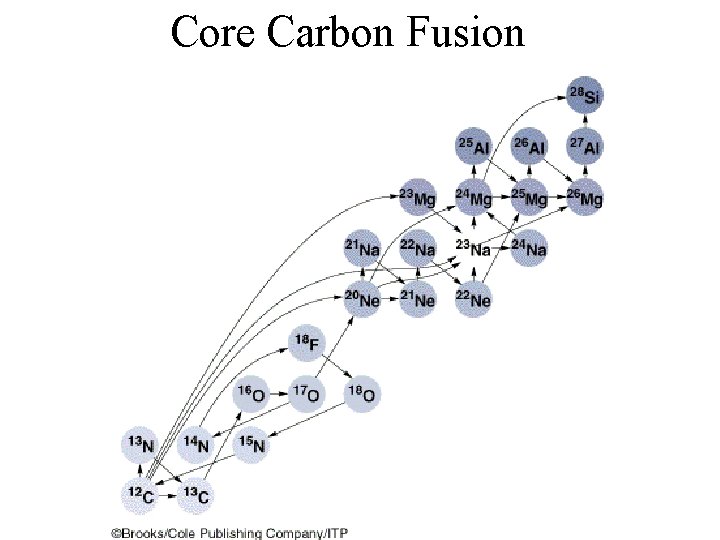
Core Carbon Fusion
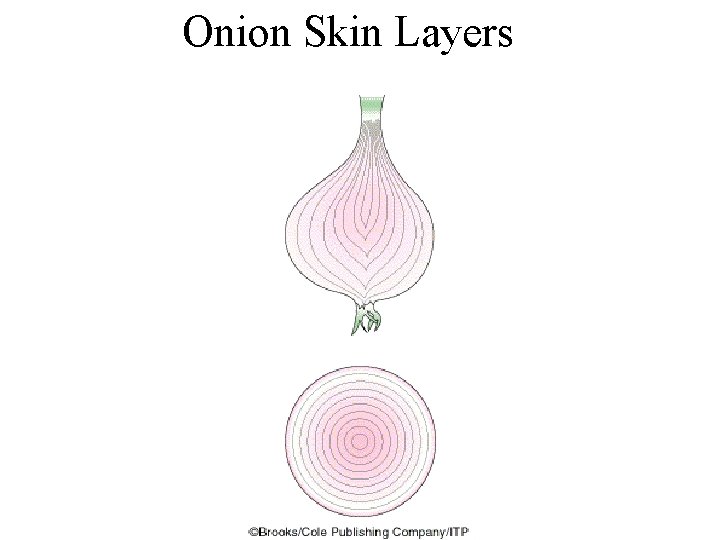
Onion Skin Layers
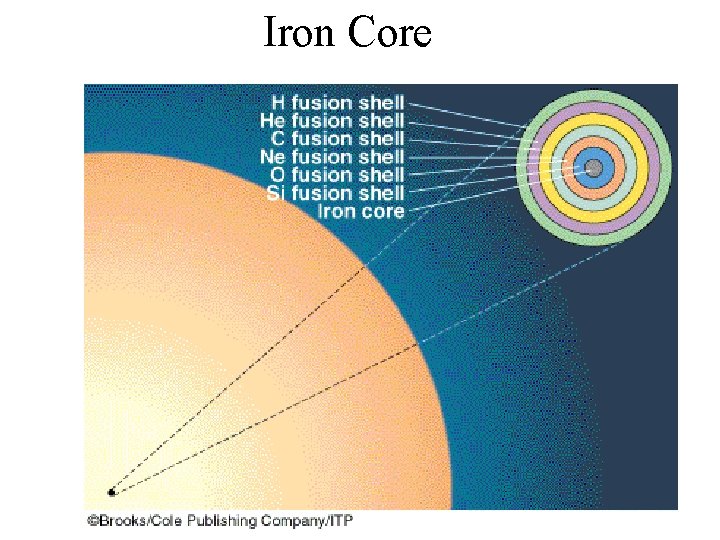
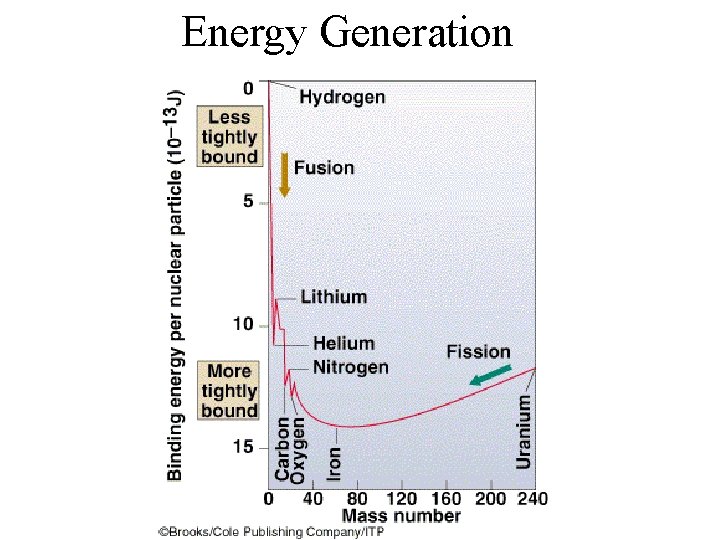
Iron Core
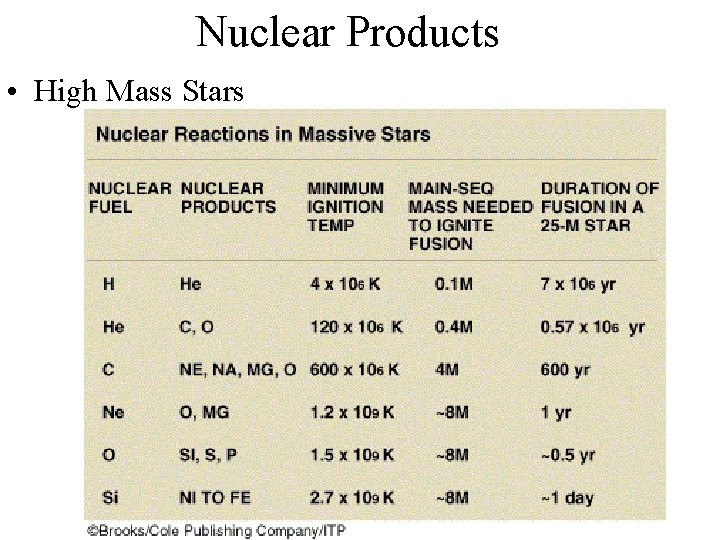
Nuclear Products • High Mass Stars
Energy Generation
Super. Nova
High Mass Stars
Life and Death
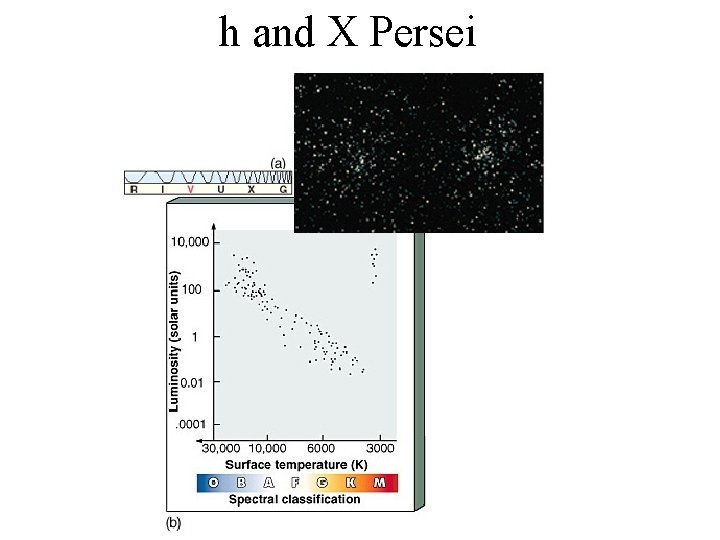
h and C Persei
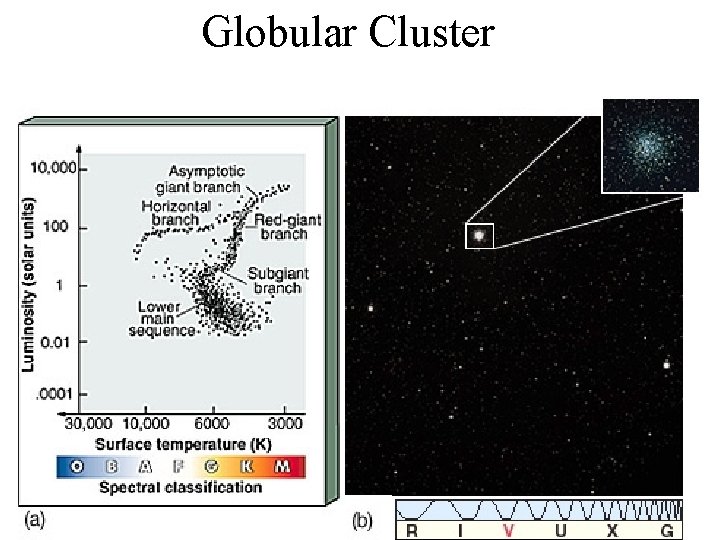
Globular Cluster
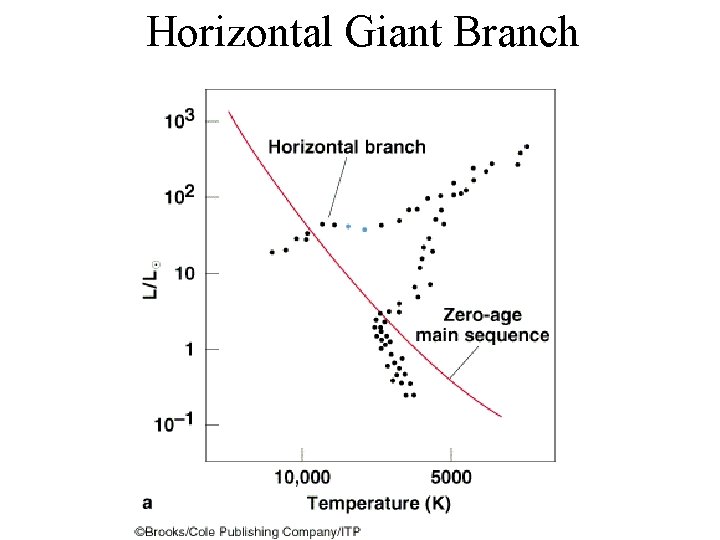
Horizontal Giant Branch
- Slides: 38