
Steering user behavior with badges Every day examples
Steering user behavior with badges
Every day examples of badges Different examples for badges: • Army badges • Police badges • Boy scout badges The value of badges : • Sense of accomplishment • Privilege's • Authority • Social value 2 -2 -
Common problems while designing a social network • Very often a users normal behavior is different than the optimal behavior according to the network designer • Wikipedia. • Stack Overflow. • Reddit. 3 -3 -
Paper contribution • how badges can influence and steer user behavior on a social network. • We introduce a formal model for analyzing the ways in which badges can steer users to change their behavior • We will compare our model to the “real world” using the website stack overflow as an example. • we investigate the problem of how to optimally place badges in order to induce particular user behaviors. • How to decide on value distribution of badges. 4 -4 -
Introducing our model -5 -
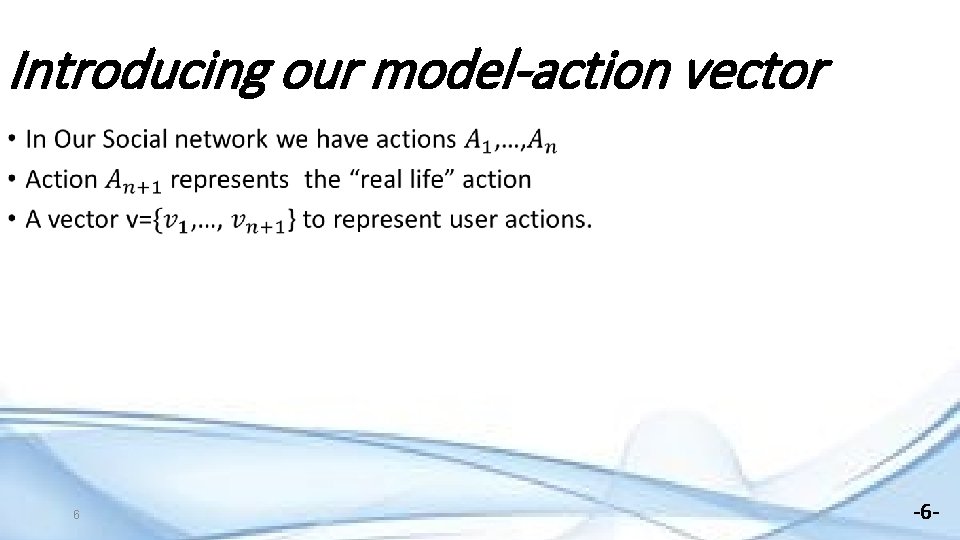
Introducing our model-action vector 6 -6 -
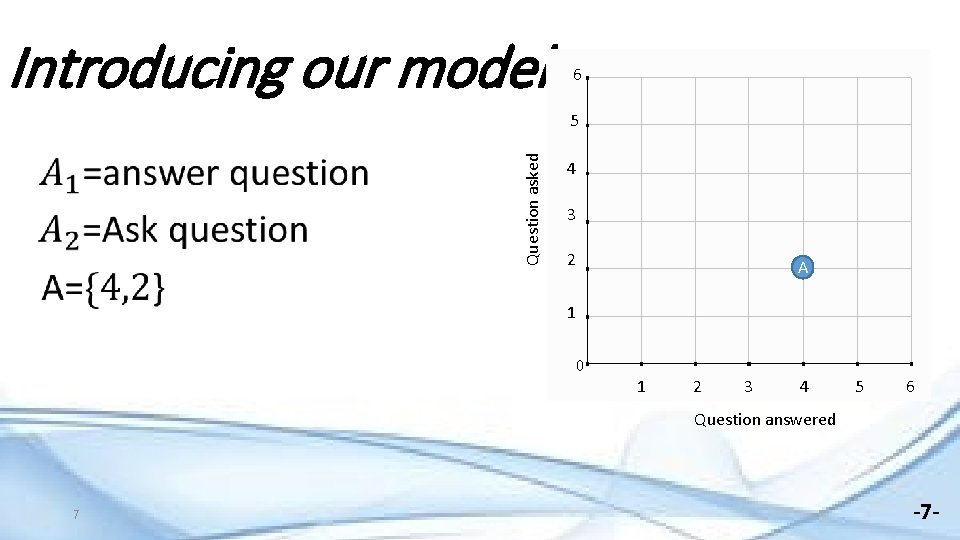
Introducing our model 6 Question asked 5 4 3 2 A 1 1 2 3 4 5 6 Question answered 7 -7 -
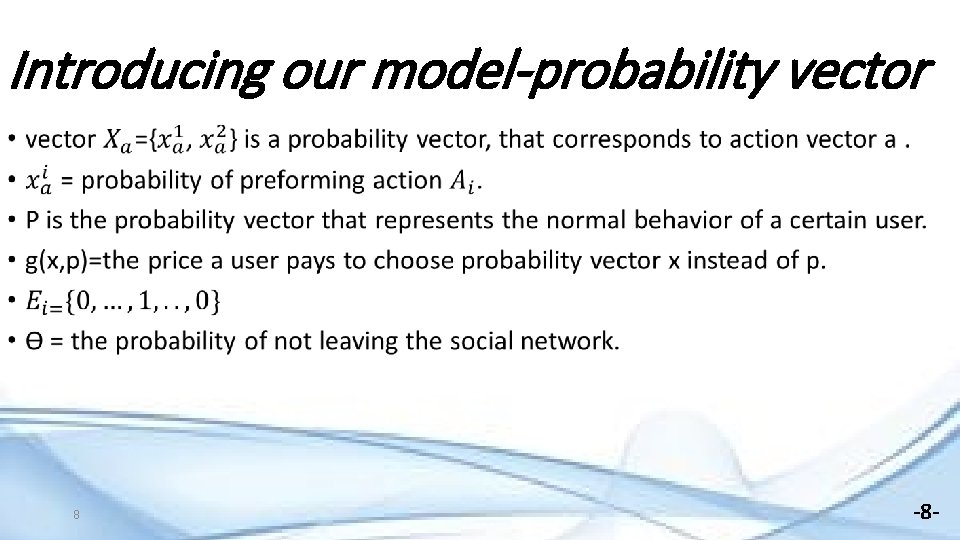
Introducing our model-probability vector 8 -8 -
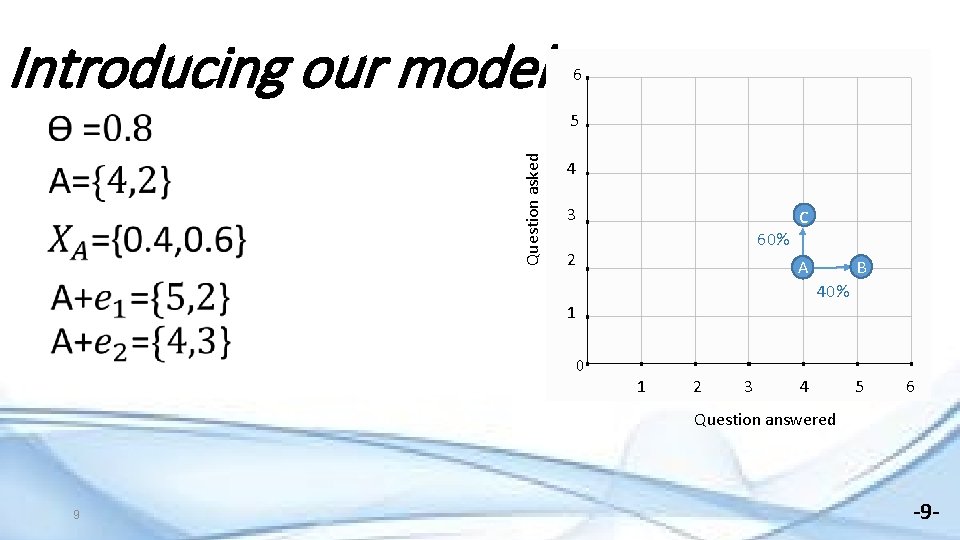
Introducing our model 6 Question asked 5 4 3 60% 2 c B A 40% 1 1 2 3 4 5 6 Question answered 9 -9 -
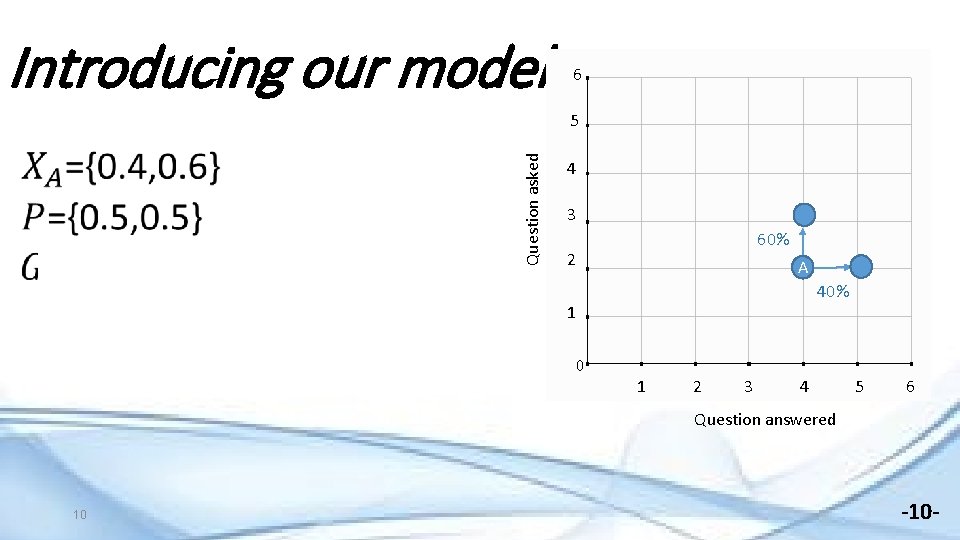
Introducing our model 6 Question asked 5 4 3 60% 2 A 40% 1 1 2 3 4 5 6 Question answered 10 -10 -
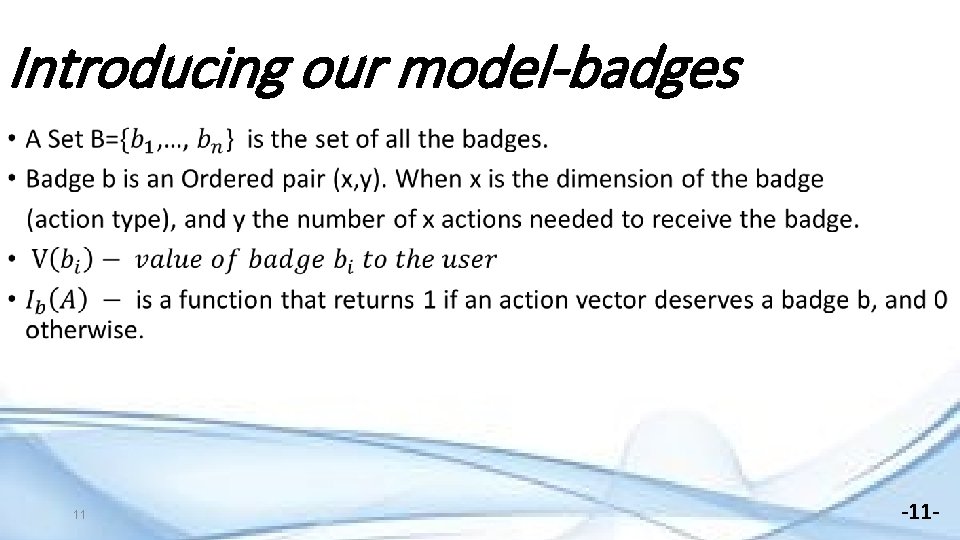
Introducing our model-badges 11 -11 -
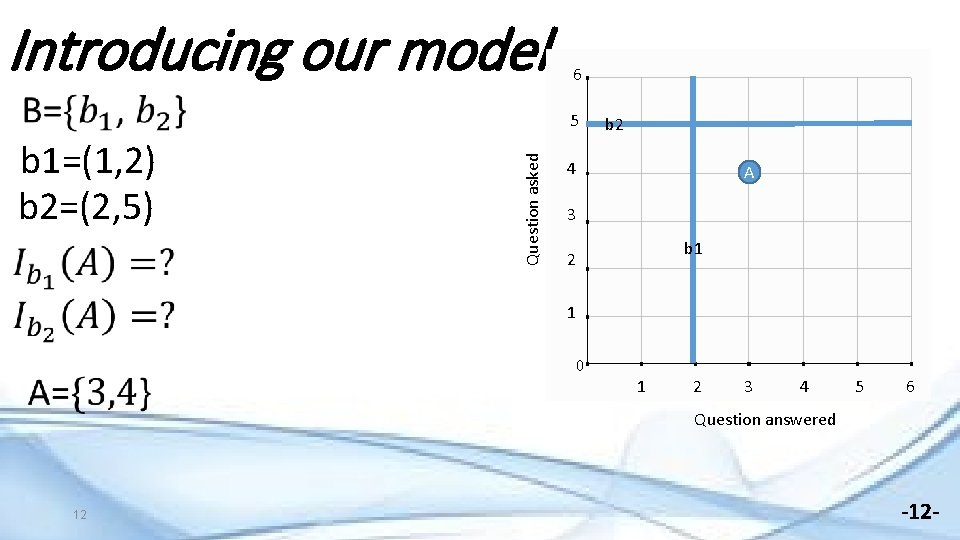
Introducing our model 6 b 1=(1, 2) b 2=(2, 5) Question asked 5 b 2 4 A 3 b 1 2 1 1 2 3 4 5 6 Question answered 12 -12 -
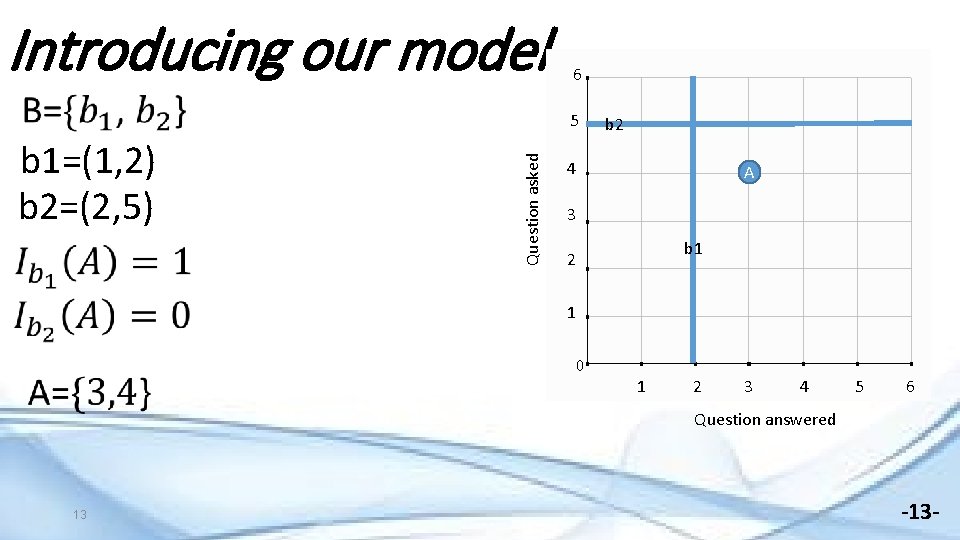
Introducing our model 6 b 1=(1, 2) b 2=(2, 5) Question asked 5 b 2 4 A 3 b 1 2 1 1 2 3 4 5 6 Question answered 13 -13 -
Introducing our model-assumptions • The user will try to avoid deviating from P as much as he can while trying to earn the value of the badges. • We will call the value a user gains from a probability vector UTILITY 14 -14 -
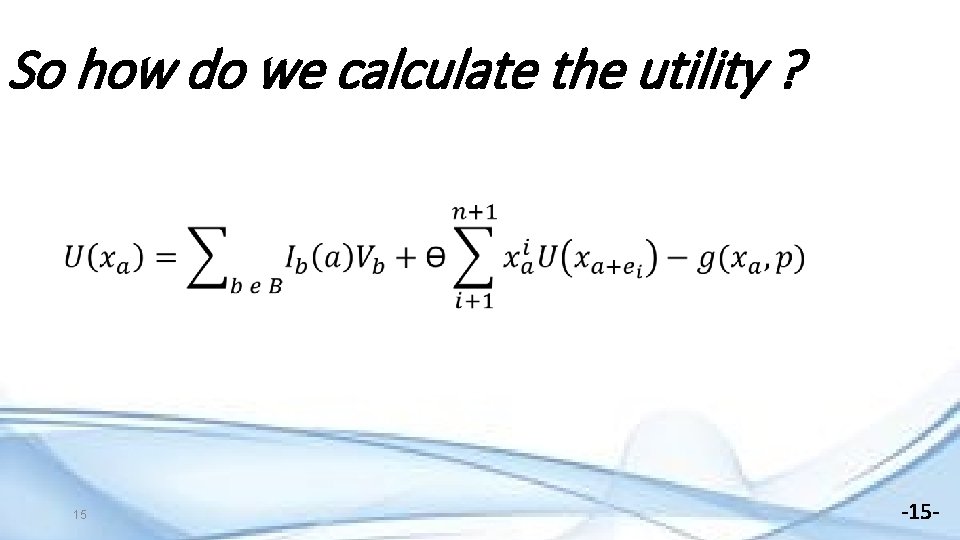
So how do we calculate the utility ? 15 -15 -
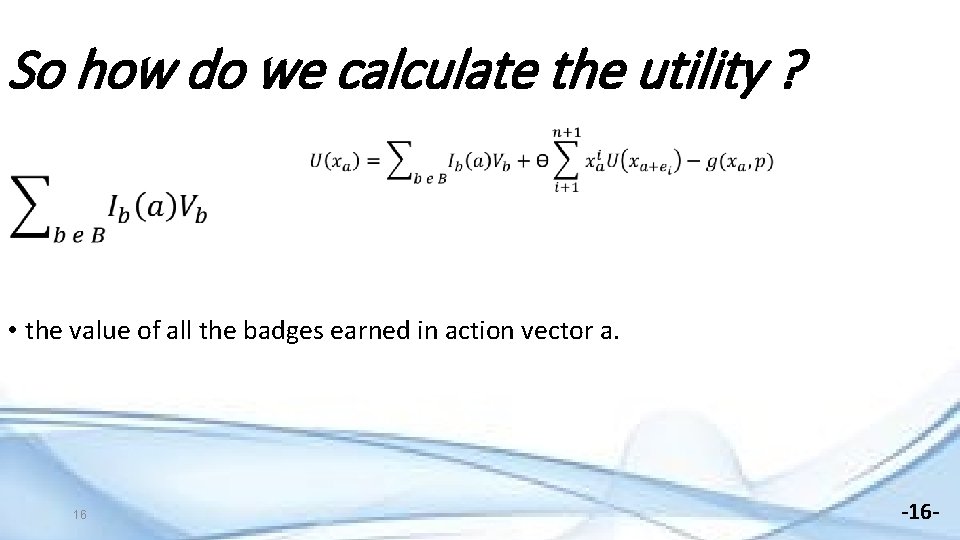
So how do we calculate the utility ? • the value of all the badges earned in action vector a. 16 -16 -
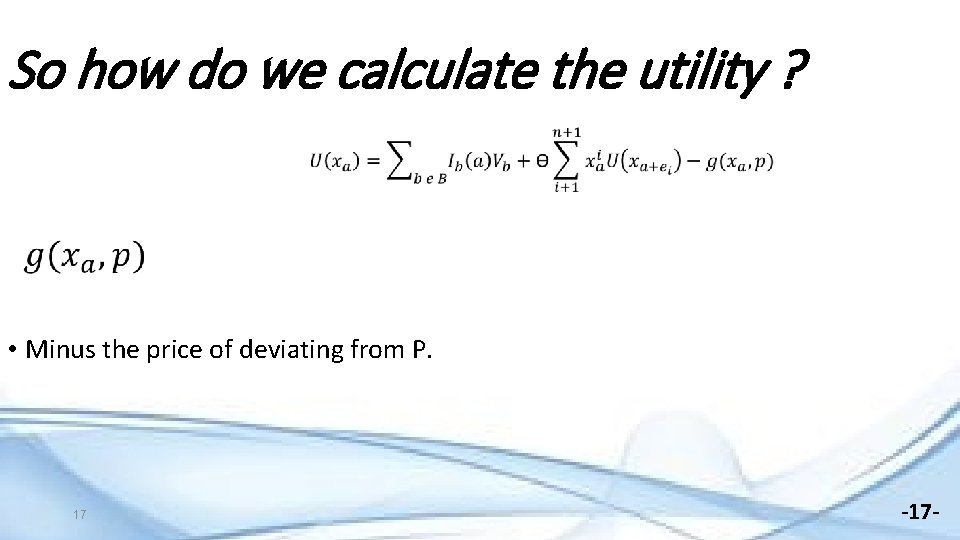
So how do we calculate the utility ? • Minus the price of deviating from P. 17 -17 -
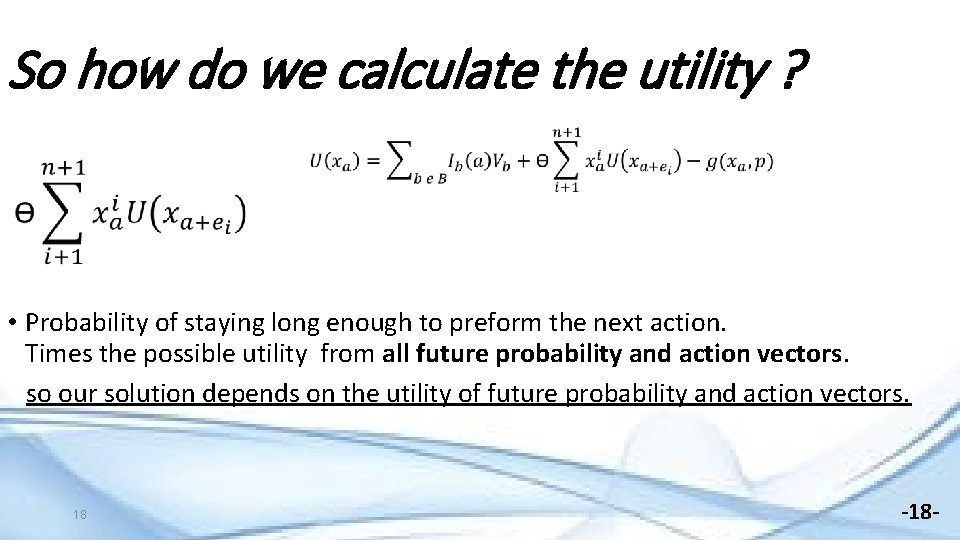
So how do we calculate the utility ? • Probability of staying long enough to preform the next action. Times the possible utility from all future probability and action vectors. so our solution depends on the utility of future probability and action vectors. 18 -18 -
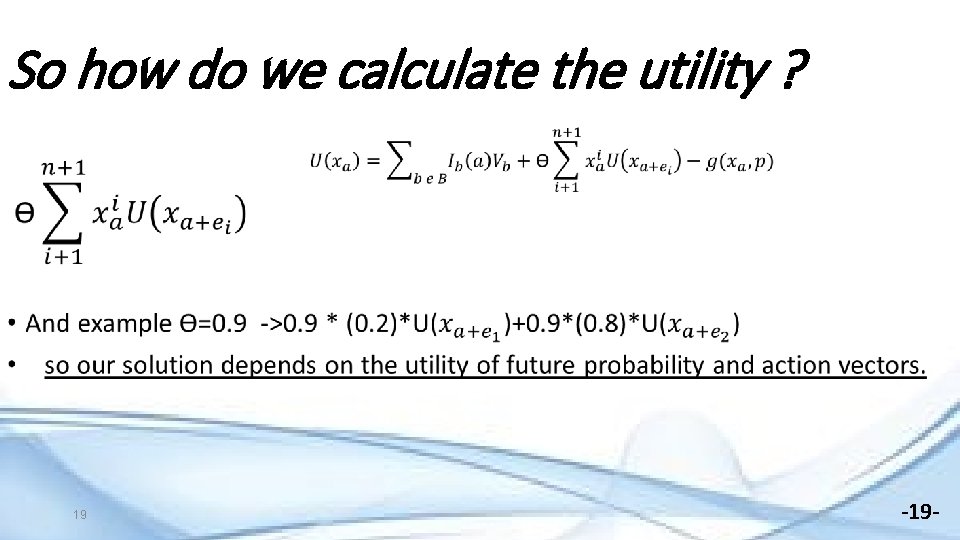
So how do we calculate the utility ? 19 -19 -
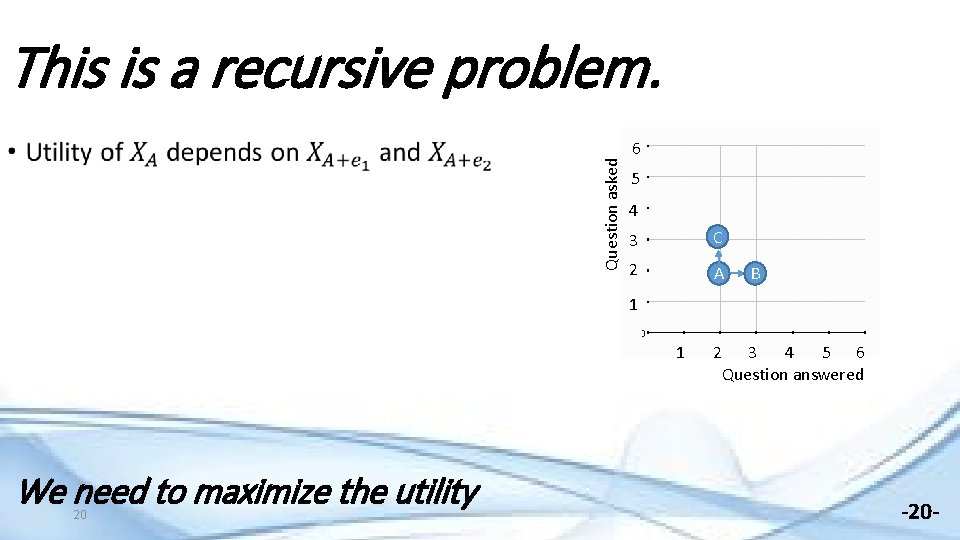
Question asked This is a recursive problem. 6 5 4 3 C 2 A B 1 1 We need to maximize the utility 20 2 3 4 5 6 Question answered -20 -
Lets focus on one badge and one dimension 21 -21 -
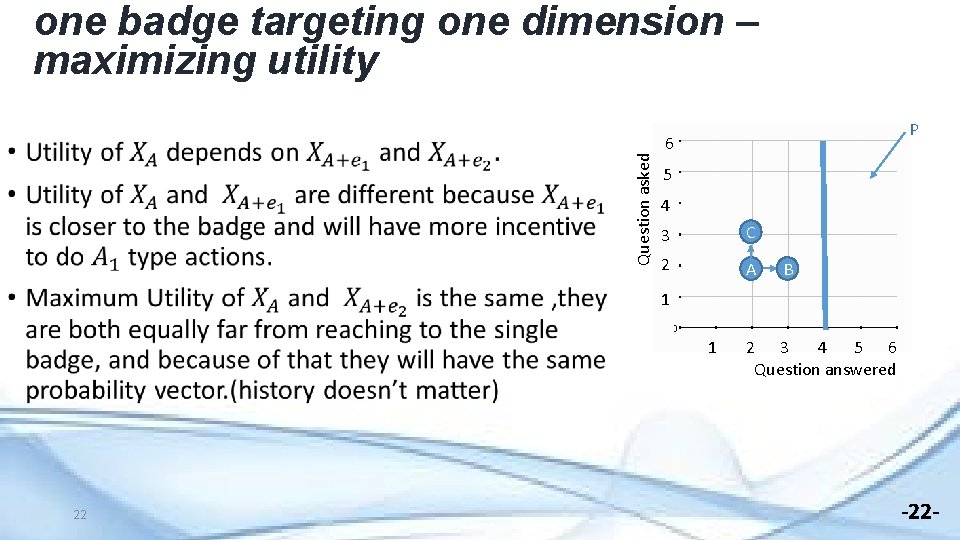
Question asked one badge targeting one dimension – maximizing utility P 6 5 4 3 C 2 A B 1 1 22 2 3 4 5 6 Question answered -22 -
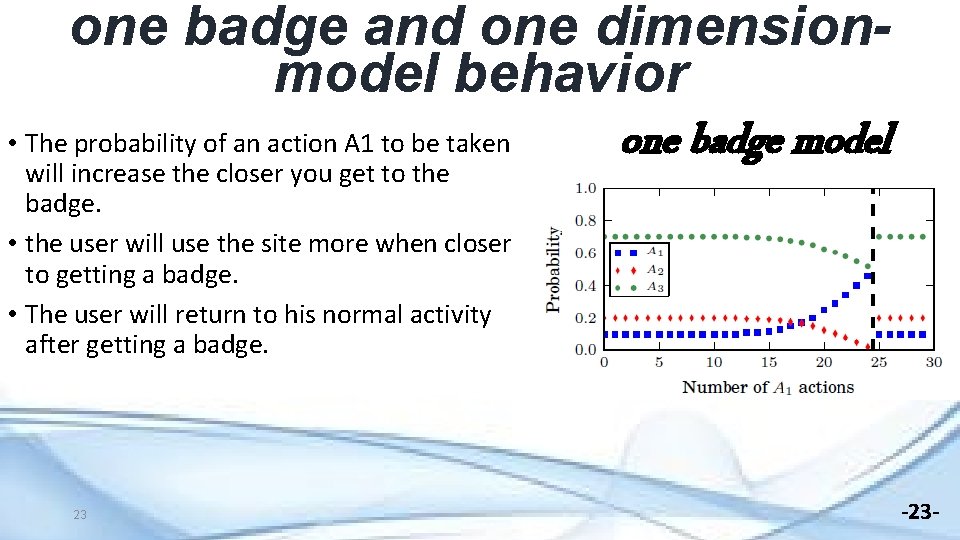
one badge and one dimensionmodel behavior • The probability of an action A 1 to be taken will increase the closer you get to the badge. • the user will use the site more when closer to getting a badge. • The user will return to his normal activity after getting a badge. 23 one badge model -23 -
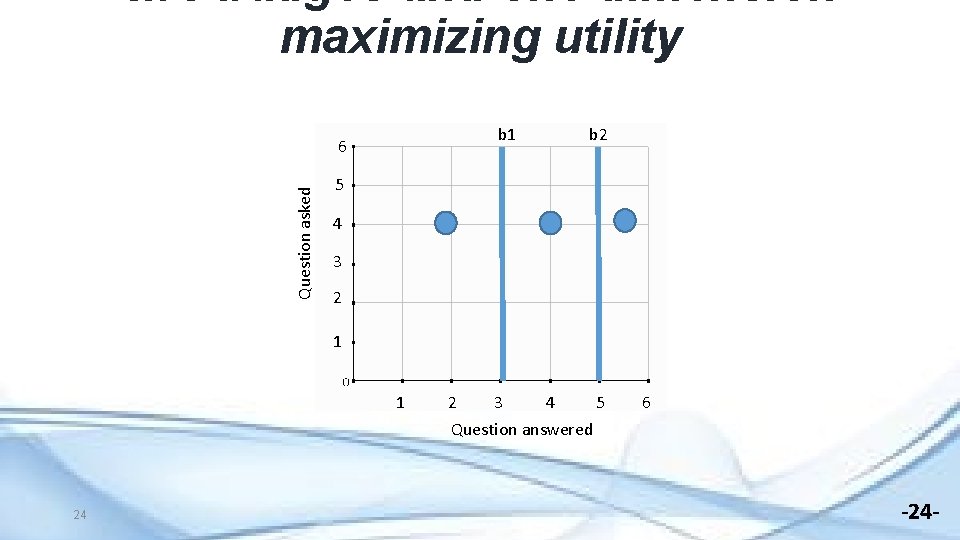
two badges and one dimension maximizing utility b 1 Question asked 6 b 2 5 4 3 2 1 1 24 2 3 4 5 Question answered 6 -24 -
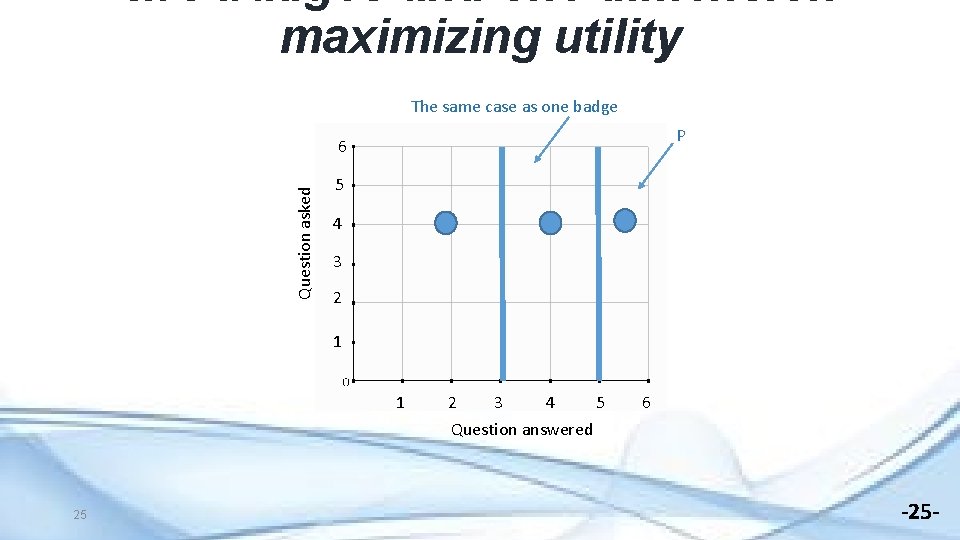
two badges and one dimension maximizing utility The same case as one badge P Question asked 6 5 4 3 2 1 1 25 2 3 4 5 Question answered 6 -25 -
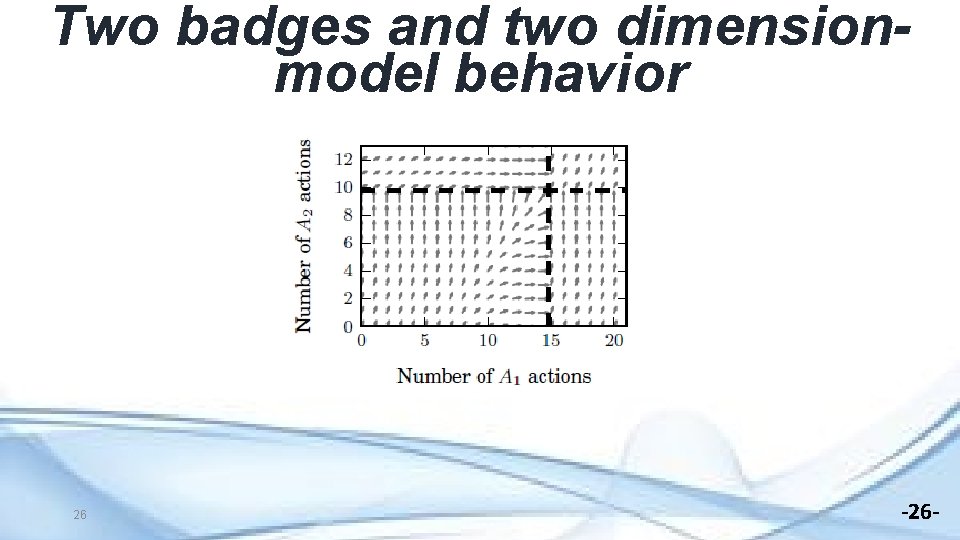
Two badges and two dimensionmodel behavior 26 -26 -
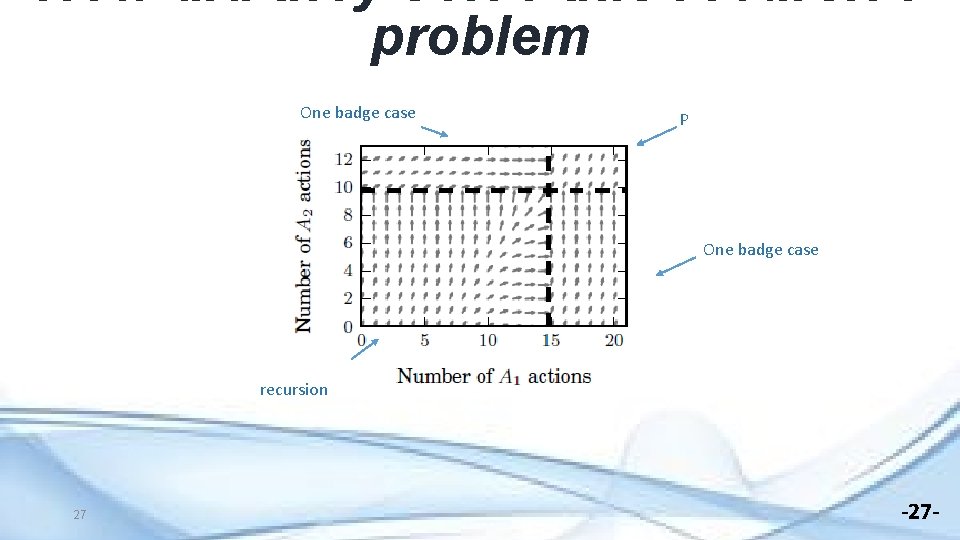
How did they solve this recursive problem One badge case P One badge case recursion 27 -27 -
Before we see the empirical data 28 -28 -
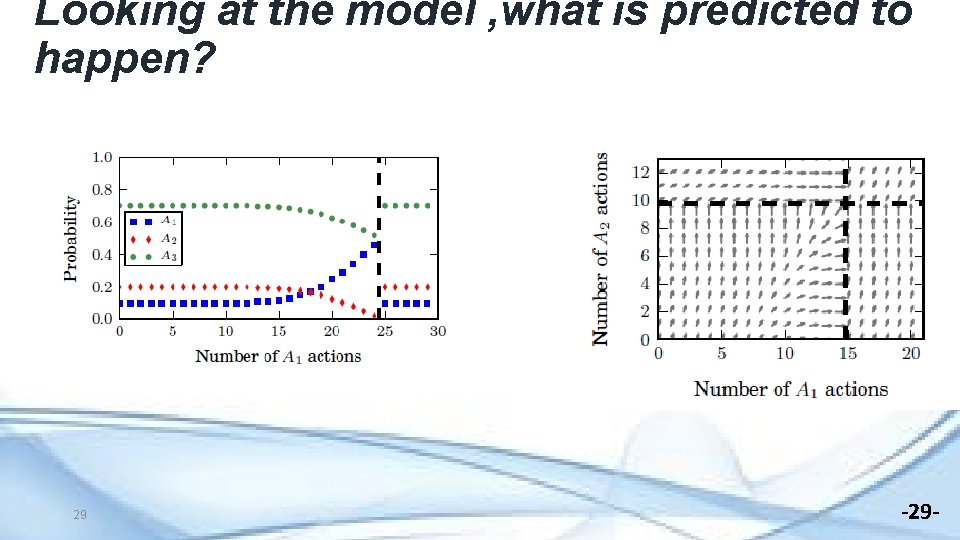
Looking at the model , what is predicted to happen? 29 -29 -
What might be wrong with our assumptions? • Some people dislike the idea of badges, and want to feel like they are helping for free. • People might lose their motivation after gaining the badge. • Will make new users less valuable and therefore more inclined to quit. 30 -30 -

Introducing the Stack Overflow badge System 31 -31 -
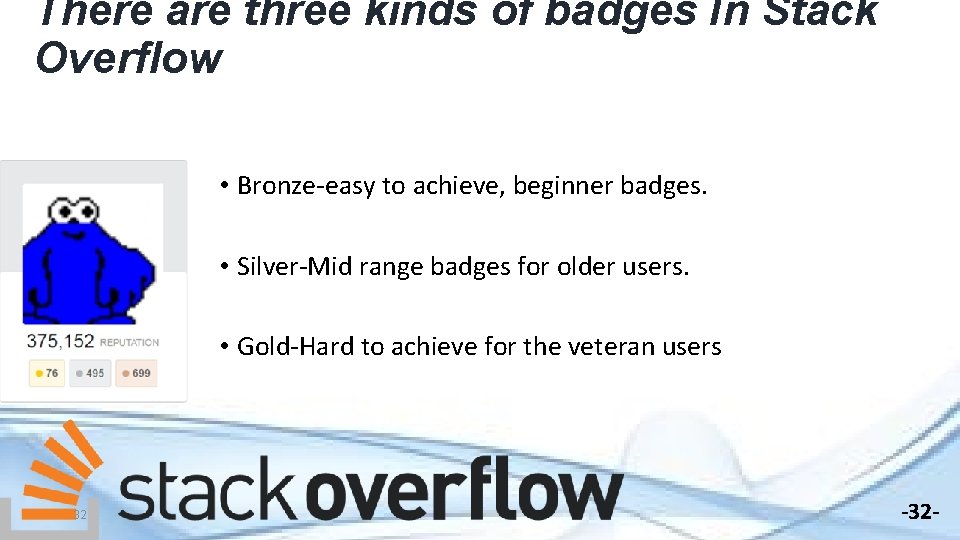
There are three kinds of badges In Stack Overflow • Bronze-easy to achieve, beginner badges. • Silver-Mid range badges for older users. • Gold-Hard to achieve for the veteran users 32 -32 -
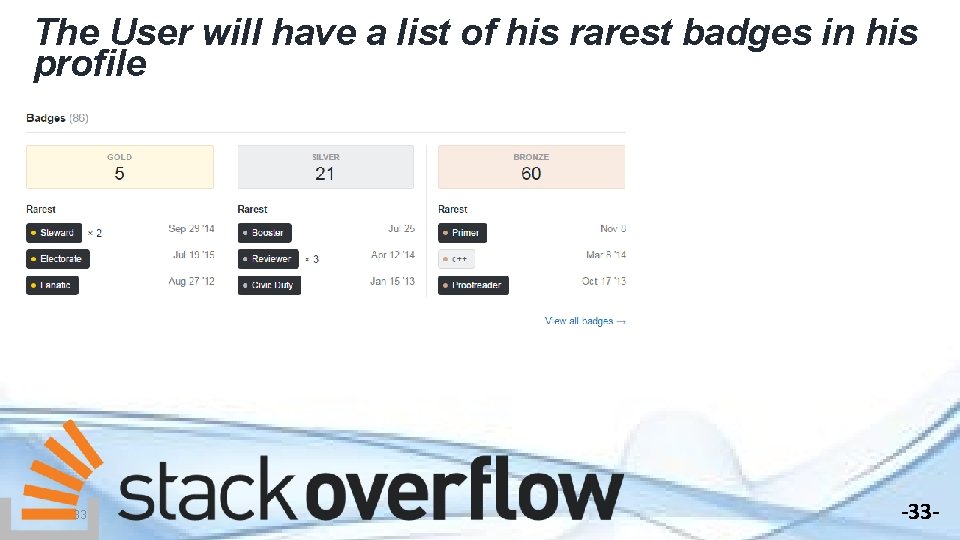
The User will have a list of his rarest badges in his profile 33 -33 -

The User will have a full list of his badges available for viewing 34 -34 -
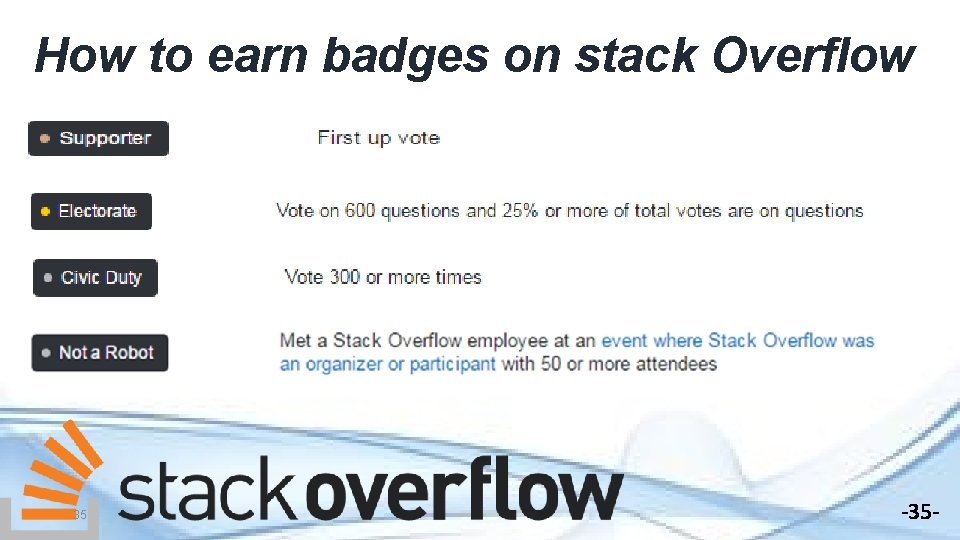
How to earn badges on stack Overflow 35 -35 -
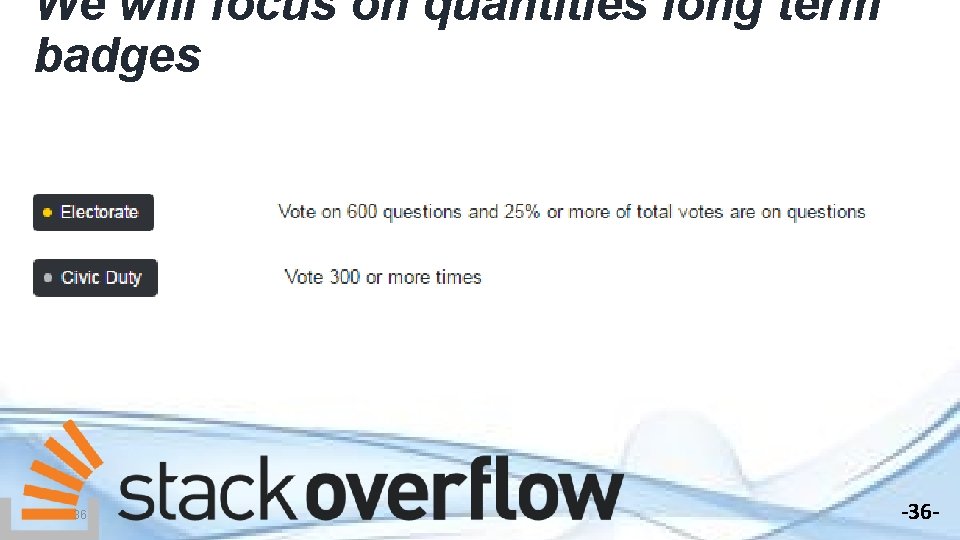
We will focus on quantities long term badges 36 -36 -
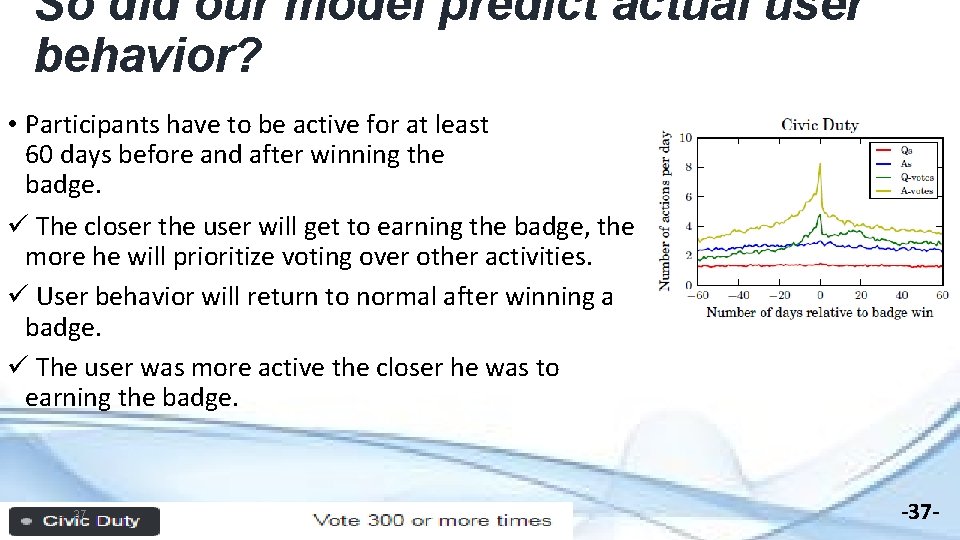
So did our model predict actual user behavior? • Participants have to be active for at least 60 days before and after winning the badge. ü The closer the user will get to earning the badge, the more he will prioritize voting over other activities. ü User behavior will return to normal after winning a badge. ü The user was more active the closer he was to earning the badge. 37 -37 -
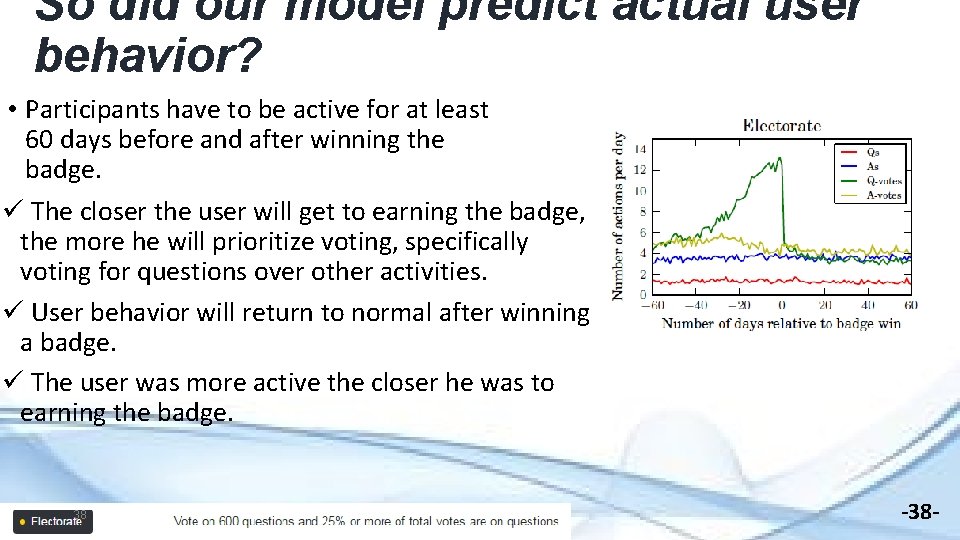
So did our model predict actual user behavior? • Participants have to be active for at least 60 days before and after winning the badge. ü The closer the user will get to earning the badge, the more he will prioritize voting, specifically voting for questions over other activities. ü User behavior will return to normal after winning a badge. ü The user was more active the closer he was to earning the badge. 38 -38 -
Our model predicted the user behavior • The model predicts user behavior with the badge system, so we will use the model to solve some design questions of using badges. 39 -39 -
But did our model miss anything ? 40 -40 -
Questions left unanswered by our model. • Did the chances of staying or quitting the social network change for users ? • Did the quality of actions change? • Will adding a badge system change the growth of the networks user base ? • How do badges on multiple dimensions change user behavior ? 41 -41 -
Design Questions we can use our model to solve The badge placement problem • How to place badges in order to achieve the desired user behavior. 42 -42 -
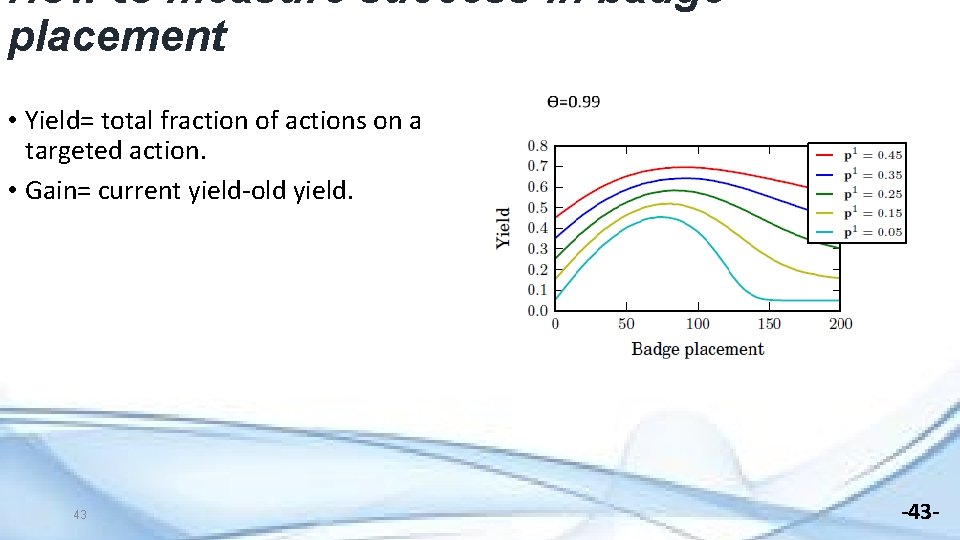
How to measure success in badge placement • Yield= total fraction of actions on a targeted action. • Gain= current yield-old yield. 43 -43 -
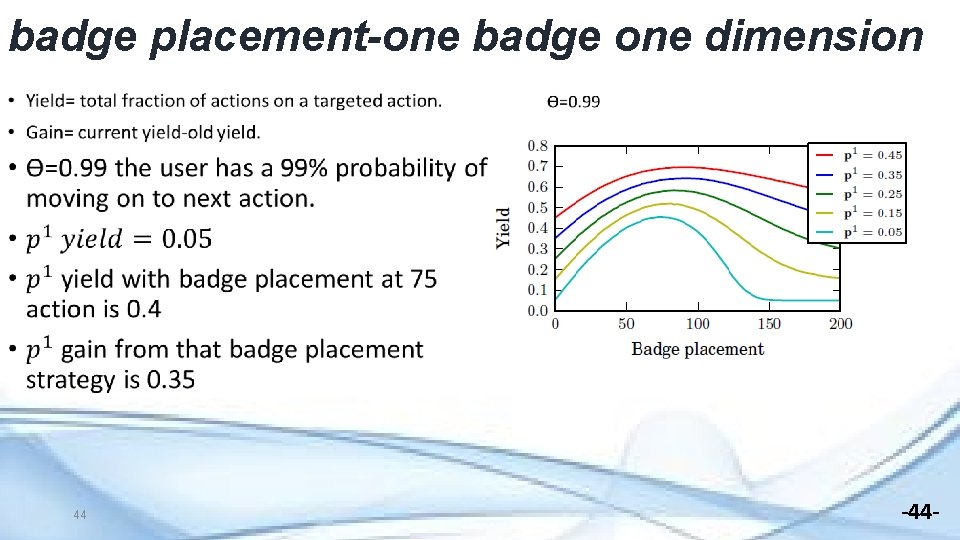
badge placement-one badge one dimension • 44 -44 -
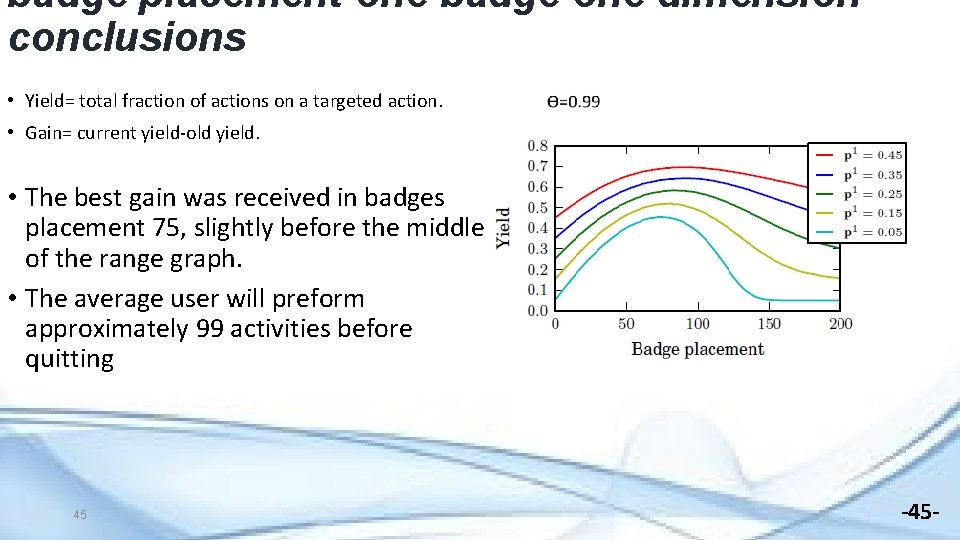
badge placement-one badge one dimensionconclusions • Yield= total fraction of actions on a targeted action. • Gain= current yield-old yield. • The best gain was received in badges placement 75, slightly before the middle of the range graph. • The average user will preform approximately 99 activities before quitting 45 -45 -
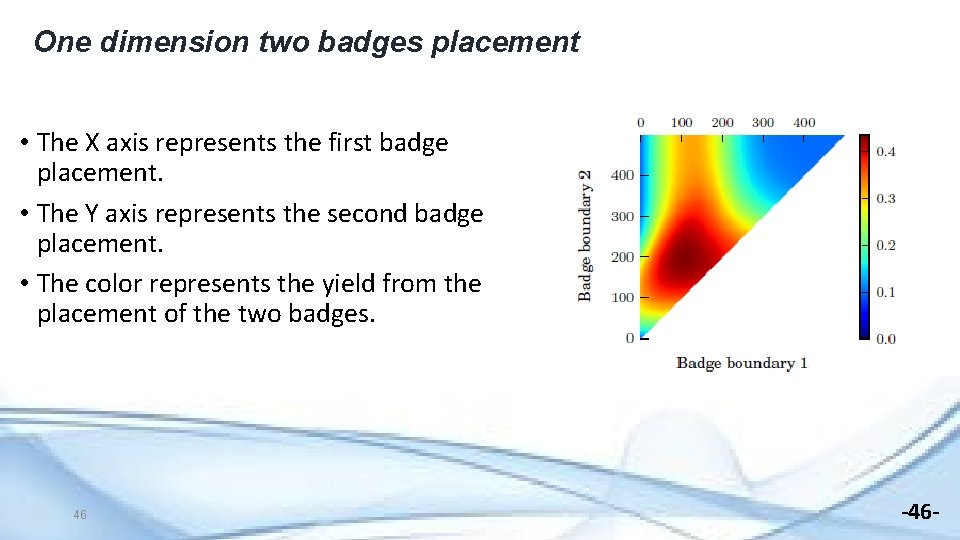
One dimension two badges placement • The X axis represents the first badge placement. • The Y axis represents the second badge placement. • The color represents the yield from the placement of the two badges. 46 -46 -
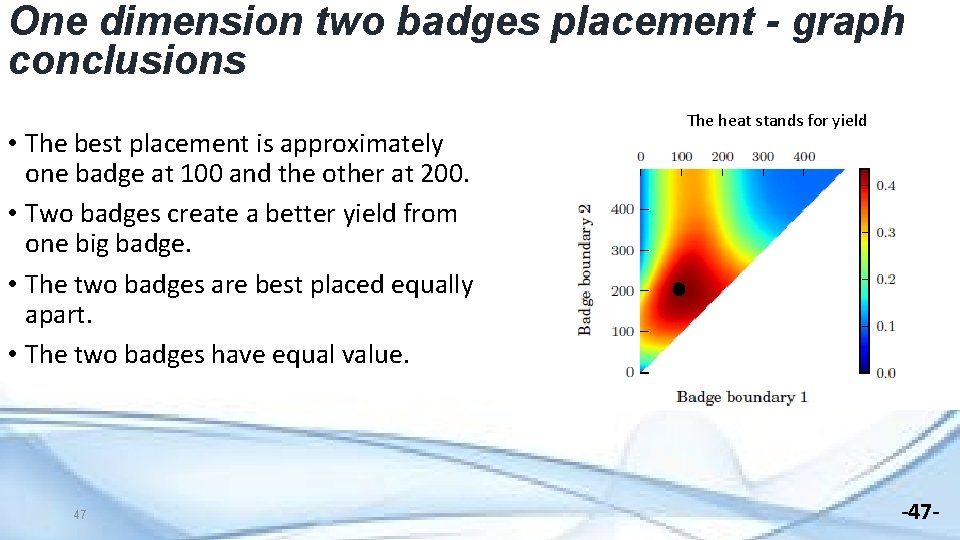
One dimension two badges placement - graph conclusions • The best placement is approximately one badge at 100 and the other at 200. • Two badges create a better yield from one big badge. • The two badges are best placed equally apart. • The two badges have equal value. 47 The heat stands for yield -47 -
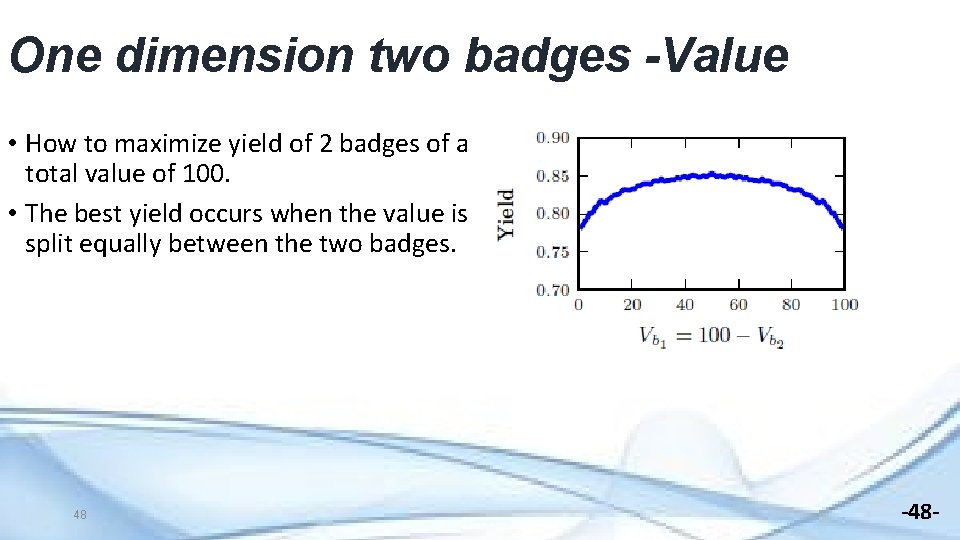
One dimension two badges -Value • How to maximize yield of 2 badges of a total value of 100. • The best yield occurs when the value is split equally between the two badges. 48 -48 -
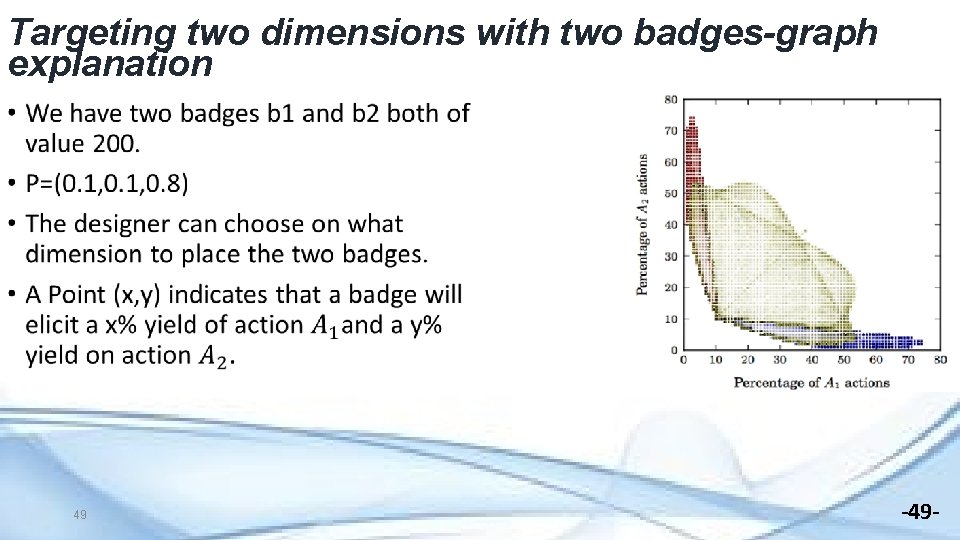
Targeting two dimensions with two badges-graph explanation 49 -49 -
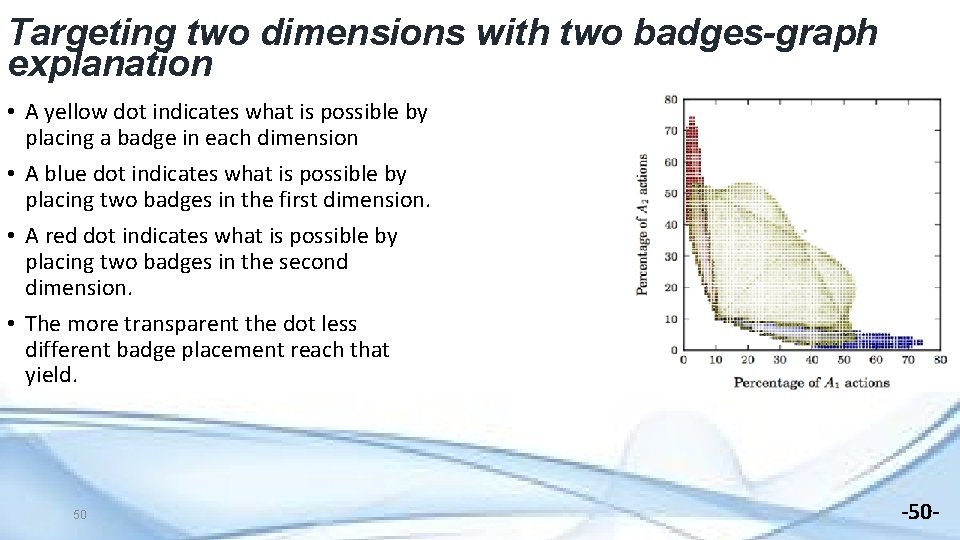
Targeting two dimensions with two badges-graph explanation • A yellow dot indicates what is possible by placing a badge in each dimension • A blue dot indicates what is possible by placing two badges in the first dimension. • A red dot indicates what is possible by placing two badges in the second dimension. • The more transparent the dot less different badge placement reach that yield. 50 -50 -
conclusions • Badges hold value in the eyes of the users. • The model illustrated accurately predicts user behavior, and can be used as a great tool for answering designing problems arising from the use of badges. • Using badges in a social network is a complex problem that can be simplified by following a simple model. • Badges are an effective way of steering the user behavior on social networks, and help the designers better control the network. 51 -51 -
- Slides: 51