
STEEL INDUSTRY The Bessemer Process created a new
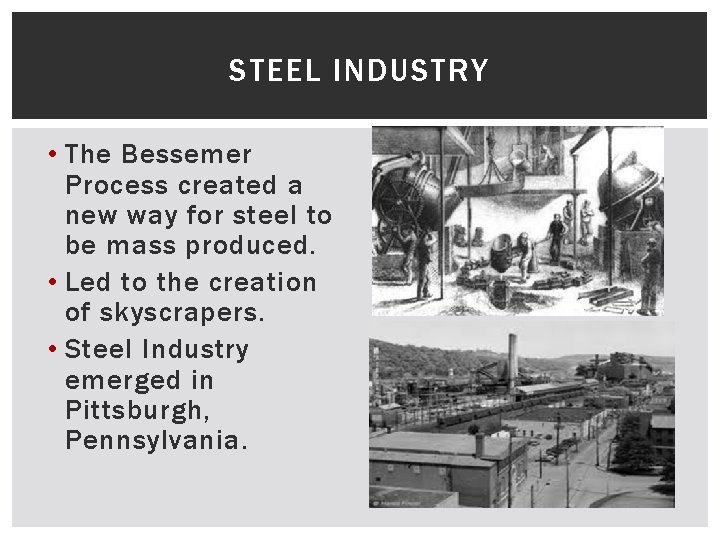
STEEL INDUSTRY • The Bessemer Process created a new way for steel to be mass produced. • Led to the creation of skyscrapers. • Steel Industry emerged in Pittsburgh, Pennsylvania.
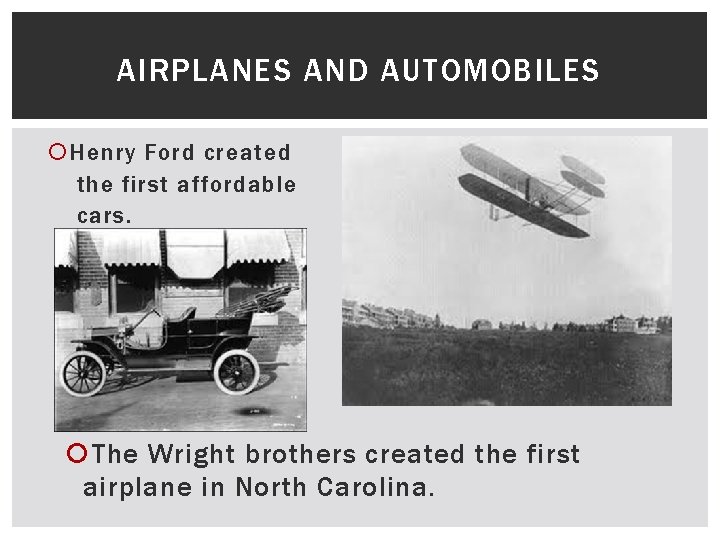
AIRPLANES AND AUTOMOBILES Henry Ford created the first affordable cars. The Wright brothers created the first airplane in North Carolina.
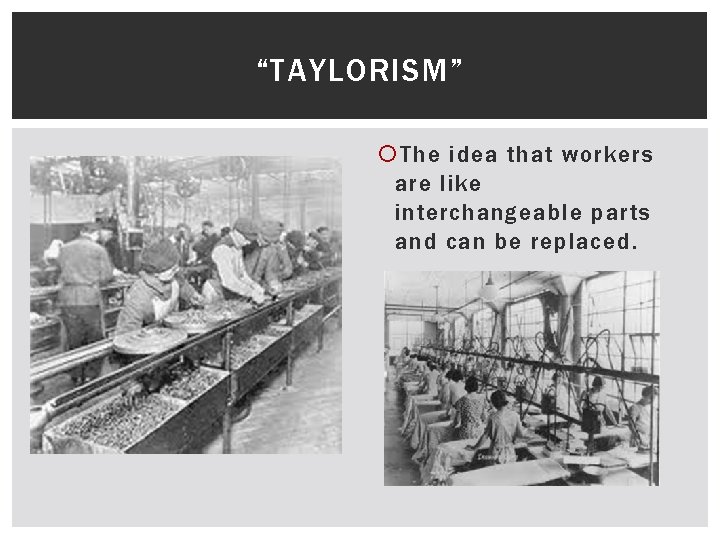
“TAYLORISM” The idea that workers are like interchangeable parts and can be replaced.
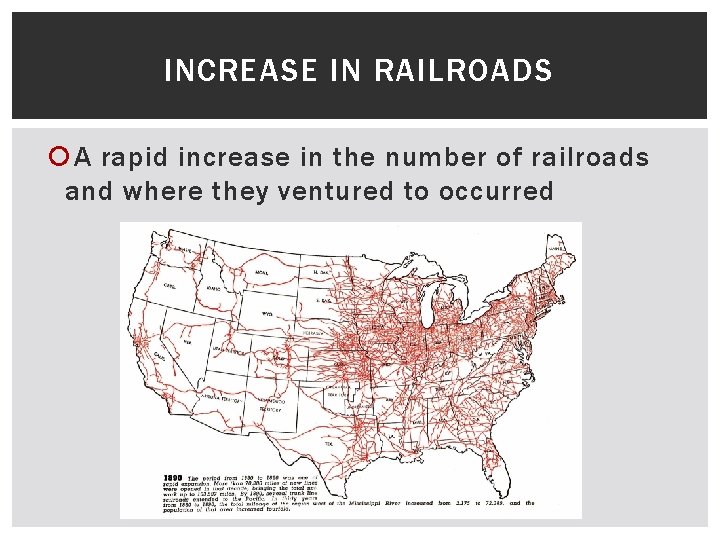
INCREASE IN RAILROADS A rapid increase in the number of railroads and where they ventured to occurred
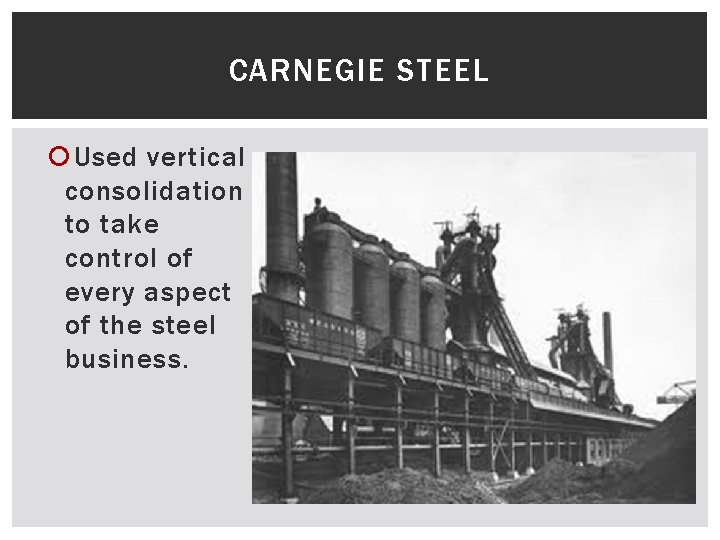
CARNEGIE STEEL Used vertical consolidation to take control of every aspect of the steel business.
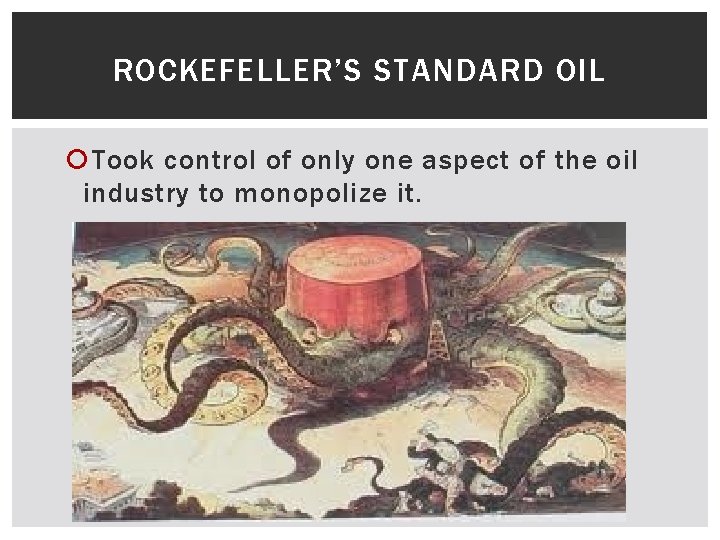
ROCKEFELLER’S STANDARD OIL Took control of only one aspect of the oil industry to monopolize it.
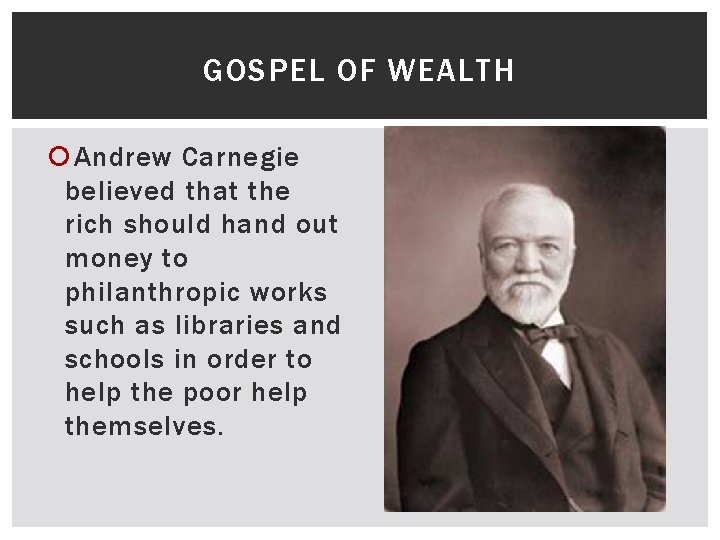
GOSPEL OF WEALTH Andrew Carnegie believed that the rich should hand out money to philanthropic works such as libraries and schools in order to help the poor help themselves.
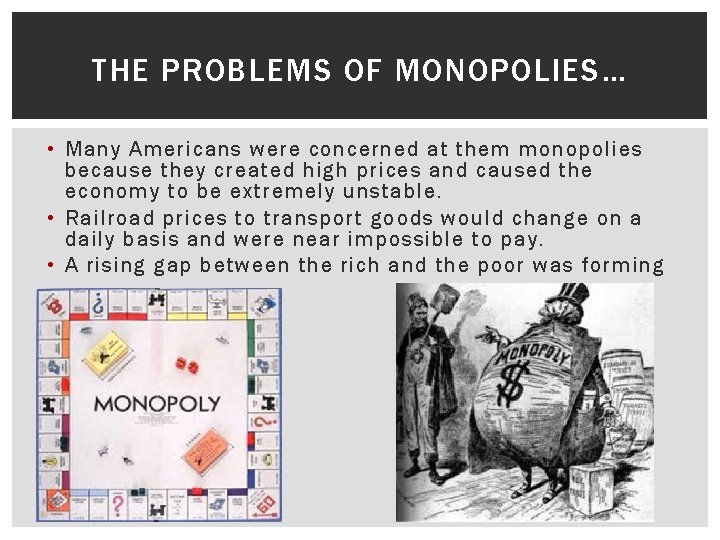
THE PROBLEMS OF MONOPOLIES… • Many Americans were concerned at them monopolies because they created high prices and caused the economy to be extremely unstable. • Railroad prices to transport goods would change on a daily basis and were near impossible to pay. • A rising gap between the rich and the poor was forming
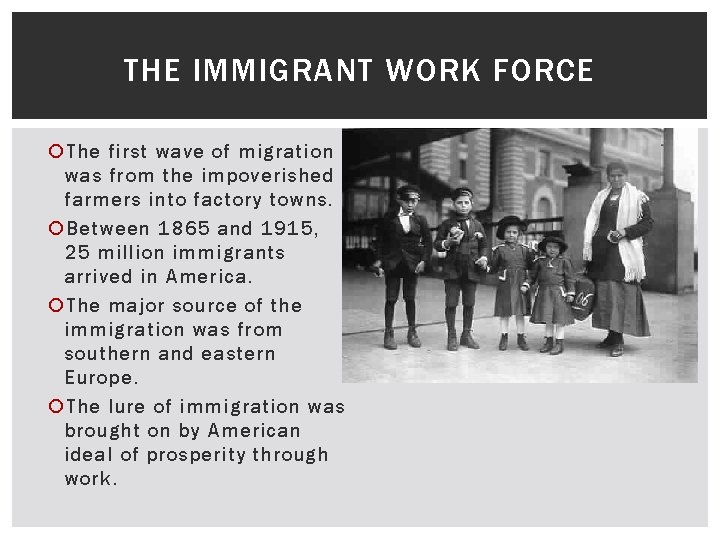
THE IMMIGRANT WORK FORCE The first wave of migration was from the impoverished farmers into factory towns. Between 1865 and 1915, 25 million immigrants arrived in America. The major source of the immigration was from southern and eastern Europe. The lure of immigration was brought on by American ideal of prosperity through work.
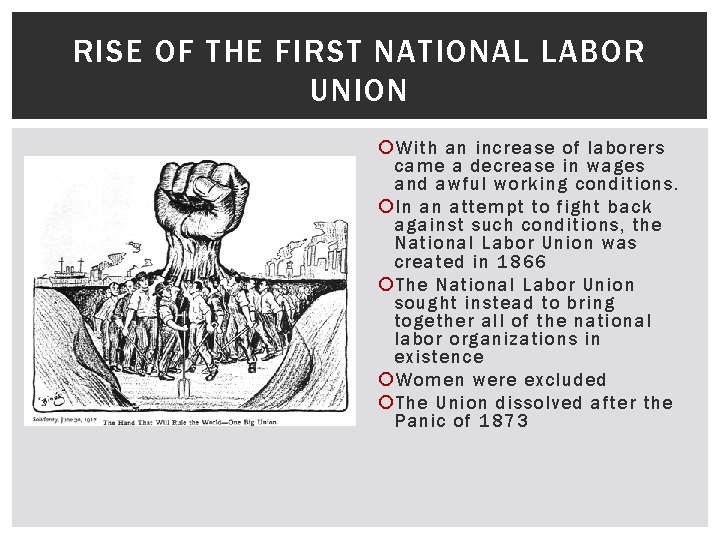
RISE OF THE FIRST NATIONAL LABOR UNION With an increase of laborers came a decrease in wages and awful working conditions. In an attempt to fight back against such conditions, the National Labor Union was created in 1866 The National Labor Union sought instead to bring together all of the national labor organizations in existence Women were excluded The Union dissolved after the Panic of 1873
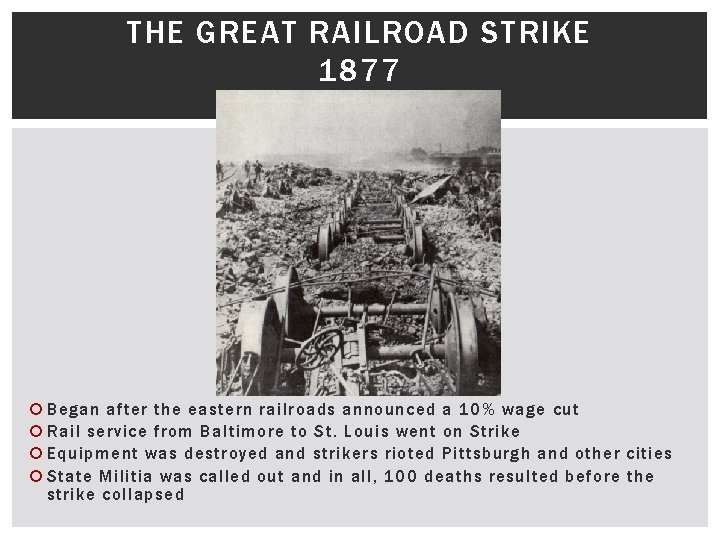
THE GREAT RAILROAD STRIKE 1877 Began after the eastern railroads announced a 10% wage cut Rail service from Baltimore to St. Louis went on Strike Equipment was destroyed and strikers rioted Pittsburgh and other cities State Militia was called out and in all, 100 deaths resulted before the strike collapsed
MORE LABOR UNIONS Knights of Labor 1877 Welcome to “all who toiled”, including women Were loosely organized Focus was on the long-range reform of the economy Powderly, Uriah Stephens, and Barry American Federation of Labor (AFL) 1881 Represented skilled workers Focused on the relationship between labor and management Immediate betterment of working conditions Samuel Gompers
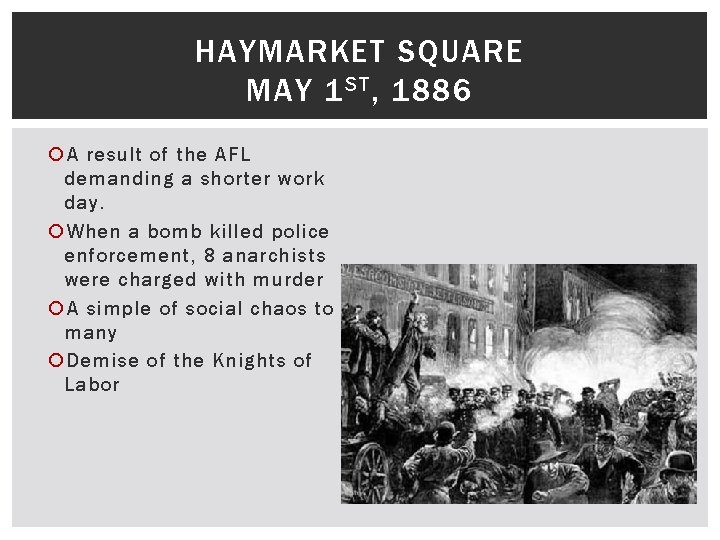
HAYMARKET SQUARE MAY 1 ST , 1886 A result of the AFL demanding a shorter work day. When a bomb killed police enforcement, 8 anarchists were charged with murder A simple of social chaos to many Demise of the Knights of Labor
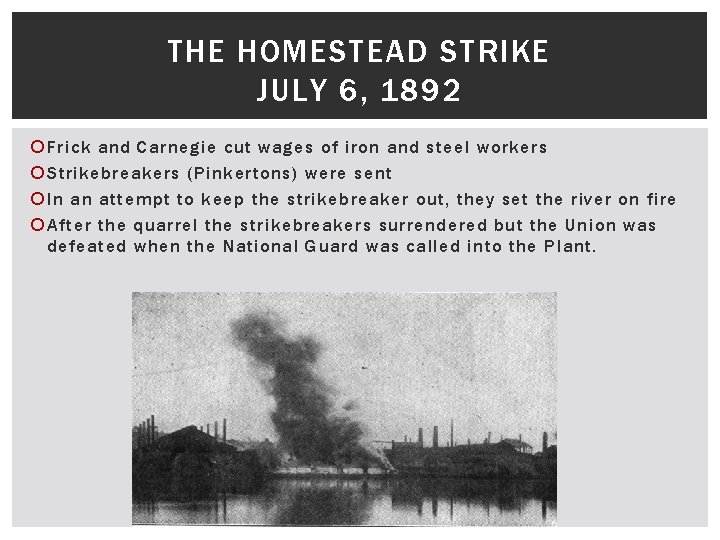
THE HOMESTEAD STRIKE JULY 6, 1892 Frick and Carnegie cut wages of iron and steel workers Strikebreakers (Pinkertons) were sent In an attempt to keep the strikebreaker out, they set the river on fire After the quarrel the strikebreakers surrendered but the Union was defeated when the National Guard was called into the Plant.
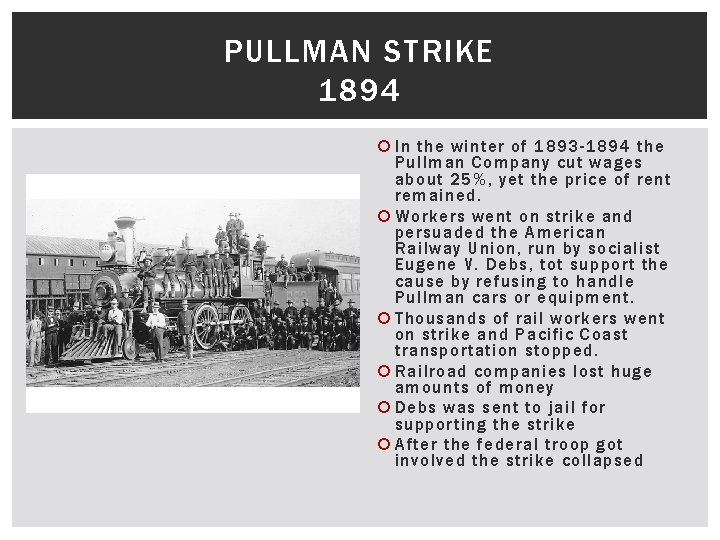
PULLMAN STRIKE 1894 In the winter of 1893 -1894 the Pullman Company cut wages about 25%, yet the price of rent remained. Workers went on strike and persuaded the American Railway Union, run by socialist Eugene V. Debs, tot support the cause by refusing to handle Pullman cars or equipment. Thousands of rail workers went on strike and Pacific Coast transportation stopped. Railroad companies lost huge amounts of money Debs was sent to jail for supporting the strike After the federal troop got involved the strike collapsed
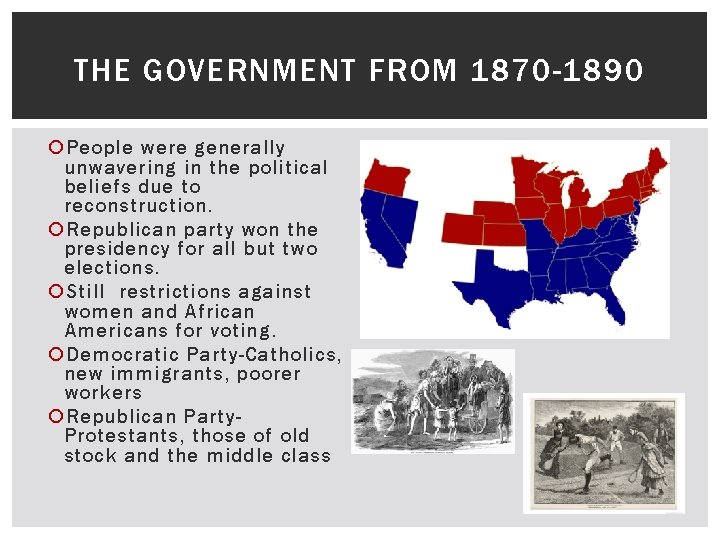
THE GOVERNMENT FROM 1870 -1890 People were generally unwavering in the political beliefs due to reconstruction. Republican party won the presidency for all but two elections. Still restrictions against women and African Americans for voting. Democratic Party-Catholics, new immigrants, poorer workers Republican Party. Protestants, those of old stock and the middle class
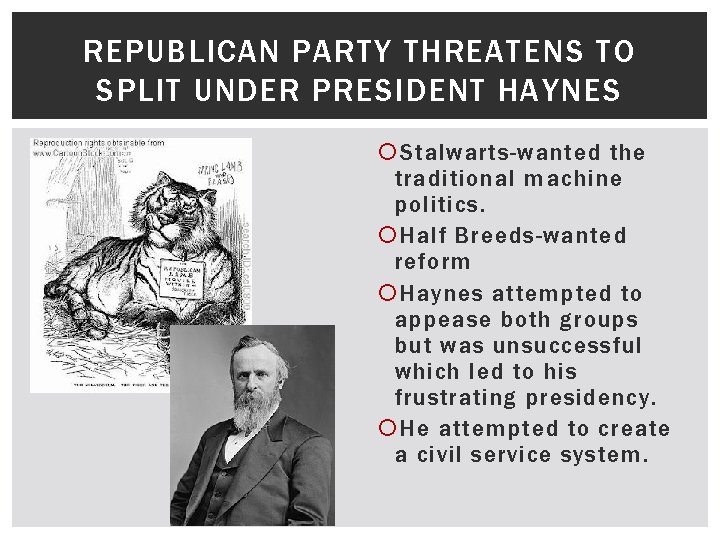
REPUBLICAN PARTY THREATENS TO SPLIT UNDER PRESIDENT HAYNES Stalwarts-wanted the traditional machine politics. Half Breeds-wanted reform Haynes attempted to appease both groups but was unsuccessful which led to his frustrating presidency. He attempted to create a civil service system.
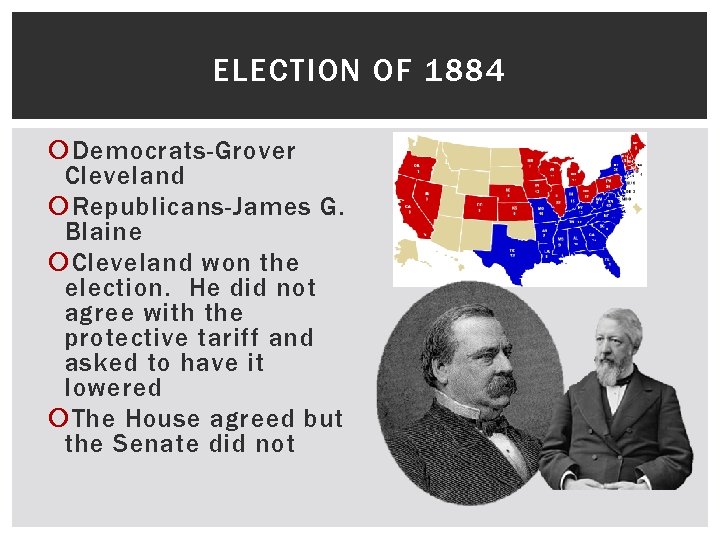
ELECTION OF 1884 Democrats-Grover Cleveland Republicans-James G. Blaine Cleveland won the election. He did not agree with the protective tariff and asked to have it lowered The House agreed but the Senate did not
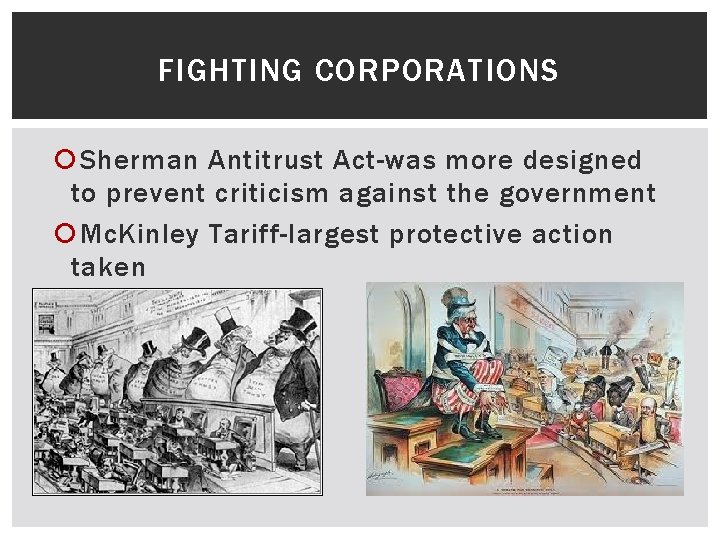
FIGHTING CORPORATIONS Sherman Antitrust Act-was more designed to prevent criticism against the government Mc. Kinley Tariff-largest protective action taken
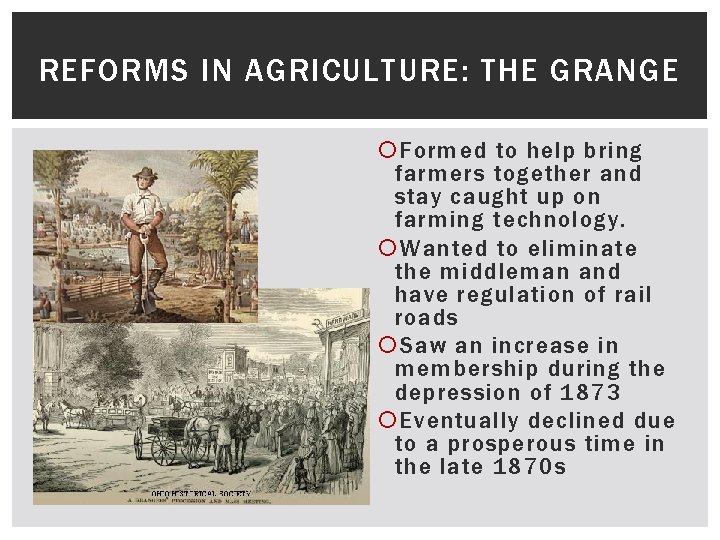
REFORMS IN AGRICULTURE: THE GRANGE Formed to help bring farmers together and stay caught up on farming technology. Wanted to eliminate the middleman and have regulation of rail roads Saw an increase in membership during the depression of 1873 Eventually declined due to a prosperous time in the late 1870 s
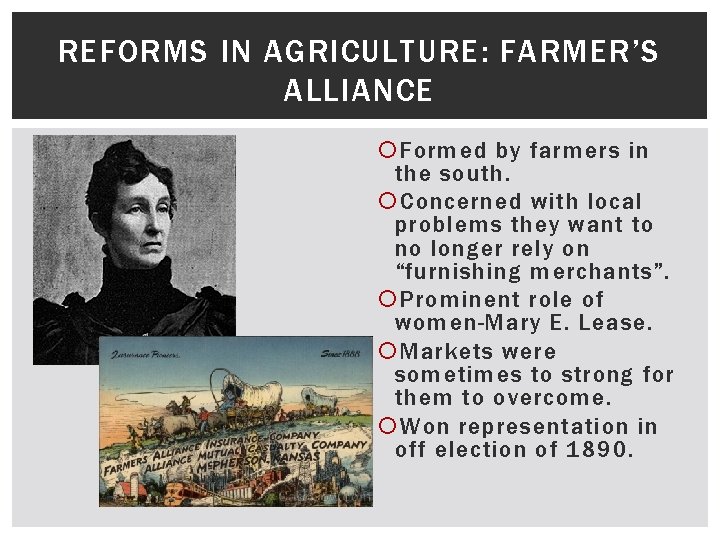
REFORMS IN AGRICULTURE: FARMER’S ALLIANCE Formed by farmers in the south. Concerned with local problems they want to no longer rely on “furnishing merchants”. Prominent role of women-Mary E. Lease. Markets were sometimes to strong for them to overcome. Won representation in off election of 1890.
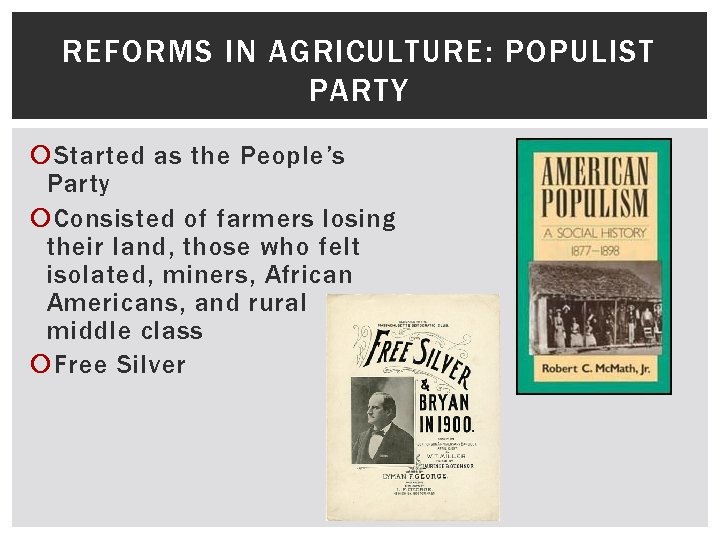
REFORMS IN AGRICULTURE: POPULIST PARTY Started as the People’s Party Consisted of farmers losing their land, those who felt isolated, miners, African Americans, and rural middle class Free Silver
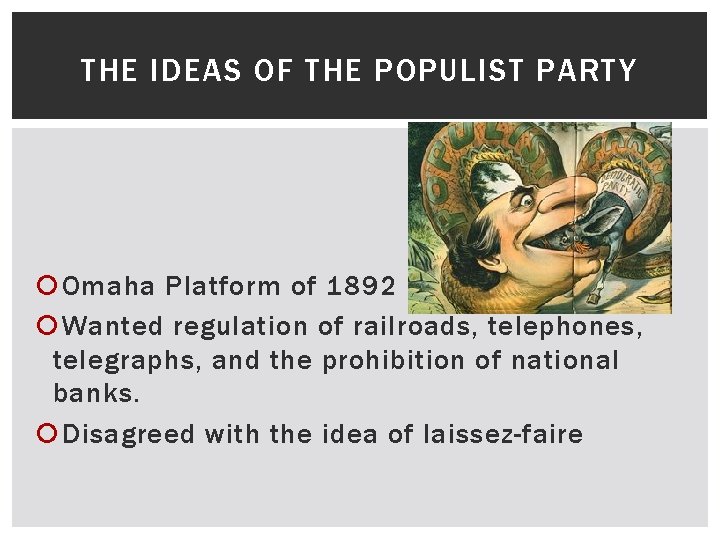
THE IDEAS OF THE POPULIST PARTY Omaha Platform of 1892 Wanted regulation of railroads, telephones, telegraphs, and the prohibition of national banks. Disagreed with the idea of laissez-faire
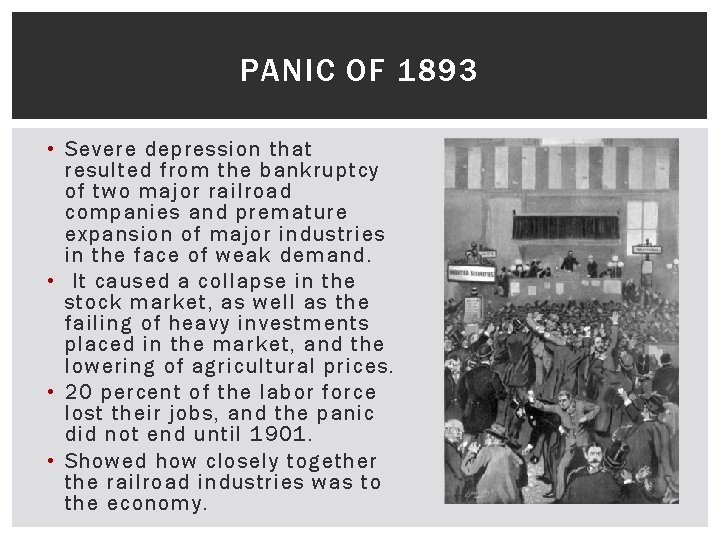
PANIC OF 1893 • Severe depression that resulted from the bankruptcy of two major railroad companies and premature expansion of major industries in the face of weak demand. • It caused a collapse in the stock market, as well as the failing of heavy investments placed in the market, and the lowering of agricultural prices. • 20 percent of the labor force lost their jobs, and the panic did not end until 1901. • Showed how closely together the railroad industries was to the economy.
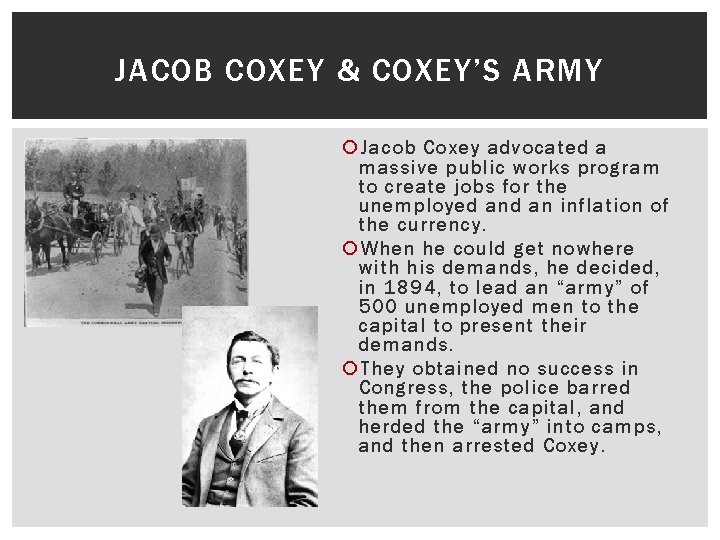
JACOB COXEY & COXEY’S ARMY Jacob Coxey advocated a massive public works program to create jobs for the unemployed an inflation of the currency. When he could get nowhere with his demands, he decided, in 1894, to lead an “army” of 500 unemployed men to the capital to present their demands. They obtained no success in Congress, the police barred them from the capital, and herded the “army” into camps, and then arrested Coxey.
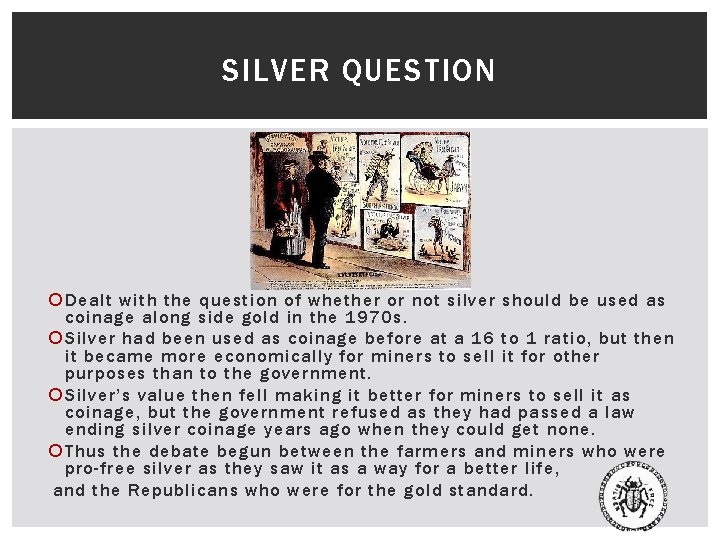
SILVER QUESTION Dealt with the question of whether or not silver should be used as coinage along side gold in the 1970 s. Silver had been used as coinage before at a 16 to 1 ratio, but then it became more economically for miners to sell it for other purposes than to the government. Silver’s value then fell making it better for miners to sell it as coinage, but the government refused as they had passed a law ending silver coinage years ago when they could get none. Thus the debate begun between the farmers and miners who were pro-free silver as they saw it as a way for a better life , and the Republicans who were for the gold standard.
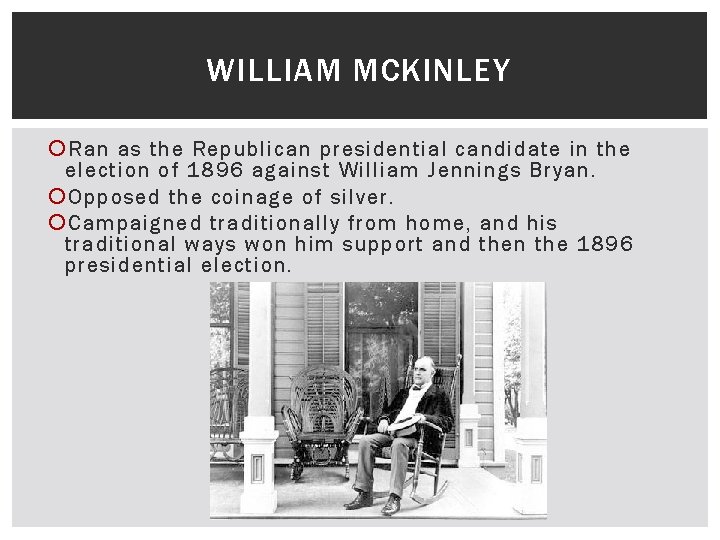
WILLIAM MCKINLEY Ran as the Republican presidential candidate in the election of 1896 against William Jennings Bryan. Opposed the coinage of silver. Campaigned traditionally from home, and his traditional ways won him support and then the 1896 presidential election.
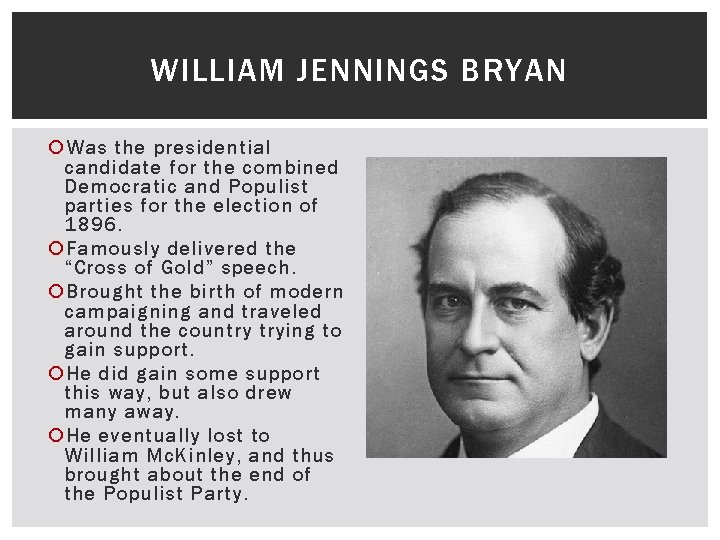
WILLIAM JENNINGS BRYAN Was the presidential candidate for the combined Democratic and Populist parties for the election of 1896. Famously delivered the “Cross of Gold” speech. Brought the birth of modern campaigning and traveled around the country trying to gain support. He did gain some support this way, but also drew many away. He eventually lost to William Mc. Kinley, and thus brought about the end of the Populist Party.
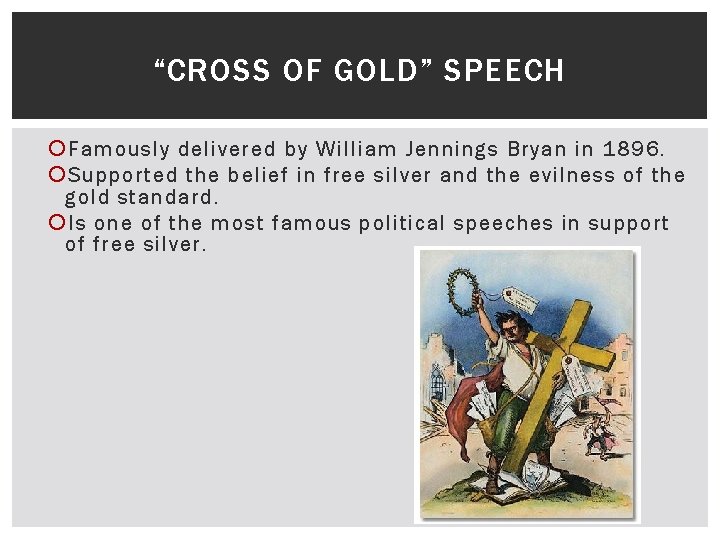
“CROSS OF GOLD” SPEECH Famously delivered by William Jennings Bryan in 1896. Supported the belief in free silver and the evilness of the gold standard. Is one of the most famous political speeches in support of free silver.
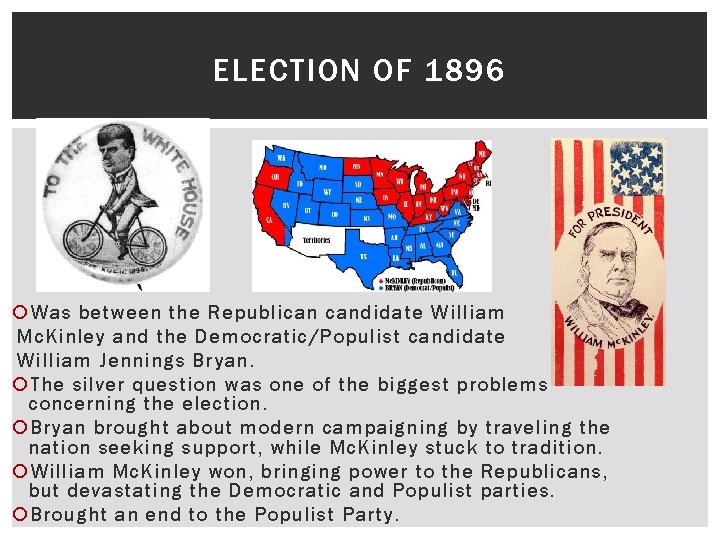
ELECTION OF 1896 Was between the Republican candidate William Mc. Kinley and the Democratic/Populist candidate William Jennings Bryan. The silver question was one of the biggest problems concerning the election. Bryan brought about modern campaigning by traveling the nation seeking support, while Mc. Kinley stuck to tradition. William Mc. Kinley won, bringing power to the Republicans, but devastating the Democratic and Populist parties. Brought an end to the Populist Party.
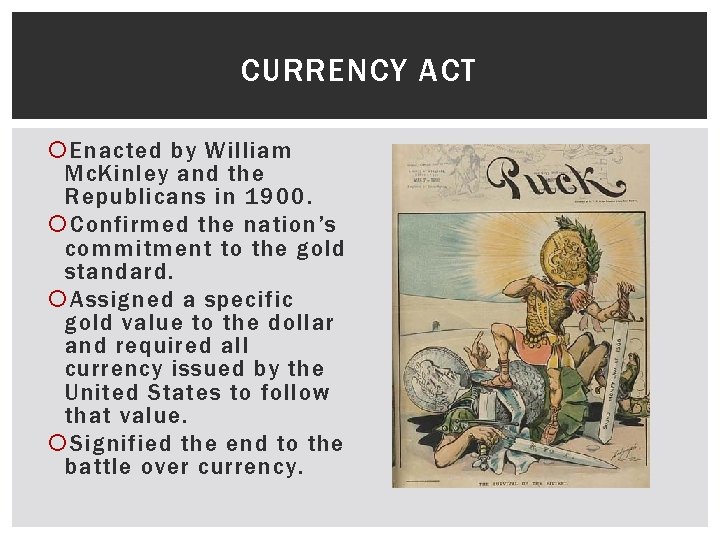
CURRENCY ACT Enacted by William Mc. Kinley and the Republicans in 1900. Confirmed the nation’s commitment to the gold standard. Assigned a specific gold value to the dollar and required all currency issued by the United States to follow that value. Signified the end to the battle over currency.
- Slides: 31