
Steel Coating Systems By Ivan Silbernagel P E
Steel Coating Systems By: Ivan Silbernagel, P. E. Structure Coatings Engineer ODOT Construction Section
Coating Options 1. Hot-Dip Galvanizing (spec 2530) 2. Liquid Coatings (spec 594) 3. Powder Coatings (spec 593) 4. Duplex Systems (spec 593 & 594) 5. Thermal Spray Coatings (AWS)
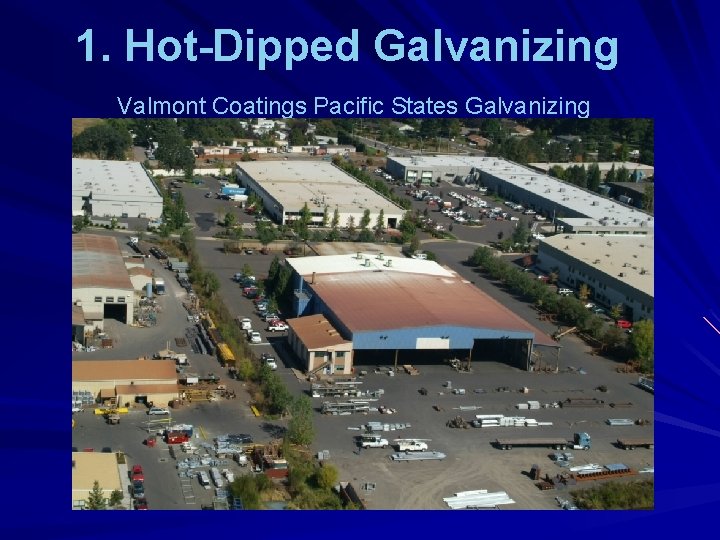
1. Hot-Dipped Galvanizing Valmont Coatings Pacific States Galvanizing
HDG Surface Prep Steps 1. Degreasing - Removes dirt, oils, organic residue 2. Sulfuric Acid Pickling - Removes mill scale and oxides 3. Fluxing - Mild cleaning, provides protective layer
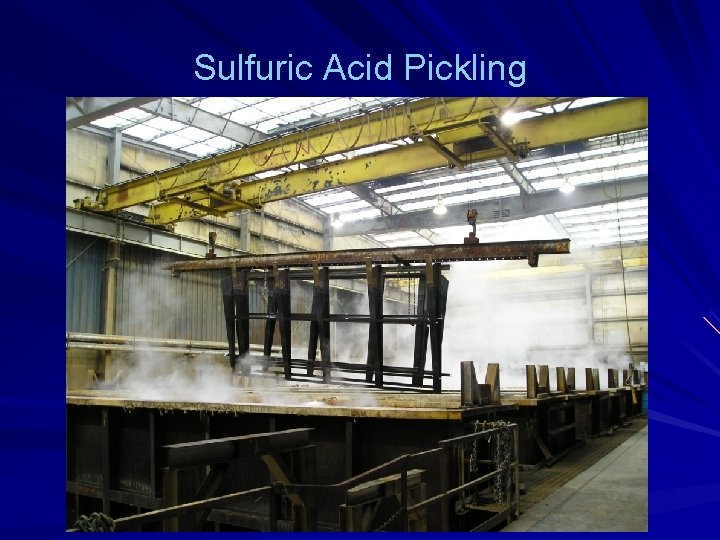
Sulfuric Acid Pickling
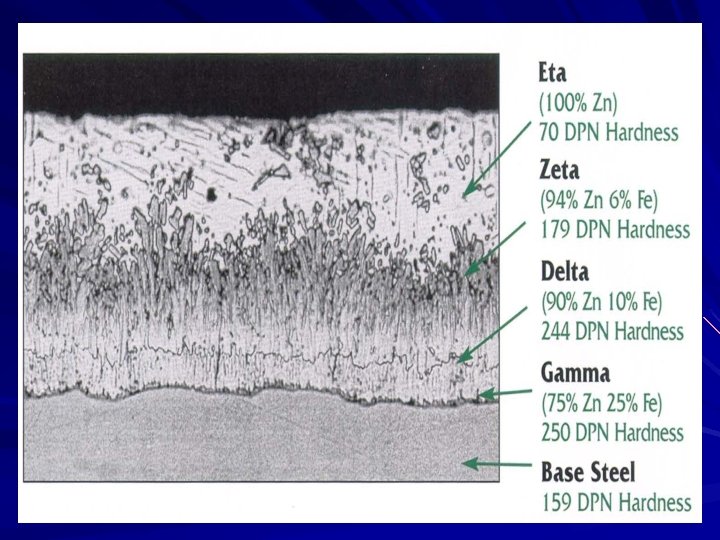
Galvanizing Process Immersed in a bath of molten zinc (≈ 830 0 F) > 98% pure zinc, minor elements added for coating properties (Al, Bi, Ni) Removed after reaching bath temperature (approx 5 to 7 minutes) Zinc reacts with iron in the steel to form galvanized coating Creates 4 layers (3 zinc alloys w/ zinc topcoat)
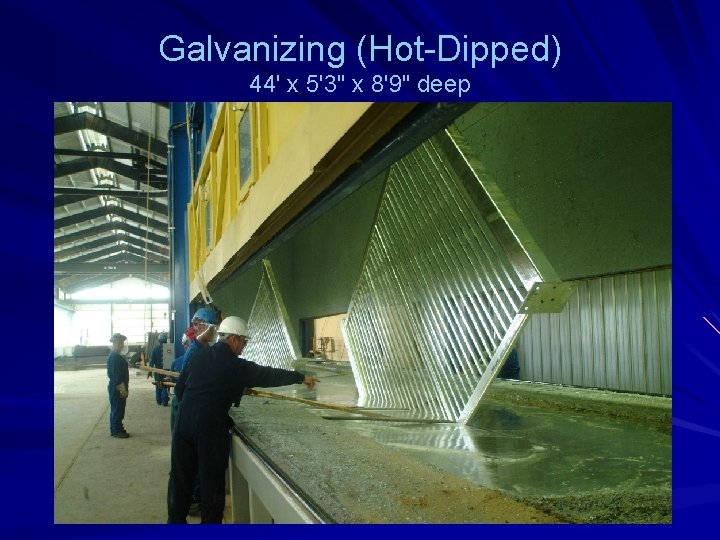
Galvanizing (Hot-Dipped) 44' x 5'3" x 8'9" deep
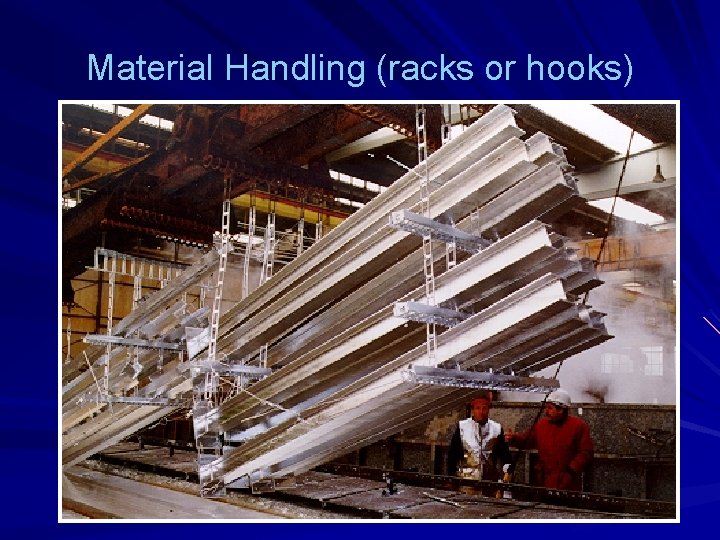
Material Handling (racks or hooks)
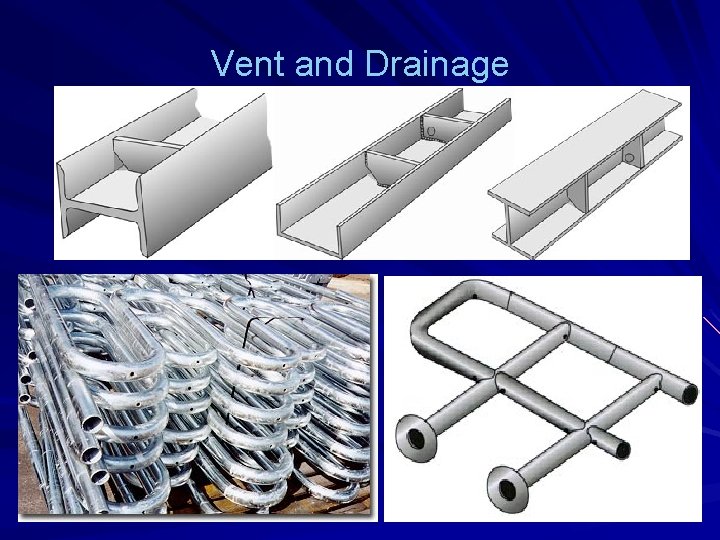
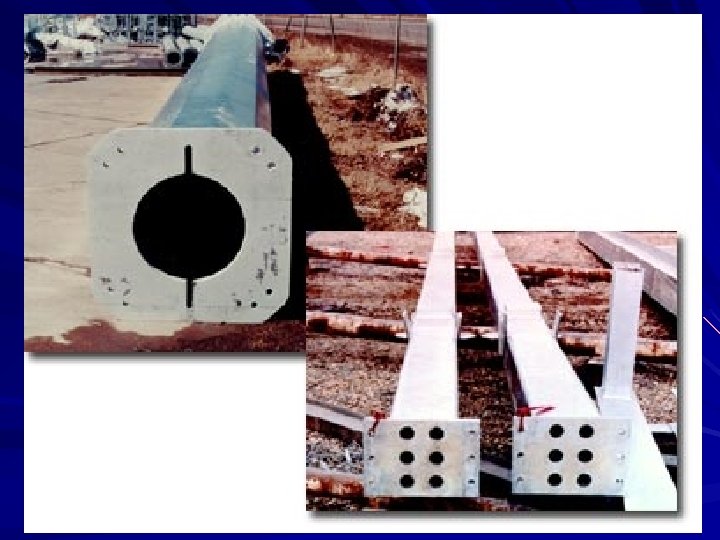
Vent and Drainage
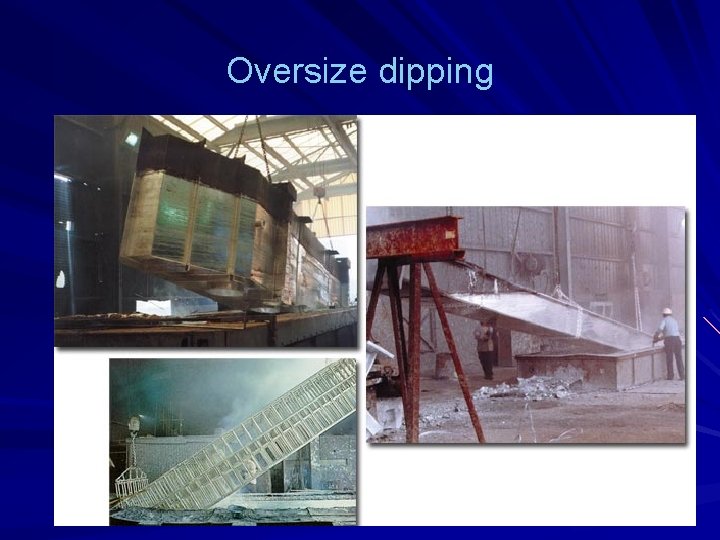
Oversize dipping
Material thickness Different thickness – Reach bath temperature at different times – Cools at different rate – Maintaining original shape
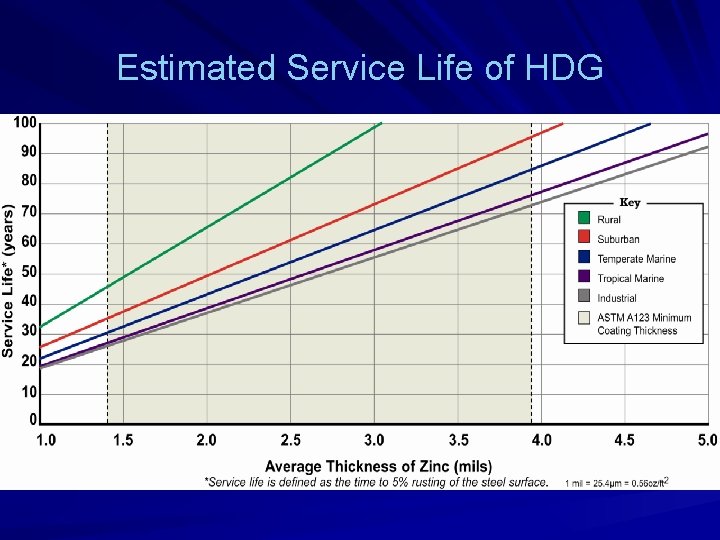
Estimated Service Life of HDG
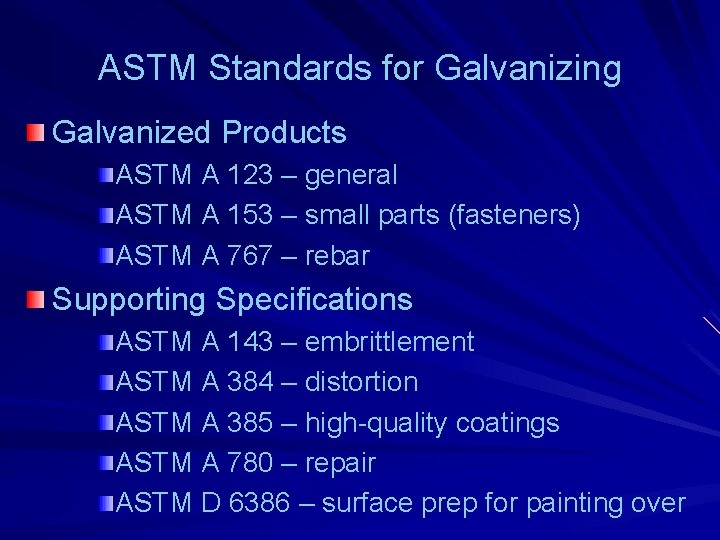
ASTM Standards for Galvanizing Galvanized Products ASTM A 123 – general ASTM A 153 – small parts (fasteners) ASTM A 767 – rebar Supporting Specifications ASTM A 143 – embrittlement ASTM A 384 – distortion ASTM A 385 – high-quality coatings ASTM A 780 – repair ASTM D 6386 – surface prep for painting over
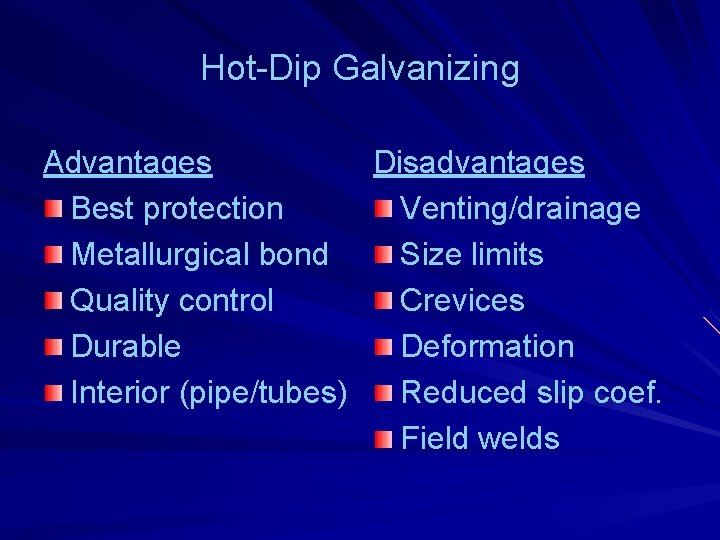
Hot-Dip Galvanizing Advantages Disadvantages Best protection Venting/drainage Metallurgical bond Size limits Quality control Crevices Durable Deformation Interior (pipe/tubes) Reduced slip coef. Field welds
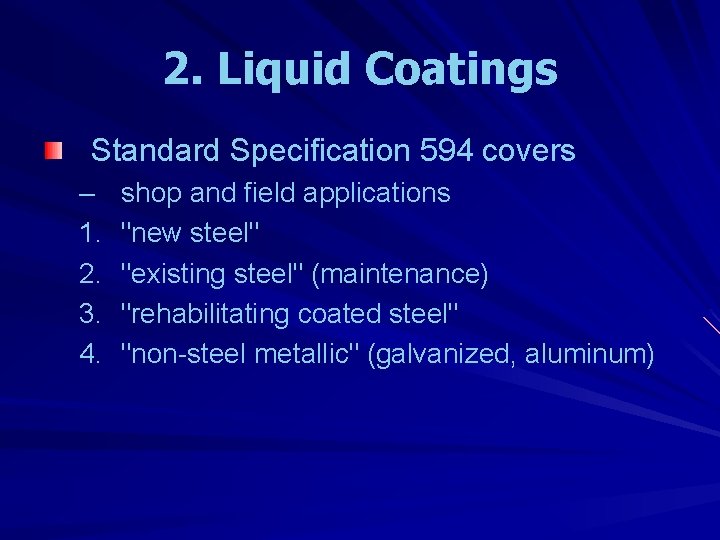
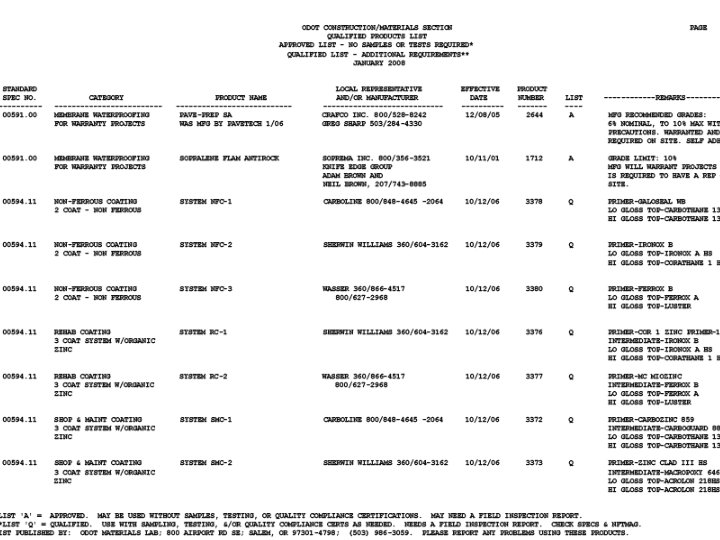
2. Liquid Coatings Standard Specification 594 covers – 1. 2. 3. 4. shop and field applications "new steel" "existing steel" (maintenance) "rehabilitating coated steel" "non-steel metallic" (galvanized, aluminum)
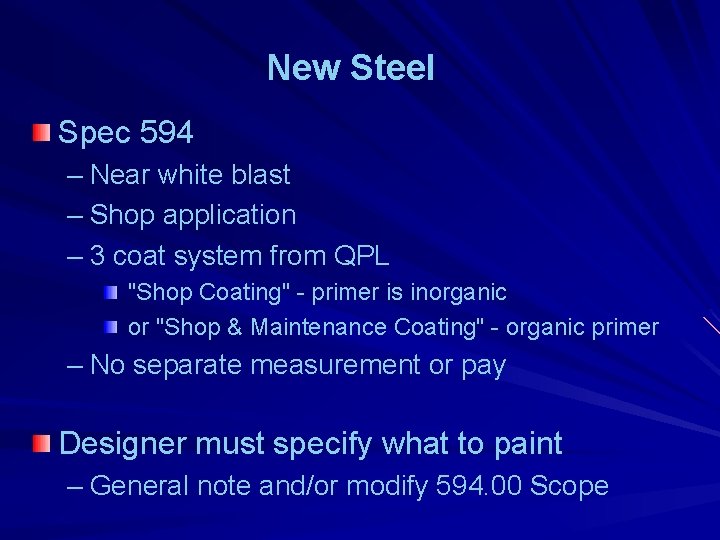
New Steel Spec 594 – Near white blast – Shop application – 3 coat system from QPL "Shop Coating" - primer is inorganic or "Shop & Maintenance Coating" - organic primer – No separate measurement or pay Designer must specify what to paint – General note and/or modify 594. 00 Scope
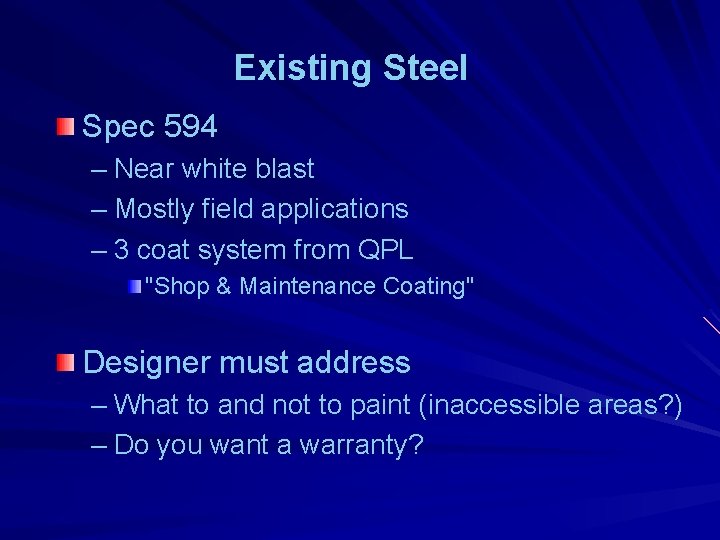
Existing Steel Spec 594 – Near white blast – Mostly field applications – 3 coat system from QPL "Shop & Maintenance Coating" Designer must address – What to and not to paint (inaccessible areas? ) – Do you want a warranty?
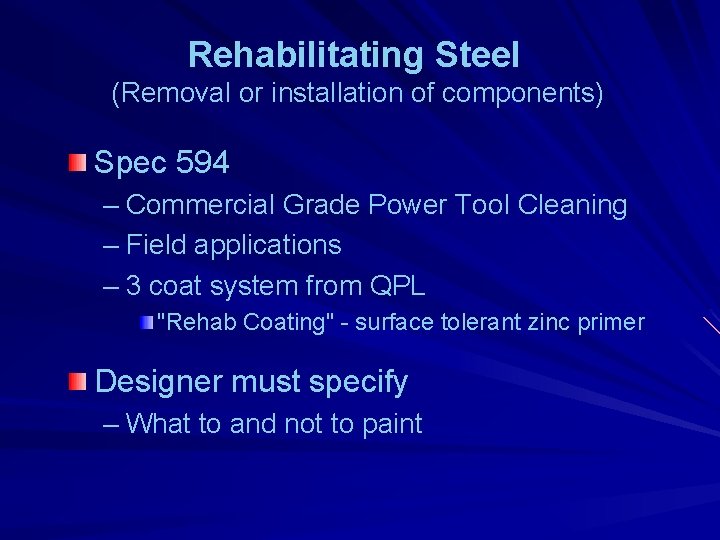
Rehabilitating Steel (Removal or installation of components) Spec 594 – Commercial Grade Power Tool Cleaning – Field applications – 3 coat system from QPL "Rehab Coating" - surface tolerant zinc primer Designer must specify – What to and not to paint
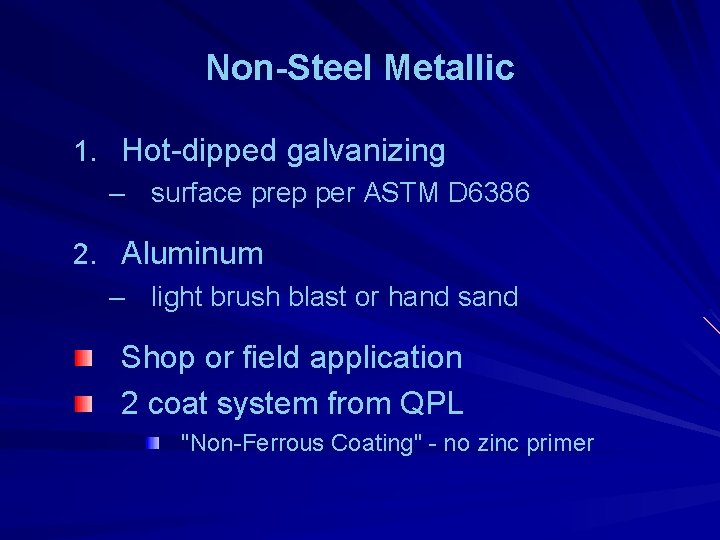
Non-Steel Metallic 1. Hot-dipped galvanizing – surface prep per ASTM D 6386 2. Aluminum – light brush blast or hand sand Shop or field application 2 coat system from QPL "Non-Ferrous Coating" - no zinc primer
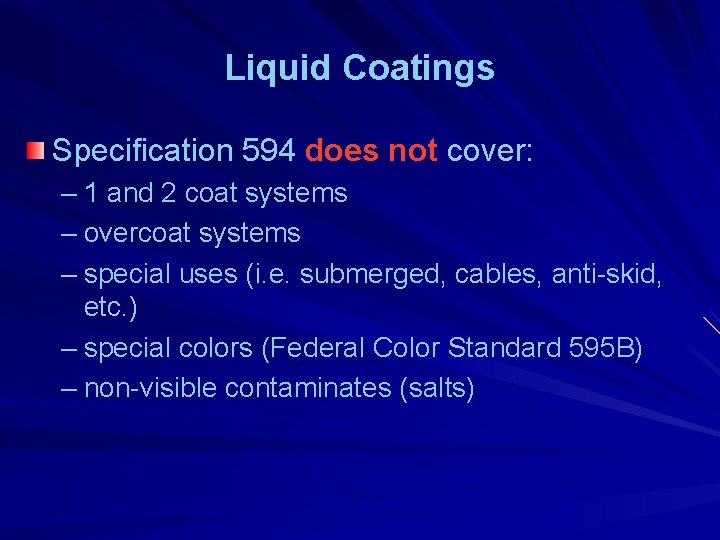
Liquid Coatings Specification 594 does not cover: – 1 and 2 coat systems – overcoat systems – special uses (i. e. submerged, cables, anti-skid, etc. ) – special colors (Federal Color Standard 595 B) – non-visible contaminates (salts)
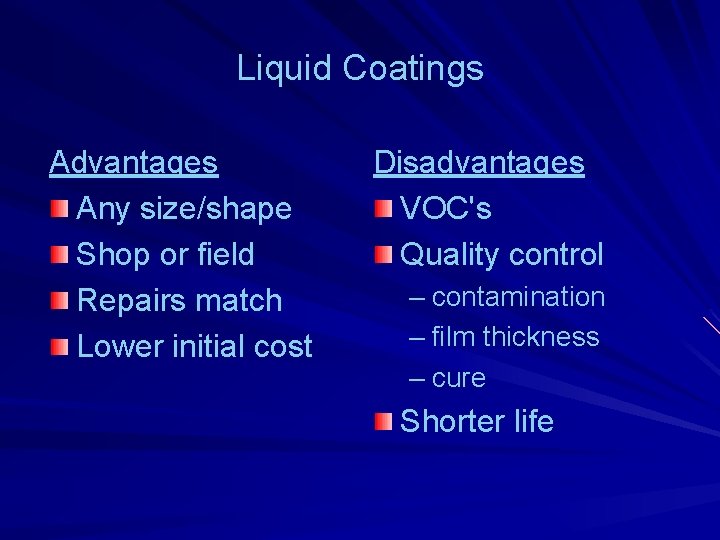
Liquid Coatings Advantages Any size/shape Shop or field Repairs match Lower initial cost Disadvantages VOC's Quality control – contamination – film thickness – cure Shorter life
3. Powder Coatings Specification 593 covers applications on new and existing structures used for small to medium sized parts (railing, sign structures, light poles, etc. ) PTI size limited to 52' x 14' x 12' high
Powder Coatings spec 593 requires a 2 coat system – Primer zinc rich epoxy primer for steel epoxy primer for non-steel metallic – Topcoat polyester meeting AAMA Spec 2605
Surface Prep Steps Steel surfaces – "Near White" abrasive blast – Phosphate treat immediately and dry with heat Galvanized surfaces – ASTM D 6386 Other non-steel metallic surfaces – Light abrasive blast or hand sand
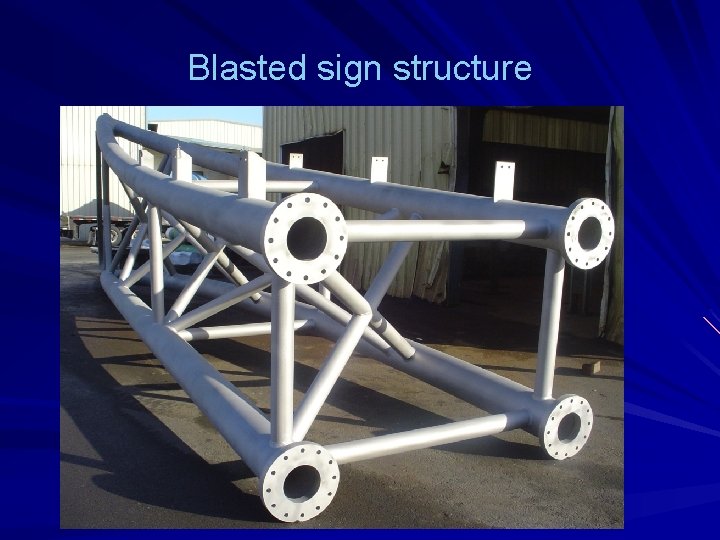
Blasted sign structure
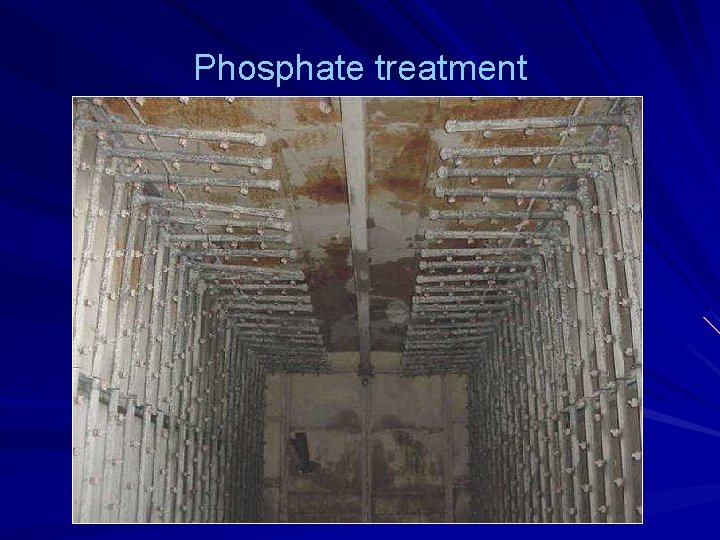
Phosphate treatment
Powder Coating Application Preheat surface Apply primer (within 4 hrs of cleaning) Heat to partially cure primer Apply topcoat Heat to finish cure
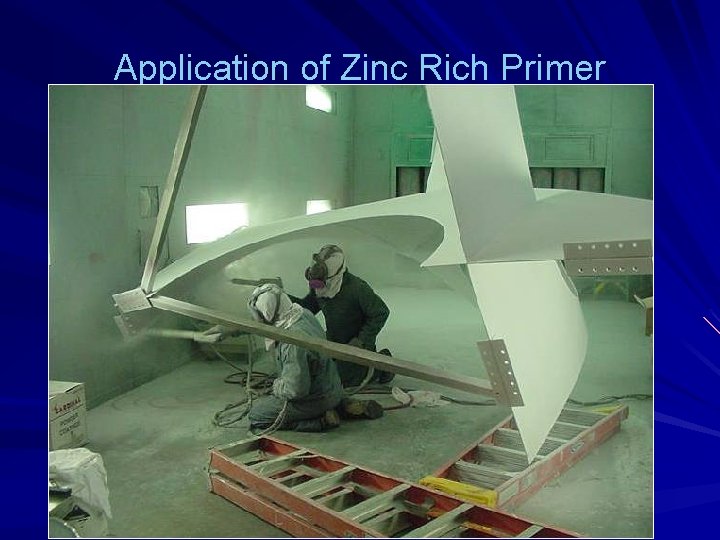
Application of Zinc Rich Primer
Powder Coatings Advantages No VOC's Quality Control Adhesion No dry spray Transport Damage Disadvantages Size limits Doesn't fill crevices Castings Field repairs
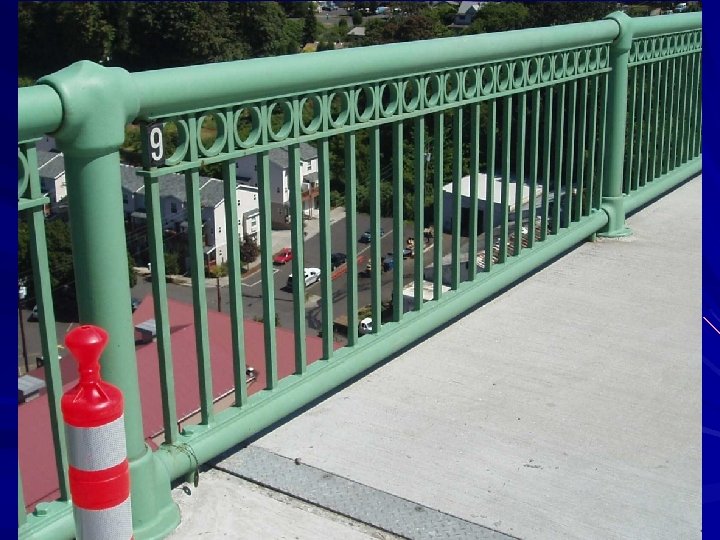
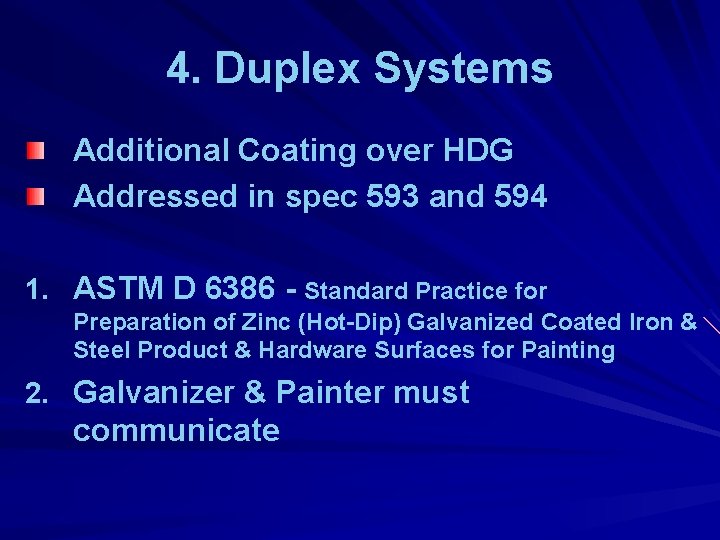
4. Duplex Systems Additional Coating over HDG Addressed in spec 593 and 594 1. ASTM D 6386 - Standard Practice for Preparation of Zinc (Hot-Dip) Galvanized Coated Iron & Steel Product & Hardware Surfaces for Painting 2. Galvanizer & Painter must communicate
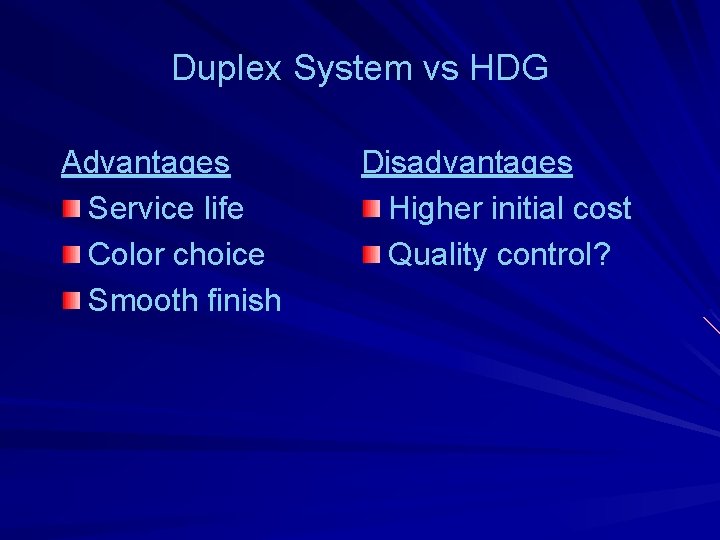
Duplex System vs HDG Advantages Service life Color choice Smooth finish Disadvantages Higher initial cost Quality control?
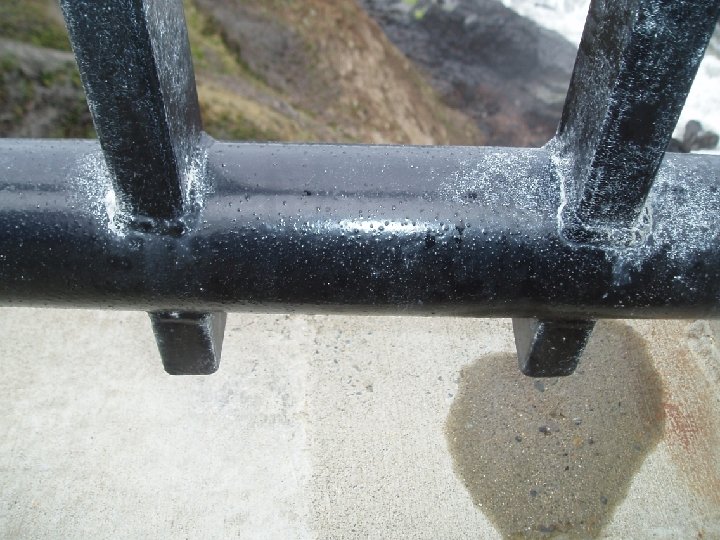
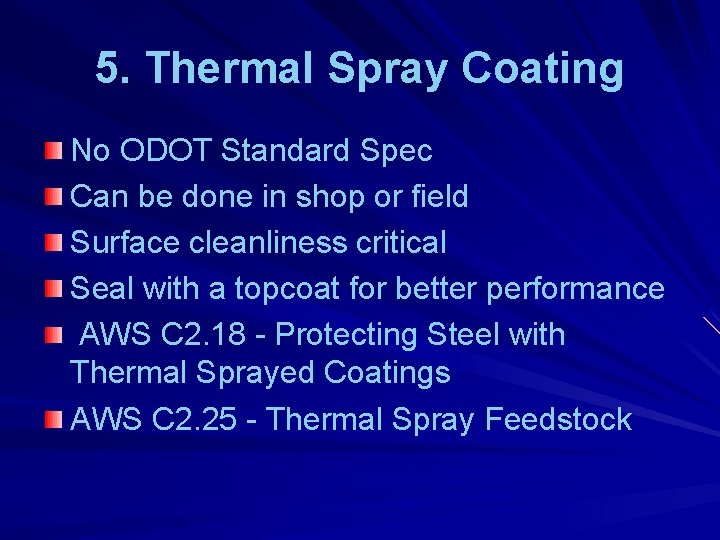
5. Thermal Spray Coating No ODOT Standard Spec Can be done in shop or field Surface cleanliness critical Seal with a topcoat for better performance AWS C 2. 18 - Protecting Steel with Thermal Sprayed Coatings AWS C 2. 25 - Thermal Spray Feedstock
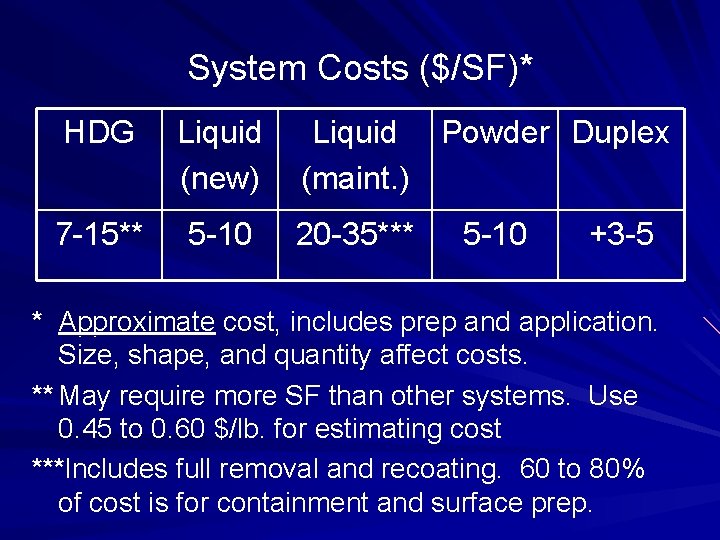
System Costs ($/SF)* HDG Liquid (new) 7 -15** 5 -10 Liquid Powder Duplex (maint. ) 20 -35*** 5 -10 +3 -5 * Approximate cost, includes prep and application. Size, shape, and quantity affect costs. ** May require more SF than other systems. Use 0. 45 to 0. 60 $/lb. for estimating cost ***Includes full removal and recoating. 60 to 80% of cost is for containment and surface prep.
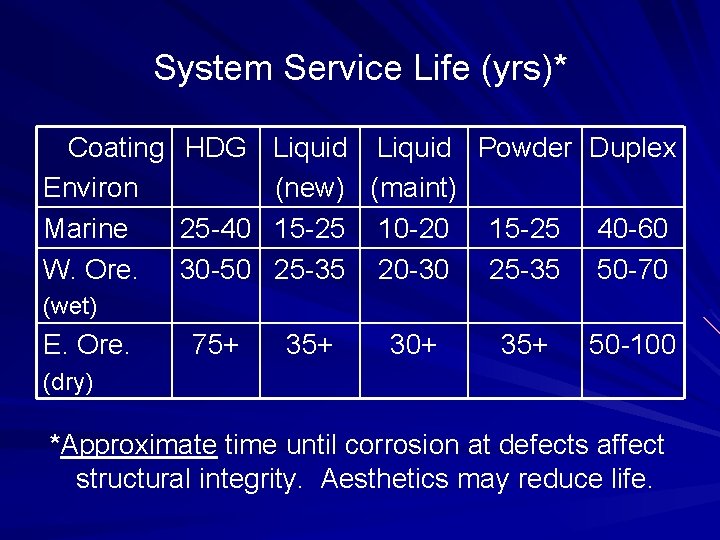
System Service Life (yrs)* Coating HDG Liquid Powder Duplex Environ (new) (maint) Marine 25 -40 15 -25 10 -20 15 -25 40 -60 W. Ore. 30 -50 25 -35 20 -30 25 -35 50 -70 (wet) E. Ore. 75+ 30+ 35+ 50 -100 (dry) *Approximate time until corrosion at defects affect structural integrity. Aesthetics may reduce life.
- Slides: 39