
Status Neutral The New Normal for HIV Exploring

- Slides: 24
Status Neutral: The New Normal for HIV
Exploring biomedical interventions including Pr. EP, PEP, and Tas. P, and how they reduce stigma I. Participants will gain a deeper understanding of biomedical interventions II. Participants will gain proficiency in language that reduces stigma III. Participants will gain proficiency in understanding the data regarding biomedical interventions and the story the data tells
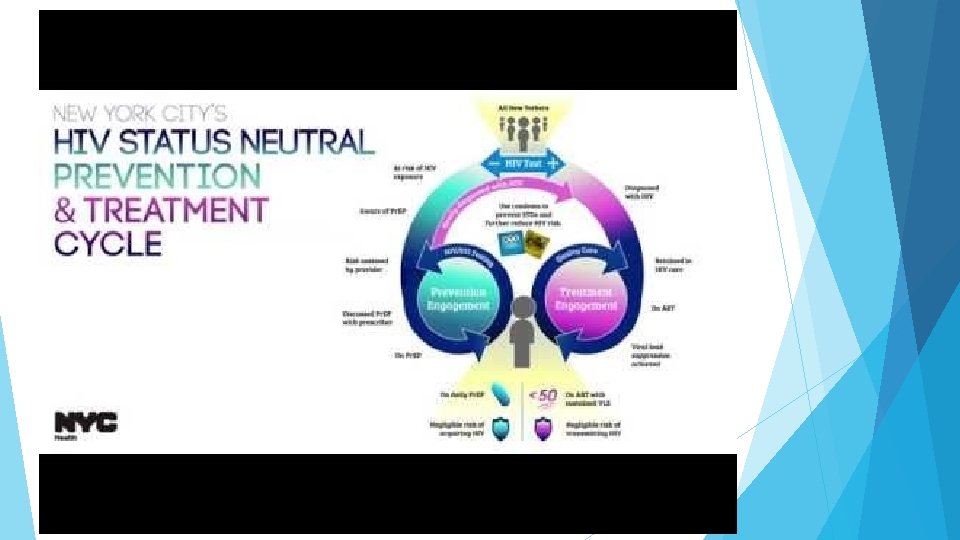
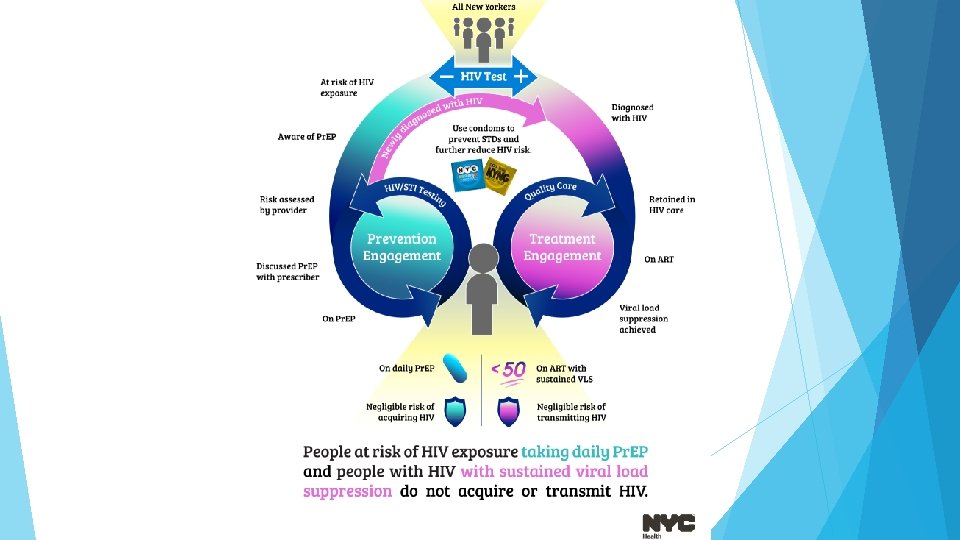
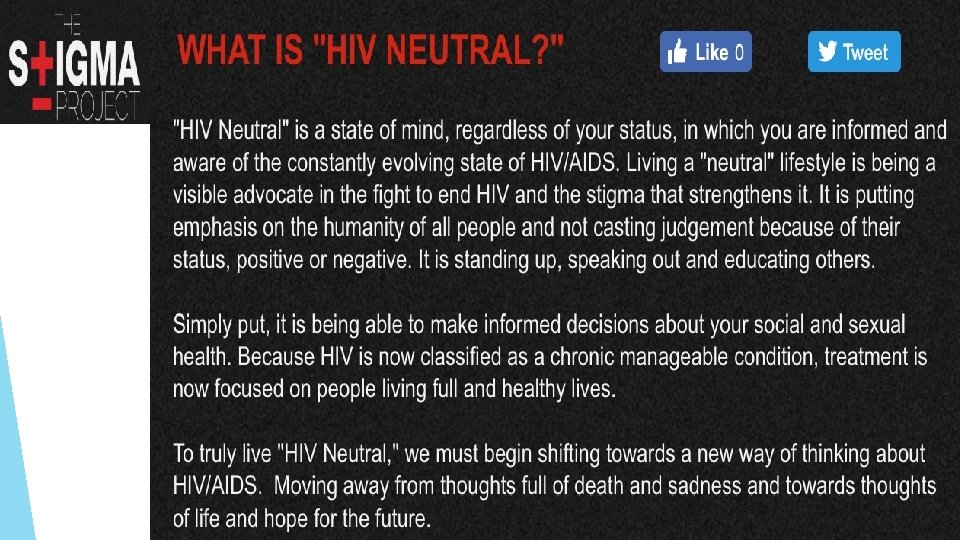
What does Status Neutral mean? Treatment as Prevention and Prevention as Treatment Status Neutral Care Environment Stigma and Disclosure Improved Adherence and Self-Efficacy
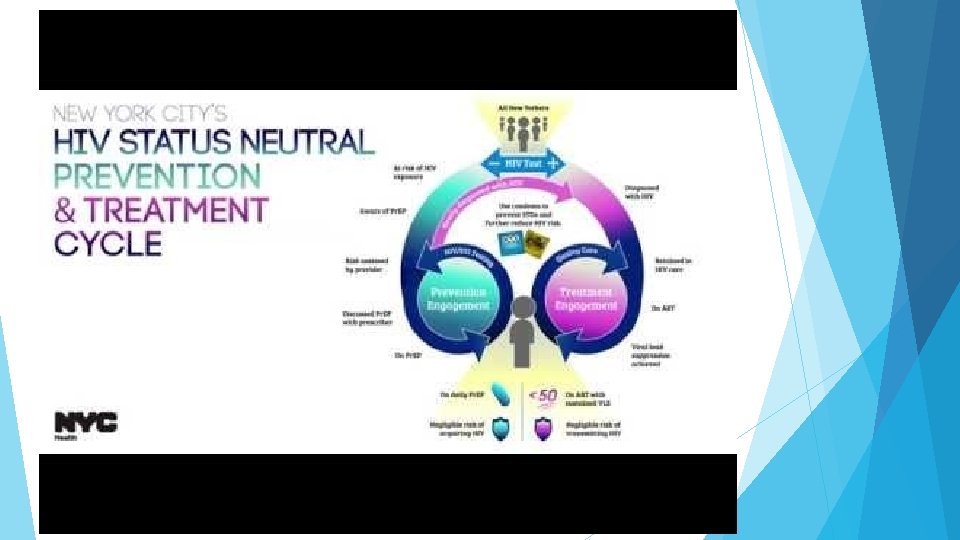
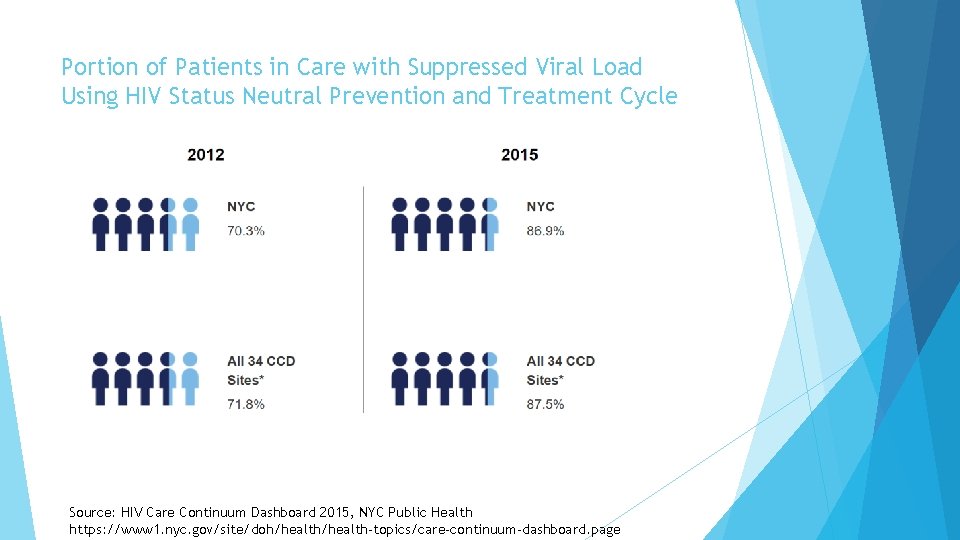
Portion of Patients in Care with Suppressed Viral Load Using HIV Status Neutral Prevention and Treatment Cycle Source: HIV Care Continuum Dashboard 2015, NYC Public Health https: //www 1. nyc. gov/site/doh/health-topics/care-continuum-dashboard. page
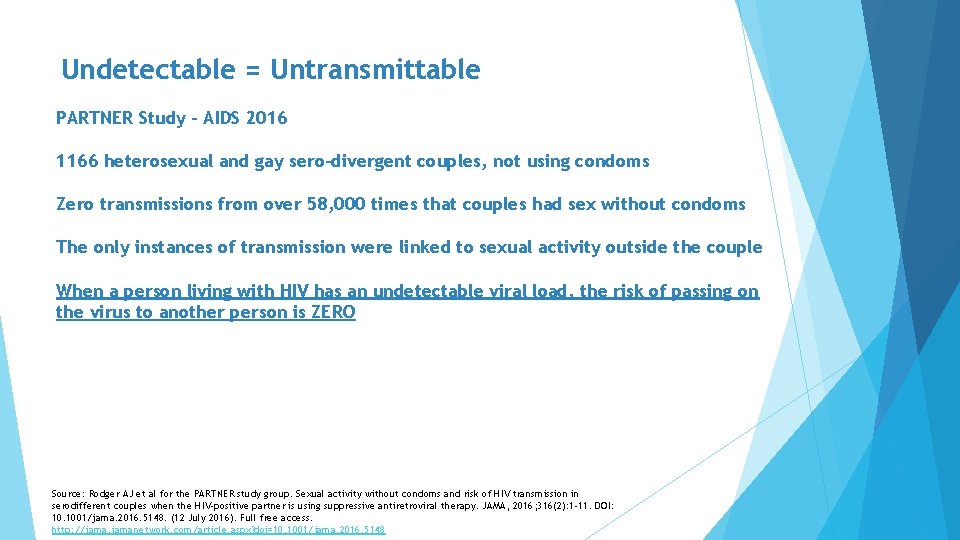
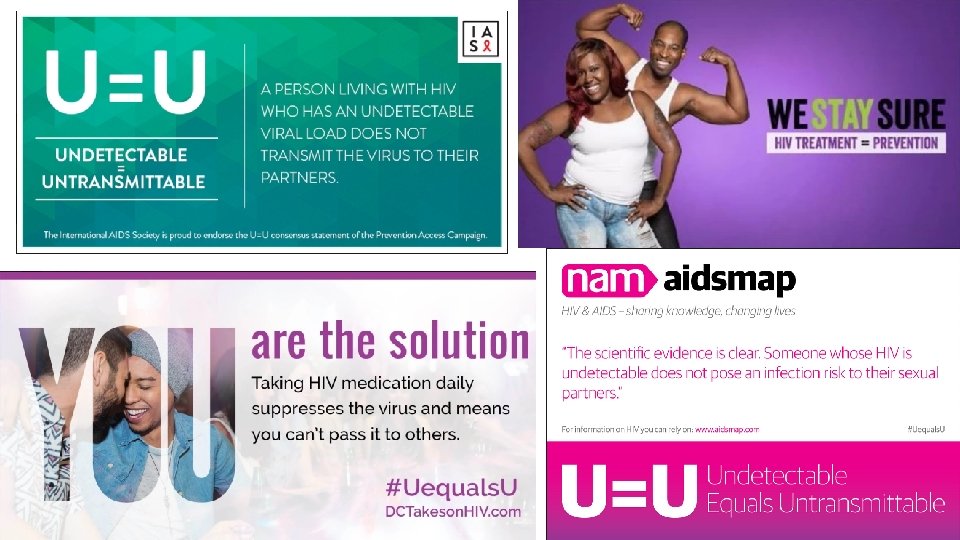
Undetectable = Untransmittable PARTNER Study – AIDS 2016 1166 heterosexual and gay sero-divergent couples, not using condoms Zero transmissions from over 58, 000 times that couples had sex without condoms The only instances of transmission were linked to sexual activity outside the couple When a person living with HIV has an undetectable viral load, the risk of passing on the virus to another person is ZERO Source: Rodger AJ et al for the PARTNER study group. Sexual activity without condoms and risk of HIV transmission in serodifferent couples when the HIV-positive partner is using suppressive antiretroviral therapy. JAMA, 2016; 316(2): 1 -11. DOI: 10. 1001/jama. 2016. 5148. (12 July 2016). Full free access. http: //jamanetwork. com/article. aspx? doi=10. 1001/jama. 2016. 5148
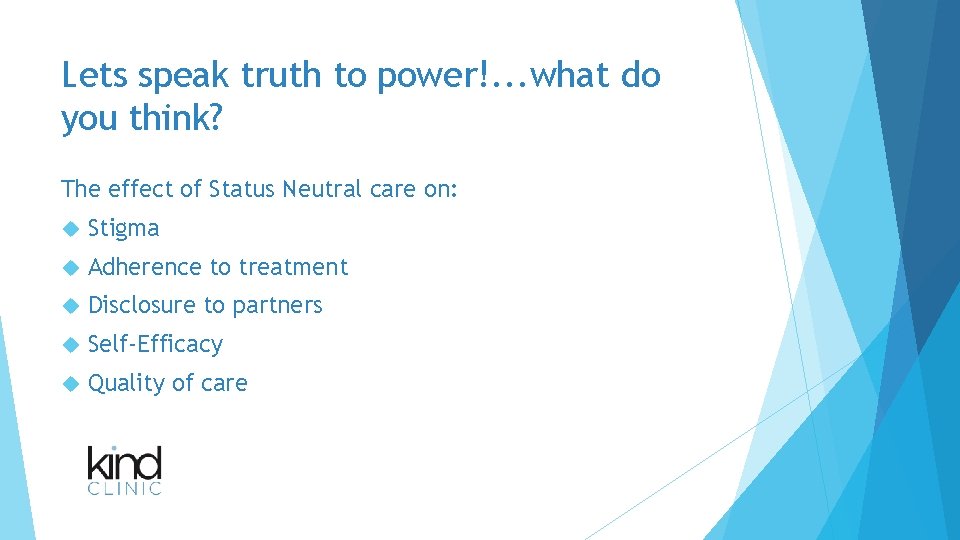
Lets speak truth to power!. . . what do you think? The effect of Status Neutral care on: Stigma Adherence to treatment Disclosure to partners Self-Efficacy Quality of care
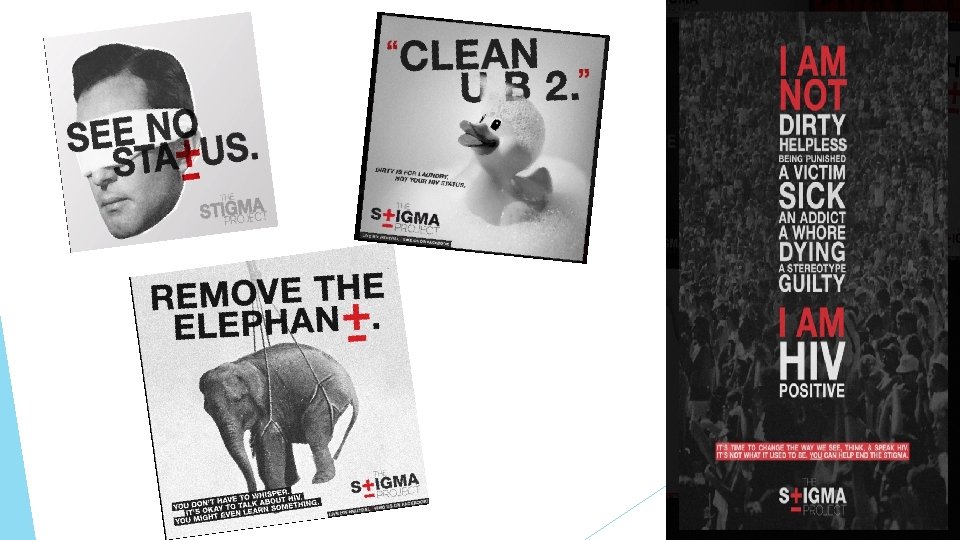
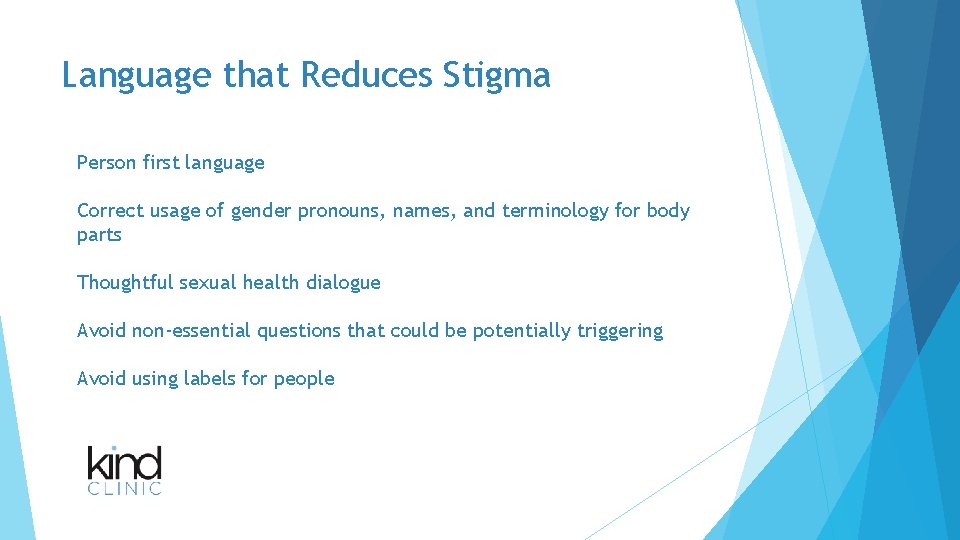
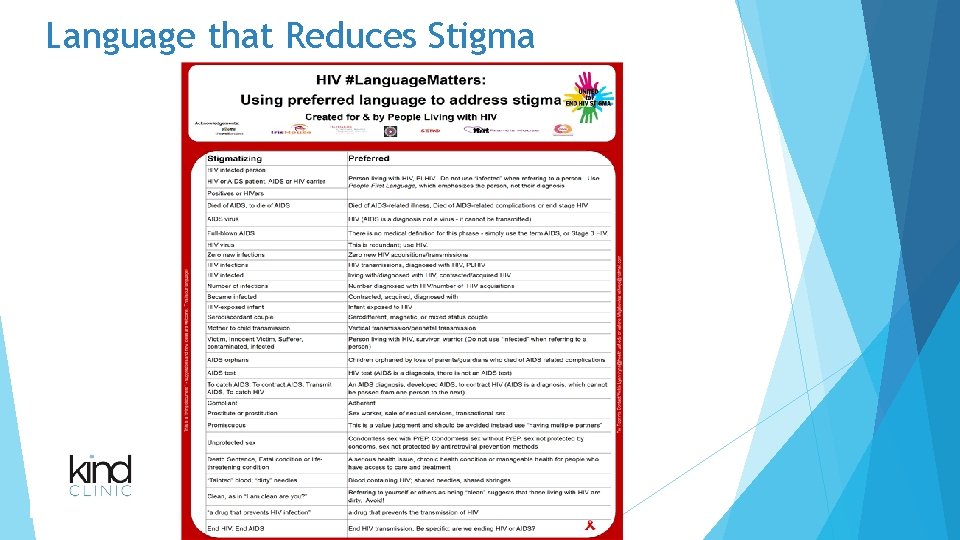
Language that Reduces Stigma Person first language Correct usage of gender pronouns, names, and terminology for body parts Thoughtful sexual health dialogue Avoid non-essential questions that could be potentially triggering Avoid using labels for people
Language that Reduces Stigma
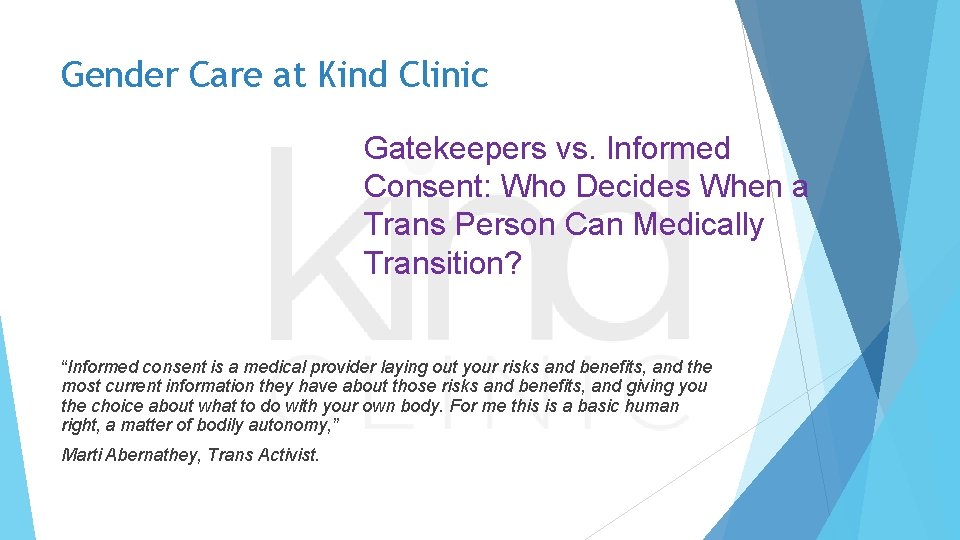
Gender Care at Kind Clinic Gatekeepers vs. Informed Consent: Who Decides When a Trans Person Can Medically Transition? “Informed consent is a medical provider laying out your risks and benefits, and the most current information they have about those risks and benefits, and giving you the choice about what to do with your own body. For me this is a basic human right, a matter of bodily autonomy, ” Marti Abernathey, Trans Activist.
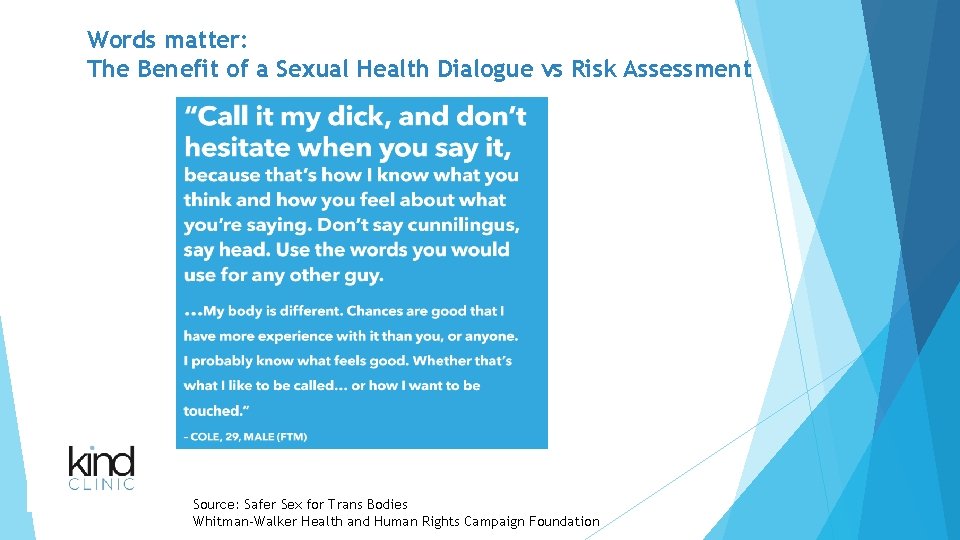
Words matter: The Benefit of a Sexual Health Dialogue vs Risk Assessment Source: Safer Sex for Trans Bodies Whitman-Walker Health and Human Rights Campaign Foundation
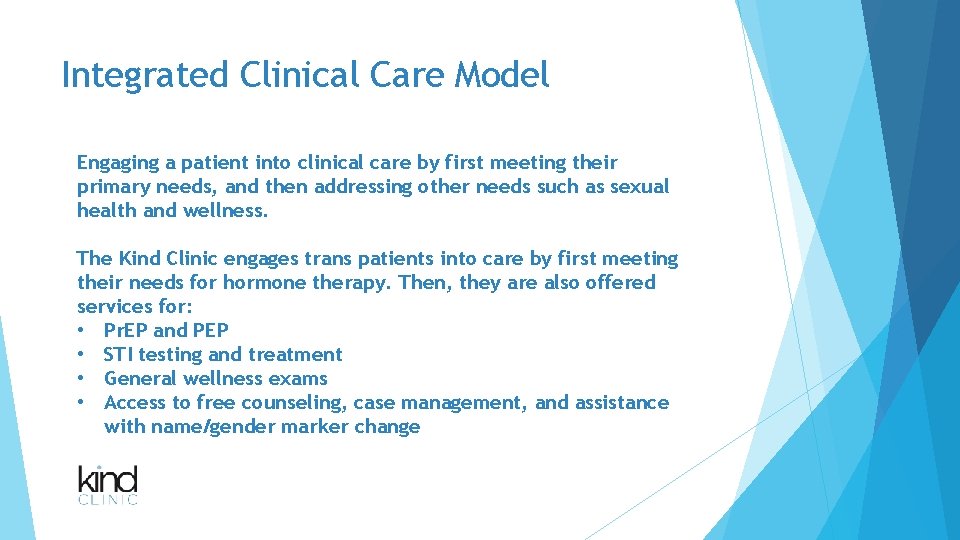
Integrated Clinical Care Model Engaging a patient into clinical care by first meeting their primary needs, and then addressing other needs such as sexual health and wellness. The Kind Clinic engages trans patients into care by first meeting their needs for hormone therapy. Then, they are also offered services for: • Pr. EP and PEP • STI testing and treatment • General wellness exams • Access to free counseling, case management, and assistance with name/gender marker change
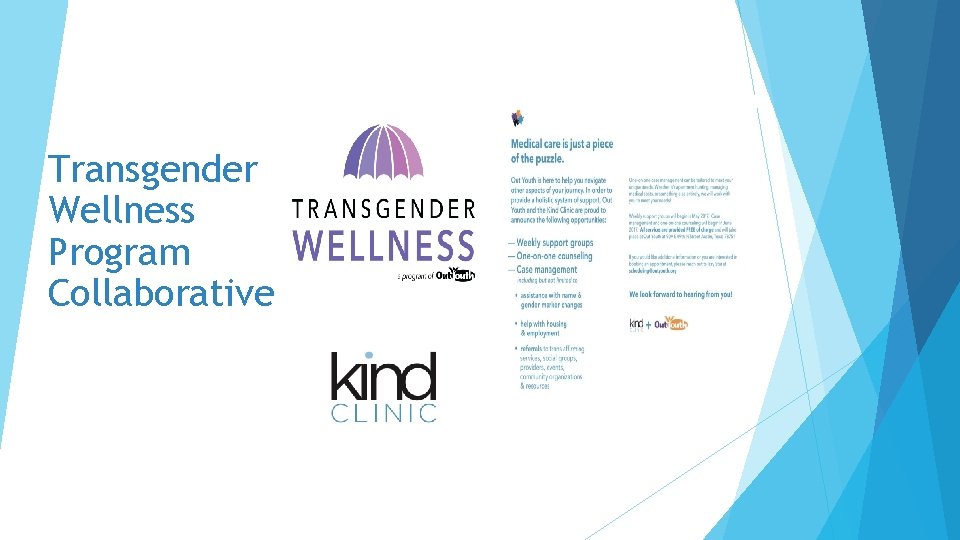
Transgender Wellness Program Collaborative
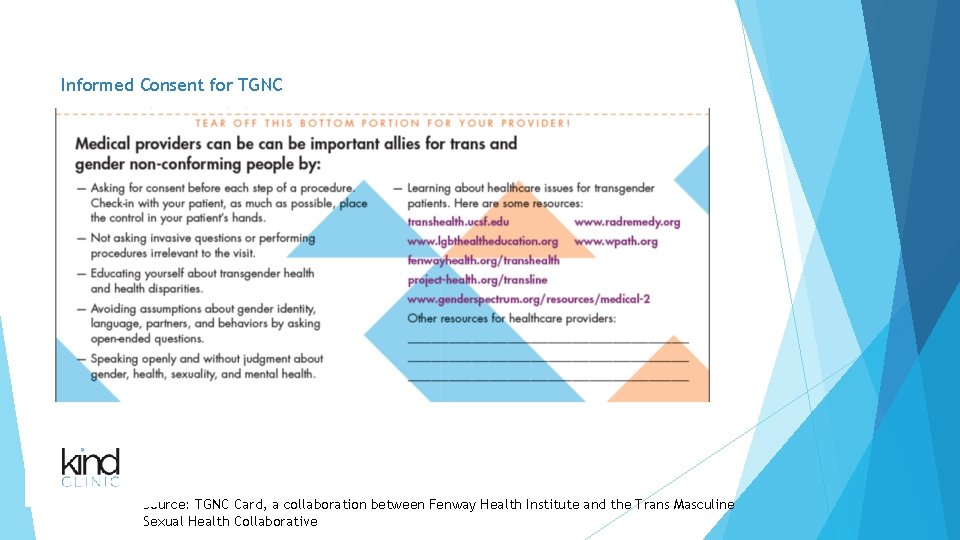
Informed Consent for TGNC Source: TGNC Card, a collaboration between Fenway Health Institute and the Trans Masculine Sexual Health Collaborative
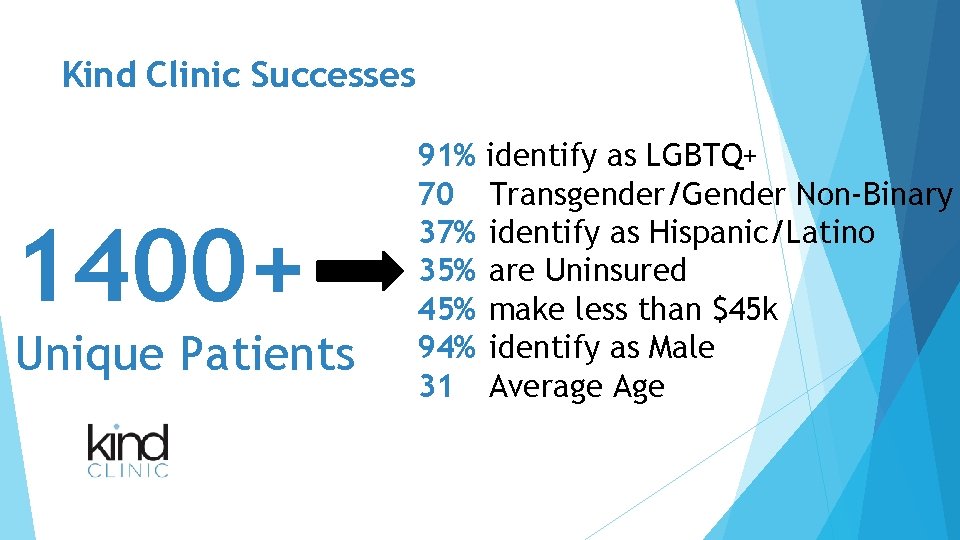
Kind Clinic Successes 1400+ Unique Patients 91% 70 37% 35% 45% 94% 31 identify as LGBTQ+ Transgender/Gender Non-Binary identify as Hispanic/Latino are Uninsured make less than $45 k identify as Male Average Age
Potential Barriers to Status Neutral Care Can you think of any drawbacks to this model of care? Can you think of any potential challenges in incorporating Status Neutral care? What are some ways we can address those barriers?
Wrap-Up Questions How do you feel about Status Neutral care and the U=U campaign? How can you incorporate a Status Neutral care environment with your clients?
Thank you! Joe Mc. Adams joe@texashealthaction. org Sarah Palmer, MPH sarah@texashealthaction. org