
Status and Plans on MASTU Joe Milnes For
- Slides: 34
Status and Plans on MAST-U Joe Milnes For the MAST Upgrade Team Culham Centre for Fusion Energy UK Atomic Energy Authority Fusion Power Associates 37 th Annual Meeting and Symposium Fusion Power Development: An International Venture 13 th / 14 th December 2016
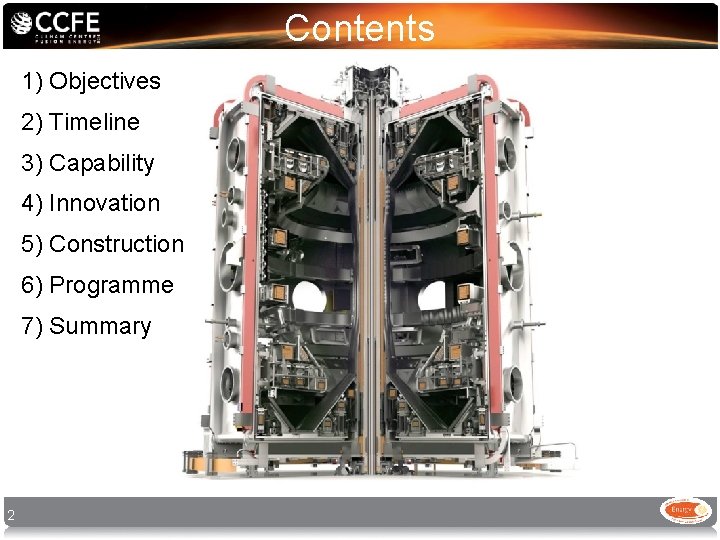
Contents 1) Objectives 2) Timeline 3) Capability 4) Innovation 5) Construction 6) Programme 7) Summary 2
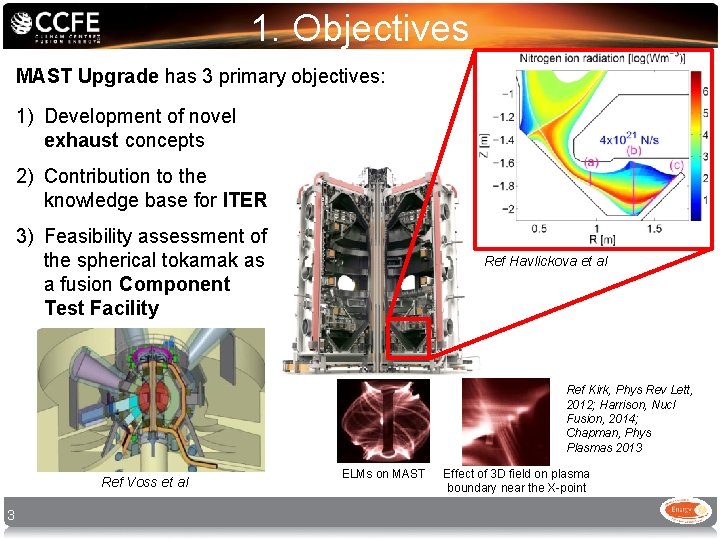
1. Objectives MAST Upgrade has 3 primary objectives: 1) Development of novel exhaust concepts 2) Contribution to the knowledge base for ITER 3) Feasibility assessment of the spherical tokamak as a fusion Component Test Facility Ref Havlickova et al Ref Kirk, Phys Rev Lett, 2012; Harrison, Nucl Fusion, 2014; Chapman, Phys Plasmas 2013 Ref Voss et al 3 ELMs on MAST Effect of 3 D field on plasma boundary near the X-point
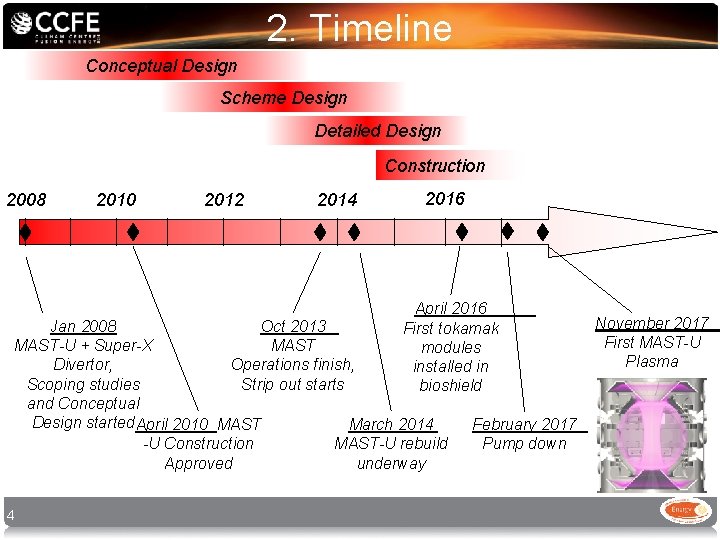
2. Timeline Conceptual Design Scheme Design Detailed Design Construction 2008 2010 2012 2014 2016 April 2016 First tokamak modules installed in bioshield Jan 2008 Oct 2013 MAST-U + Super-X MAST Divertor, Operations finish, Scoping studies Strip out starts and Conceptual Design started April 2010 MAST March 2014 -U Construction MAST-U rebuild Approved underway 4 February 2017 Pump down November 2017 First MAST-U Plasma
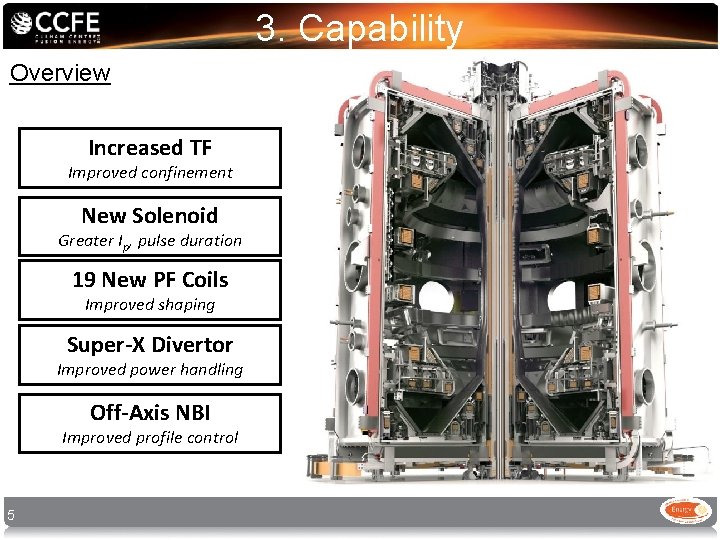
3. Capability Overview Increased TF Improved confinement New Solenoid Greater Ip, pulse duration 19 New PF Coils Improved shaping Super-X Divertor Improved power handling Off-Axis NBI Improved profile control 5
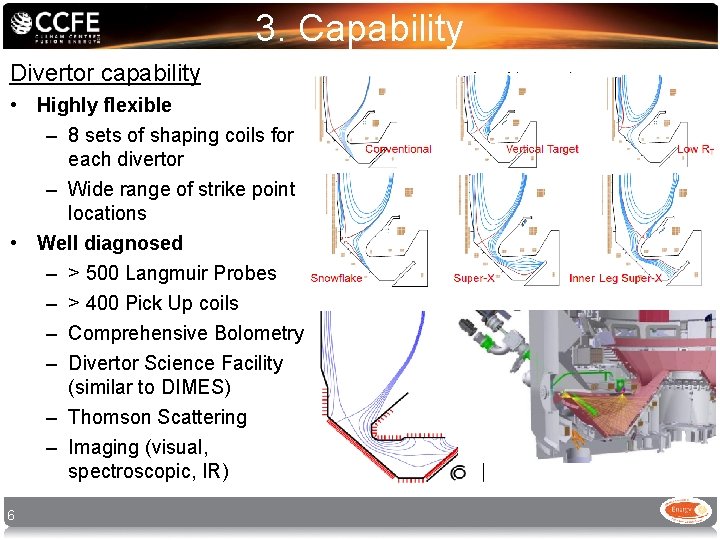
3. Capability Divertor capability • Highly flexible – 8 sets of shaping coils for each divertor – Wide range of strike point locations • Well diagnosed – > 500 Langmuir Probes – > 400 Pick Up coils – Comprehensive Bolometry – Divertor Science Facility (similar to DIMES) – Thomson Scattering – Imaging (visual, spectroscopic, IR) 6
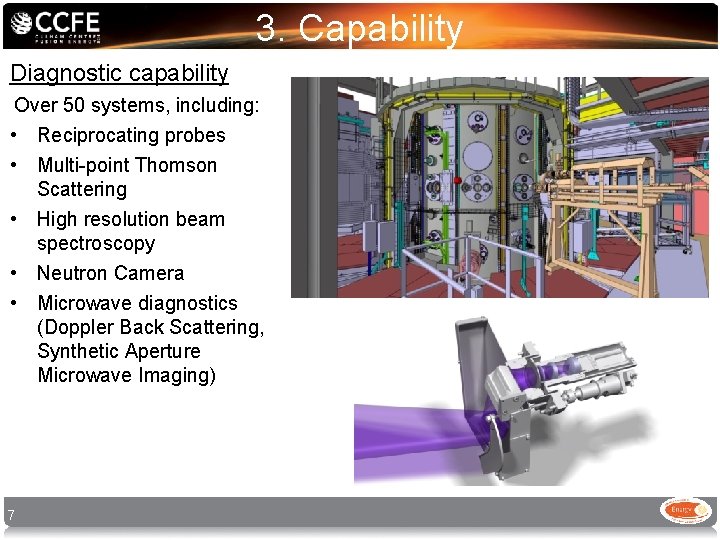
3. Capability Diagnostic capability Over 50 systems, including: • Reciprocating probes • Multi-point Thomson Scattering • High resolution beam spectroscopy • Neutron Camera • Microwave diagnostics (Doppler Back Scattering, Synthetic Aperture Microwave Imaging) 7
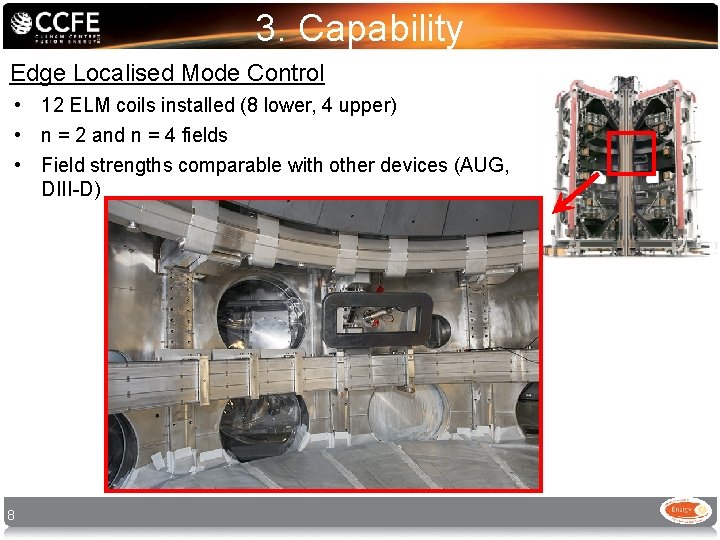
3. Capability Edge Localised Mode Control • 12 ELM coils installed (8 lower, 4 upper) • n = 2 and n = 4 fields • Field strengths comparable with other devices (AUG, DIII-D) 8
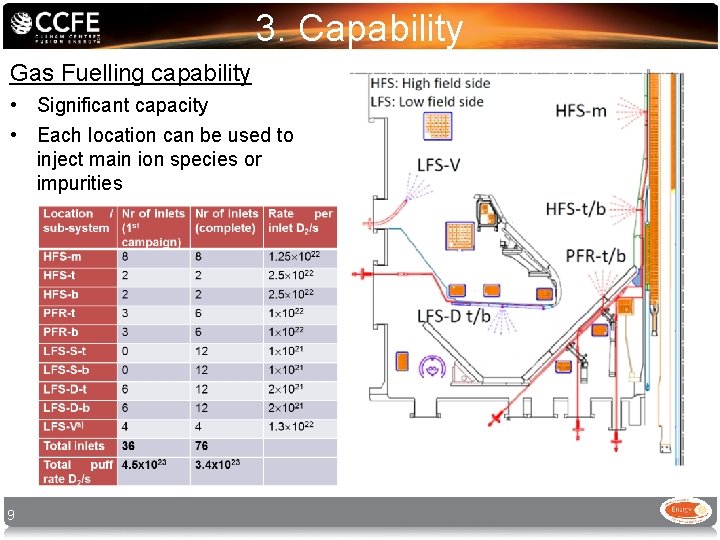
3. Capability Gas Fuelling capability • Significant capacity • Each location can be used to inject main ion species or impurities 9
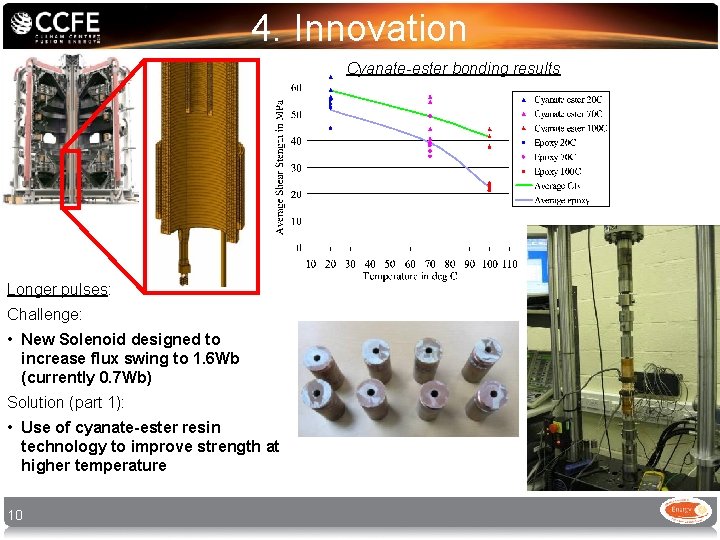
4. Innovation Cyanate-ester bonding results Longer pulses: Challenge: • New Solenoid designed to increase flux swing to 1. 6 Wb (currently 0. 7 Wb) Solution (part 1): • Use of cyanate-ester resin technology to improve strength at higher temperature 10
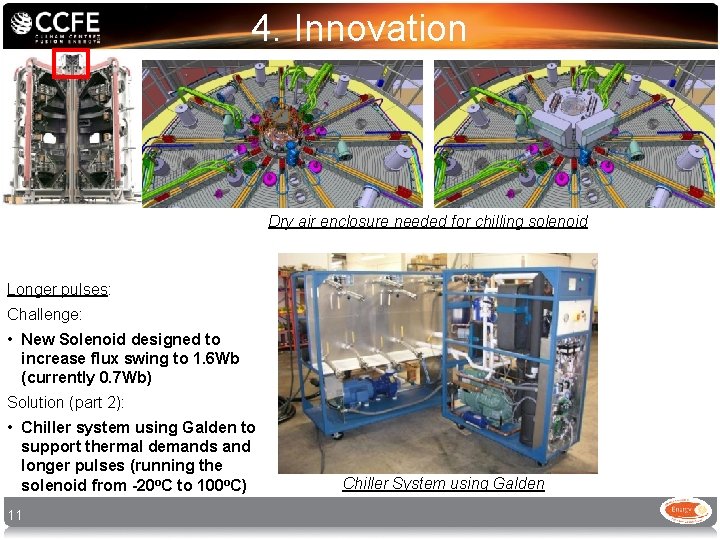
4. Innovation Dry air enclosure needed for chilling solenoid Longer pulses: Challenge: • New Solenoid designed to increase flux swing to 1. 6 Wb (currently 0. 7 Wb) Solution (part 2): • Chiller system using Galden to support thermal demands and longer pulses (running the solenoid from -20 o. C to 100 o. C) 11 Chiller System using Galden
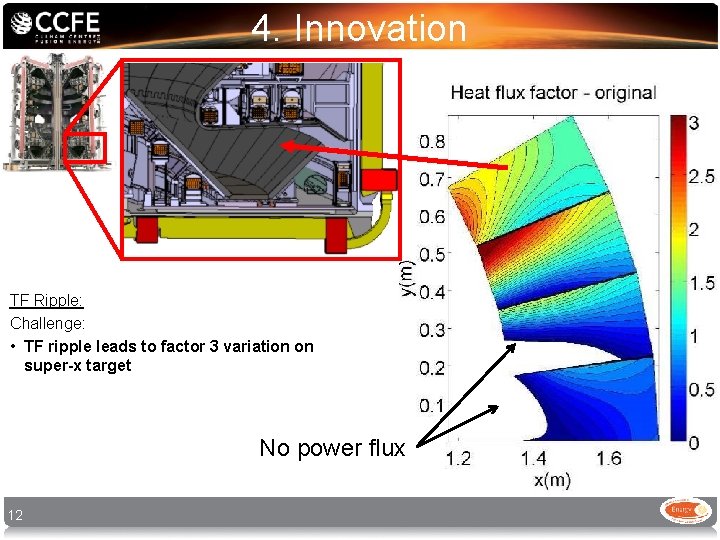
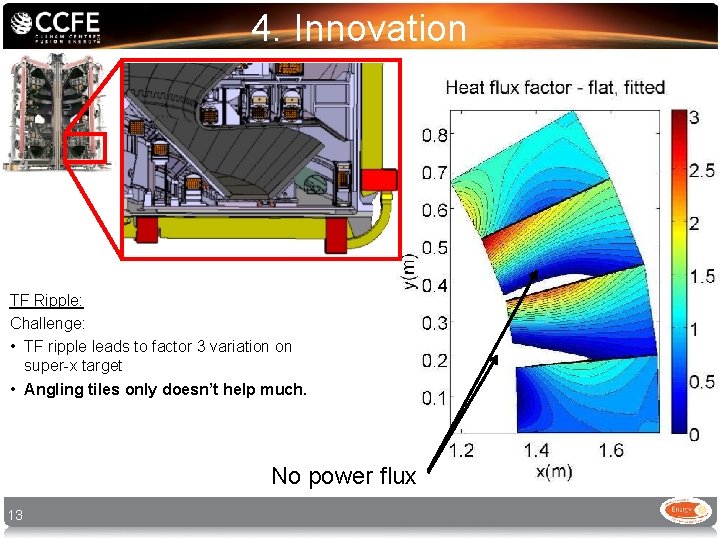
4. Innovation TF Ripple: Challenge: • TF ripple leads to factor 3 variation on super-x target No power flux 12
4. Innovation TF Ripple: Challenge: • TF ripple leads to factor 3 variation on super-x target • Angling tiles only doesn’t help much. No power flux 13
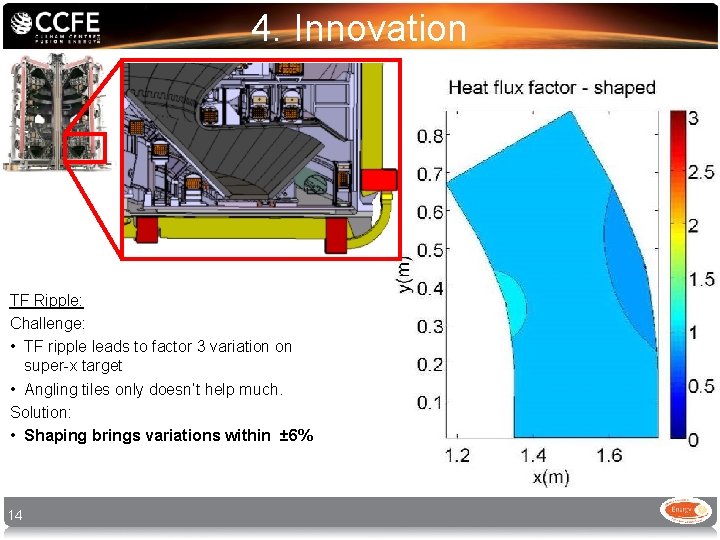
4. Innovation TF Ripple: Challenge: • TF ripple leads to factor 3 variation on super-x target • Angling tiles only doesn’t help much. Solution: • Shaping brings variations within ± 6% 14
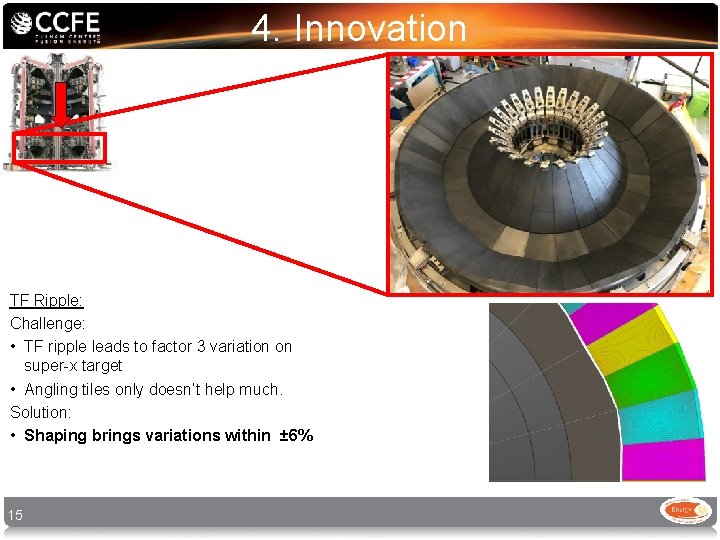
4. Innovation TF Ripple: Challenge: • TF ripple leads to factor 3 variation on super-x target • Angling tiles only doesn’t help much. Solution: • Shaping brings variations within ± 6% 15
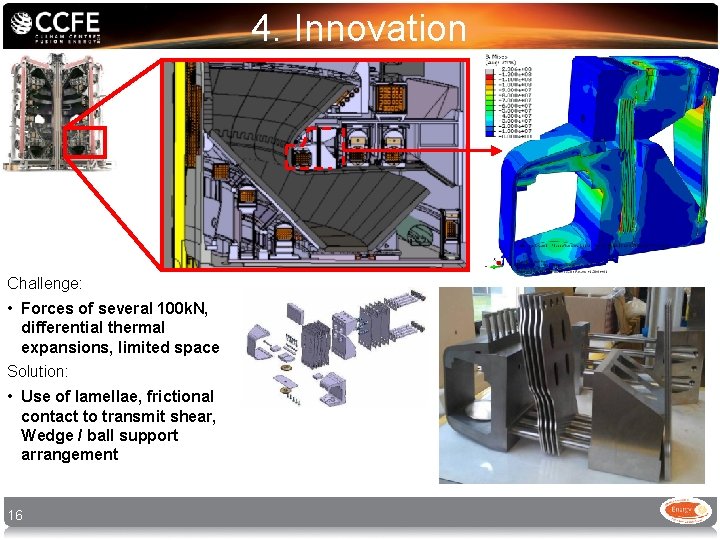
4. Innovation Challenge: • Forces of several 100 k. N, differential thermal expansions, limited space Solution: • Use of lamellae, frictional contact to transmit shear, Wedge / ball support arrangement 16
5. Construction MAST-U Summary Video 17
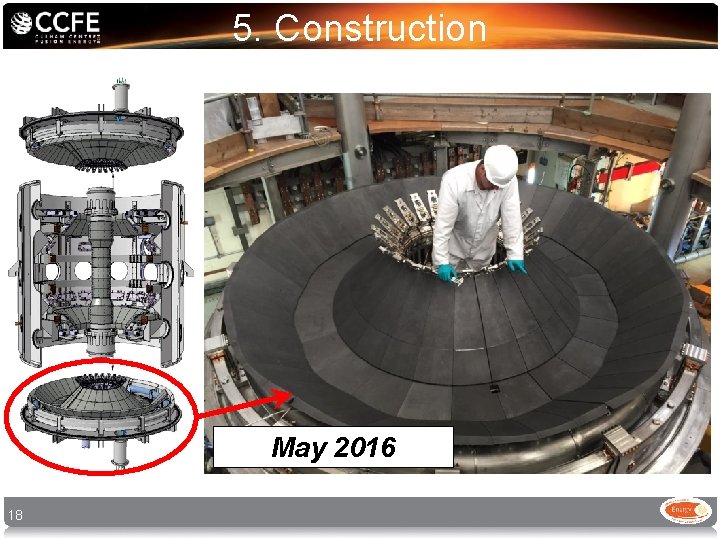
5. Construction May 2016 18
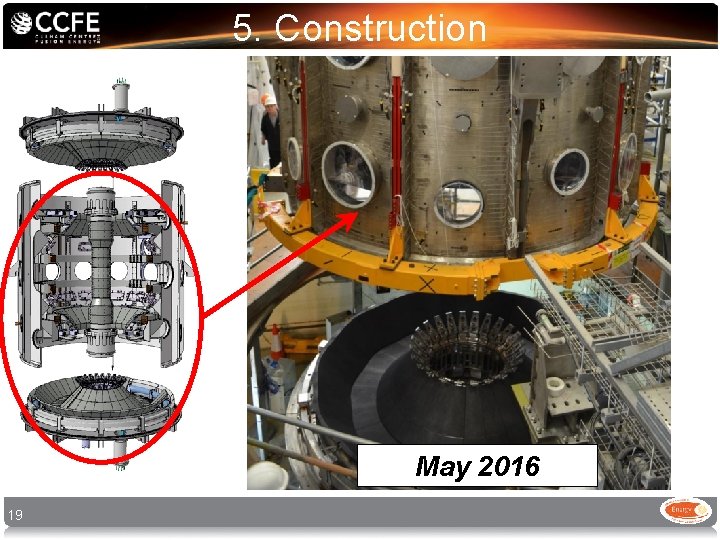
5. Construction May 2016 19
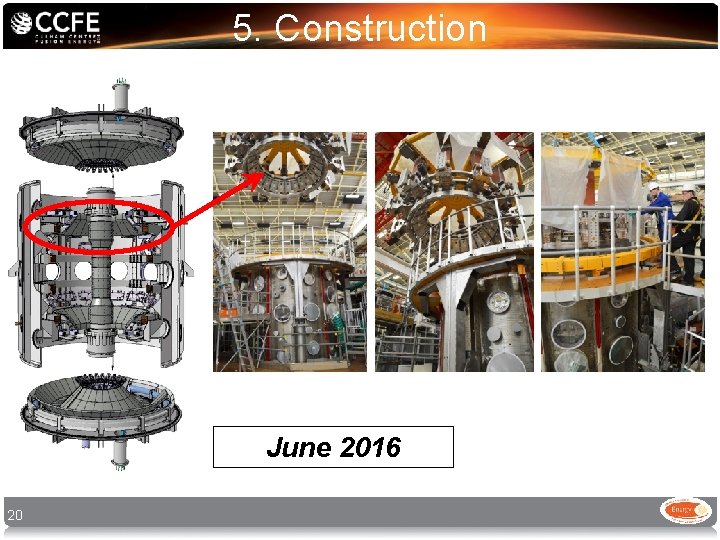
5. Construction June 2016 20
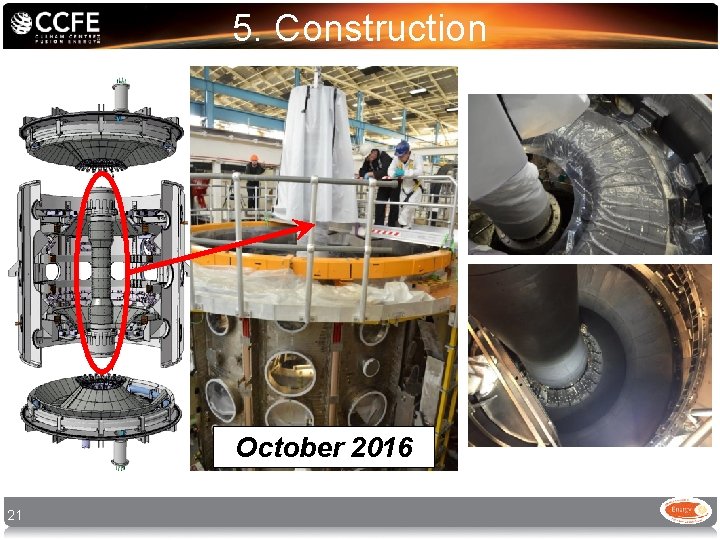
5. Construction October 2016 21
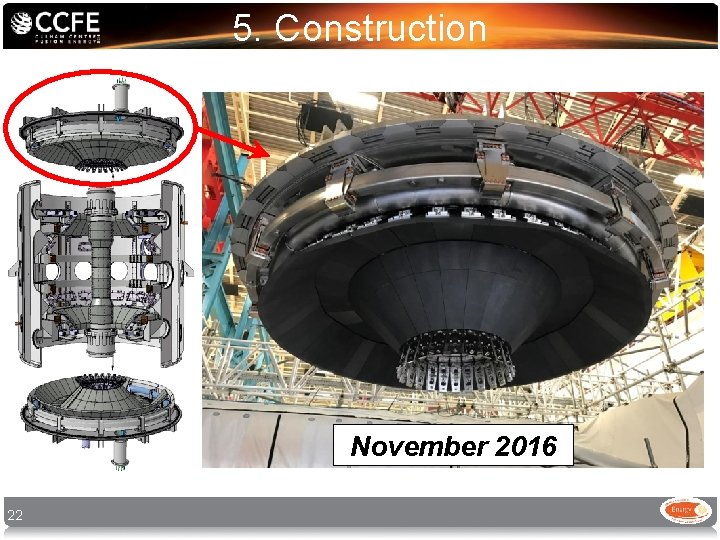
5. Construction November 2016 22
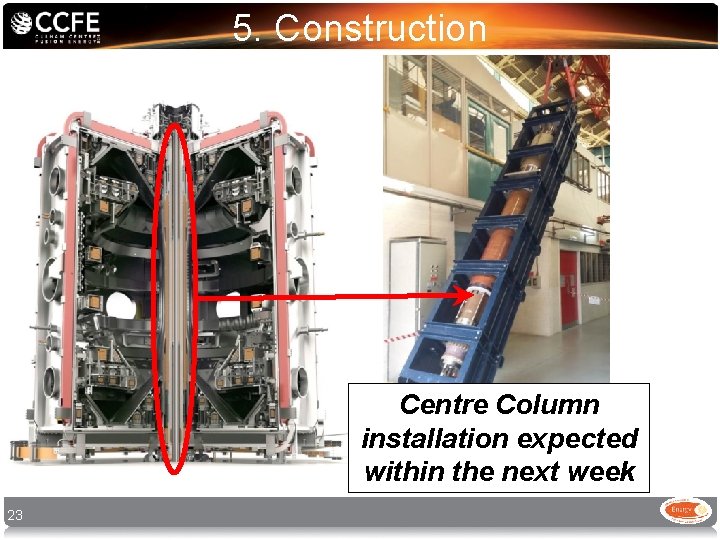
5. Construction Centre Column installation expected within the next week 23
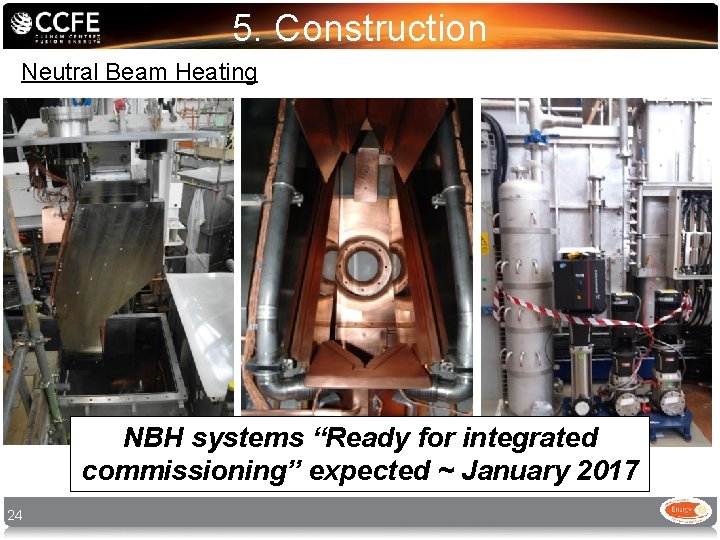
5. Construction Neutral Beam Heating NBH systems “Ready for integrated commissioning” expected ~ January 2017 24
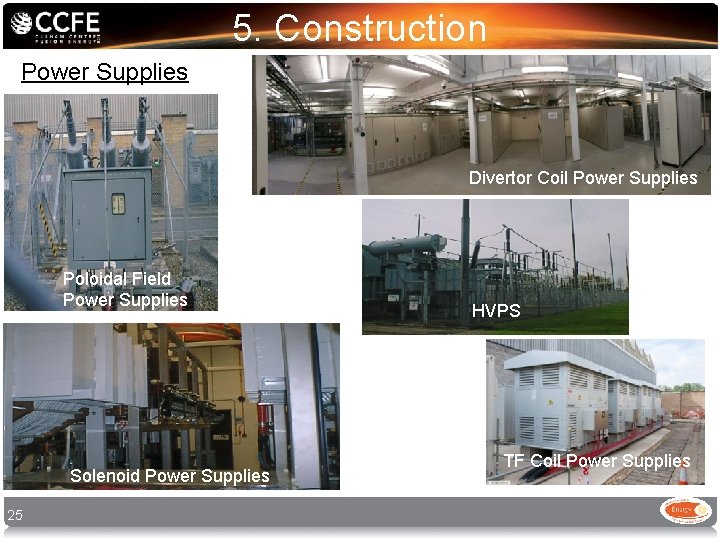
5. Construction Power Supplies Divertor Coil Power Supplies Poloidal Field Power Supplies HVPS LVPS Solenoid Power Supplies 25 TF Coil Power Supplies
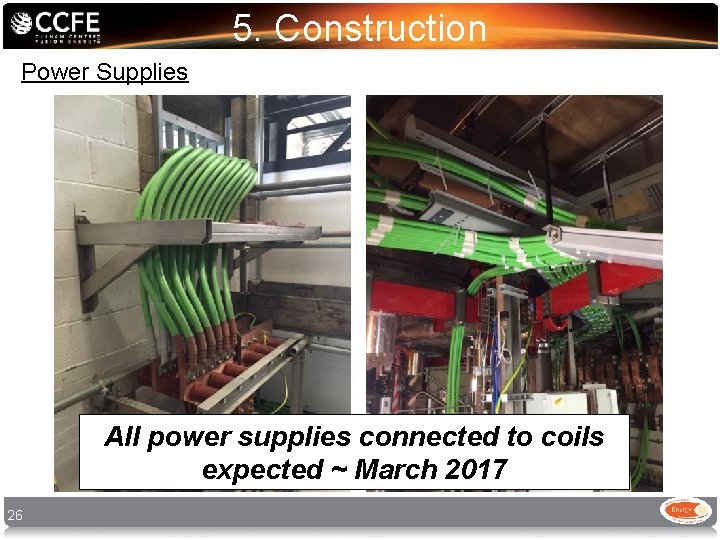
5. Construction Power Supplies All power supplies connected to coils expected ~ March 2017 26
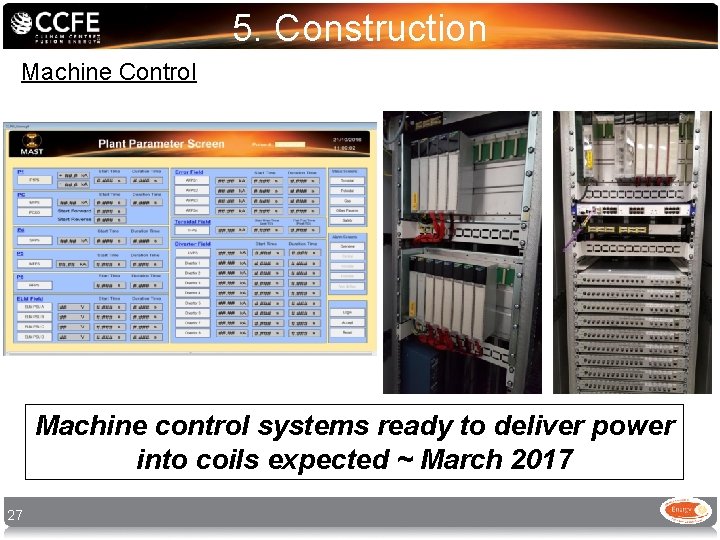
5. Construction Machine Control Machine control systems ready to deliver power into coils expected ~ March 2017 27
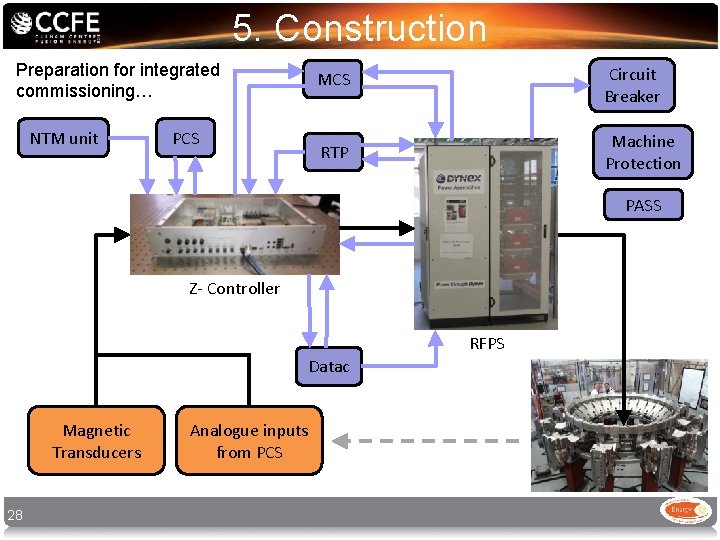
5. Construction Preparation for integrated commissioning… NTM unit PCS MCS Circuit Breaker RTP Machine Protection PASS Z- Controller RFPS Datac Magnetic Transducers 28 Analogue inputs from PCS
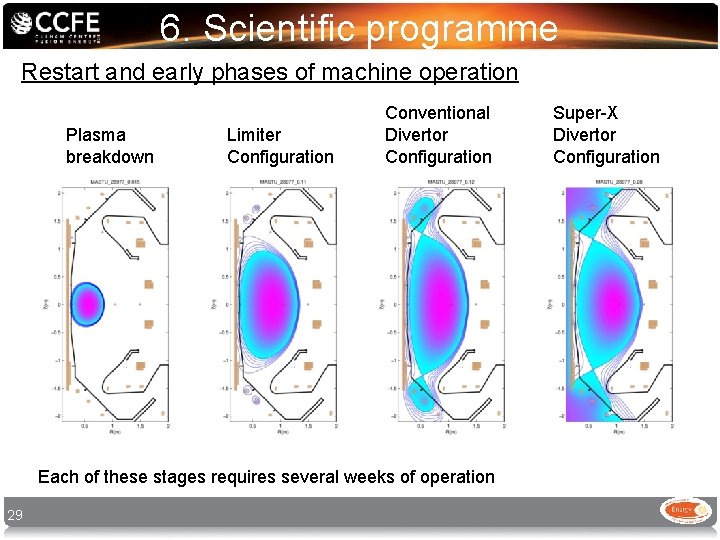
6. Scientific programme Restart and early phases of machine operation Plasma breakdown Limiter Configuration Conventional Divertor Configuration Each of these stages requires several weeks of operation 29 Super-X Divertor Configuration
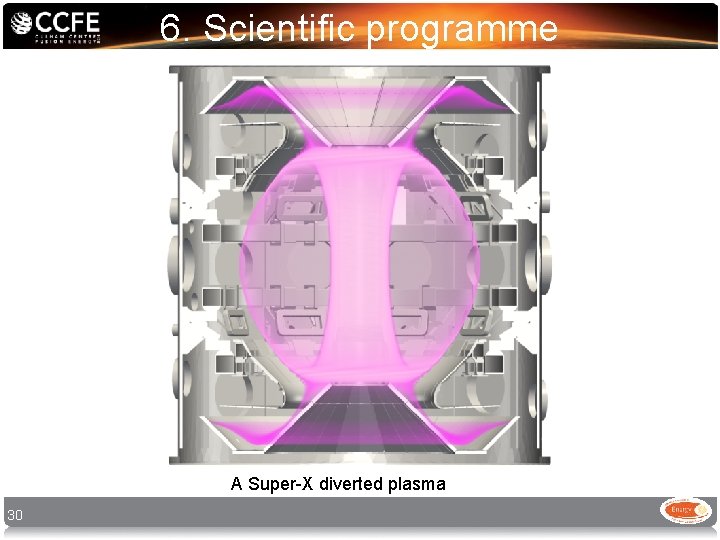
6. Scientific programme A Super-X diverted plasma 30
6. Scientific programme Key early goals • Improving the understanding of exhaust physics – Closure and connection length – Flux expansion at the divertor targets – Volumetric losses and detachment • Fast ion physics and current drive – Tailoring super-Alfvenic fast ion distribution – High elongation plasmas with reduced fast ion redistribution • Other high-priority ITER, DEMO and CTF needs – RMP ELM control – Pedestal & core turbulence at low collisionality 31
6. Scientific programme Collaborations • Following recent EUROfusion call for proposals, 40 proposals were received showing a strong interest from European collaborators • The requested number of pulses was 3 times those available • Shot prioritisation was discussed at the General planning meeting held in November 2016 in Garching at which MAST-U was included for the first time 32
6. Scientific programme Collaborations • USA • ORNL: Bolometry • PPPL: plasma control and divertor physics • GA: ELM control • Florida: proton detector • W&M: turbulence imaging • Wisconsin: EMC 3 (3 -D fluid plasma and kinetic neutral transport code) • UC Irvine: FIDA measurements • UCLA: Doppler Back Scattering + a number of other collaborations around the globe 33
7. Summary • Completion of >90% of the MAST-U Tokamak build has meant that a large number of technical risks are now retired • Current focus is on successful installation of the Centre Column, installation / testing of key services and preparation for the start of integrated commissioning in first half of 2017 • Once complete, we expect this device to make significant contributions in the fields of exhaust physics, edge physics, fast ion physics and current drive, and other high-priority ITER, DEMO areas of interest. • There are still many opportunities for collaborations from across the globe to participate in this exciting new facility 34