
Statistics Sampling Distributions Nonnormal Distributions Weve studied a
Statistics Sampling Distributions
Non-normal Distributions We’ve studied a lot about the normal distribution Some distributions are not normal …
Non-normal Distributions Kurtosis - how tall or flat your curve is compared to a normal curve
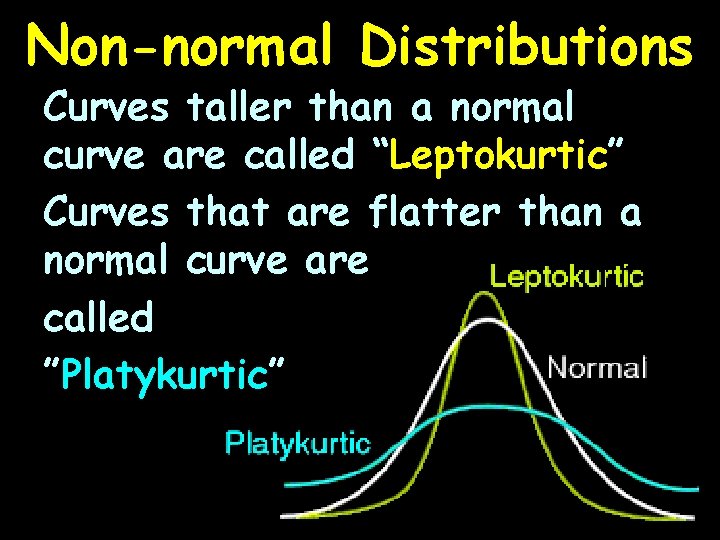
Non-normal Distributions Curves taller than a normal curve are called “Leptokurtic” Curves that are flatter than a normal curve are called ”Platykurtic”
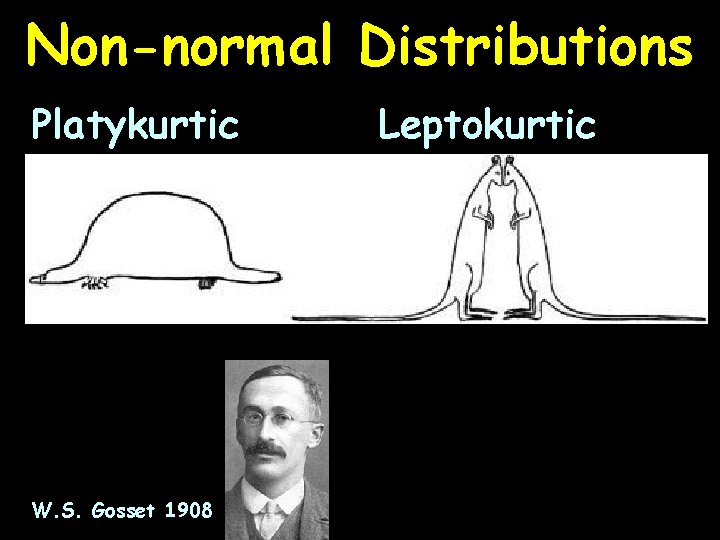
Non-normal Distributions Platykurtic W. S. Gosset 1908 Leptokurtic
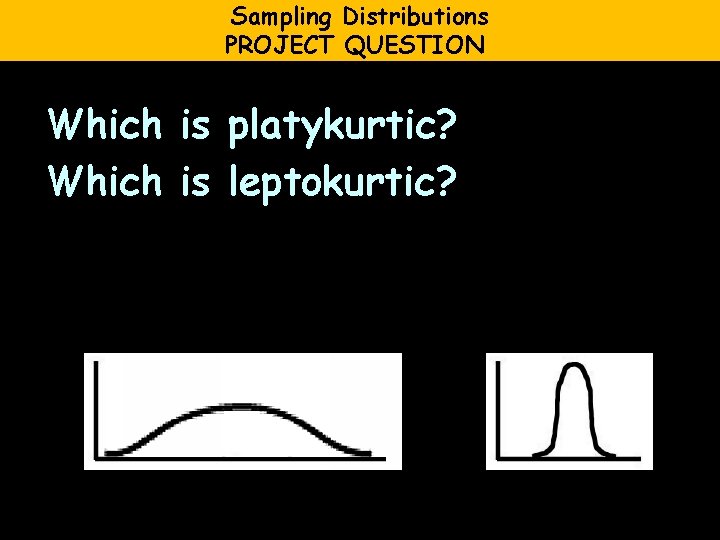
Sampling Distributions PROJECT QUESTION Which is platykurtic? Which is leptokurtic?
Non-normal Distributions Skewness – the data are “bunched” to one side vs a normal curve
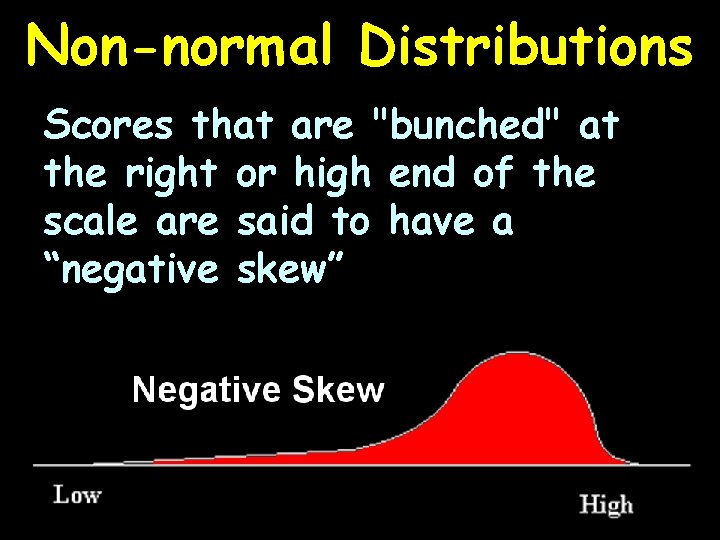
Non-normal Distributions Scores that are "bunched" at the right or high end of the scale are said to have a “negative skew”
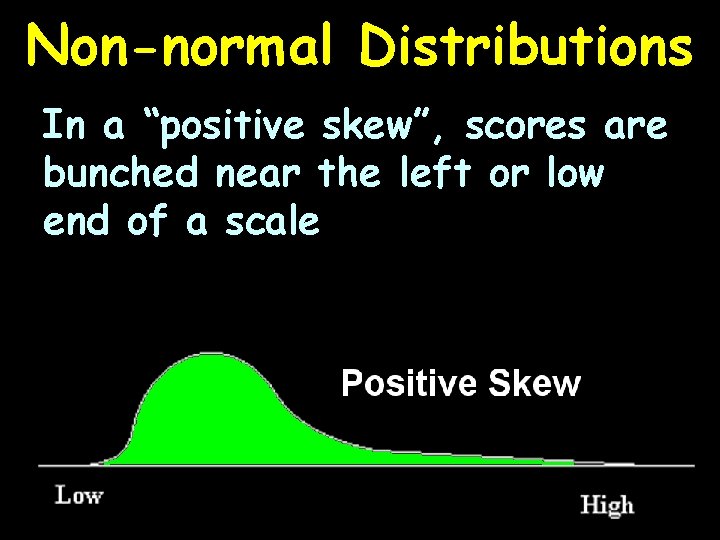
Non-normal Distributions In a “positive skew”, scores are bunched near the left or low end of a scale
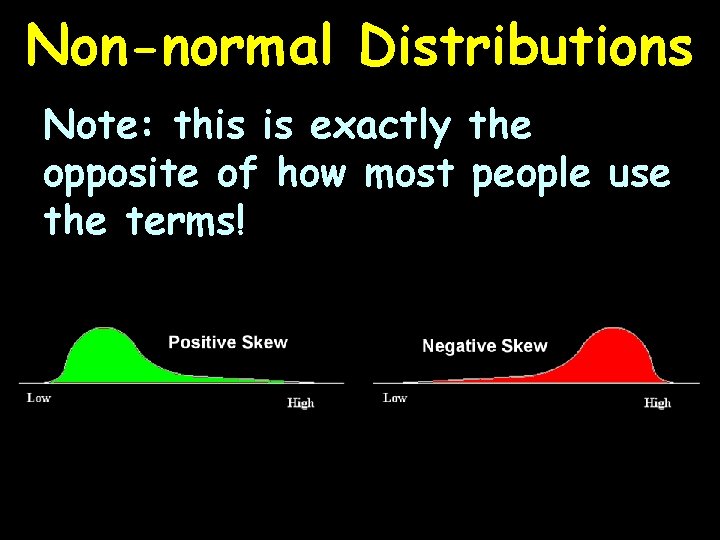
Non-normal Distributions Note: this is exactly the opposite of how most people use the terms!
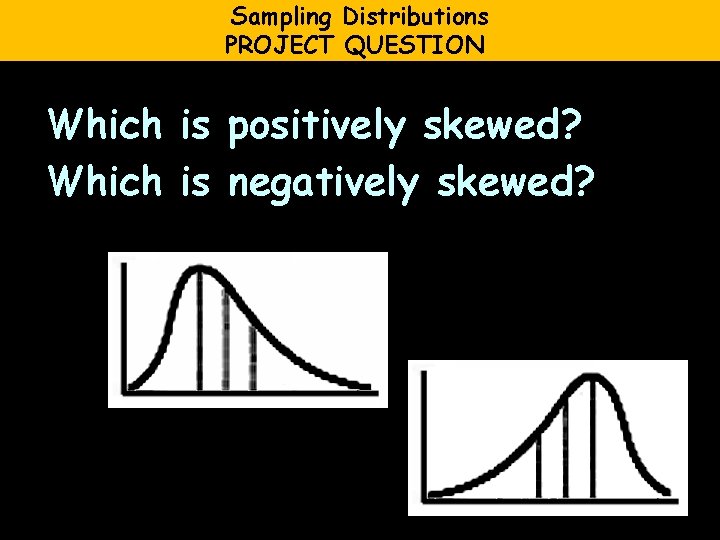
Sampling Distributions PROJECT QUESTION Which is positively skewed? Which is negatively skewed?
Normal Distributions We use normal distributions a lot in statistics because lots of things have graphs this shape! -heights -weights -IQ test scores -bull’s eyes
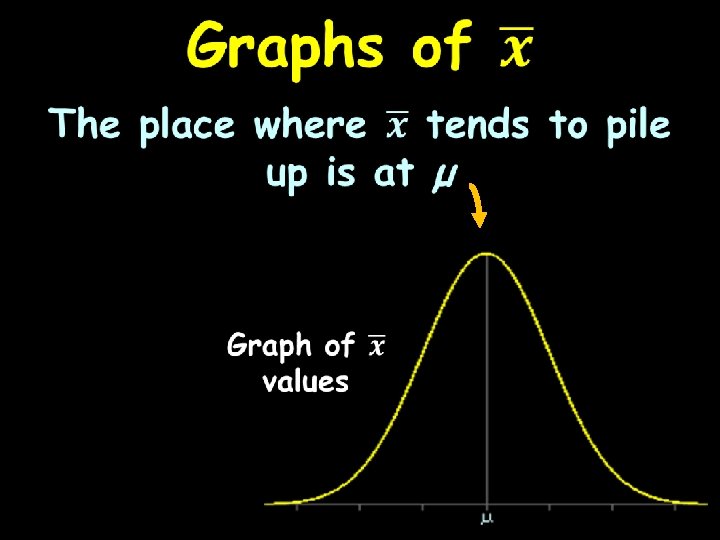
Normal Distributions Also, even data which are not normally distributed have averages which DO have normal distributions
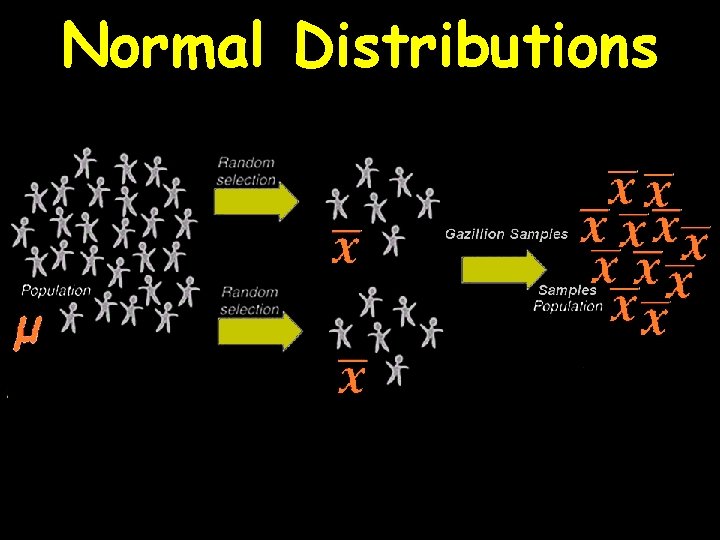
Normal Distributions If you take a gazillion samples and find the means for each of the gazillion samples You would have a new population: the gazillion means
Normal Distributions
Normal Distributions If you plotted the frequency of the gazillion mean values, it is called a SAMPLING DISTRIBUTION
Sampling Distributions The shape of the plot of the gazillion sample means would have a normal-ish distribution NO MATTER WHAT THE ORIGINAL DATA LOOKED LIKE
Sampling Distributions But … the shape of the distribution of your gazillion means changes with the size “n” of the samples you took
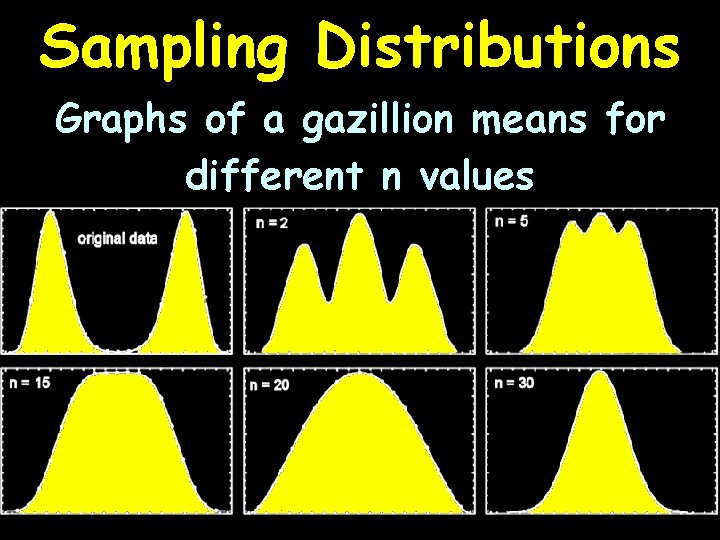
Sampling Distributions Graphs of a gazillion means for different n values
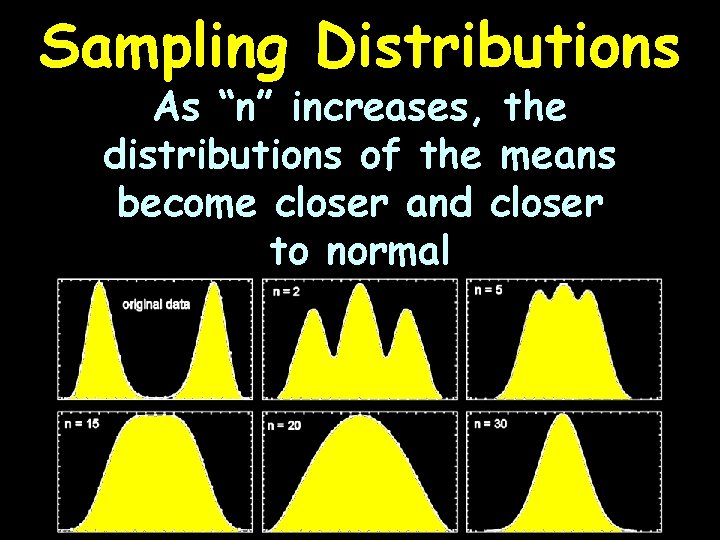
Sampling Distributions As “n” increases, the distributions of the means become closer and closer to normal
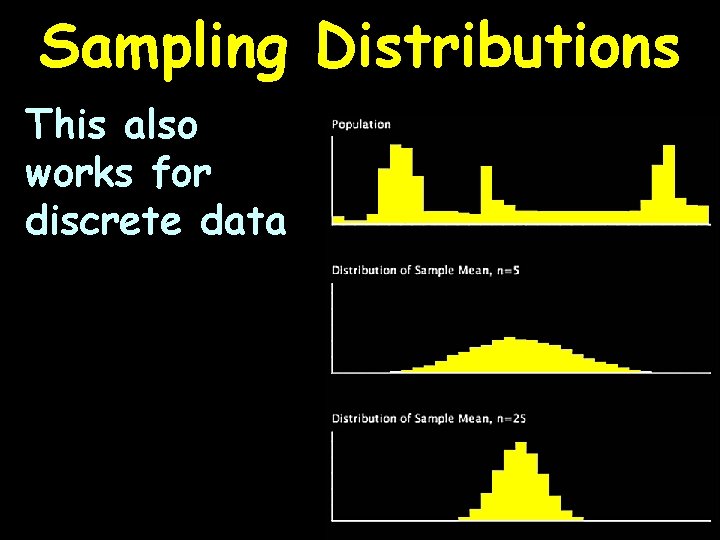
Sampling Distributions This also works for discrete data
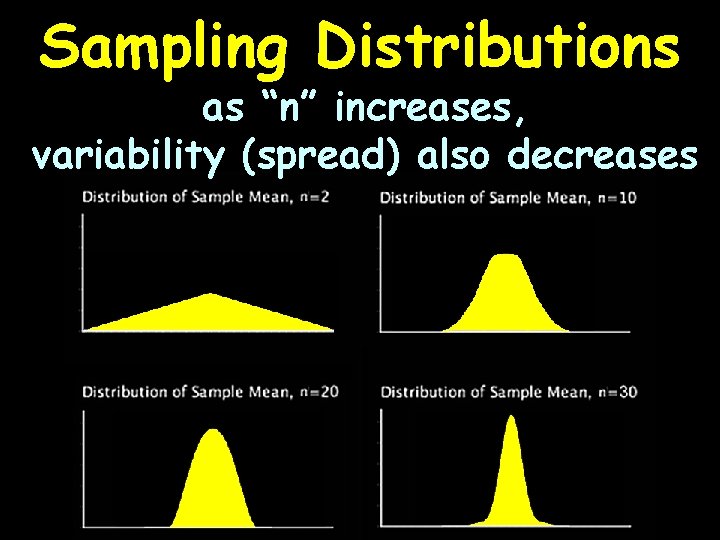
Sampling Distributions as “n” increases, variability (spread) also decreases
Sampling Distributions We usually say the sample mean will be normally distributed if n is ≥ 20 -30 (the “good-enuff” value)
Sampling Distributions The statistical principle that allows us to conclude that sample means have a normal distribution if the sample size is 20 -30 or more is called the Central Limit Theorem
Sampling Distributions If you can assume the distribution of the sample means is normal, you can use the normal distribution probabilities for making probability statements about µ
Sampling Distributions Sample means from platykurtic, leptokurtic, and bimodal distributions become “normal enough” when your sample size n is 20 -30 or more
Sampling Distributions Means from samples of skewed populations do not become “normal enough” very easily You sometimes need a mega-huge sample size to “normalize” a badly skewed distribution
Sampling Distributions A wild outlier might indicate a badly skewed distribution
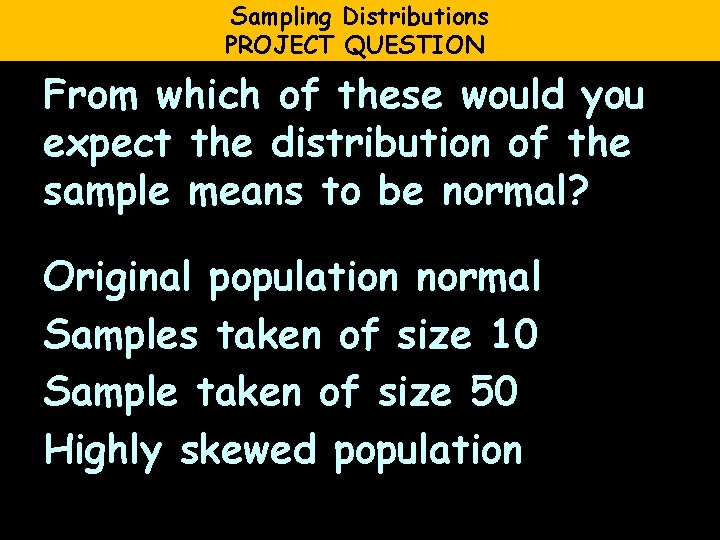
Sampling Distributions PROJECT QUESTION From which of these would you expect the distribution of the sample means to be normal? Original population normal Samples taken of size 10 Sample taken of size 50 Highly skewed population

Questions?
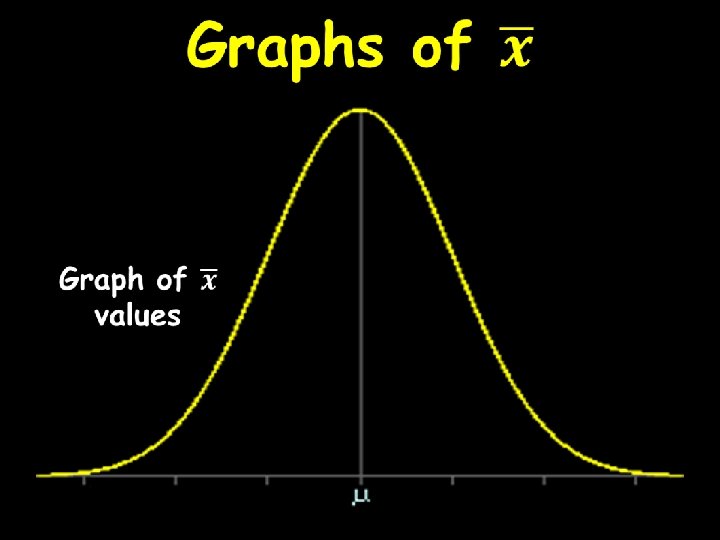
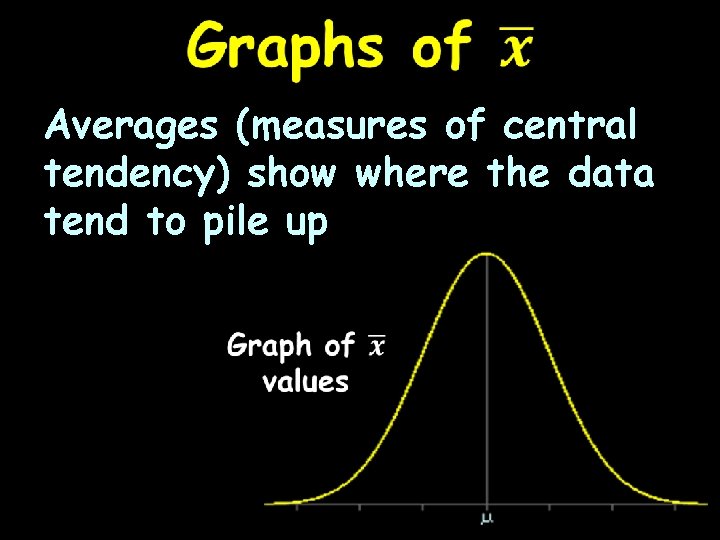
Averages (measures of central tendency) show where the data tend to pile up
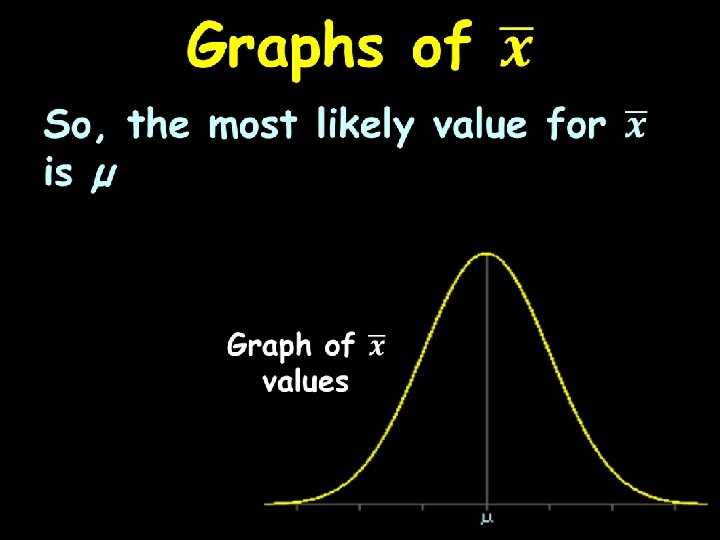
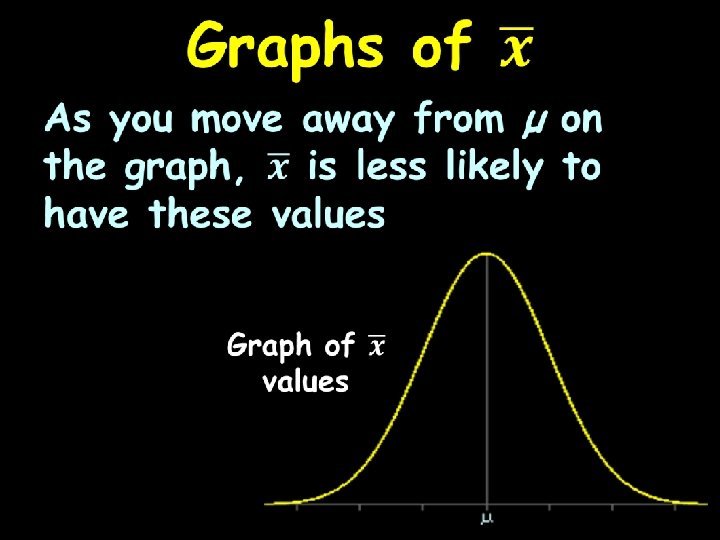
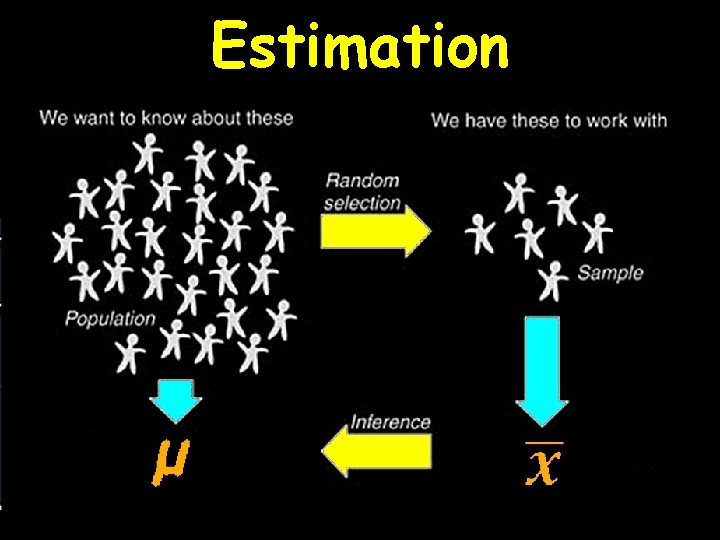
Estimation
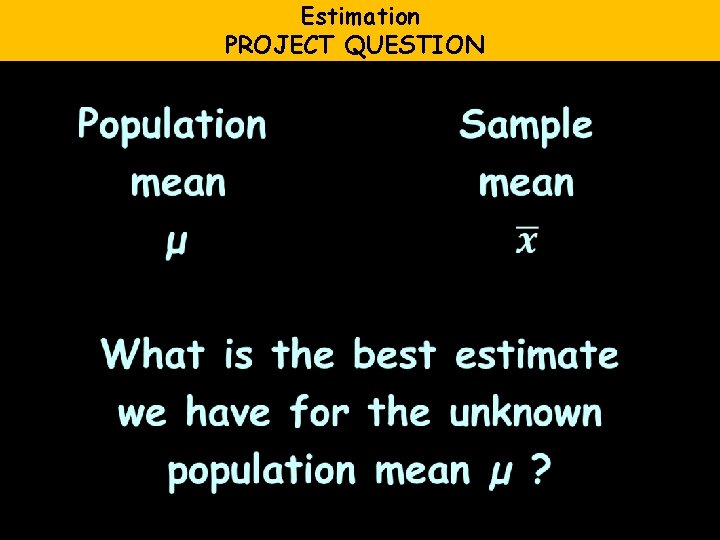
Estimation PROJECT QUESTION
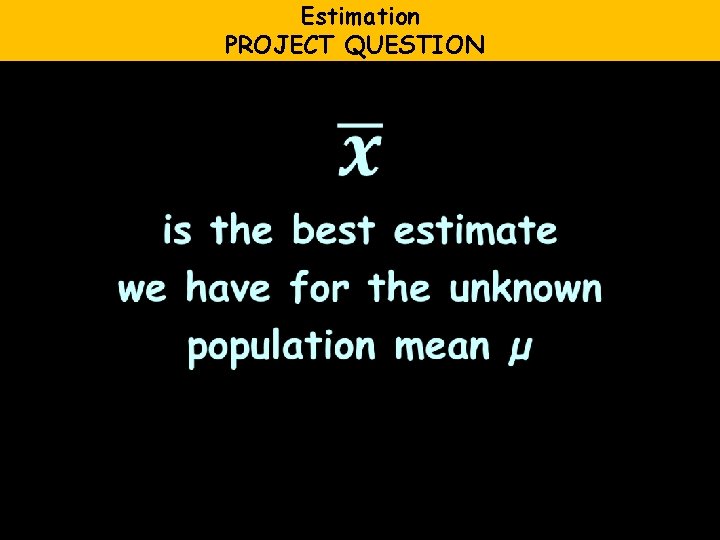
Estimation PROJECT QUESTION
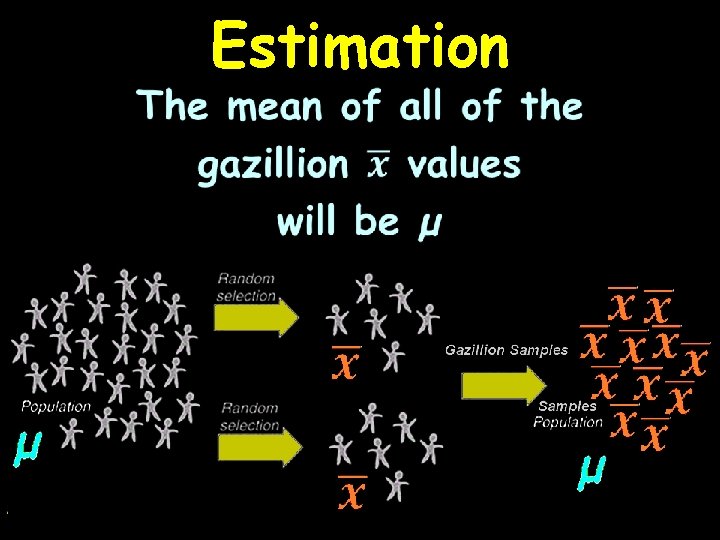
Estimation
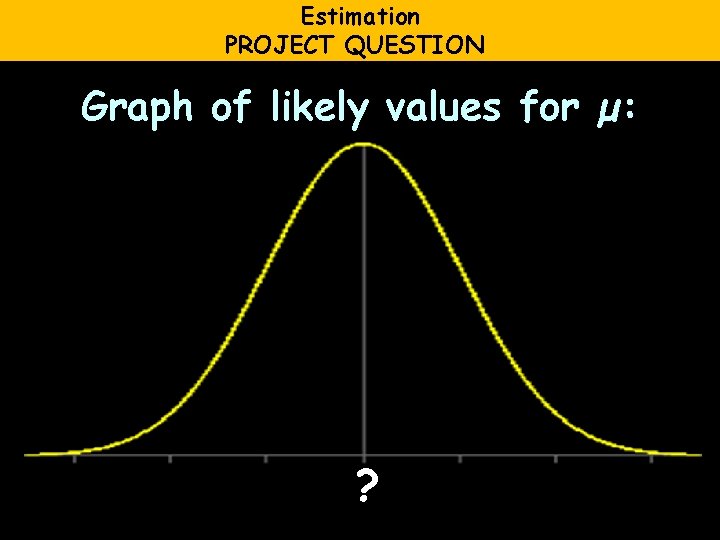
Estimation PROJECT QUESTION Graph of likely values for µ: ?
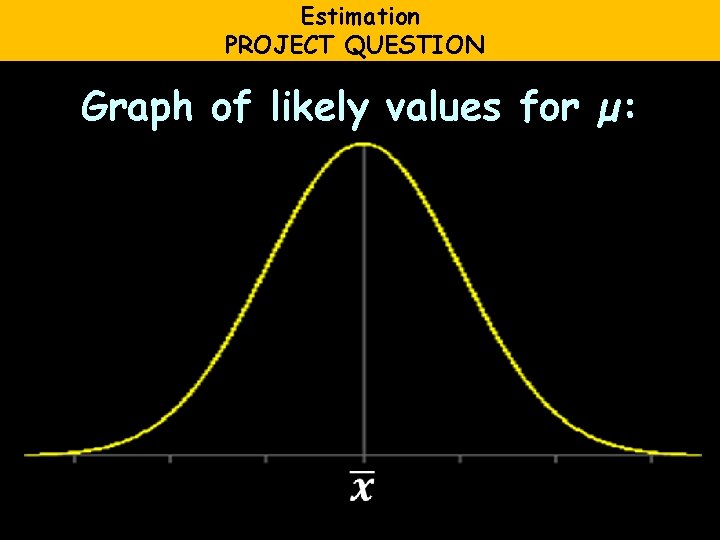
Estimation PROJECT QUESTION Graph of likely values for µ:
Estimation
Estimation
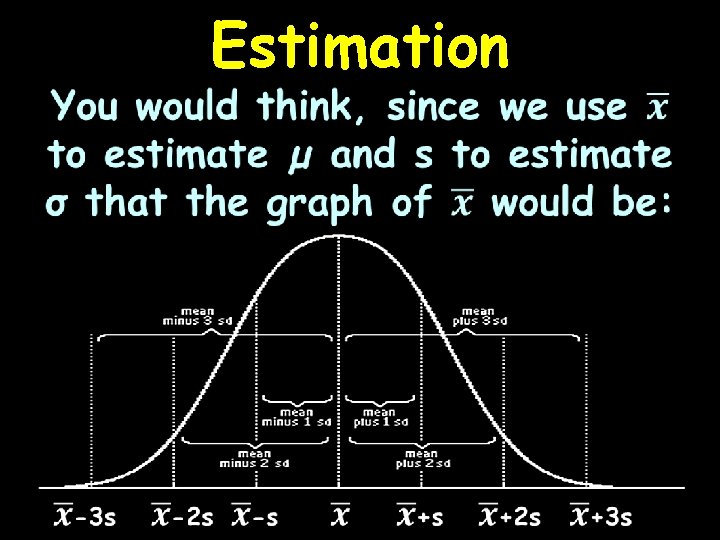
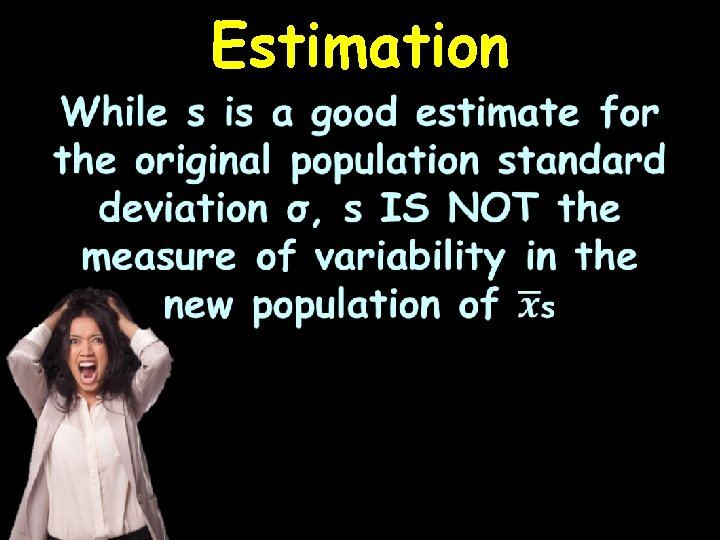
Estimation The sample standard deviation “s” is the best estimate we have for the unknown population standard deviation “σ”
Estimation Using s to estimate σ is also an inference
Estimation
Estimation It’s not…
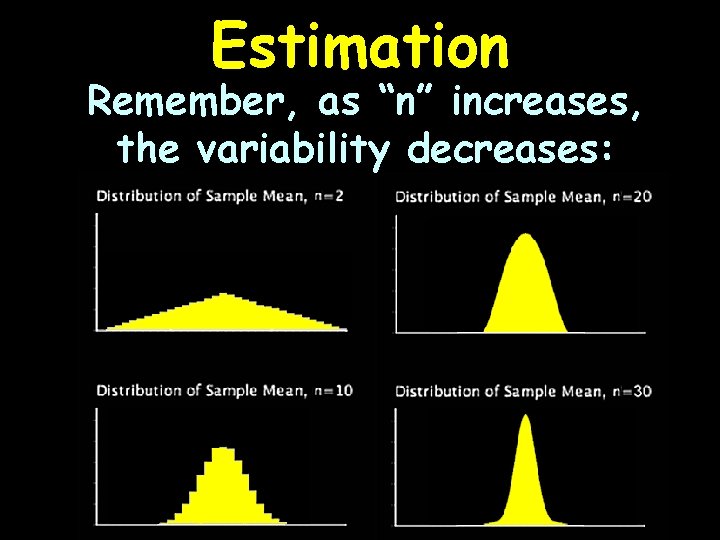
Estimation Remember, as “n” increases, the variability decreases:
Estimation
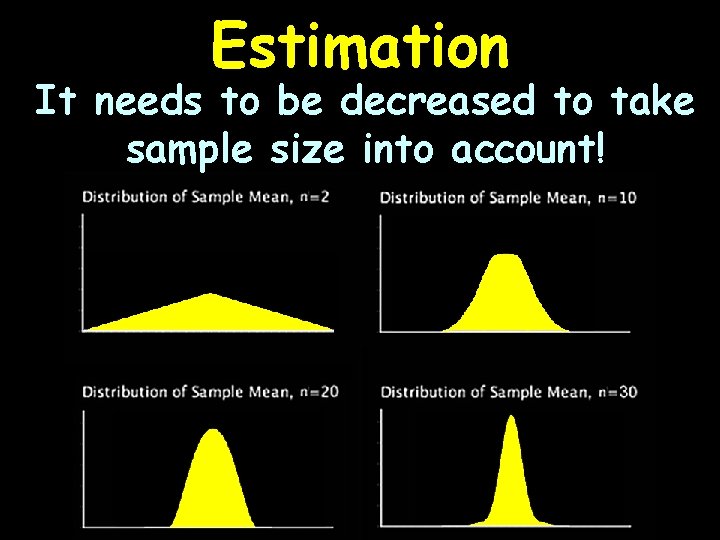
Estimation It needs to be decreased to take sample size into account!
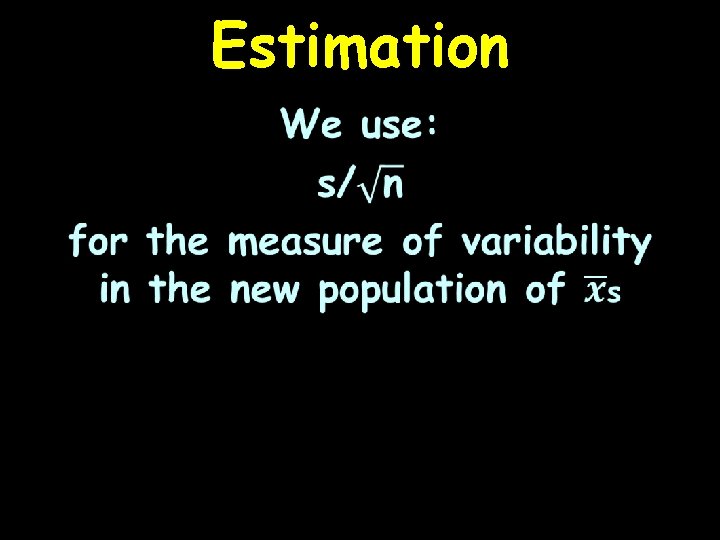
Estimation
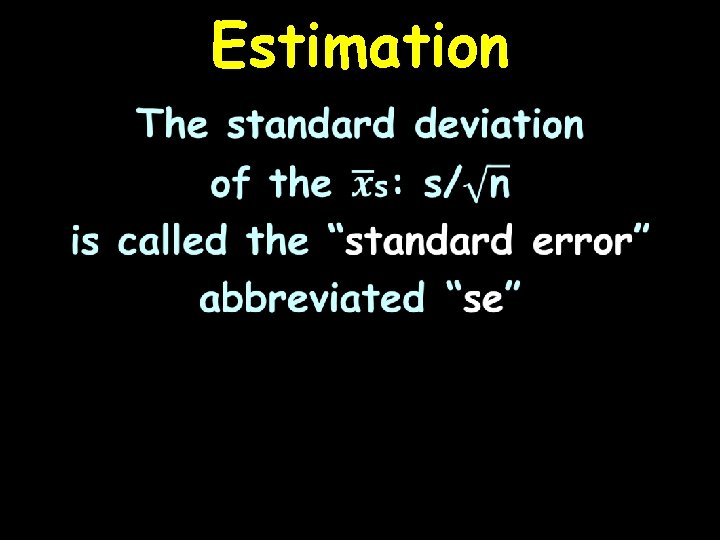
Estimation
Estimation BTW: you now know ALL of the items on the Descriptive Statistics list in Excel
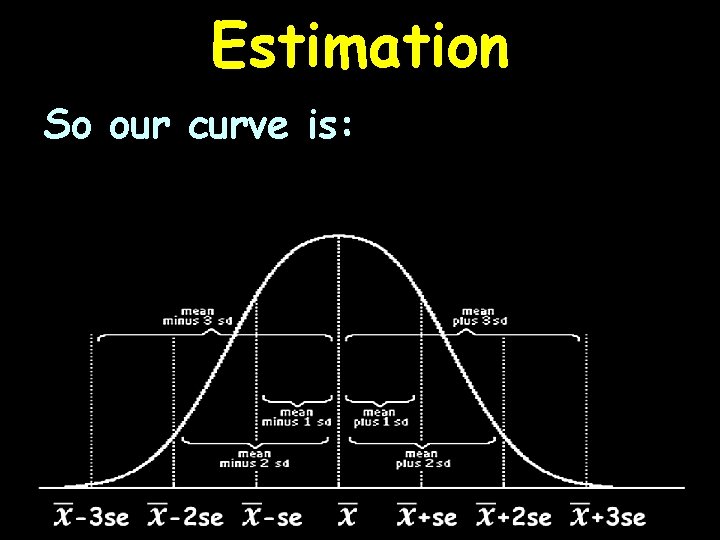
Estimation So our curve is:
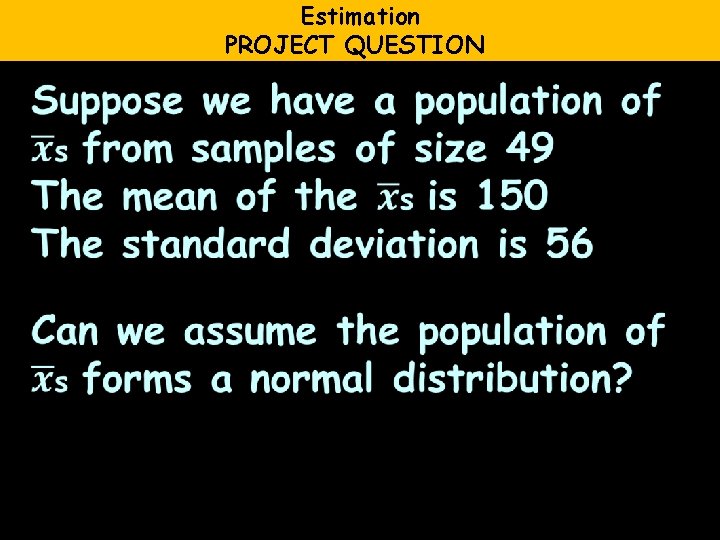
Estimation PROJECT QUESTION
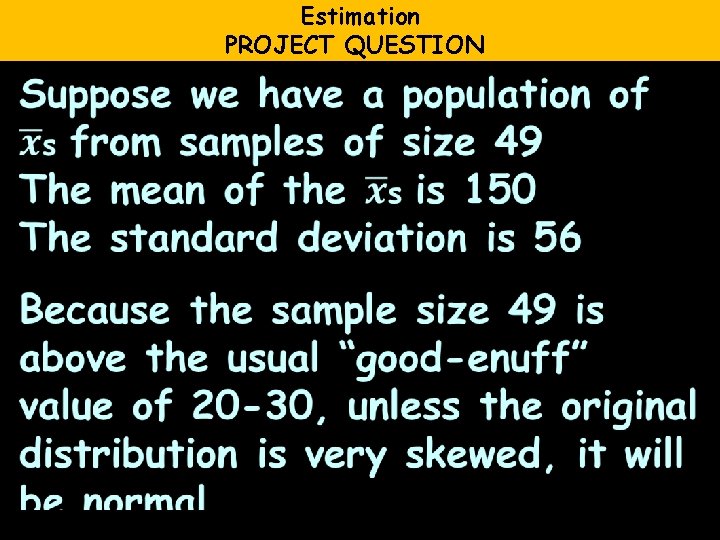
Estimation PROJECT QUESTION
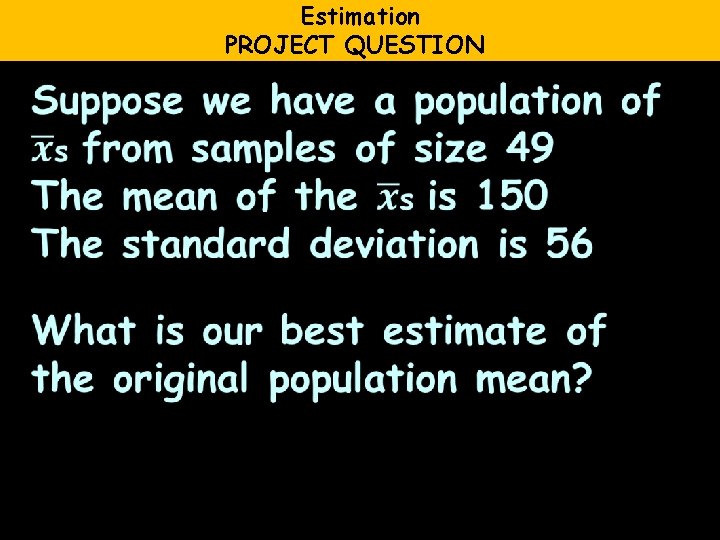
Estimation PROJECT QUESTION
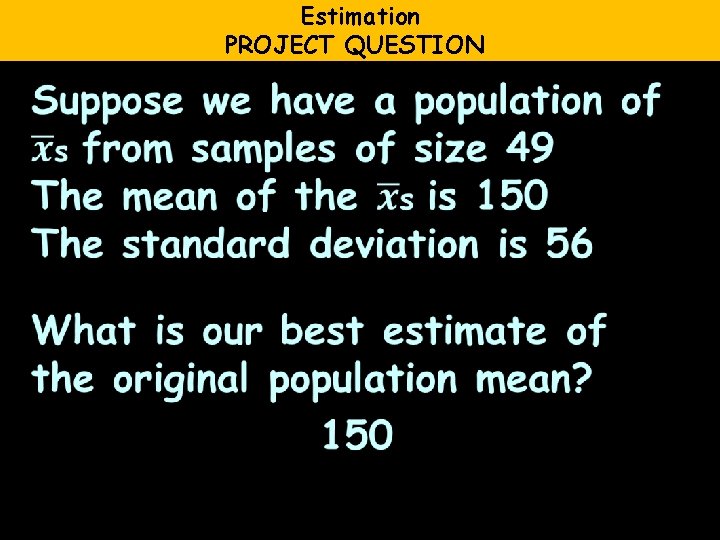
Estimation PROJECT QUESTION
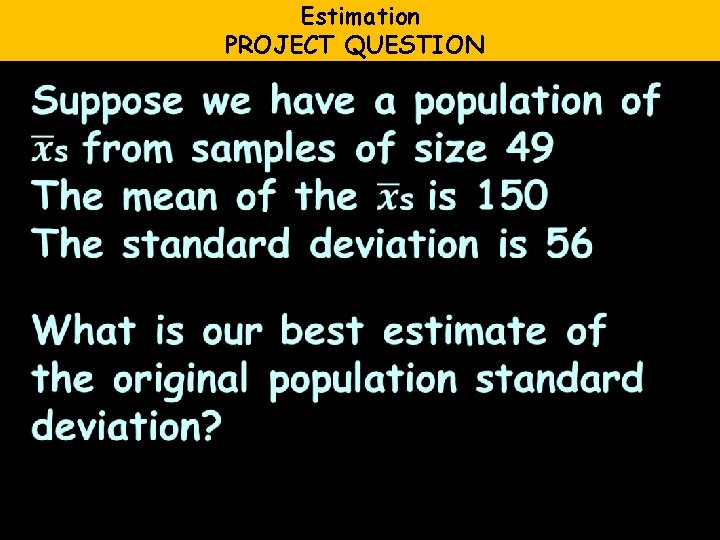
Estimation PROJECT QUESTION
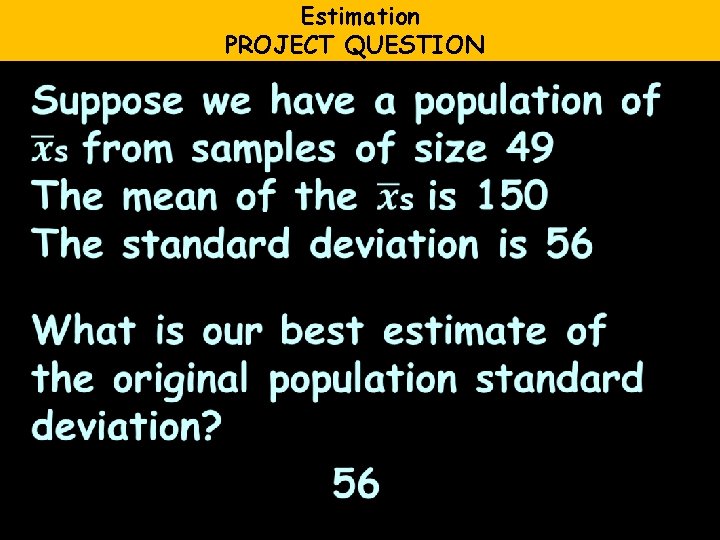
Estimation PROJECT QUESTION
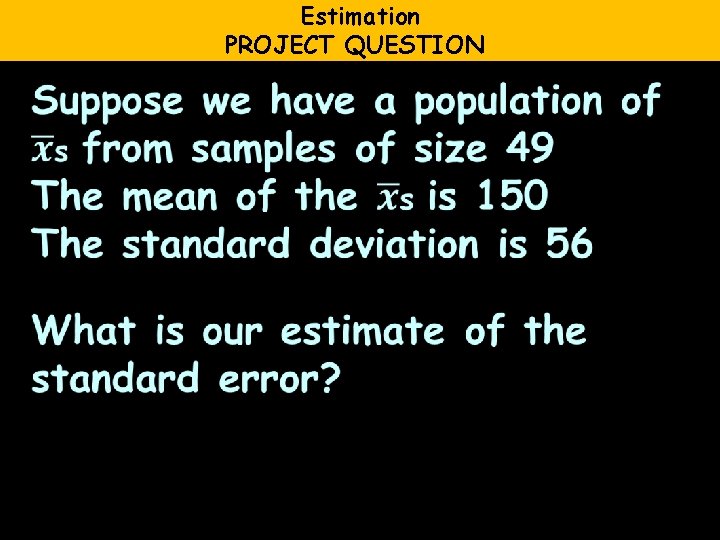
Estimation PROJECT QUESTION
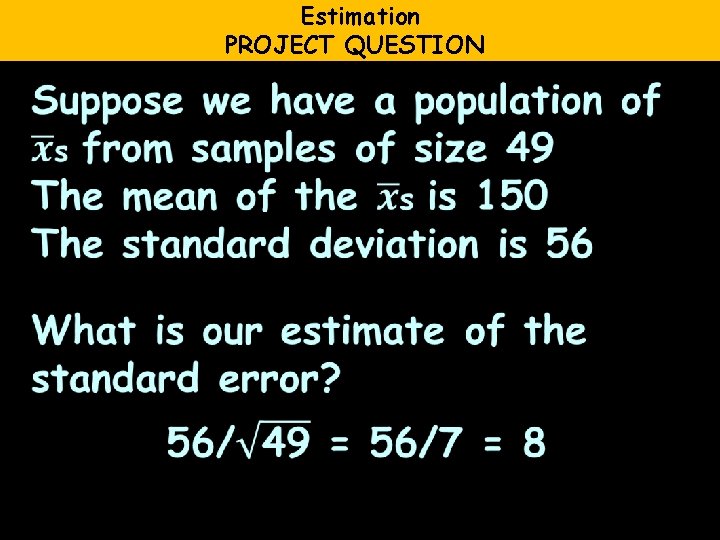
Estimation PROJECT QUESTION
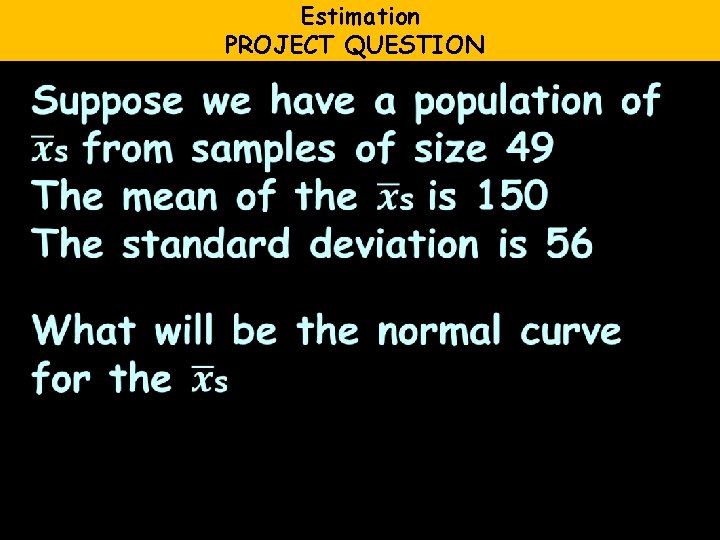
Estimation PROJECT QUESTION
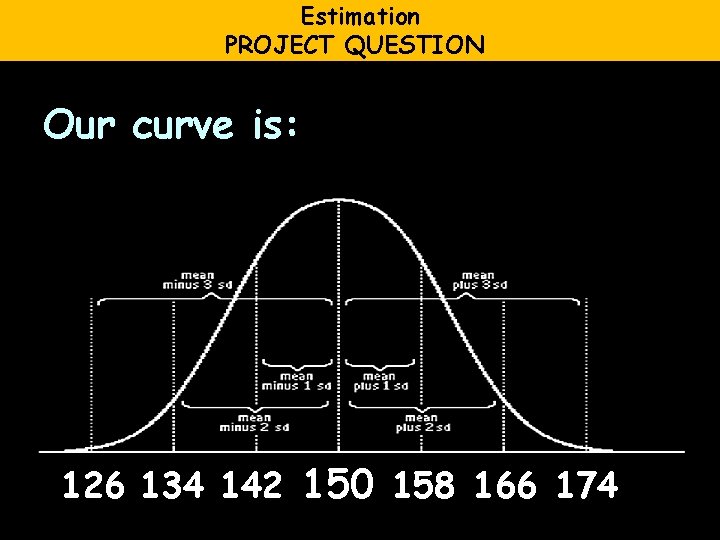
Estimation PROJECT QUESTION Our curve is: 126 134 142 150 158 166 174
Questions?
- Slides: 65