
Statistics of Freeway Traffic 1 Overview The Freeway
- Slides: 26
Statistics of Freeway Traffic 1
Overview • The Freeway Performance Measurement System (Pe. MS) • Computer Lab • Visualization of Traffic Dynamics • Visualization and Data Quality • Travel Time Prediction • Computer Lab 2
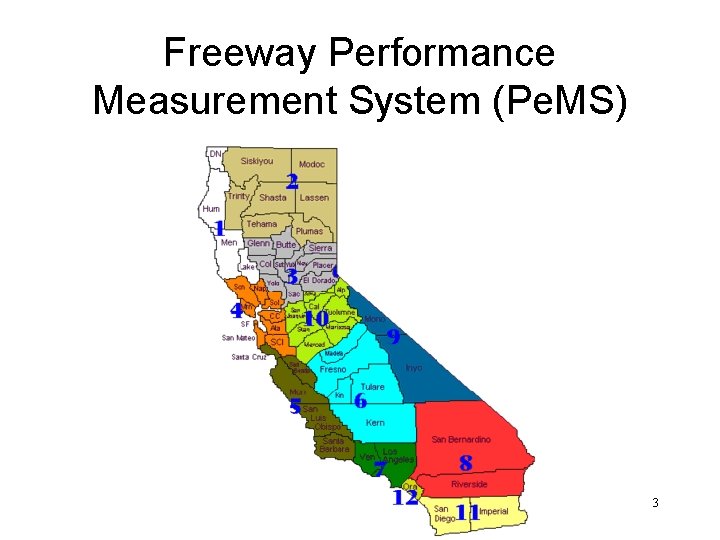
Freeway Performance Measurement System (Pe. MS) 3
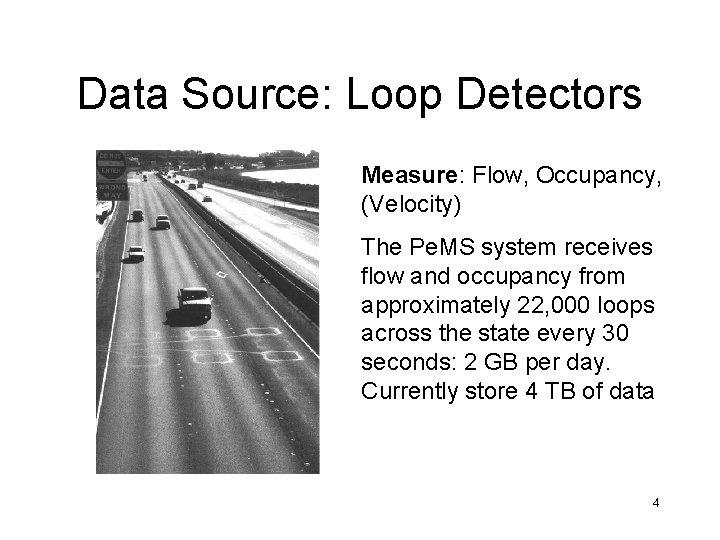
Data Source: Loop Detectors Measure: Flow, Occupancy, (Velocity) The Pe. MS system receives flow and occupancy from approximately 22, 000 loops across the state every 30 seconds: 2 GB per day. Currently store 4 TB of data 4
Uses • Managers at any time can have a uniform, and comprehensive assessment of freeway performance. • Traffic engineers can base their operational decisions on knowledge of the current state of the freeway network. • Planners can determine whether congestion bottlenecks can be alleviated by improving operations or by minor capital improvements. • Travelers can obtain the current shortest route and travel time estimates. • Researchers can validate their theories and calibrate simulation models. 5
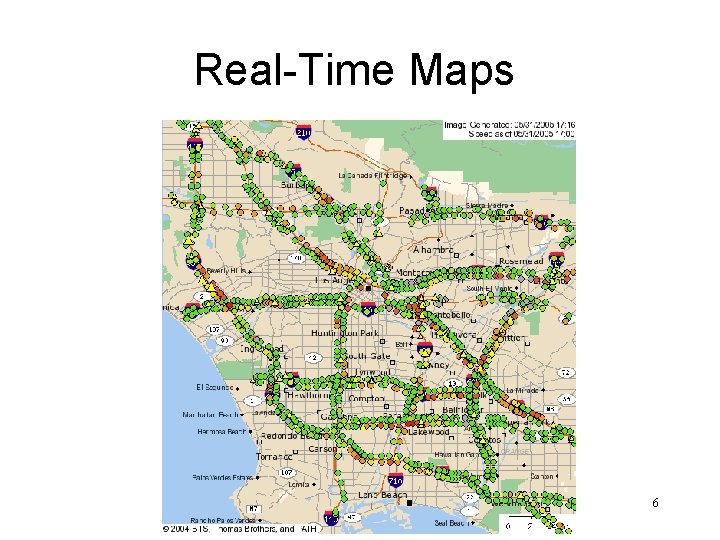
Real-Time Maps 6
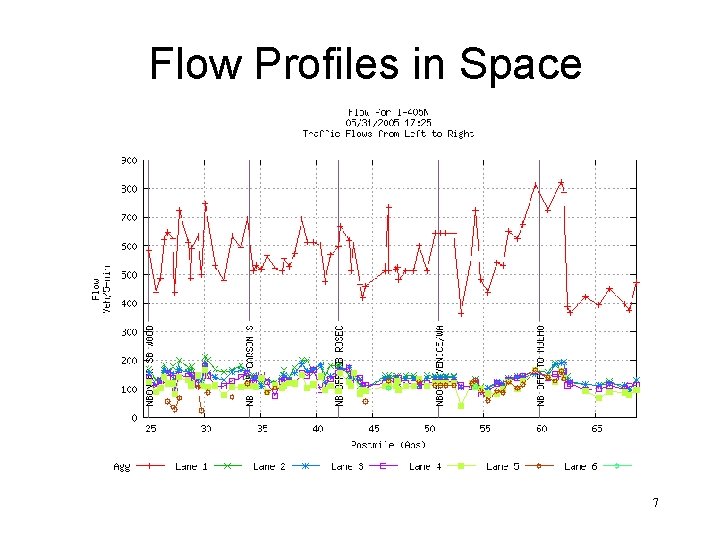
Flow Profiles in Space 7
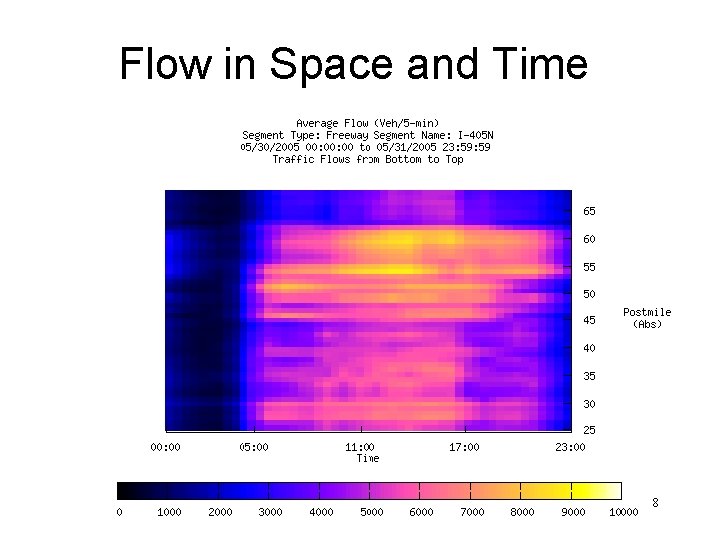
Flow in Space and Time 8
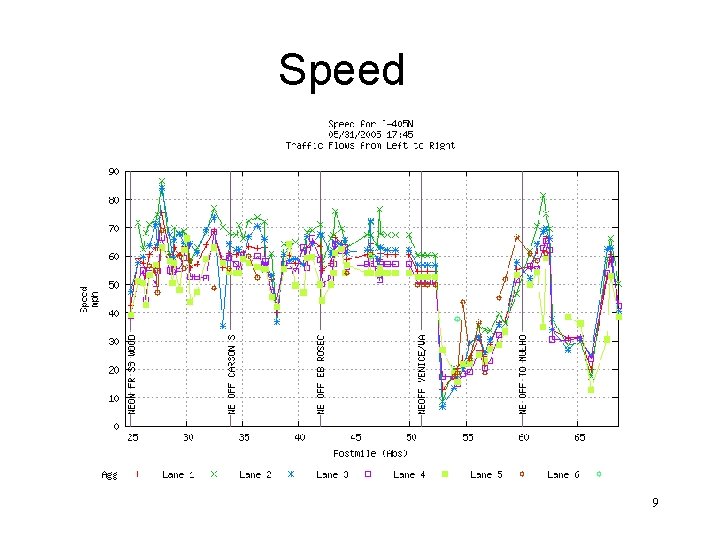
Speed 9
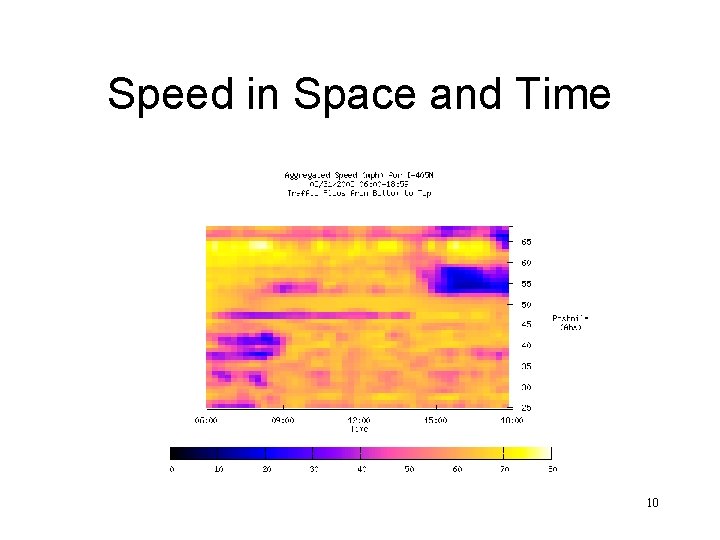
Speed in Space and Time 10
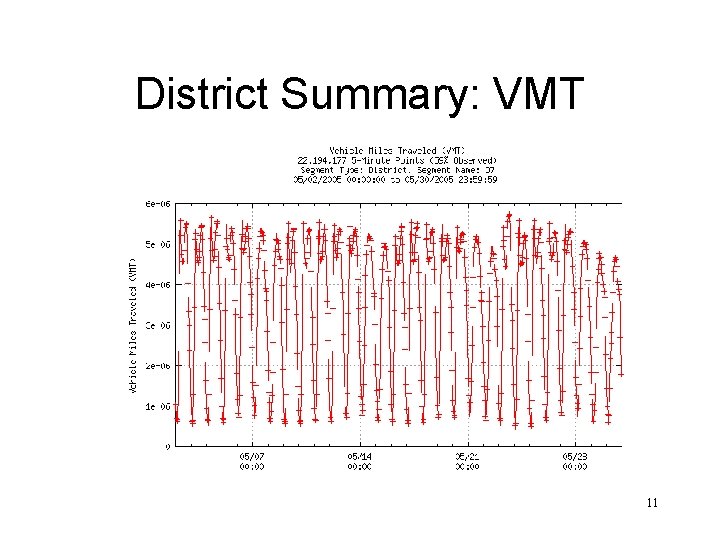
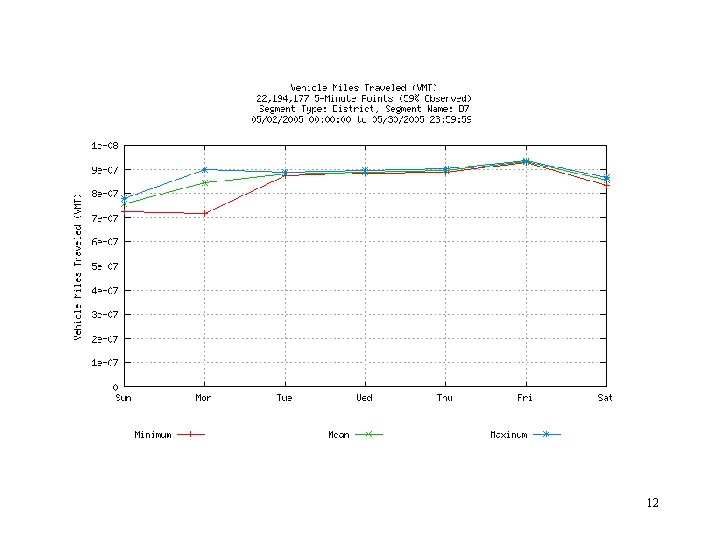
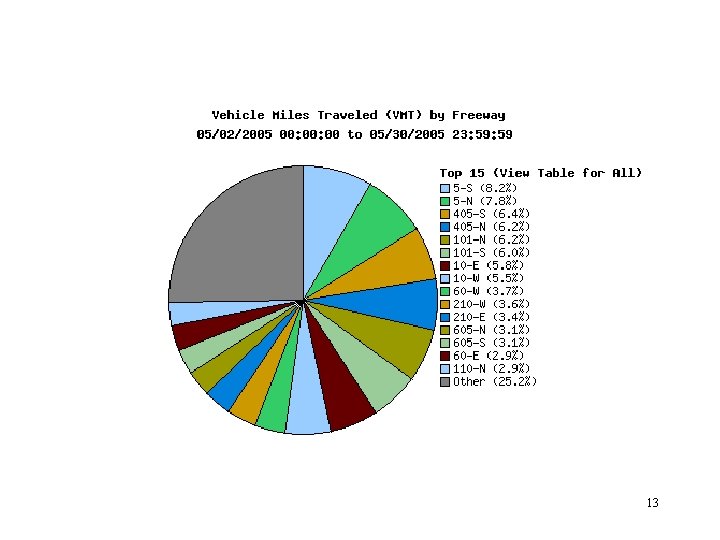
District Summary: VMT 11
12
13
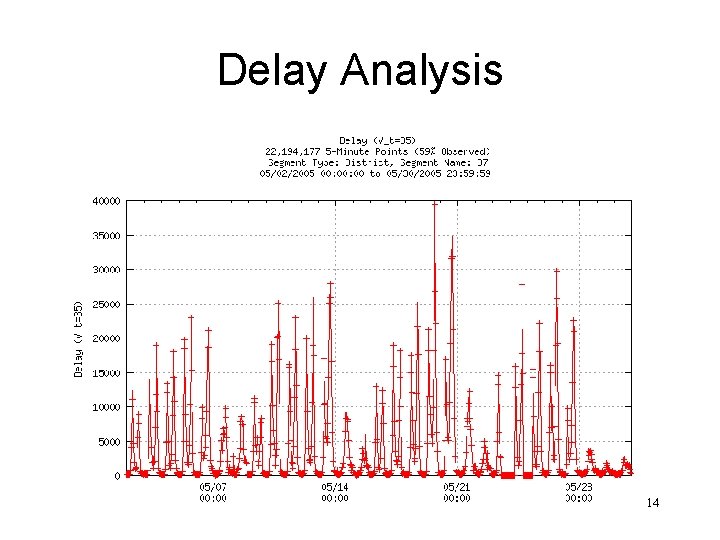
Delay Analysis 14
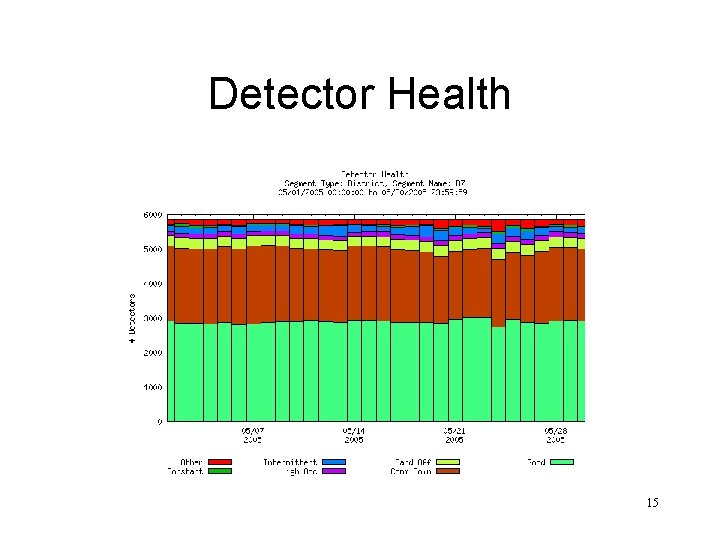
Detector Health 15
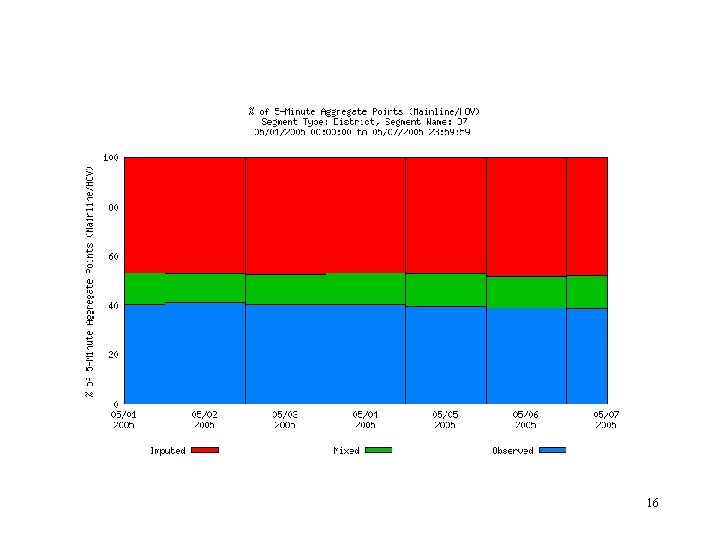
16
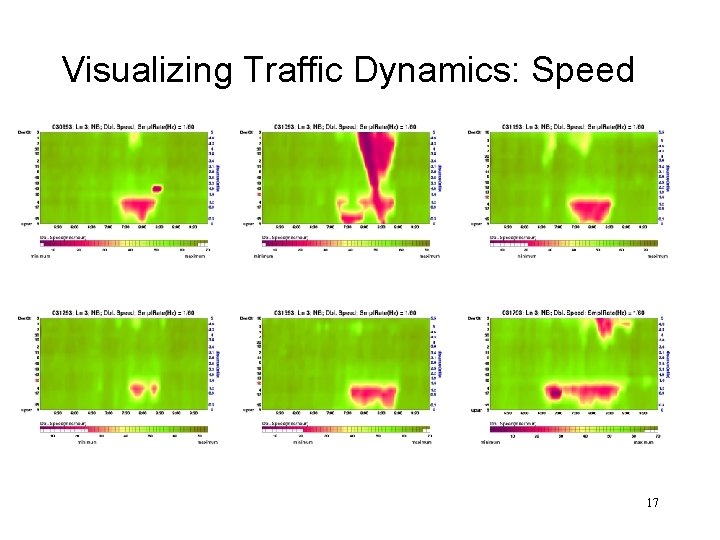
Visualizing Traffic Dynamics: Speed 17
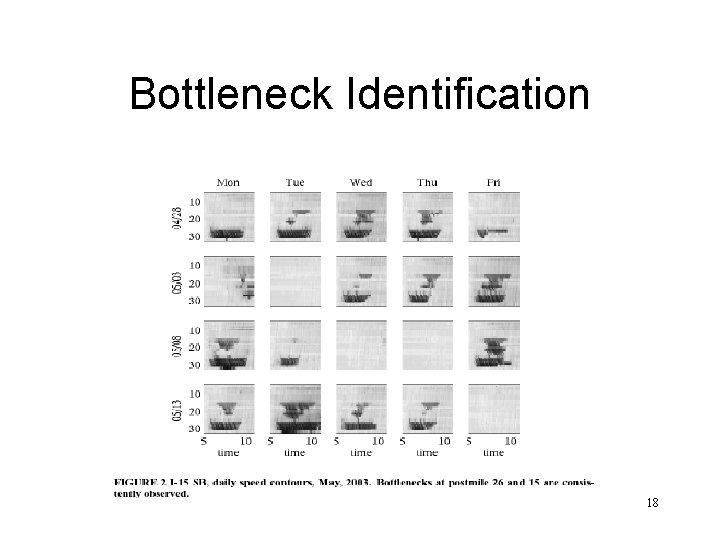
Bottleneck Identification 18
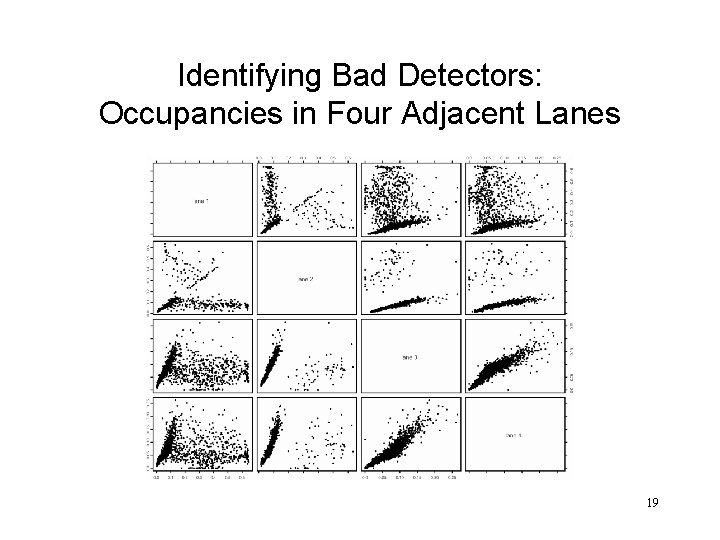
Identifying Bad Detectors: Occupancies in Four Adjacent Lanes 19
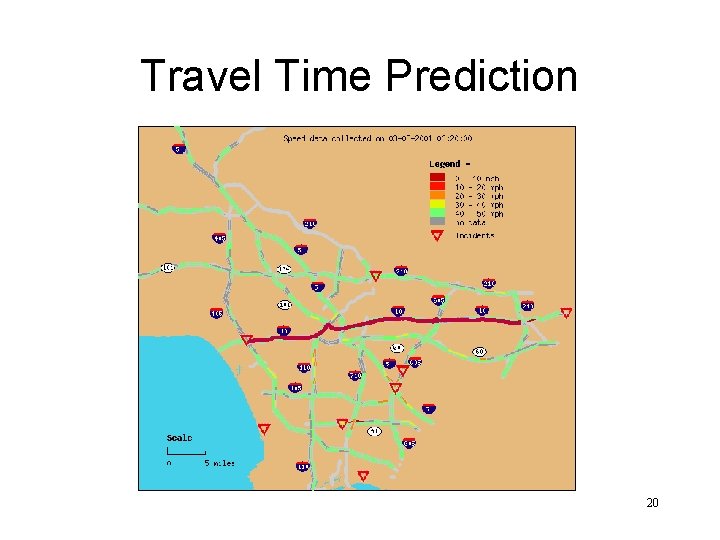
Travel Time Prediction 20
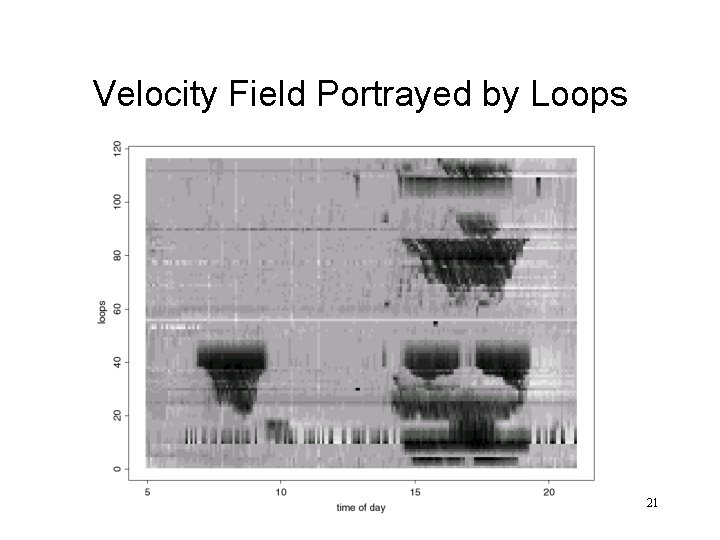
Velocity Field Portrayed by Loops 21
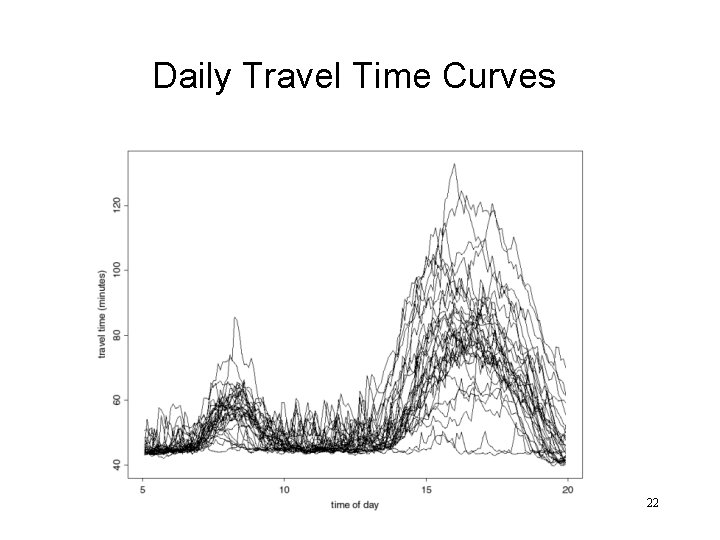
Daily Travel Time Curves 22
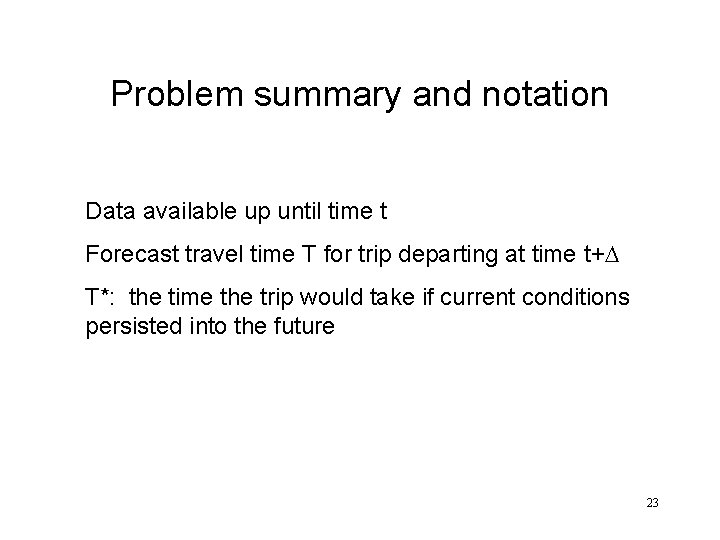
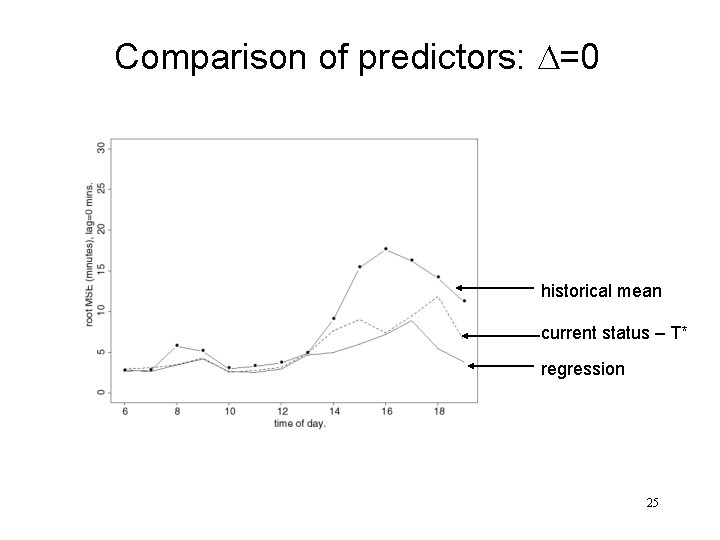
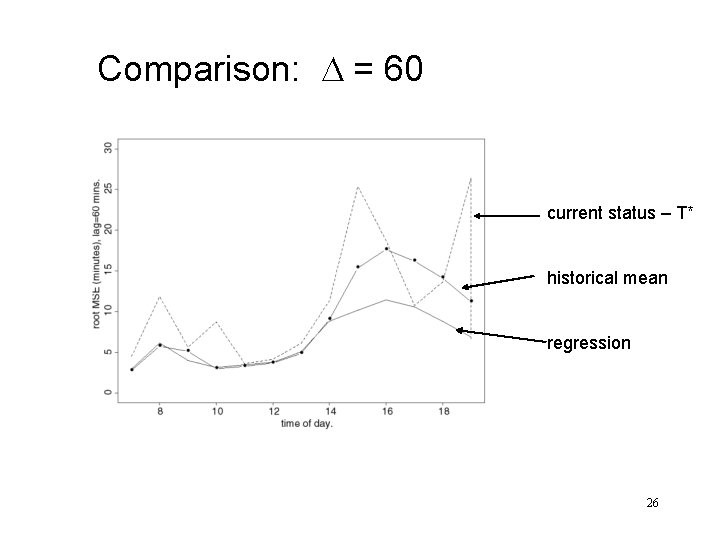
Problem summary and notation Data available up until time t Forecast travel time T for trip departing at time t+D T*: the time the trip would take if current conditions persisted into the future 23
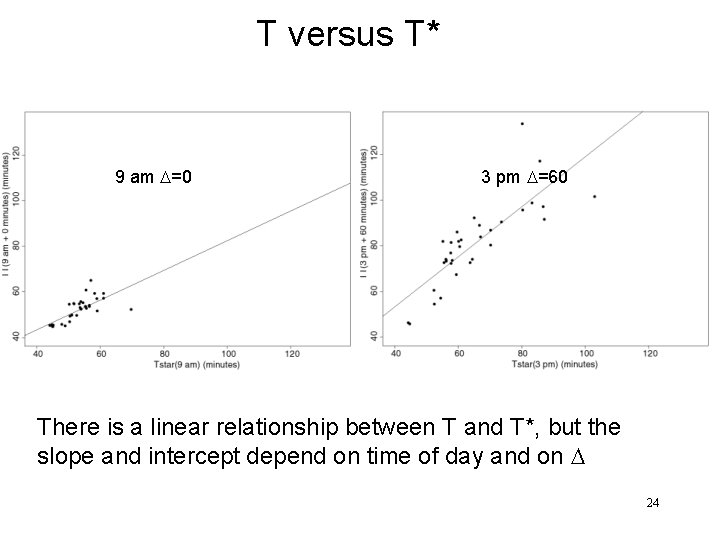
T versus T* 9 am D=0 3 pm D=60 There is a linear relationship between T and T*, but the slope and intercept depend on time of day and on D 24
Comparison of predictors: D=0 historical mean current status – T* regression 25
Comparison: D = 60 current status – T* historical mean regression 26