
Statistics O R 881 Object Oriented Data Analysis

Statistics – O. R. 881 Object Oriented Data Analysis Steve Marron Dept. of Statistics and Operations Research University of North Carolina

Administrative Info • Details on Course Web Page https: //marron. web. unc. edu/stor-881 -object-oriented-data-analysis-fall-2019/ • Or: – Google: “Marrons teaching material” – Choose This Course

Administrative Info Available on that Web Page: • Will Post Daily Power Points • Also Keep Running List of References

Who are we? • Varying Levels of Expertise – 2 nd Year Graduate (MS & Ph. D) Students –… – Faculty Level Researchers • Various Backgrounds – Statistics / Biostat – Computer Science – Imaging – Bioinformatics – Genetics – Pharmacy – Others…

Course Expectations Grading Based on: “Participant Presentations” 5 – 10 minute talks • By Enrolled Students • Hopefully Others

Class Meeting Style • When you don’t understand something • Many others probably join you • So please fire away with questions • Discussion usually enlightening for others • If needed, I’ll tell you to shut up (essentially never happens)

Course Context Currently Fashionable Topic: Big Data Science

Course Context Currently Fashionable Topic: Big Data Science
Course Context Currently Fashionable Topic: Big (Data) Science Many Important Issues. But More Challenging (& Important? ): Complex Data
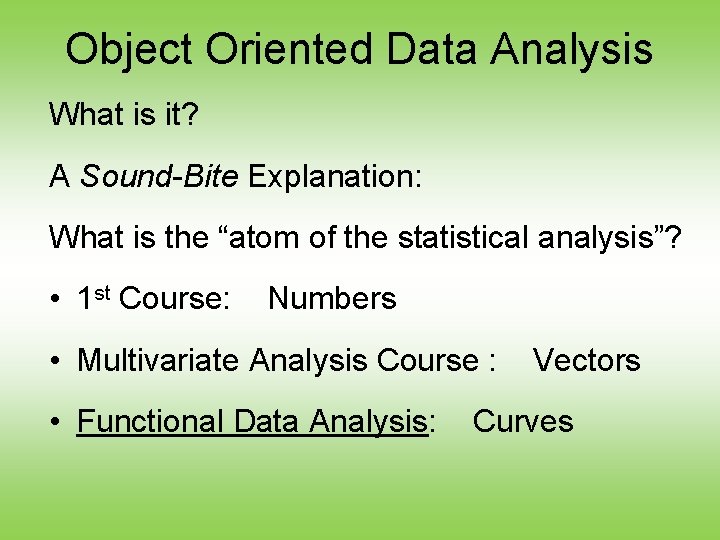
Object Oriented Data Analysis What is it? A Sound-Bite Explanation: What is the “atom of the statistical analysis”? • 1 st Course: Numbers • Multivariate Analysis Course : Vectors • Functional Data Analysis: Curves
Functional Data Analysis Currently active field in statistics, see: Ramsay & Silverman (2005) {Book} Ramsay & Silverman (2002) {Book} Ramsay, J. O. (2005) {Website}
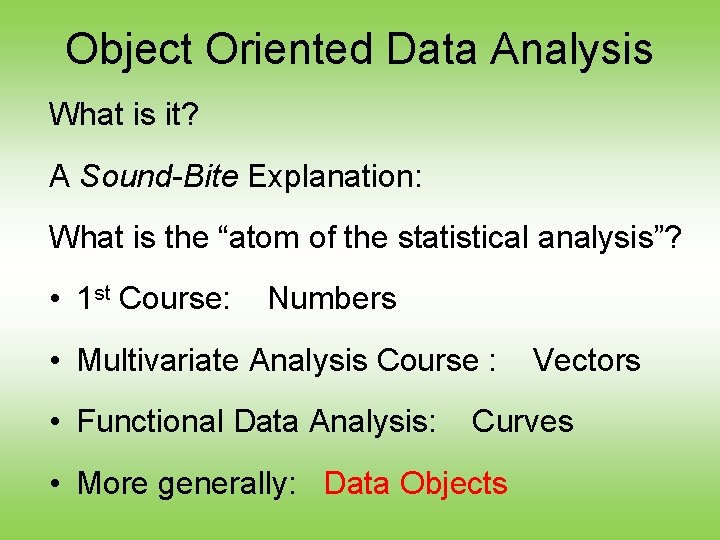
Object Oriented Data Analysis What is it? A Sound-Bite Explanation: What is the “atom of the statistical analysis”? • 1 st Course: Numbers • Multivariate Analysis Course : Vectors • Functional Data Analysis: Curves • More generally: Data Objects
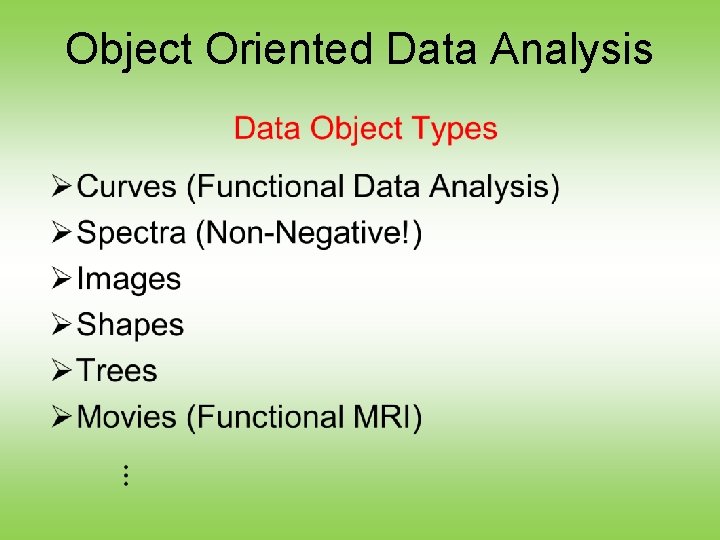
Object Oriented Data Analysis •
Object Oriented Data Analysis Current Motivation (of OODA terminology): Ø In Complicated Data Analyses Ø Fundamental (Non-Obvious) Question Is: “What Should We Take as Data Objects? ” Ø Key to Focusing Needed Analyses
Object Oriented Data Analysis Reviewer for Annals of Applied Statistics: Why not just say: “Experimental Units”? q Useful for some situations q But misses different representations E. g. log transformations …
Object Oriented Data Analysis Currently Published References: Wang and Marron (2007) Marron and Alonso (2014)

Object Oriented Data Analysis Publication in Progress: Object Oriented Data Analysis Book with Ian Dryden Latest Draft Available on Course Web Page Comments Welcome (Email Preferred)
Object Oriented Data Analysis What is Actually Done? Major Statistical Tasks: • • Understanding Population Structure Classification (i. e. Discrimination) Time Series of Data Objects “Vertical Integration” of Datatypes
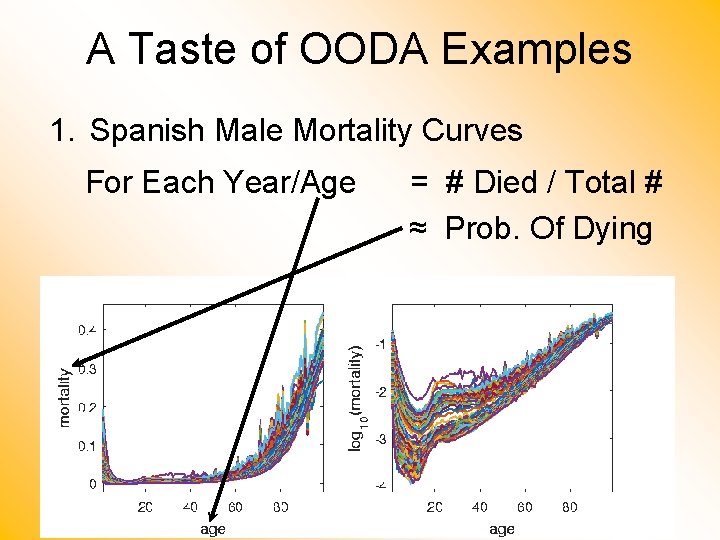
A Taste of OODA Examples 1. Spanish Male Mortality Curves For Each Year/Age = # Died / Total # ≈ Prob. Of Dying
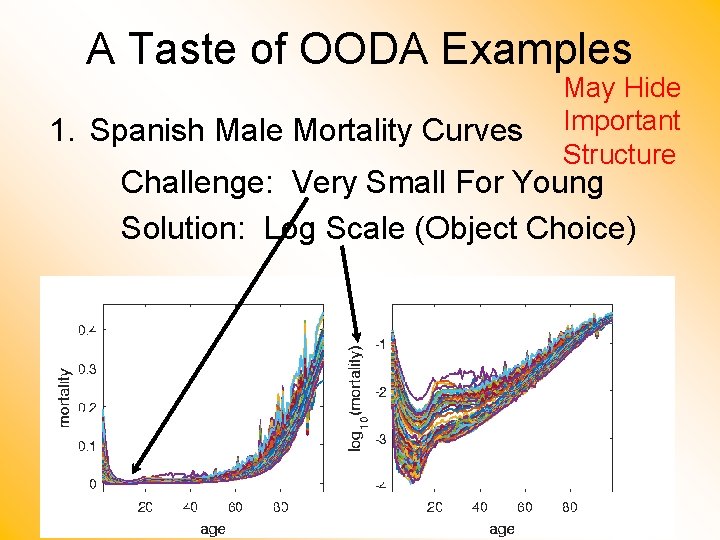
A Taste of OODA Examples 1. Spanish Male Mortality Curves May Hide Important Structure Challenge: Very Small For Young Solution: Log Scale (Object Choice)
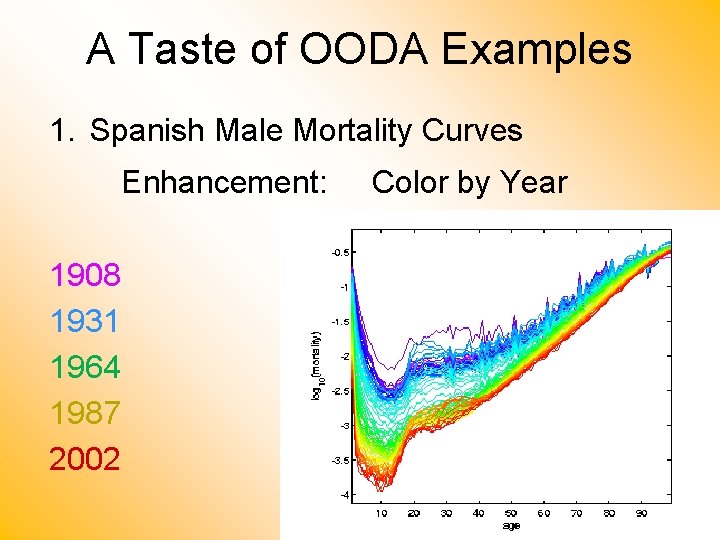
A Taste of OODA Examples 1. Spanish Male Mortality Curves Enhancement: Color by Year 1908 1931 1964 1987 2002
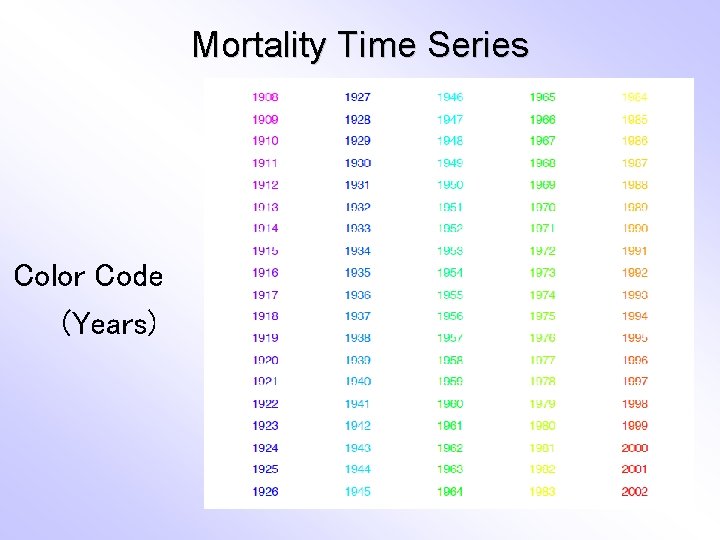
Mortality Time Series Color Code (Years)
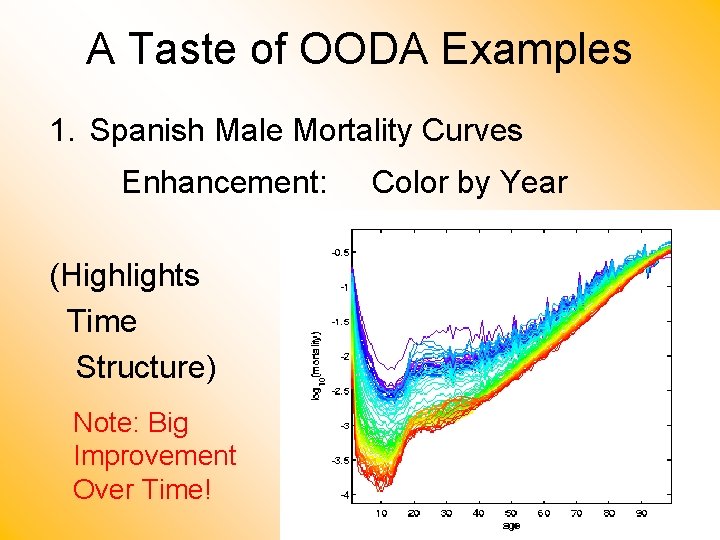
A Taste of OODA Examples 1. Spanish Male Mortality Curves Enhancement: Color by Year (Highlights Time Structure) Note: Big Improvement Over Time!
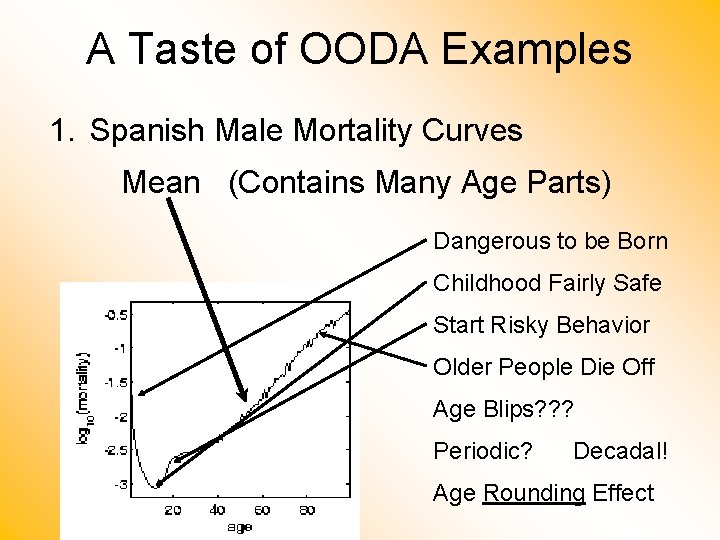
A Taste of OODA Examples 1. Spanish Male Mortality Curves Mean (Contains Many Age Parts) Dangerous to be Born Childhood Fairly Safe Start Risky Behavior Older People Die Off Age Blips? ? ? Periodic? Decadal! Age Rounding Effect
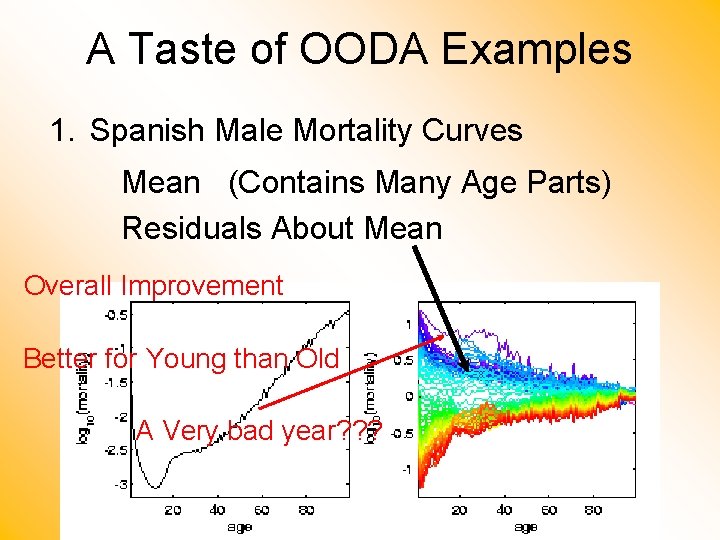
A Taste of OODA Examples 1. Spanish Male Mortality Curves Mean (Contains Many Age Parts) Residuals About Mean Overall Improvement Better for Young than Old A Very bad year? ? ?
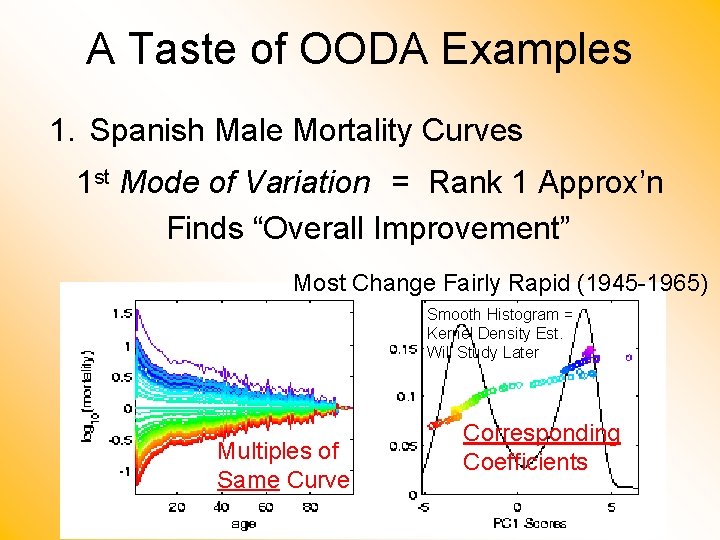
A Taste of OODA Examples 1. Spanish Male Mortality Curves 1 st Mode of Variation = Rank 1 Approx’n Finds “Overall Improvement” Most Change Fairly Rapid (1945 -1965) Smooth Histogram = Kernel Density Est. Will Study Later Multiples of Same Curve Corresponding Coefficients
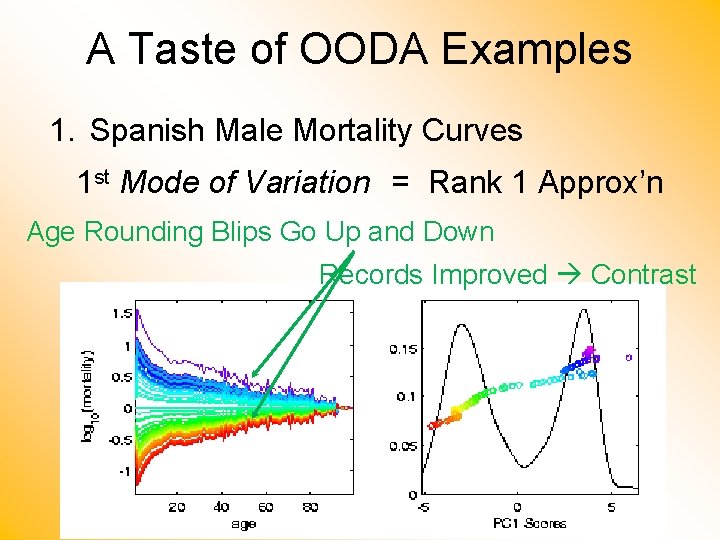
A Taste of OODA Examples 1. Spanish Male Mortality Curves 1 st Mode of Variation = Rank 1 Approx’n Age Rounding Blips Go Up and Down Records Improved Contrast
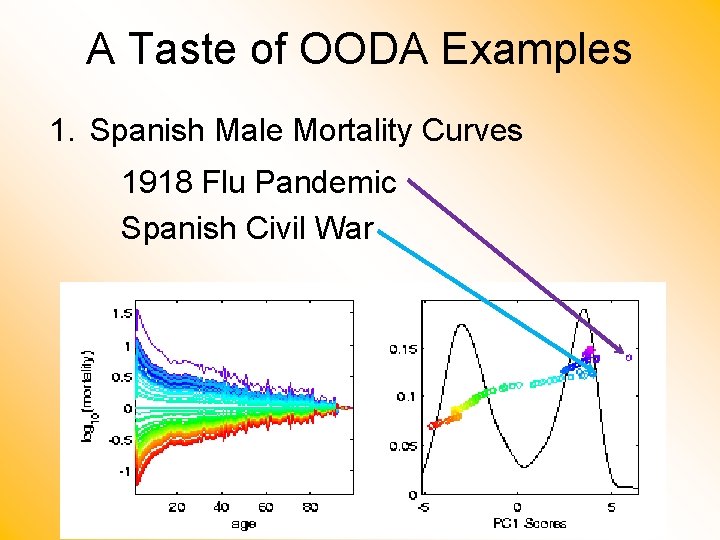
A Taste of OODA Examples 1. Spanish Male Mortality Curves 1918 Flu Pandemic Spanish Civil War
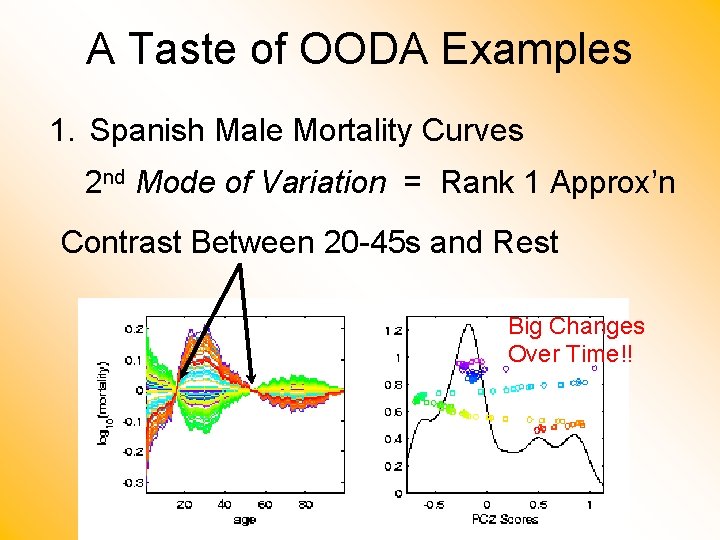
A Taste of OODA Examples 1. Spanish Male Mortality Curves 2 nd Mode of Variation = Rank 1 Approx’n Contrast Between 20 -45 s and Rest Big Changes Over Time!!
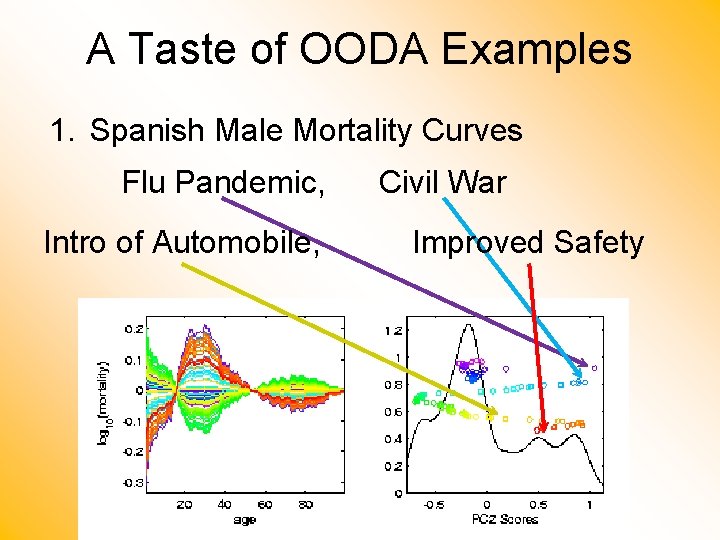
A Taste of OODA Examples 1. Spanish Male Mortality Curves Flu Pandemic, Civil War Intro of Automobile, Improved Safety
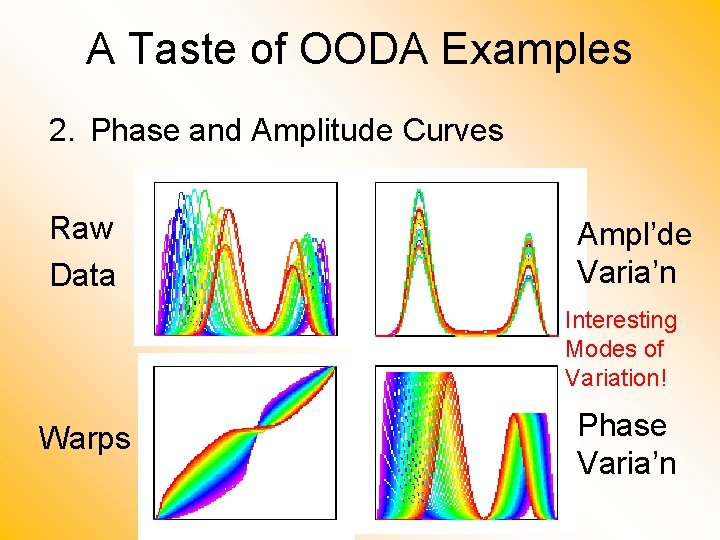
A Taste of OODA Examples 2. Phase and Amplitude Curves Raw Data Ampl’de Varia’n Interesting Modes of Variation! Warps Phase Varia’n
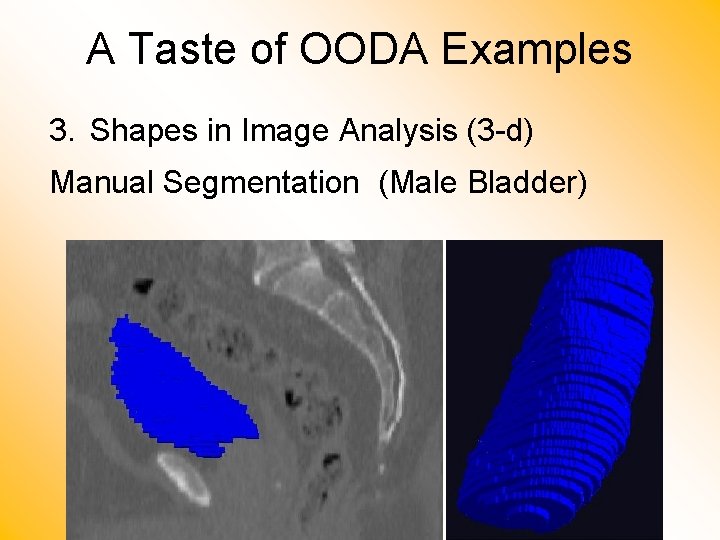
A Taste of OODA Examples 3. Shapes in Image Analysis (3 -d) Manual Segmentation (Male Bladder)
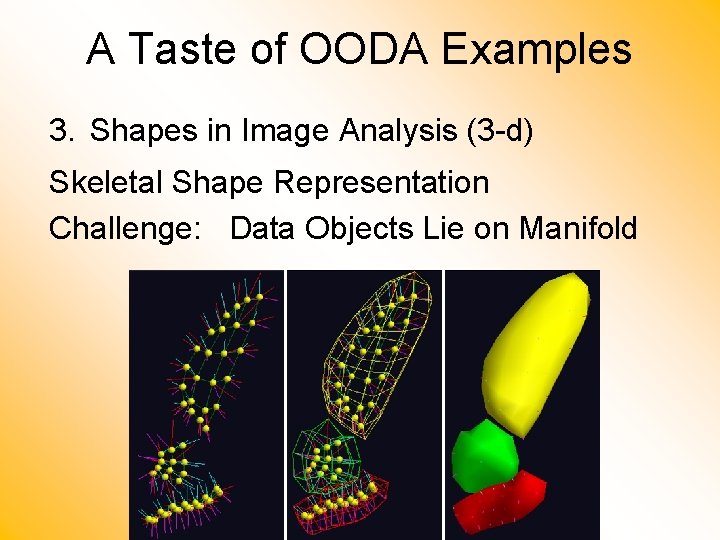
A Taste of OODA Examples 3. Shapes in Image Analysis (3 -d) Skeletal Shape Representation Challenge: Data Objects Lie on Manifold
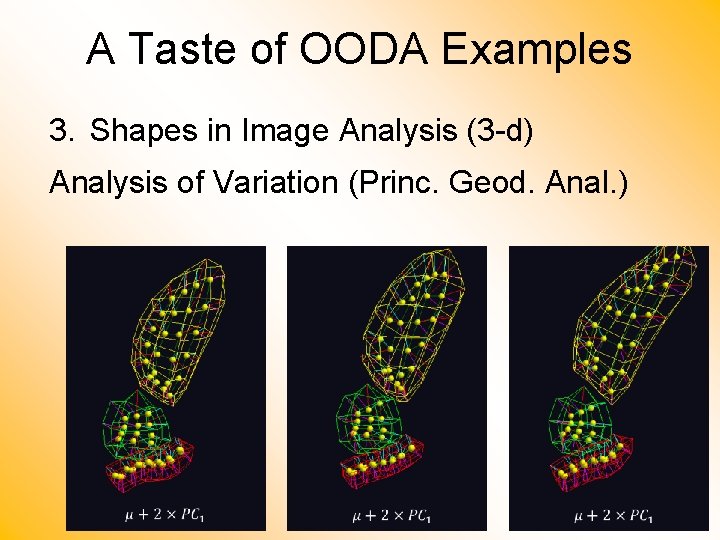
A Taste of OODA Examples 3. Shapes in Image Analysis (3 -d) Analysis of Variation (Princ. Geod. Anal. )
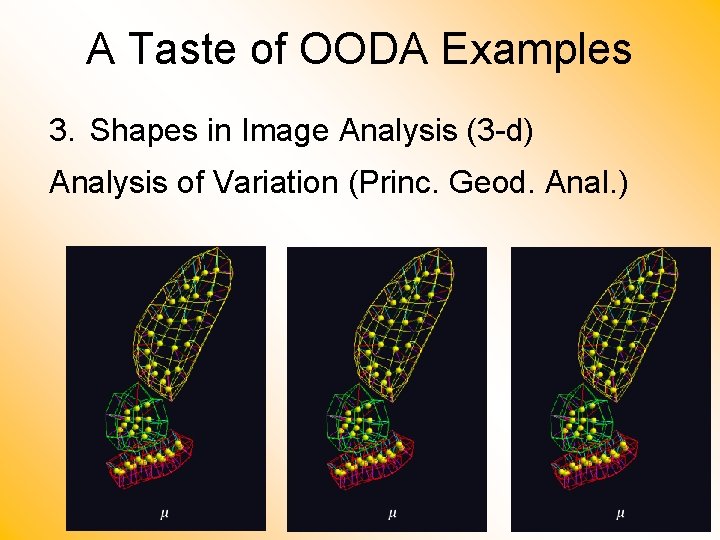
A Taste of OODA Examples 3. Shapes in Image Analysis (3 -d) Analysis of Variation (Princ. Geod. Anal. )
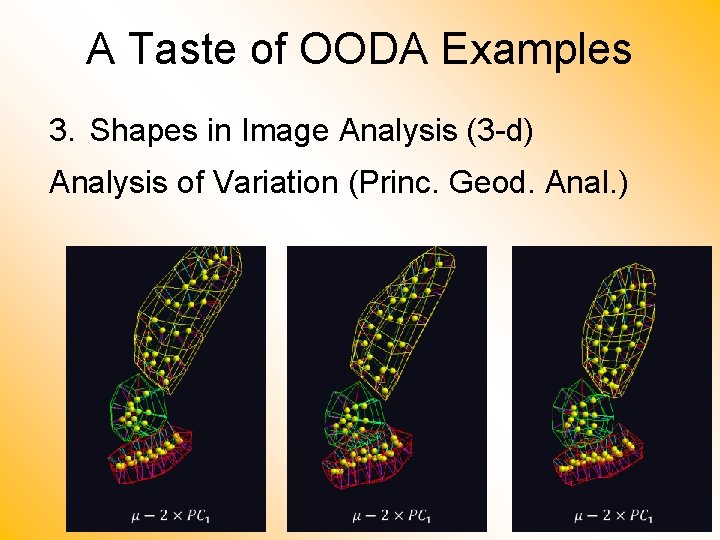
A Taste of OODA Examples 3. Shapes in Image Analysis (3 -d) Analysis of Variation (Princ. Geod. Anal. )
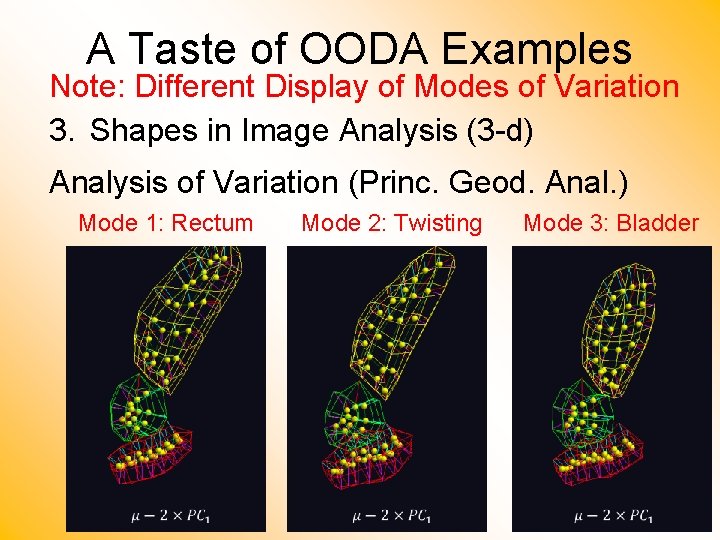
A Taste of OODA Examples Note: Different Display of Modes of Variation 3. Shapes in Image Analysis (3 -d) Analysis of Variation (Princ. Geod. Anal. ) Mode 1: Rectum Mode 2: Twisting Mode 3: Bladder
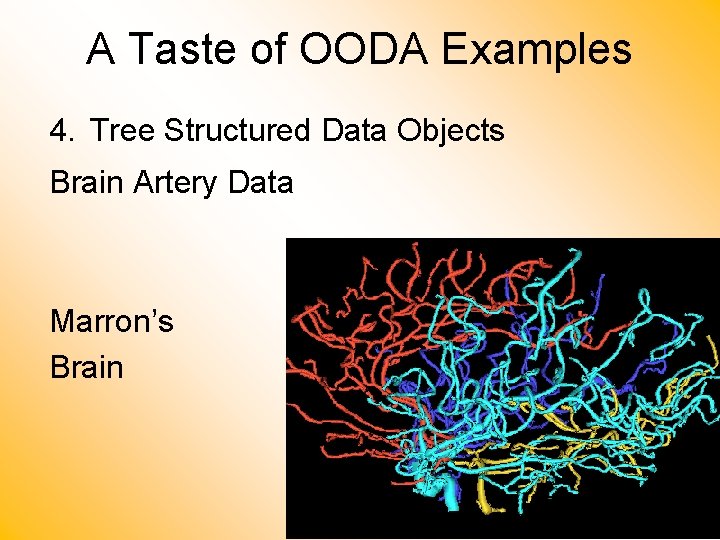
A Taste of OODA Examples 4. Tree Structured Data Objects Brain Artery Data Marron’s Brain
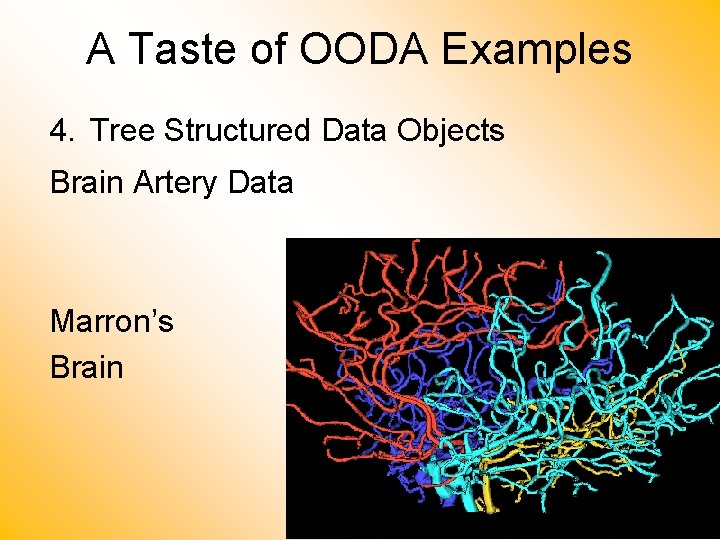
A Taste of OODA Examples 4. Tree Structured Data Objects Brain Artery Data Marron’s Brain
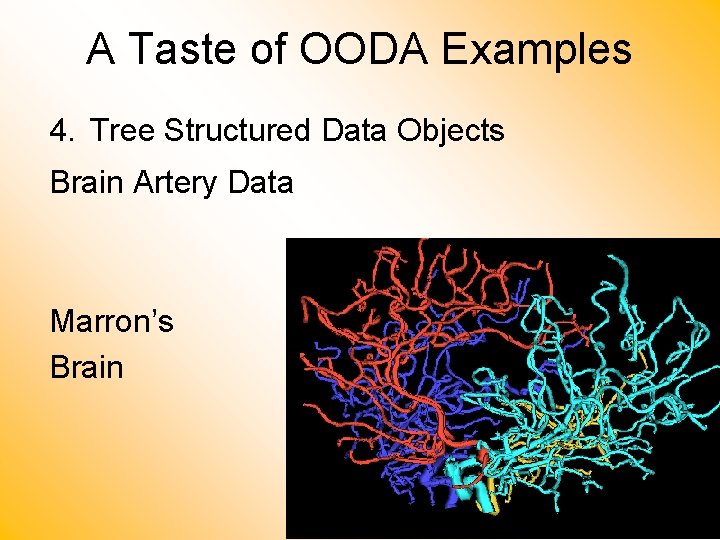
A Taste of OODA Examples 4. Tree Structured Data Objects Brain Artery Data Marron’s Brain
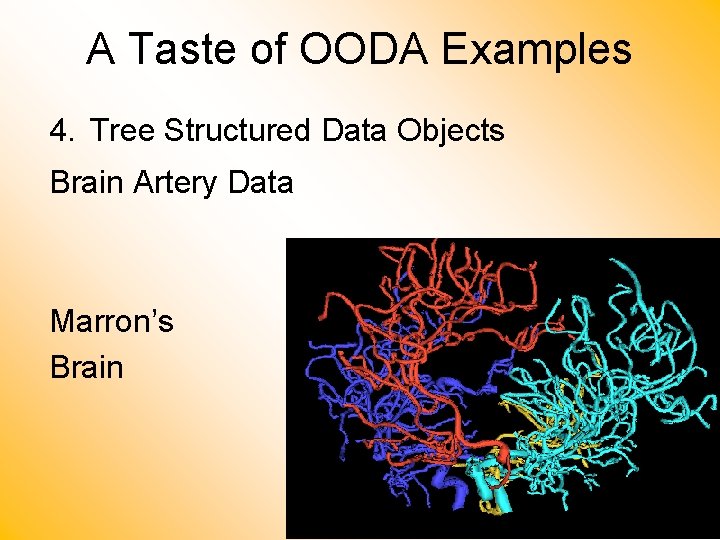
A Taste of OODA Examples 4. Tree Structured Data Objects Brain Artery Data Marron’s Brain
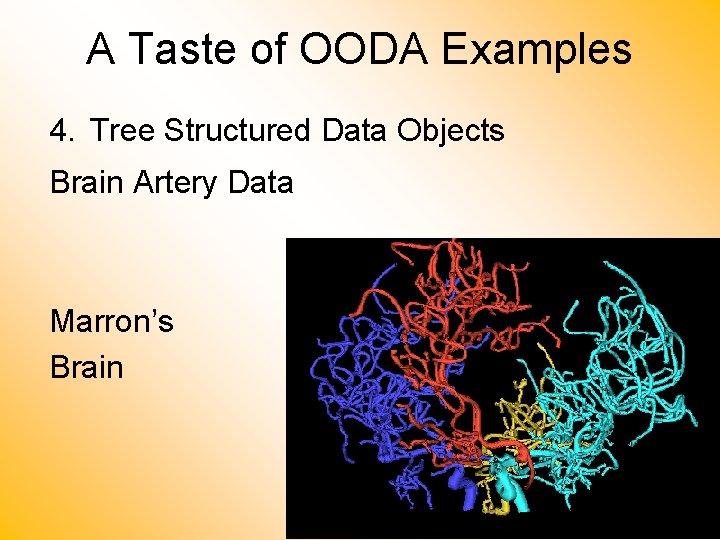
A Taste of OODA Examples 4. Tree Structured Data Objects Brain Artery Data Marron’s Brain
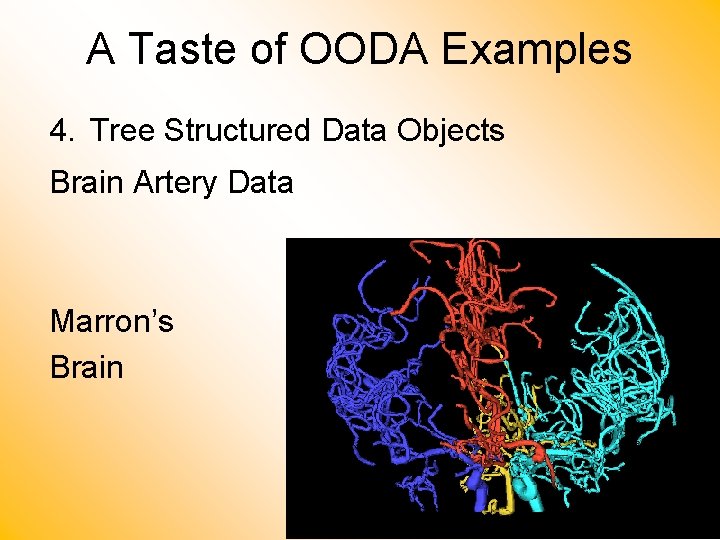
A Taste of OODA Examples 4. Tree Structured Data Objects Brain Artery Data Marron’s Brain
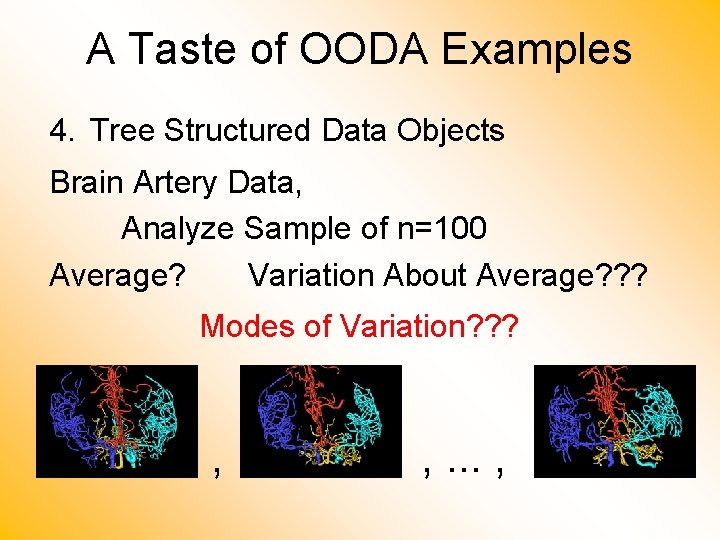
A Taste of OODA Examples 4. Tree Structured Data Objects Brain Artery Data, Analyze Sample of n=100 Average? Variation About Average? ? ? Modes of Variation? ? ? , , . . . ,
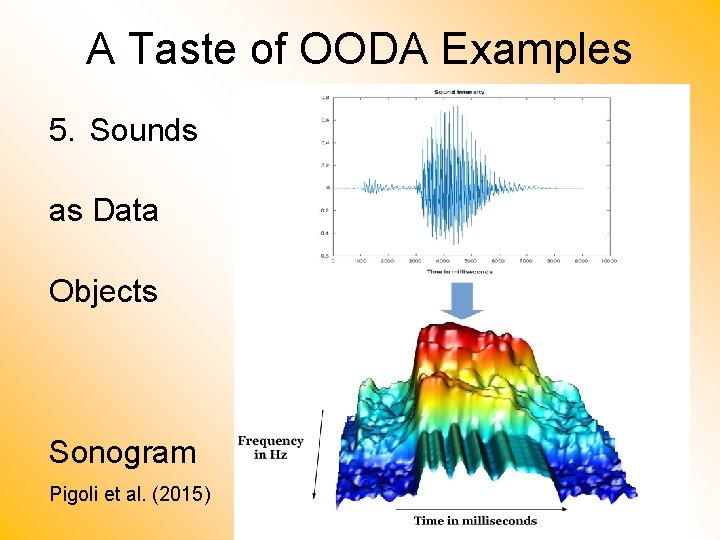
A Taste of OODA Examples 5. Sounds as Data Objects Sonogram Pigoli et al. (2015)
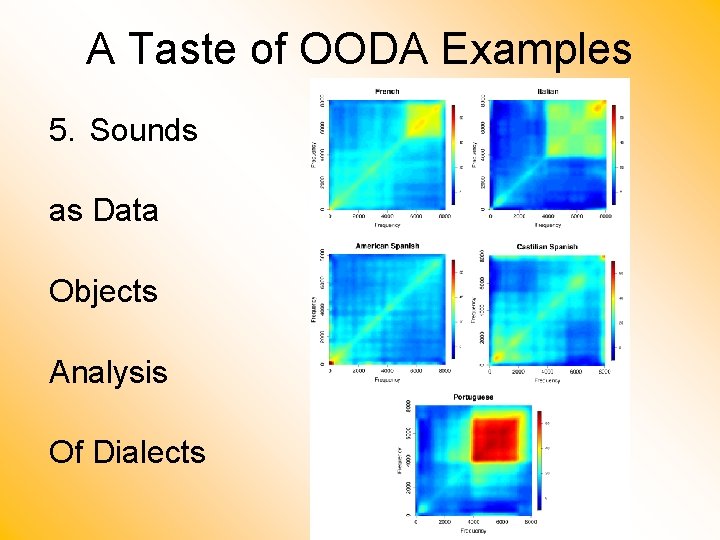
A Taste of OODA Examples 5. Sounds as Data Objects Analysis Of Dialects
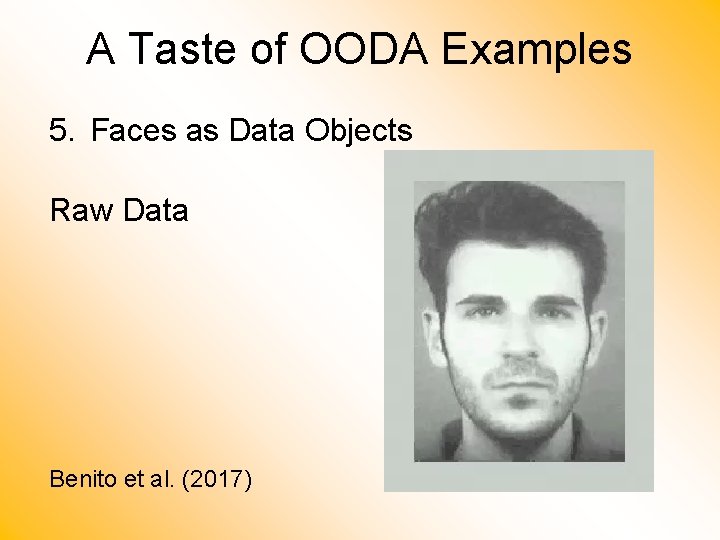
A Taste of OODA Examples 5. Faces as Data Objects Raw Data Benito et al. (2017)
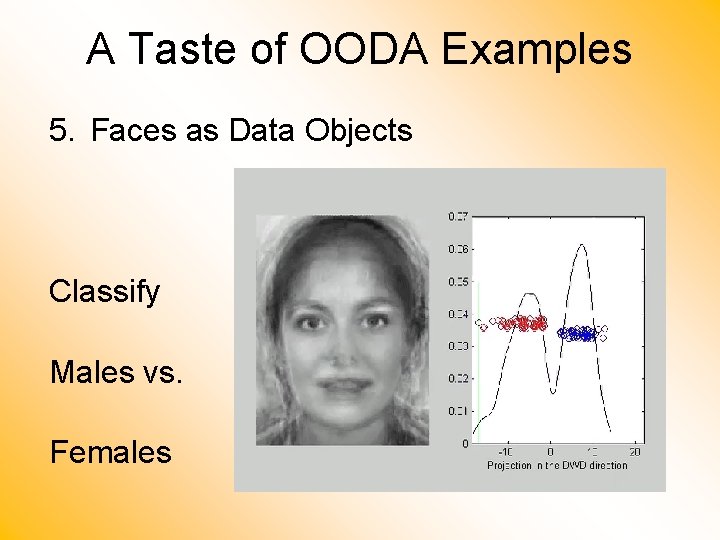
A Taste of OODA Examples 5. Faces as Data Objects Classify Males vs. Females
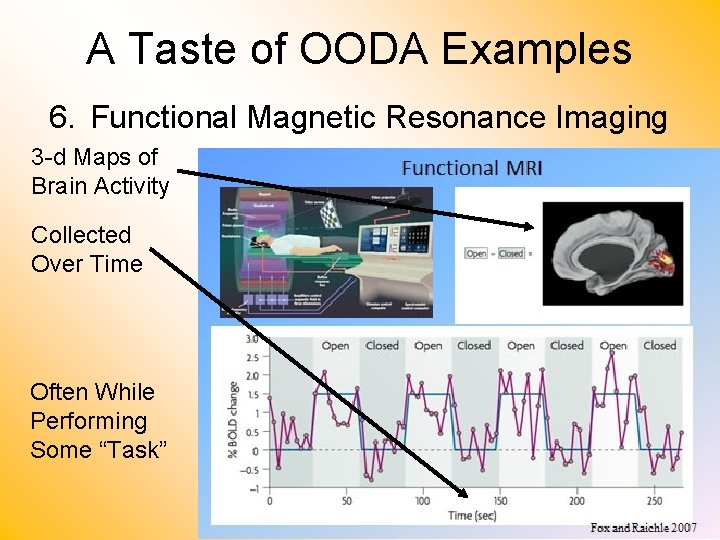
A Taste of OODA Examples 6. Functional Magnetic Resonance Imaging 3 -d Maps of Brain Activity Collected Over Time Often While Performing Some “Task”
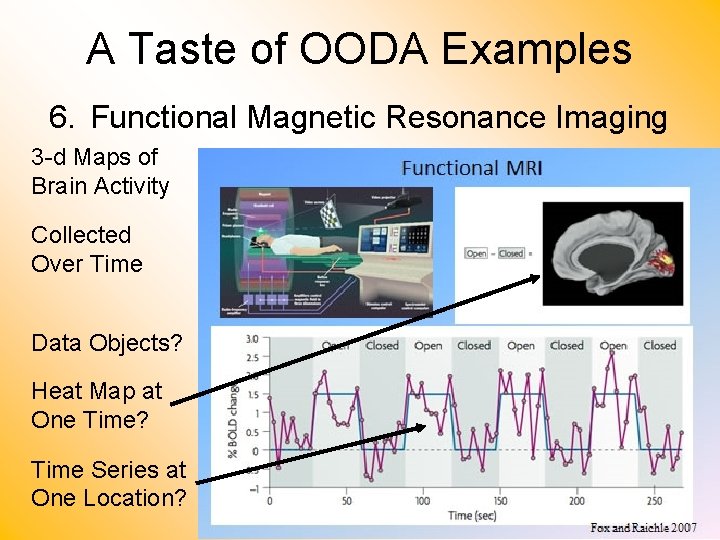
A Taste of OODA Examples 6. Functional Magnetic Resonance Imaging 3 -d Maps of Brain Activity Collected Over Time Data Objects? Heat Map at One Time? Time Series at One Location?
Object Oriented Data Analysis What is it? A Sound-Bite Explanation: What is the “atom of the statistical analysis”? • 1 st Course: Numbers • Multivariate Analysis Course : Vectors • Functional Data Analysis: Curves • More generally: Data Objects
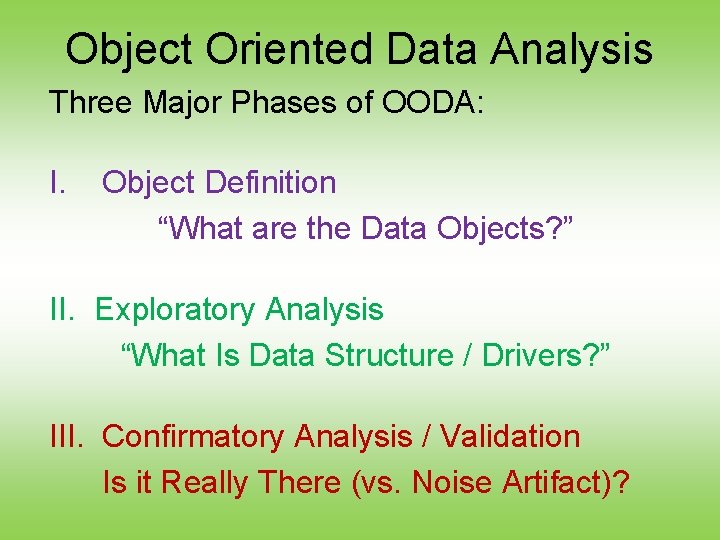
Object Oriented Data Analysis Three Major Phases of OODA: I. Object Definition “What are the Data Objects? ” II. Exploratory Analysis “What Is Data Structure / Drivers? ” III. Confirmatory Analysis / Validation Is it Really There (vs. Noise Artifact)?
Object Oriented Data Analysis Three Major Phases of OODA: I. Object Definition “What are the Data Objects? ” ü Generally Not Widely Appreciated ü But Highlighted in OODA
Object Oriented Data Analysis Three Major Phases of OODA: II. Exploratory Analysis “What Is Data Structure / Drivers? ” ü Understood by Some in Statistics Classical Reference: Tukey (1977) ü Better Understood in Machine Learning
Object Oriented Data Analysis Three Major Phases of OODA: III. Confirmatory Analysis / Validation Is it Really There (vs. Noise Artifact)? ü Primary Focus of Modern “Statistics” ü E. g. STOR & Biostat Ph. D Curriculum ü Less Considered In Machine Learning
Object Oriented Data Analysis Three Major Phases of OODA: I. Object Definition “What are the Data Objects? ” Background Notation, etc.
Choice of Data Objects Two Main Parts: Ø Data Object Definition (e. g. Mortality Data, which curves? ? ? )
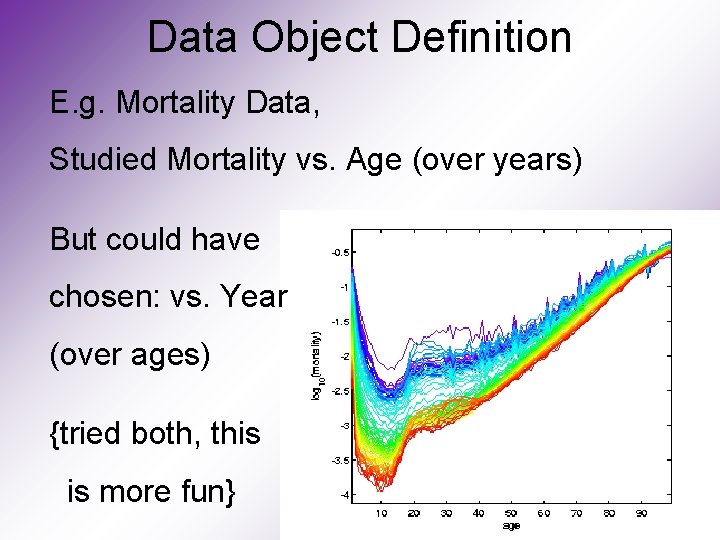
Data Object Definition E. g. Mortality Data, Studied Mortality vs. Age (over years) But could have chosen: vs. Year (over ages) {tried both, this is more fun}
Choice of Data Objects Two Main Parts: Ø Data Object Definition (e. g. Mortality Data, which curves? ? ? ) Ø Data Object Representation (e. g. Mortality Data)
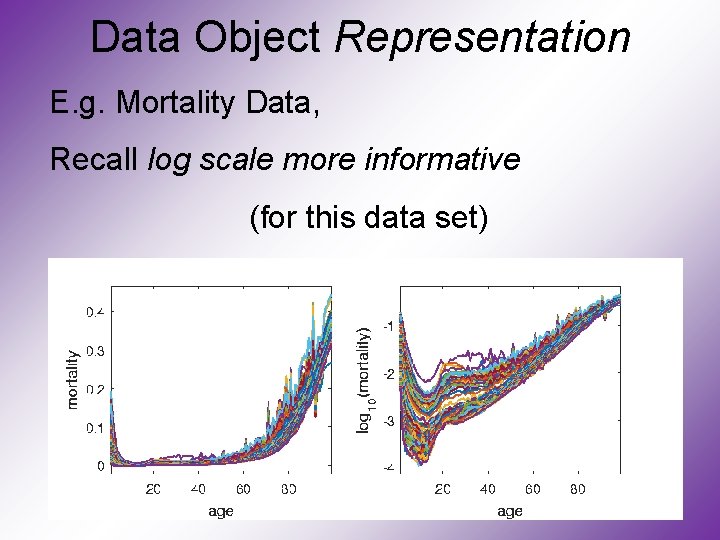
Data Object Representation E. g. Mortality Data, Recall log scale more informative (for this data set)
Basics of OODA
Notation •
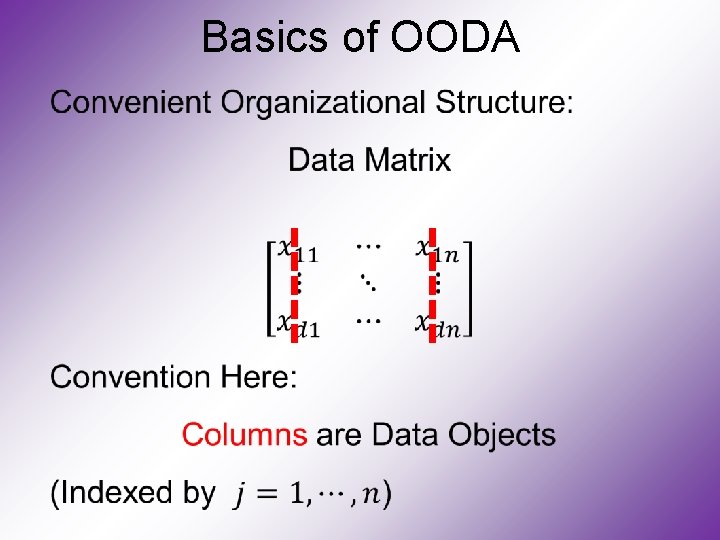
Basics of OODA
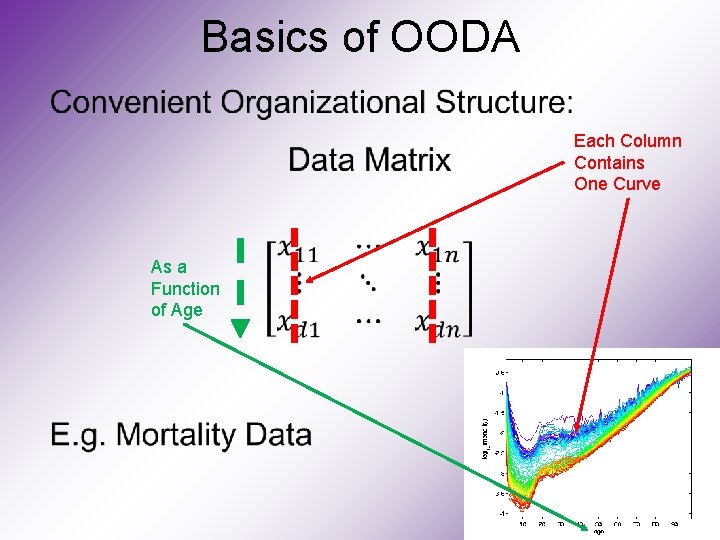
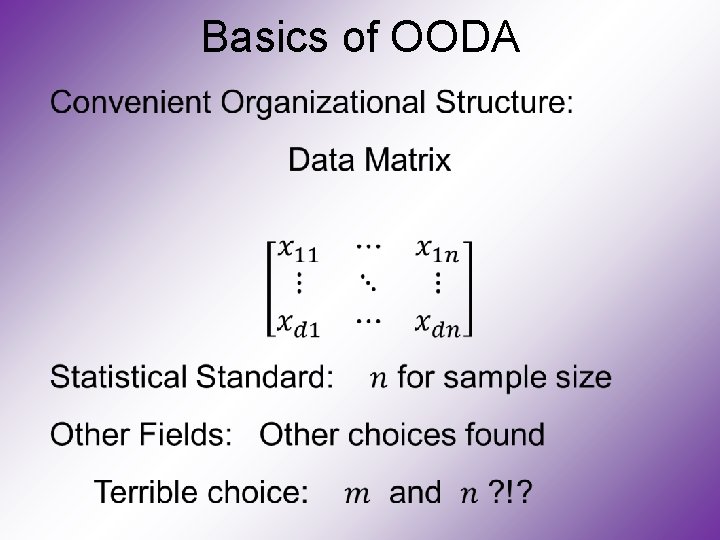
Basics of OODA Each Column Contains One Curve As a Function of Age
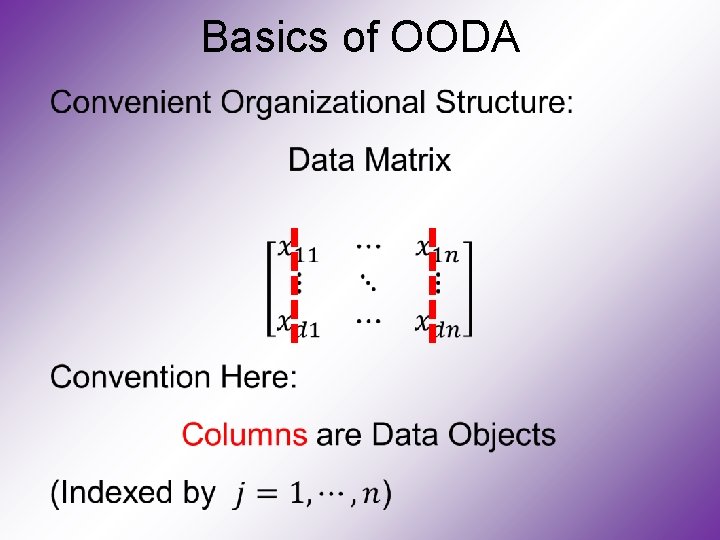
Basics of OODA
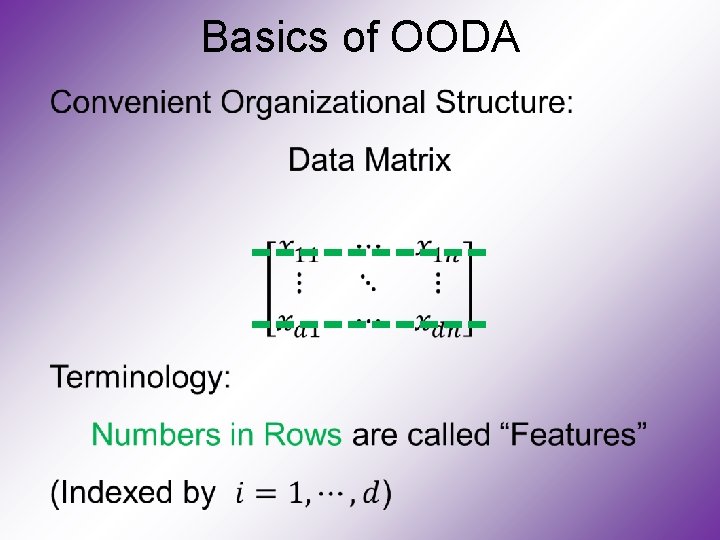
Basics of OODA
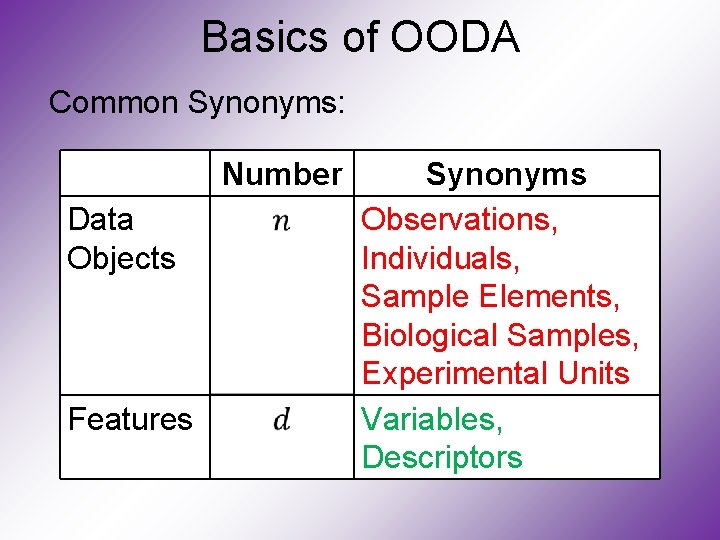
Basics of OODA Common Synonyms: Number Data Objects Features Synonyms Observations, Individuals, Sample Elements, Biological Samples, Experimental Units Variables, Descriptors
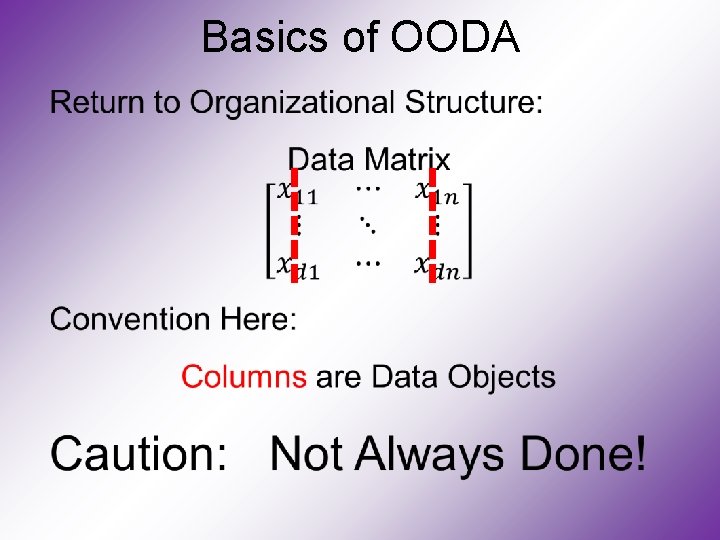
Basics of OODA
Basics of OODA Row vs. Column Choice by Areas: Columns as Data Objects: v Linear Algebra (column vectors) v Bioinformatics (from Excel restrictions) Rows as Data Objects: v Statistical Data Bases v Linear Models
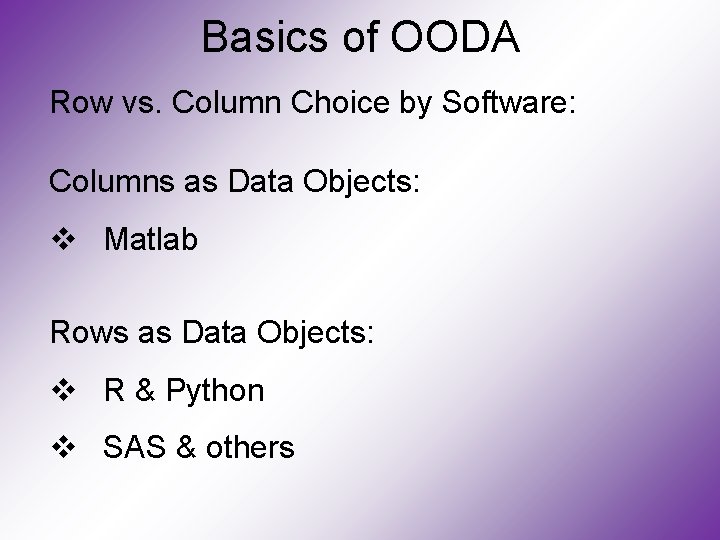
Basics of OODA Row vs. Column Choice by Software: Columns as Data Objects: v Matlab Rows as Data Objects: v R & Python v SAS & others
Object Oriented Data Analysis Three Major Phases of OODA: I. Object Definition “What are the Data Objects? ” II. Exploratory Analysis “What Is Data Structure / Drivers? ” III. Confirmatory Analysis / Validation Is it Really There (vs. Noise Artifact)?
Object Oriented Data Analysis Three Major Phases of OODA: II. Exploratory Analysis “What Is Data Structure / Drivers? ” Important Aspect: Data Visualization (Look at Simple Examples)
Visualization •
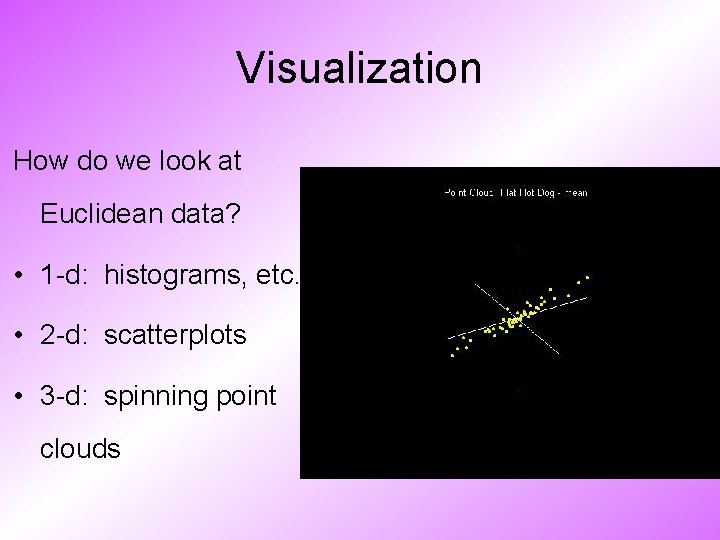
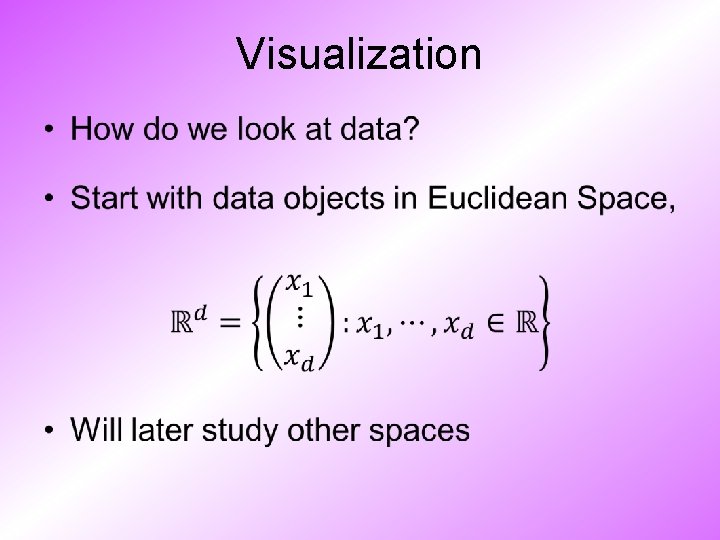
Visualization How do we look at Euclidean data? • 1 -d: histograms, etc. • 2 -d: scatterplots • 3 -d: spinning point clouds
Visualization How do we look at Euclidean data? • Higher Dimensions? Workhorse Idea: Projections
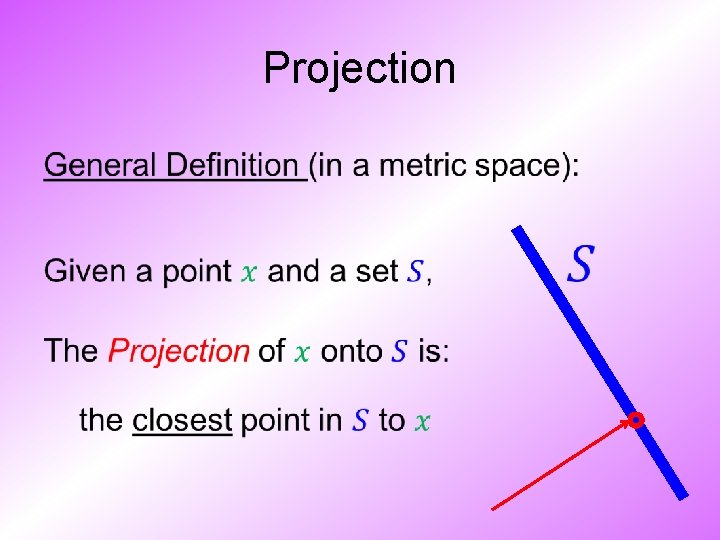
Projection •
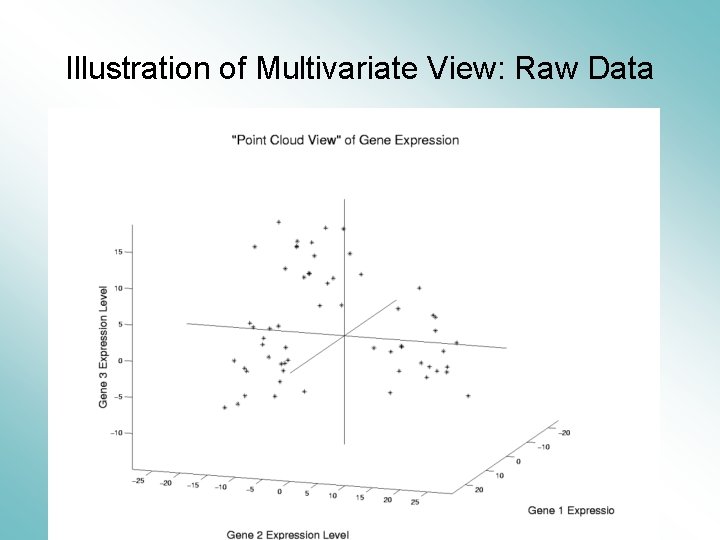
Illustration of Multivariate View: Raw Data
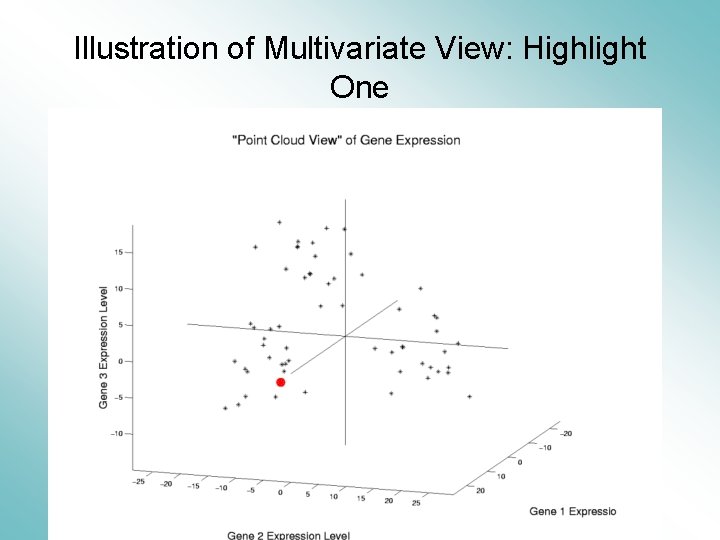
Illustration of Multivariate View: Highlight One
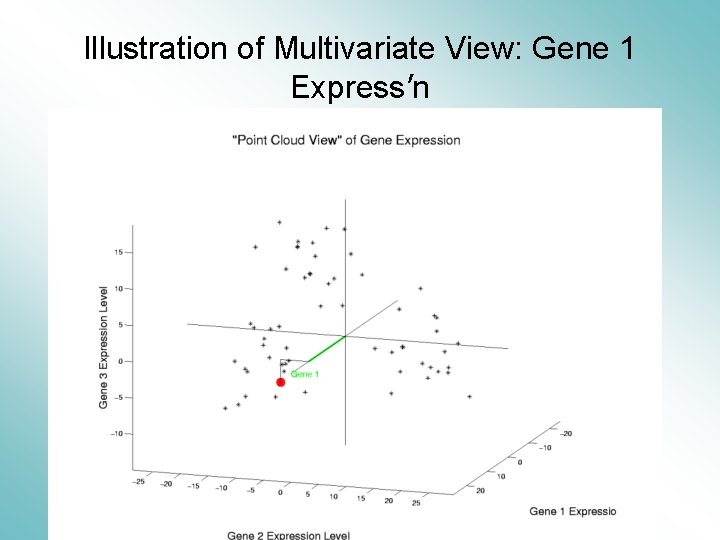
Illustration of Multivariate View: Gene 1 Express’n
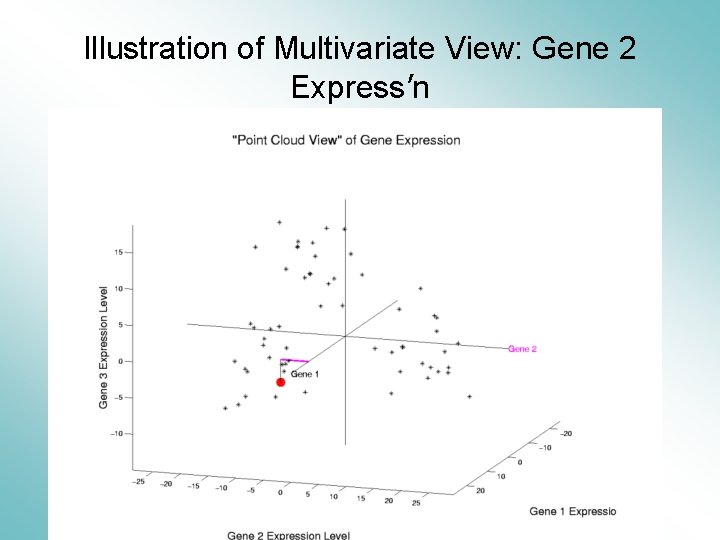
Illustration of Multivariate View: Gene 2 Express’n
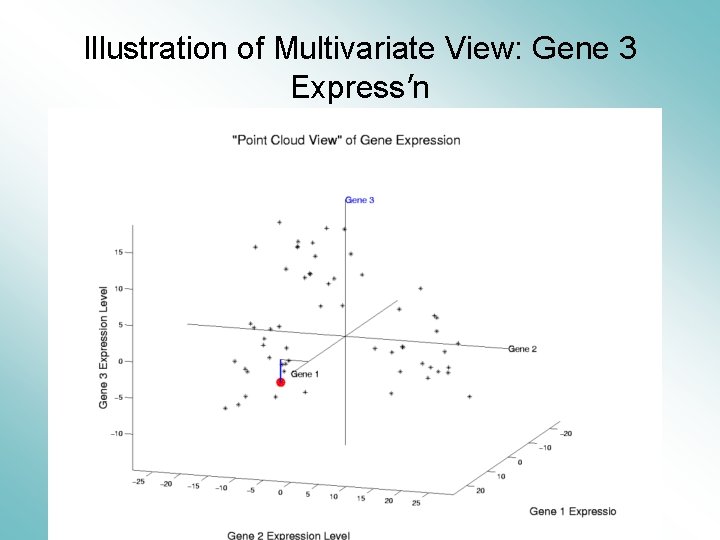
Illustration of Multivariate View: Gene 3 Express’n
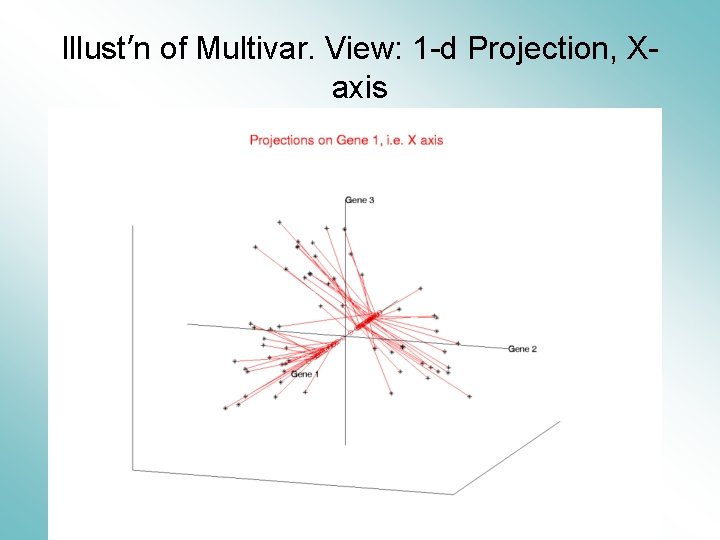
Illust’n of Multivar. View: 1 -d Projection, Xaxis
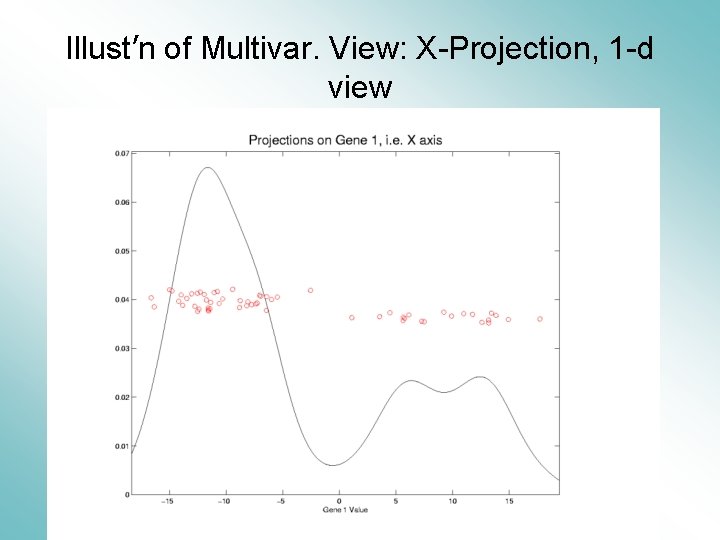
Illust’n of Multivar. View: X-Projection, 1 -d view
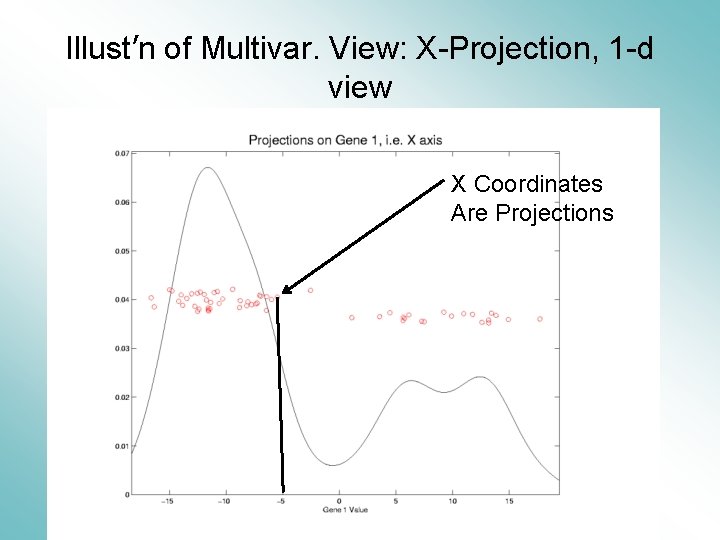
Illust’n of Multivar. View: X-Projection, 1 -d view X Coordinates Are Projections
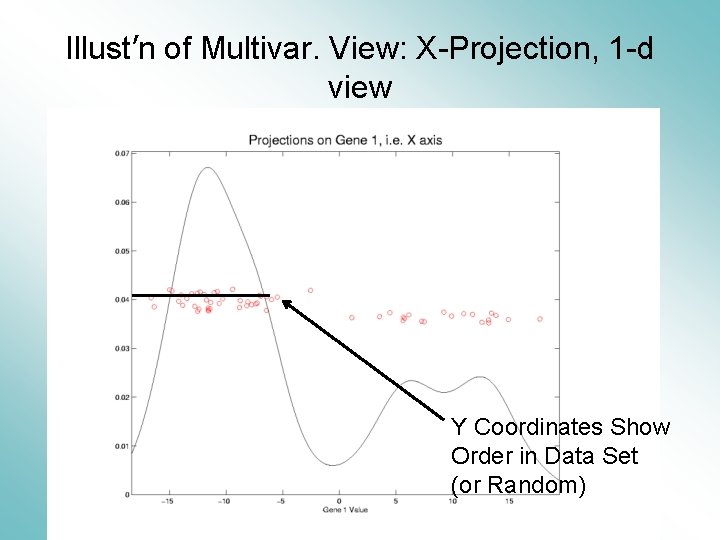
Illust’n of Multivar. View: X-Projection, 1 -d view Y Coordinates Show Order in Data Set (or Random)
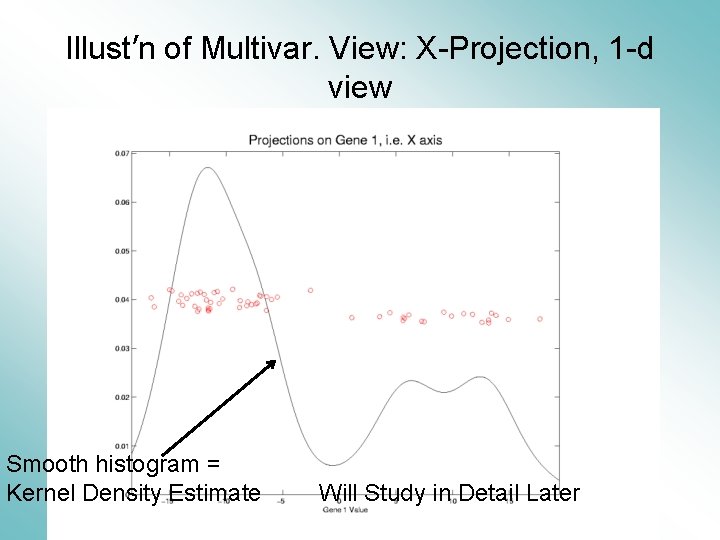
Illust’n of Multivar. View: X-Projection, 1 -d view Smooth histogram = Kernel Density Estimate Will Study in Detail Later
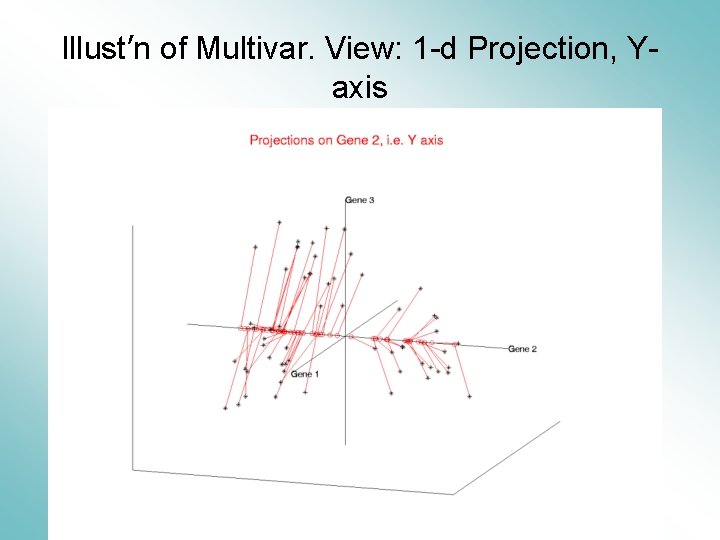
Illust’n of Multivar. View: 1 -d Projection, Yaxis
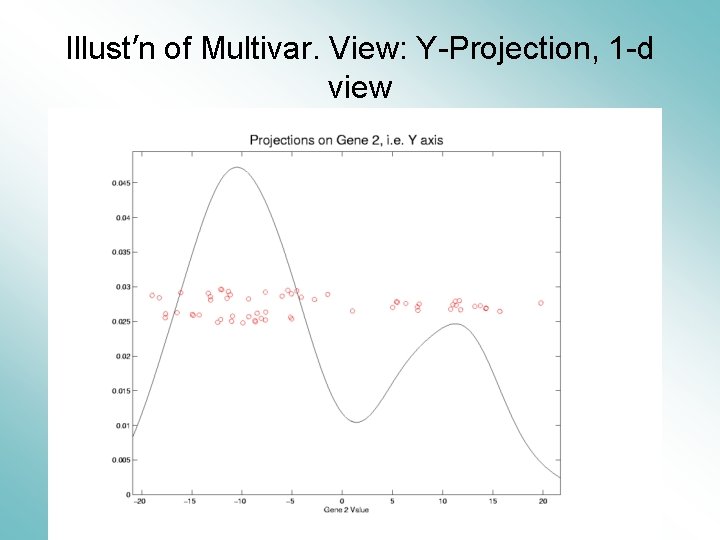
Illust’n of Multivar. View: Y-Projection, 1 -d view
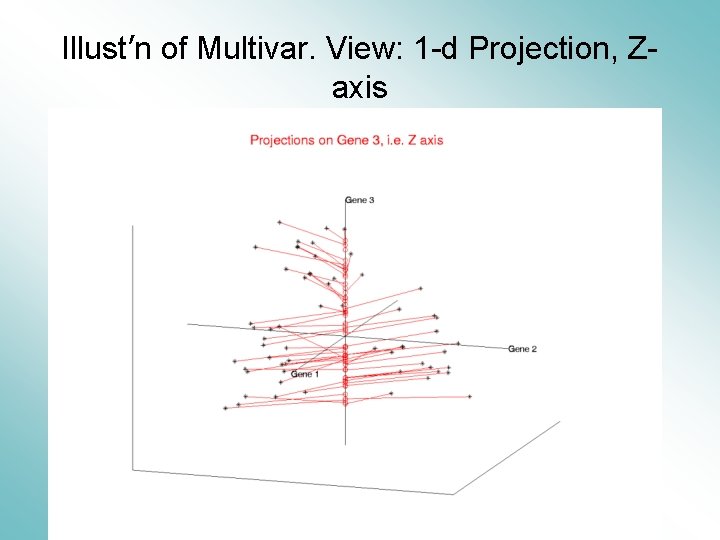
Illust’n of Multivar. View: 1 -d Projection, Zaxis
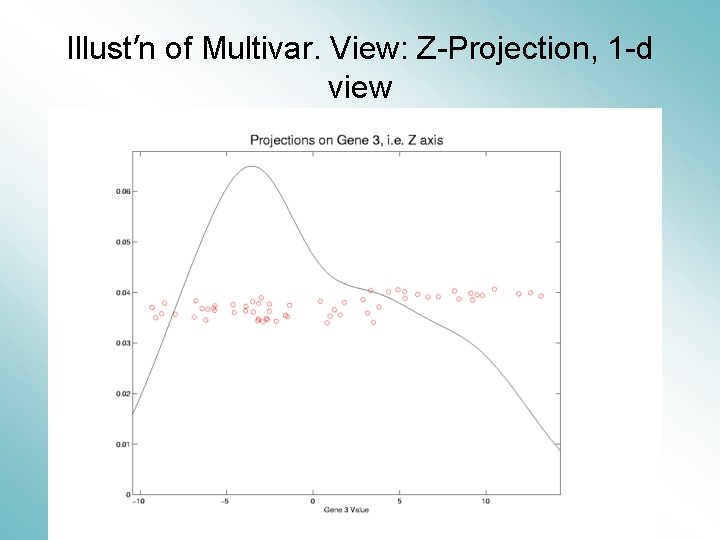
Illust’n of Multivar. View: Z-Projection, 1 -d view
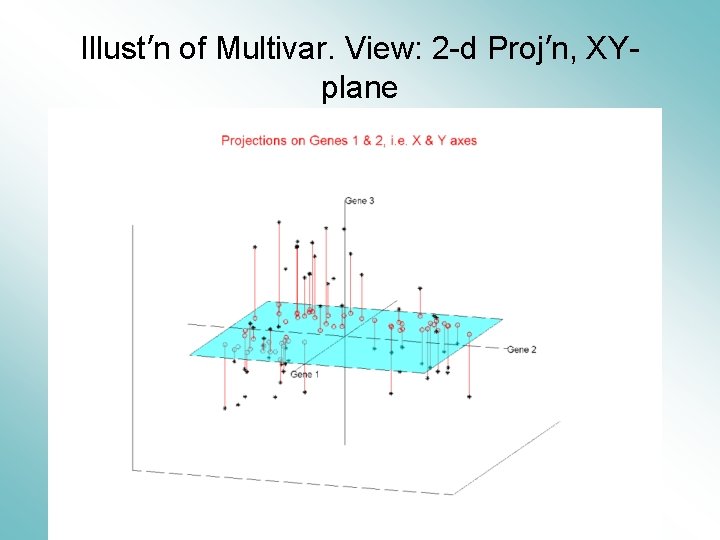
Illust’n of Multivar. View: 2 -d Proj’n, XYplane
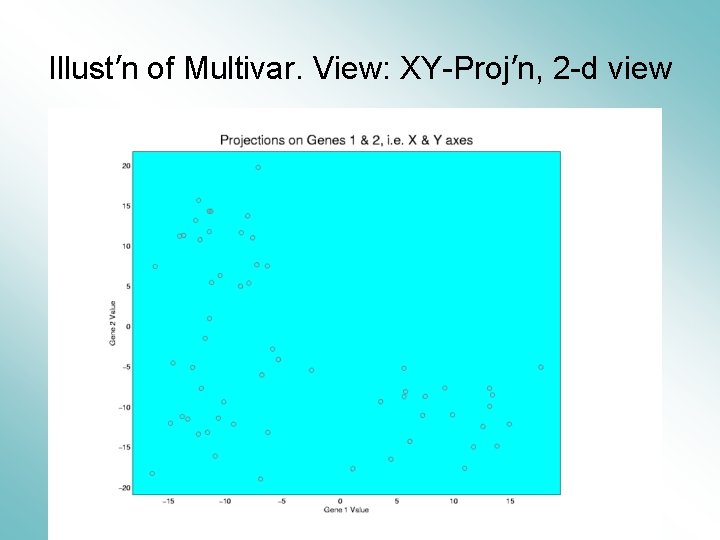
Illust’n of Multivar. View: XY-Proj’n, 2 -d view
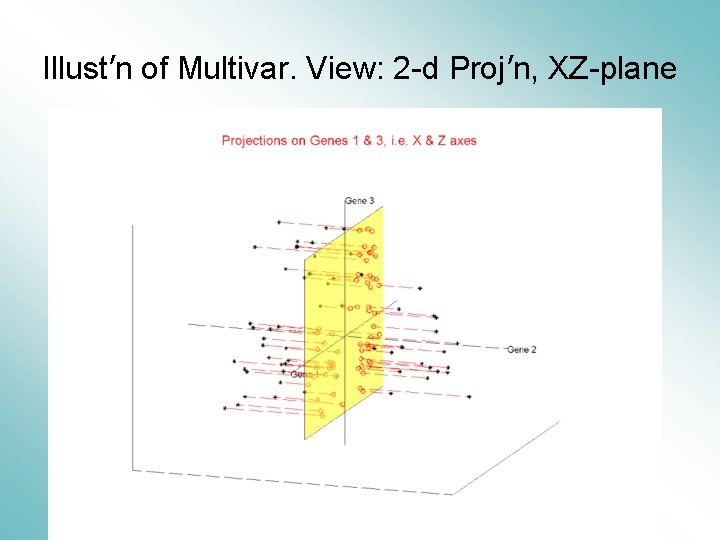
Illust’n of Multivar. View: 2 -d Proj’n, XZ-plane
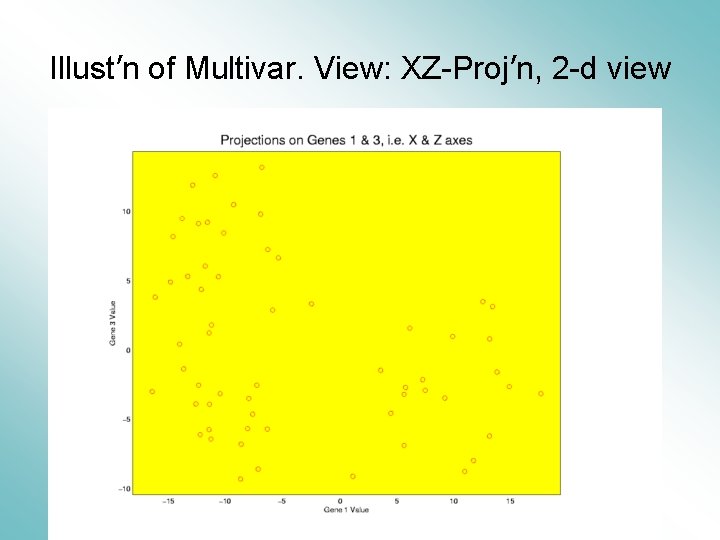
Illust’n of Multivar. View: XZ-Proj’n, 2 -d view
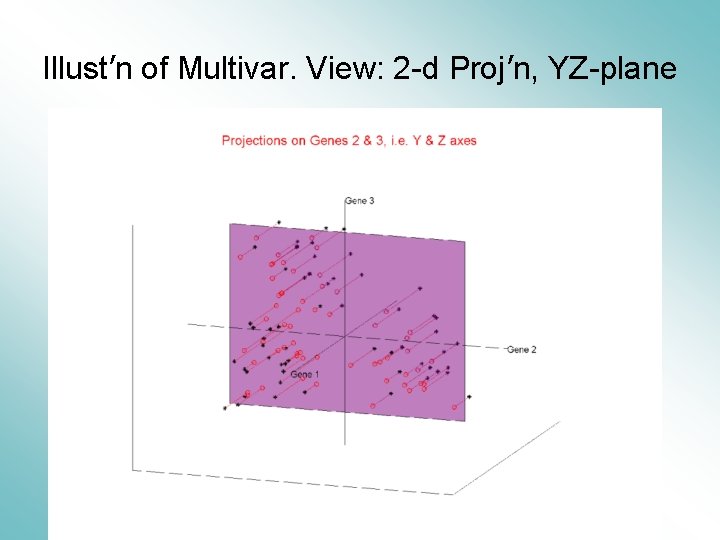
Illust’n of Multivar. View: 2 -d Proj’n, YZ-plane
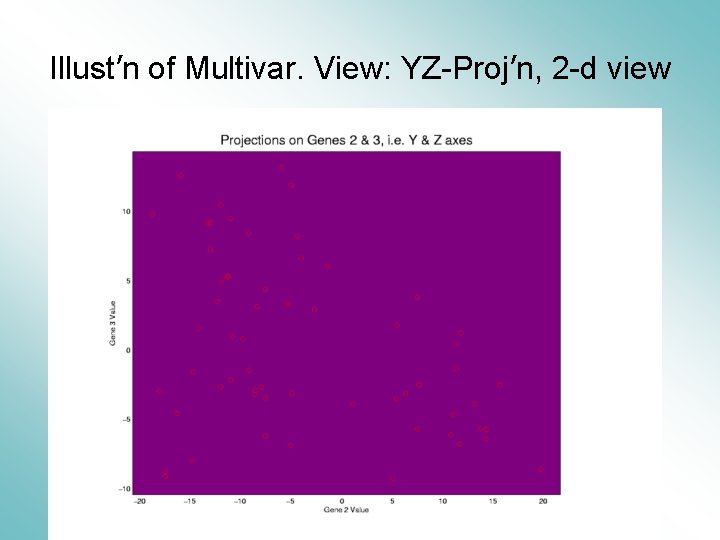
Illust’n of Multivar. View: YZ-Proj’n, 2 -d view
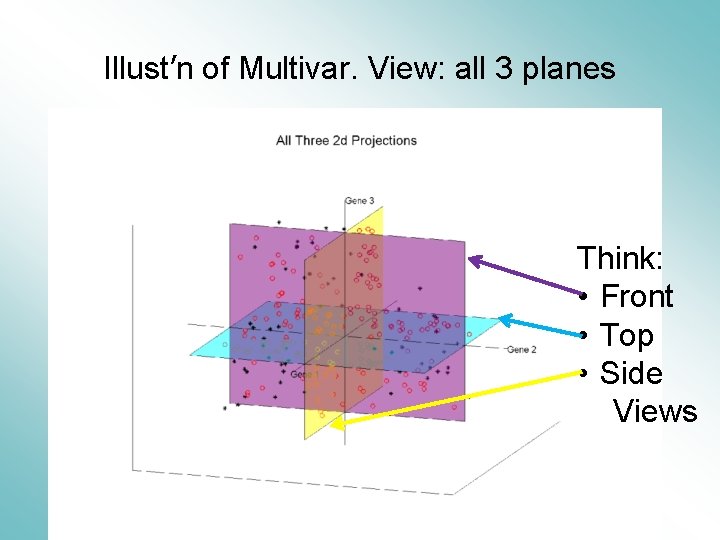
Illust’n of Multivar. View: all 3 planes Think: • Front • Top • Side Views
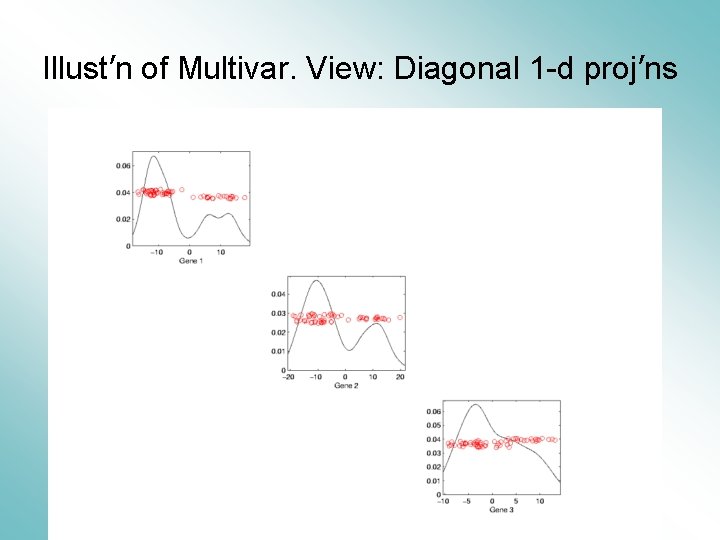
Illust’n of Multivar. View: Diagonal 1 -d proj’ns
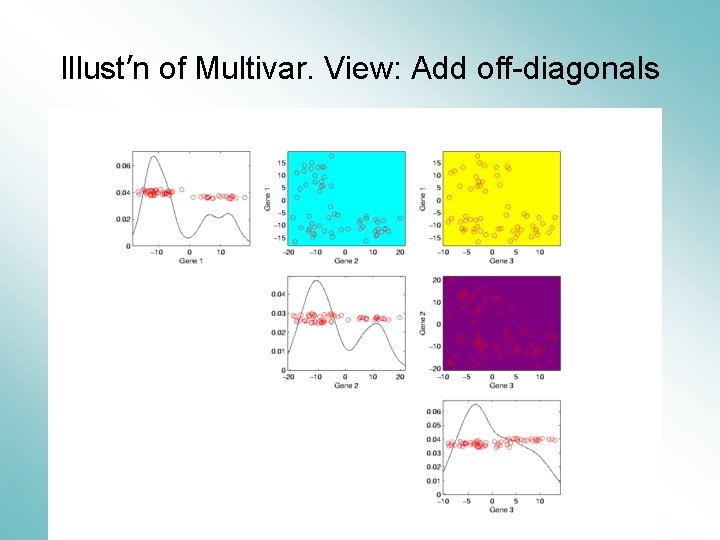
Illust’n of Multivar. View: Add off-diagonals
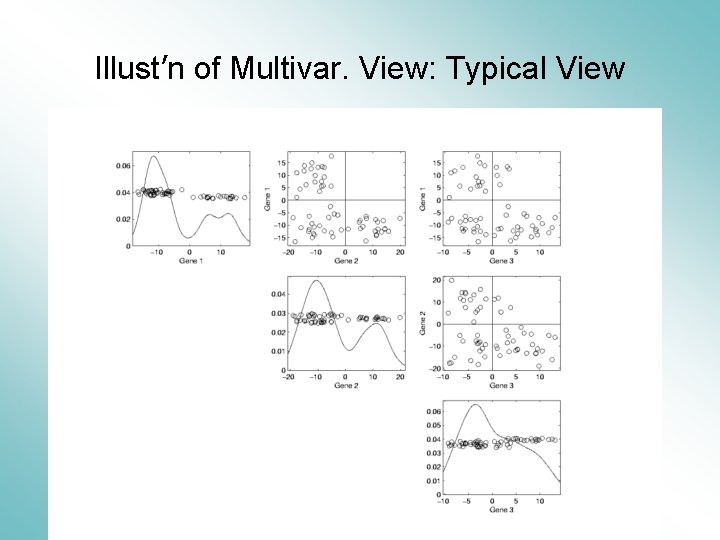
Illust’n of Multivar. View: Typical View
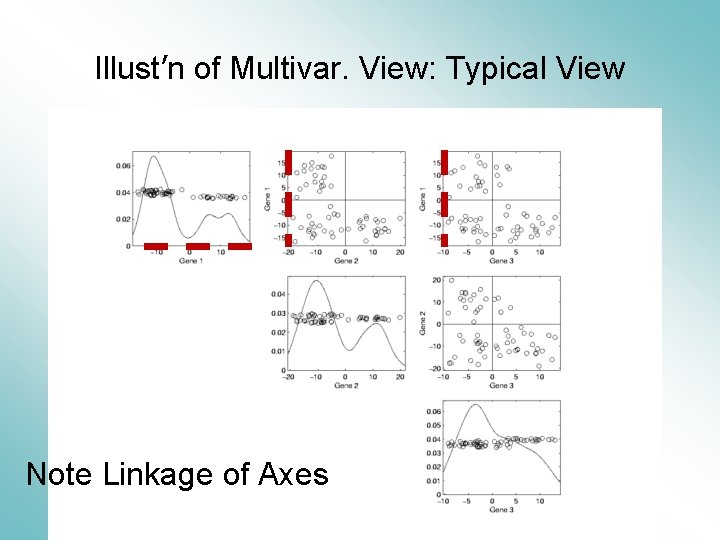
Illust’n of Multivar. View: Typical View Note Linkage of Axes
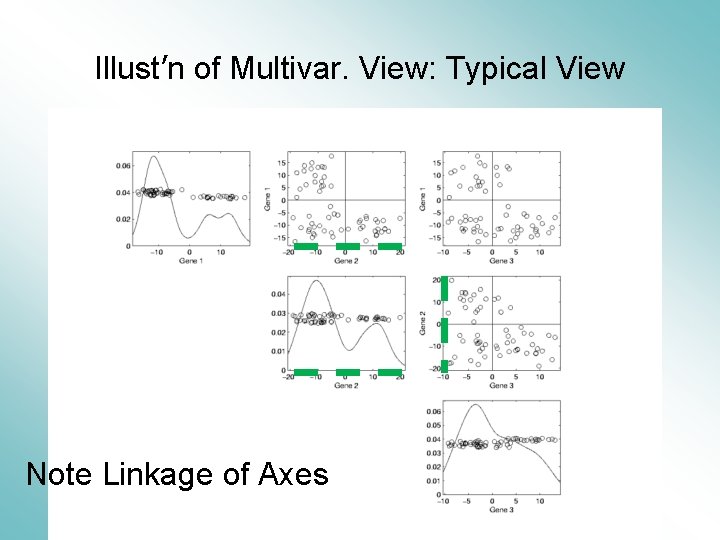
Illust’n of Multivar. View: Typical View Note Linkage of Axes
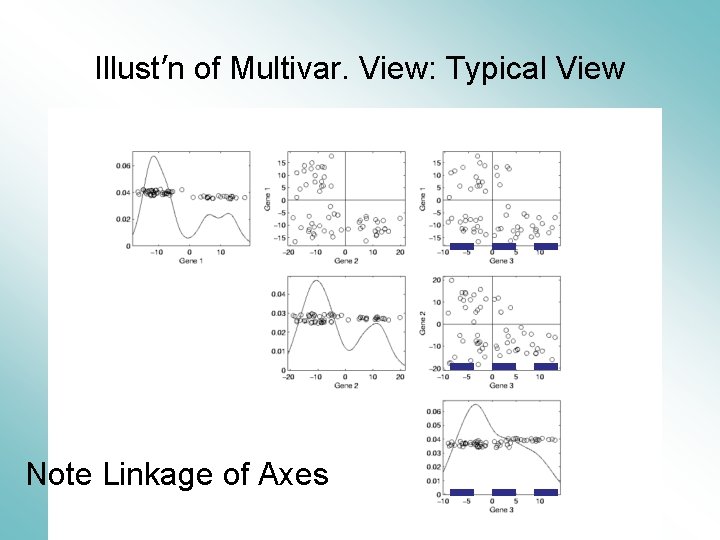
Illust’n of Multivar. View: Typical View Note Linkage of Axes
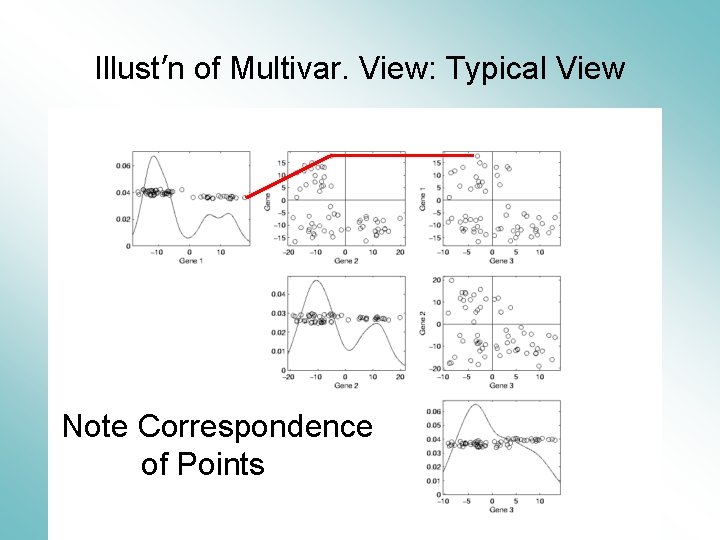
Illust’n of Multivar. View: Typical View Note Correspondence of Points
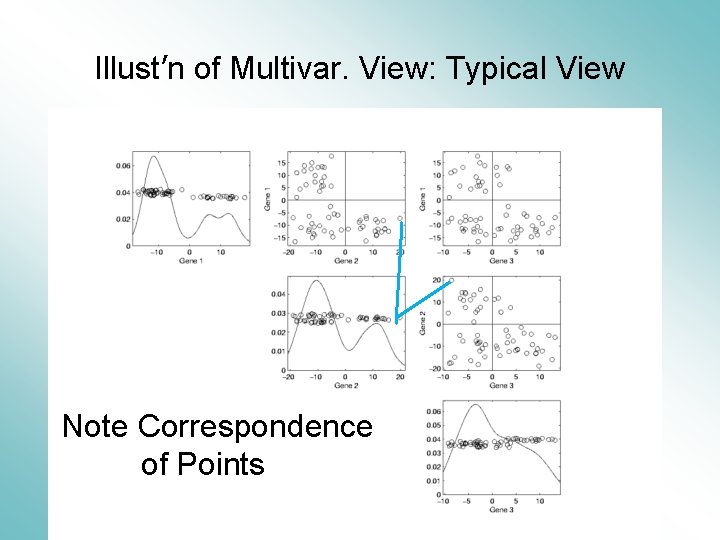
Illust’n of Multivar. View: Typical View Note Correspondence of Points
Projection Important Point • There are many “directions of interest” on which projection is useful An important set of directions: Principal Components
Principal Components Find Directions of: “Maximal (projected) Variation” • Compute Sequentially • On Orthogonal Subspaces Will take careful look at mathematics later
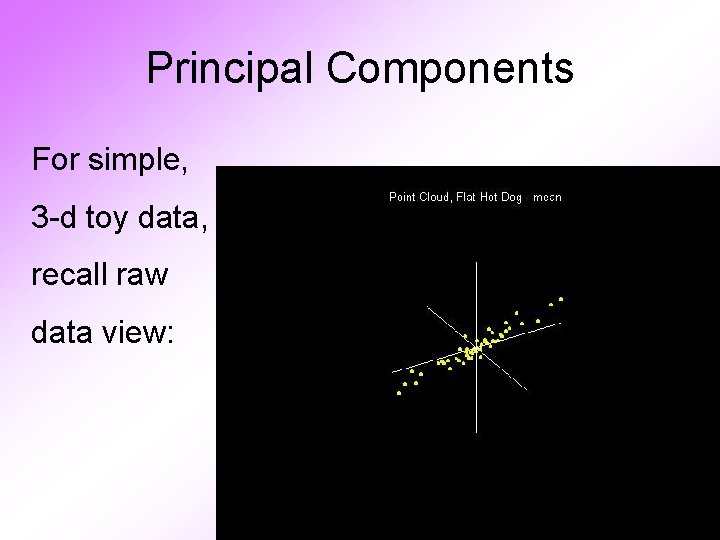
Principal Components For simple, 3 -d toy data, recall raw data view:
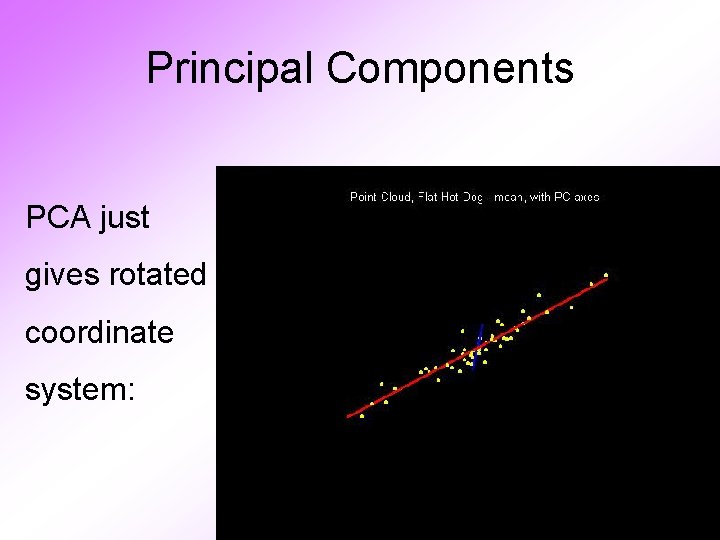
Principal Components PCA just gives rotated coordinate system:
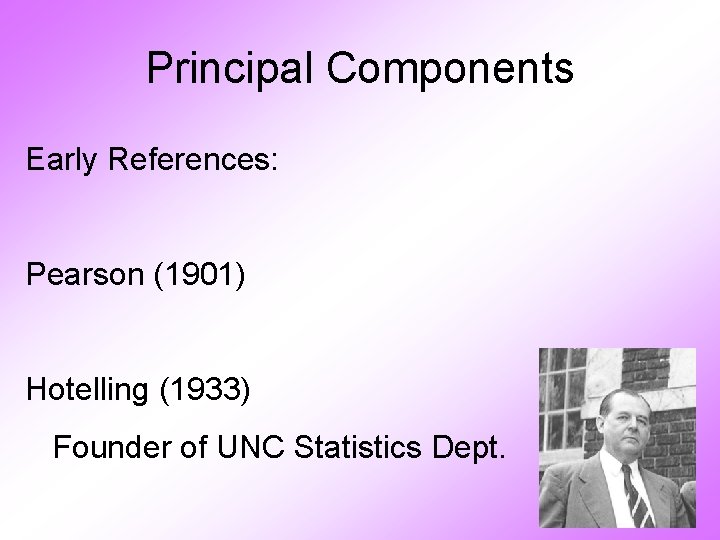
Principal Components Early References: Pearson (1901) Hotelling (1933) Founder of UNC Statistics Dept.
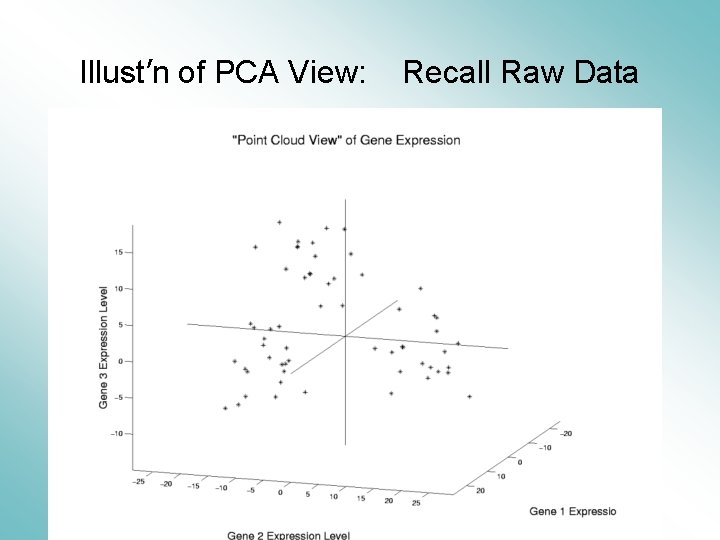
Illust’n of PCA View: Recall Raw Data
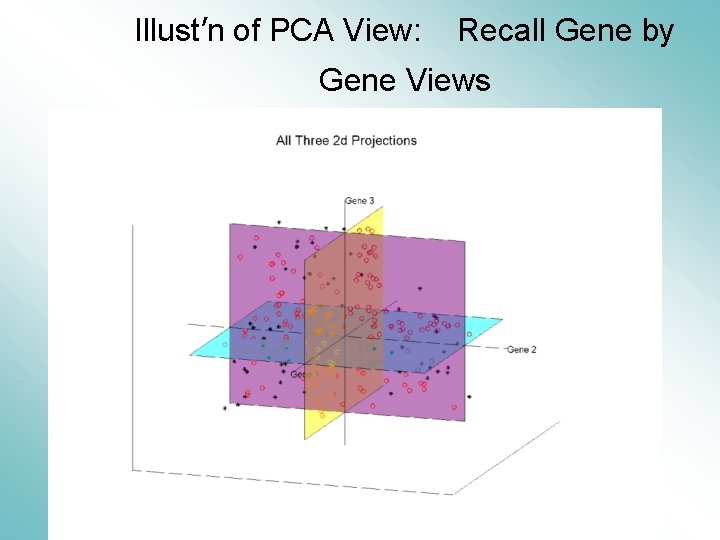
Illust’n of PCA View: Recall Gene by Gene Views
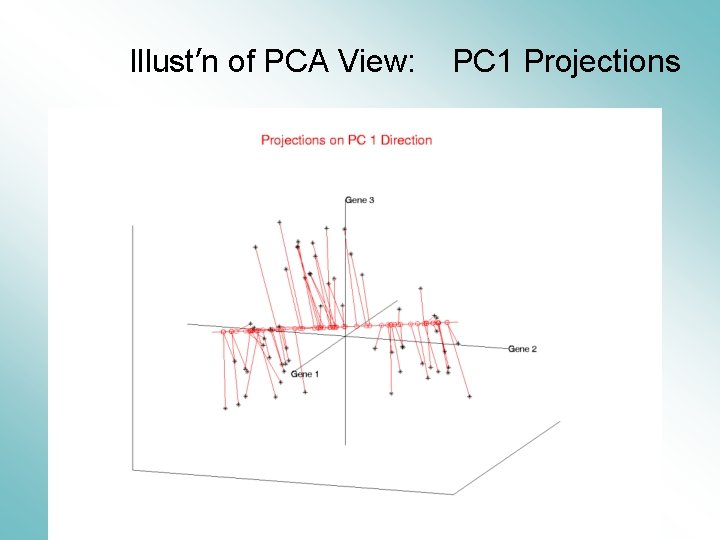
Illust’n of PCA View: PC 1 Projections
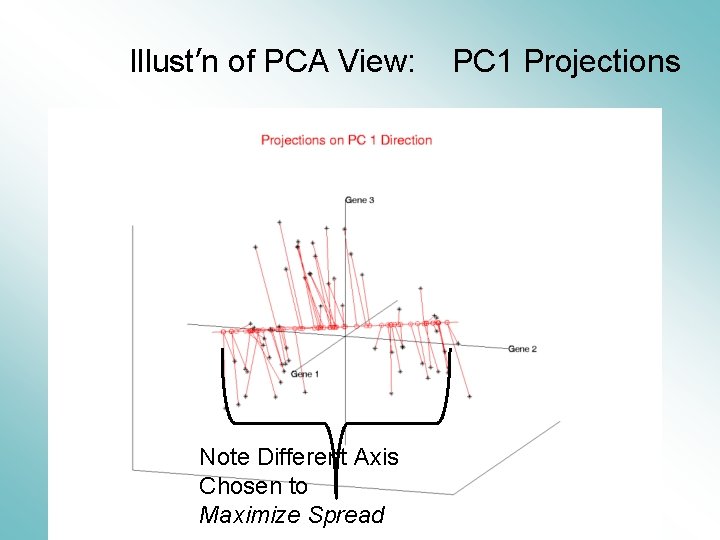
Illust’n of PCA View: PC 1 Projections Note Different Axis Chosen to Maximize Spread
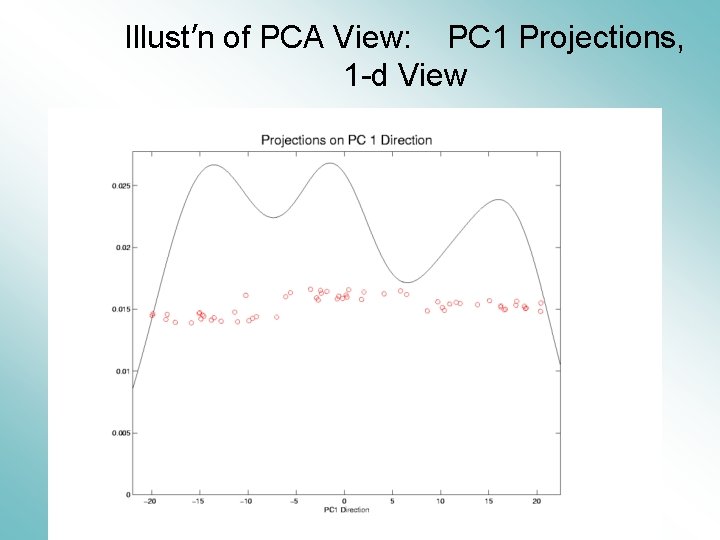
Illust’n of PCA View: PC 1 Projections, 1 -d View
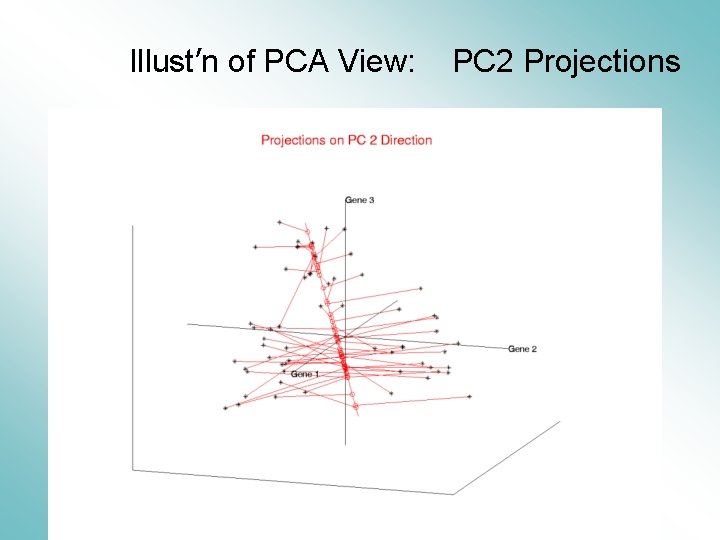
Illust’n of PCA View: PC 2 Projections
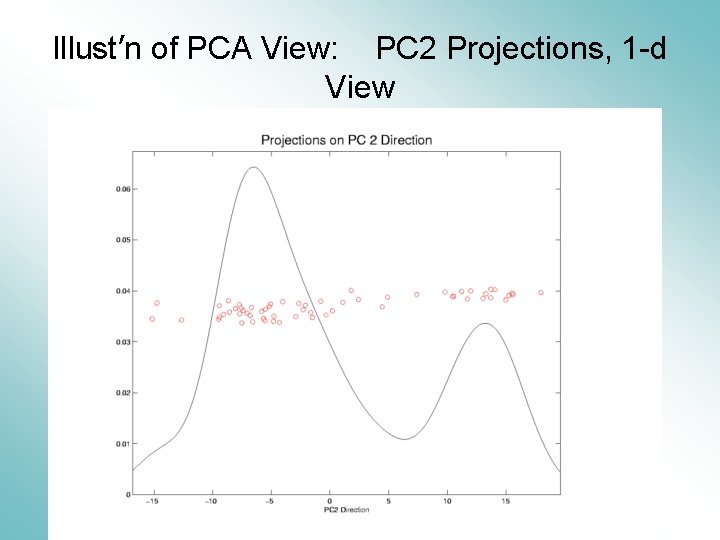
Illust’n of PCA View: PC 2 Projections, 1 -d View
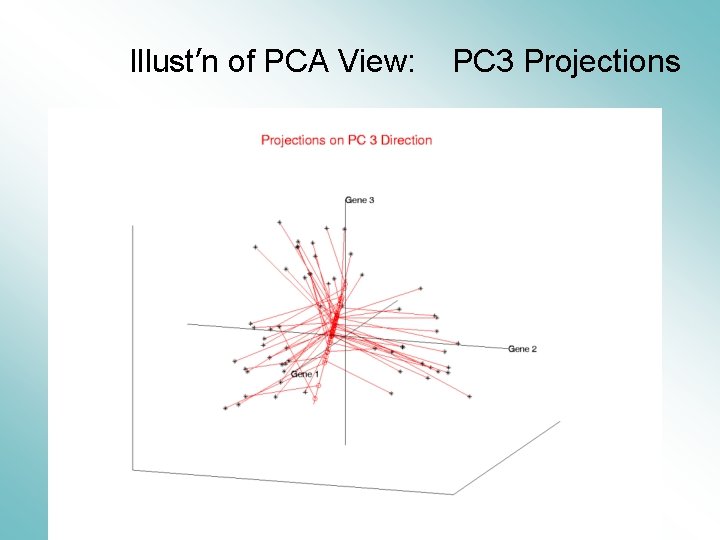
Illust’n of PCA View: PC 3 Projections
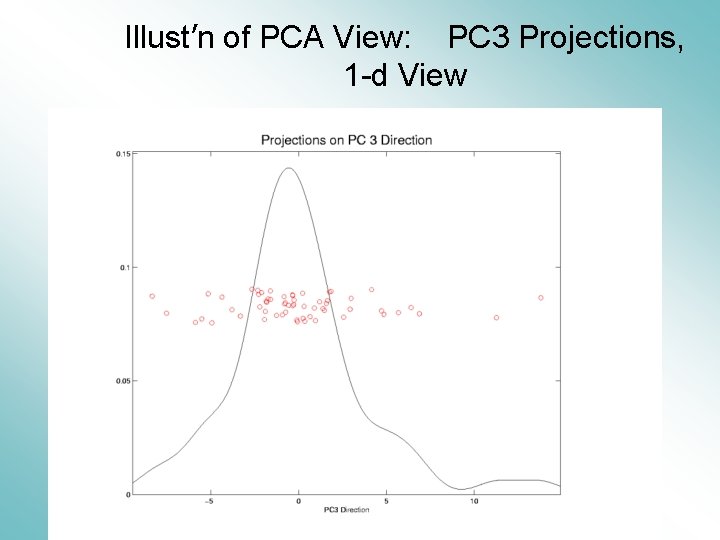
Illust’n of PCA View: PC 3 Projections, 1 -d View
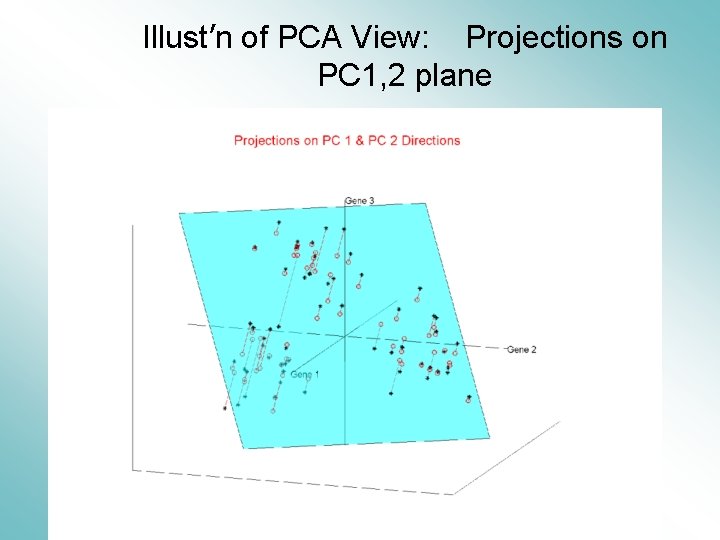
Illust’n of PCA View: Projections on PC 1, 2 plane
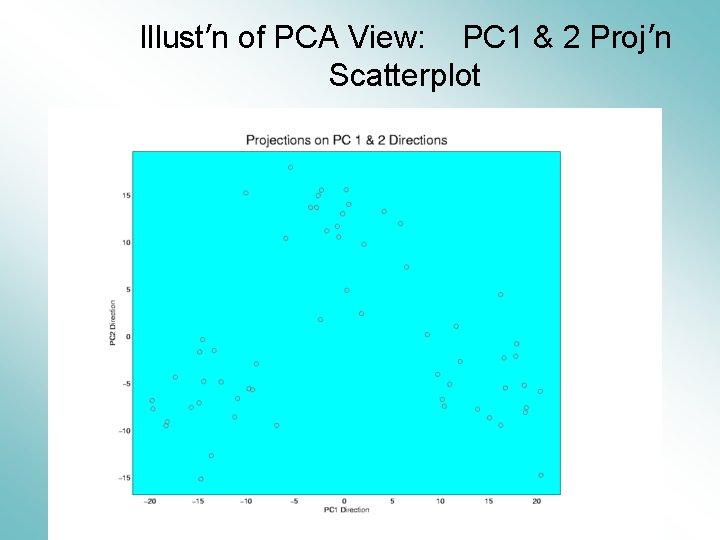
Illust’n of PCA View: PC 1 & 2 Proj’n Scatterplot
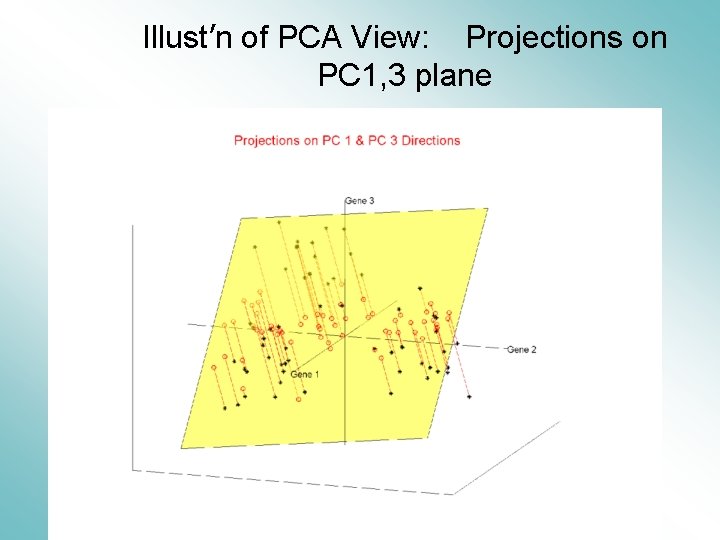
Illust’n of PCA View: Projections on PC 1, 3 plane
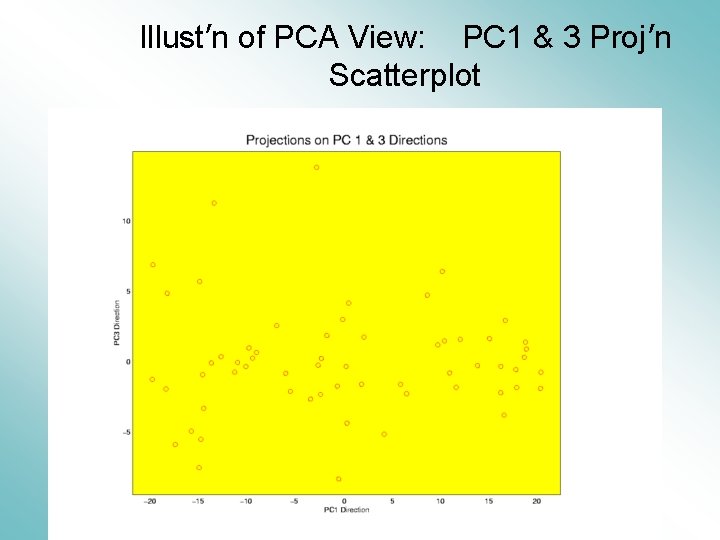
Illust’n of PCA View: PC 1 & 3 Proj’n Scatterplot
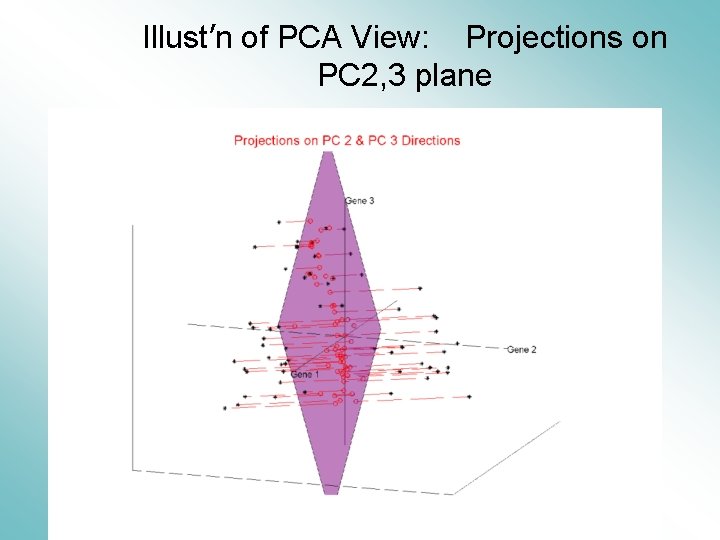
Illust’n of PCA View: Projections on PC 2, 3 plane
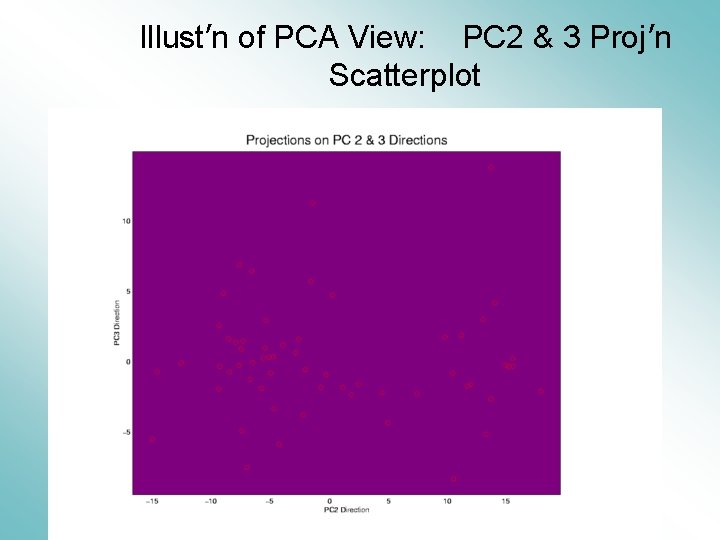
Illust’n of PCA View: PC 2 & 3 Proj’n Scatterplot
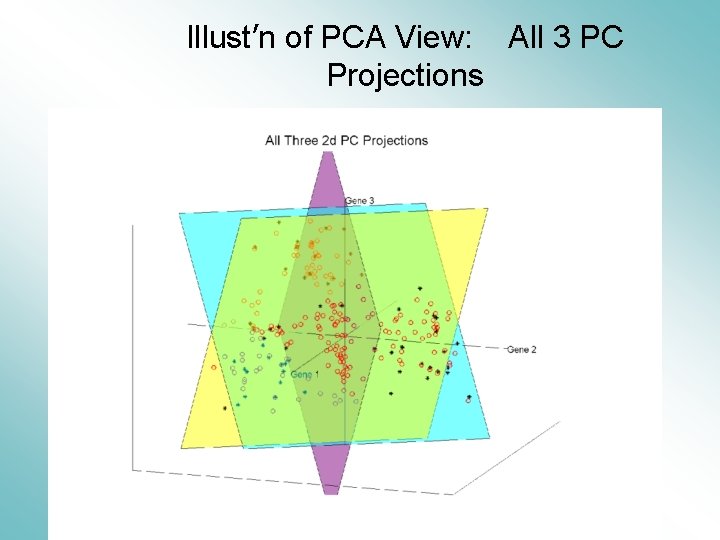
Illust’n of PCA View: All 3 PC Projections
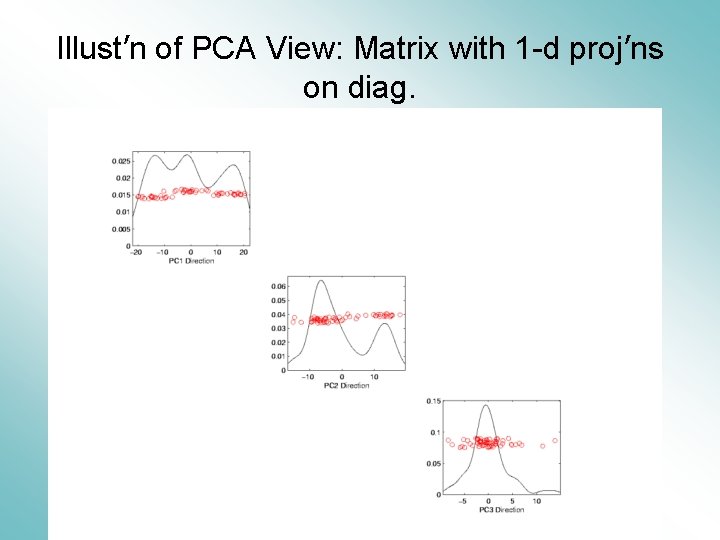
Illust’n of PCA View: Matrix with 1 -d proj’ns on diag.
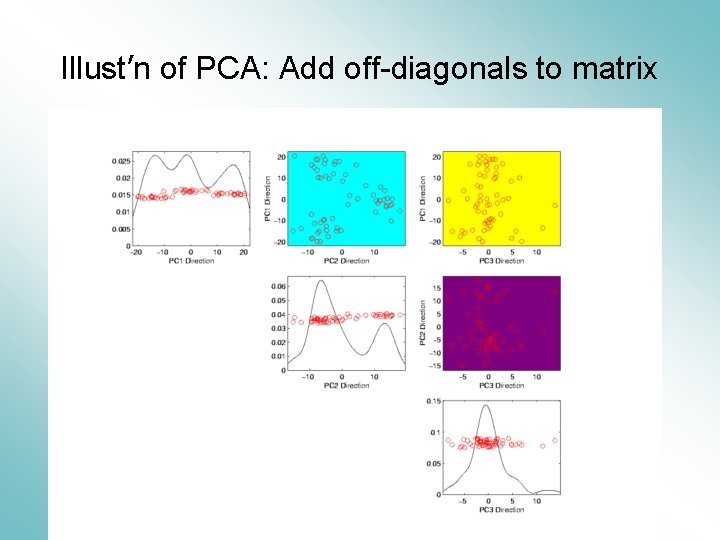
Illust’n of PCA: Add off-diagonals to matrix
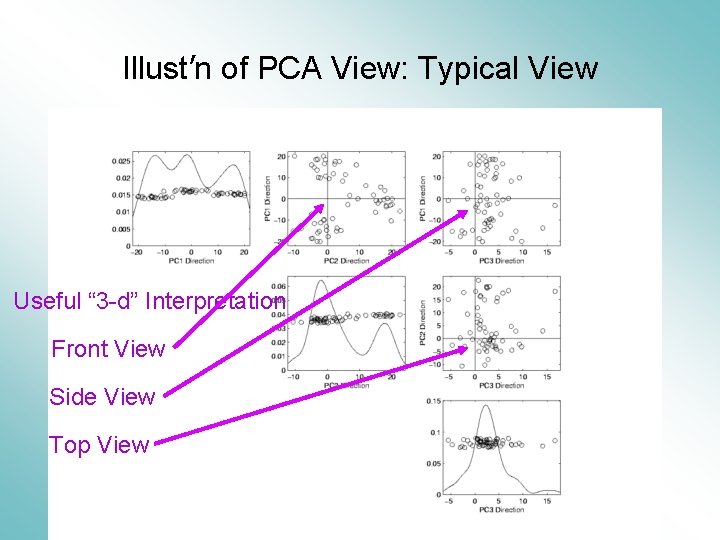
Illust’n of PCA View: Typical View Useful “ 3 -d” Interpretation Front View Side View Top View
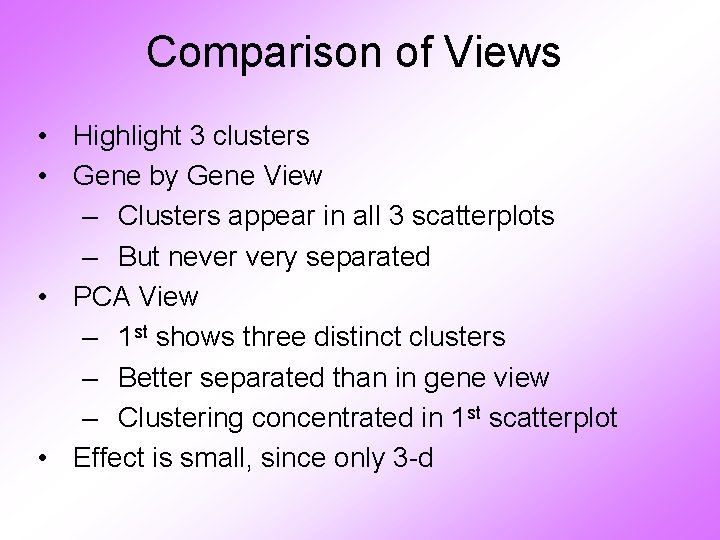
Comparison of Views • Highlight 3 clusters • Gene by Gene View – Clusters appear in all 3 scatterplots – But never very separated • PCA View – 1 st shows three distinct clusters – Better separated than in gene view – Clustering concentrated in 1 st scatterplot • Effect is small, since only 3 -d
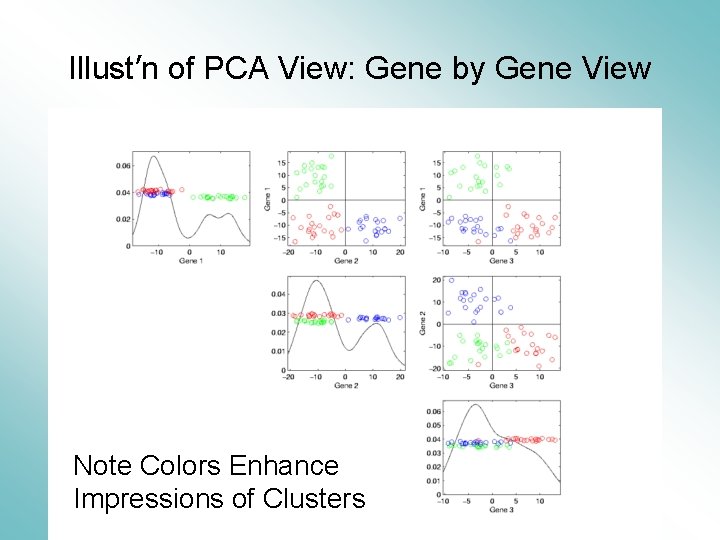
Illust’n of PCA View: Gene by Gene View Note Colors Enhance Impressions of Clusters
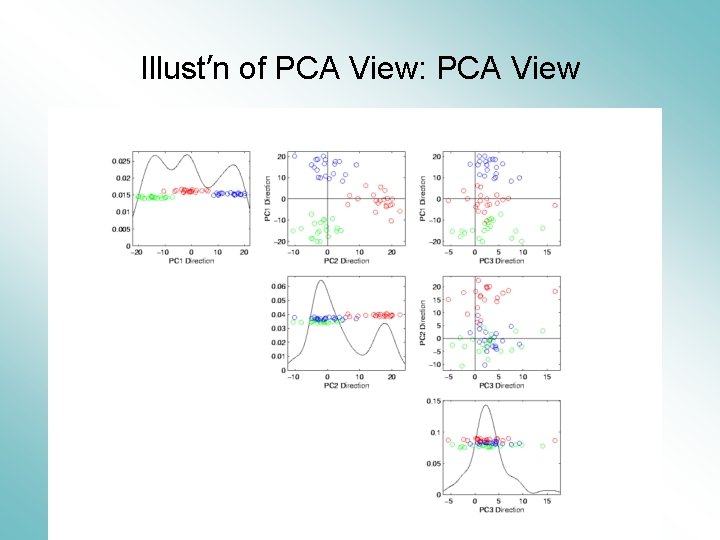
Illust’n of PCA View: PCA View
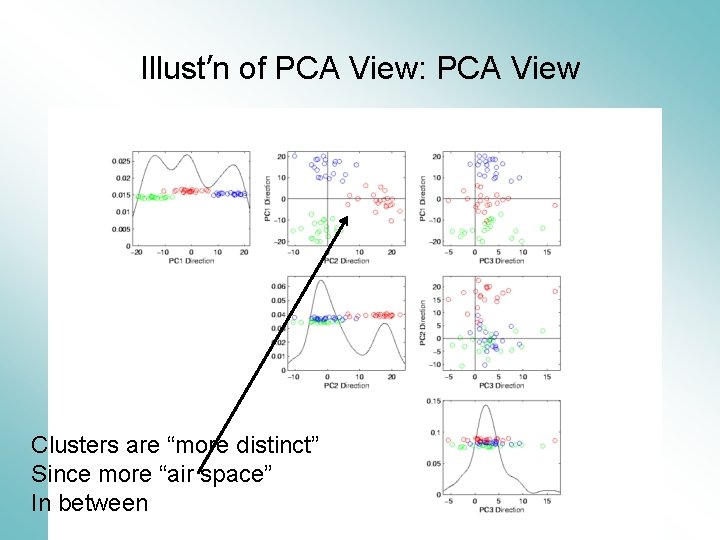
Illust’n of PCA View: PCA View Clusters are “more distinct” Since more “air space” In between
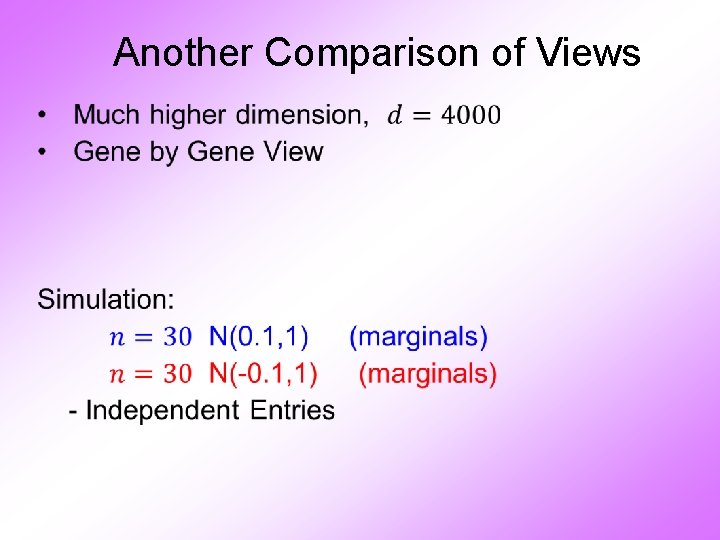
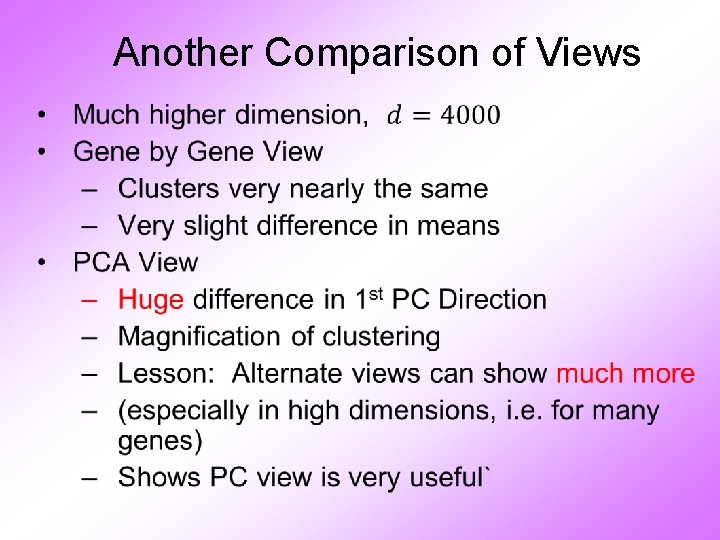
Another Comparison of Views •
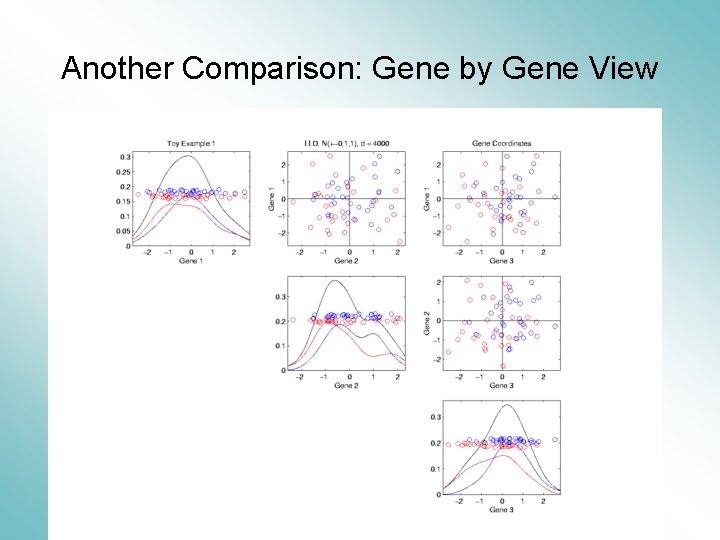
Another Comparison: Gene by Gene View
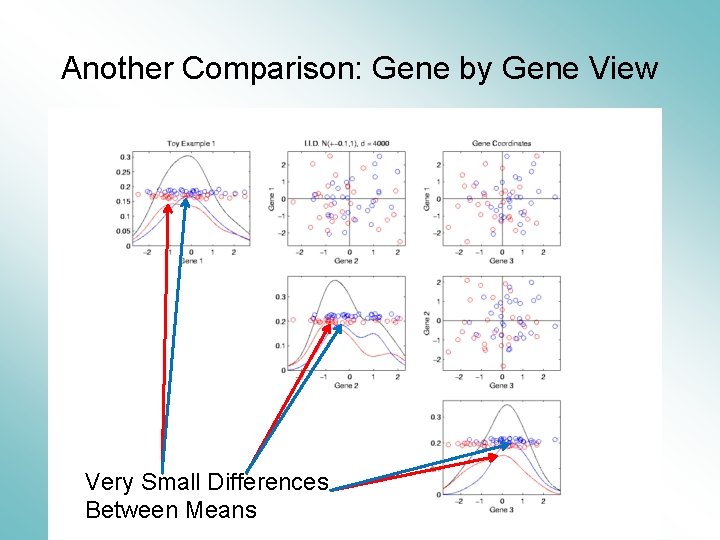
Another Comparison: Gene by Gene View Very Small Differences Between Means
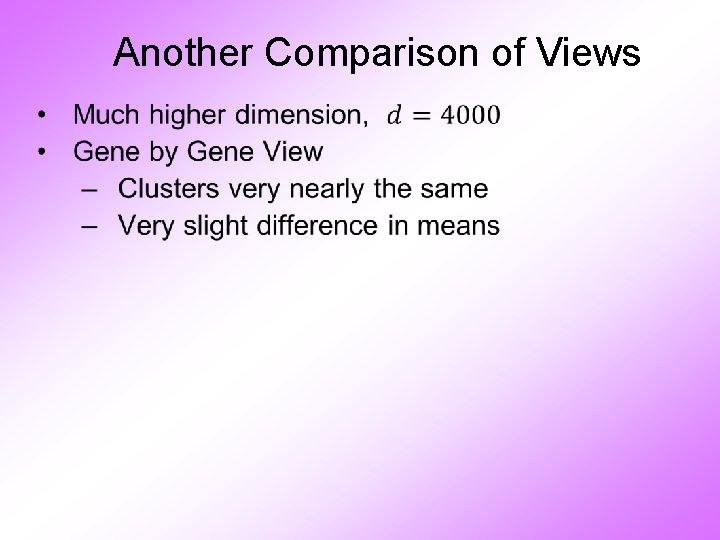
Another Comparison of Views •
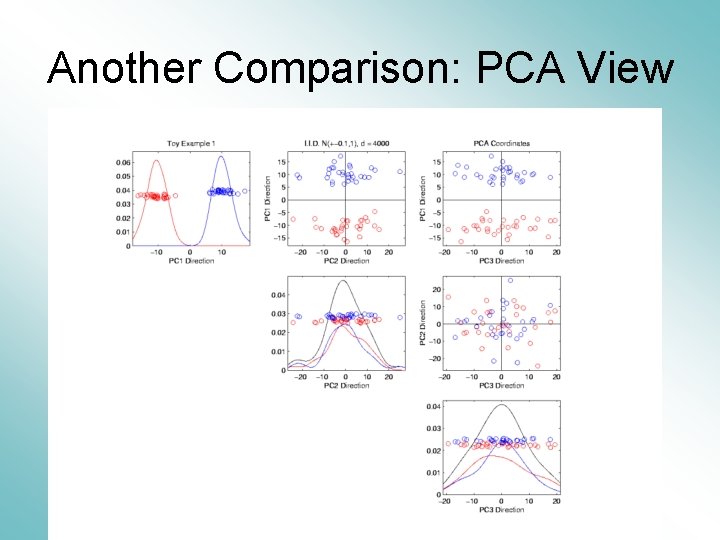
Another Comparison: PCA View
Another Comparison of Views •
- Slides: 139