
Statistics and Probability Theory Lecture 32 Fasih ur

Statistics and Probability Theory Lecture 32 Fasih ur Rehman

Last Class • Revision (1 st half)
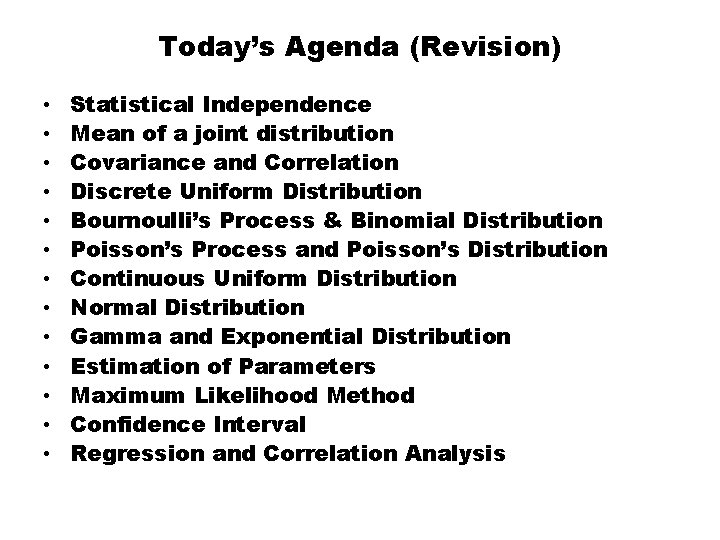
Today’s Agenda (Revision) • • • • Statistical Independence Mean of a joint distribution Covariance and Correlation Discrete Uniform Distribution Bournoulli’s Process & Binomial Distribution Poisson’s Process and Poisson’s Distribution Continuous Uniform Distribution Normal Distribution Gamma and Exponential Distribution Estimation of Parameters Maximum Likelihood Method Confidence Interval Regression and Correlation Analysis

Statistical Independence •
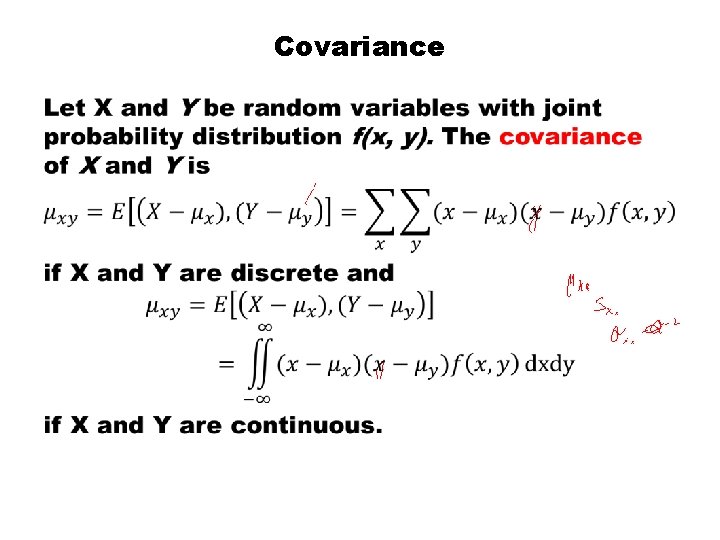
Covariance •
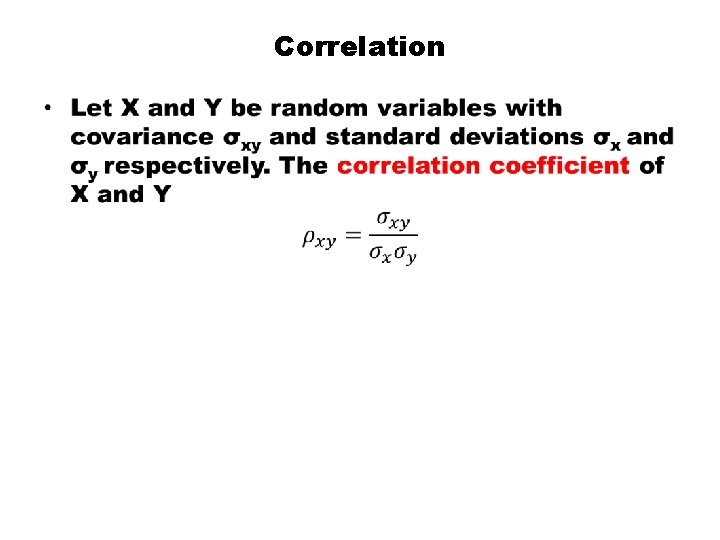
Correlation •
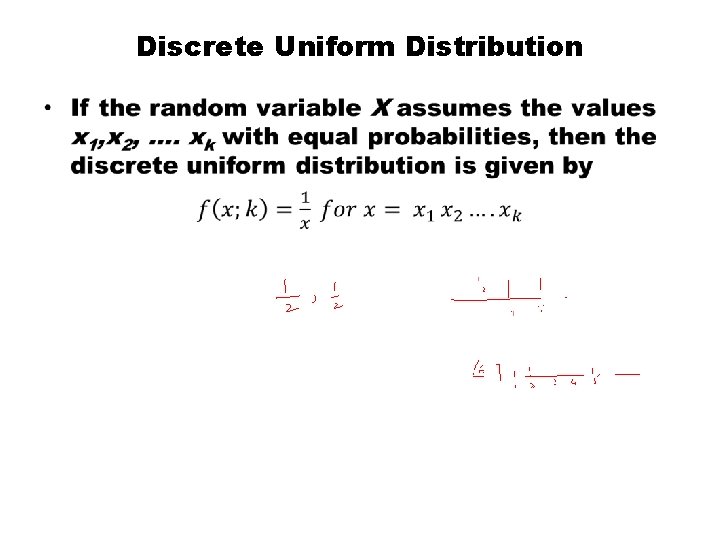
Discrete Uniform Distribution •
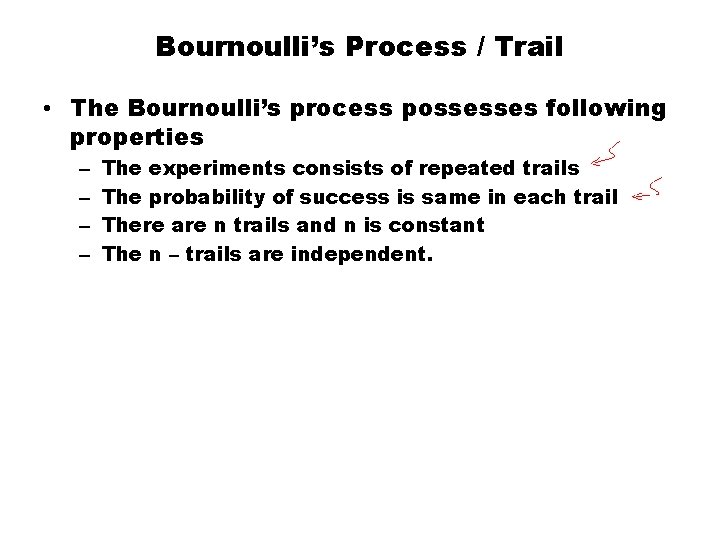
Bournoulli’s Process / Trail • The Bournoulli’s process possesses following properties – – The experiments consists of repeated trails The probability of success is same in each trail There are n trails and n is constant The n – trails are independent.
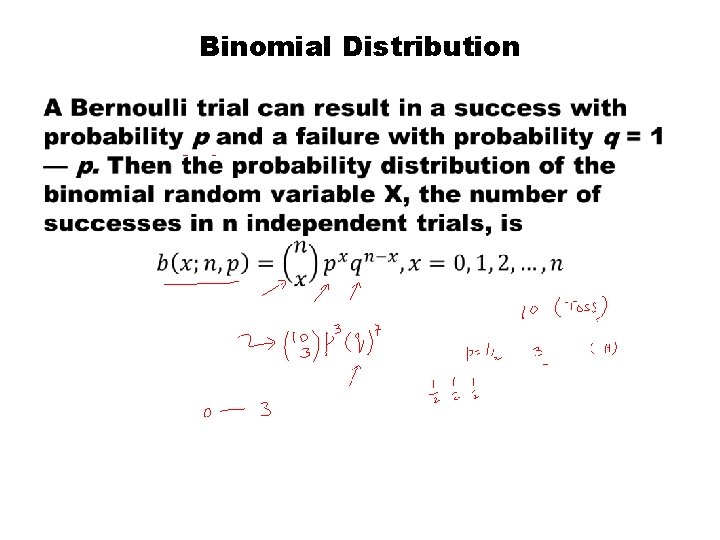
Binomial Distribution •
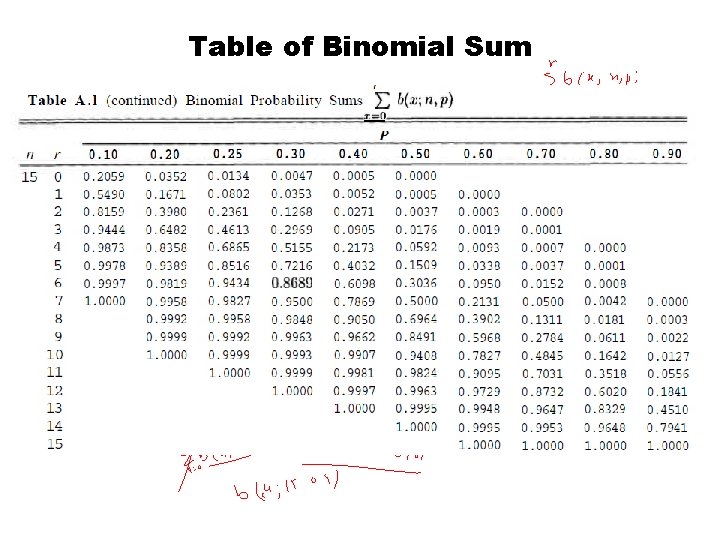
Table of Binomial Sum
Poisson’s Experiment and Process • Experiments yielding numerical values of a random variable X, the number of outcomes occurring during a given time interval or in a specified region, are called Poisson experiments. • Poisson Experiment is derived from the Poisson’s Process.
Poisson’s Process • A process is called a Poisson Process if – the process has no memory – The probability that a single outcome will occur during a very short time interval or in a small region is proportional to the length of the time interval or the size of the region and does not depend on the number of outcomes occurring outside this time interval or region. – The probability that more than one outcome will occur in such a short time interval or fall in such a small region is negligible. • The number X of outcomes occurring during a Poisson experiment is called a Poisson random variable, and its probability distribution is called the Poisson distribution.
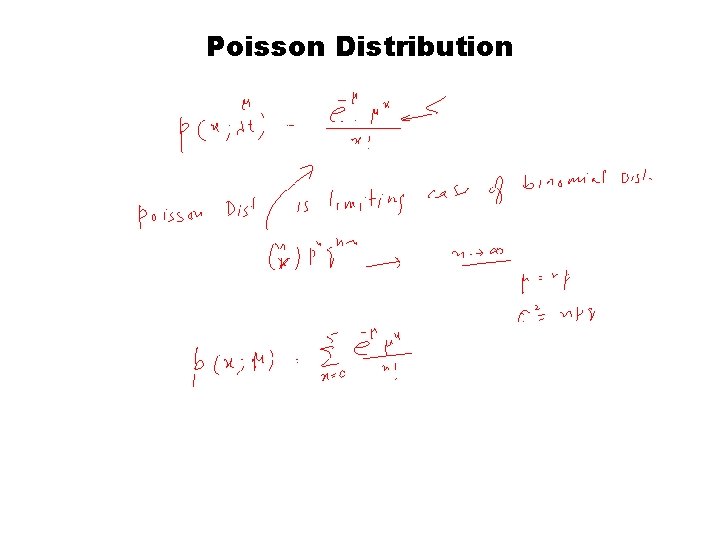
Poisson Distribution
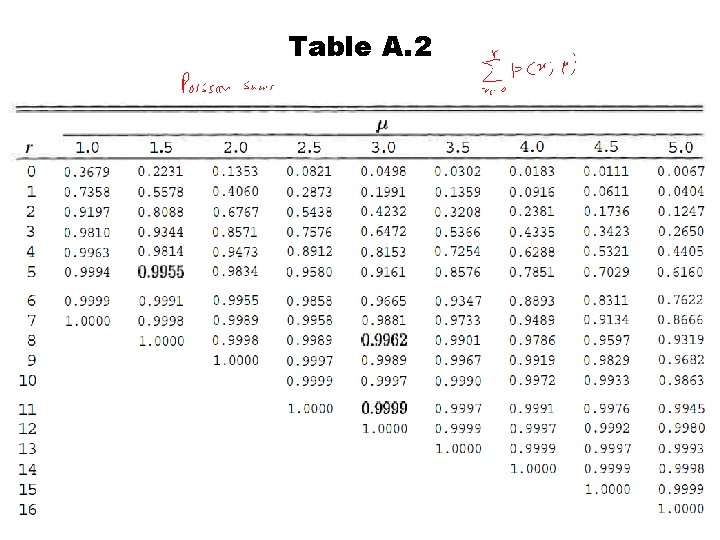
Table A. 2
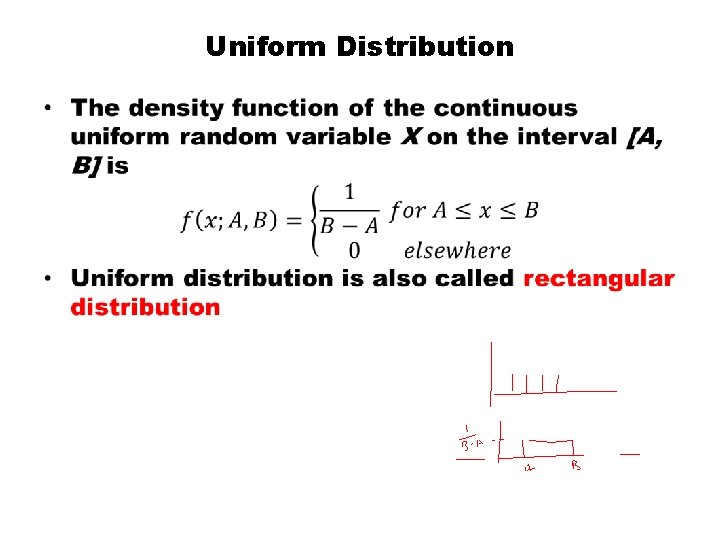
Uniform Distribution •
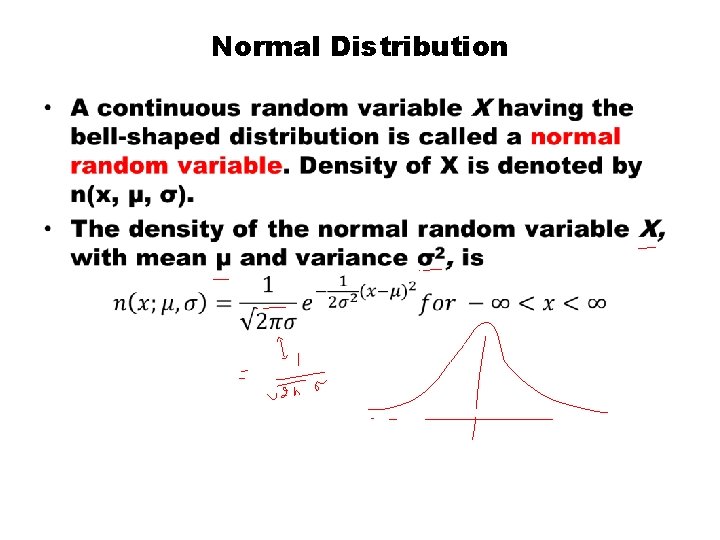
Normal Distribution •
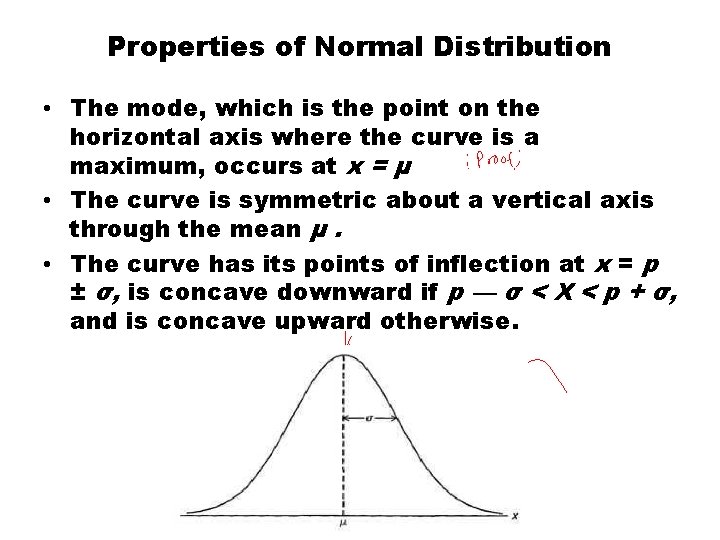
Properties of Normal Distribution • The mode, which is the point on the horizontal axis where the curve is a maximum, occurs at x = μ • The curve is symmetric about a vertical axis through the mean μ. • The curve has its points of inflection at x = p ± σ, is concave downward if p — σ < X < p + σ, and is concave upward otherwise.
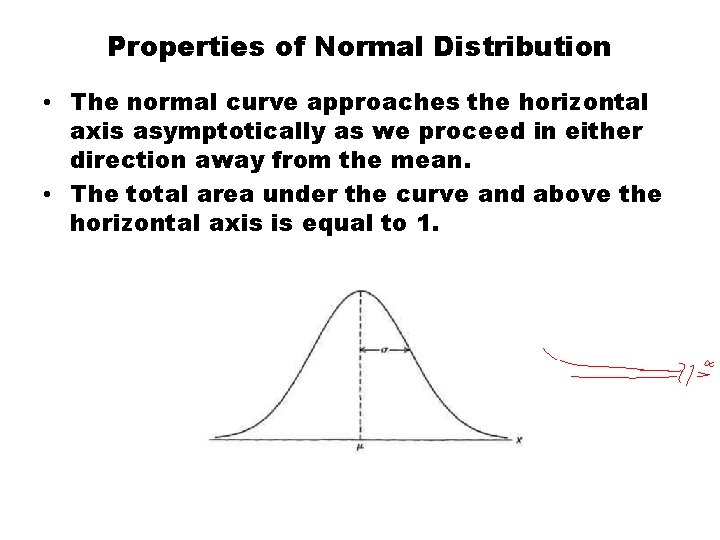
Properties of Normal Distribution • The normal curve approaches the horizontal axis asymptotically as we proceed in either direction away from the mean. • The total area under the curve and above the horizontal axis is equal to 1.
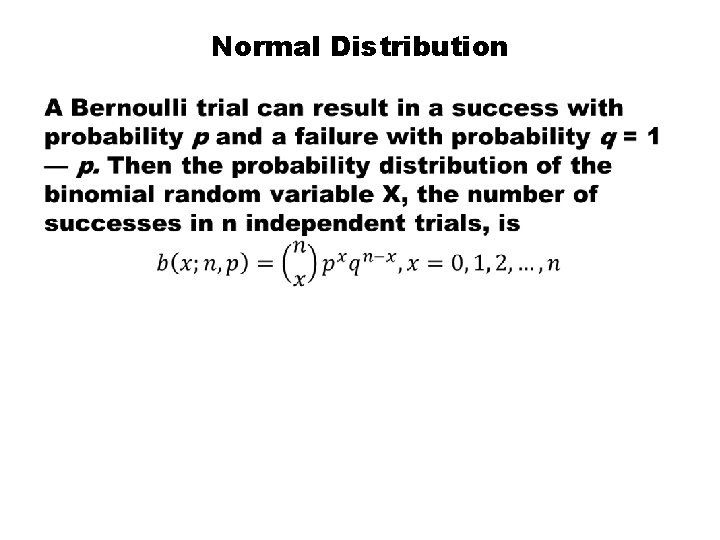
Normal Distribution •
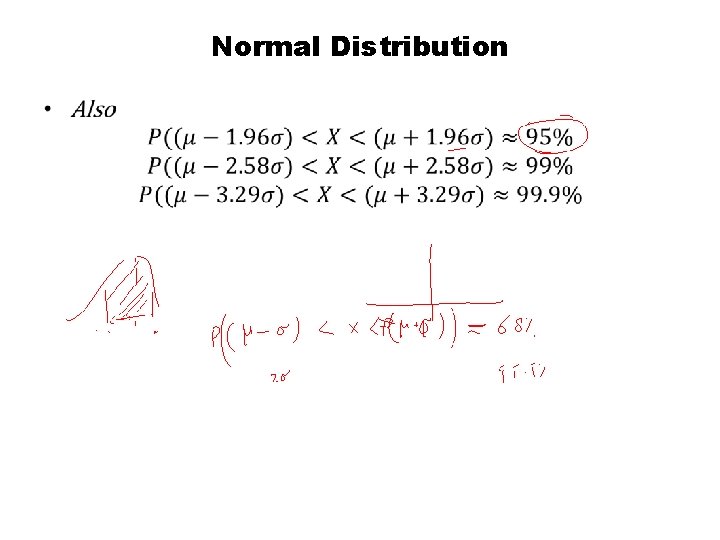
Normal Distribution •
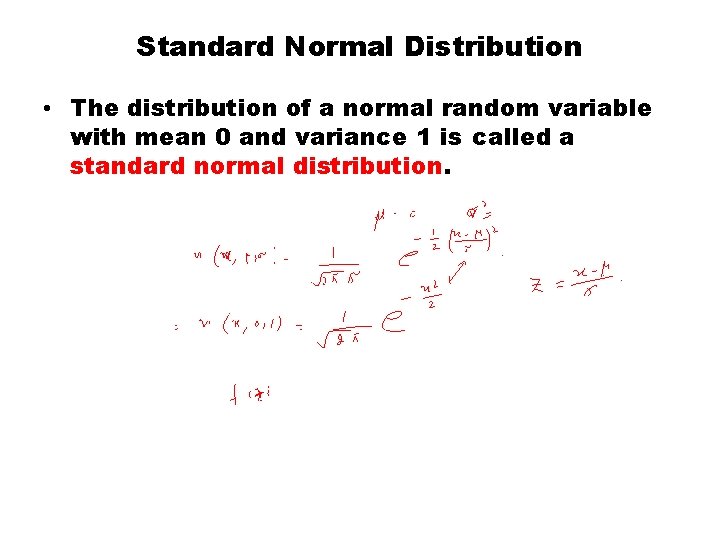
Standard Normal Distribution • The distribution of a normal random variable with mean 0 and variance 1 is called a standard normal distribution.
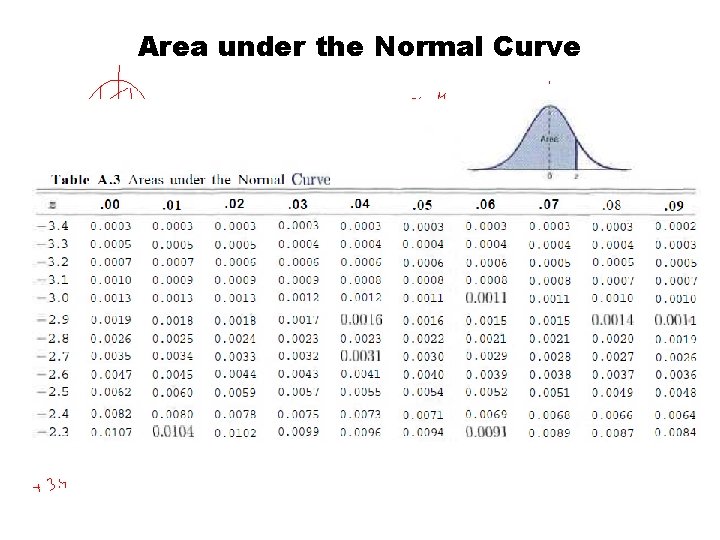
Area under the Normal Curve
Estimation of Parameters • Population and Sample • A point estimate of a parameter is a number (point on the real line), which is computed from a given sample and serves as an approximation of the unknown exact value of the parameter of the population. • An interval estimate is an interval (“confidence interval”) obtained from a sample.
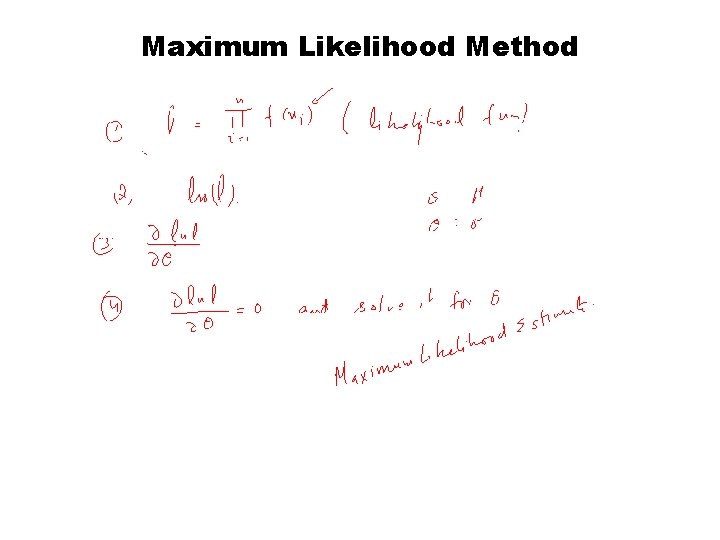
Maximum Likelihood Method
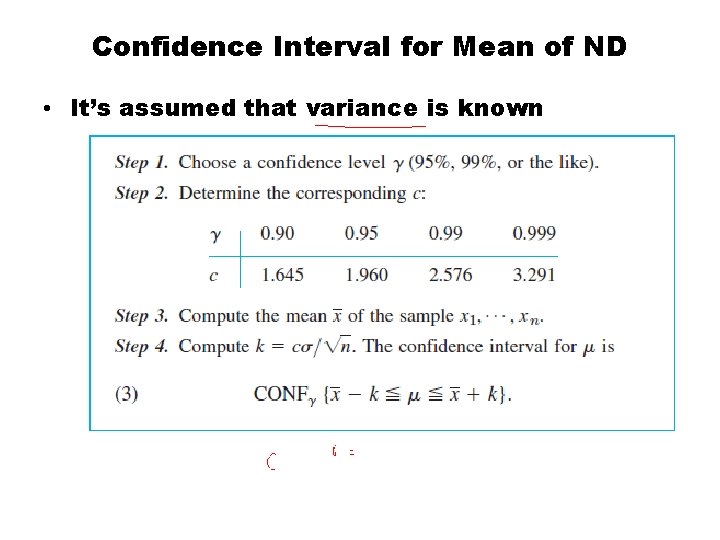
Confidence Interval for Mean of ND • It’s assumed that variance is known
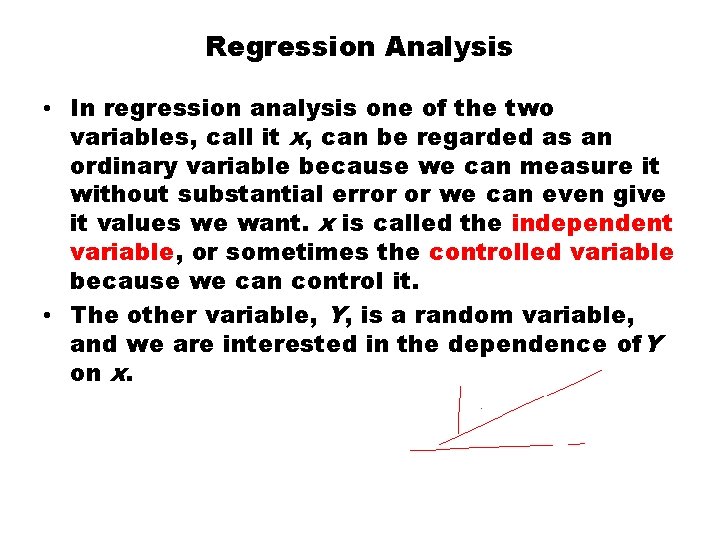
Regression Analysis • In regression analysis one of the two variables, call it x, can be regarded as an ordinary variable because we can measure it without substantial error or we can even give it values we want. x is called the independent variable, or sometimes the controlled variable because we can control it. • The other variable, Y, is a random variable, and we are interested in the dependence of. Y on x.
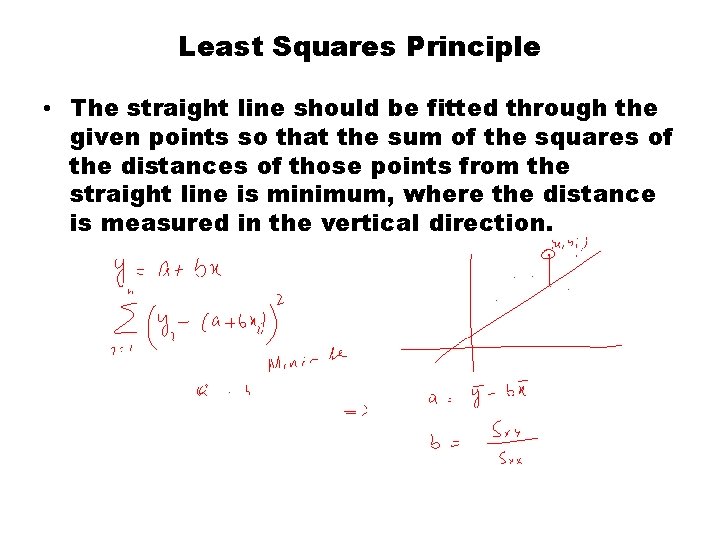
Least Squares Principle • The straight line should be fitted through the given points so that the sum of the squares of the distances of those points from the straight line is minimum, where the distance is measured in the vertical direction.
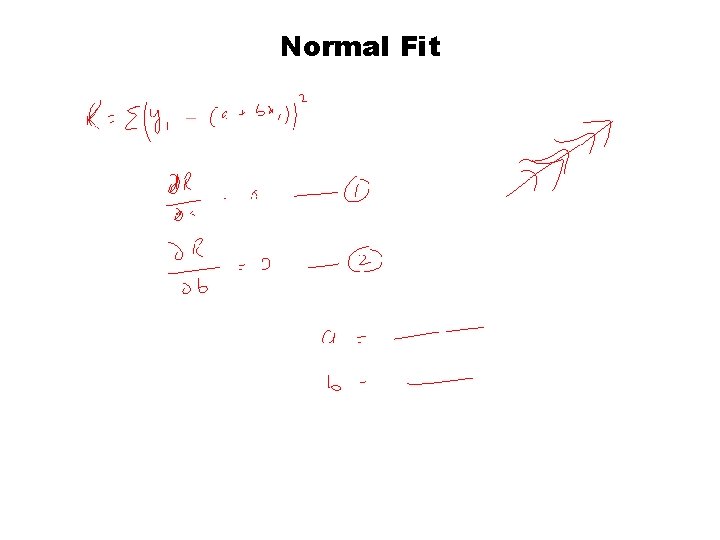
Normal Fit
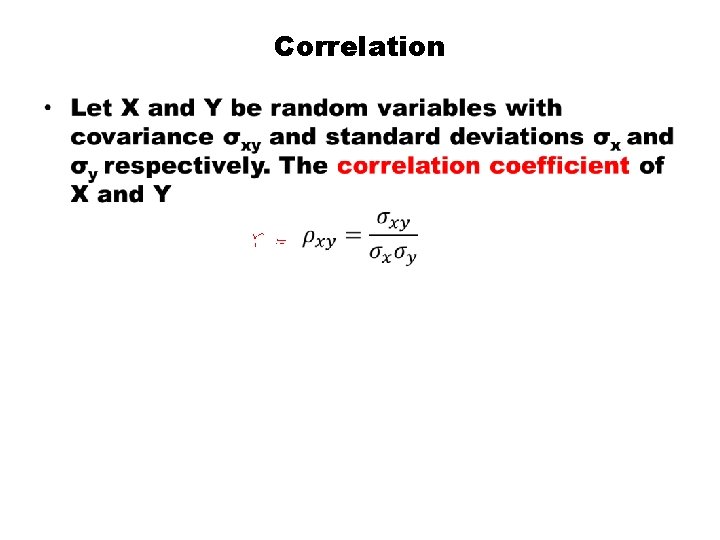
Correlation •
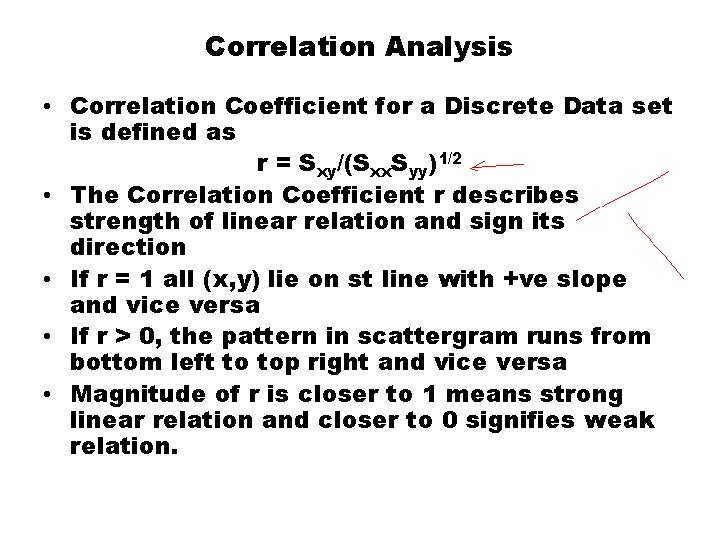
Correlation Analysis • Correlation Coefficient for a Discrete Data set is defined as r = Sxy/(Sxx. Syy)1/2 • The Correlation Coefficient r describes strength of linear relation and sign its direction • If r = 1 all (x, y) lie on st line with +ve slope and vice versa • If r > 0, the pattern in scattergram runs from bottom left to top right and vice versa • Magnitude of r is closer to 1 means strong linear relation and closer to 0 signifies weak relation.
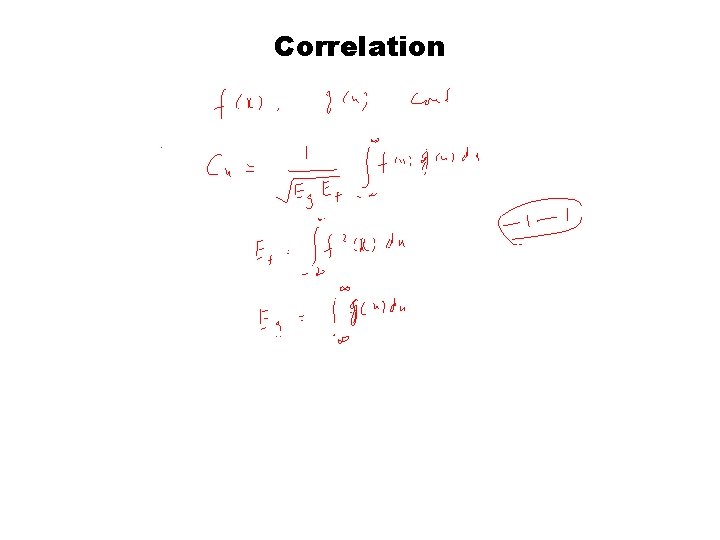
Correlation
Summary • Revision of 2 nd half of the course
References • Probability and Statistics for Engineers and Scientists by Walpole • Schaum Outline Series on Probability and Statistics. • Advanced Engineering Mathematics by E Kreyszig.
- Slides: 33