
Statistics and Art Sampling Response Error Mixed Models






- Slides: 42
Statistics and Art: Sampling, Response Error, Mixed Models, Missing Data, and Inference Ed Stanek 9/9/2021 1
9/9/2021 2
Outline 1. Example: Dose-response Models in Toxicology- Threshold vs Hormetic Models 2. What is truth? : Predict what? 3. Subsets- sampling 4. Prediction 5. Results on Predictor of Realized Subject True Value 6. Illustration and Dilemma 7. Extension to two-stage problems 8. Missing data framework 9. 9/9/2021 Conclusions 3
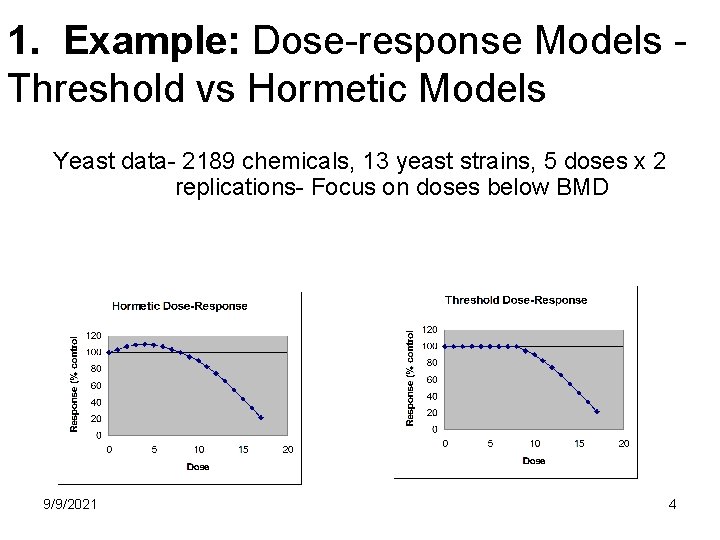
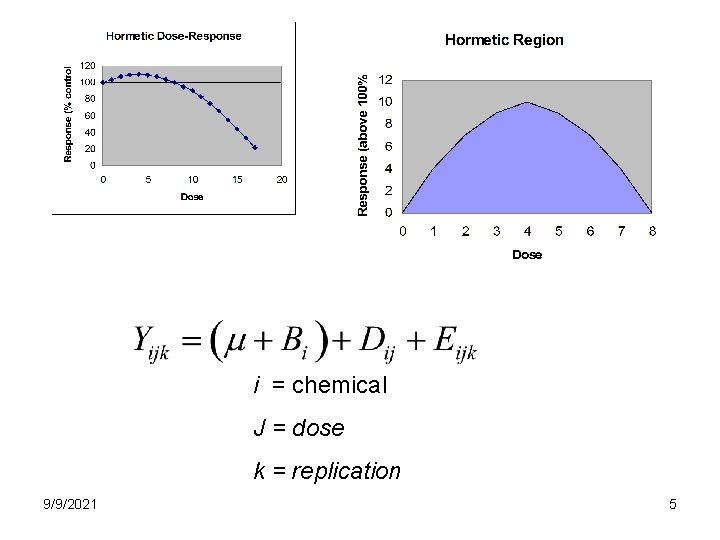
1. Example: Dose-response Models Threshold vs Hormetic Models Yeast data- 2189 chemicals, 13 yeast strains, 5 doses x 2 replications- Focus on doses below BMD 9/9/2021 4
i = chemical J = dose k = replication 9/9/2021 5
9/9/2021 6
9/9/2021 7
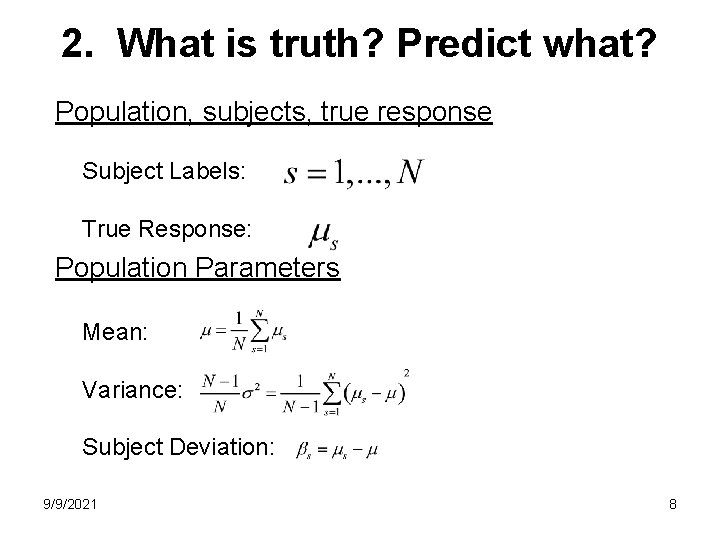
2. What is truth? Predict what? Population, subjects, true response Subject Labels: True Response: Population Parameters Mean: Variance: Subject Deviation: 9/9/2021 8
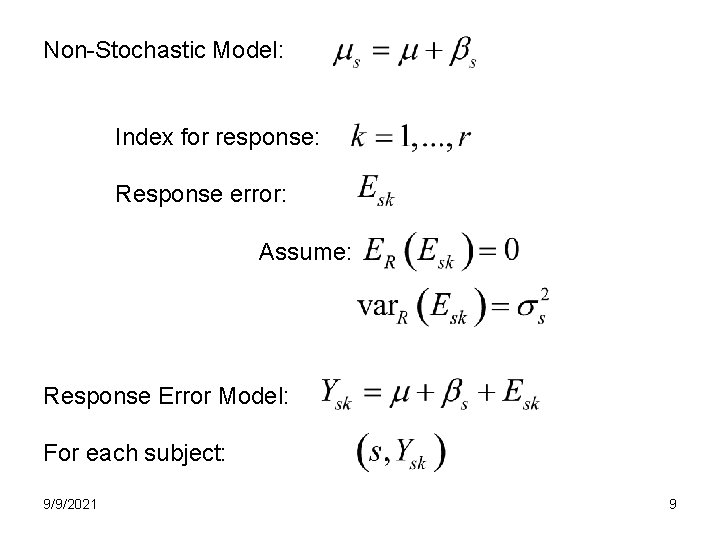
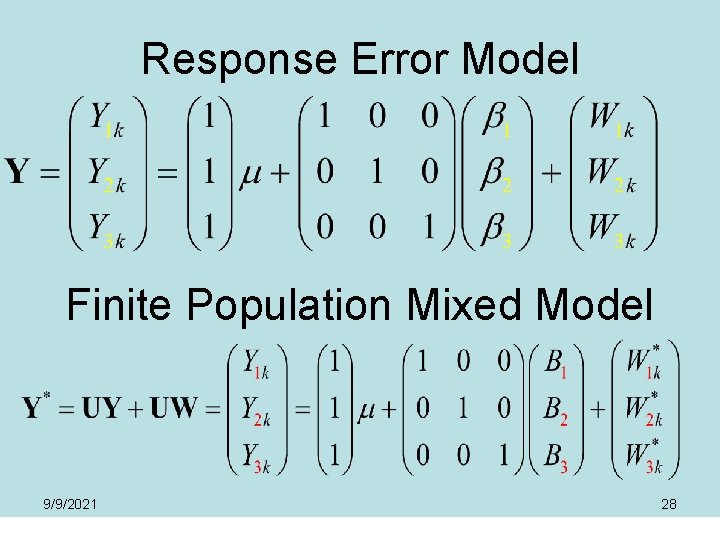
Non-Stochastic Model: Index for response: Response error: Assume: Response Error Model: For each subject: 9/9/2021 9
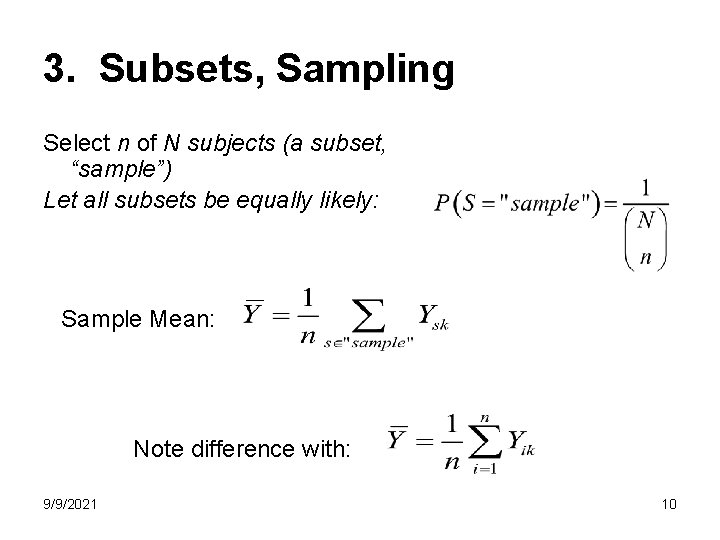
3. Subsets, Sampling Select n of N subjects (a subset, “sample”) Let all subsets be equally likely: Sample Mean: Note difference with: 9/9/2021 10
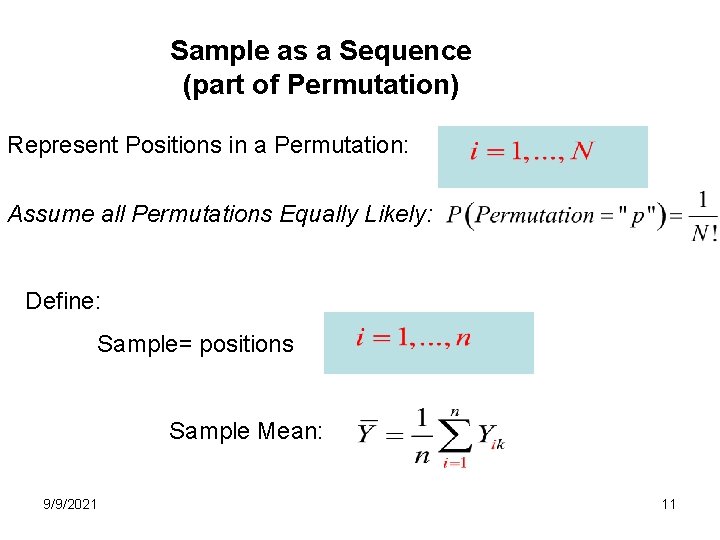
Sample as a Sequence (part of Permutation) Represent Positions in a Permutation: Assume all Permutations Equally Likely: Define: Sample= positions Sample Mean: 9/9/2021 11
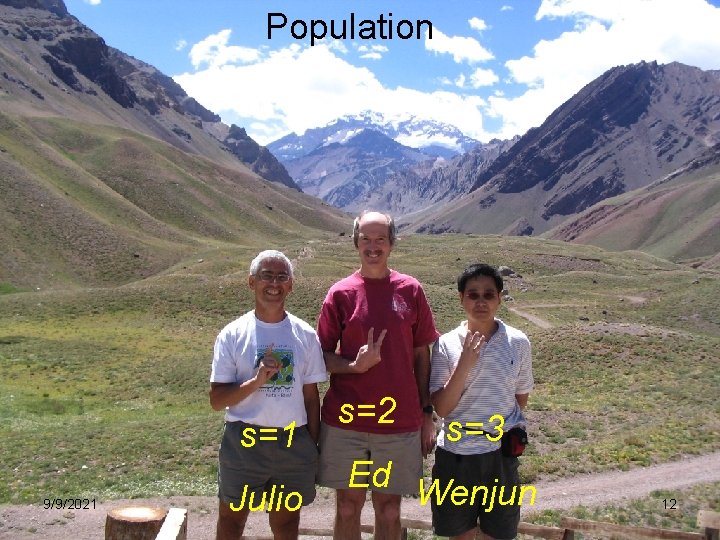
Population s=1 9/9/2021 Julio s=2 s=3 Ed Wenjun 12
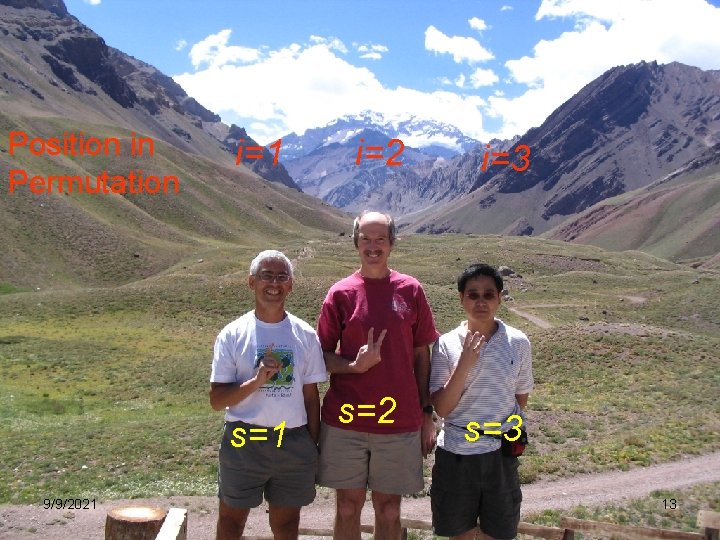
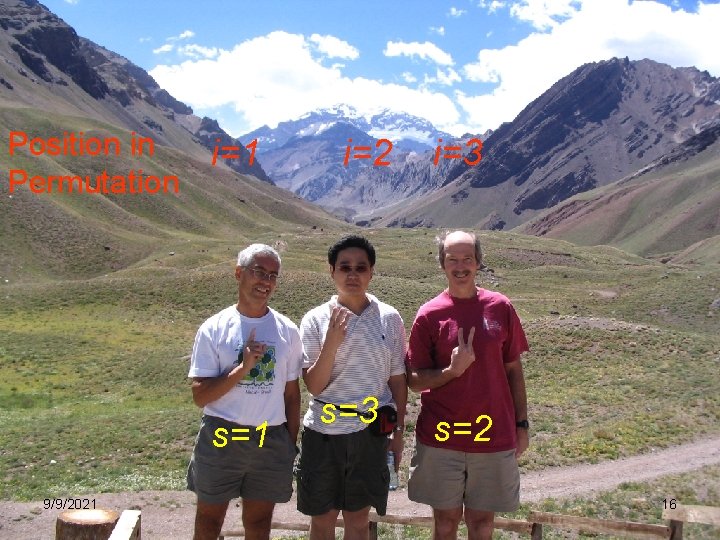
Position in Permutation i=1 s=1 9/9/2021 i=2 i=3 s=2 s=3 13
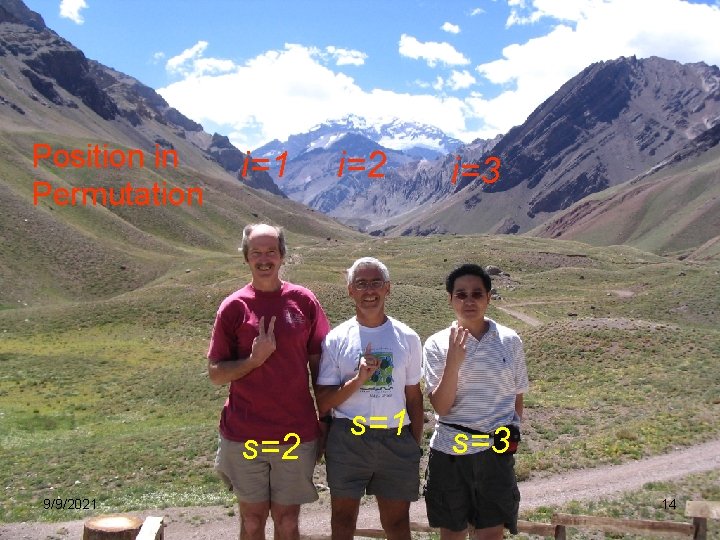
Position in i=1 Permutation s=1 s=2 9/9/2021 i=2 i=3 s=2 s=1 s=3 14
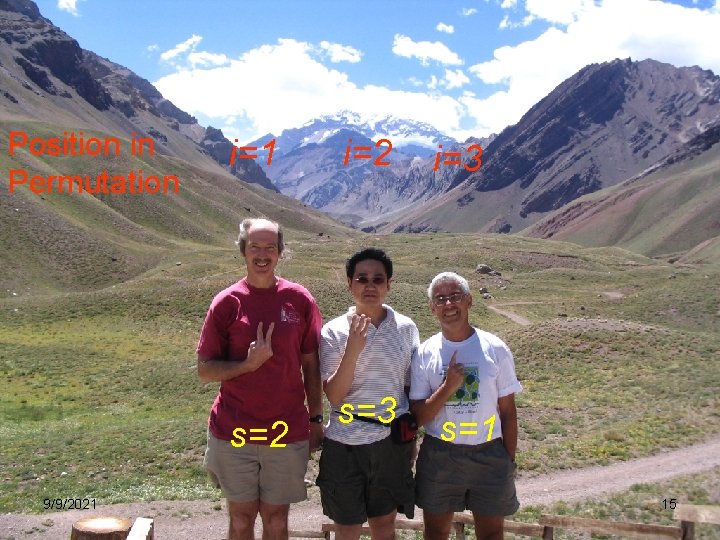
Position in Permutation i=1 s=2 9/9/2021 i=2 i=3 s=1 15
Position in i=1 Permutation s=1 9/9/2021 i=2 s=3 i=3 s=2 16
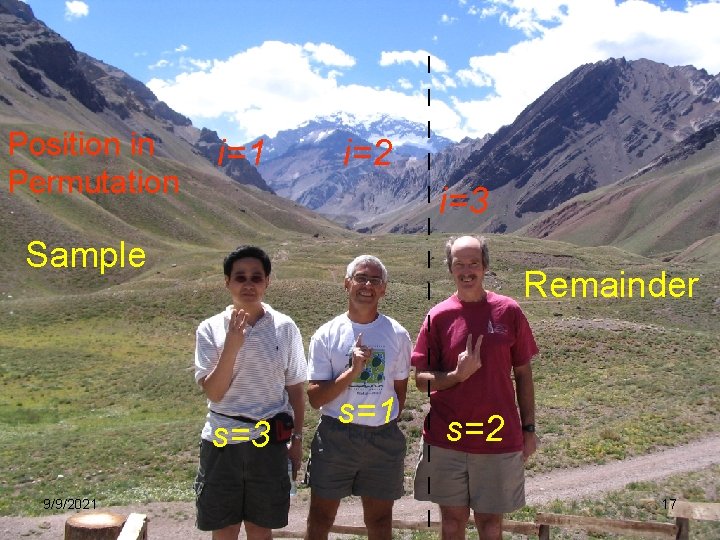
| | Position in Permutation i=1 i=2 | | Sample i=3 | Remainder | | | s=3 s=1 | | | s=2 | 9/9/2021 | 17
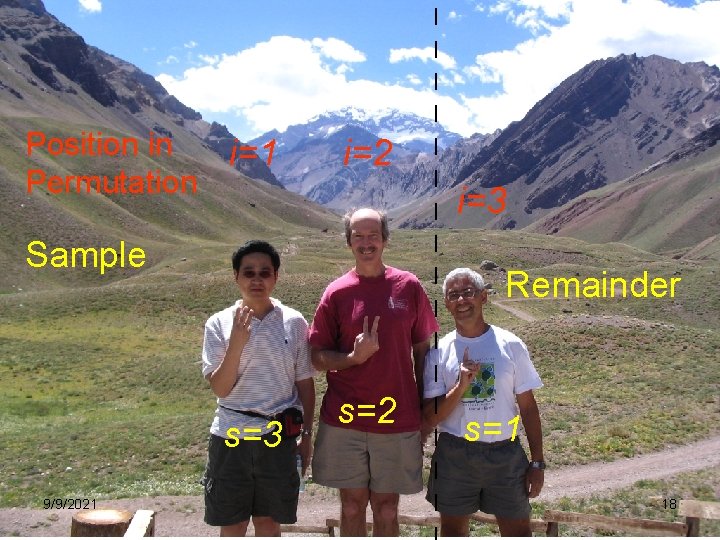
| | Position in i=1 Permutation i=2 | | | i=3 | Sample | | Remainder | | s=3 s=2 | | s=1 | 9/9/2021 | | 18
• Population size (N) is most likely > 3 • We only see “n” subjects in the sample • For example: Suppose n=3, and N=7 – We may see … 9/9/2021 19
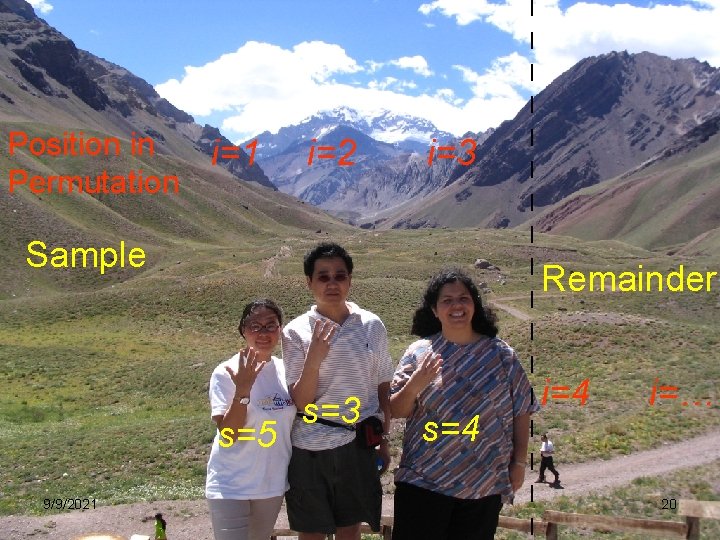
| | Position in i=1 Permutation i=2 i=3 | | Sample | | Remainder | | s=5 9/9/2021 s=3 | s=4 i=… | | 20
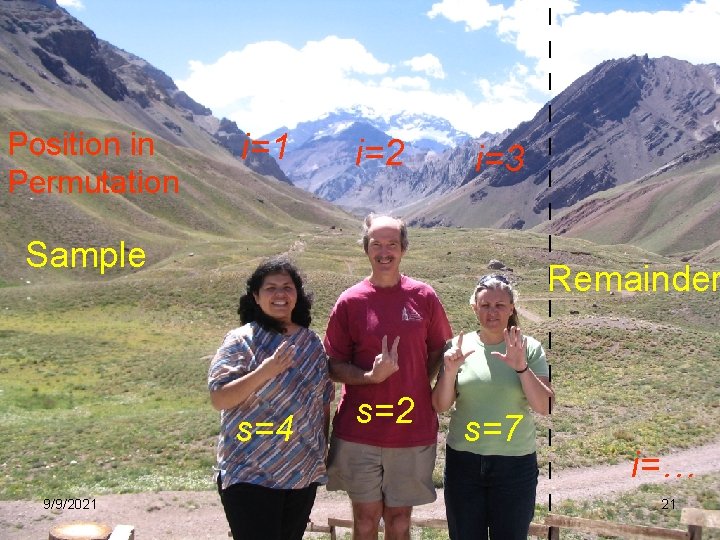
| | Position in Permutation i=1 i=2 i=3 | | Sample Remainder | | s=4 s=2 s=7 | | | 9/9/2021 | | i=… 21
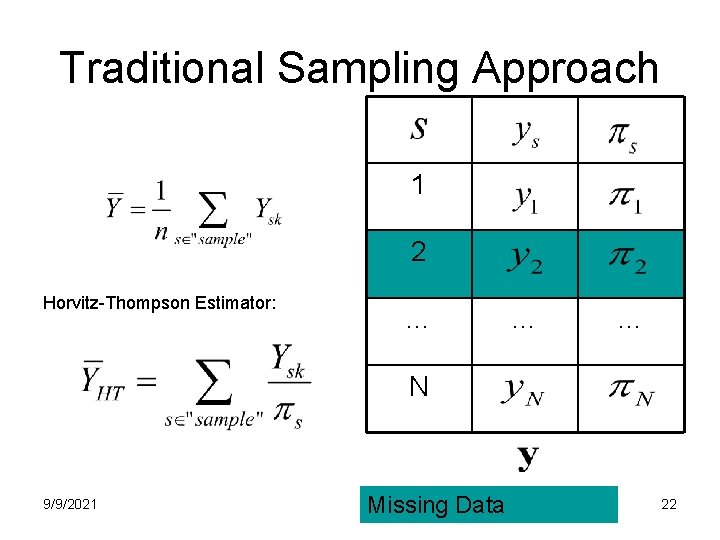
Traditional Sampling Approach 1 2 Horvitz-Thompson Estimator: … … … N 9/9/2021 Missing Data 22
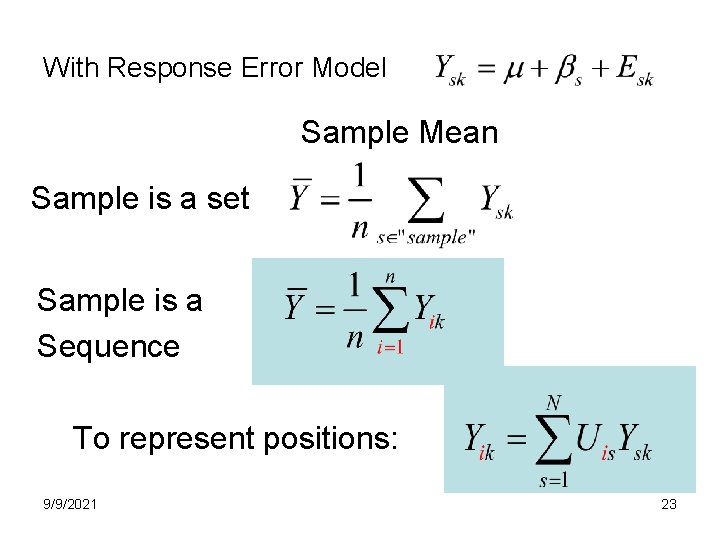
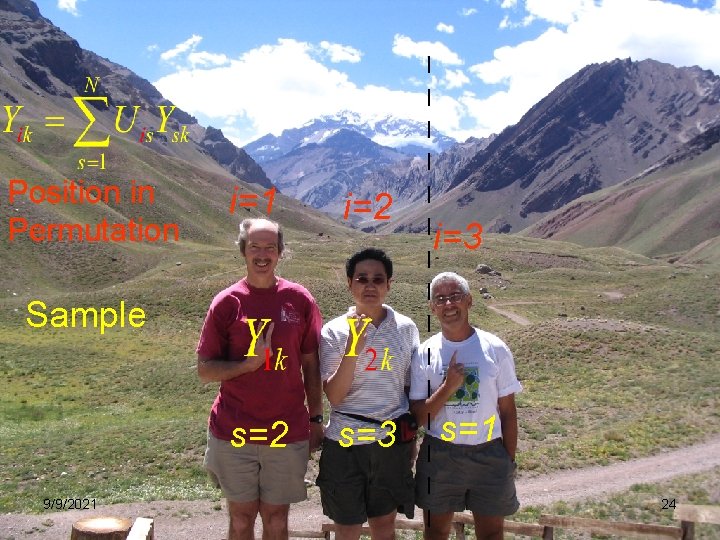
With Response Error Model Sample Mean Sample is a set Sample is a Sequence To represent positions: 9/9/2021 23
| | Position in Permutation i=1 i=2 | | | i=3 | Sample | | | s=2 s=3 s=1 | | | 9/9/2021 | 24
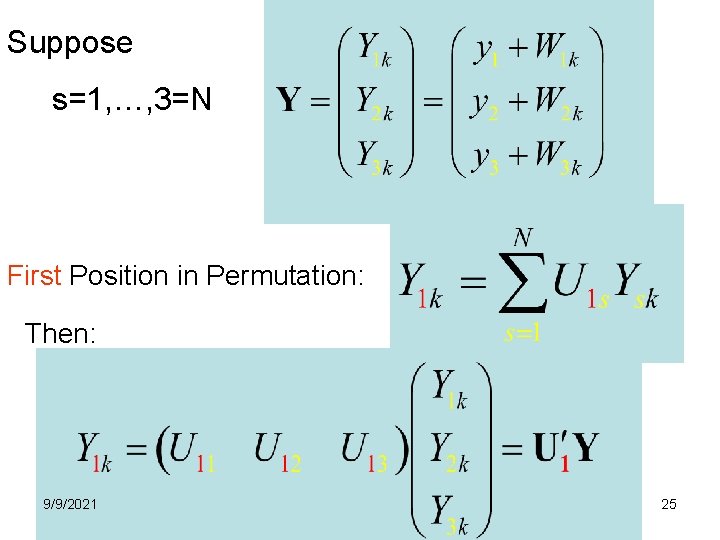
Suppose s=1, …, 3=N First Position in Permutation: Then: 9/9/2021 25
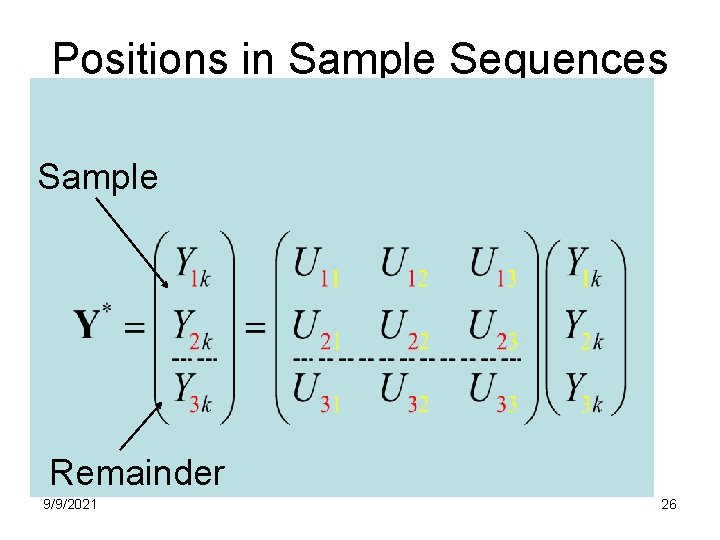
Positions in Sample Sequences Sample Remainder 9/9/2021 26
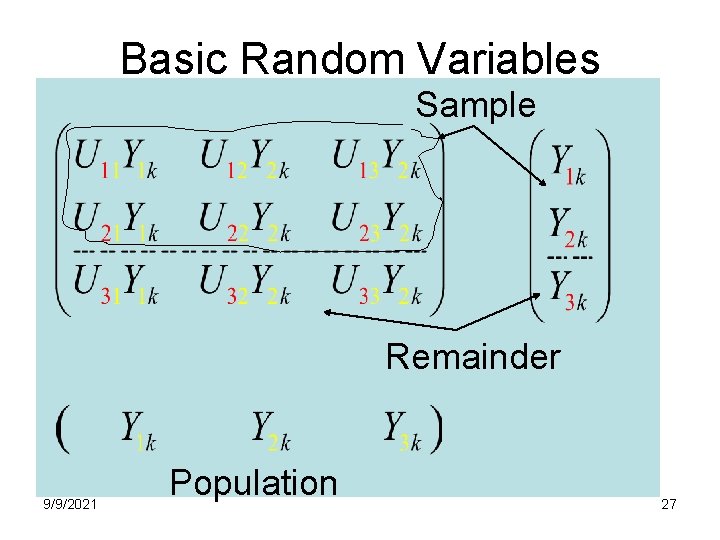
Basic Random Variables Sample Remainder 9/9/2021 Population 27
Response Error Model Finite Population Mixed Model 9/9/2021 28
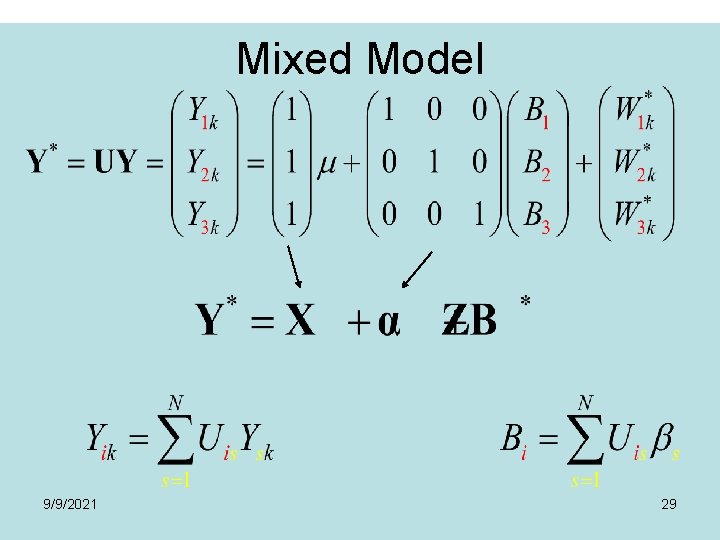
Mixed Model 9/9/2021 29
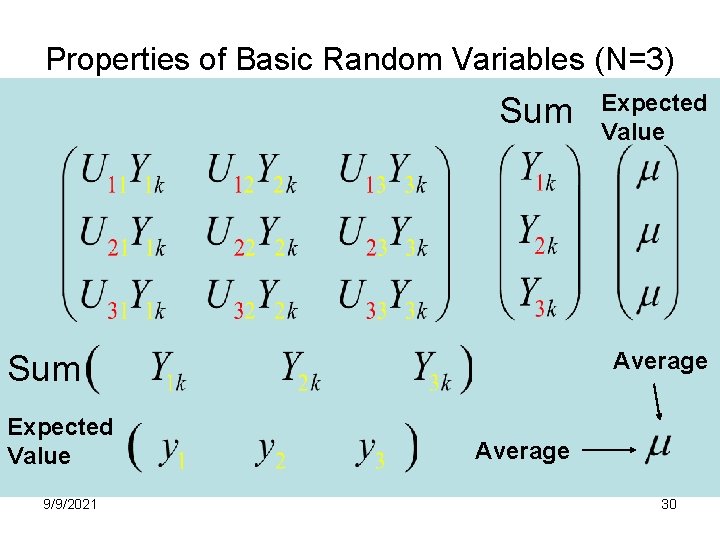
Properties of Basic Random Variables (N=3) Sum Average Sum Expected Value 9/9/2021 Expected Value Average 30
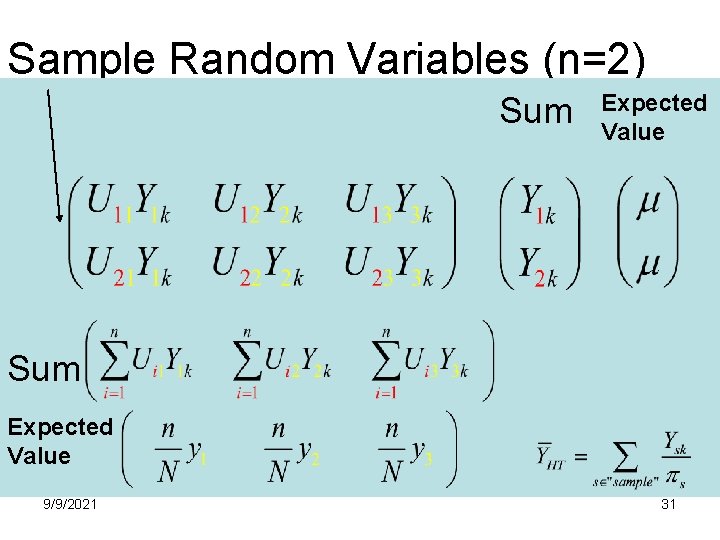
Sample Random Variables (n=2) Sum Expected Value 9/9/2021 31
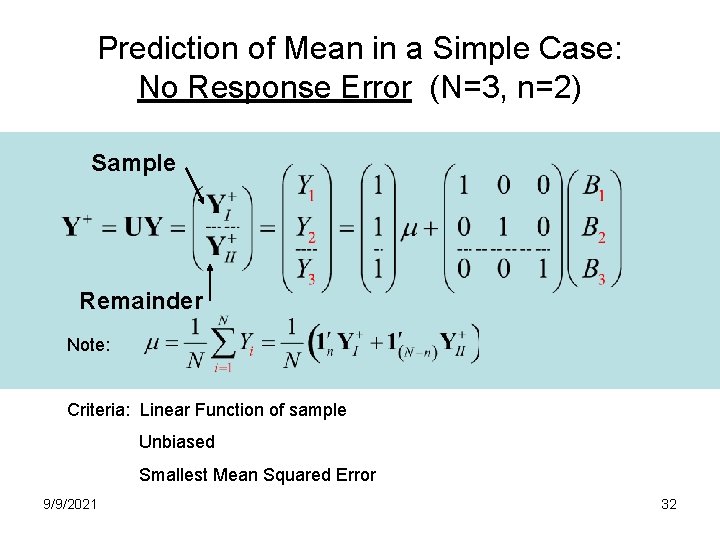
Prediction of Mean in a Simple Case: No Response Error (N=3, n=2) Sample Remainder Note: Criteria: Linear Function of sample Unbiased Smallest Mean Squared Error 9/9/2021 32
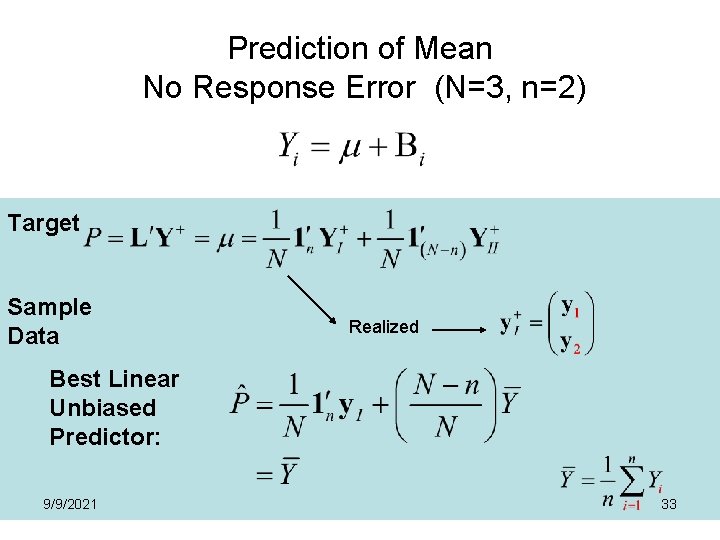
Prediction of Mean No Response Error (N=3, n=2) Target Sample Data Realized Best Linear Unbiased Predictor: 9/9/2021 33
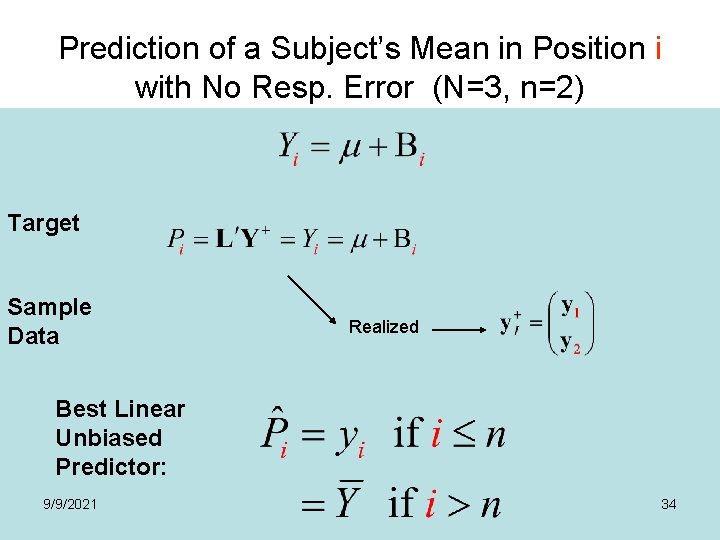
Prediction of a Subject’s Mean in Position i with No Resp. Error (N=3, n=2) Target Sample Data Realized Best Linear Unbiased Predictor: 9/9/2021 34
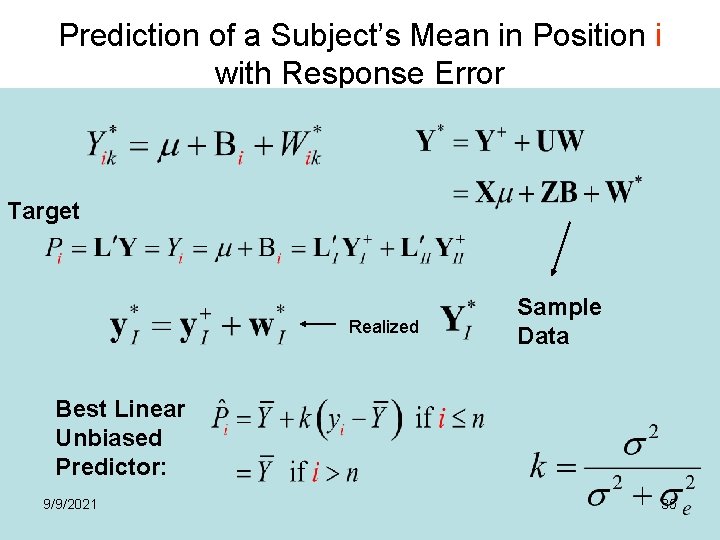
Prediction of a Subject’s Mean in Position i with Response Error Target Realized Sample Data Best Linear Unbiased Predictor: 9/9/2021 35
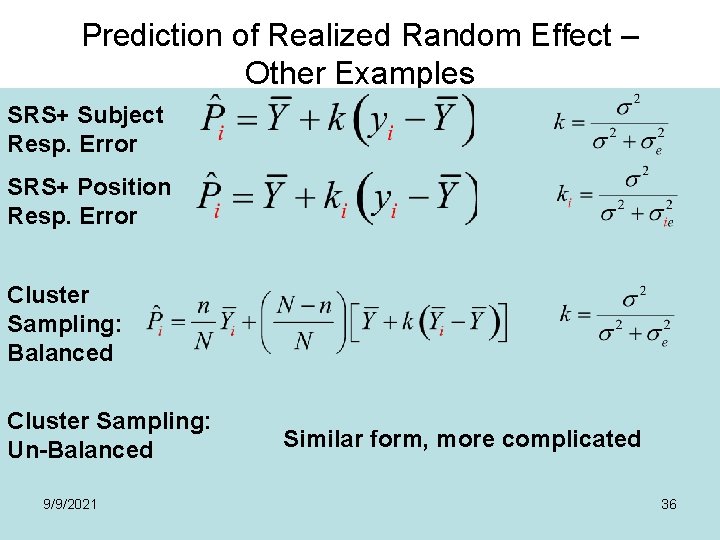
Prediction of Realized Random Effect – Other Examples SRS+ Subject Resp. Error SRS+ Position Resp. Error Cluster Sampling: Balanced Cluster Sampling: Un-Balanced 9/9/2021 Similar form, more complicated 36
9/9/2021 37
9/9/2021 38
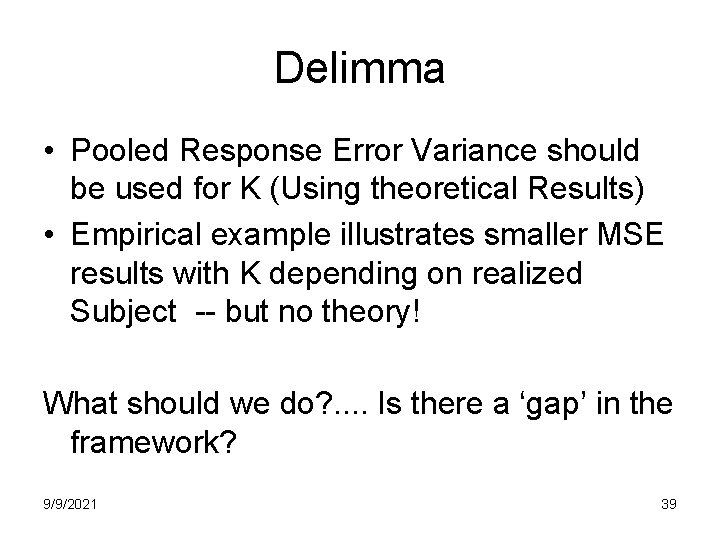
Delimma • Pooled Response Error Variance should be used for K (Using theoretical Results) • Empirical example illustrates smaller MSE results with K depending on realized Subject -- but no theory! What should we do? . . Is there a ‘gap’ in the framework? 9/9/2021 39
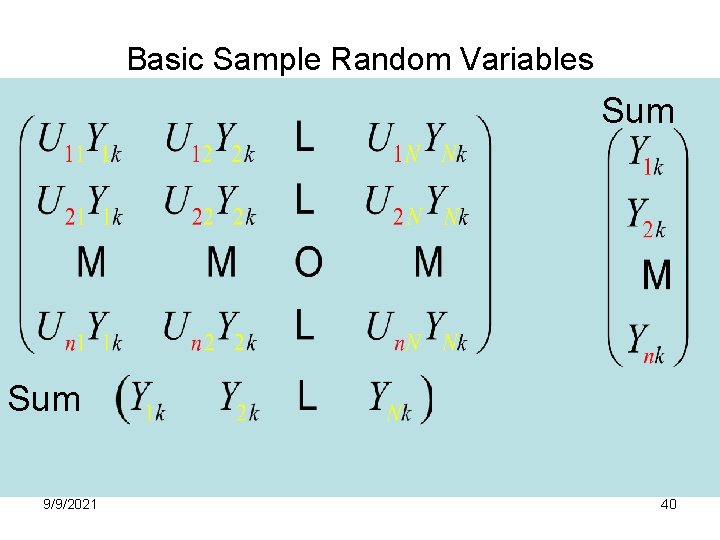
Basic Sample Random Variables Sum 9/9/2021 40
Basic Random Variables 9/9/2021 41
More Work is needed! 9/9/2021 42 Thank