
Statistical Thinking Section 1 2 Statistical Thinking Context

- Slides: 13
Statistical Thinking Section 1 -2
Statistical Thinking Context Source Sampling Method Conclusions Practical Implications
Statistical Thinking Context Source Sampling Conclusions Practical Implications
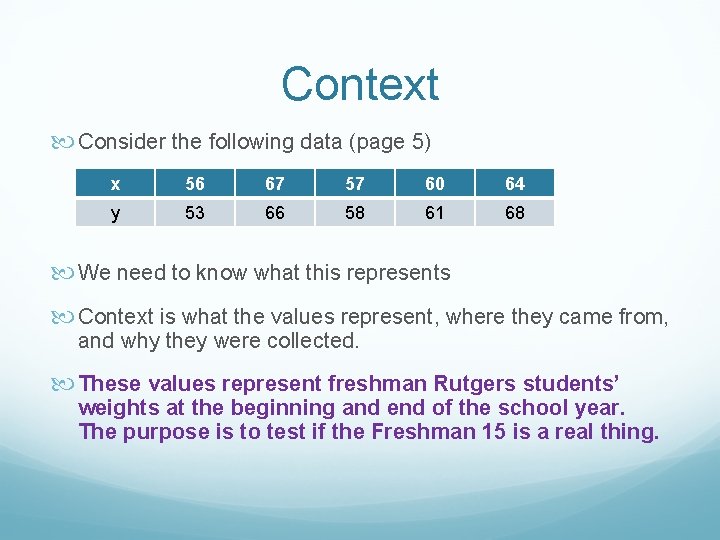
Context Consider the following data (page 5) x 56 67 57 60 64 y 53 66 58 61 68 We need to know what this represents Context is what the values represent, where they came from, and why they were collected. These values represent freshman Rutgers students’ weights at the beginning and end of the school year. The purpose is to test if the Freshman 15 is a real thing.
Statistical Thinking Context Source Sampling Method Conclusions Practical Implications
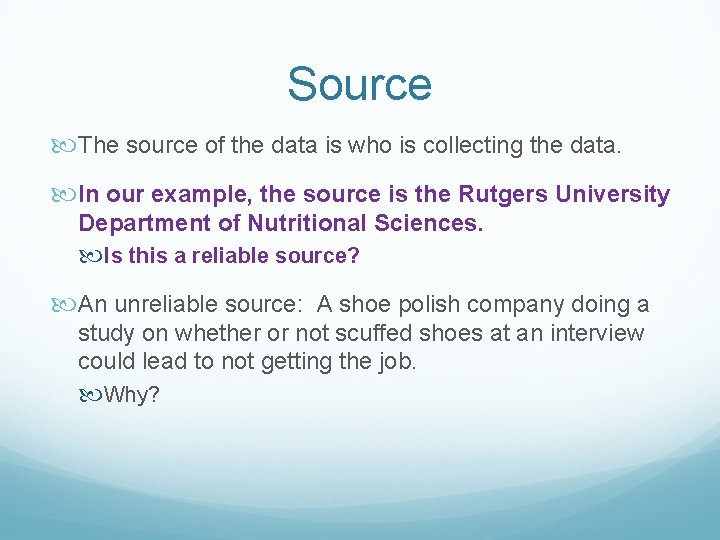
Source The source of the data is who is collecting the data. In our example, the source is the Rutgers University Department of Nutritional Sciences. Is this a reliable source? An unreliable source: A shoe polish company doing a study on whether or not scuffed shoes at an interview could lead to not getting the job. Why?
Statistical Thinking Context Source Sampling Method Conclusions Practical Implications
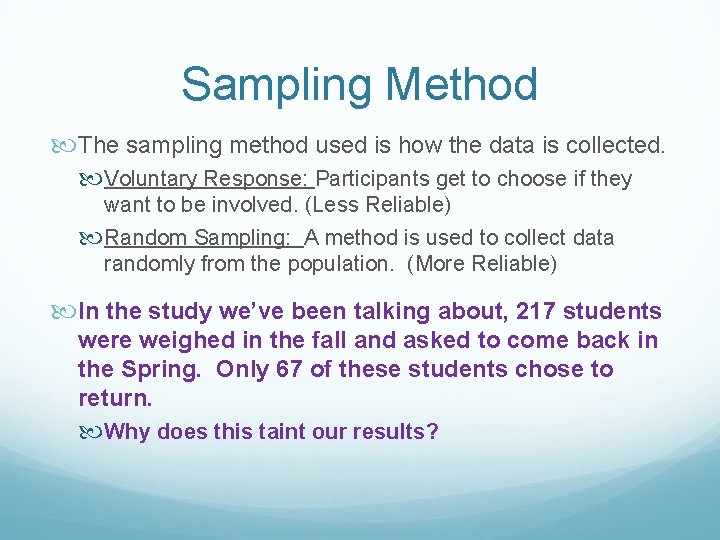
Sampling Method The sampling method used is how the data is collected. Voluntary Response: Participants get to choose if they want to be involved. (Less Reliable) Random Sampling: A method is used to collect data randomly from the population. (More Reliable) In the study we’ve been talking about, 217 students were weighed in the fall and asked to come back in the Spring. Only 67 of these students chose to return. Why does this taint our results?
Statistical Thinking Context Source Sampling Method Conclusions Practical Implications
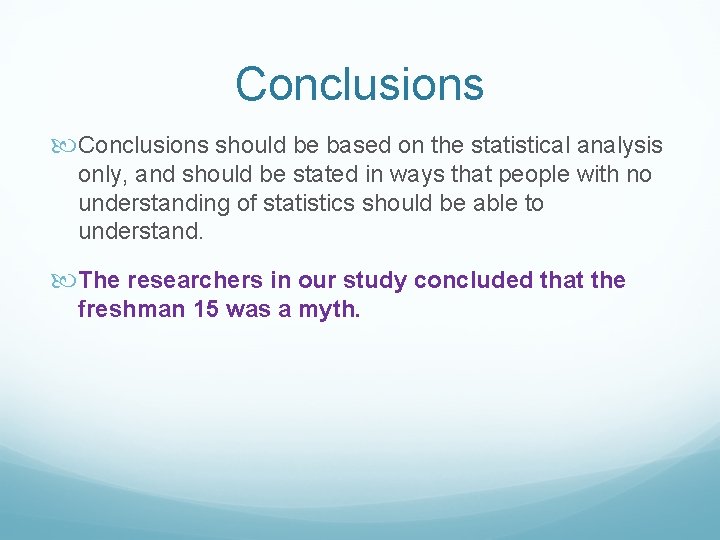
Conclusions should be based on the statistical analysis only, and should be stated in ways that people with no understanding of statistics should be able to understand. The researchers in our study concluded that the freshman 15 was a myth.
Statistical Thinking Context Source Sampling Method Conclusions Practical Implications
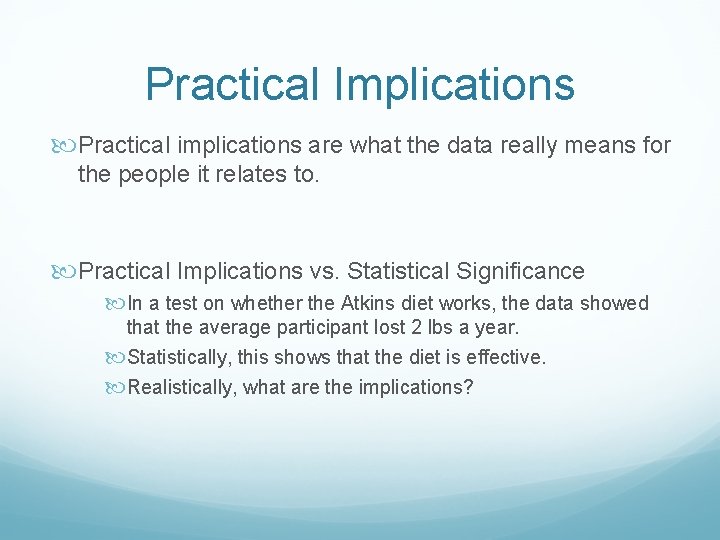
Practical Implications Practical implications are what the data really means for the people it relates to. Practical Implications vs. Statistical Significance In a test on whether the Atkins diet works, the data showed that the average participant lost 2 lbs a year. Statistically, this shows that the diet is effective. Realistically, what are the implications?
Homework P. 10: 15 -18