
Statistical Reasoning in Everyday Life Module 7 Analyze
- Slides: 13
Statistical Reasoning in Everyday Life Module 7
Analyze Results • Use measures of central tendency (mean, median and mode). • Use measures of variation (range and standard deviation). 2
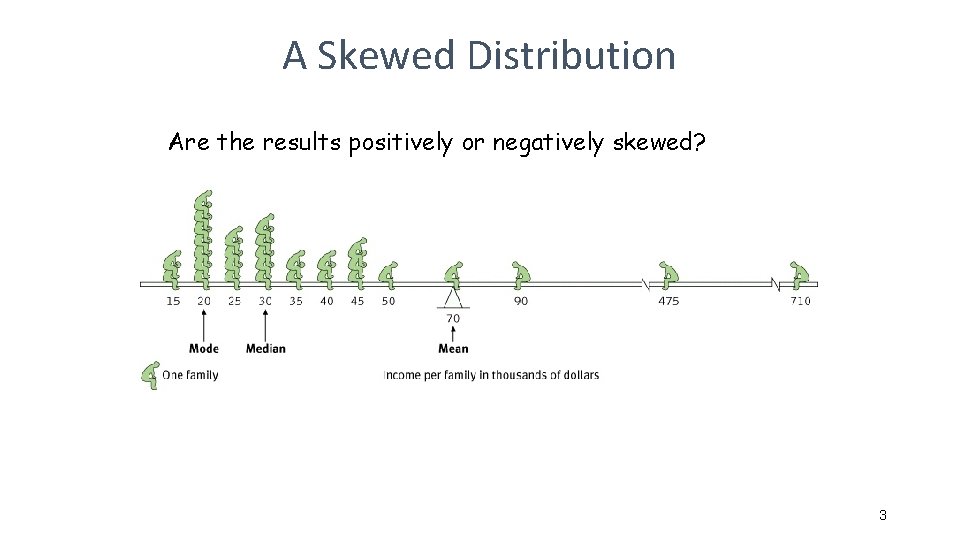
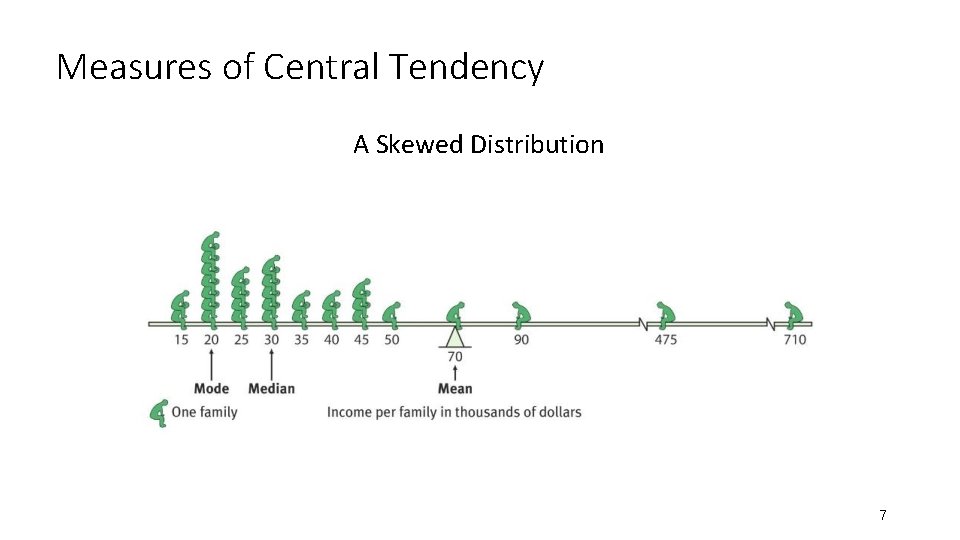
A Skewed Distribution Are the results positively or negatively skewed? 3
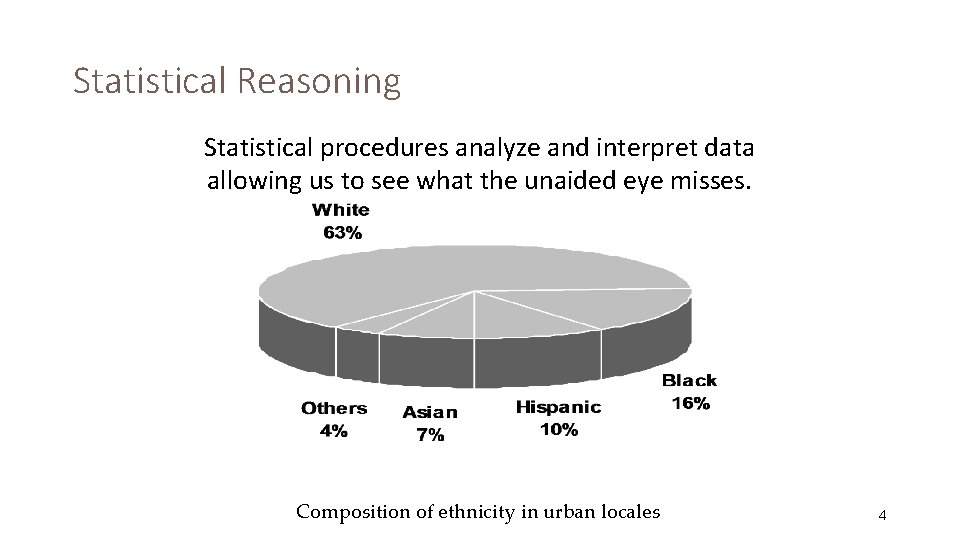
Statistical Reasoning Statistical procedures analyze and interpret data allowing us to see what the unaided eye misses. Composition of ethnicity in urban locales 4
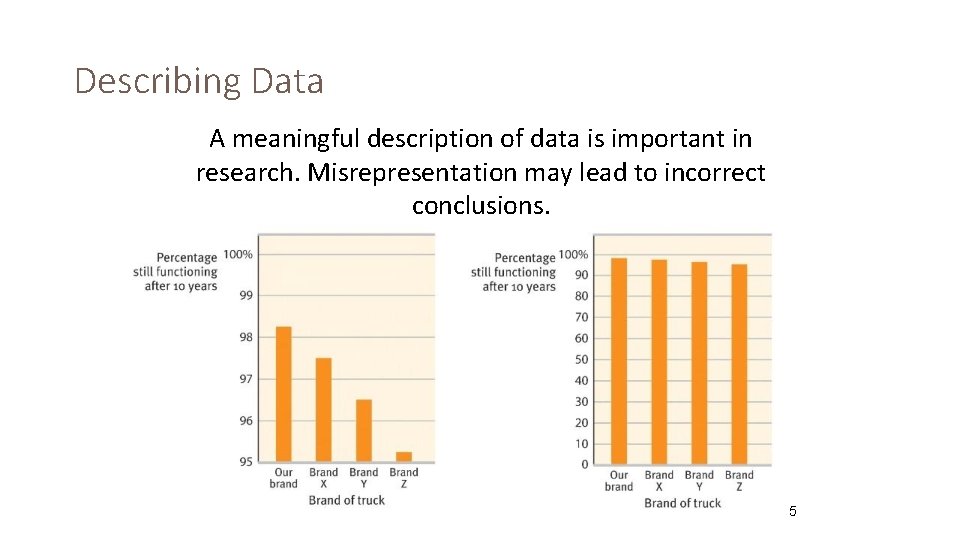
Describing Data A meaningful description of data is important in research. Misrepresentation may lead to incorrect conclusions. 5
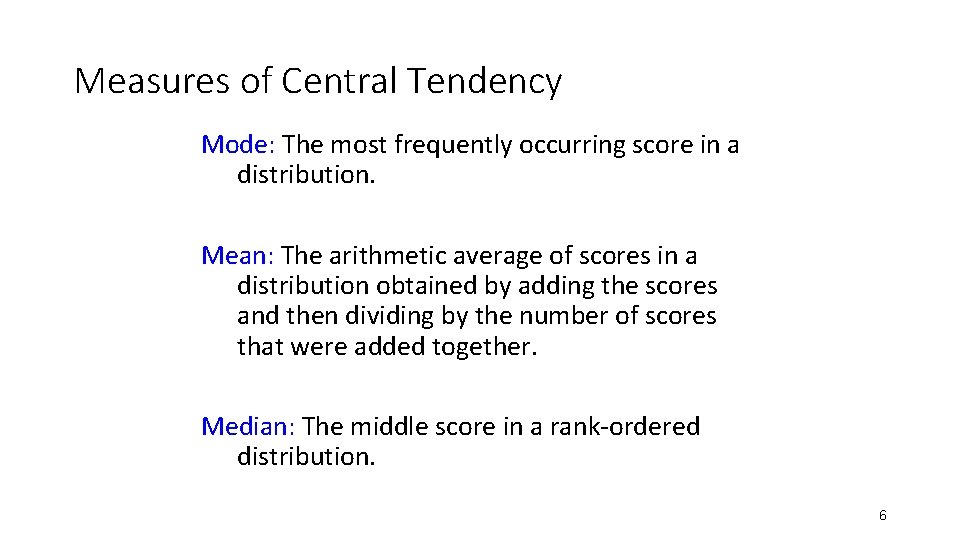
Measures of Central Tendency Mode: The most frequently occurring score in a distribution. Mean: The arithmetic average of scores in a distribution obtained by adding the scores and then dividing by the number of scores that were added together. Median: The middle score in a rank-ordered distribution. 6
Measures of Central Tendency A Skewed Distribution 7
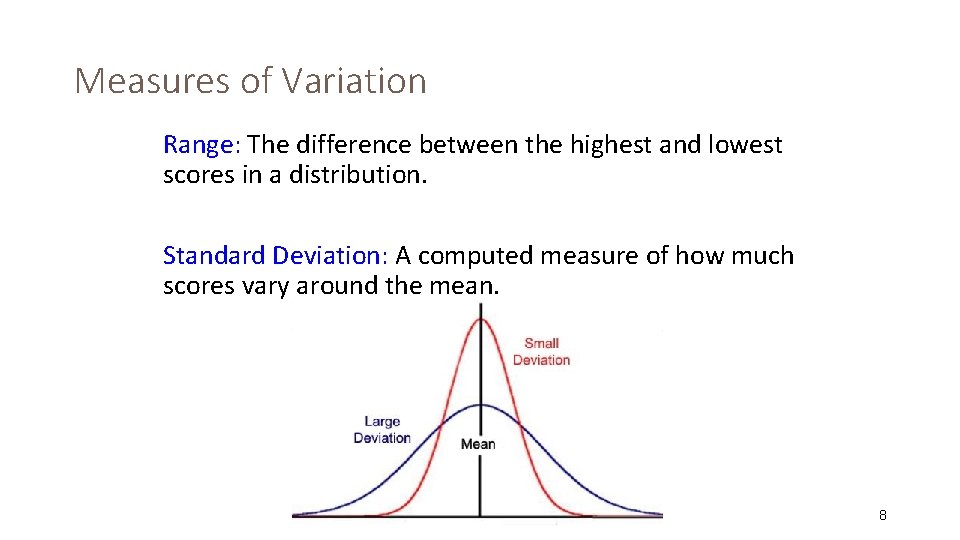
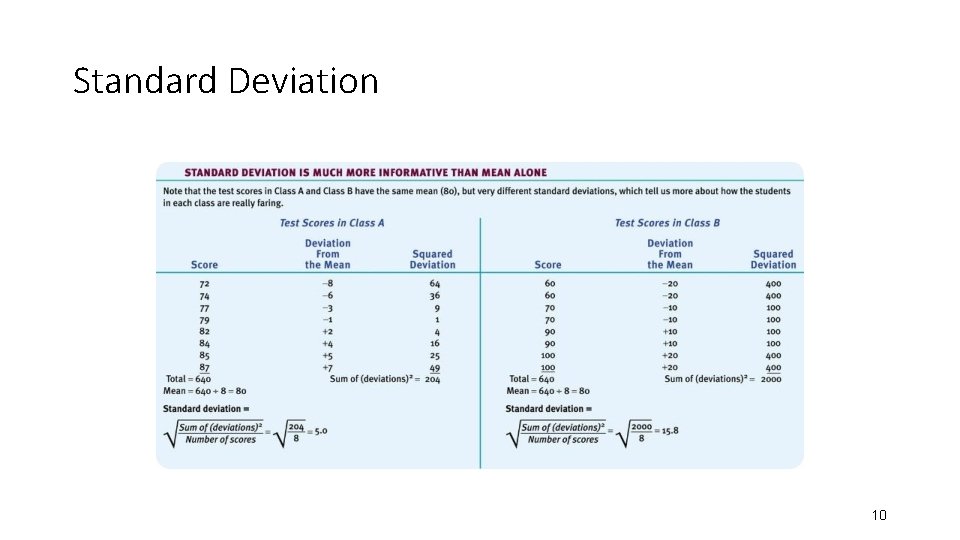
Measures of Variation Range: The difference between the highest and lowest scores in a distribution. Standard Deviation: A computed measure of how much scores vary around the mean. 8
Standard Deviation • https: //www. youtube. com/watch? v=g. FA 11 e. KE 3 a. Y
Standard Deviation 10
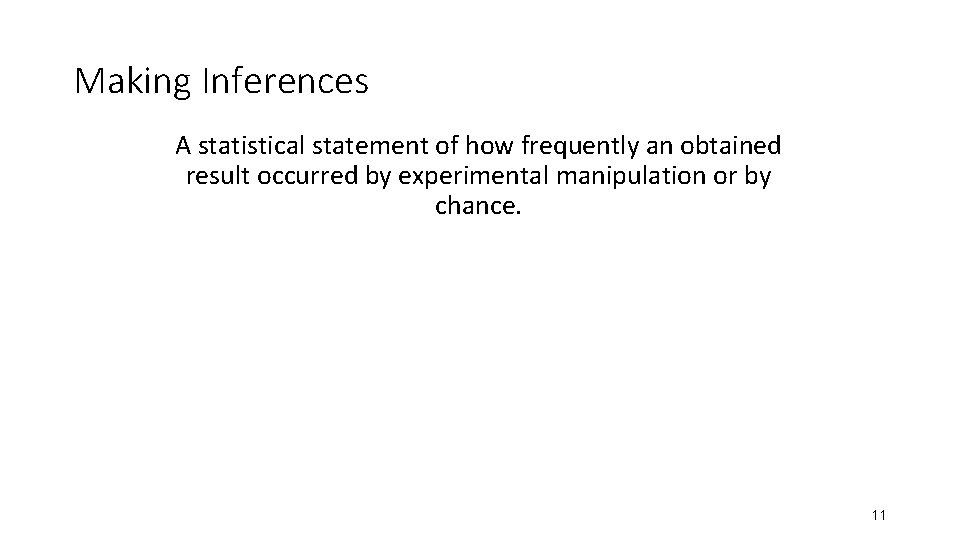
Making Inferences A statistical statement of how frequently an obtained result occurred by experimental manipulation or by chance. 11
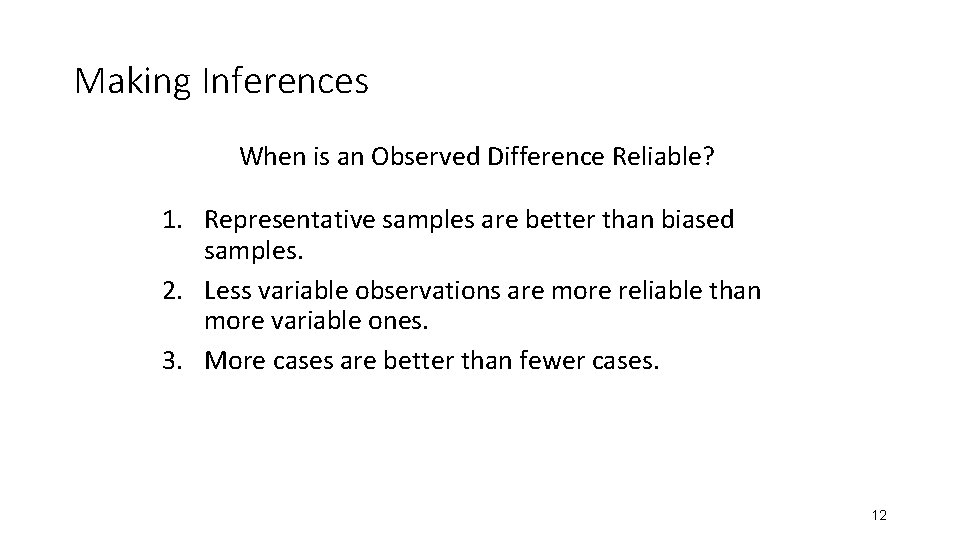
Making Inferences When is an Observed Difference Reliable? 1. Representative samples are better than biased samples. 2. Less variable observations are more reliable than more variable ones. 3. More cases are better than fewer cases. 12
Making Inferences When is a Difference Significant? When sample averages are reliable and the difference between them is relatively large, we say the difference has statistical significance. For psychologists this difference is measured by p <. 05 • Less than 1 in 20 probability of your results being due to chance. • Lower the p value the less likely your results are just luck 13