
STATISTICAL QUALITY CONTROL The technique makes use of



- Slides: 12
STATISTICAL QUALITY CONTROL: The technique makes use of statistical methods and principles for controlling the quality of production within specified limits.
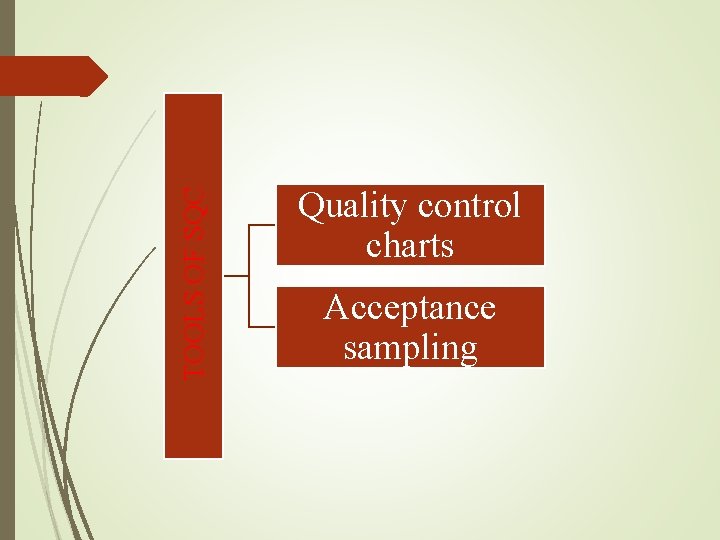
TOOLS OF SQC Quality control charts Acceptance sampling
QUALITY CONTROL CHARTS: It is a graphical presentation of expected variations in quality.
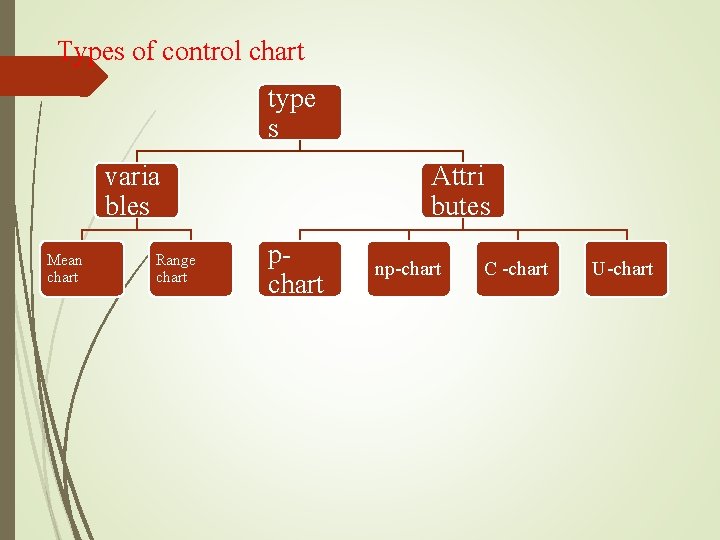
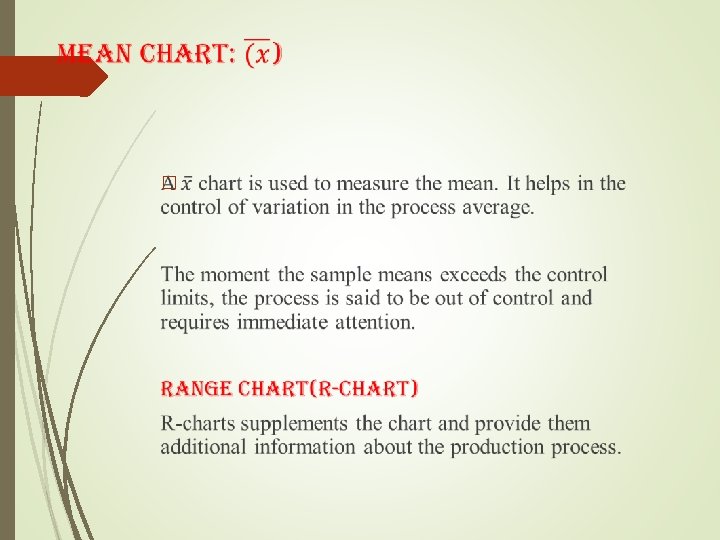
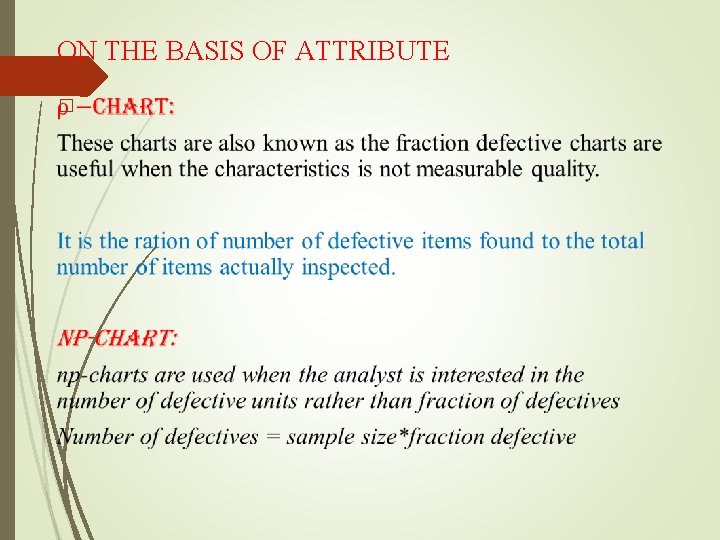
Types of control chart type s varia bles Mean chart Range chart Attri butes pchart np-chart C -chart U-chart
ON THE BASIS OF ATTRIBUTE �
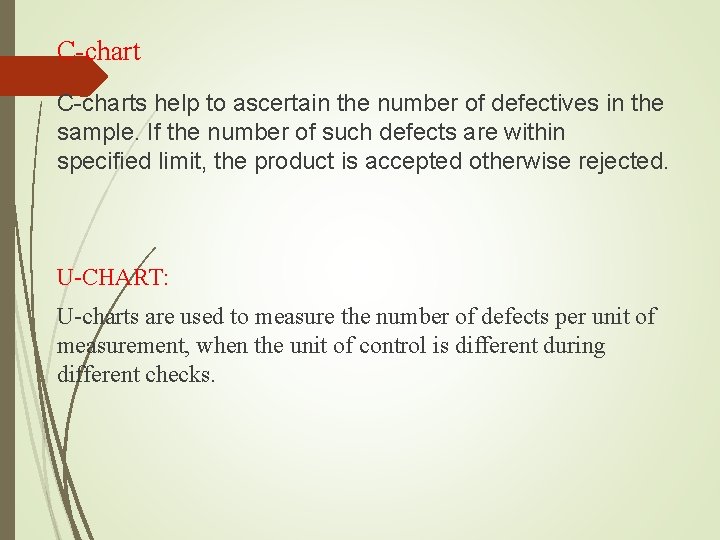
C-charts help to ascertain the number of defectives in the sample. If the number of such defects are within specified limit, the product is accepted otherwise rejected. U-CHART: U-charts are used to measure the number of defects per unit of measurement, when the unit of control is different during different checks.
ACCEPTANCE SAMPLING A sample is drawn and inspected. If the quality is as per the pre-determined standards. It is presumed that the quality of whole lot is good.
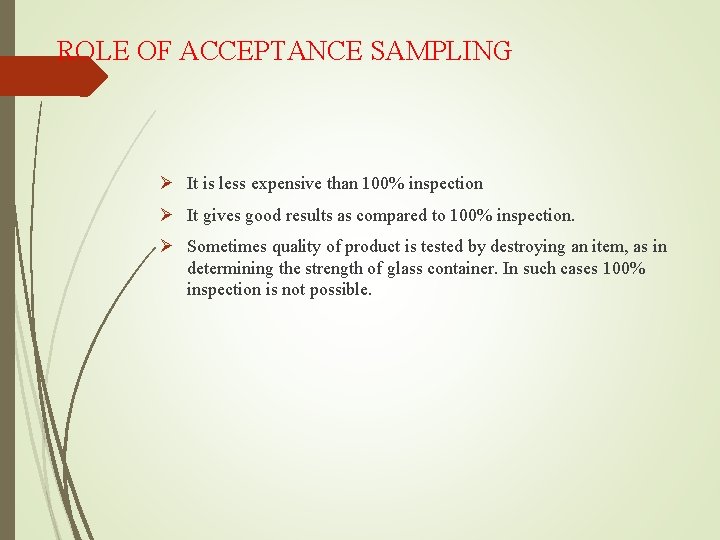
ROLE OF ACCEPTANCE SAMPLING Ø It is less expensive than 100% inspection Ø It gives good results as compared to 100% inspection. Ø Sometimes quality of product is tested by destroying an item, as in determining the strength of glass container. In such cases 100% inspection is not possible.
Types of acceptance sampling Single-sampling plan Double-sampling plan Multiple-sampling plan
� Single sampling plan : Single sample Is drawn and inspected from the lot of items. � Double sampling plan: Two samples are drawn foe inspection. The second sample is drawn only if the number of defectives is high in the first sample. � Multiple sampling plan: More than two samples are chosen for inspection.
Advantages foe SQC: � This method is based on inspecting a sample instead of whole lot. � It results in increasing profits too. � It helps in simplifying quality control. � It helps in creating quality consciousness among employees. � Helps in improving goodwill of products among consumers. � It helps in smooth and unrestricted production.