
Statistical NLP Spring 2010 Lecture 16 Word Alignment
![Some Results § [Och and Ney 03]](https://slidetodoc.com/presentation_image_h2/9725ba449dae3abd694c6e384e419647/image-36.jpg "Some Results § [Och and Ney 03]")
![Pharaoh’s Model [Koehn et al, 2003] Segmentation Translation Distortion](https://slidetodoc.com/presentation_image_h2/9725ba449dae3abd694c6e384e419647/image-46.jpg "Pharaoh’s Model [Koehn et al, 2003] Segmentation Translation Distortion")
- Slides: 57
Statistical NLP Spring 2010 Lecture 16: Word Alignment Dan Klein – UC Berkeley
HW 2: PNP Classification § Overall: good work! § Top results: § § § 88. 1: Matthew Can (word/phrase pre/suffixes) 88. 1: Kurtis Heimerl (positional scaling) 88. 1: Henry Milner (word/phrase length, word/phrase shapes) 88. 2: James Ide (regularization search, dictionary, rhymes) 88. 5: Michael Li (words and chars, pre/suffices, lengths) 97. 0: Nick Boyd (IMDB gazeteer, search result features) § Best generated items § Nick’s drug “Hycodan” § Sergey’s drug “Waterbabies Expectorant”
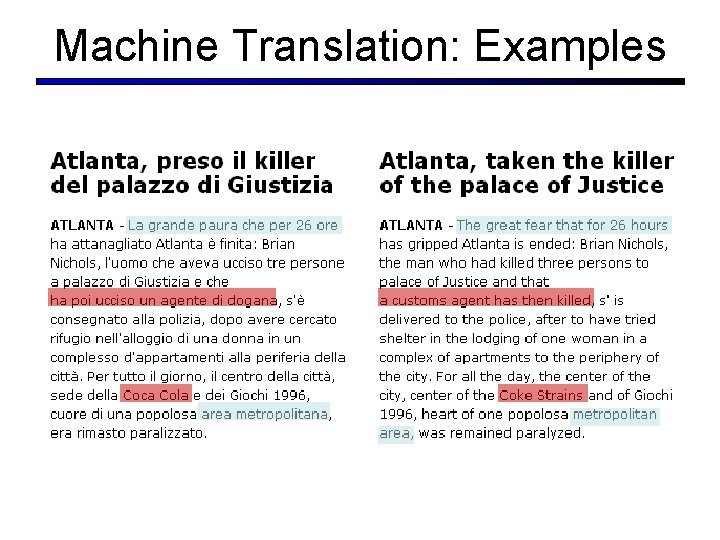
Machine Translation: Examples
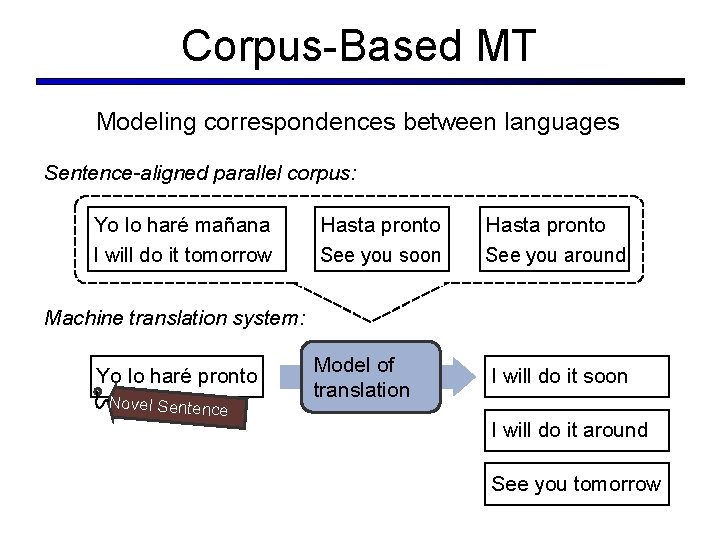
Corpus-Based MT Modeling correspondences between languages Sentence-aligned parallel corpus: Yo lo haré mañana I will do it tomorrow Hasta pronto See you soon Hasta pronto See you around Model of translation I will do it soon Machine translation system: Yo lo haré pronto Novel Sentence I will do it around See you tomorrow
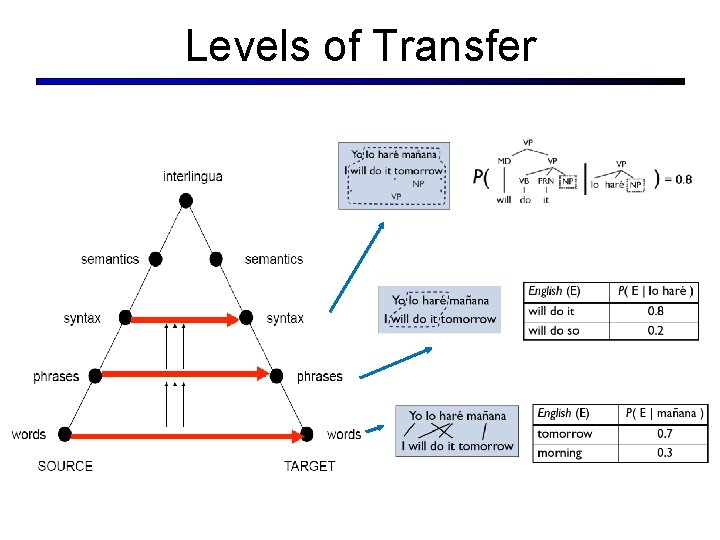
Levels of Transfer
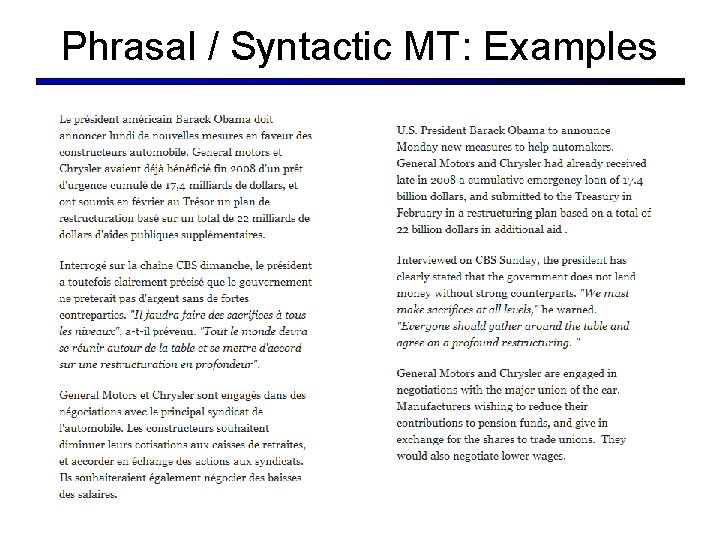
Phrasal / Syntactic MT: Examples
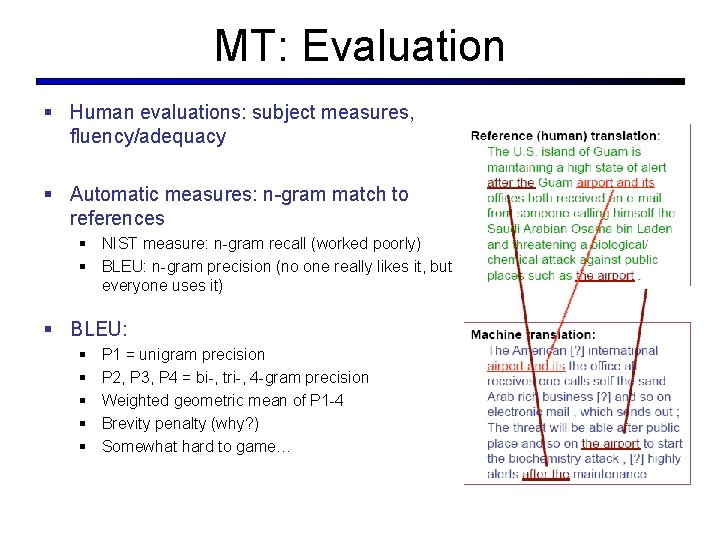
MT: Evaluation § Human evaluations: subject measures, fluency/adequacy § Automatic measures: n-gram match to references § NIST measure: n-gram recall (worked poorly) § BLEU: n-gram precision (no one really likes it, but everyone uses it) § BLEU: § § § P 1 = unigram precision P 2, P 3, P 4 = bi-, tri-, 4 -gram precision Weighted geometric mean of P 1 -4 Brevity penalty (why? ) Somewhat hard to game…
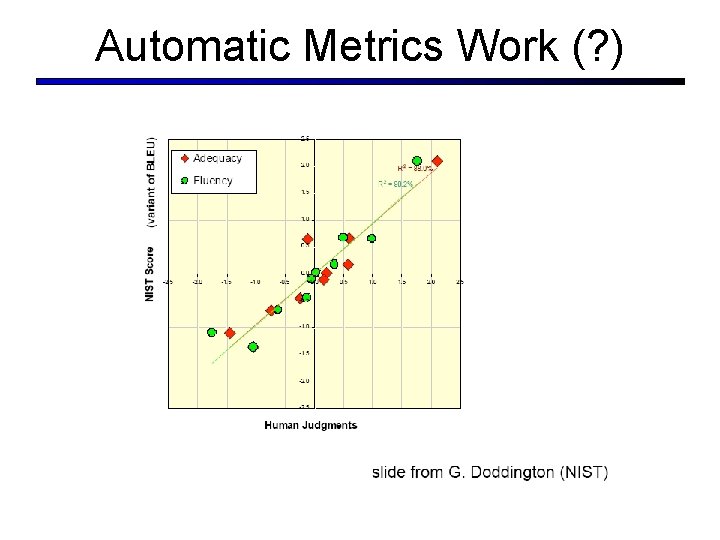
Automatic Metrics Work (? )
Today § The components of a simple MT system § You already know about the LM § Word-alignment based TMs § IBM models 1 and 2, HMM model § A simple decoder § Next few classes § More complex word-level and phrase-level TMs § Tree-to-tree and tree-to-string TMs § More sophisticated decoders
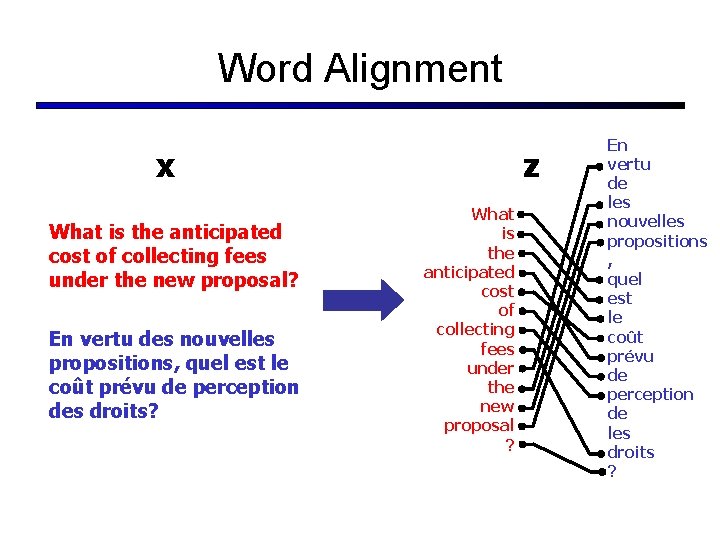
Word Alignment x What is the anticipated cost of collecting fees under the new proposal? En vertu des nouvelles propositions, quel est le coût prévu de perception des droits? z What is the anticipated cost of collecting fees under the new proposal ? En vertu de les nouvelles propositions , quel est le coût prévu de perception de les droits ?
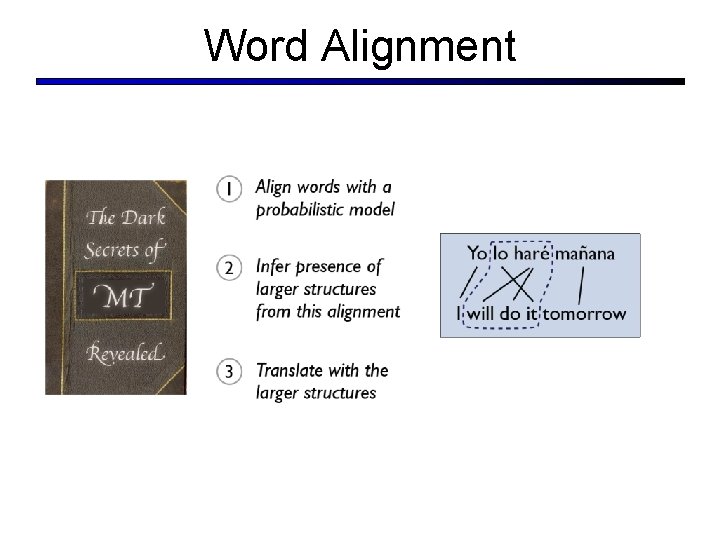
Word Alignment
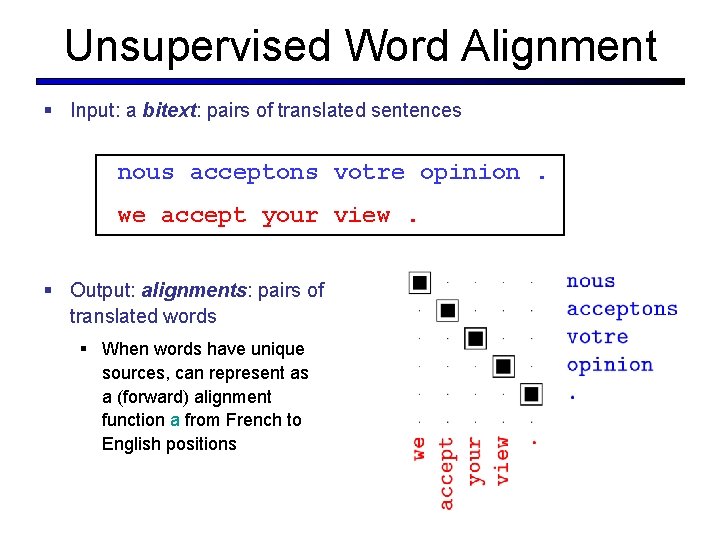
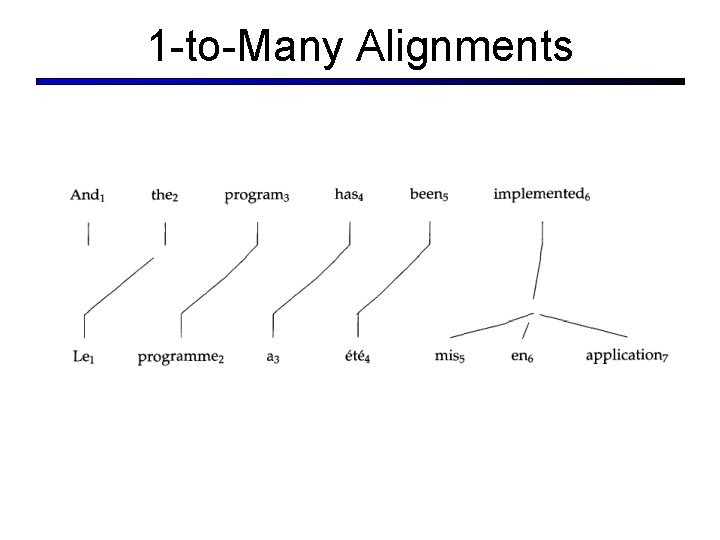
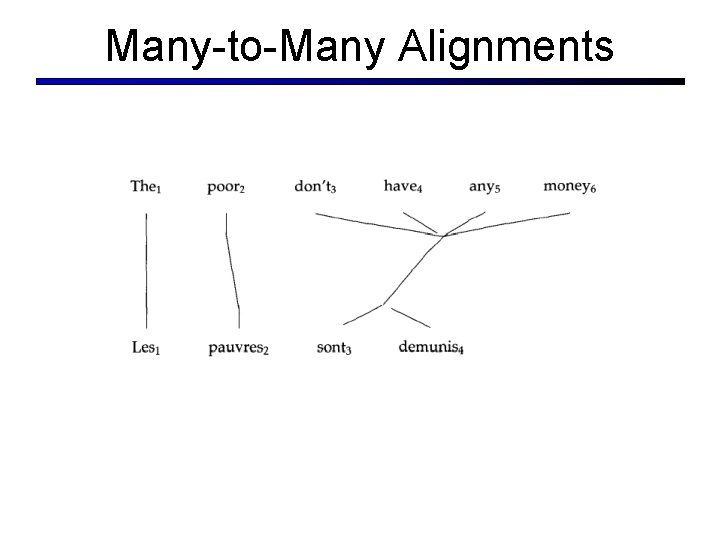
Unsupervised Word Alignment § Input: a bitext: pairs of translated sentences nous acceptons votre opinion. we accept your view. § Output: alignments: pairs of translated words § When words have unique sources, can represent as a (forward) alignment function a from French to English positions
1 -to-Many Alignments
Many-to-Many Alignments
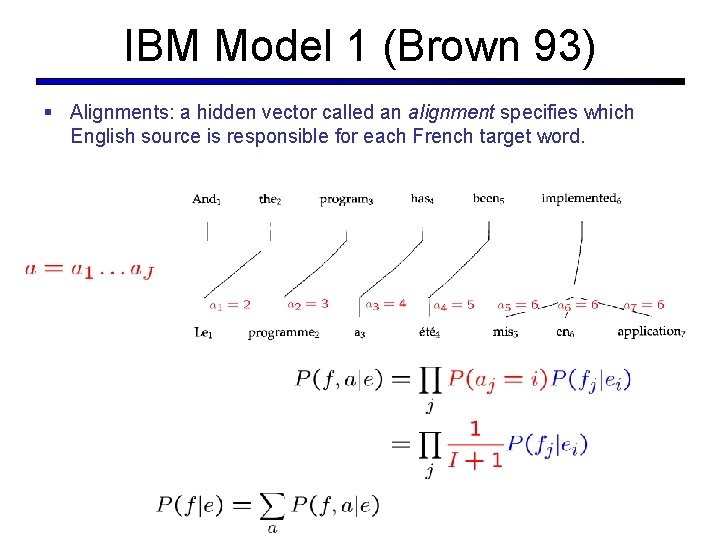
IBM Model 1 (Brown 93) § Alignments: a hidden vector called an alignment specifies which English source is responsible for each French target word.
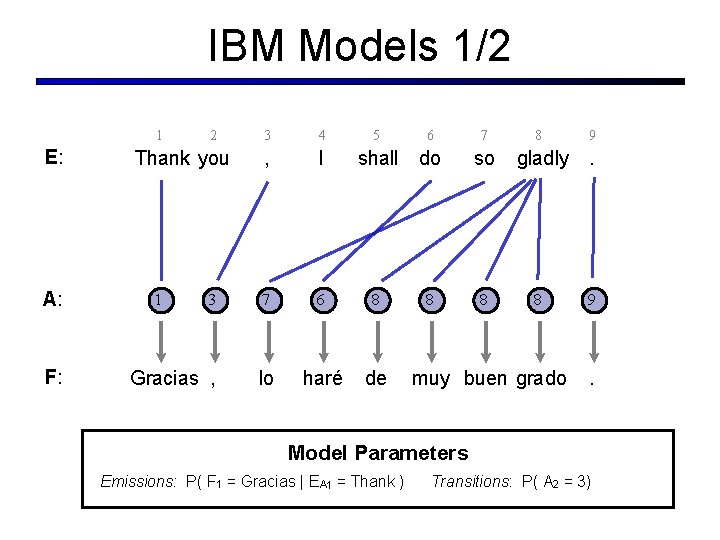
IBM Models 1/2 1 E: A: F: 2 3 4 , I 3 7 6 8 Gracias , lo haré de Thank you 1 5 6 shall do 8 7 so 8 8 gladly 8 muy buen grado 9 . Model Parameters Emissions: P( F 1 = Gracias | EA 1 = Thank ) Transitions: P( A 2 = 3)
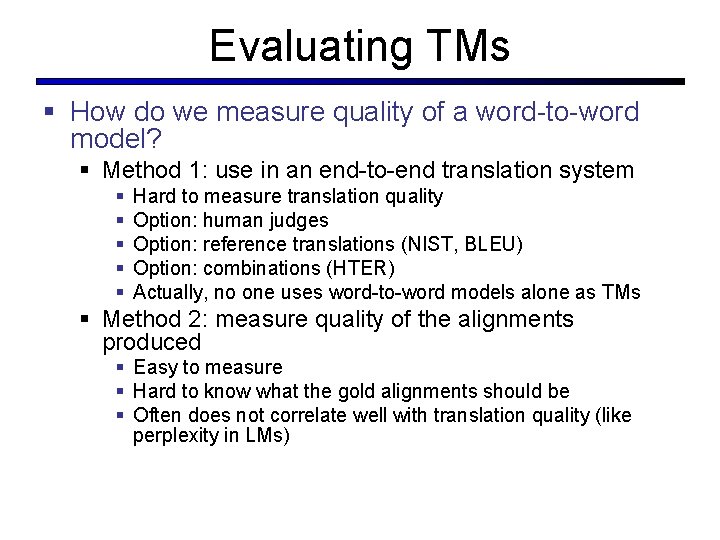
Evaluating TMs § How do we measure quality of a word-to-word model? § Method 1: use in an end-to-end translation system § § § Hard to measure translation quality Option: human judges Option: reference translations (NIST, BLEU) Option: combinations (HTER) Actually, no one uses word-to-word models alone as TMs § Method 2: measure quality of the alignments produced § Easy to measure § Hard to know what the gold alignments should be § Often does not correlate well with translation quality (like perplexity in LMs)
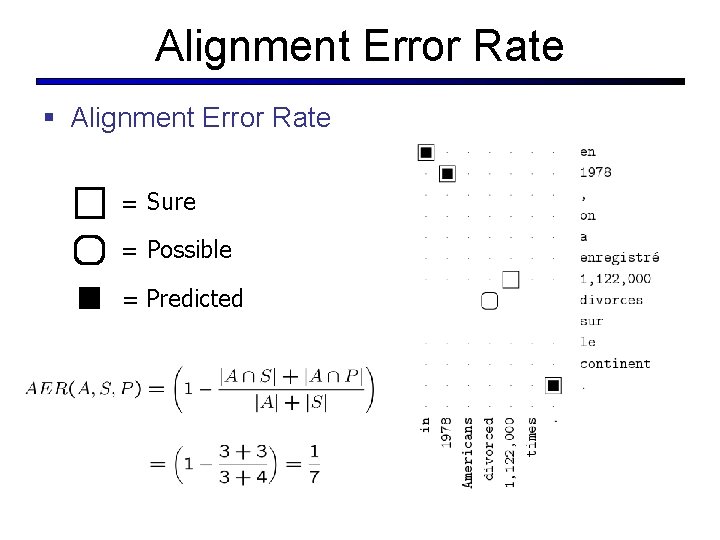
Alignment Error Rate § Alignment Error Rate = Sure align. = Possible align. = Predicted align.
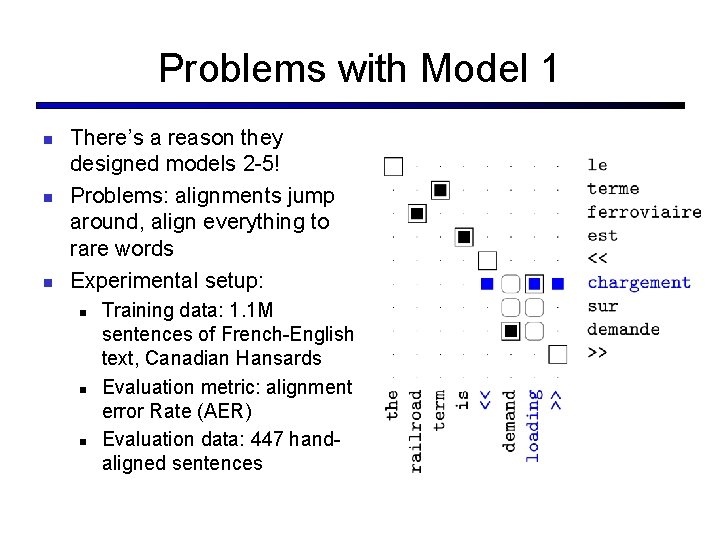
Problems with Model 1 n n n There’s a reason they designed models 2 -5! Problems: alignments jump around, align everything to rare words Experimental setup: n n n Training data: 1. 1 M sentences of French-English text, Canadian Hansards Evaluation metric: alignment error Rate (AER) Evaluation data: 447 handaligned sentences
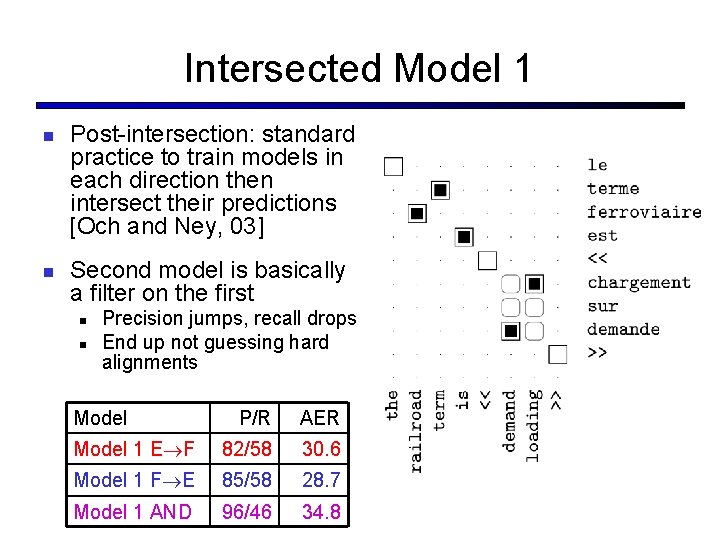
Intersected Model 1 n n Post-intersection: standard practice to train models in each direction then intersect their predictions [Och and Ney, 03] Second model is basically a filter on the first n n Precision jumps, recall drops End up not guessing hard alignments Model P/R AER Model 1 E F 82/58 30. 6 Model 1 F E 85/58 28. 7 Model 1 AND 96/46 34. 8
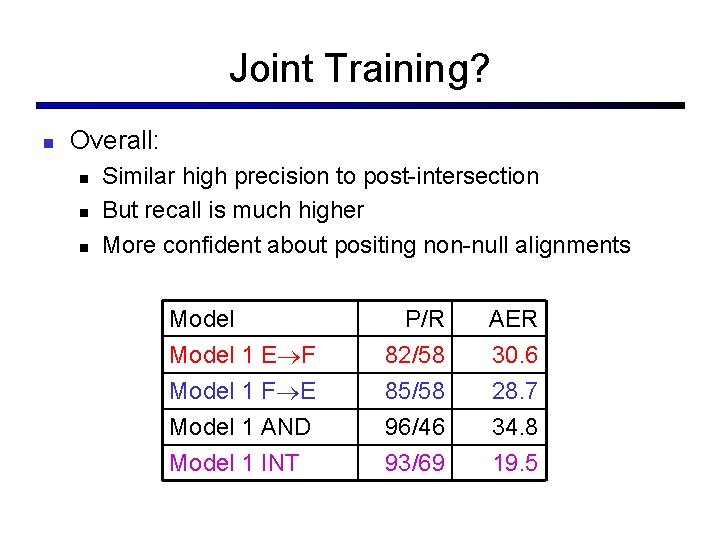
Joint Training? n Overall: n n n Similar high precision to post-intersection But recall is much higher More confident about positing non-null alignments Model 1 E F P/R 82/58 AER 30. 6 Model 1 F E Model 1 AND 85/58 96/46 28. 7 34. 8 Model 1 INT 93/69 19. 5
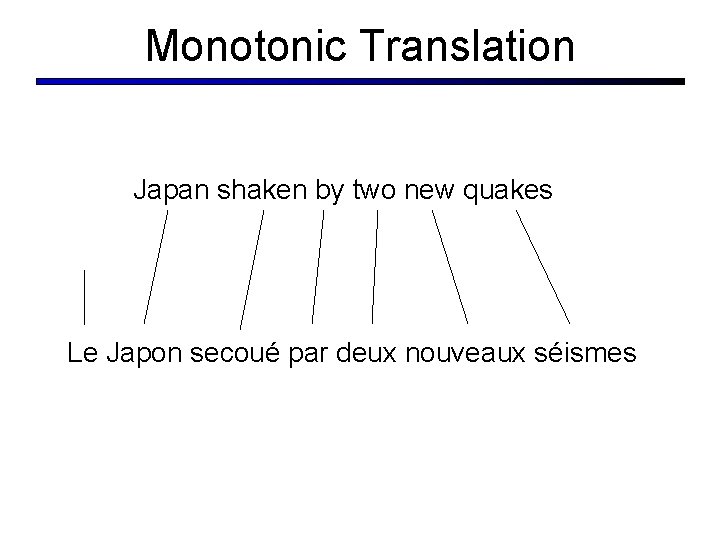
Monotonic Translation Japan shaken by two new quakes Le Japon secoué par deux nouveaux séismes
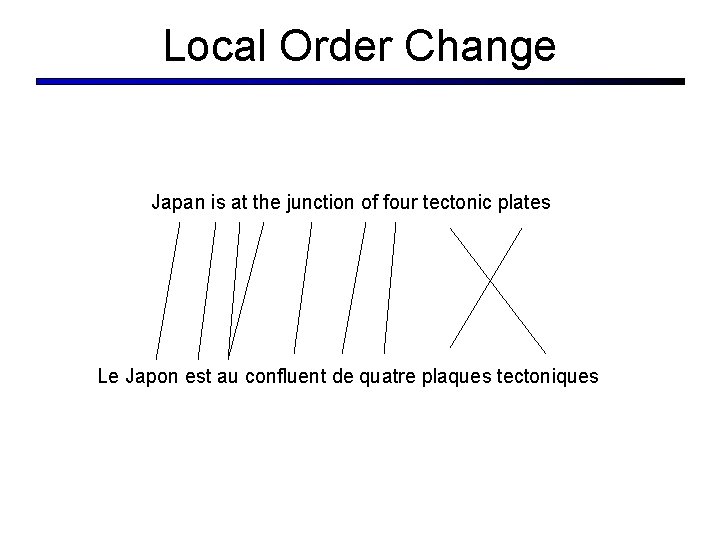
Local Order Change Japan is at the junction of four tectonic plates Le Japon est au confluent de quatre plaques tectoniques
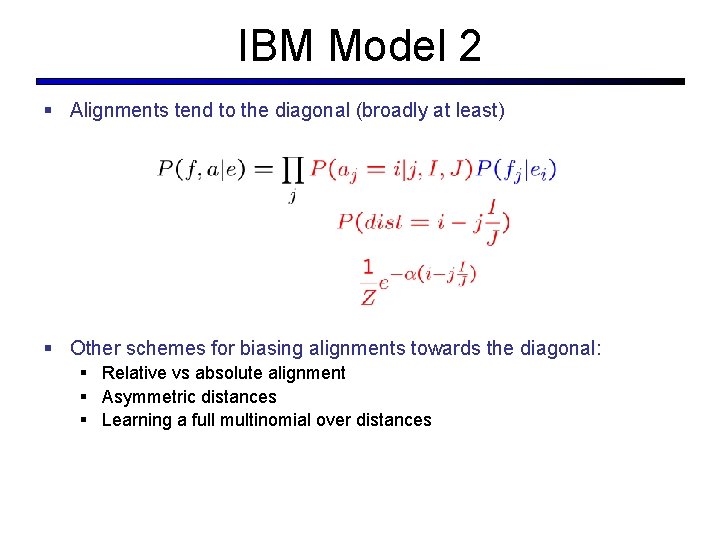
IBM Model 2 § Alignments tend to the diagonal (broadly at least) § Other schemes for biasing alignments towards the diagonal: § Relative vs absolute alignment § Asymmetric distances § Learning a full multinomial over distances
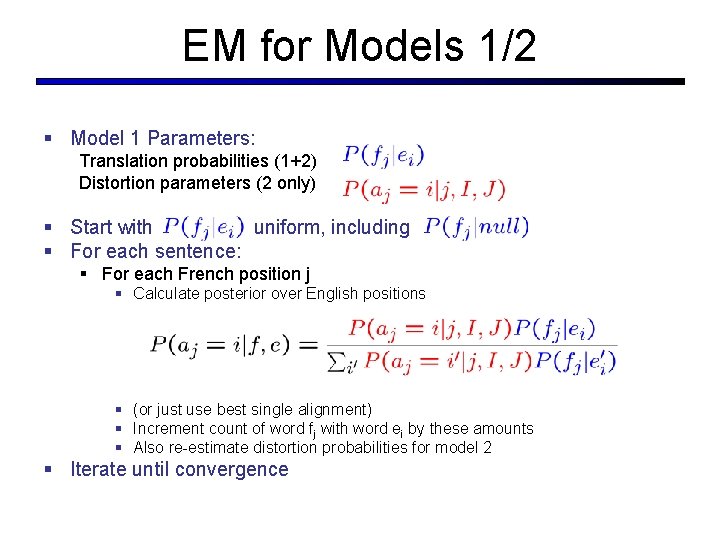
EM for Models 1/2 § Model 1 Parameters: Translation probabilities (1+2) Distortion parameters (2 only) § Start with uniform, including § For each sentence: § For each French position j § Calculate posterior over English positions § (or just use best single alignment) § Increment count of word fj with word ei by these amounts § Also re-estimate distortion probabilities for model 2 § Iterate until convergence
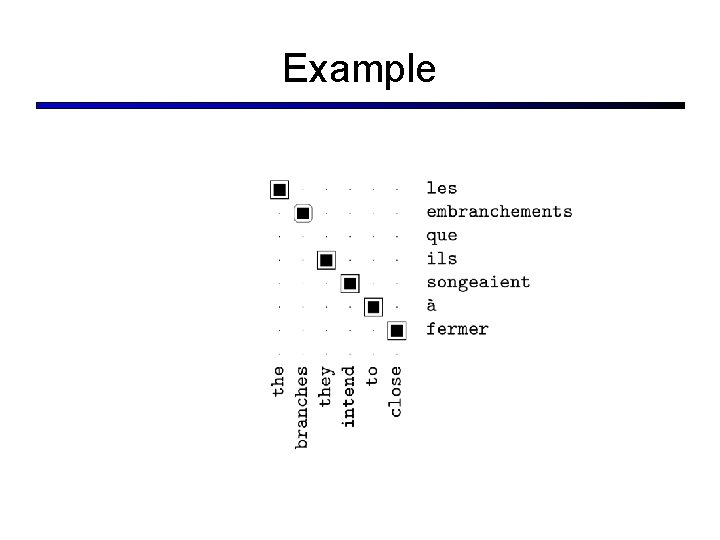
Example
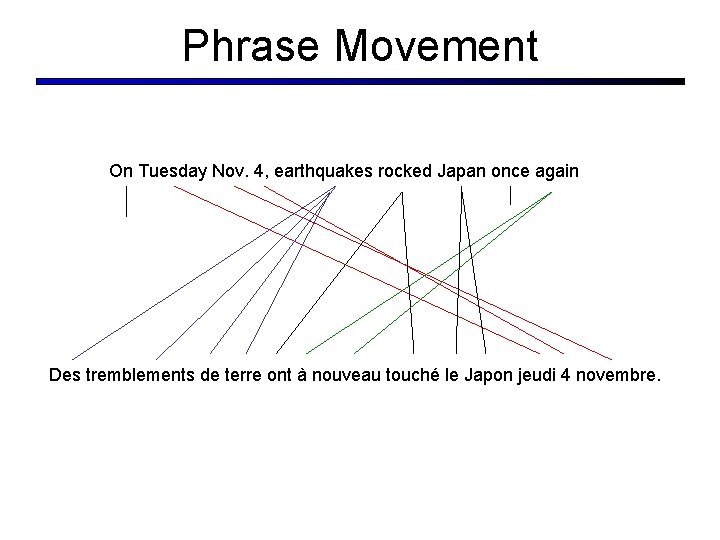
Phrase Movement On Tuesday Nov. 4, earthquakes rocked Japan once again Des tremblements de terre ont à nouveau touché le Japon jeudi 4 novembre.
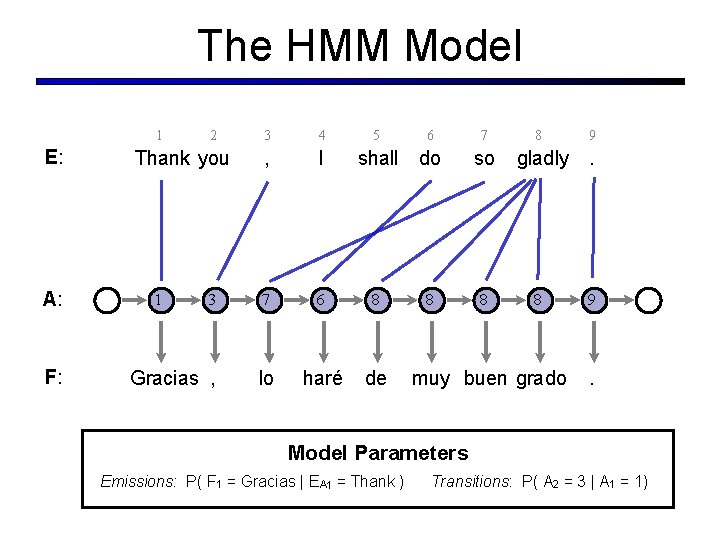
The HMM Model 1 E: A: F: 2 3 4 , I 3 7 6 8 Gracias , lo haré de Thank you 1 5 6 shall do 8 7 so 8 8 gladly 8 muy buen grado 9 . Model Parameters Emissions: P( F 1 = Gracias | EA 1 = Thank ) Transitions: P( A 2 = 3 | A 1 = 1)
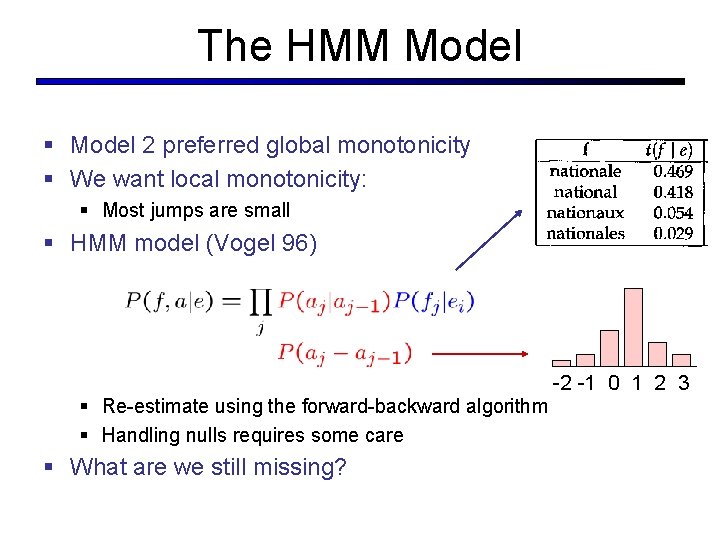
The HMM Model § Model 2 preferred global monotonicity § We want local monotonicity: § Most jumps are small § HMM model (Vogel 96) -2 -1 0 1 2 3 § Re-estimate using the forward-backward algorithm § Handling nulls requires some care § What are we still missing?
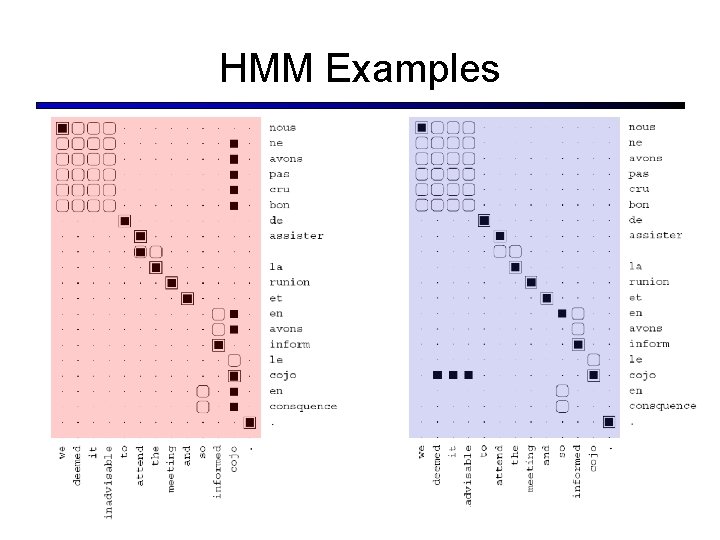
HMM Examples
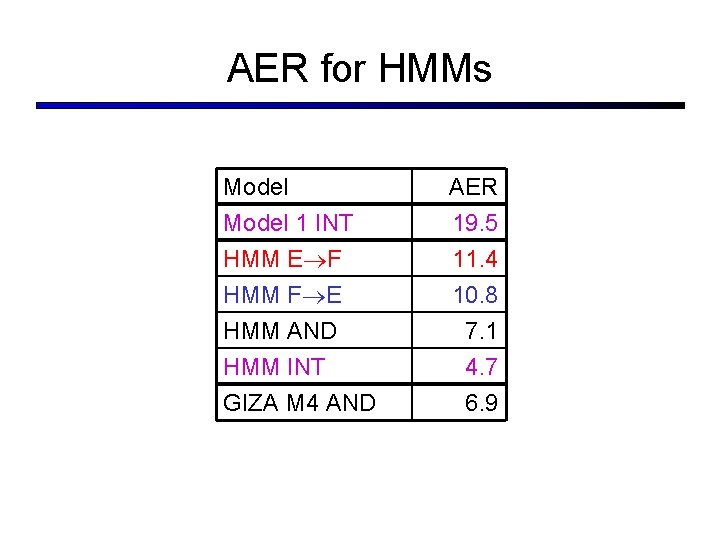
AER for HMMs Model 1 INT HMM E F HMM F E HMM AND HMM INT GIZA M 4 AND AER 19. 5 11. 4 10. 8 7. 1 4. 7 6. 9
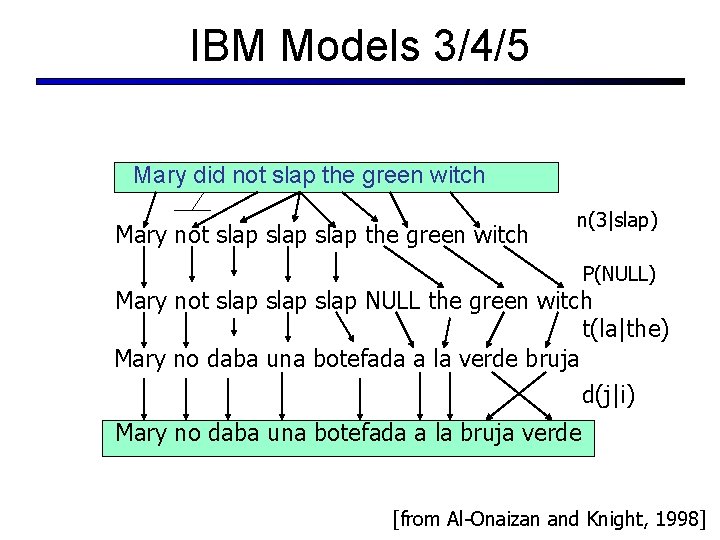
IBM Models 3/4/5 Mary did not slap the green witch Mary not slap the green witch n(3|slap) P(NULL) Mary not slap NULL the green witch t(la|the) Mary no daba una botefada a la verde bruja d(j|i) Mary no daba una botefada a la bruja verde [from Al-Onaizan and Knight, 1998]
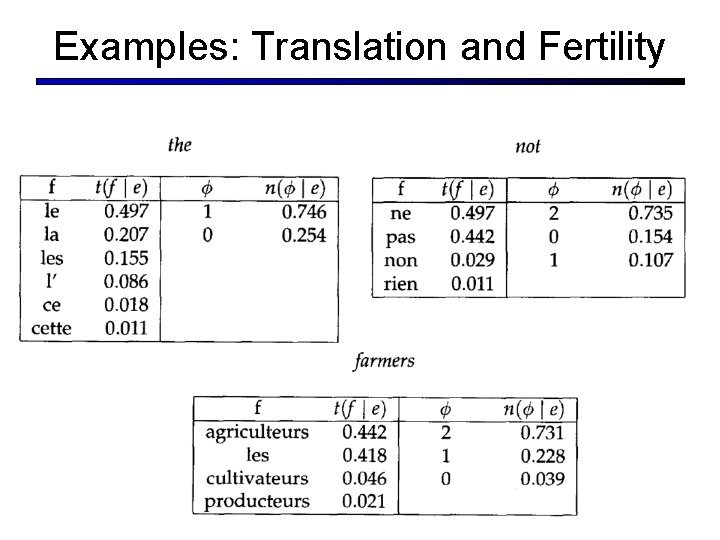
Examples: Translation and Fertility
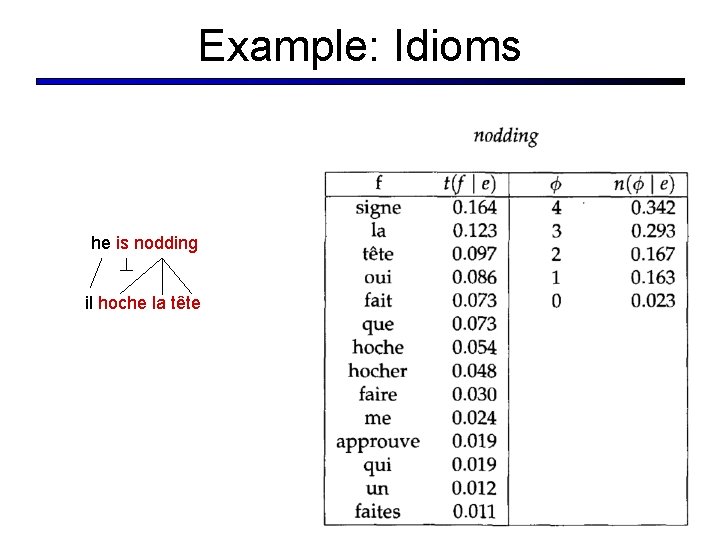
Example: Idioms he is nodding il hoche la tête
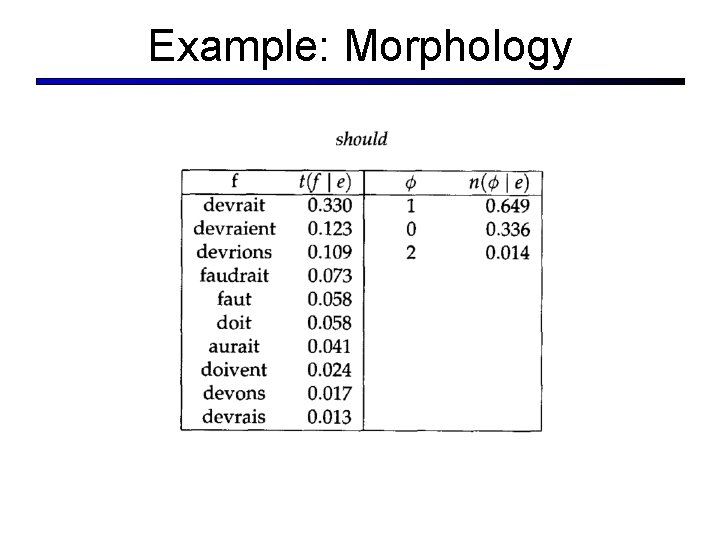
Example: Morphology
Some Results § [Och and Ney 03]
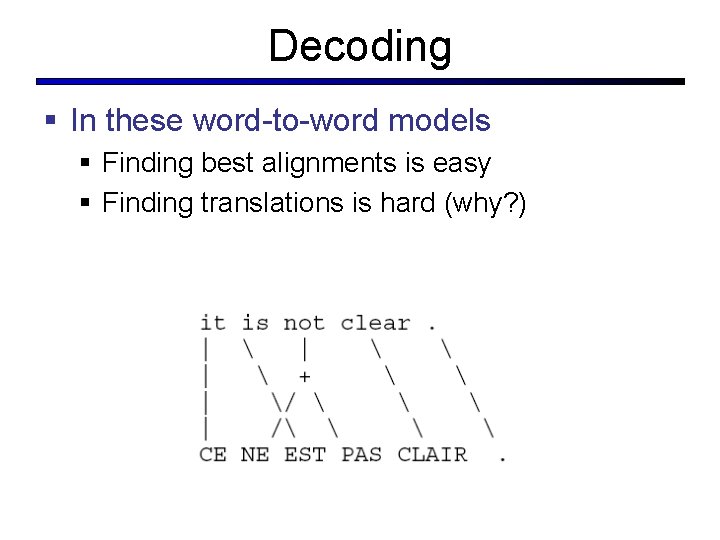
Decoding § In these word-to-word models § Finding best alignments is easy § Finding translations is hard (why? )
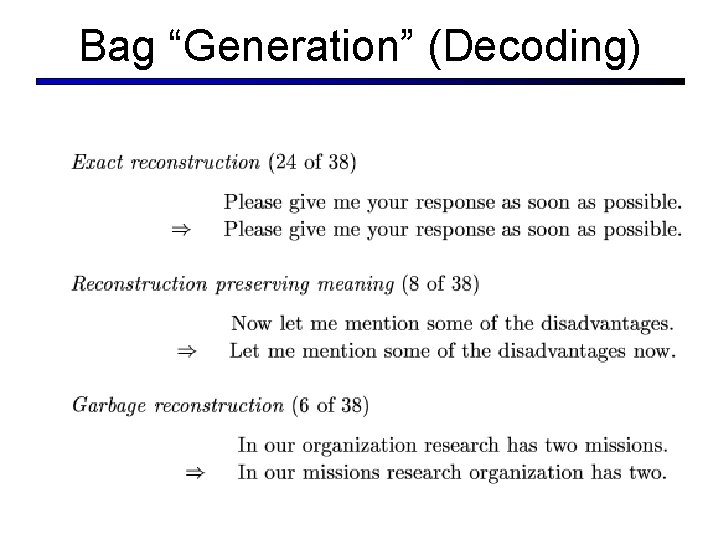
Bag “Generation” (Decoding)
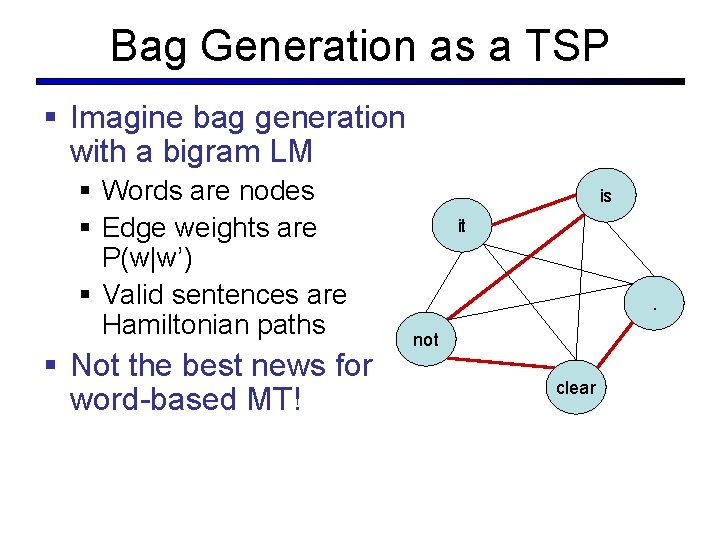
Bag Generation as a TSP § Imagine bag generation with a bigram LM § Words are nodes § Edge weights are P(w|w’) § Valid sentences are Hamiltonian paths § Not the best news for word-based MT! is it . not clear
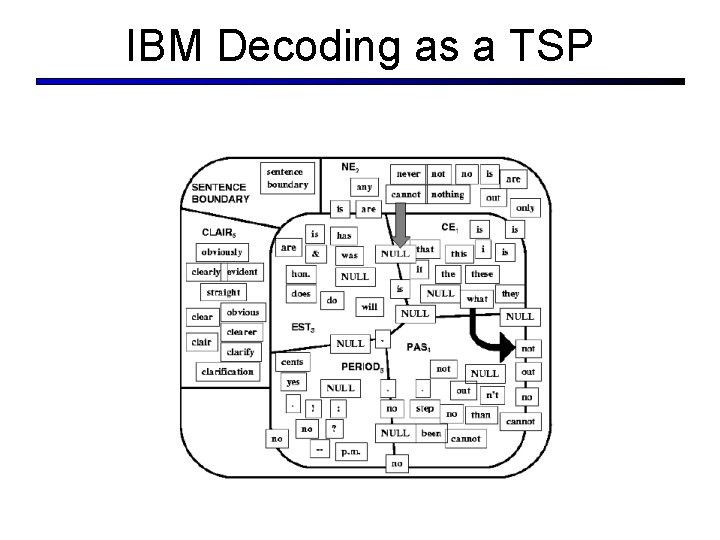
IBM Decoding as a TSP
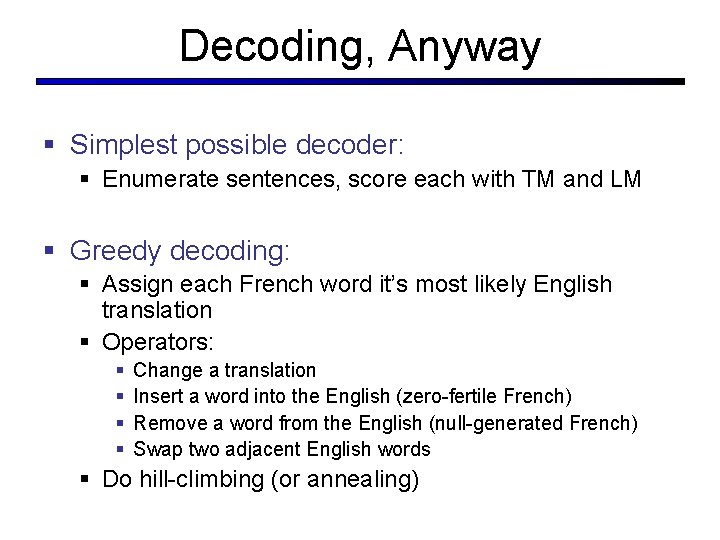
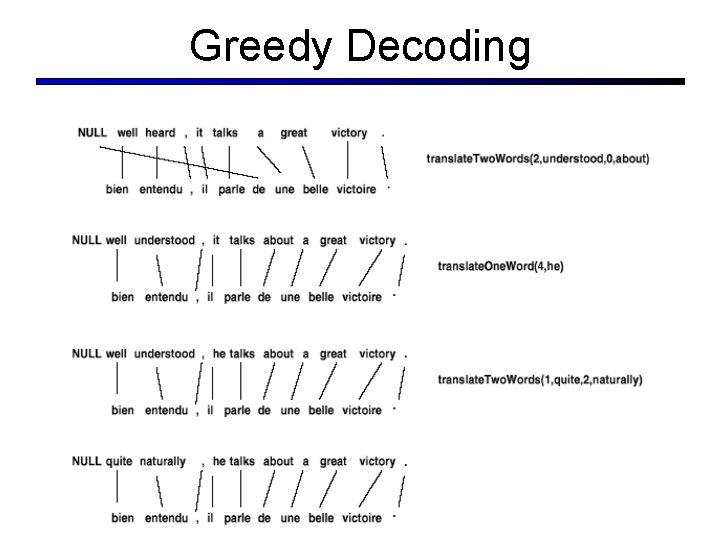
Decoding, Anyway § Simplest possible decoder: § Enumerate sentences, score each with TM and LM § Greedy decoding: § Assign each French word it’s most likely English translation § Operators: § § Change a translation Insert a word into the English (zero-fertile French) Remove a word from the English (null-generated French) Swap two adjacent English words § Do hill-climbing (or annealing)
Greedy Decoding
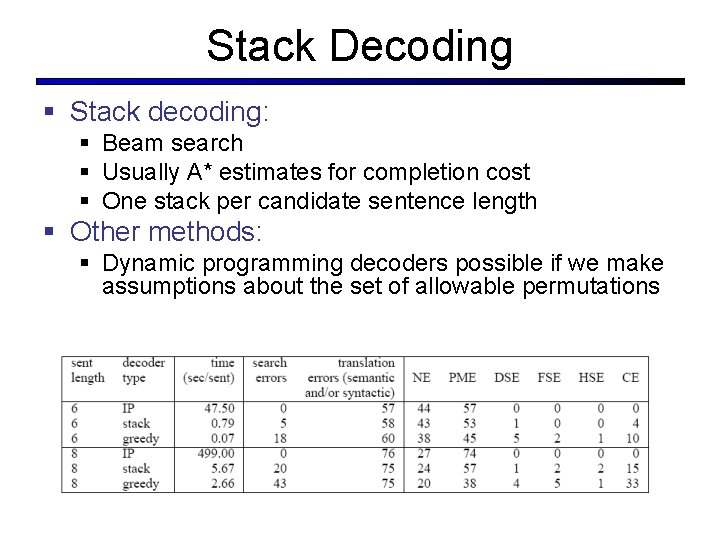
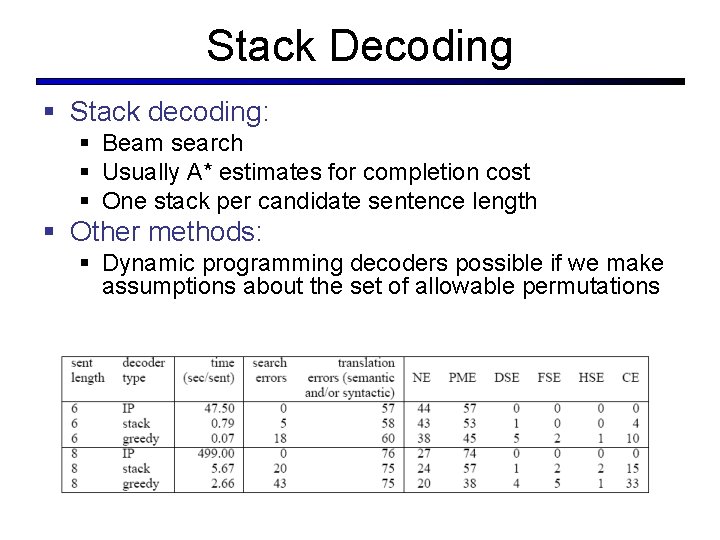
Stack Decoding § Stack decoding: § Beam search § Usually A* estimates for completion cost § One stack per candidate sentence length § Other methods: § Dynamic programming decoders possible if we make assumptions about the set of allowable permutations
Stack Decoding § Stack decoding: § Beam search § Usually A* estimates for completion cost § One stack per candidate sentence length § Other methods: § Dynamic programming decoders possible if we make assumptions about the set of allowable permutations
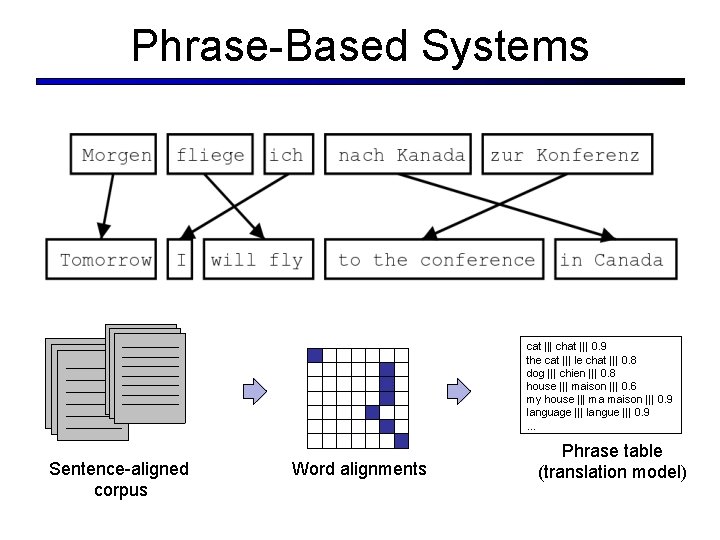
Phrase-Based Systems cat ||| chat ||| 0. 9 the cat ||| le chat ||| 0. 8 dog ||| chien ||| 0. 8 house ||| maison ||| 0. 6 my house ||| ma maison ||| 0. 9 language ||| langue ||| 0. 9 … Sentence-aligned corpus Word alignments Phrase table (translation model)
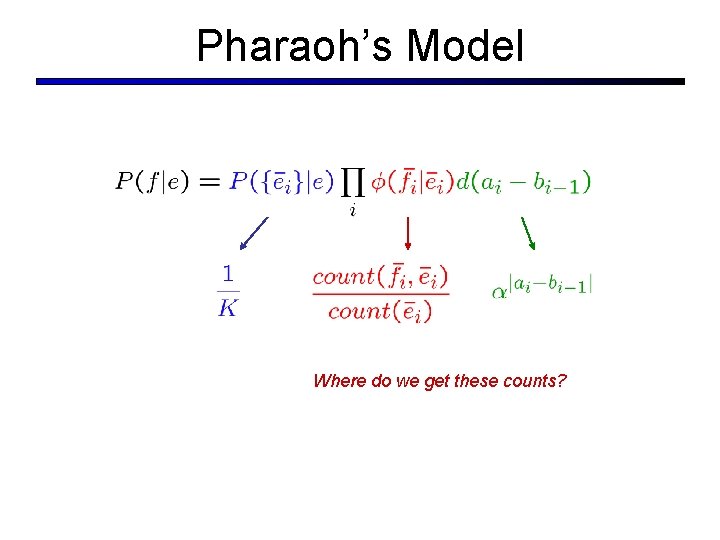
Pharaoh’s Model [Koehn et al, 2003] Segmentation Translation Distortion
Pharaoh’s Model Where do we get these counts?
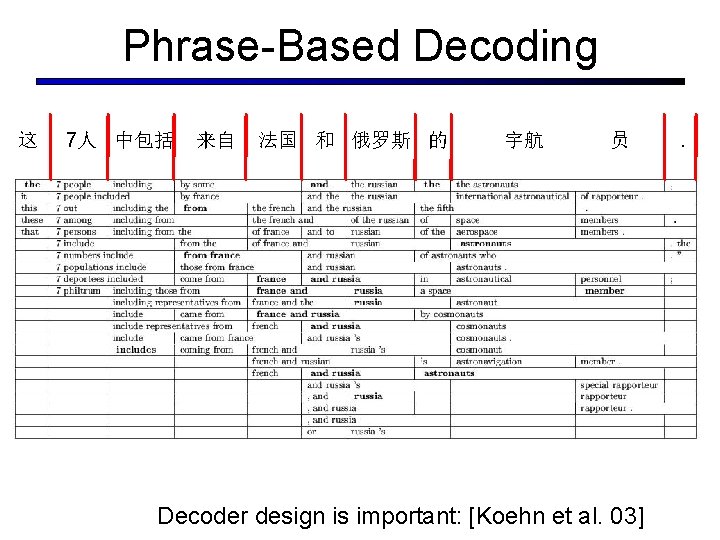
Phrase-Based Decoding 这 7人 中包括 来自 法国 和 俄罗斯 的 宇航 员 Decoder design is important: [Koehn et al. 03] .
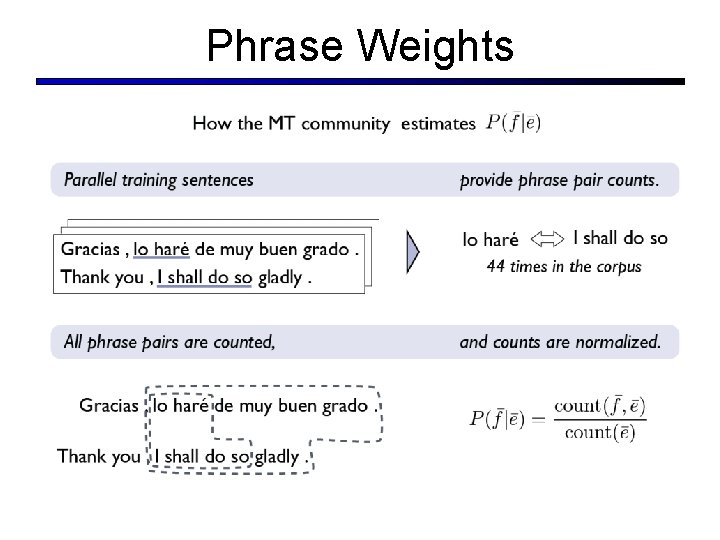
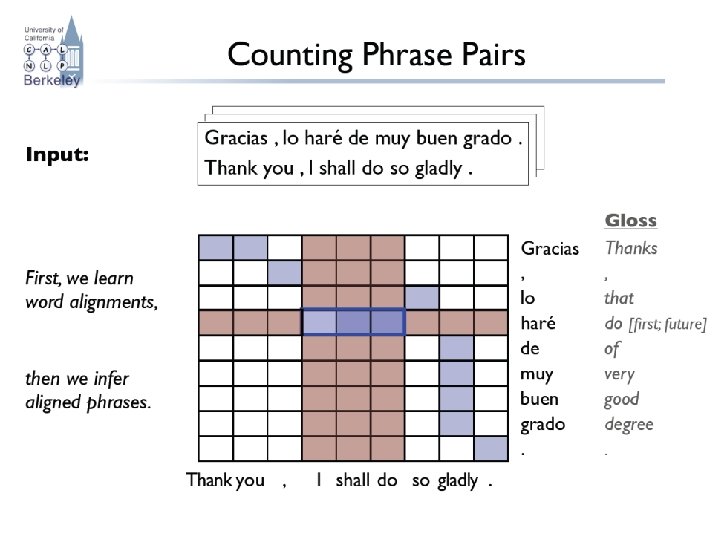
Phrase Weights
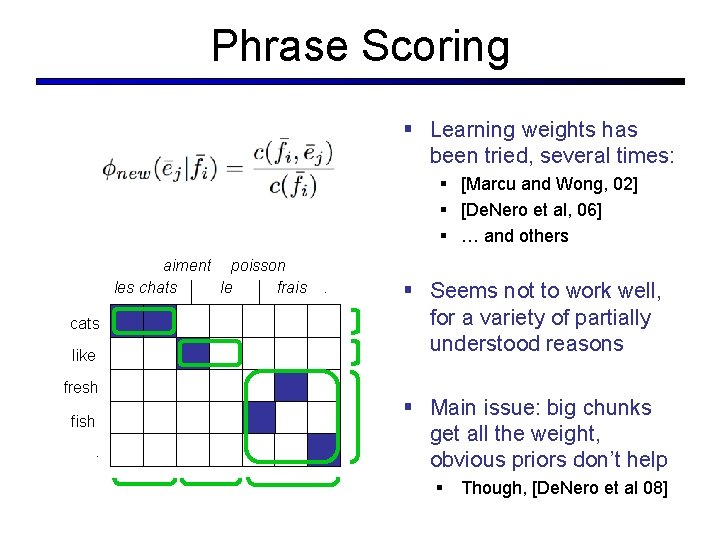
Phrase Scoring § Learning weights has been tried, several times: § [Marcu and Wong, 02] § [De. Nero et al, 06] § … and others aiment poisson les chats le frais cats like fresh fish. . . § Seems not to work well, for a variety of partially understood reasons § Main issue: big chunks get all the weight, obvious priors don’t help § Though, [De. Nero et al 08]
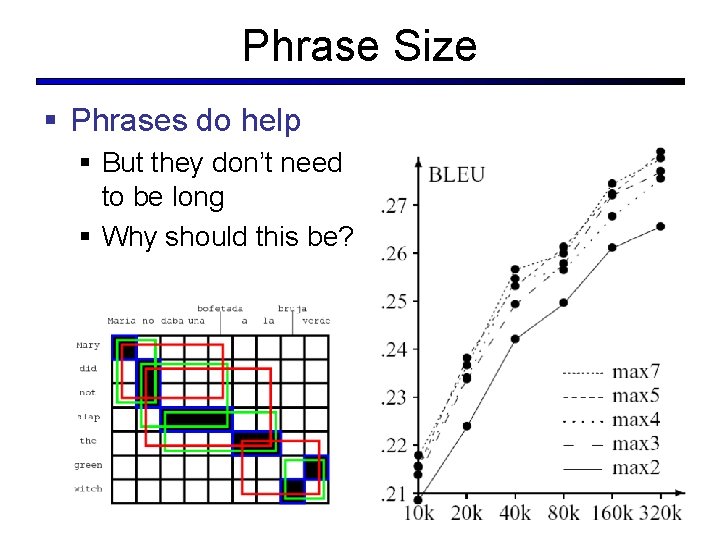
Phrase Size § Phrases do help § But they don’t need to be long § Why should this be?
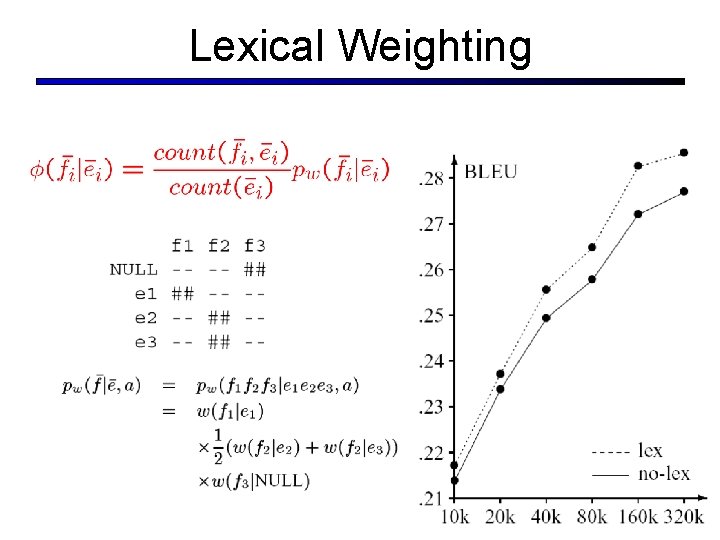
Lexical Weighting
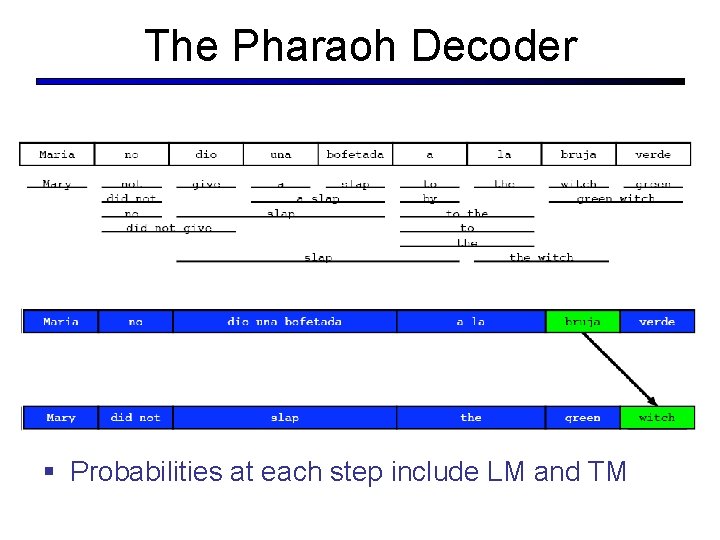
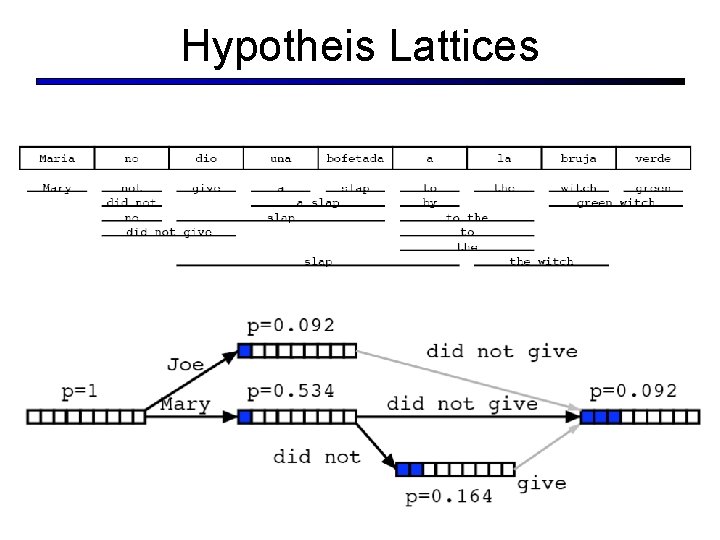
The Pharaoh Decoder § Probabilities at each step include LM and TM
Hypotheis Lattices
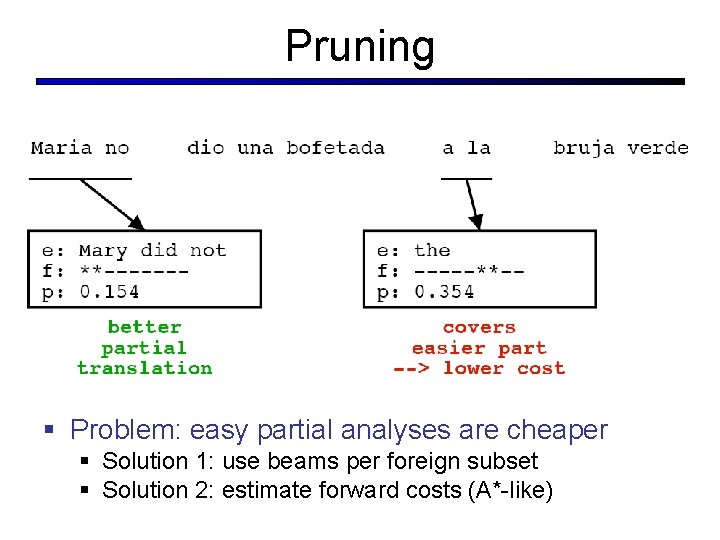
Pruning § Problem: easy partial analyses are cheaper § Solution 1: use beams per foreign subset § Solution 2: estimate forward costs (A*-like)
WSD? § Remember when we discussed WSD? § Word-based MT systems rarely have a WSD step § Why not?