
Statistical Genomics Lecture 6 Genotype by sequencing Zhiwu

Statistical Genomics Lecture 6: Genotype by sequencing Zhiwu Zhang Washington State University
Outline Genetic markers Sequencing Full vs. reduced
Human genome project Funded by DOE, NIH and Welcome Trust in the UK Begun in 1990 Original planed to last 15 years. Institute for Genomic Research and U. of Washington provided over 450 K BAC each was tagged and contain 3~4 Kb across the entire human genome
Human genome project Accelerate the completion date to 2003 Celera Genomics Craig Venter was among those sequenced Identified 20~120 K genes Sequence of 3 billion base pairs Cost near 3 billion dollars

Types of genetic markers RFLP: Restriction fragment length polymorphism SSR: Simple Sequence Repeats SNP: Single Nucleotide Polymorphism ü Chip ü Sequencing
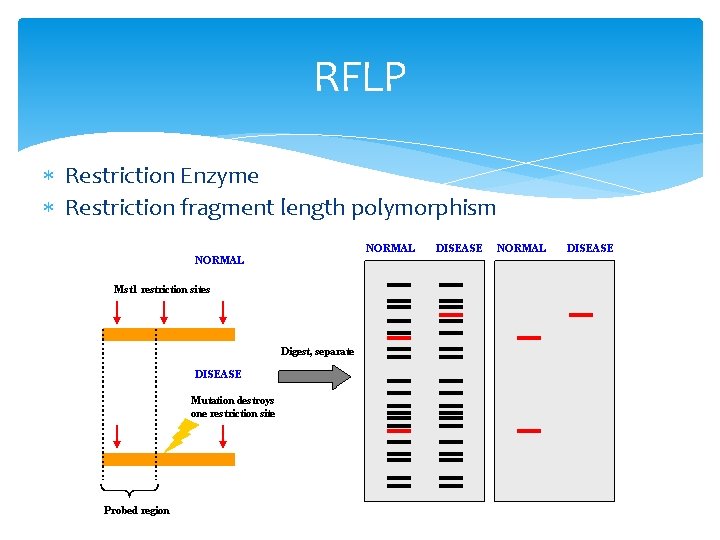
RFLP Restriction Enzyme Restriction fragment length polymorphism
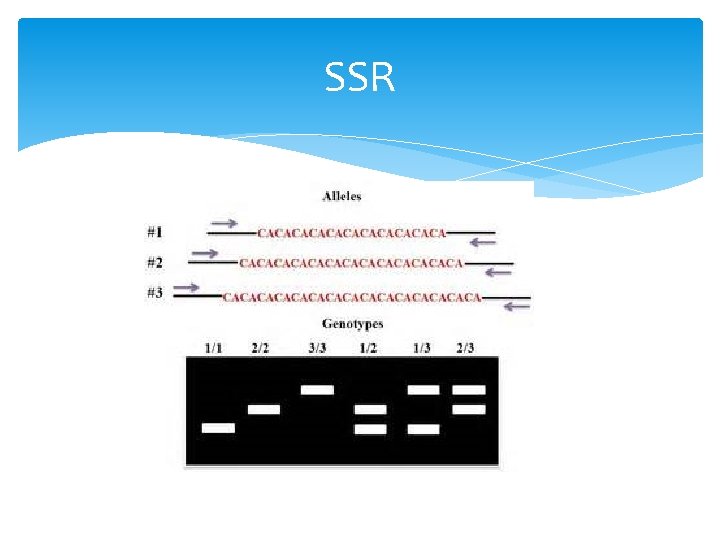
SSR
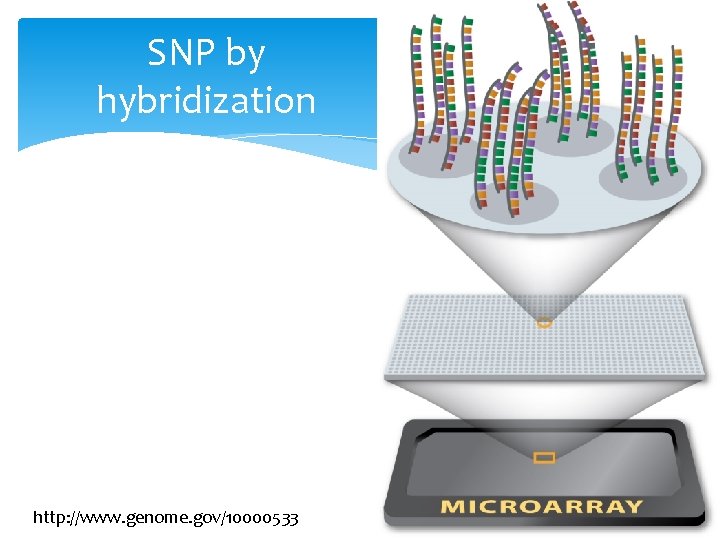
SNP by hybridization http: //www. genome. gov/10000533
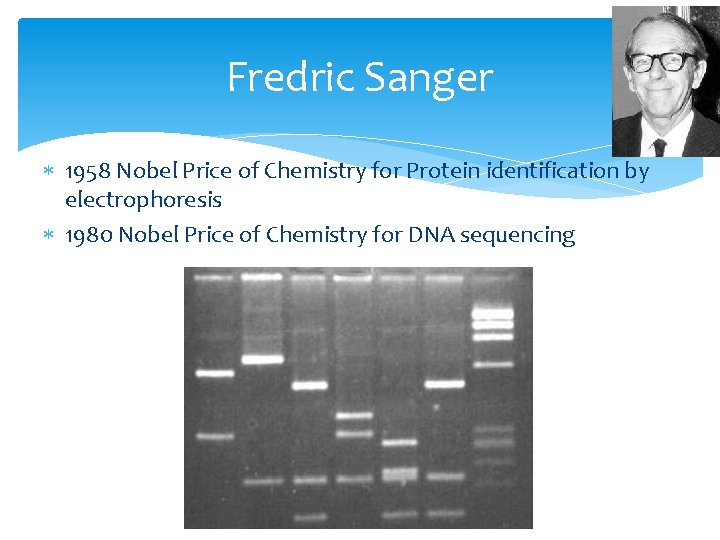
Fredric Sanger 1958 Nobel Price of Chemistry for Protein identification by electrophoresis 1980 Nobel Price of Chemistry for DNA sequencing
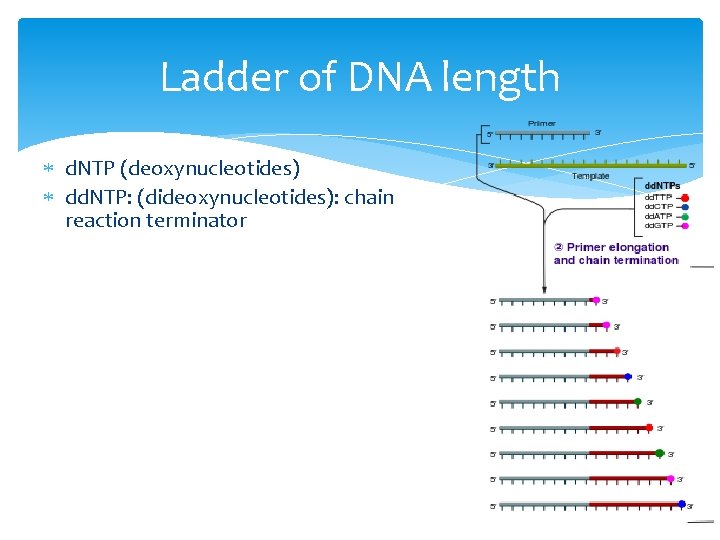
Ladder of DNA length d. NTP (deoxynucleotides) dd. NTP: (dideoxynucleotides): chain reaction terminator
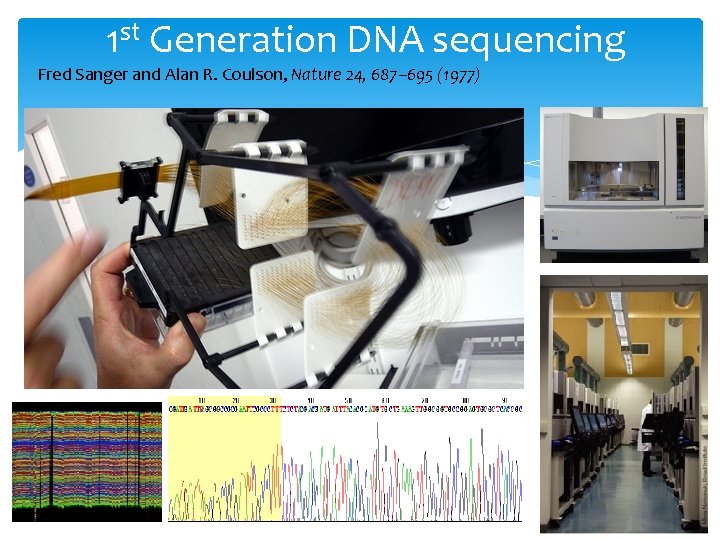
1 st Generation DNA sequencing Fred Sanger and Alan R. Coulson, Nature 24, 687– 695 (1977)
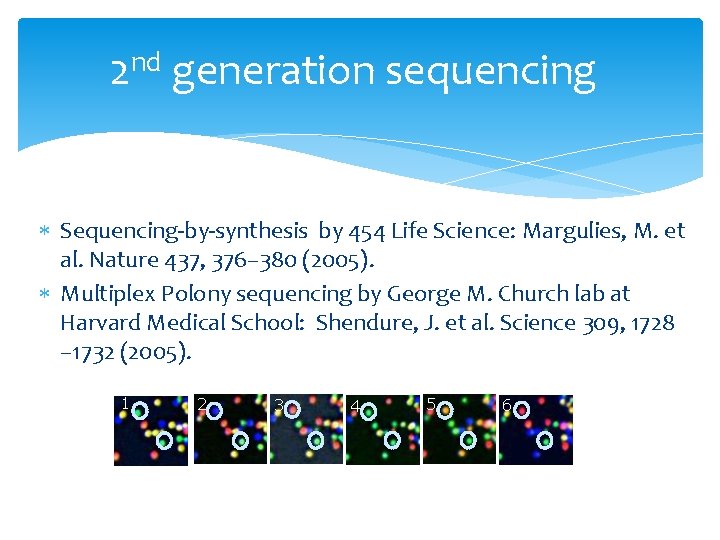
2 nd generation sequencing Sequencing-by-synthesis by 454 Life Science: Margulies, M. et al. Nature 437, 376– 380 (2005). Multiplex Polony sequencing by George M. Church lab at Harvard Medical School: Shendure, J. et al. Science 309, 1728 – 1732 (2005). 1 2 3 4 5 6
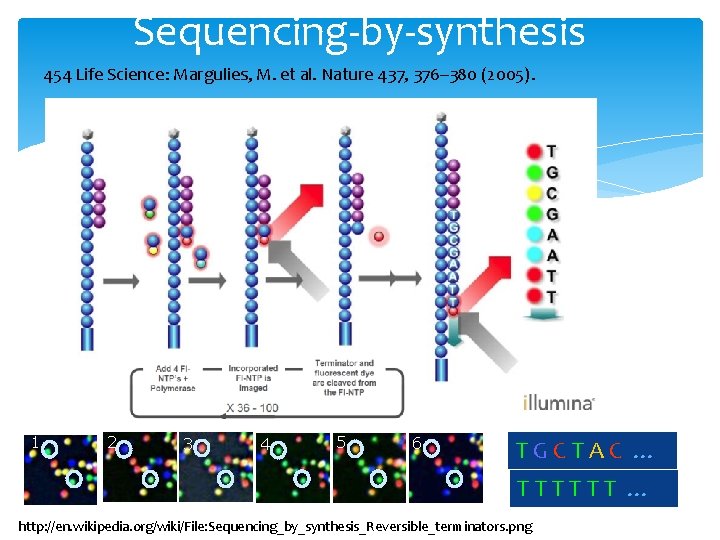
Sequencing-by-synthesis 454 Life Science: Margulies, M. et al. Nature 437, 376– 380 (2005). 1 2 3 4 5 6 TGCTAC … TTTTTT … http: //en. wikipedia. org/wiki/File: Sequencing_by_synthesis_Reversible_terminators. png
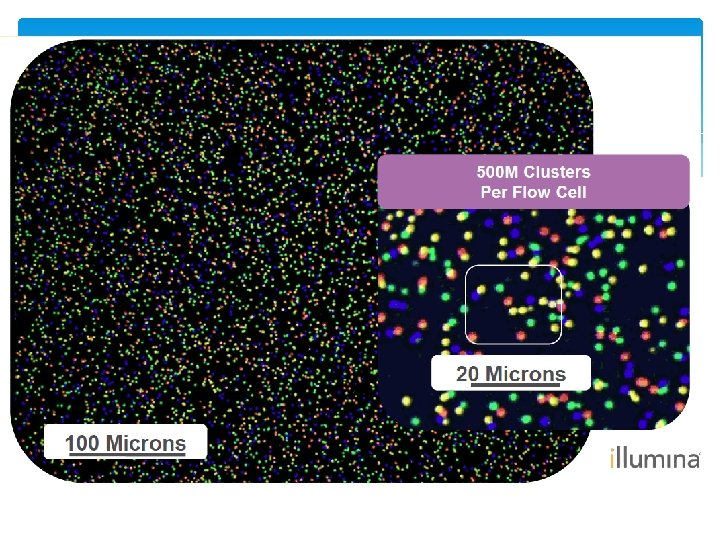
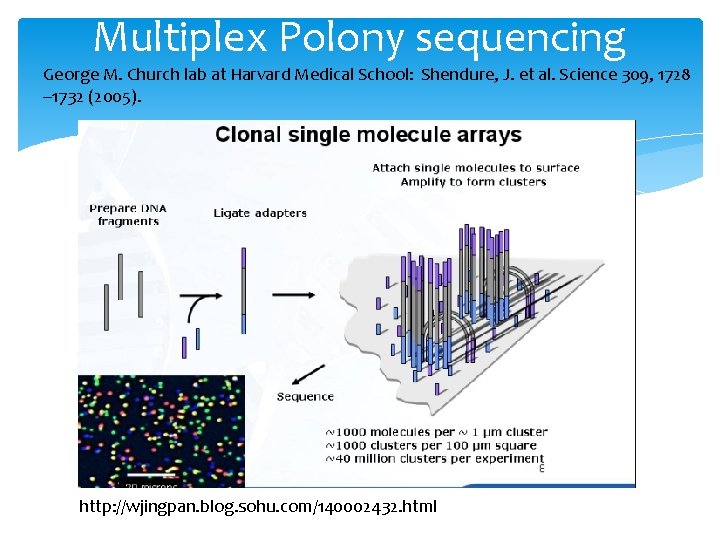
Multiplex Polony sequencing George M. Church lab at Harvard Medical School: Shendure, J. et al. Science 309, 1728 – 1732 (2005). http: //wjingpan. blog. sohu. com/140002432. html
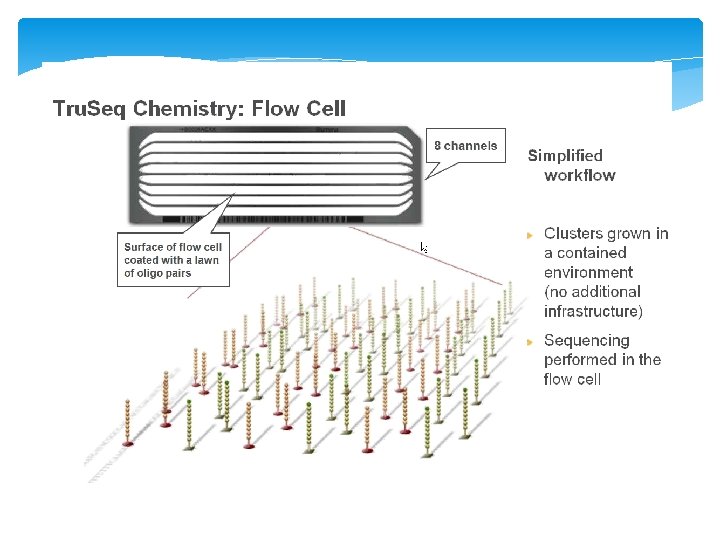
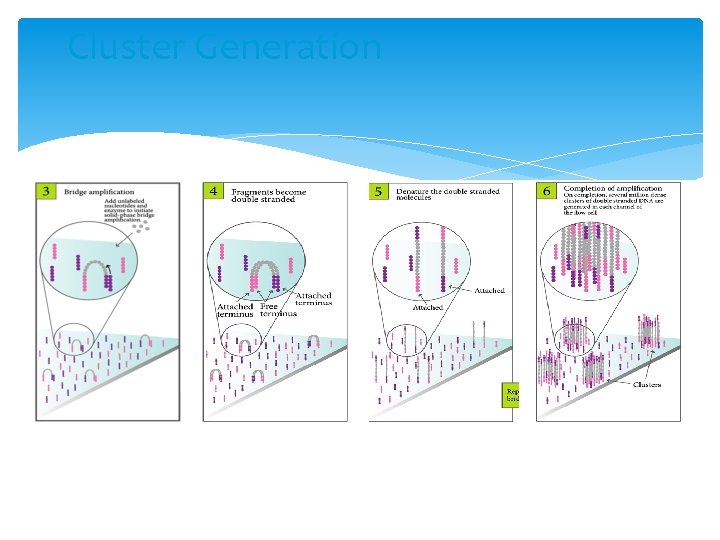
Cluster Generation
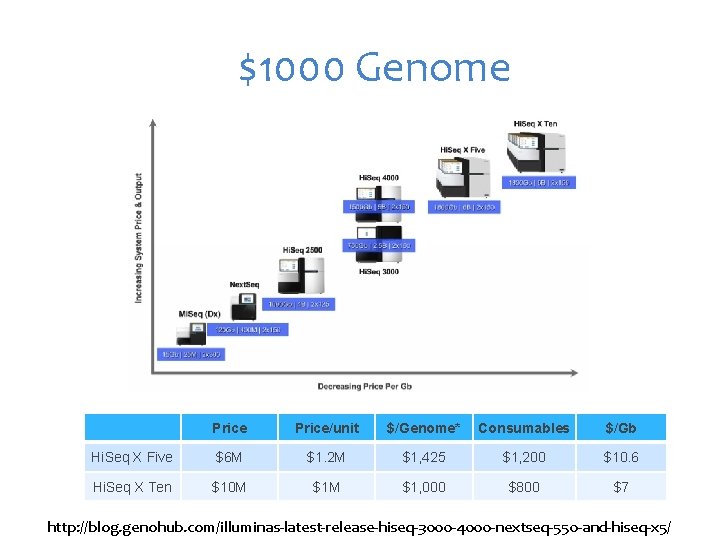
$1000 Genome Price/unit $/Genome* Consumables $/Gb Hi. Seq X Five $6 M $1. 2 M $1, 425 $1, 200 $10. 6 Hi. Seq X Ten $10 M $1, 000 $800 $7 http: //blog. genohub. com/illuminas-latest-release-hiseq-3000 -4000 -nextseq-550 -and-hiseq-x 5/
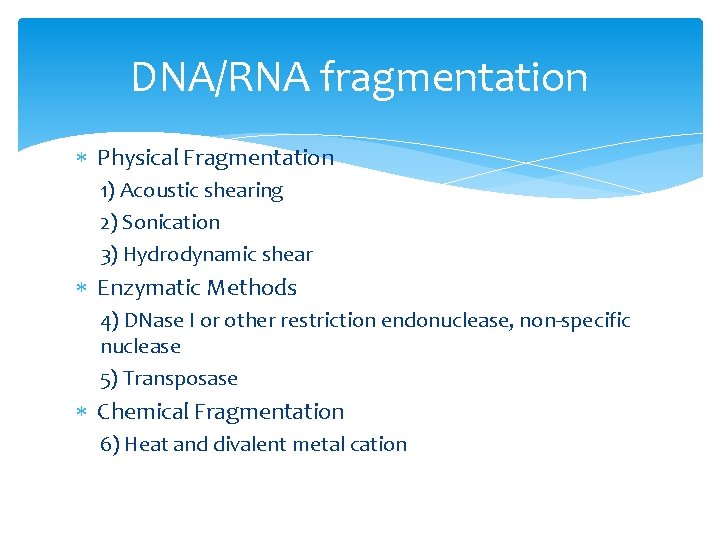
DNA/RNA fragmentation Physical Fragmentation 1) Acoustic shearing 2) Sonication 3) Hydrodynamic shear Enzymatic Methods 4) DNase I or other restriction endonuclease, non-specific nuclease 5) Transposase Chemical Fragmentation 6) Heat and divalent metal cation
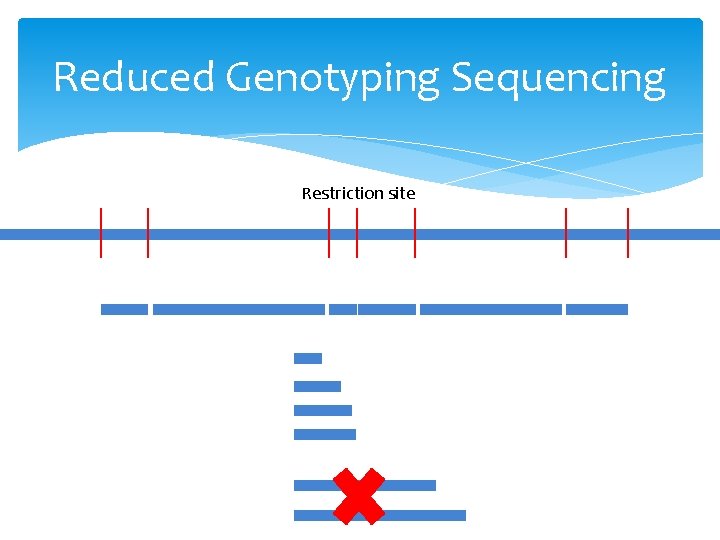
Reduced Genotyping Sequencing Restriction site
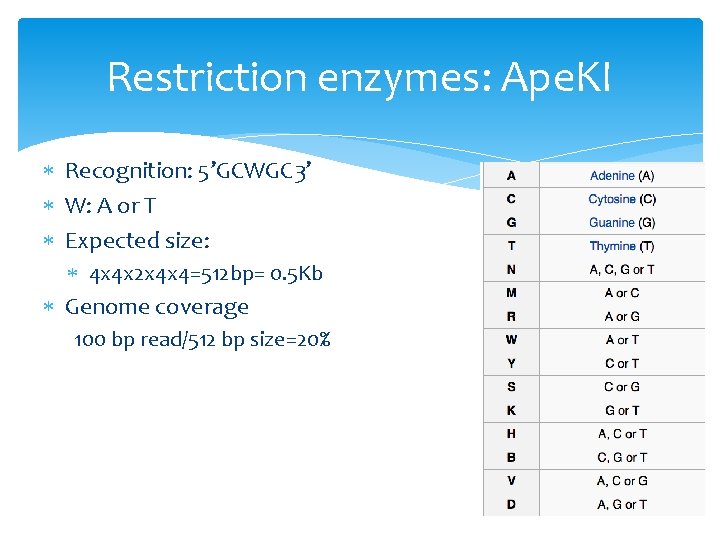
Restriction enzymes: Ape. KI Recognition: 5’GCWGC 3’ W: A or T Expected size: 4 x 4 x 2 x 4 x 4=512 bp= 0. 5 Kb Genome coverage 100 bp read/512 bp size=20%
Restriction enzymes: Pst. I Recognition: 5’ CTGCAG 3’ Expected size: 4^6=4096 bp= 4 Kb Genome coverage 100 bp read/4096 bp size=2. 5%
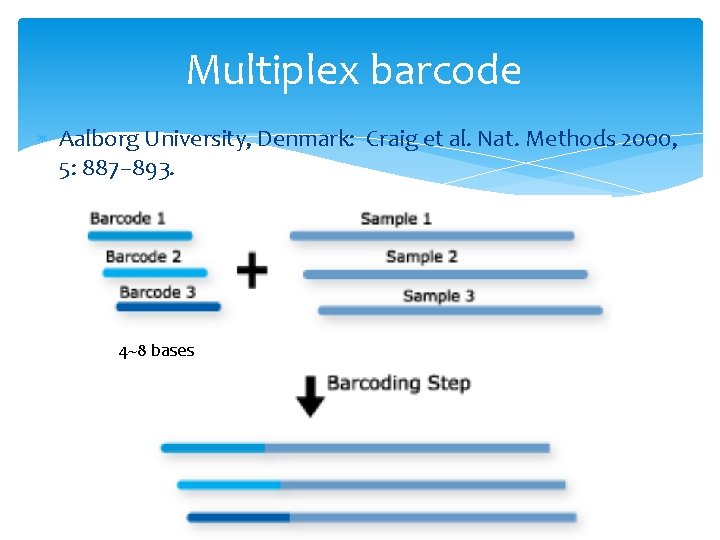
Multiplex barcode Aalborg University, Denmark: Craig et al. Nat. Methods 2000, 5: 887– 893. 4~8 bases
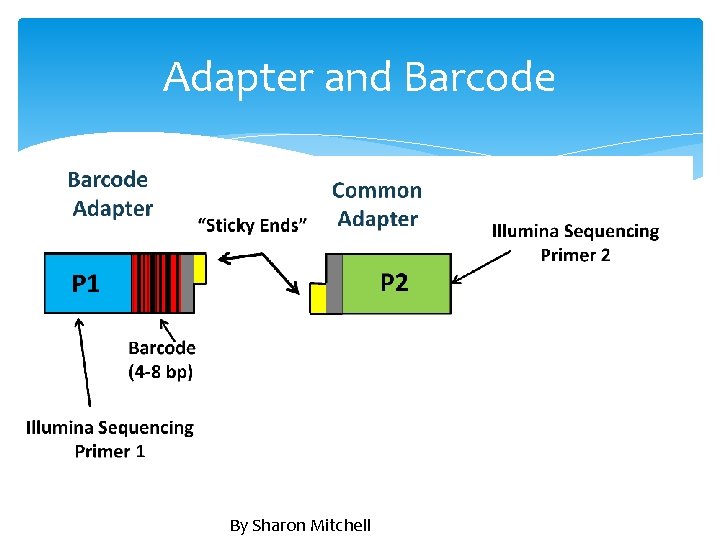
Adapter and Barcode By Sharon Mitchell
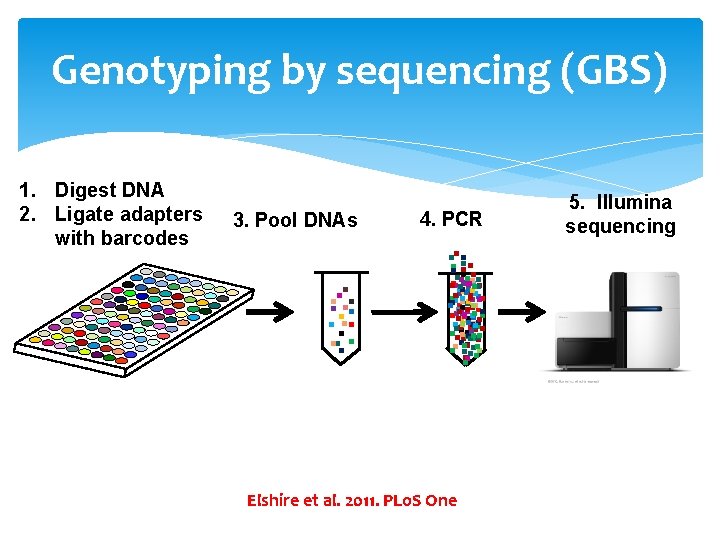
Genotyping by sequencing (GBS) 3. Pool DNAs 4. PCR . . . 1. Digest DNA 2. Ligate adapters with barcodes . . Elshire et al. 2011. PLo. S One 5. Illumina sequencing
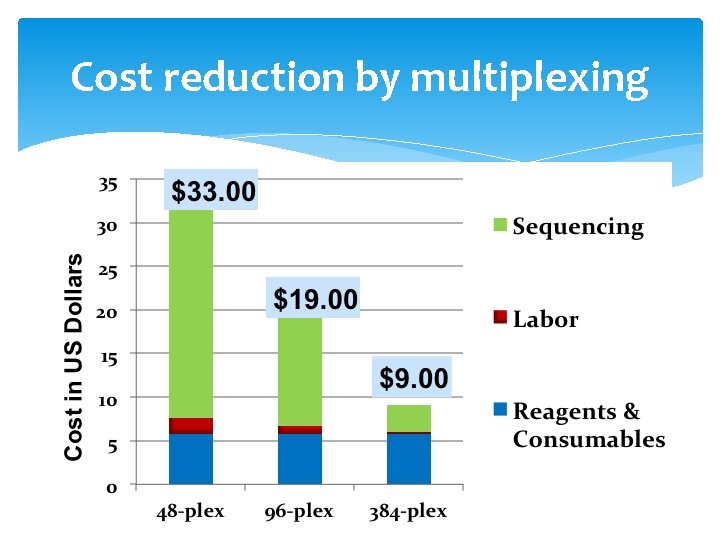
Cost reduction by multiplexing
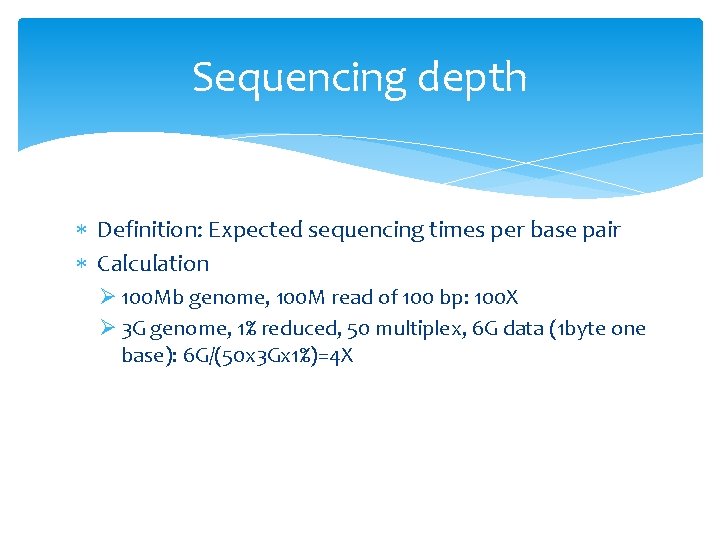
Sequencing depth Definition: Expected sequencing times per base pair Calculation Ø 100 Mb genome, 100 M read of 100 bp: 100 X Ø 3 G genome, 1% reduced, 50 multiplex, 6 G data (1 byte one base): 6 G/(50 x 3 Gx 1%)=4 X
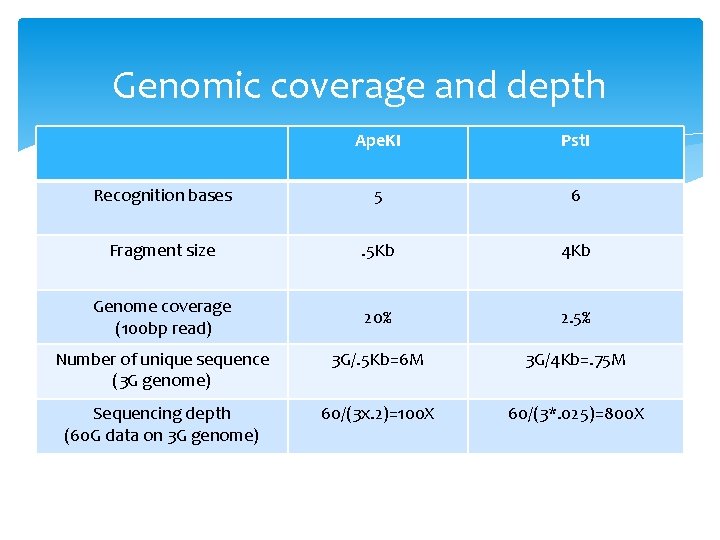
Genomic coverage and depth Ape. KI Pst. I Recognition bases 5 6 Fragment size . 5 Kb 4 Kb Genome coverage (100 bp read) 20% 2. 5% Number of unique sequence (3 G genome) 3 G/. 5 Kb=6 M 3 G/4 Kb=. 75 M Sequencing depth (60 G data on 3 G genome) 60/(3 x. 2)=100 X 60/(3*. 025)=800 X
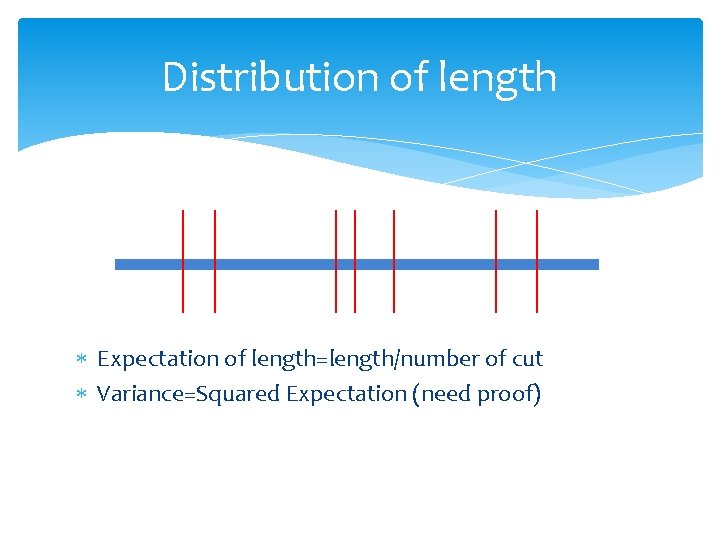
Distribution of length Expectation of length=length/number of cut Variance=Squared Expectation (need proof)
![Distribution of length n=100000 size=30000 x=round(runif(n, 1, size)) y=sort(x) interval=y[-1]-y[-n] hist(interval) Ex=size/n Va=Ex*Ex m=mean(interval)](http://slidetodoc.com/presentation_image_h2/d439179887543c69efa883eb611426d5/image-30.jpg "Distribution of length n=100000 size=30000 x=round(runif(n, 1, size)) y=sort(x) interval=y[-1]-y[-n] hist(interval) Ex=size/n Va=Ex*Ex m=mean(interval)")
Distribution of length n=100000 size=30000 x=round(runif(n, 1, size)) y=sort(x) interval=y[-1]-y[-n] hist(interval) Ex=size/n Va=Ex*Ex m=mean(interval) v=var(interval) m v
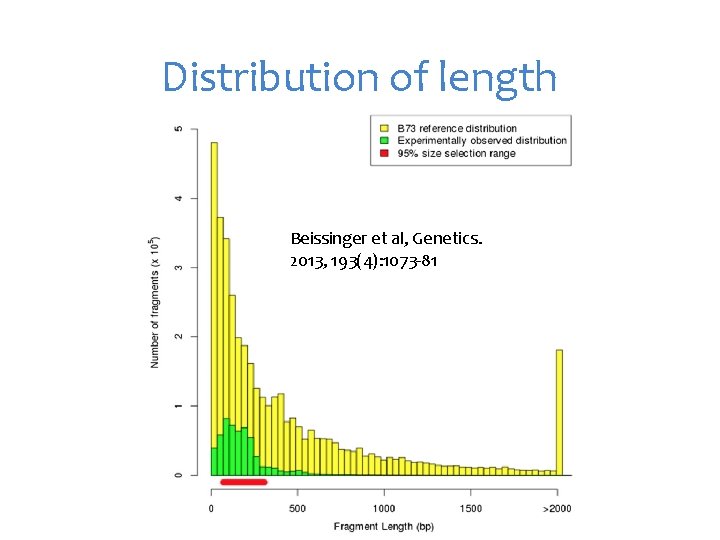
Distribution of length Beissinger et al, Genetics. 2013, 193(4): 1073 -81
Outline Genetic markers Sequencing Full vs. reduced Experiment Data process and format
- Slides: 32