
Statistical Adjustment Model Measurable Skill Gains MSG Module
Statistical Adjustment Model – Measurable Skill Gains (MSG) Module 11 2019 WIOA National Performance Training U. S. Department of Labor Employment and Training Administration
Today’s Objectives ü How the MSG model is the same ü How the MSG model is different ü Data challenges and their implications for the MSG model ü Future plans 2
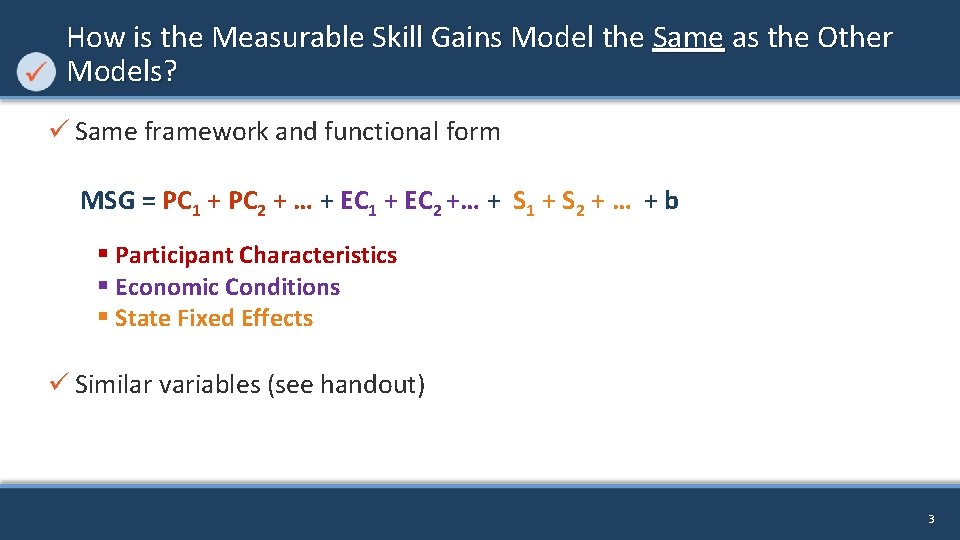
How is the Measurable Skill Gains Model the Same as the Other Models? ü Same framework and functional form MSG = PC 1 + PC 2 + … + EC 1 + EC 2 +… + S 1 + S 2 + … + b § Participant Characteristics § Economic Conditions § State Fixed Effects ü Similar variables (see handout) 3
How is the Measurable Skill Gains Model Different than the Other Models? ü Possible variable differences ü Data Challenges ► The MSG indicator is different—It is NOT exit based ► MSG data has been collected since PY 2016, however, since it is a new data element it has taken some time for the reported data to better reflect actual skill gains of participants ► There is no historical data for this performance indicator 4

Challenges with Determining the MSG Denominator for Quarters ü Remember, the MSG indicator is a PY rate (Participation in training or education program with at least 1 of the 5 measurable skill gains in PY) / (Participation in education or training program in PY) ü How can we convert this rate to a quarter rate? ► Rolling 4 quarters (i. e. , reference period + prior 3 quarters) ► Quarters treated as a PY (i. e. , any gains in only that quarter) ► Other ideas? ü Ultimately, there is a balance between determining which method results in quarter MSG rates that are comparable to PY rates without impacting model estimates. 5
Measurable Skill Gains Model Development – Data Challenges ü Data quantity ►Currently only have 9 quarters of total data (PY 2016 Q 1 – PY 2018 Q 1) ►For a sufficient number of observations, PY data needs to be converted to state data by quarter. (Which is problematic as previously discussed. ) 6
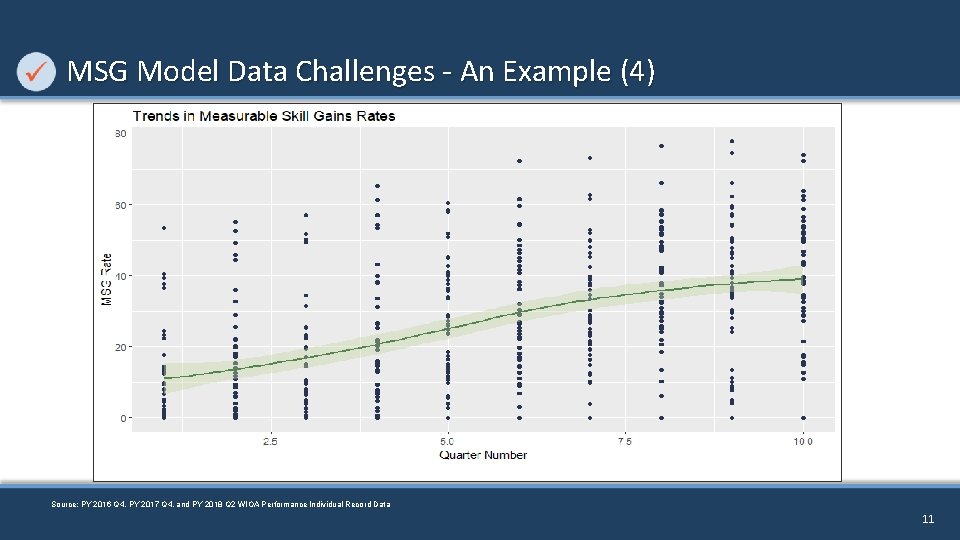
Measurable Skill Gains Model Development – Data Challenges (2) ü Data quality ►Much of the early data (i. e. , PY 2016) is unusable ►The dependent variable of the model (i. e. , the MSG rate) has an upward trend due to improvements in data collection and reporting ►Lack of data reliability makes it difficult to assess the estimated effects of the model variables 7
MSG Model Data Challenges - An Example (1) ü What is the expected relationship between gaining a measurable skill gain (the dependent variable in this model) and the unemployment rate (one of the independent variables or this model)? ü What does the data look like? ► MSG rate trends since PY 2016? ► Unemployment rate trends since 2016? 8
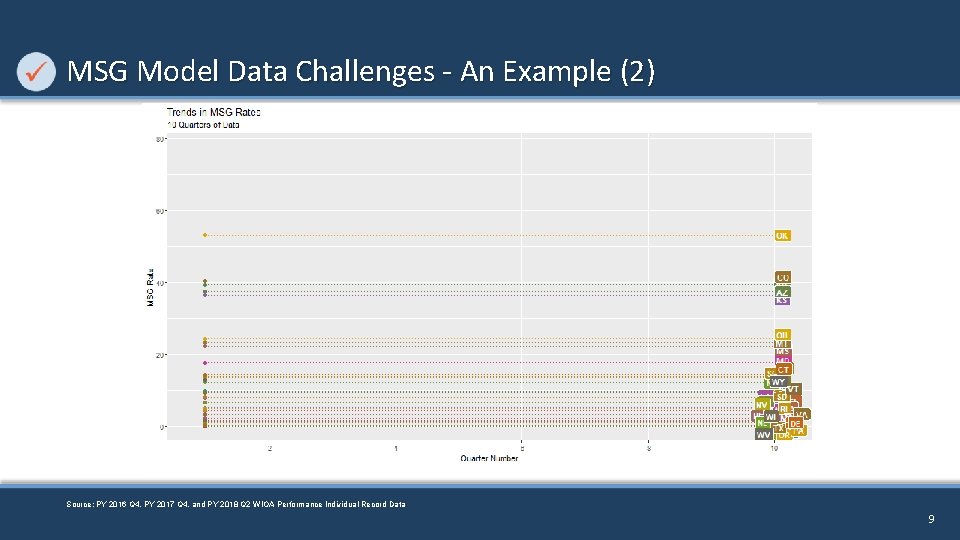
MSG Model Data Challenges - An Example (2) Source: PY 2016 Q 4, PY 2017 Q 4, and PY 2018 Q 2 WIOA Performance Individual Record Data 9

MSG Model Data Challenges - An Example (3) Source: PY 2016 Q 4, PY 2017 Q 4, and PY 2018 Q 2 WIOA Performance Individual Record Data 10
MSG Model Data Challenges - An Example (4) Source: PY 2016 Q 4, PY 2017 Q 4, and PY 2018 Q 2 WIOA Performance Individual Record Data 11
MSG Model Data Challenges - An Example (5) Source: PY 2016 Q 4, PY 2017 Q 4, and PY 2018 Q 2 WIOA Performance Individual Record Data 12
MSG Model Data Challenges - An Example (6) Source: PY 2016 Q 4, PY 2017 Q 4, and PY 2018 Q 2 WIOA Performance Individual Record Data 13
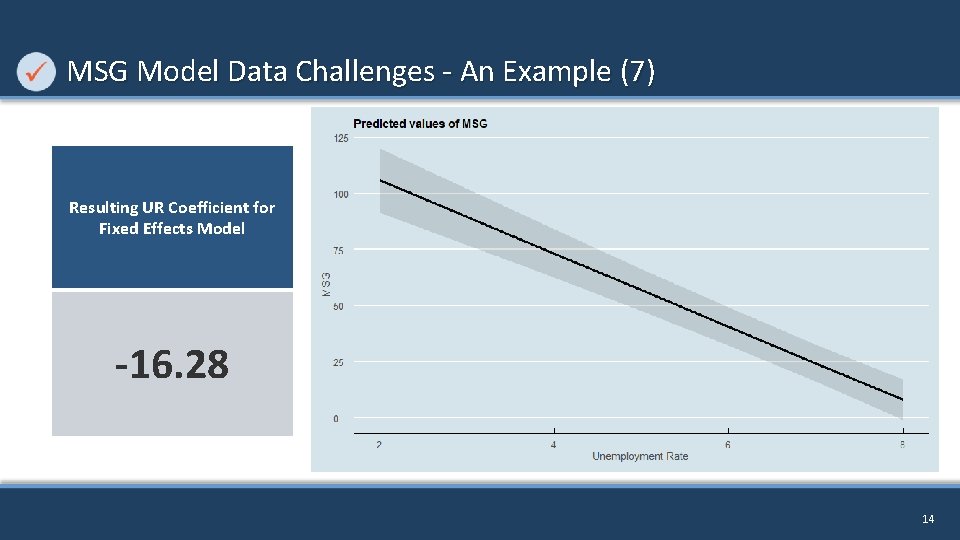
MSG Model Data Challenges - An Example (7) Resulting UR Coefficient for Fixed Effects Model -16. 28 14
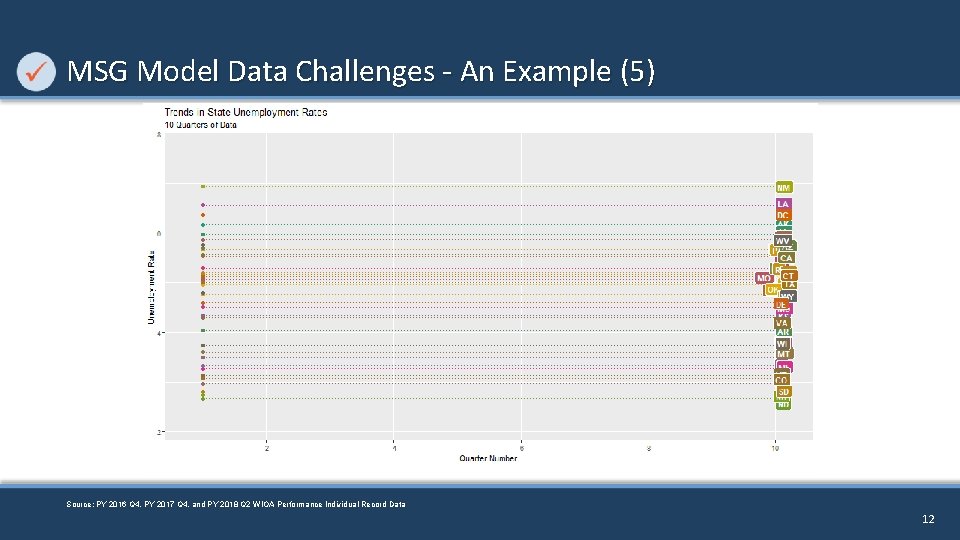
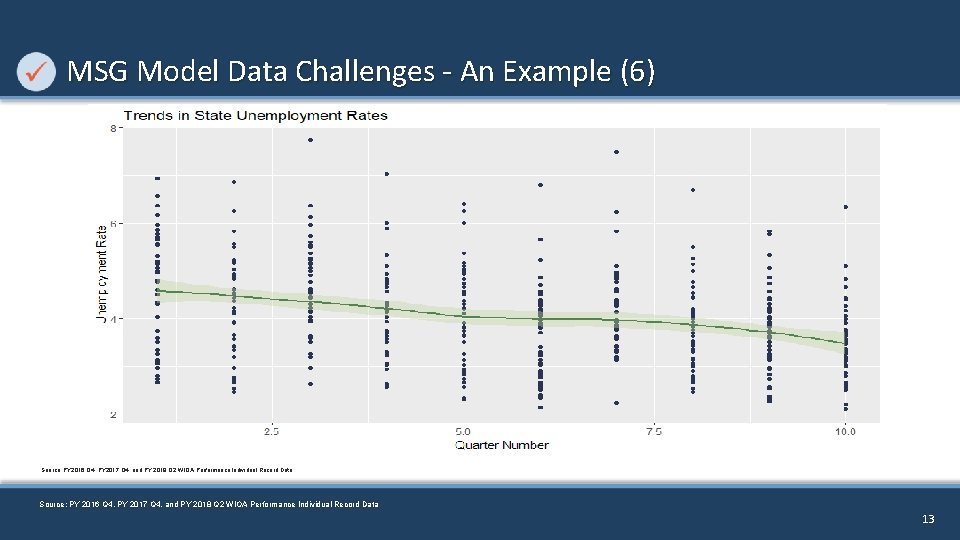
MSG Model Data Challenges - An Example (8) ü This example shows how both the data quantity and quality challenges affect the development of the model ► Quantity challenge – the short timeframe doesn’t allow for much variation in the unemployment rate variable ► Quality challenge – consistent upward trend as reported data on MSG indicator improve ü What other variables might be a problem? ► With the unemployment rate data we at least have reliability in the quality of the data 15
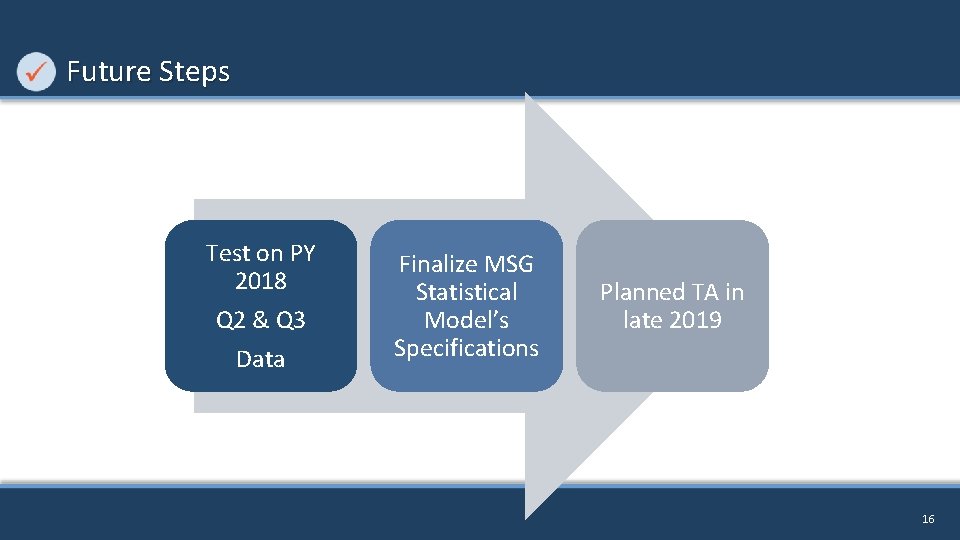
Future Steps Test on PY 2018 Q 2 & Q 3 Data Finalize MSG Statistical Model’s Specifications Planned TA in late 2019 16

Any Questions? 17
Contact Kevin Reuss Economist Employment and Training Administration U. S. Department of Labor Reuss. kevin. l@dol. gov 18

Please complete your evaluations. 19
- Slides: 19