
Station Tours 101 A Guide to Effective Fire
- Slides: 23
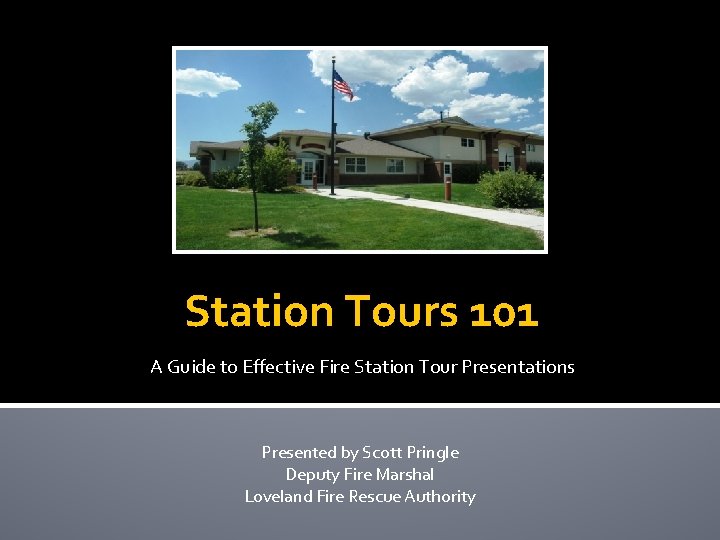
Station Tours 101 A Guide to Effective Fire Station Tour Presentations Presented by Scott Pringle Deputy Fire Marshal Loveland Fire Rescue Authority
Objectives �Provide a “toolbox” of potential fire station tour presentation topics. �Help you to custom tailor your presentations to your audience. �Add pertinent fire and life safety education to your presentations.
Overview �Like it or not, conducting fire station tours will be a common occurrence during your fire service career. �This course will help you to become more effective in the areas of content and delivery of your fire station tour presentations.
About Station Tours �Some tours may be scheduled in advance, while others might be unexpected “drop-ins”. �Tour groups can vary in size, and can include a variety of ages and comprehension levels of the visitors. �Regardless of these variables, having a preexisting basic plan and system for conducting tours will help.
Be Prepared �For any scheduled station tours, make a good impression by ensuring that the station and apparatus are clean and orderly. �Look professional - wear the appropriate uniform. �Have any handouts that you plan to distribute ready before the tour group arrives.
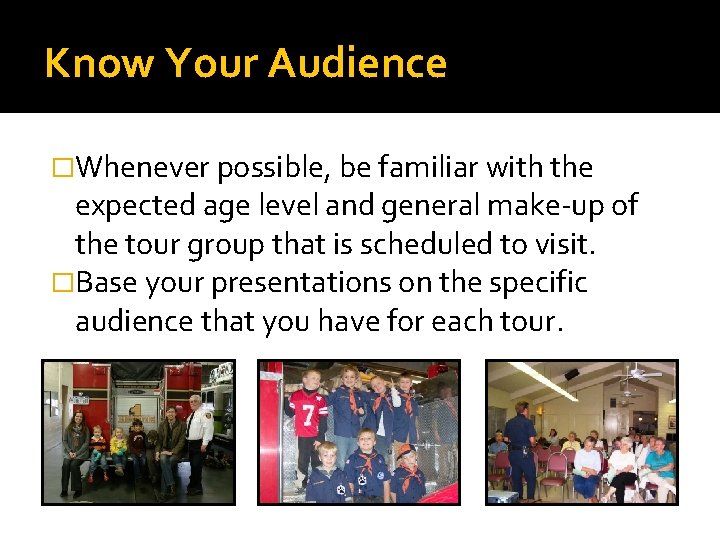
Know Your Audience �Whenever possible, be familiar with the expected age level and general make-up of the tour group that is scheduled to visit. �Base your presentations on the specific audience that you have for each tour.
Have a Plan �Have specific topics ready to discuss with certain age groups, as well as the general topics that you will cover with every tour group. �Have an idea of how much time you plan to spend with each tour group. �Establish a general sequence of events. �Remember that no two tours will be exactly the same, but many will have commonalities.
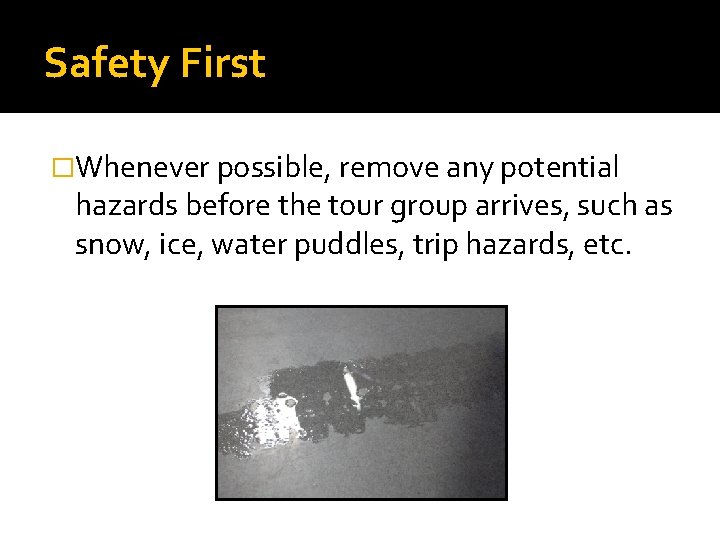
Safety First �Whenever possible, remove any potential hazards before the tour group arrives, such as snow, ice, water puddles, trip hazards, etc.
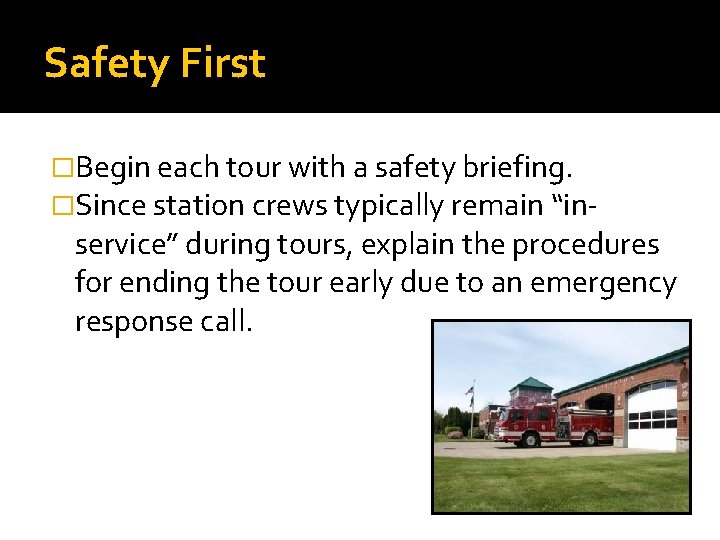
Safety First �Begin each tour with a safety briefing. �Since station crews typically remain “in- service” during tours, explain the procedures for ending the tour early due to an emergency response call.
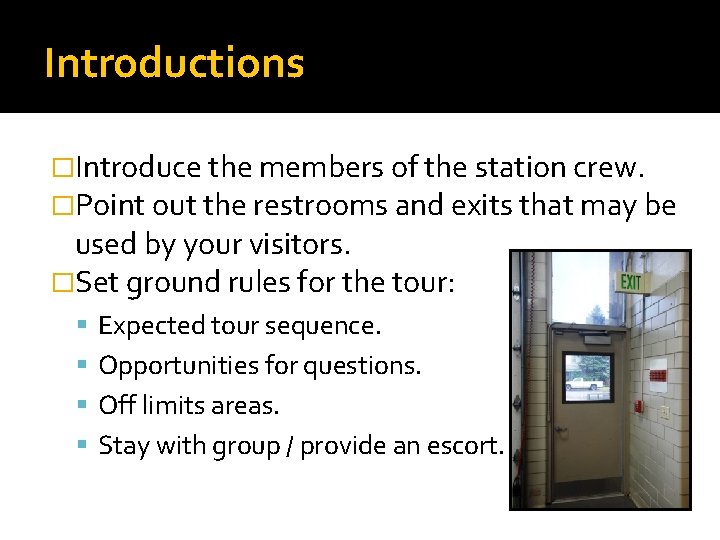
Introductions �Introduce the members of the station crew. �Point out the restrooms and exits that may be used by your visitors. �Set ground rules for the tour: Expected tour sequence. Opportunities for questions. Off limits areas. Stay with group / provide an escort.
Where to Start �A great place to start the tour presentation is in the station’s dayroom. �Topics here can include: Overview of the fire department - what you do. Life of a firefighter - describe a typical 24 -hour shift. Station duties - cleaning, laundry, etc.
Next Stop – The Kitchen �The fire station’s kitchen can be a great area to teach some valuable life safety topics, including: Parents should establish a 3 -foot “no kids” zone around cooking appliances. Watch what you heat. Keep matches and lighters locked up and out of reach of children. How to treat a burn injury. Fire extinguishers.
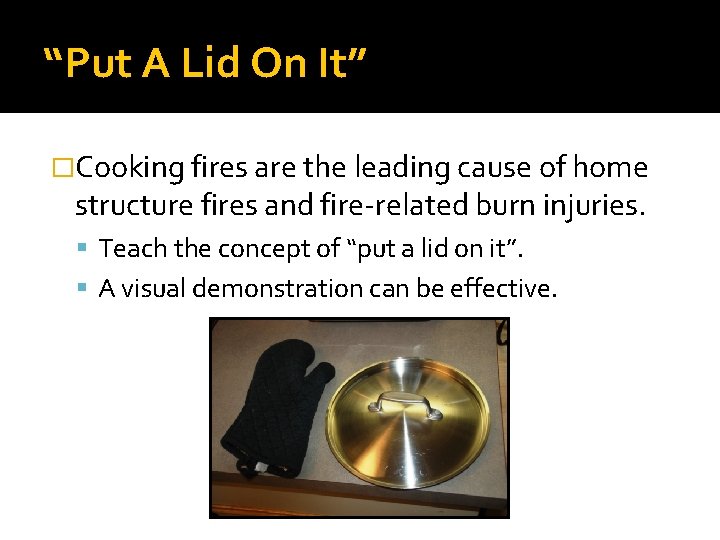
“Put A Lid On It” �Cooking fires are the leading cause of home structure fires and fire-related burn injuries. Teach the concept of “put a lid on it”. A visual demonstration can be effective.
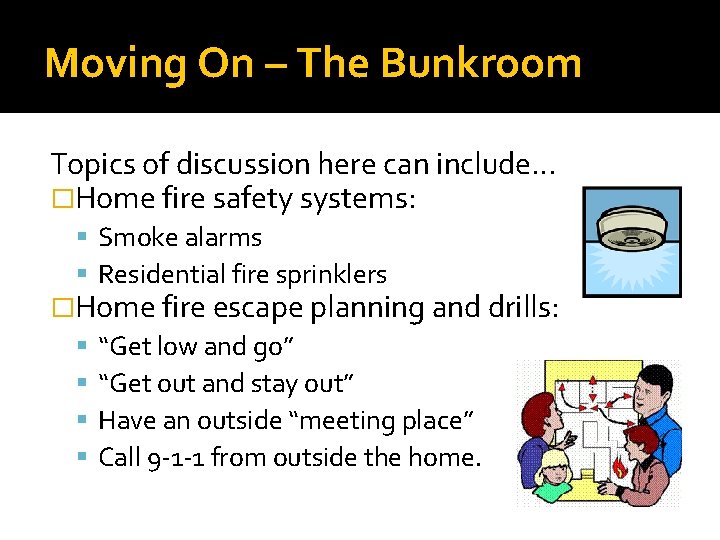
Moving On – The Bunkroom Topics of discussion here can include… �Home fire safety systems: Smoke alarms Residential fire sprinklers �Home fire escape planning and drills: “Get low and go” “Get out and stay out” Have an outside “meeting place” Call 9 -1 -1 from outside the home.
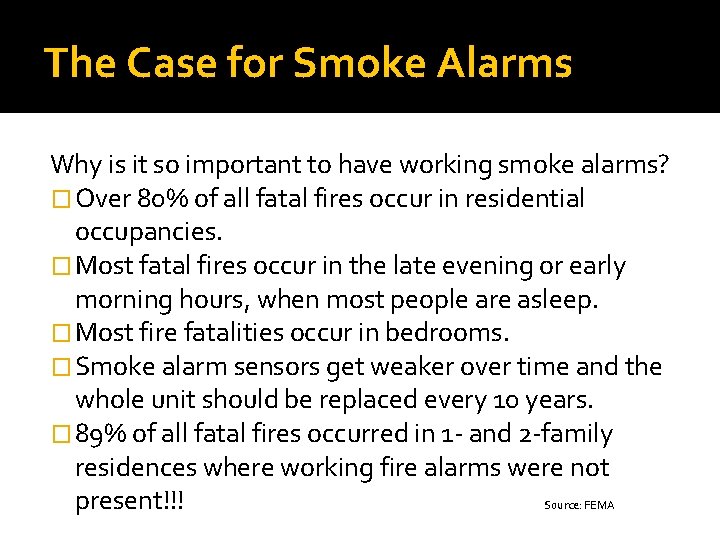
The Case for Smoke Alarms Why is it so important to have working smoke alarms? � Over 80% of all fatal fires occur in residential occupancies. � Most fatal fires occur in the late evening or early morning hours, when most people are asleep. � Most fire fatalities occur in bedrooms. � Smoke alarm sensors get weaker over time and the whole unit should be replaced every 10 years. � 89% of all fatal fires occurred in 1 - and 2 -family residences where working fire alarms were not present!!! Source: FEMA
Know the Beeps! �Smoke alarm activations are repeating sets of three (3) beeps, with a short pause in between sets. �Carbon monoxide activation are repeating sets of four (4) very quick beeps, with a short pause in between sets. �Both types of devices will typically “chirp” once every 30 – 60 seconds to indicate a low battery alert.
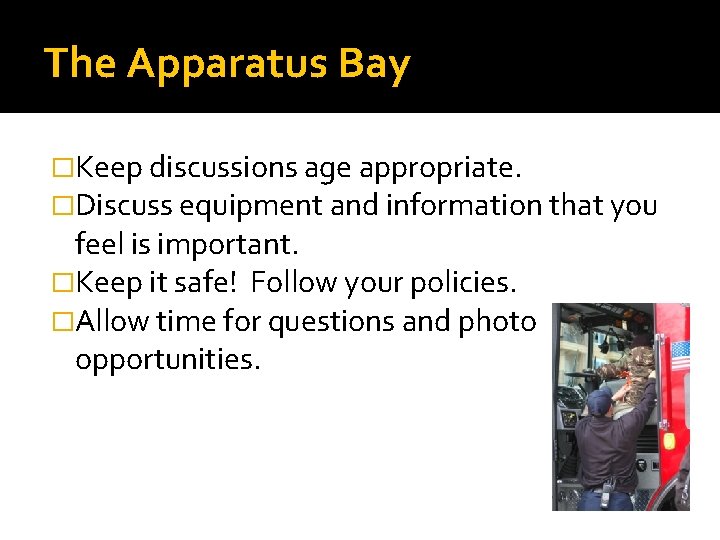
The Apparatus Bay �Keep discussions age appropriate. �Discuss equipment and information that you feel is important. �Keep it safe! Follow your policies. �Allow time for questions and photo opportunities.
More Safety Topics �While showing off the apparatus, you can also discuss… Seatbelt use. Car seats / booster seats for children. ▪ Give info on local car seat inspection programs. “Pull to the right for sirens and lights”.
Helpful tips �Be creative Use interactive demonstrations Have dispatch air a welcome message to your group �Be animated Speak with character and charisma Move around Use humor when appropriate �Customize Tailor the tour content to fit your audience
The Sky’s the Limit! �Other topics of discussion can include… Carbon Monoxide (sources, alarms, etc. ) Bike helmets, life jackets, and other life safety equipment. Other department services (smoke alarms, bike helmets, home safety surveys, car seat techs, etc. ) Local emergency notification systems. Home disaster planning / emergency supply kits. City / department budgets. Inter-agency relationships. Any other pertinent or local programs or issues.
Conclusion �Answer any questions. �Re-enforce safety lessons. �Distribute any handouts. �Thank your audience. �Escort them to the exit. �Log your event if your department tracks public relations contacts.
Summary �Make station tours a “valued added service”. �Use educational components to go beyond the expected entertainment value. �Take every opportunity to gain the support of your community members. �Ensure that they leave with a positive impression of your crew, your station, and your agency.
Any questions or comments? Thanks for you time! Contact Information: scott. pringle@cityofloveland. org 970 -962 -2614