
STATICS UNITS CALCULATIONS PROBLEM SOLVING Todays Objectives Students
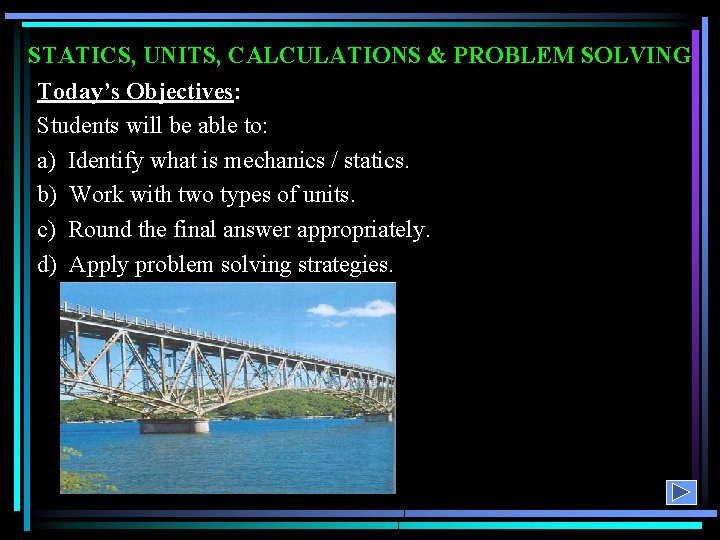
STATICS, UNITS, CALCULATIONS & PROBLEM SOLVING Today’s Objectives: Students will be able to: a) Identify what is mechanics / statics. b) Work with two types of units. c) Round the final answer appropriately. d) Apply problem solving strategies.
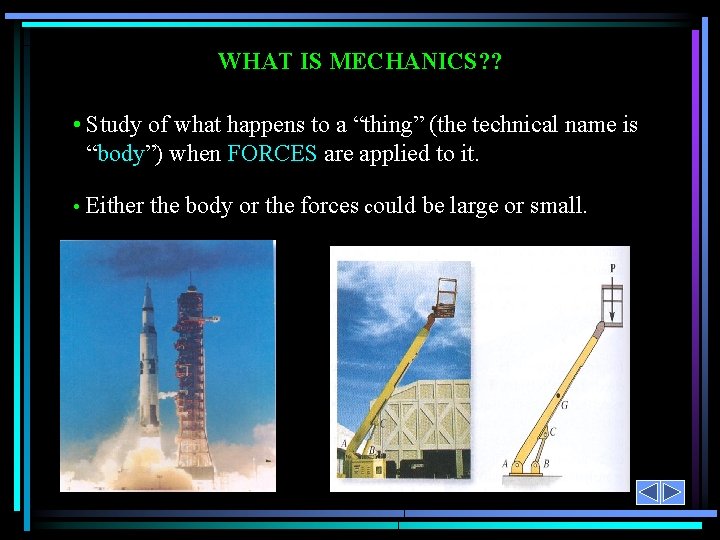
WHAT IS MECHANICS? ? • Study of what happens to a “thing” (the technical name is “body”) when FORCES are applied to it. • Either the body or the forces could be large or small.
BRANCHES OF MECHANICS

What may happen if static's is not applied properly?
SYSTEMS OF UNITS (Section 1. 3) • Four fundamental physical quantities. • Length, mass, time, force. • One equation relates them, F = m * a • We use this equation to develop systems of units • Units are arbitrary names we give to the physical quantities.
UNIT SYSTEMS • Define 3 of the units and call them the base units. • Derive the 4 th unit (called the derived unit) using F = m * a. • We will work with two unit systems in static’s: SI and US Customary.
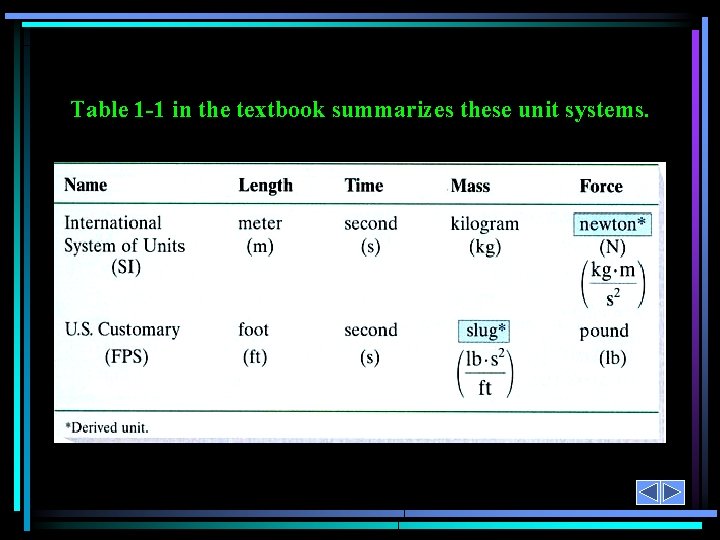
Table 1 -1 in the textbook summarizes these unit systems.
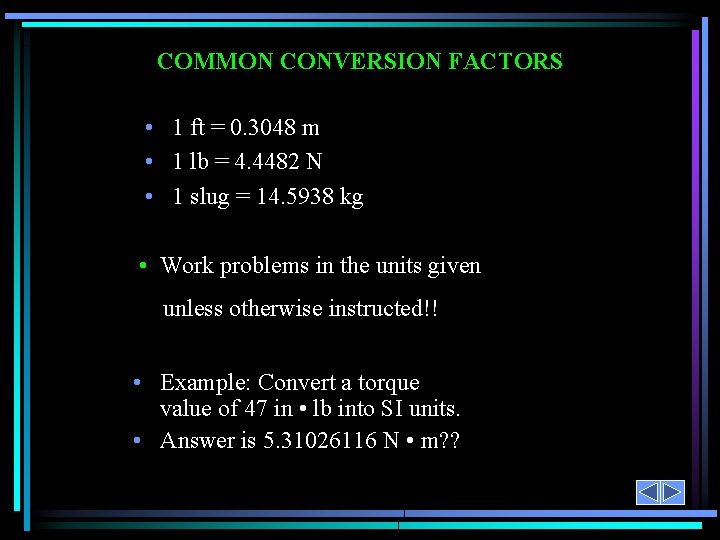
COMMON CONVERSION FACTORS • 1 ft = 0. 3048 m • 1 lb = 4. 4482 N • 1 slug = 14. 5938 kg • Work problems in the units given unless otherwise instructed!! • Example: Convert a torque value of 47 in • lb into SI units. • Answer is 5. 31026116 N • m? ?
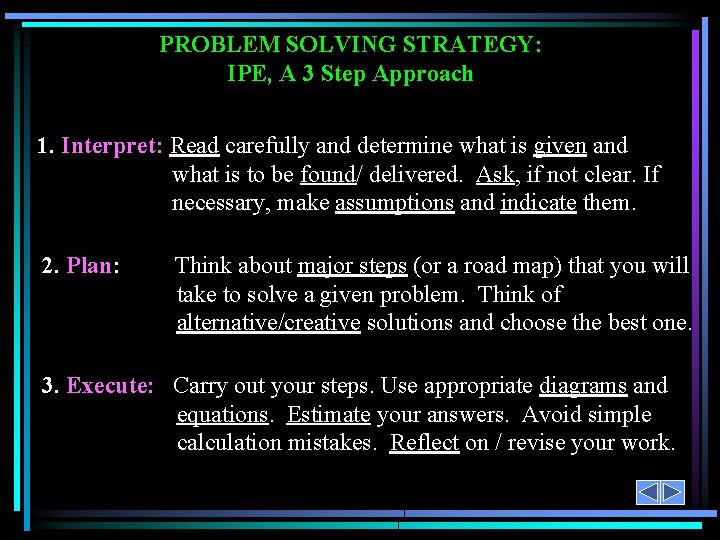
PROBLEM SOLVING STRATEGY: IPE, A 3 Step Approach 1. Interpret: Read carefully and determine what is given and what is to be found/ delivered. Ask, if not clear. If necessary, make assumptions and indicate them. 2. Plan: Think about major steps (or a road map) that you will take to solve a given problem. Think of alternative/creative solutions and choose the best one. 3. Execute: Carry out your steps. Use appropriate diagrams and equations. Estimate your answers. Avoid simple calculation mistakes. Reflect on / revise your work.
- Slides: 10